
Development of Prof Sara Pavia Department of Civil
- Slides: 11
Development of Prof. Sara Pavia. Department of Civil Engineering. A partner of: Project 2018 -1 -ES 01 -KA 201 -050639 Contents
We developed the contents based on some principles that, from experience, we considered important to accomplish learning and to maintain the interest of students with Down Syndrome.
1. Learning is visual as people with DS are visual learners. 2. The contents are practical and meaningful but never abstract. 3. So they are relevant to the students’ lives. 4. Concepts are explained clearly. 5. Concepts relate to each other. 6. Concepts follow a logic sequence based on their relationships. 7. Only one concept per sentence. 8. Ideally one concept per slide. 9. When concepts are introduced they are explained. 10. Concepts are assisted with visual aids (images) and activities. 11. Activities include: outdoor, school activities and virtual activities and games. 12. They are designed to learn about the concepts and reinforce the learning.
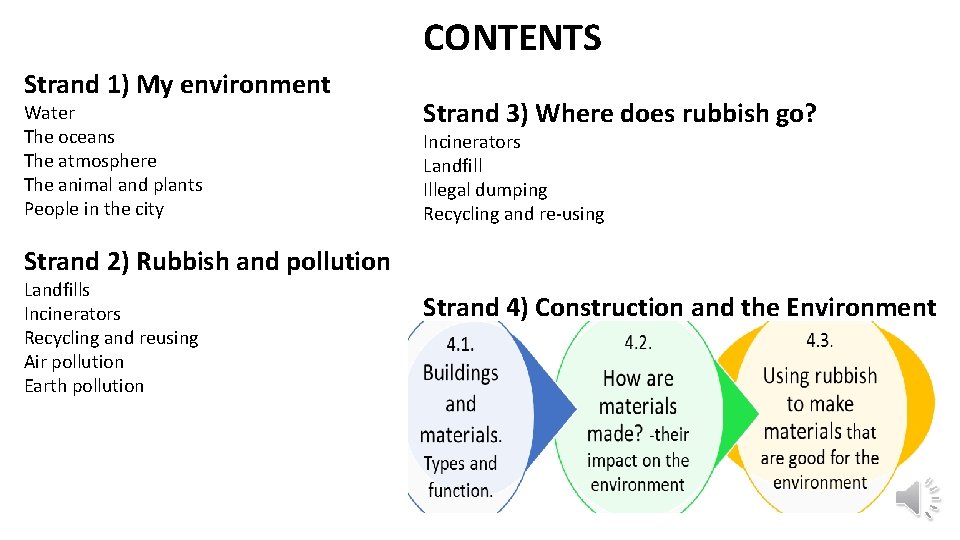
CONTENTS Strand 1) My environment Water The oceans The atmosphere The animal and plants People in the city Strand 3) Where does rubbish go? Incinerators Landfill Illegal dumping Recycling and re-using Strand 2) Rubbish and pollution Landfills Incinerators Recycling and reusing Air pollution Earth pollution Strand 4) Construction and the Environment
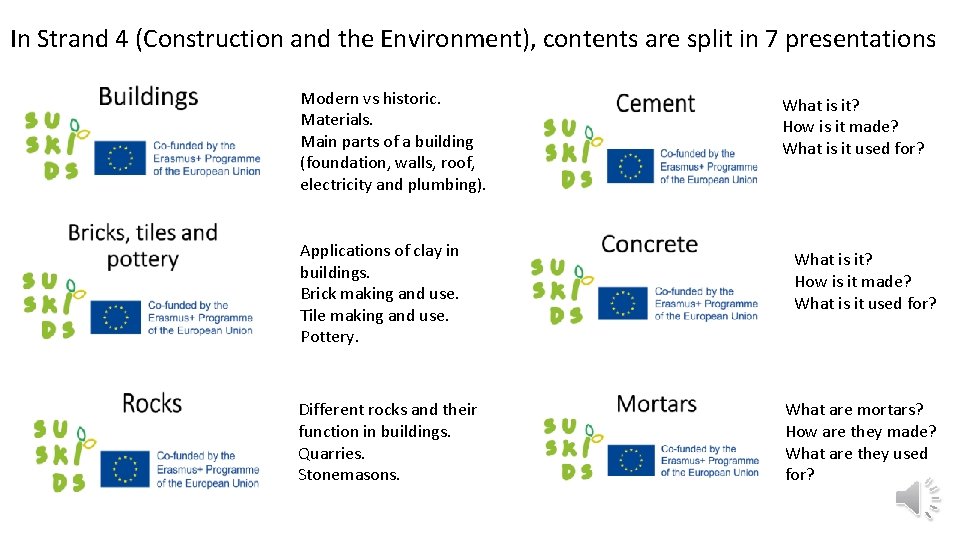
In Strand 4 (Construction and the Environment), contents are split in 7 presentations Modern vs historic. Materials. Main parts of a building (foundation, walls, roof, electricity and plumbing). Applications of clay in buildings. Brick making and use. Tile making and use. Pottery. Different rocks and their function in buildings. Quarries. Stonemasons. What is it? How is it made? What is it used for? What are mortars? How are they made? What are they used for?
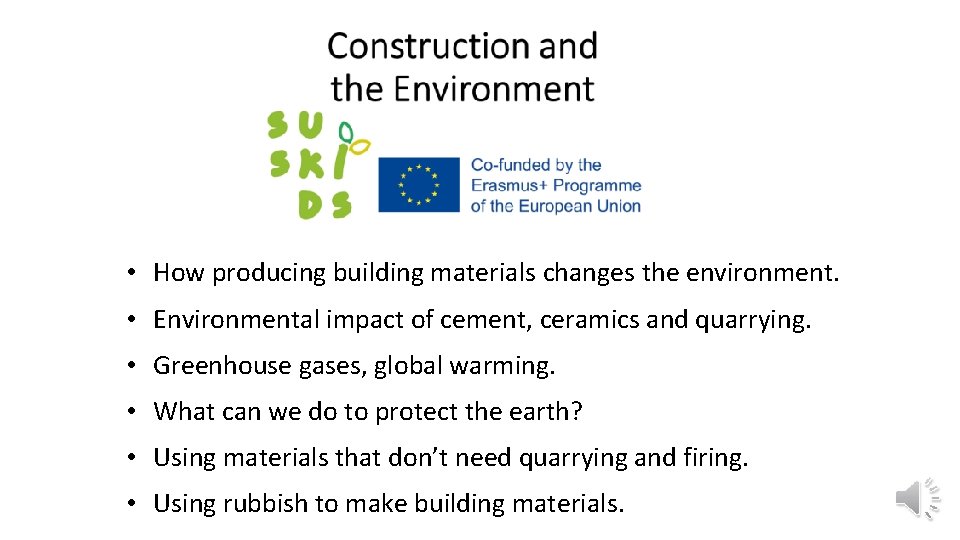
• How producing building materials changes the environment. • Environmental impact of cement, ceramics and quarrying. • Greenhouse gases, global warming. • What can we do to protect the earth? • Using materials that don’t need quarrying and firing. • Using rubbish to make building materials.
Activities include: - outdoor, - school and home activities - virtual activities. Some involve practising and developing communication (make presentations and discuss subjects in class). Others involve the use of technology (computer, phone /camera, write email, find information in the web). Some activities are related to numeracy and science, e. g. using maps, buying items, explaining a shop receipt, developing an understanding of strength and durability.
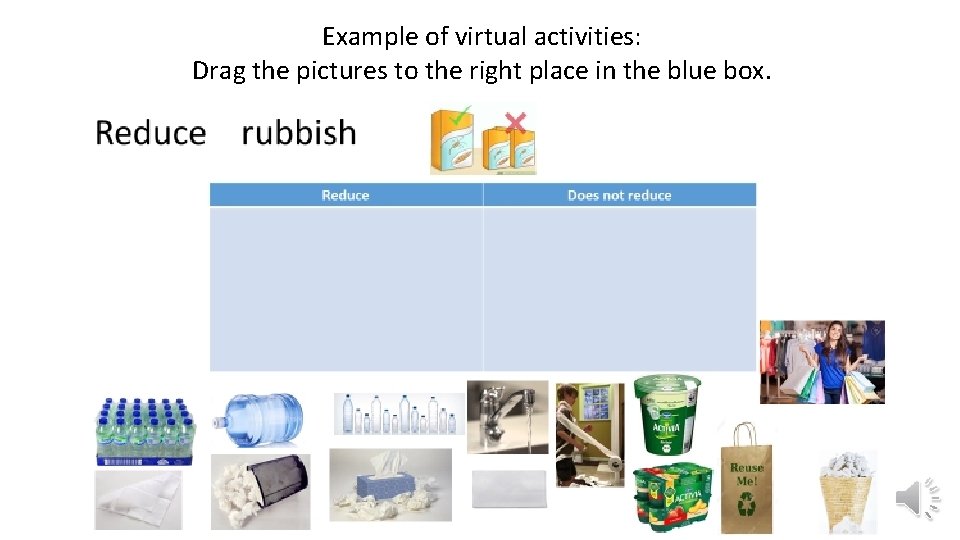
Example of virtual activities: Drag the pictures to the right place in the blue box.
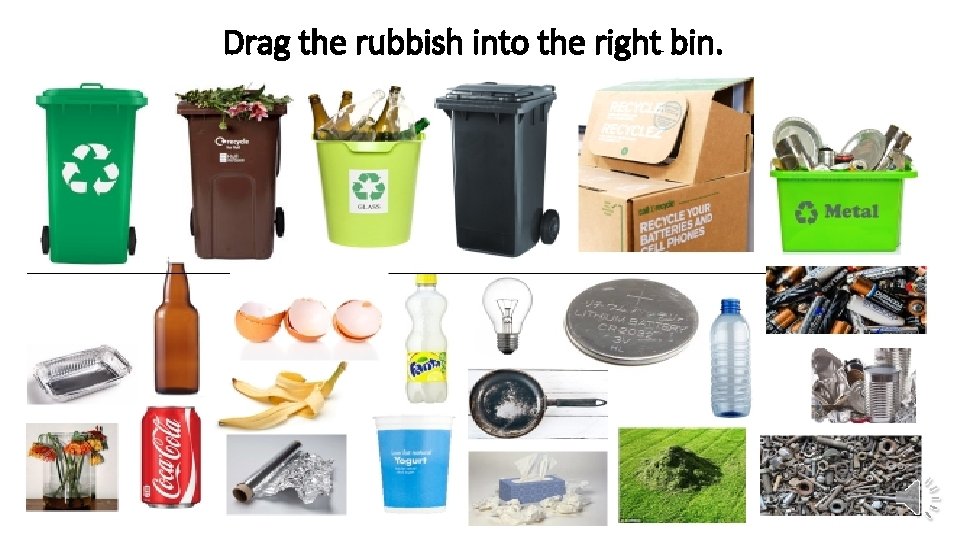
Drag the rubbish into the right bin.
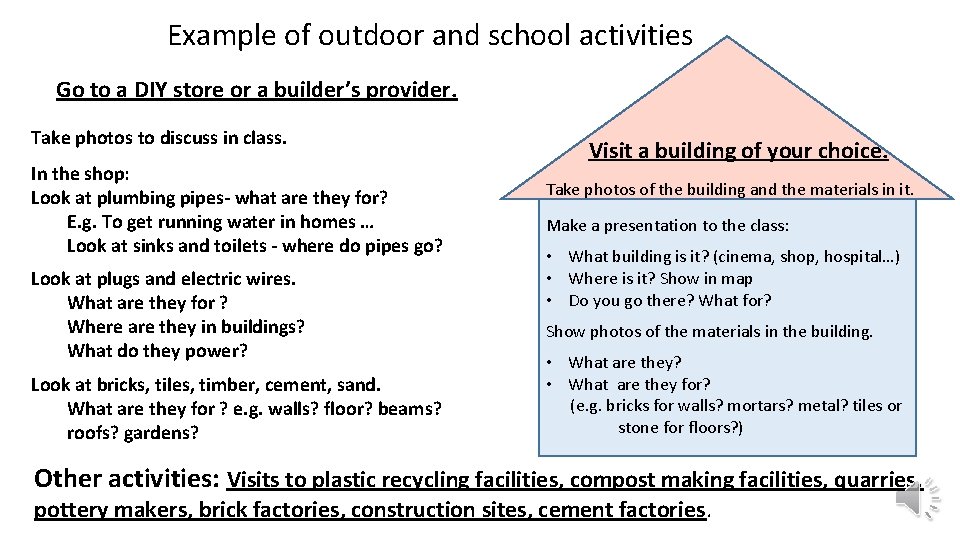
Example of outdoor and school activities Go to a DIY store or a builder’s provider. Take photos to discuss in class. In the shop: Look at plumbing pipes- what are they for? E. g. To get running water in homes … Look at sinks and toilets - where do pipes go? Look at plugs and electric wires. What are they for ? Where are they in buildings? What do they power? Look at bricks, tiles, timber, cement, sand. What are they for ? e. g. walls? floor? beams? roofs? gardens? gain. Visit a building of your choice. Take photos of the building and the materials in it. Make a presentation to the class: • What building is it? (cinema, shop, hospital…) • Where is it? Show in map • Do you go there? What for? Show photos of the materials in the building. • What are they? • What are they for? (e. g. bricks for walls? mortars? metal? tiles or stone for floors? ) Other activities: Visits to plastic recycling facilities, compost making facilities, quarries, pottery makers, brick factories, construction sites, cement factories.
Thank you for your attention