
Development of Firefighter Uniform Prototypes Using Innovative Nonwovens




- Slides: 13
Development of Firefighter Uniform Prototypes Using Innovative Nonwovens Mary M. Warnock and Laurie M. Apple
Firefighter Uniforms Must: • Be functional • Allow tasks to be performed – Fire – Chemical/biological agents • Protect against toxic substance exposure • Allow quick and efficient movements
Ergonomic Test Protocol • Assessed – Functional characteristics – Fit – Comfort • Divisions – Anthropometric – Range of motion – Generic dynamics – Job-specific dynamics – Manual tasks – Donning
Experimental Fabrics • 100% cotton needlepunched nonwoven with carbon filler • 100% cotton print cloth treated with epoxy bis-phosphonate monomer, cyanoguanidine and citric acid • Twaron woven fabric with ripstop weave • Nomex III A moisture barrier • Silicone rubber sheeting
Construction Parameters • Flat-pattern methodology • Juki industrial sewing machine – 12 stitches/inch • Cotton wrapped polyester thread • Machine quilting – Needlepunched nonwoven and print cloth – For thermal barrier
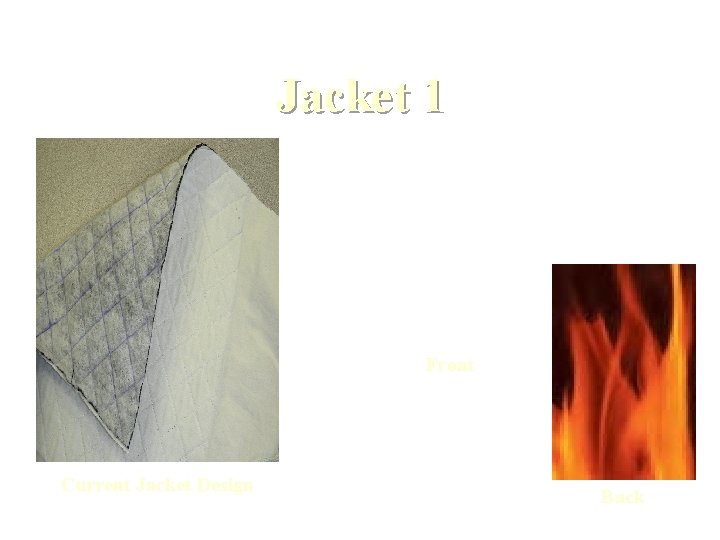
Jacket 1 Front Current Jacket Design Back
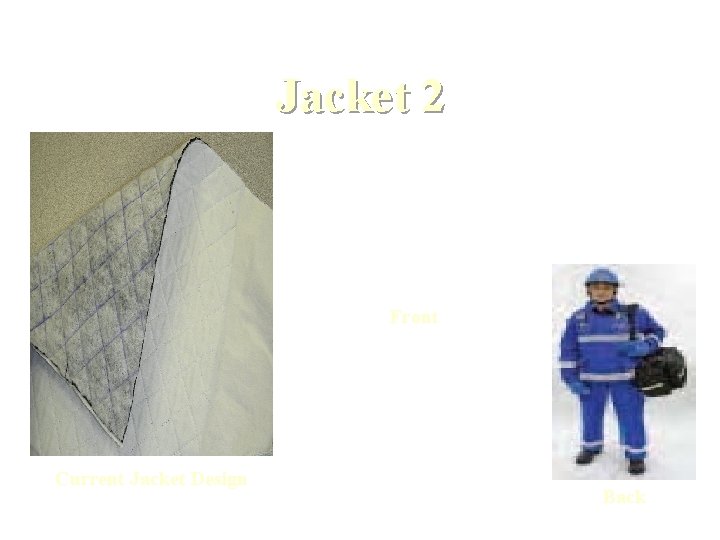
Jacket 2 Front Current Jacket Design Back
Needlepunched Carbon Filled Nonwoven Fabric Plain Quilted
Cross-Section Sample
Sleeve Prototype Sleeve Jacket/Sleeve Insertion
Conclusions • Lightweight, body-hugging protective clothing can be constructed giving maximum protection to the wearer. • Closure issue addressed for ease of donning and doffing the uniform. • Better mobility due to breathing apparatus being located in an enclosed back pouch. • Radio easily accessed on the jacket sleeve.
Acknowledgements • Dr. William (Bill) Springer, Industrial Engineering, University of Arkansas, Fayetteville • W. L. Gore & Associates, Inc. • Dr. Seshadri Ramkumar, Institute of Environmental and Human Health, Texas Tech University, Lubbock, TX • Dr. Navzer Sachinvala, SSRC-USDAARS, New Orleans, LA
Thank You!!