
Development of Design Knowledge for GDI Internal Combustion
Development of Design Knowledge for GDI Internal Combustion Engines P M V Subbarao Professor Mechanical Engineering Department I I T Delhi Models to Predict New & Better Anatomy of Artificial Horse …. .

How to develop Design Knowledge? ? ?
Thermodynamic Modeling : Development of Pseudo GDI Engine • Modeling of IC engine process can be carried out in many ways. • Multidimensional, Transient Flow and heat transfer Model. • Thermodynamic Transient Model USUF. • Fuel-air Thermodynamic Model. • Air standard Thermodynamic Model
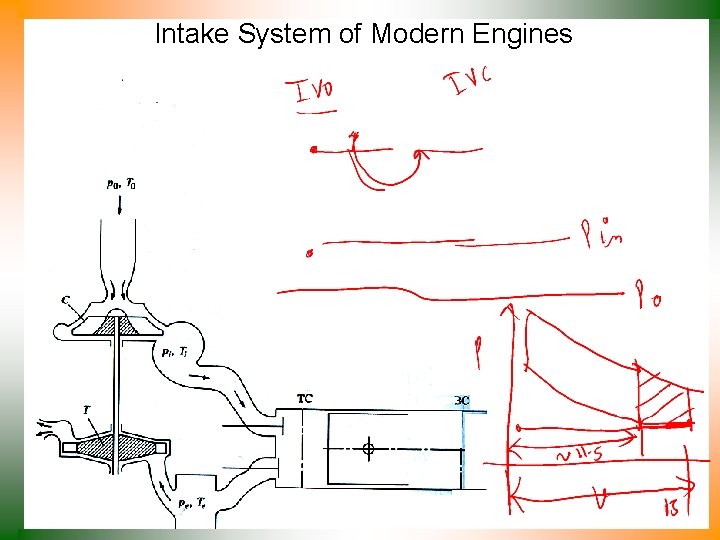
Intake System of Modern Engines
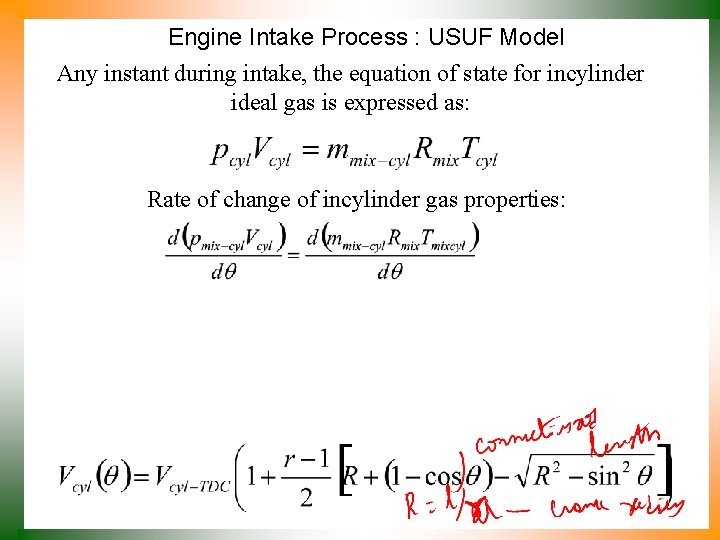
Engine Intake Process : USUF Model Any instant during intake, the equation of state for incylinder ideal gas is expressed as: Rate of change of incylinder gas properties:
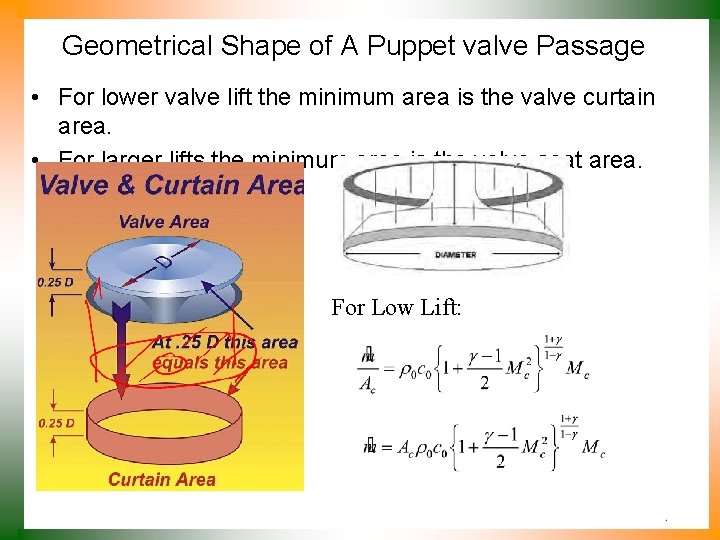
Geometrical Shape of A Puppet valve Passage • For lower valve lift the minimum area is the valve curtain area. • For larger lifts the minimum area is the valve seat area. For Low Lift:
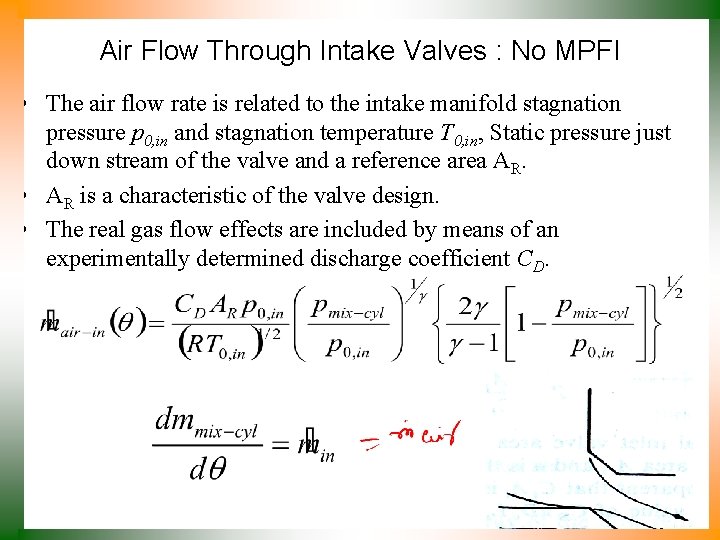
Air Flow Through Intake Valves : No MPFI • The air flow rate is related to the intake manifold stagnation pressure p 0, in and stagnation temperature T 0, in, Static pressure just down stream of the valve and a reference area AR. • AR is a characteristic of the valve design. • The real gas flow effects are included by means of an experimentally determined discharge coefficient CD.
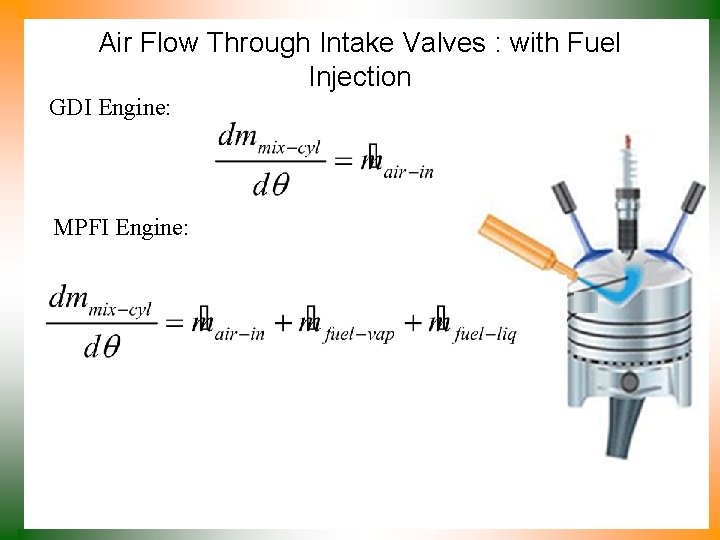
Air Flow Through Intake Valves : with Fuel Injection GDI Engine: MPFI Engine:
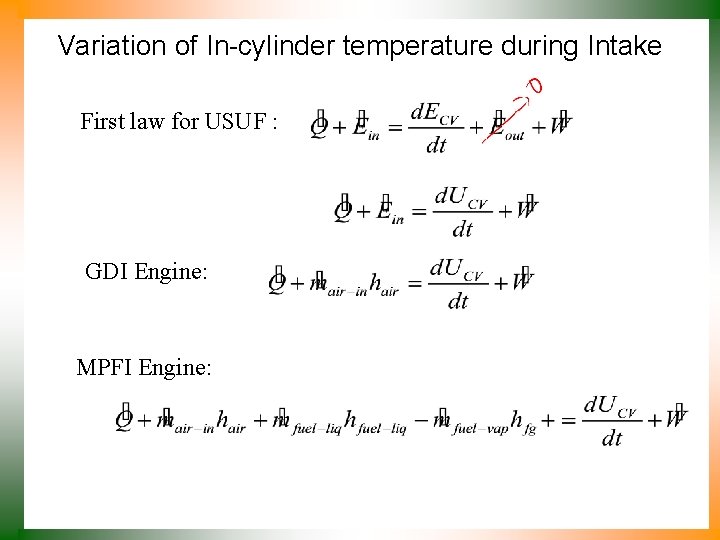
Variation of In-cylinder temperature during Intake First law for USUF : GDI Engine: MPFI Engine:
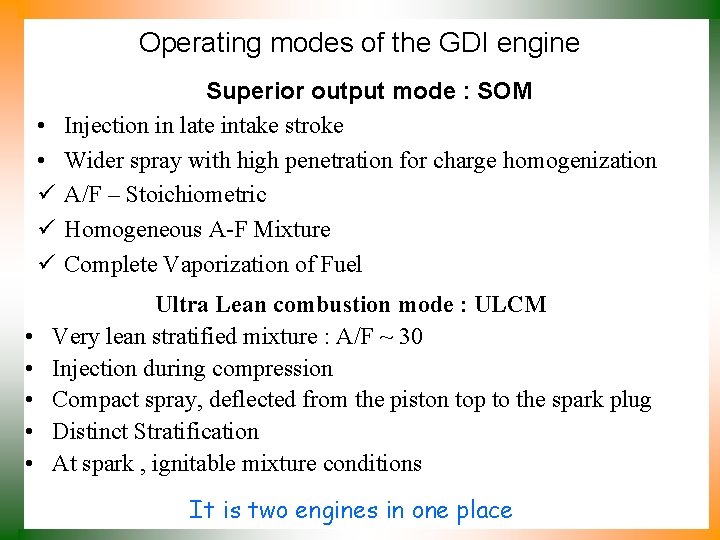
Operating modes of the GDI engine • • ü ü ü • • • Superior output mode : SOM Injection in late intake stroke Wider spray with high penetration for charge homogenization A/F – Stoichiometric Homogeneous A-F Mixture Complete Vaporization of Fuel Ultra Lean combustion mode : ULCM Very lean stratified mixture : A/F ~ 30 Injection during compression Compact spray, deflected from the piston top to the spark plug Distinct Stratification At spark , ignitable mixture conditions It is two engines in one place

Feel the In-Cylinder Processes in GDI Engine: SOM Start of injection End of injection
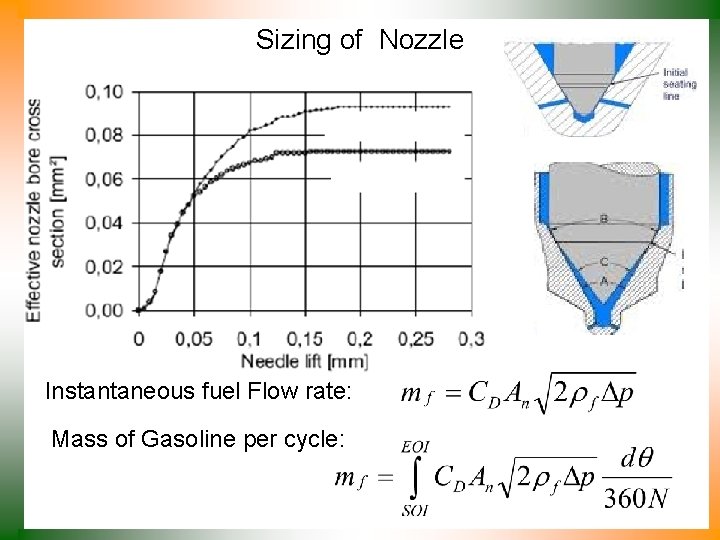
Sizing of Nozzle Instantaneous fuel Flow rate: Mass of Gasoline per cycle:
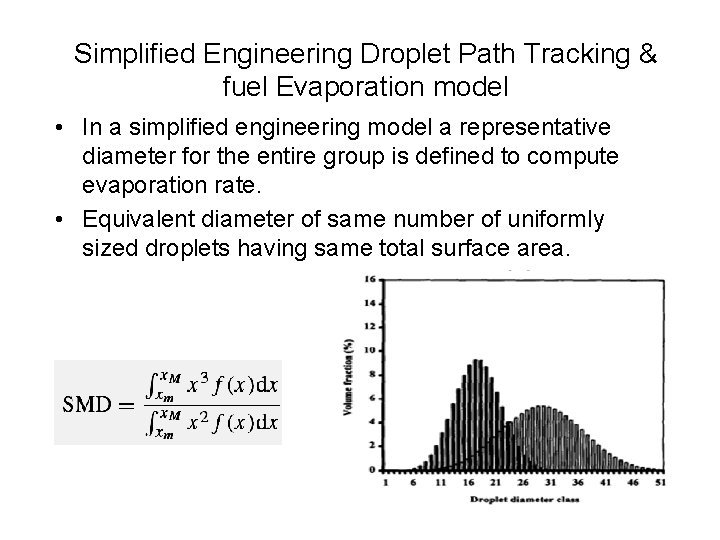
Simplified Engineering Droplet Path Tracking & fuel Evaporation model • In a simplified engineering model a representative diameter for the entire group is defined to compute evaporation rate. • Equivalent diameter of same number of uniformly sized droplets having same total surface area.
Simplified Engineering Droplet Path Tracking & fuel Evaporation model • In a simplified engineering model a representative diameter for the entire group is defined to compute evaporation rate. • Equivalent diameter of same number of uniformly sized droplets having same total surface area.
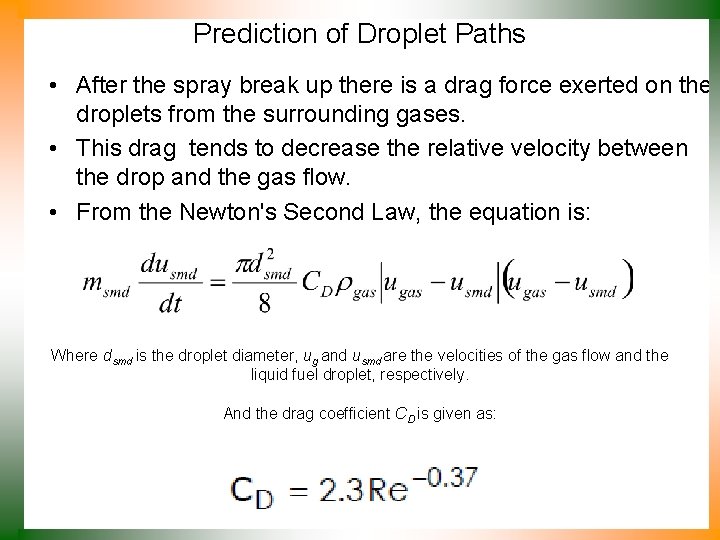
Prediction of Droplet Paths • After the spray break up there is a drag force exerted on the droplets from the surrounding gases. • This drag tends to decrease the relative velocity between the drop and the gas flow. • From the Newton's Second Law, the equation is: Where dsmd is the droplet diameter, ug and usmd are the velocities of the gas flow and the liquid fuel droplet, respectively. And the drag coefficient CD is given as:
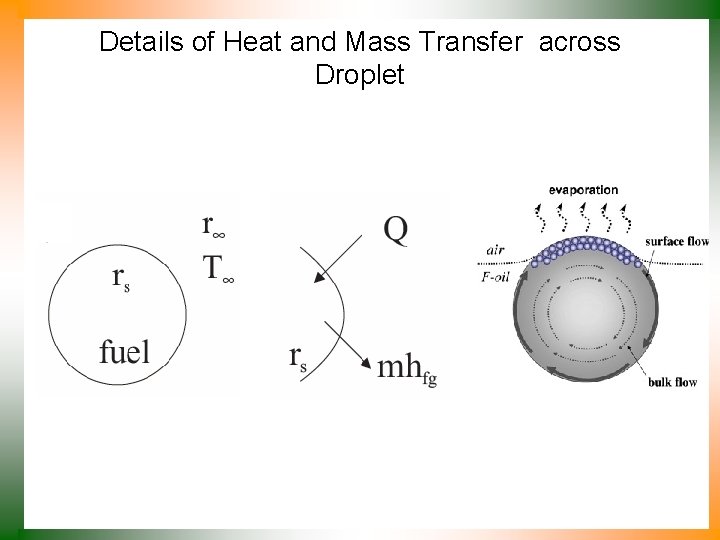
Details of Heat and Mass Transfer across Droplet
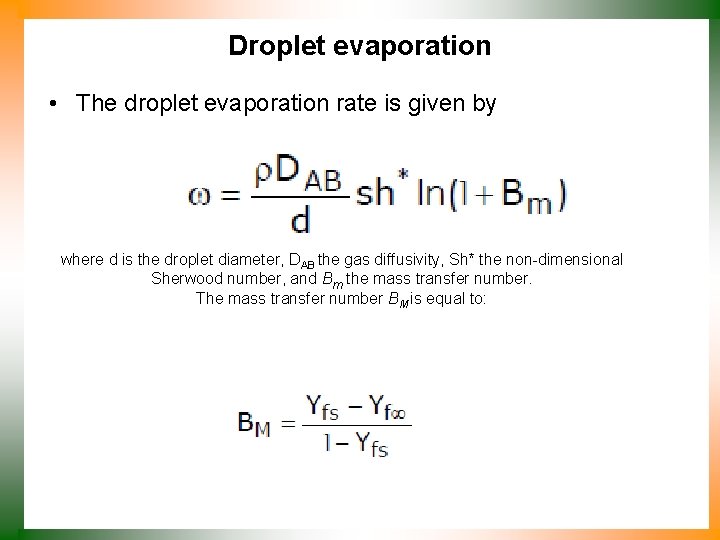
Droplet evaporation • The droplet evaporation rate is given by where d is the droplet diameter, DAB the gas diffusivity, Sh* the non-dimensional Sherwood number, and Bm the mass transfer number. The mass transfer number BM is equal to:
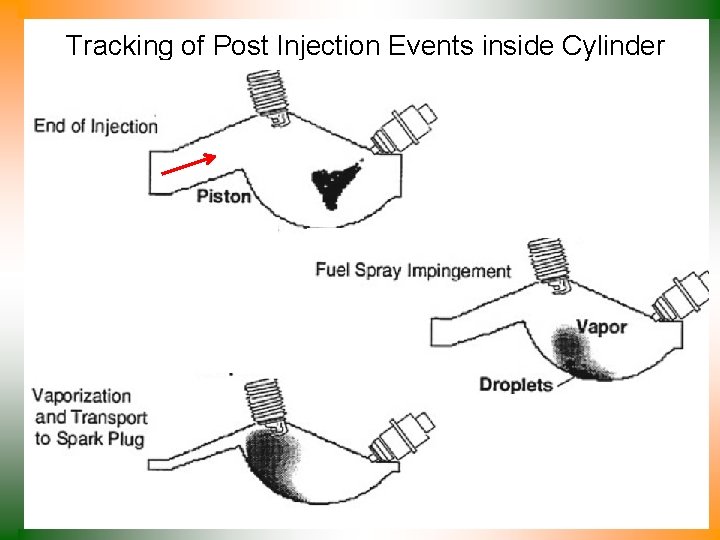
Tracking of Post Injection Events inside Cylinder
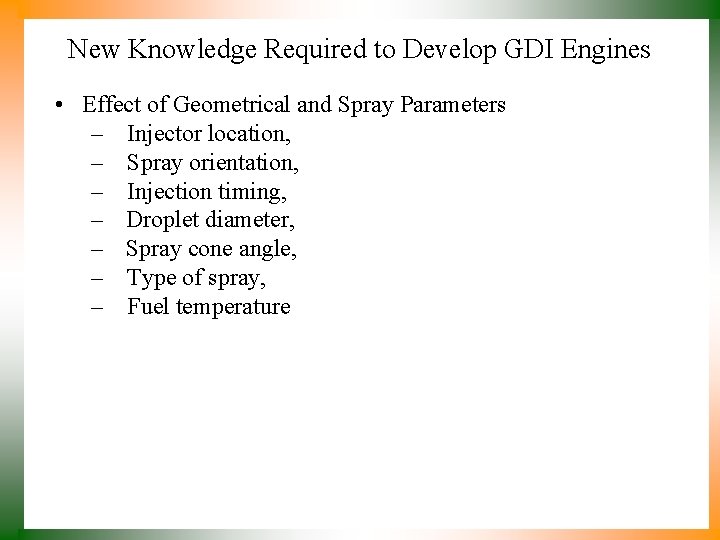
New Knowledge Required to Develop GDI Engines • Effect of Geometrical and Spray Parameters – Injector location, – Spray orientation, – Injection timing, – Droplet diameter, – Spray cone angle, – Type of spray, – Fuel temperature
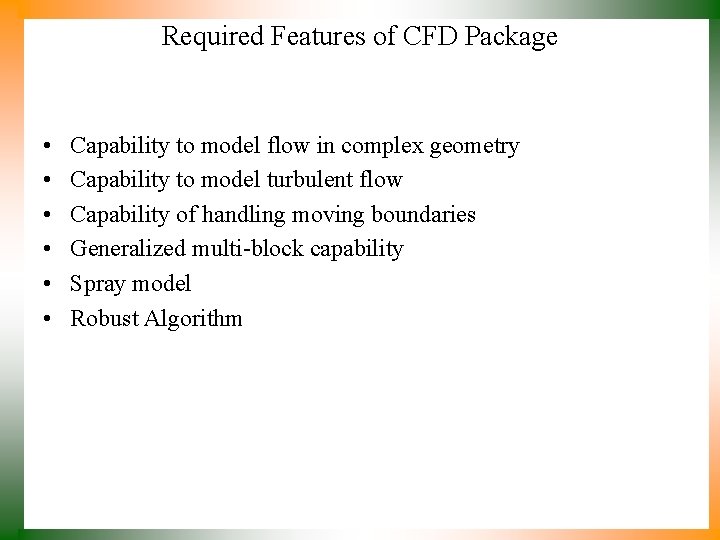
Required Features of CFD Package • • • Capability to model flow in complex geometry Capability to model turbulent flow Capability of handling moving boundaries Generalized multi-block capability Spray model Robust Algorithm
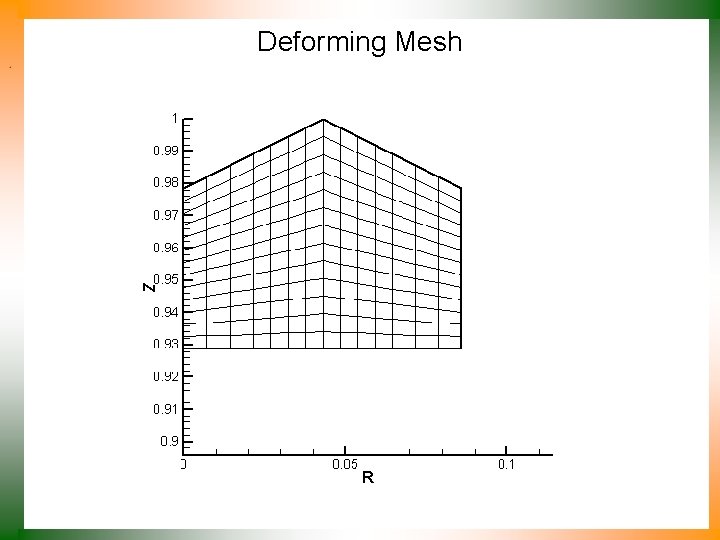
Deforming Mesh
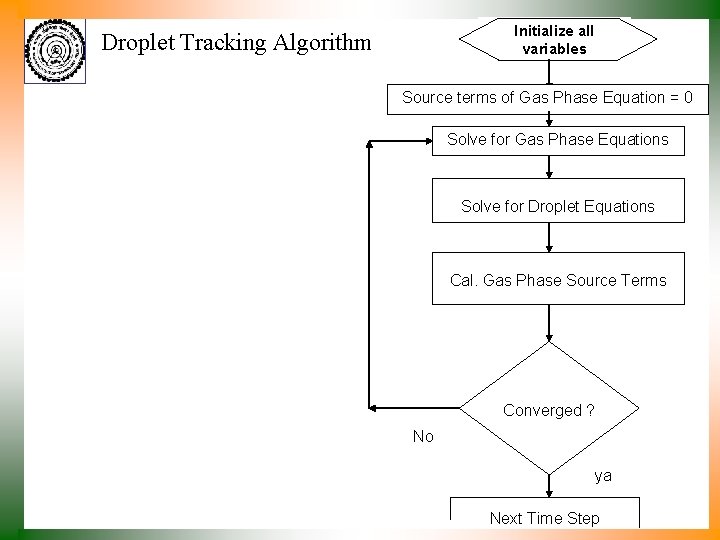
Initialize all variables Droplet Tracking Algorithm Source terms of Gas Phase Equation = 0 Solve for Gas Phase Equations Solve for Droplet Equations Cal. Gas Phase Source Terms Converged ? No ya Next Time Step
- Slides: 22