
Development Of Analysis Software for LAMP System External

- Slides: 30
Development Of Analysis Software for LAMP System External Guide Mr. Y. Bhavani Kumar Scientist/Engineer-‘SE’ NARL, Gadanki Tirupati. Internal Guide Mr. G. Karunakar Associate Professor GIT, GITAM UNIVERSITY Visakhapatnam-45.
Introduction 1. Atmosphere 2. Atmospheric Measurements i. In-situ measurements ii. Remote sensing observations 3. Concept of remote sensing i. Passive Remote sensing ii. Active Remote sensing 4. Introduction to Lidar
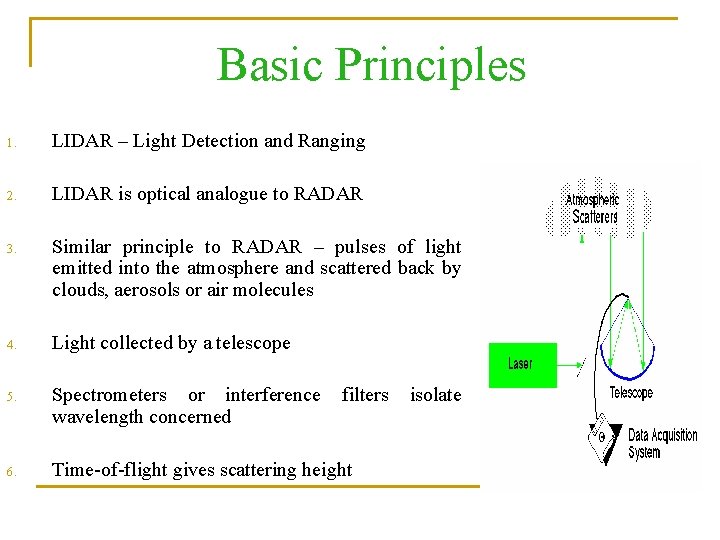
Basic Principles 1. LIDAR – Light Detection and Ranging 2. LIDAR is optical analogue to RADAR 3. Similar principle to RADAR – pulses of light emitted into the atmosphere and scattered back by clouds, aerosols or air molecules 4. Light collected by a telescope 5. Spectrometers or interference wavelength concerned 6. Time-of-flight gives scattering height filters isolate
Applications 1. 2. 3. 4. 5. 6. 7. Cloud Geometry Aerosol Studies Boundary Layer Studies Water vapour Minor constituents e. g. ozone, hydrocarbons Temperature Wind (by Doppler-shifting) etc…
Objective Primary objectives of this project are: 1. Analyzing the work done using the Ground based Monostatic LAMP (Lidar for Atmospheric Measurement and Probing) system. 2. Extracting data from the output binary file. 3. Development of different algorithms to determine various parameters of the atmospheric constituents and their variations with respect to temperature. 4. Development of Analysis Software using user-friendly MATLAB codes for scientific application purpose.
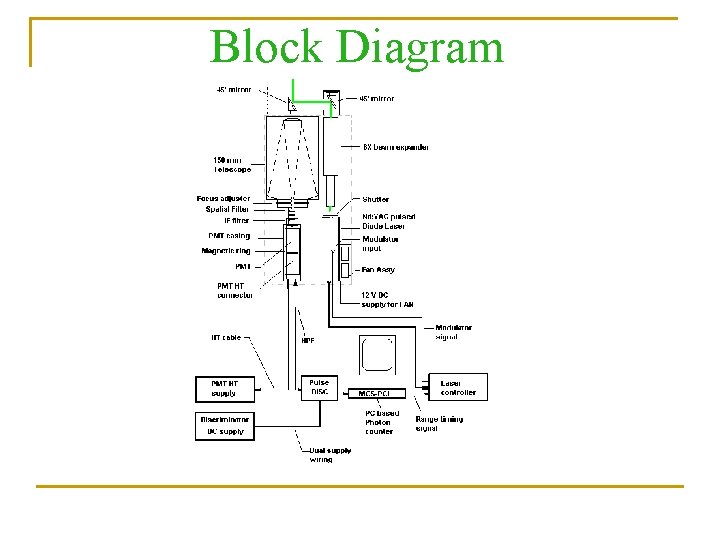
Block Diagram
Transmitter Section 1. Laser: Short pulses with lengths of few nsec and 2. Beam Expander: To reduce the divergence of light 3. Steering Mirror: Laser beam is made to fall on the 4. Control Specific Spectral properties are generated by Laser. beam before it is sent into the atmosphere. mirror. Unit: Microprocessor providing hardware interface. based system
Receiver Section 1. Telescope: Collects the photons backscattered from the atmosphere followed by an optical analyzer. 2. Detector: Received signal is converted into an electrical signal. Generally the detector can be PMT. 3. Interference Filter: To reduce background light.
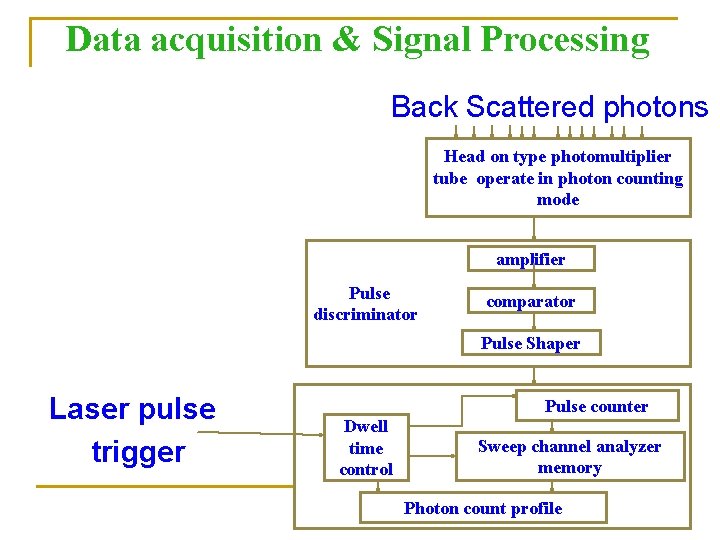
Data acquisition & Signal Processing Back Scattered photons Head on type photomultiplier tube operate in photon counting mode amplifier Pulse discriminator comparator Pulse Shaper Laser pulse trigger Pulse counter Dwell time control Sweep channel analyzer memory Photon count profile
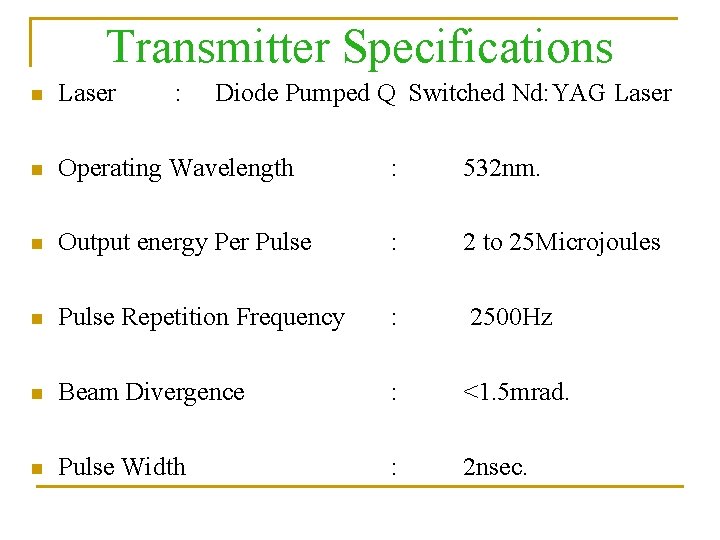
Transmitter Specifications n Laser : Diode Pumped Q Switched Nd: YAG Laser n Operating Wavelength : 532 nm. n Output energy Per Pulse : 2 to 25 Microjoules n Pulse Repetition Frequency : 2500 Hz n Beam Divergence : <1. 5 mrad. n Pulse Width : 2 nsec.
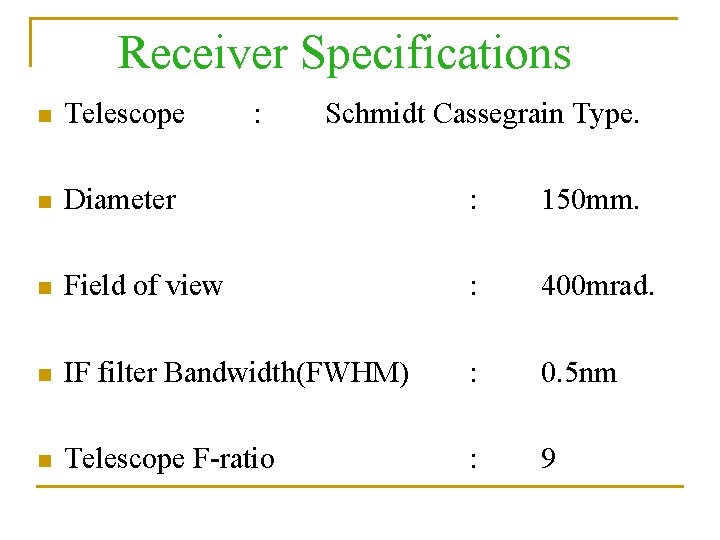
Receiver Specifications n Telescope : Schmidt Cassegrain Type. n Diameter : 150 mm. n Field of view : 400 mrad. n IF filter Bandwidth(FWHM) : 0. 5 nm n Telescope F-ratio : 9
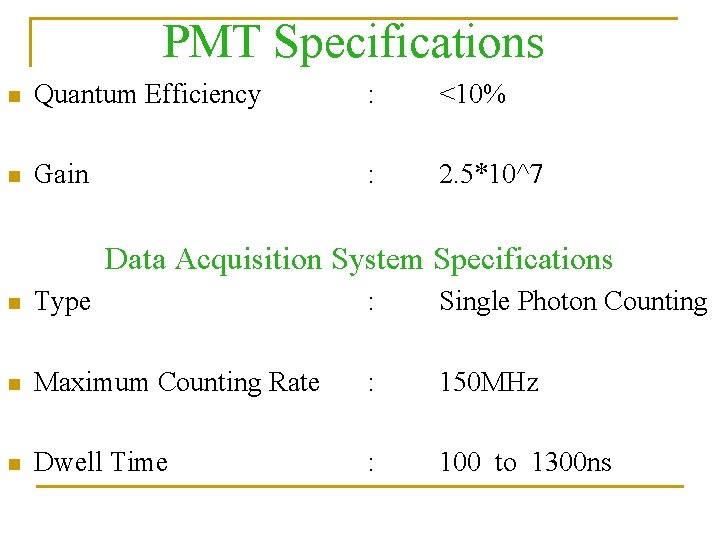
PMT Specifications n Quantum Efficiency : <10% n Gain : 2. 5*10^7 Data Acquisition System Specifications n Type : Single Photon Counting n Maximum Counting Rate : 150 MHz n Dwell Time : 100 to 1300 ns
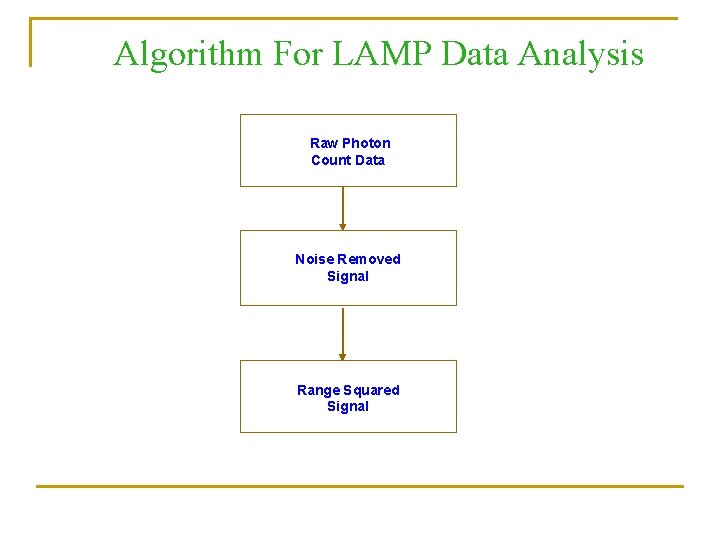
Algorithm For LAMP Data Analysis Raw Photon Count Data Noise Removed Signal Range Squared Signal
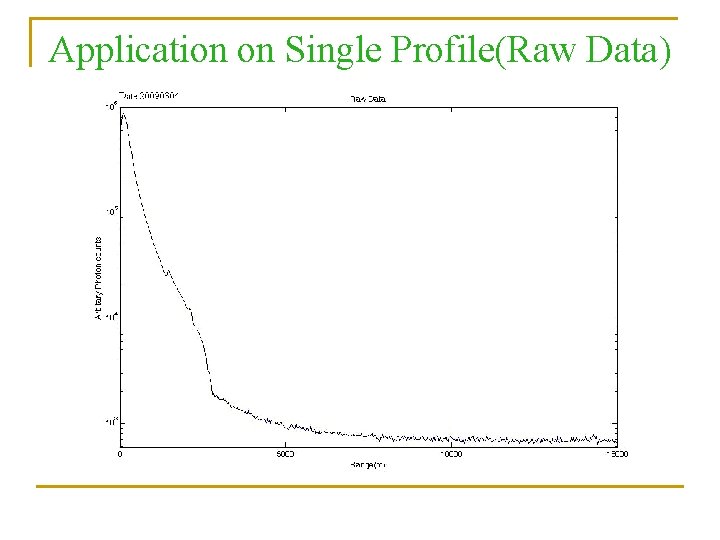
Application on Single Profile(Raw Data)
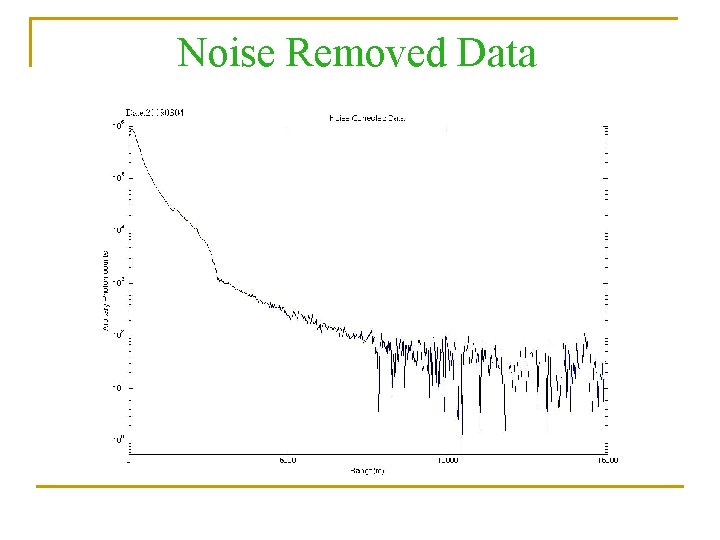
Noise Removed Data
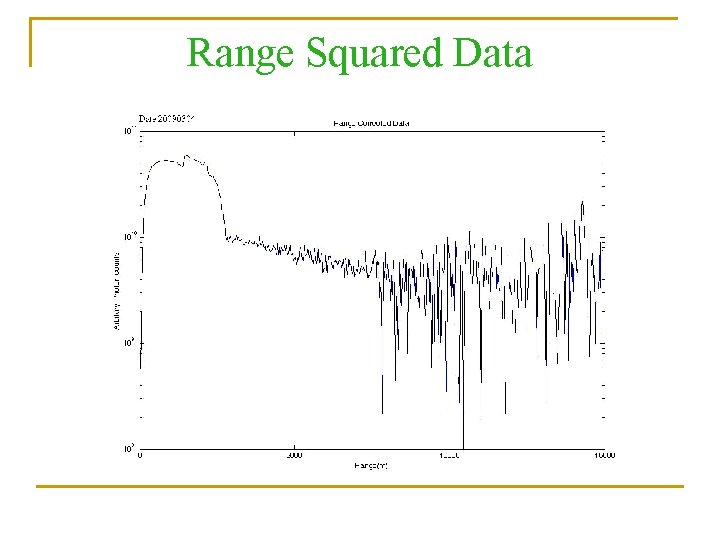
Range Squared Data
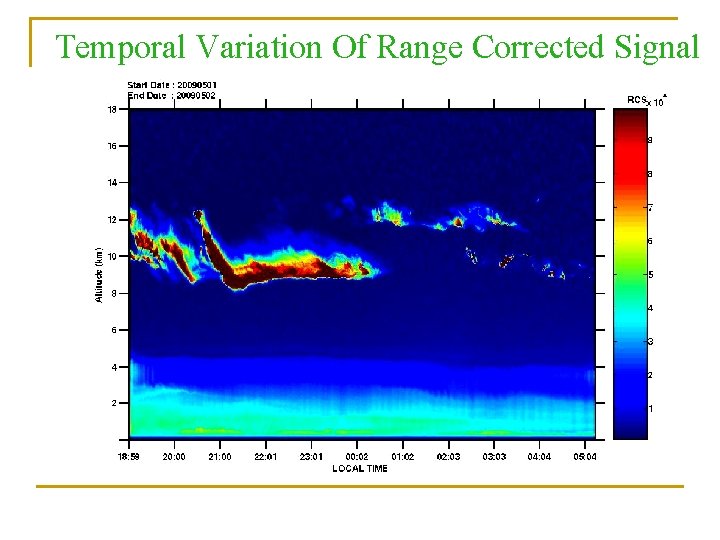
Temporal Variation Of Range Corrected Signal
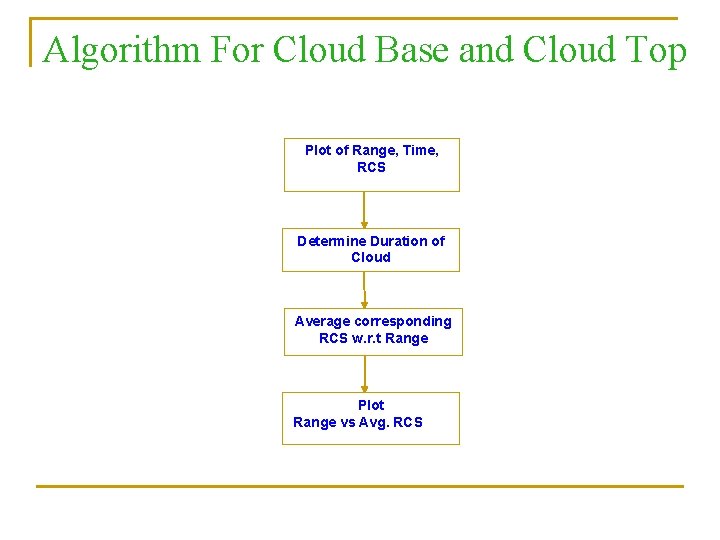
Algorithm For Cloud Base and Cloud Top Plot of Range, Time, RCS Determine Duration of Cloud Average corresponding RCS w. r. t Range Plot Range vs Avg. RCS
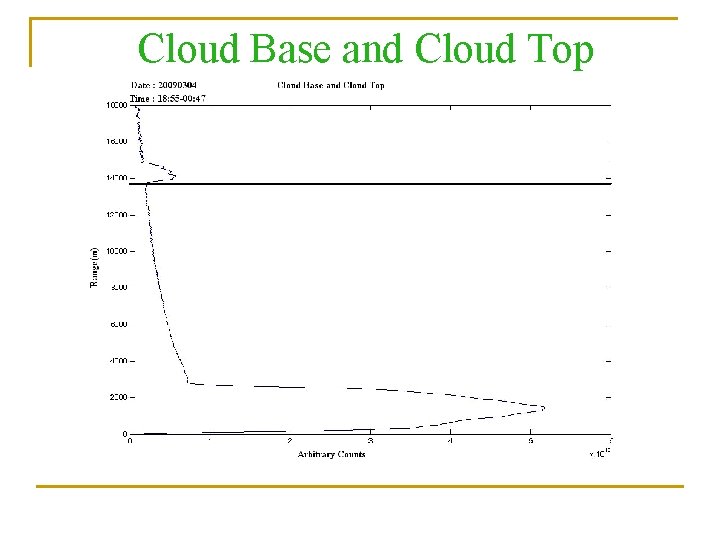
Cloud Base and Cloud Top
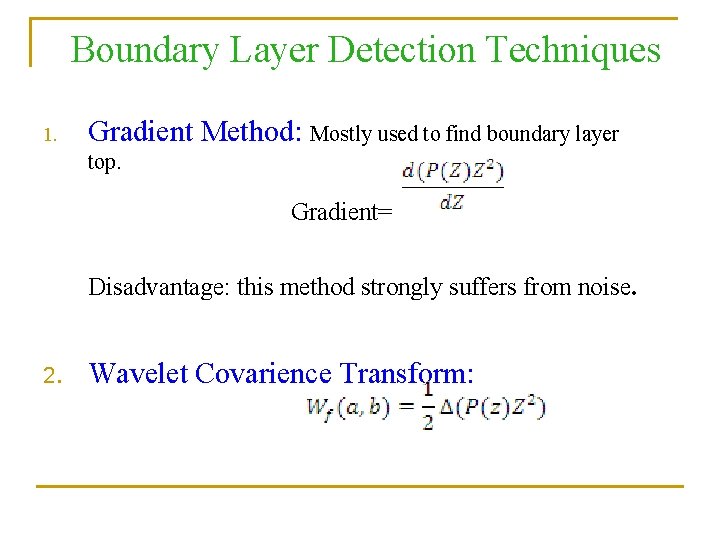
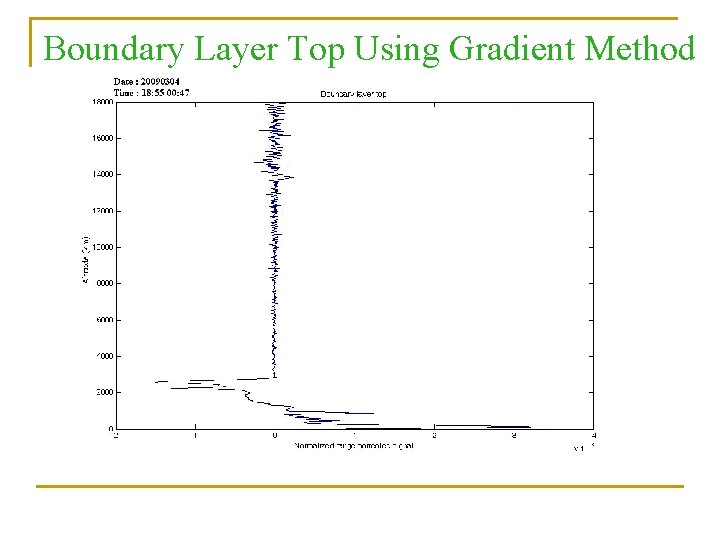
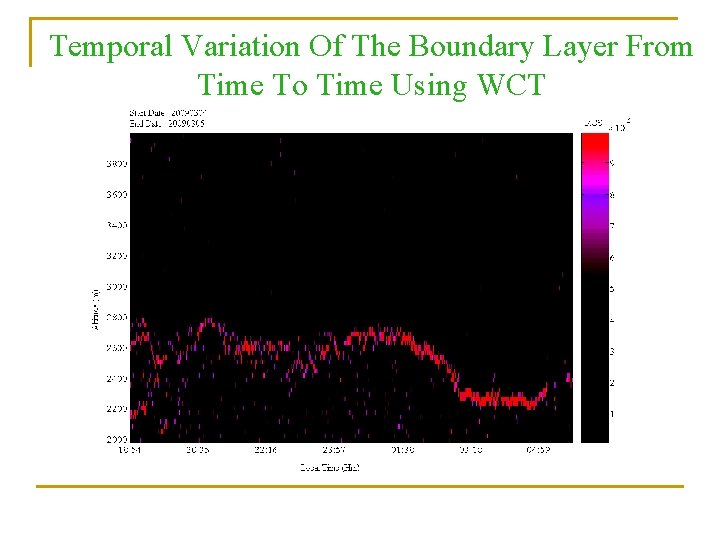
Boundary Layer Detection Techniques 1. Gradient Method: Mostly used to find boundary layer top. Gradient= Disadvantage: this method strongly suffers from noise. 2 . Wavelet Covarience Transform:
Boundary Layer Top Using Gradient Method
Temporal Variation Of The Boundary Layer From Time To Time Using WCT
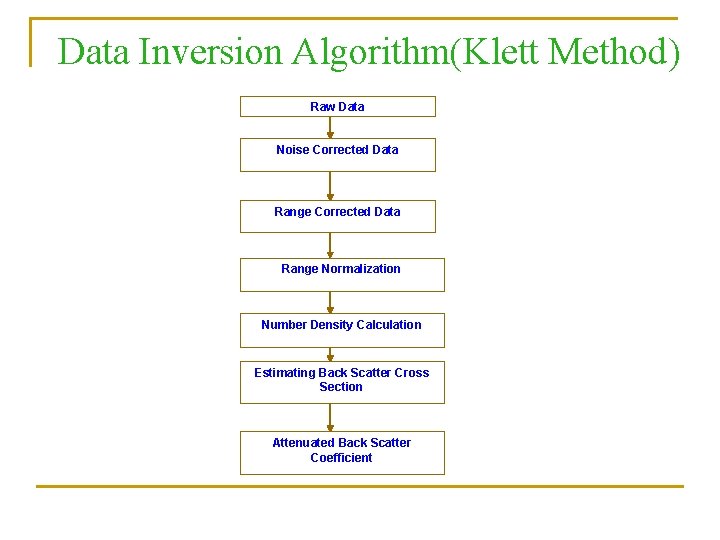
Data Inversion Algorithm(Klett Method) Raw Data Noise Corrected Data Range Normalization Number Density Calculation Estimating Back Scatter Cross Section Attenuated Back Scatter Coefficient
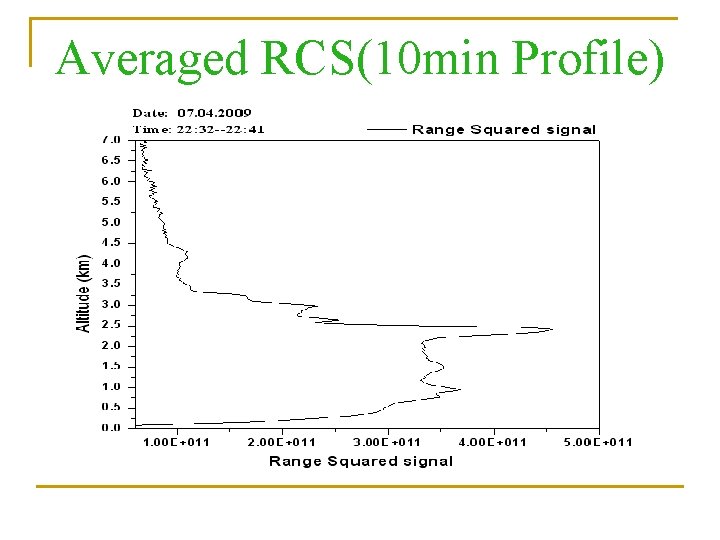
Averaged RCS(10 min Profile)
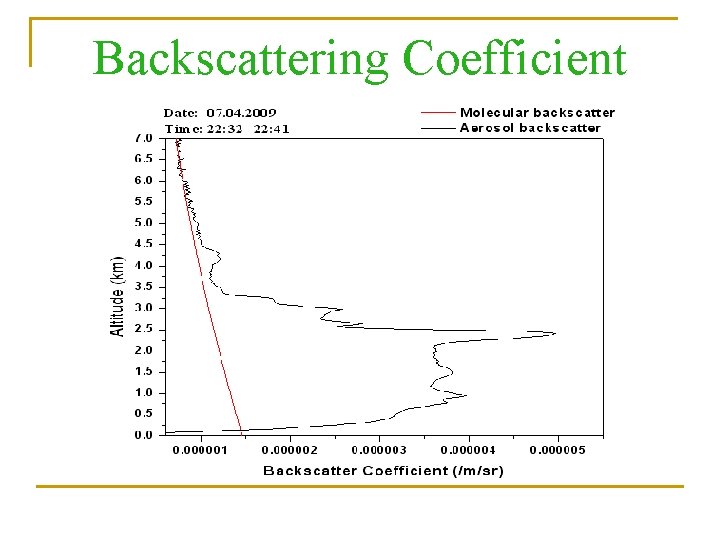
Backscattering Coefficient
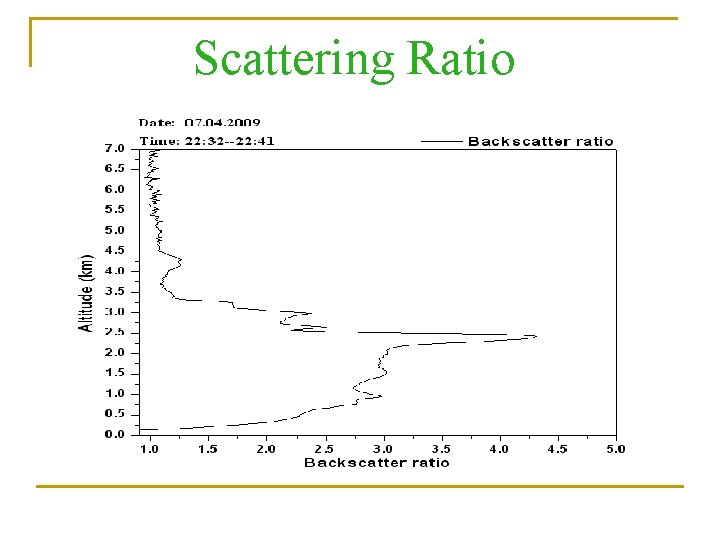
Scattering Ratio
Conclusion 1. The functioning of the currently working LAMP system was observed. 2. Various atmospheric parameters have been derived and plotted using MATLAB user-friendly software codes. 3. The code has been tested under different atmospheric conditions for retrieving the signal information. 4. The developed code has the potential to apply the code for different lidar systems with minimal changes to the program.
Future Work 1. This work can be extended in several ways by developing the software further, by using different algorithms. 2. Those include the determination of timely variation of the cloud base with respect to time, determination of extinction coefficient and aerosol optical thickness values by further analyzing the klett method, comparison of variation of night time AOT values and day time AOT values etc. 3. In case of clouds, the scattering parameters can be determined by using klett forward or backward algorithm methods. 4. With the addition of these features to the developed software, by using different algorithms make it more efficient and reliable software for atmospheric observations.
References 1. Lidar Range-Resolved Optical Remote Sensing of the Atmosphere, by Claus Weitkamp, 2004. 2. Elastic Lidar by Vladimir Kovalev, William E. Eichinger. 3. Laser Remote Sensing by Takashi Fujii, 2005. 4. Laser Remote Sensing Fundamentals and Applications, by Raymond M. Measures, 1992. 5. Technology Development for Atmospheric Research & Applications, by B. Manikiam, T. G. K. Murthy, Atmospheric Science programme, ISRO, june 2008. 6. Portable Lidar system for atmospheric boundary layer Measurements, Mr. Yellapragada Bhavani Kumar, Optical Engineering 45(7), 1(July 2006). 7. Resonance Lidar system for mesospheric Sodium measurements, Authors: Mr. Y. Bhavani Kumar, Mr. D. Narayana Rao, Mr. M. Sundara Murthy, Mr. M. Krishnaiah, Optical Engineering 46(8), 086203(August 2007). 8. Getting Started with MATLAB 7, A Quick introduction to Scientists and Engineers, Rudra Pratap, Eight edition, 2008. Author:
Thank You