
Development of an Address Point Editing Application for
- Slides: 24
Development of an Address Point Editing Application for Local Agencies Chris Klaube GEOG 596 A Advisor: Fritz Kessler Summer 2016
Outline Introduction and Background Capstone Objective Literature Review Application Features and Requirements Design Workflow Timeline
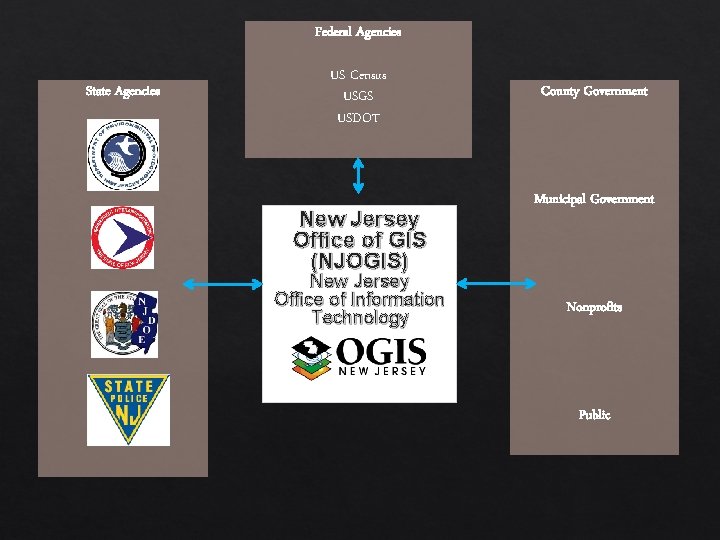
Federal Agencies State Agencies US Census USGS USDOT New Jersey Office of GIS (NJOGIS) New Jersey Office of Information Technology County Government Municipal Government Nonprofits Public
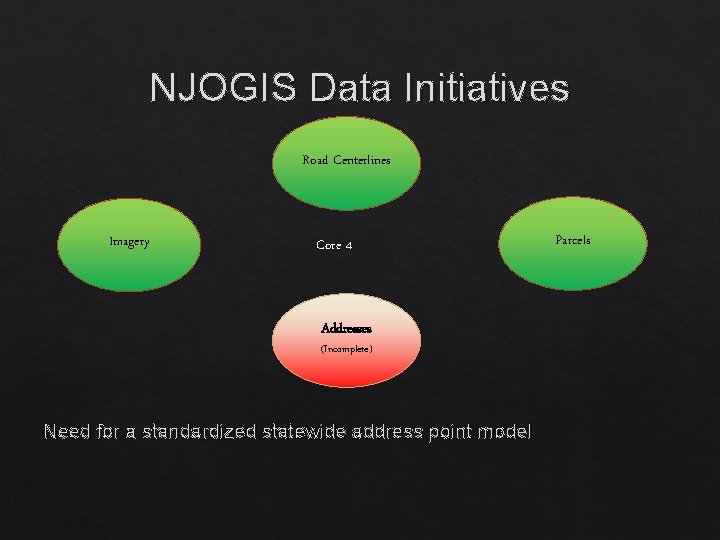
NJOGIS Data Initiatives Road Centerlines Imagery Core 4 Addresses (Incomplete) Need for a standardized statewide address point model Parcels
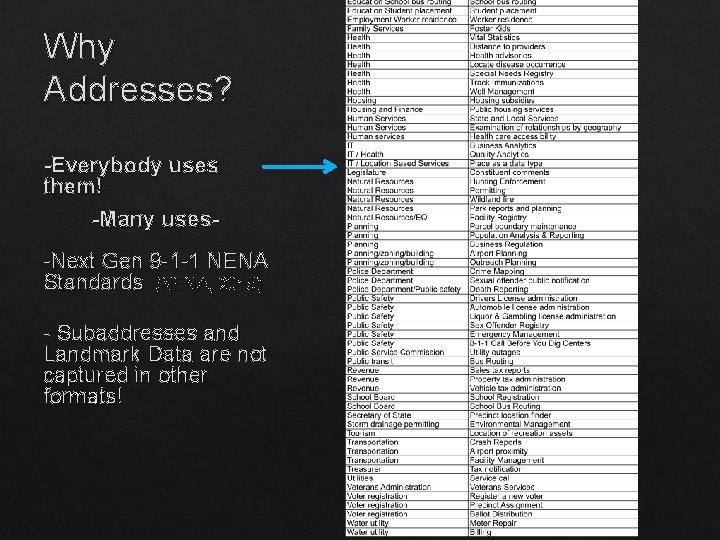
Why Addresses? -Everybody uses them! -Many uses-Next Gen 9 -1 -1 NENA Standards (NENA, 2015) - Subaddresses and Landmark Data are not captured in other formats!
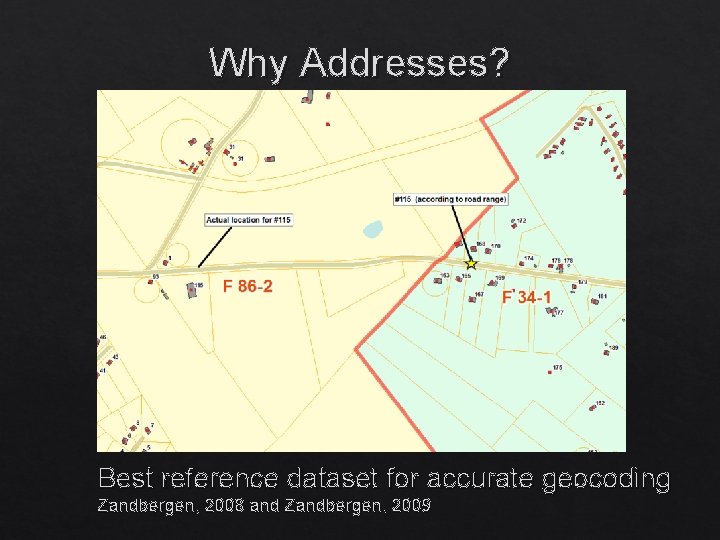
Why Addresses? Best reference dataset for accurate geocoding Zandbergen, 2008 and Zandbergen, 2009
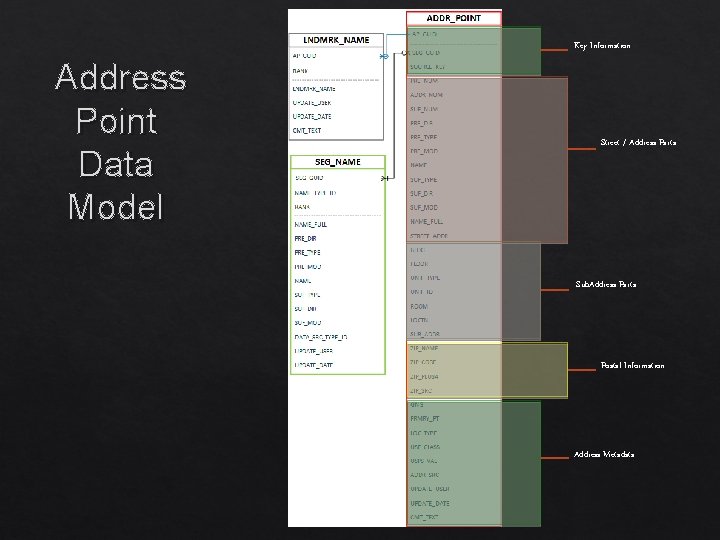
Key Information Address Point Data Model Street / Address Parts Sub. Address Parts Postal Information Address Metadata
Current Address Points Status 3 million points derived from 2015 statewide parcel records Standardized address point street names with neighboring road segments (83% of points) Validated against USPS CASS service for Postal attributes Contributions from county & municipal partners Missing many addresses!
Capstone Objective Create a secure web application that provides address points editing and validation for local government and public safety entities. Why? Many PSAPs will need this data Not many jurisdictions have the infrastructure or expertise to build address data using conventional GIS programs State does not have the resources to capture all addresses accuratelyneed local input!
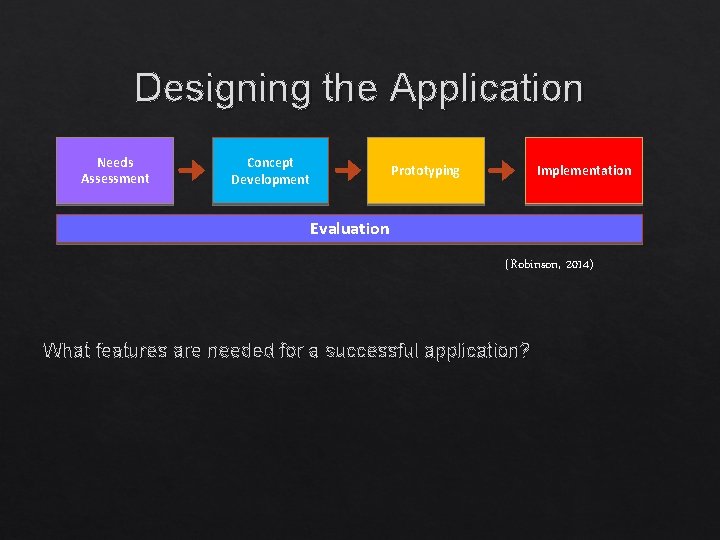
Designing the Application Needs Assessment Concept Development Prototyping Implementation Evaluation (Robinson, 2014) What features are needed for a successful application?
Volunteered Geographic Information and Government VGI – volunteers contribute geospatial data and local spatial knowledge; It’s spatial crowdsourcing! (Goodchild, 2007) Governments realizing benefits -Reduced costs for data creation -Reduced duplication of efforts (Capture once, use at many levels!) (Johnson, 2013; Janakiraman, 2010)
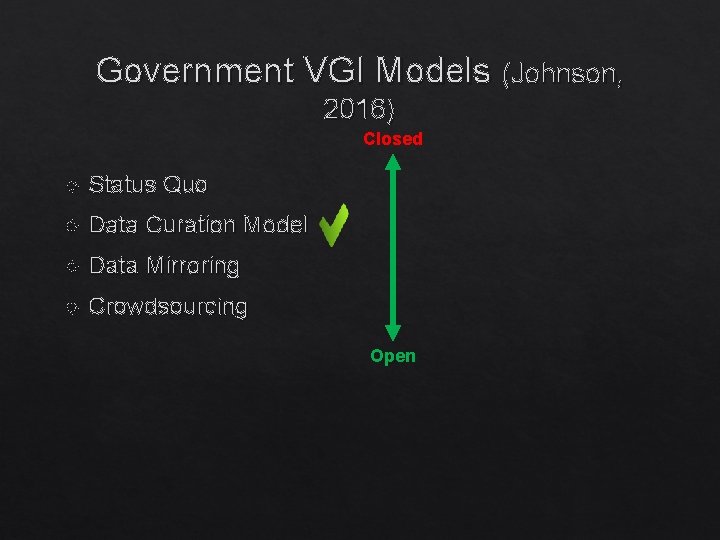
Government VGI Models (Johnson, 2016) Closed Status Quo Data Curation Model Data Mirroring Crowdsourcing Open
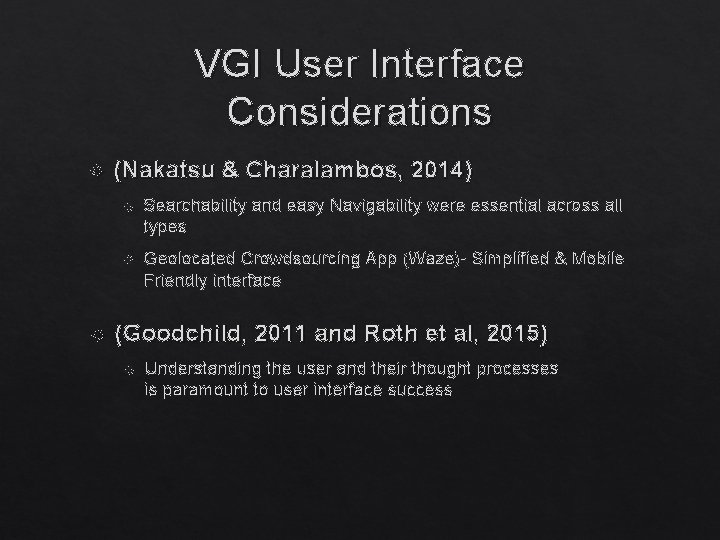
VGI User Interface Considerations (Nakatsu & Charalambos, 2014) Searchability and easy Navigability were essential across all types Geolocated Crowdsourcing App (Waze)- Simplified & Mobile Friendly interface (Goodchild, 2011 and Roth et al, 2015) Understanding the user and their thought processes is paramount to user interface success
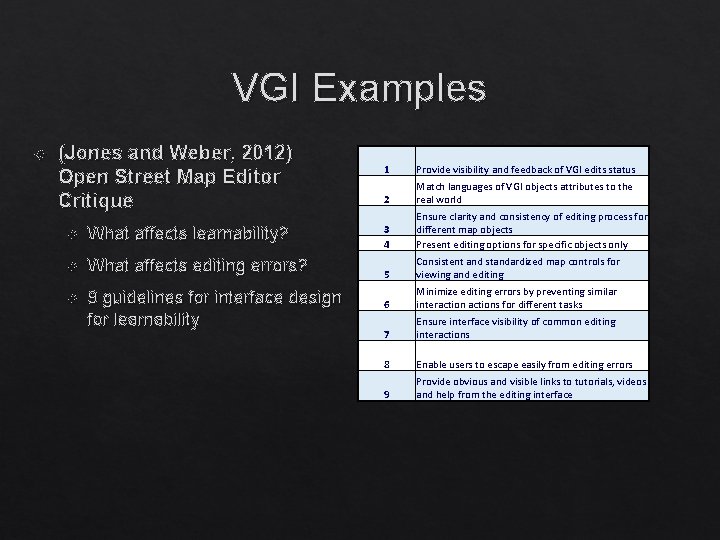
VGI Examples (Jones and Weber, 2012) Open Street Map Editor Critique What affects learnability? What affects editing errors? 9 guidelines for interface design for learnability 1 Provide visibility and feedback of VGI edits status 2 Match languages of VGI objects attributes to the real world 3 4 Ensure clarity and consistency of editing process for different map objects Present editing options for specific objects only 5 Consistent and standardized map controls for viewing and editing 6 Minimize editing errors by preventing similar interactions for different tasks 7 Ensure interface visibility of common editing interactions 8 Enable users to escape easily from editing errors 9 Provide obvious and visible links to tutorials, videos and help from the editing interface
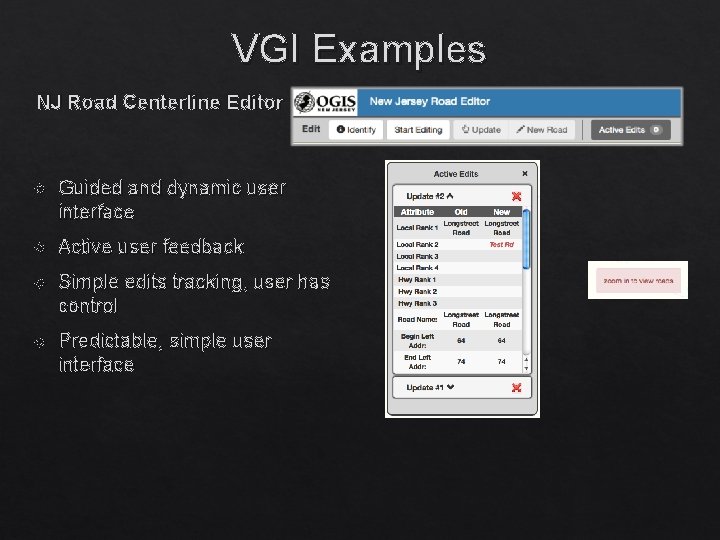
VGI Examples NJ Road Centerline Editor Guided and dynamic user interface Active user feedback Simple edits tracking, user has control Predictable, simple user interface
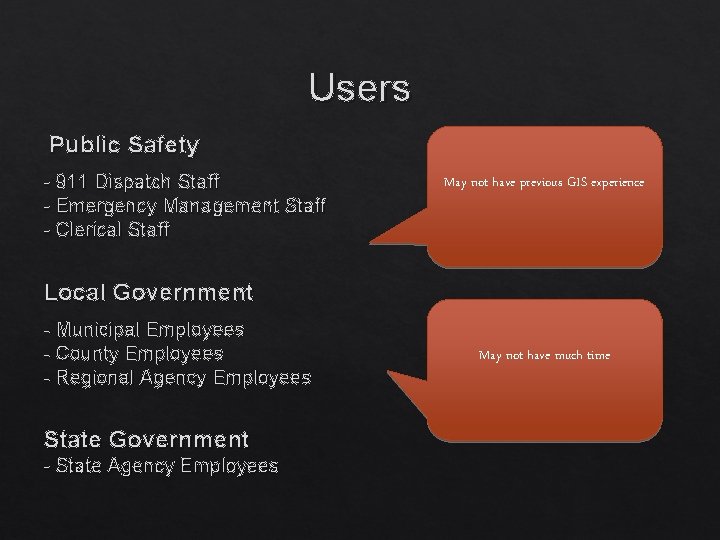
Users Public Safety - 911 Dispatch Staff - Emergency Management Staff - Clerical Staff May not have previous GIS experience Local Government - Municipal Employees - County Employees - Regional Agency Employees State Government - State Agency Employees May not have much time
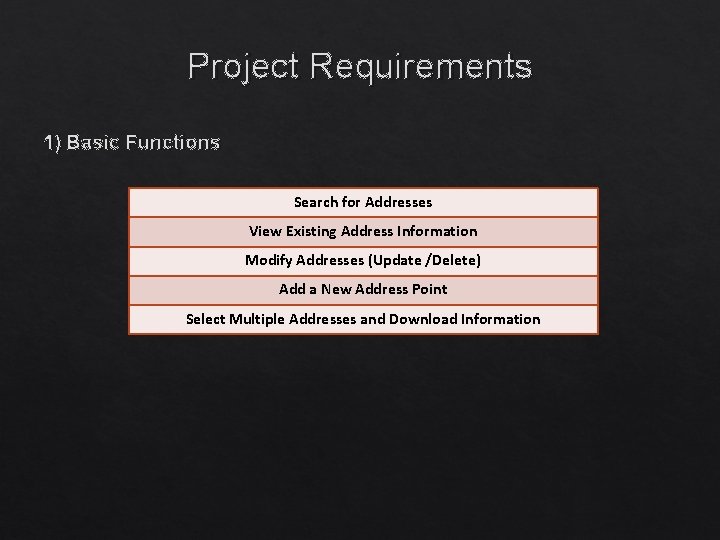
Project Requirements 1) Basic Functions Search for Addresses View Existing Address Information Modify Addresses (Update /Delete) Add a New Address Point Select Multiple Addresses and Download Information
Project Requirements 2) Users must be vetted
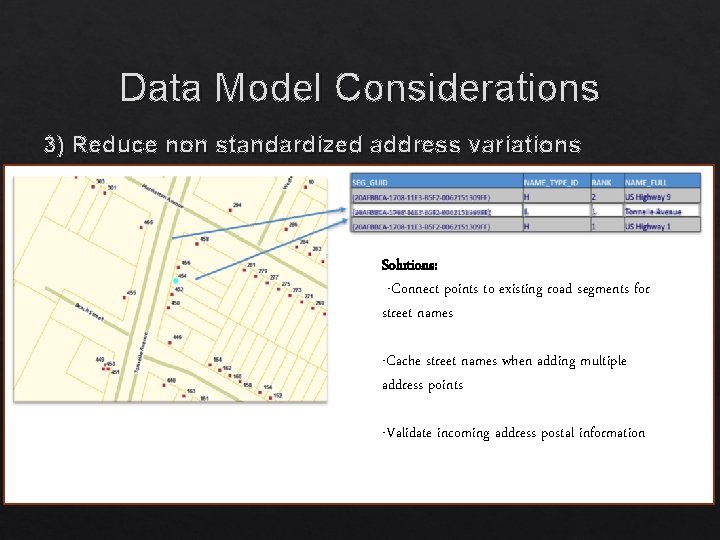
Data Model Considerations 3) Reduce non standardized address variations Solutions: -Connect points to existing road segments for street names -Cache street names when adding multiple address points -Validate incoming address postal information
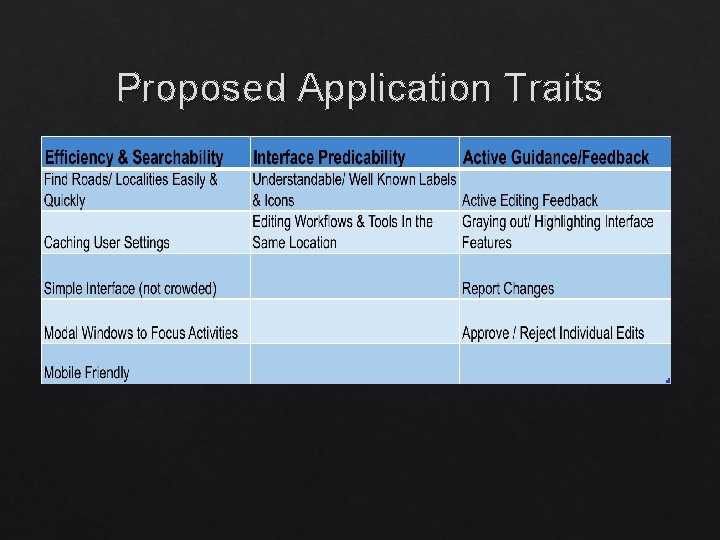
Proposed Application Traits
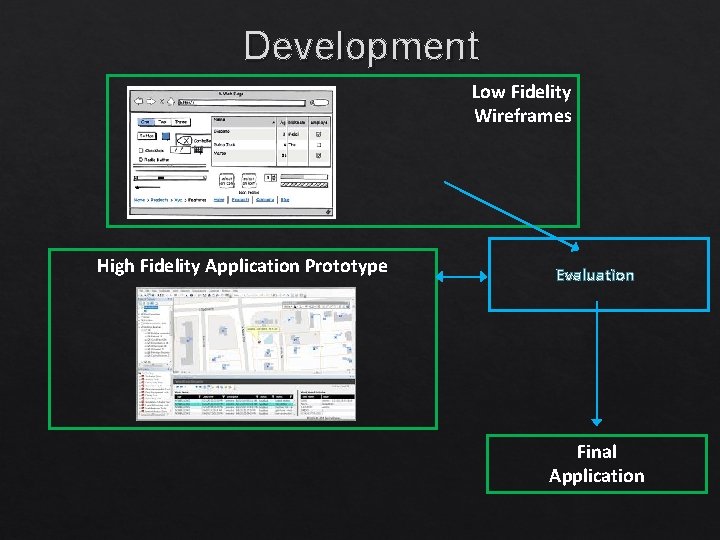
Development Low Fidelity Wireframes High Fidelity Application Prototype Evaluation Final Application
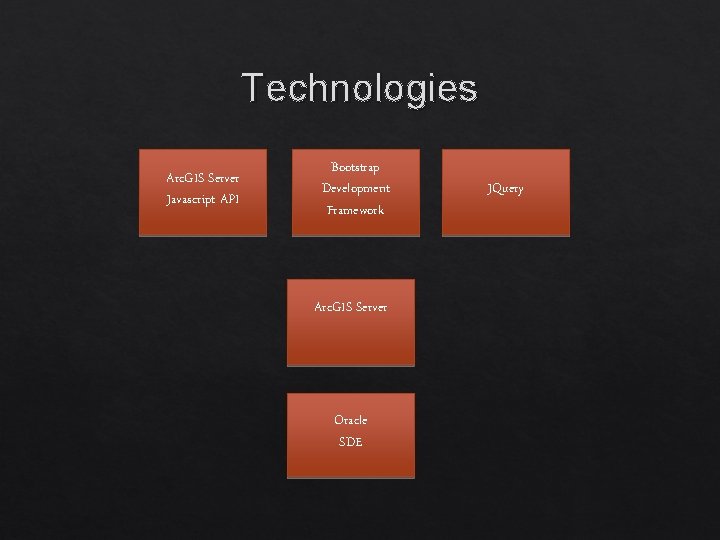
Technologies Arc. GIS Server Javascript API Bootstrap Development Framework Arc. GIS Server Oracle SDE JQuery
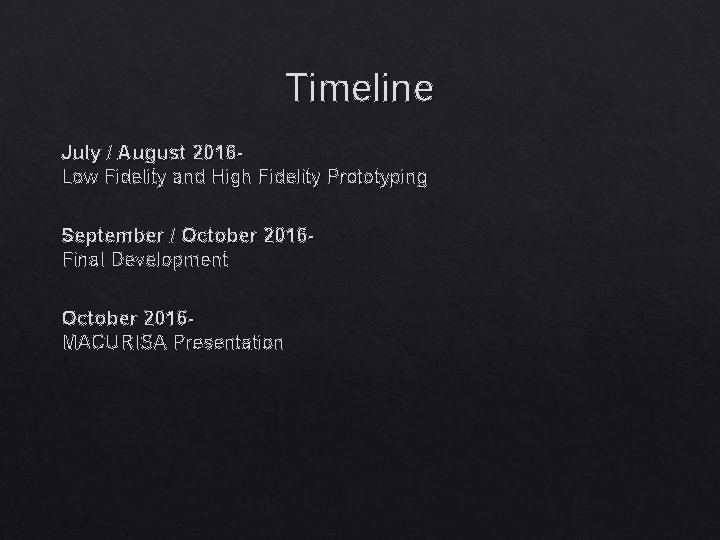
Timeline July / August 2016 Low Fidelity and High Fidelity Prototyping September / October 2016 Final Development October 2016 MACURISA Presentation
References Behrens, Jan, Corné PJM van Elzakker, and Manuela Schmidt. "Testing the Usability of Open. Street. Map's i. D Tool. " The Cartographic Journal 52. 2 (2015): 177 -184. Hackley, M. 2010. How Good is Volunteered Geographical Information? Johnson, Peter A. "Models of direct editing of government spatial data: challenges and constraints to the acceptance of contributed data. " Cartography and Geographic Information Science (2016): 1 -11. Johnson, P. A. , and R. E. Sieber. 2013. “Situating the Adoption of VGI by Government. ” Crowdsourcing Geographic Knowledge , edited by D. Sui, S. Elwood, and M. Goodchild, 65– 81. Dordrecht: Springer Netherlands. http: //www. springerlink. com/index/10. 1007/978 -94 -007 - 4587 -2_5. Jones, C. and Weber, P. (2012). ‘Towards usability engineering for online editors of volunteered geographic information: a perspective on learnability’, Transactions in GIS, 16/4, pp. 523– 544. Nakatsu, Robbie, and Charalambos Iacovou. "An Investigation of User Interface Features of Crowdsourcing Applications. " HCI in Business. Springer International Publishing, 2014. 410 -418. NENA. 2014. NENA Next Generation 9 -1 -1 United States Civic Location Data Exchange Format (CLDXF). NENA-STA-004. 1. 1 -2014 NENA. 2015. NENA Information Document for Development of Site/Structure Address Point GIS Data for 9 -1 -1 NENA-INF-014. 1 -2015 https: //c. ymcdn. com/sites/www. nena. org/resource/resmgr/Standards/NENA-INF-014. 1 -2015_SSAP_INF. pdf Nielsen, J. (1993). Usability Engineering, Academic Press, Boston. Roth, Robert E. "Interactivity and Cartography: A Contemporary Perspective on User Interface and User Experience Design from Geospatial Professionals. " Cartographica: The International Journal for Geographic Information and Geovisualization 50. 2 (2015): 94 -115. Roth, Robert E. , Kevin S. Ross, and Alan M. Mac. Eachren. "User-Centered Design for Interactive Maps: A Case Study in Crime Analysis. " ISPRS International Journal of Geo. Information 4. 1 (2015): 262 -301. Roth, Robert E. , et al. "Wireframing for interactive & web-based geographic visualization: designing the NOAA Lake Level Viewer. " Cartography and Geographic Information Science (2016): 1 -20. Sieber, R. E. , and P. A. Johnson. 2015. “Civic Open Data at a Crossroads: Dominant Models and Current Challenges. ” Government Information Quarterly 32 (3): 308– 315. URL – NJGIN. 2015. Roads. https: //njgin. state. nj. us/oit/gis/NJ_NJGINExplorer/docs/Centerline_Pub_Model. pdf URL- NJGIN. 2016. Address Points. https: //njgin. state. nj. us/download 2/Address/NJ_Address_Model. pdf Robinson, A. C. 2014. “What is Design? ”, www. e-education. psu. edu/geog 583/node/91 Zandbergen, Paul A. 2008. ‘‘A Comparison of Address Point, Parcel and Street Geocoding Techniques. ’’ Computers, Environment and Urban Systems 32: 214 -32. http: //www. sciencedirect. com. ezaccess. libraries. psu. edu/science/article/pii/S 0198971507000890 Zandbergen, P. A. (2009). Geocoding quality and implications for spatial analysis. Geography Compass, 3, 647 -680.