
DEVELOPMENT OF A STRATEGIC NATURAL RESOURCE MANAGEMENT PLAN
- Slides: 16
DEVELOPMENT OF A STRATEGIC NATURAL RESOURCE MANAGEMENT PLAN FOR KWAZULU-NATAL Project Inception Workshop 23 July 2015 Institute of Natural Resources, Pietermaritzburg Project Presentation
WORKSHOP OBJECTIVES 1. Obtain key stakeholder buy in and inputs to the project design and outcomes. § § § Approach. Other processes/initiatives to be considered. Other stakeholders to be involved. § Structure and detail of the outputs. 2. Refine if necessary the structure and focus of Thursday’s workshop.
PROJECT MOTIVATION NRM CURRENT CONTEXT v Move from programmatic approach to a more cohesive & coordinated approach in developing and leading an NRM sector. v Annual budget of R 1. 8 Billion – but significantly higher demand (approx R 12 billion). v Budget shortfall demands increased partnership and investment from the PVT sector - this requires: § Clearly show benefits (economic & ecological). § Efficiency demanded by Pvt sector.
PROJECT MOTIVATION v Spotlight on NRM § Major element of Green Economy to be built on. § Potential to assist in water security given national crisis. v Need to Prove ‘Ecological Infrastructure’ Concept § Job creation benefits adequate to secure finance in past – now need to prove ecological benefits. § Application for SIP 19. § Test cases for EI protecting built infrastructure – R 40 million invested in Ntebelanga Catchment. § Longer term view.
PROJECT MOTIVATION NRM SHIFT - Towards integration v Research contracts. v MAREP forums. v Institutional Review – inform how programme structure may change. . v NRM Tender Issued - Overall Review of Programmes (3 year) v Outcomes Based Objectives (SMART Goals) § E. g. Wfor Wetlands: ‘with a 30 % improvement in the regulation of seasonal flows, reduction of river siltation, and rehabilitation of wetland biodiversity”. § Focus on outcomes NOT just outputs - emphasizes the need for long term M&E of ecological benefits. v Regional catchment test cases for change – Ntabelanga/Medupi/u. Mngeni.
PROJECT MOTIVATION LEGAL REFORM/Compliance v Compliance with Existing Laws § Ongoing challenges of existing EIA, WULA etc. v Compliance with New Legislation § Alien invasive species management regulations.
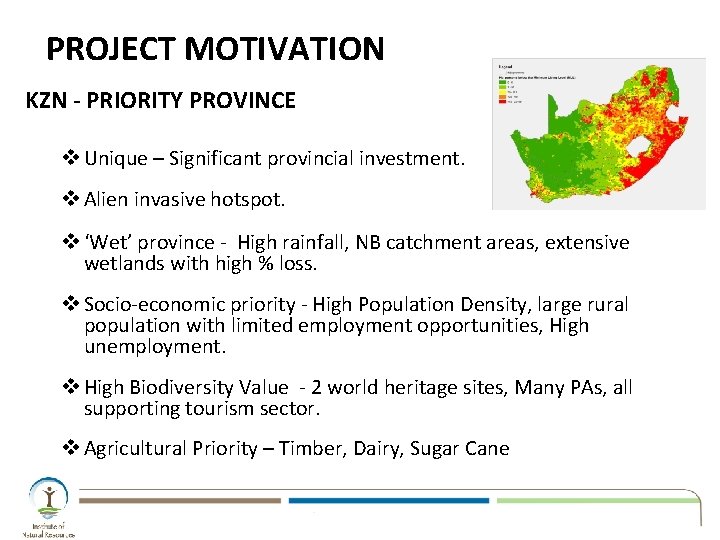
PROJECT MOTIVATION KZN - PRIORITY PROVINCE v Unique – Significant provincial investment. v Alien invasive hotspot. v ‘Wet’ province - High rainfall, NB catchment areas, extensive wetlands with high % loss. v Socio-economic priority - High Population Density, large rural population with limited employment opportunities, High unemployment. v High Biodiversity Value - 2 world heritage sites, Many PAs, all supporting tourism sector. v Agricultural Priority – Timber, Dairy, Sugar Cane
PROJECT MOTIVATION KZN – HISTORY & CHALLENGES v Organisations working in silo’s with no effective mechanisms for planning and strategizing. v Original agreements between DEA NRM and IASP for co-ordination fallen away. v Duplication of effort spatially and no coordinated reporting. v Organisations having different objectives and mandates. v Priority projects such as Protected areas don’t have enough funding to reach maintenance levels. v Challenges with funding allocations and funding prioritisation within KZN has resulted in approximately 60 000 ha reverting back to initial clearing.
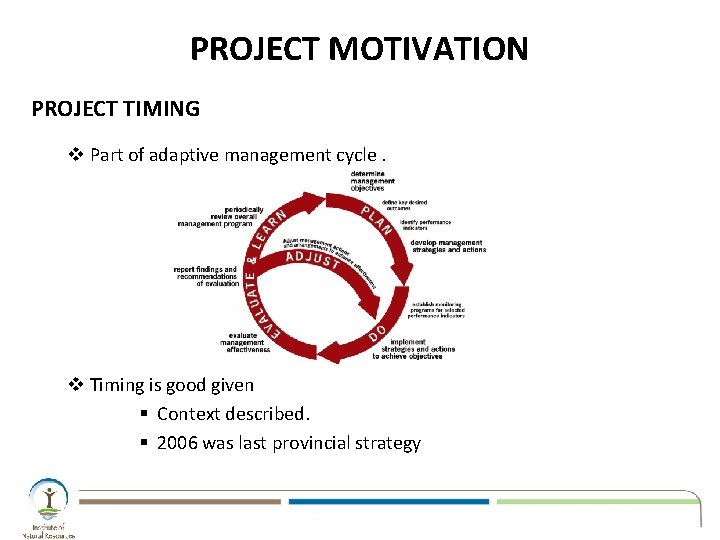
PROJECT MOTIVATION PROJECT TIMING v Part of adaptive management cycle. v Timing is good given § Context described. § 2006 was last provincial strategy
SUMMARY It is a an exciting period of change for NRM in SA as a whole. KZN has the opportunity to lead the way in terms of coordinated planning at provincial scale. INR excited to be involved & hope to assist in achieving meaningful, supportive and useable strategy.
PROJECT OVERVIEW Aim Optimise government expenditure on NRM in Kwa. Zulu-Natal and thereby also the social and ecological benefits through the development of a 5 year strategic plan that coordinates the operations of all NRM agencies across the province” Requirements § § § § Focus - provincial priorities, but cognizant of national context. Inclusive – involve all NRM agencies and role players. Supportive – of mandates. Understanding – of restrictions and limitations. Build - on success. Legal - compliant. Useable – relevant and practical. Bold & innovative – embrace change.
GUIDING PRINCIPLES v No change simply for the purpose change – must be justified. v There are various initiatives driving broader change. v Starting point – is improve on existing structures, process etc. reduce inefficiencies, improve efficacy i. t. o. priorities and establish incentive to all involved to implement the strategy. v Cover full life cycle – Planning, implementation, M&E.
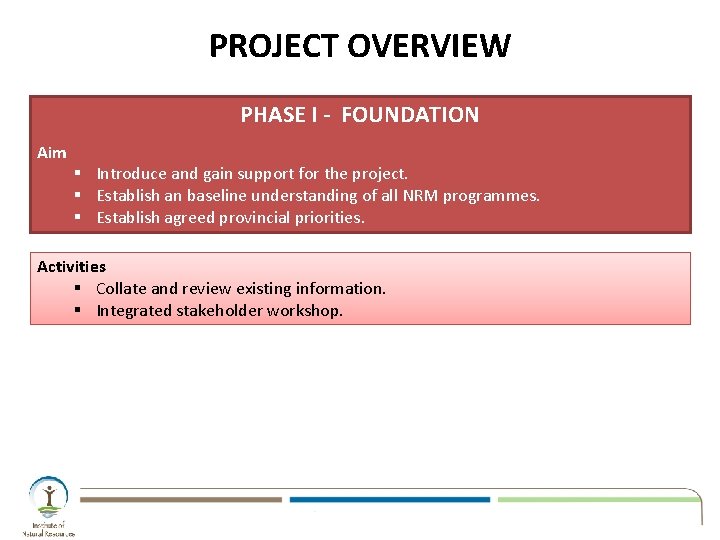
PROJECT OVERVIEW PHASE I - FOUNDATION Aim § Introduce and gain support for the project. § Establish an baseline understanding of all NRM programmes. § Establish agreed provincial priorities. Activities § Collate and review existing information. § Integrated stakeholder workshop.
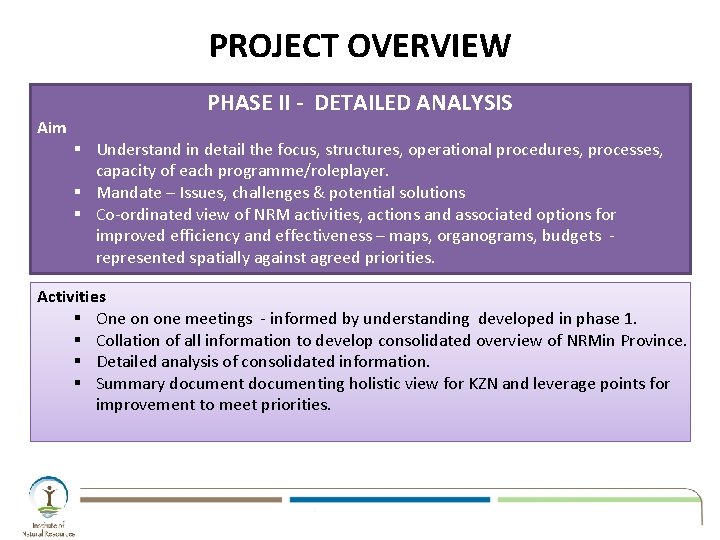
PROJECT OVERVIEW Aim PHASE II - DETAILED ANALYSIS § Understand in detail the focus, structures, operational procedures, processes, capacity of each programme/roleplayer. § Mandate – Issues, challenges & potential solutions § Co-ordinated view of NRM activities, actions and associated options for improved efficiency and effectiveness – maps, organograms, budgets represented spatially against agreed priorities. Activities § One on one meetings - informed by understanding developed in phase 1. § Collation of all information to develop consolidated overview of NRMin Province. § Detailed analysis of consolidated information. § Summary documenting holistic view for KZN and leverage points for improvement to meet priorities.
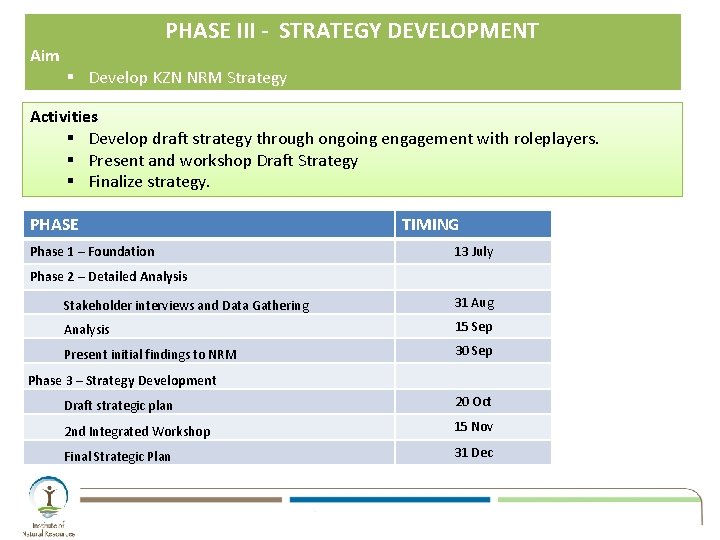
Aim PHASE III - STRATEGY DEVELOPMENT § Develop KZN NRM Strategy Activities § Develop draft strategy through ongoing engagement with roleplayers. § Present and workshop Draft Strategy § Finalize strategy. PHASE Phase 1 – Foundation TIMING 13 July Phase 2 – Detailed Analysis Stakeholder interviews and Data Gathering 31 Aug Analysis 15 Sep Present initial findings to NRM 30 Sep Phase 3 – Strategy Development Draft strategic plan 20 Oct 2 nd Integrated Workshop 15 Nov Final Strategic Plan 31 Dec
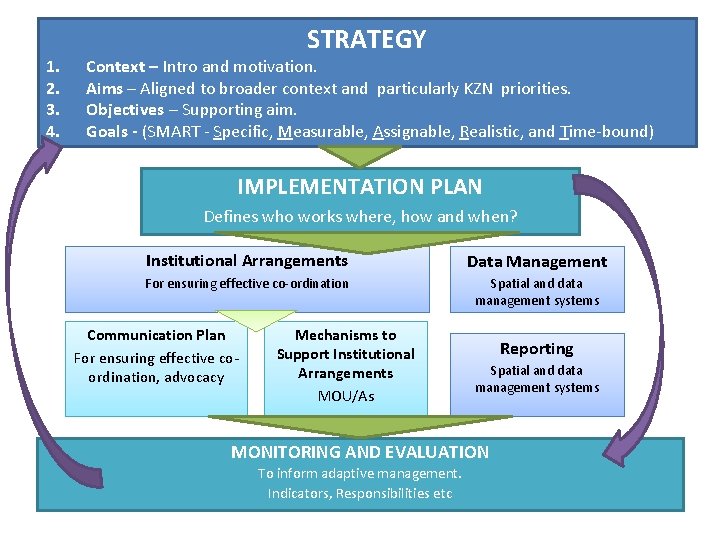
1. 2. 3. 4. STRATEGY Context – Intro and motivation. Aims – Aligned to broader context and particularly KZN priorities. Objectives – Supporting aim. Goals - (SMART - Specific, Measurable, Assignable, Realistic, and Time-bound) IMPLEMENTATION PLAN Defines who works where, how and when? Institutional Arrangements Data Management For ensuring effective co-ordination Spatial and data management systems Communication Plan For ensuring effective coordination, advocacy Mechanisms to Support Institutional Arrangements MOU/As Reporting Spatial and data management systems MONITORING AND EVALUATION To inform adaptive management. Indicators, Responsibilities etc