
Development of a One UN Training Service Platform

- Slides: 18
Development of a One UN Training Service Platform for Climate Change: Concept, Progress, Next Steps UNDP/UNEP/UNITAR Side Event, Bonn Climate Change Talks, 5 June 2009
Overview of Presentation 1. Introduction and Context 2. TSP 4 CC Service Areas 1. Knowledge Management 2. Development of a One UN CC Training Package 3. Training Delivery through One UN Collaboration 3. Pilot Phase: 2009 -2010
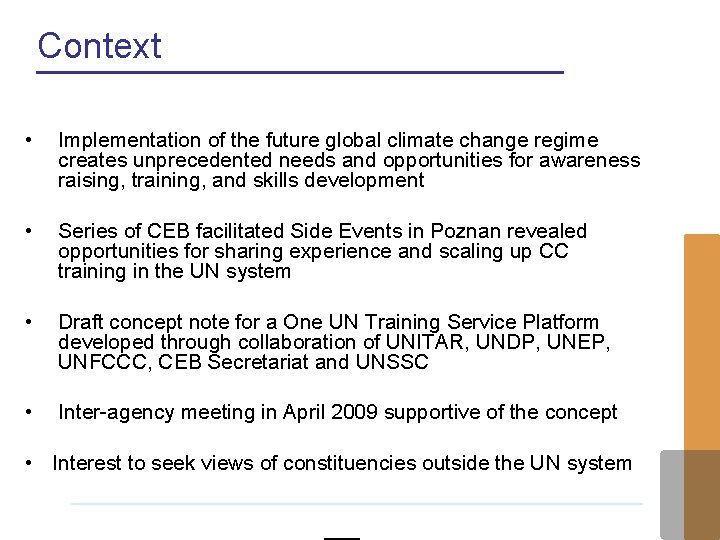
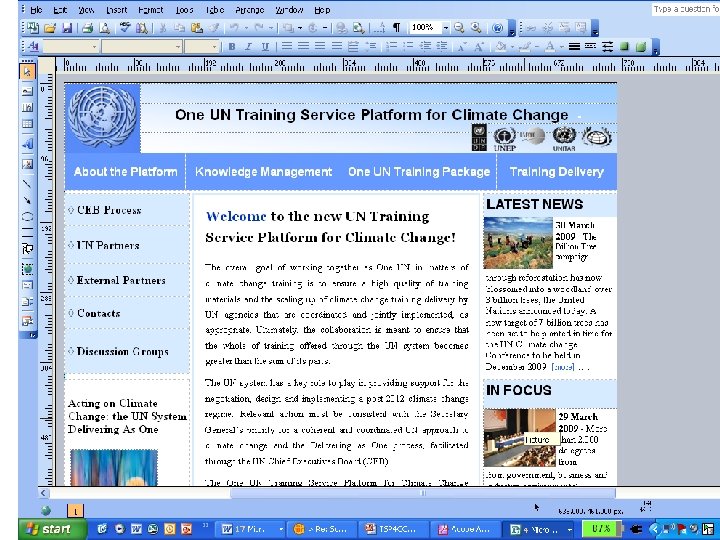
Context • Implementation of the future global climate change regime creates unprecedented needs and opportunities for awareness raising, training, and skills development • Series of CEB facilitated Side Events in Poznan revealed opportunities for sharing experience and scaling up CC training in the UN system • Draft concept note for a One UN Training Service Platform developed through collaboration of UNITAR, UNDP, UNEP, UNFCCC, CEB Secretariat and UNSSC • Inter-agency meeting in April 2009 supportive of the concept • Interest to seek views of constituencies outside the UN system
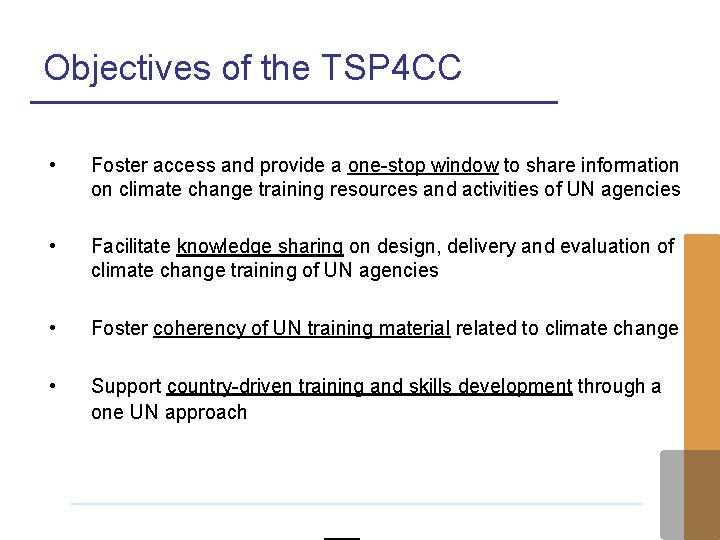
Objectives of the TSP 4 CC • Foster access and provide a one-stop window to share information on climate change training resources and activities of UN agencies • Facilitate knowledge sharing on design, delivery and evaluation of climate change training of UN agencies • Foster coherency of UN training material related to climate change • Support country-driven training and skills development through a one UN approach
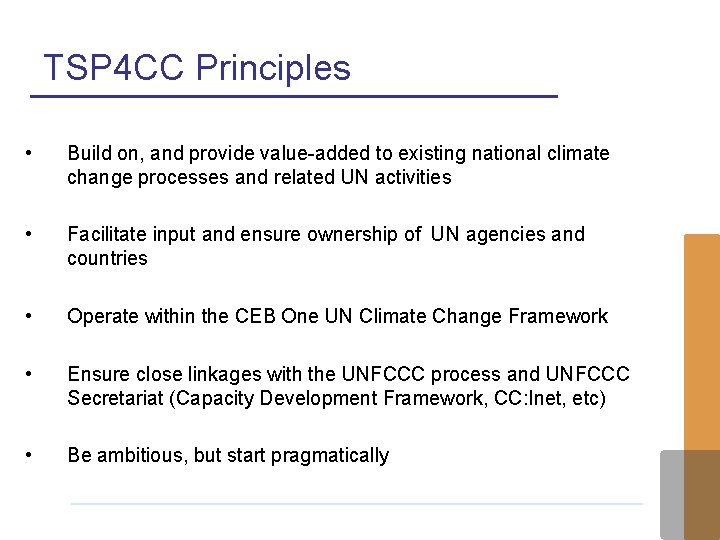
TSP 4 CC Principles • Build on, and provide value-added to existing national climate change processes and related UN activities • Facilitate input and ensure ownership of UN agencies and countries • Operate within the CEB One UN Climate Change Framework • Ensure close linkages with the UNFCCC process and UNFCCC Secretariat (Capacity Development Framework, CC: Inet, etc) • Be ambitious, but start pragmatically
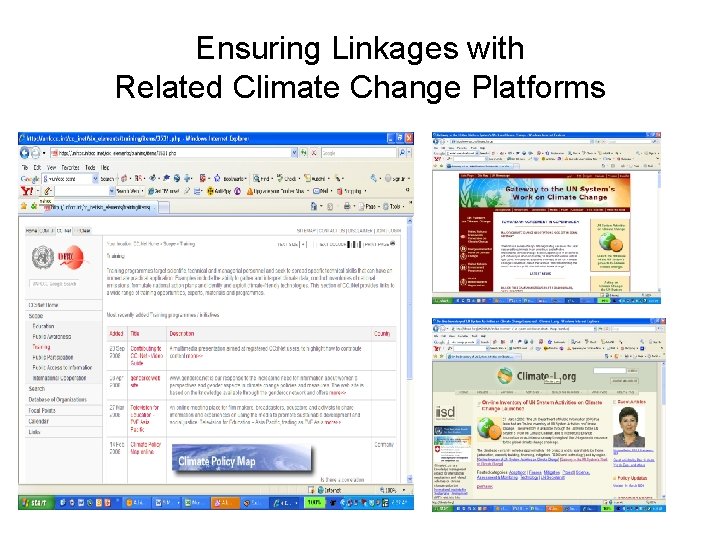
Ensuring Linkages with Related Climate Change Platforms
2. TSP 4 CC Activity and Service Areas
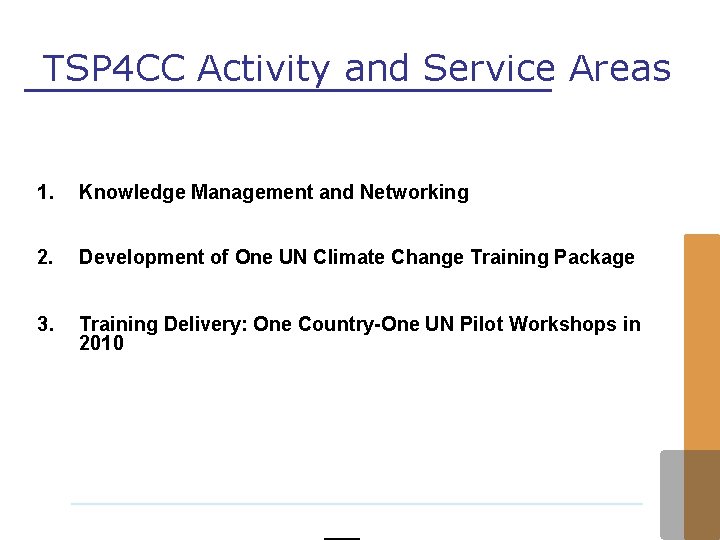
TSP 4 CC Activity and Service Areas 1. Knowledge Management and Networking 2. Development of One UN Climate Change Training Package 3. Training Delivery: One Country-One UN Pilot Workshops in 2010
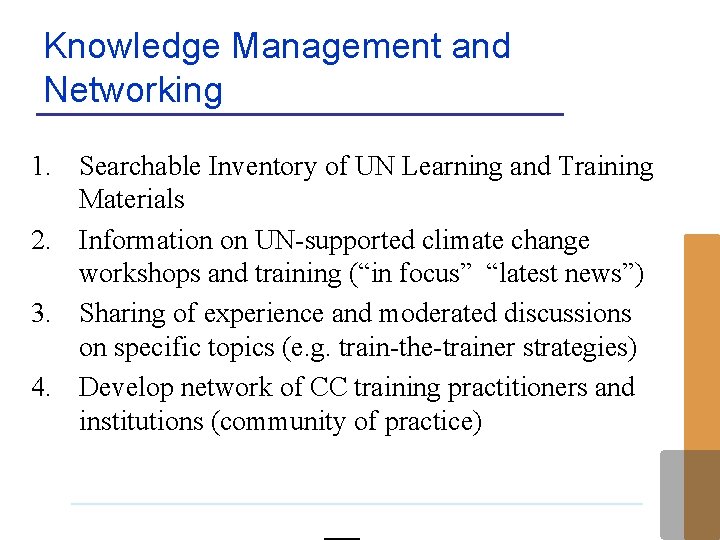
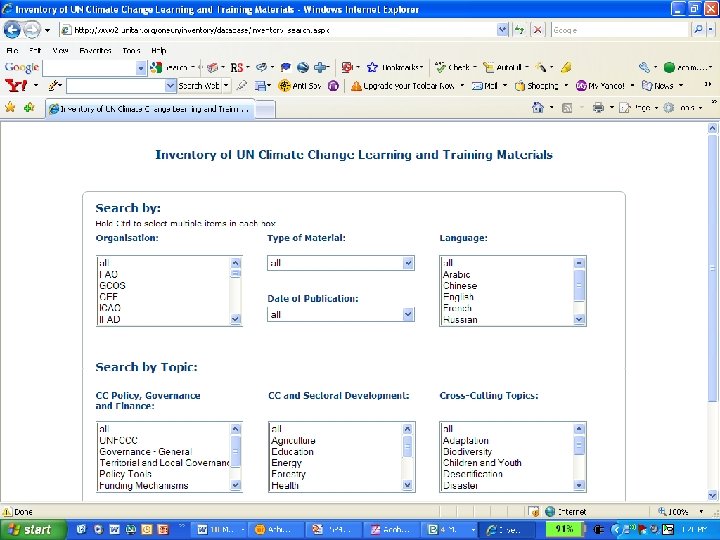
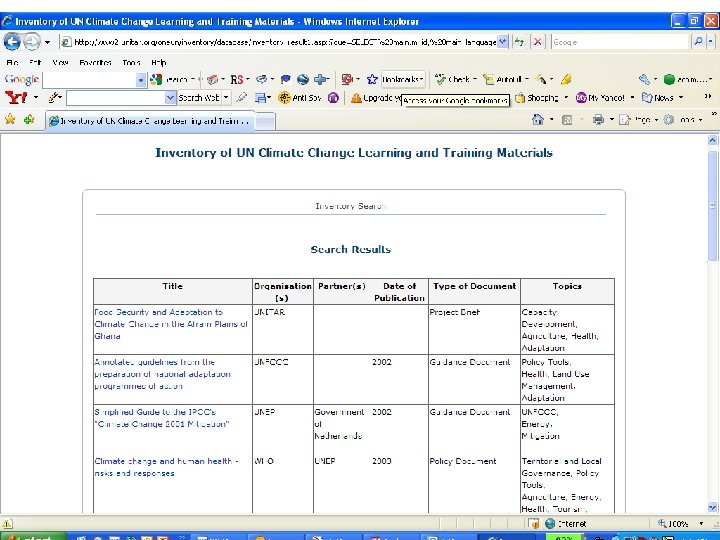
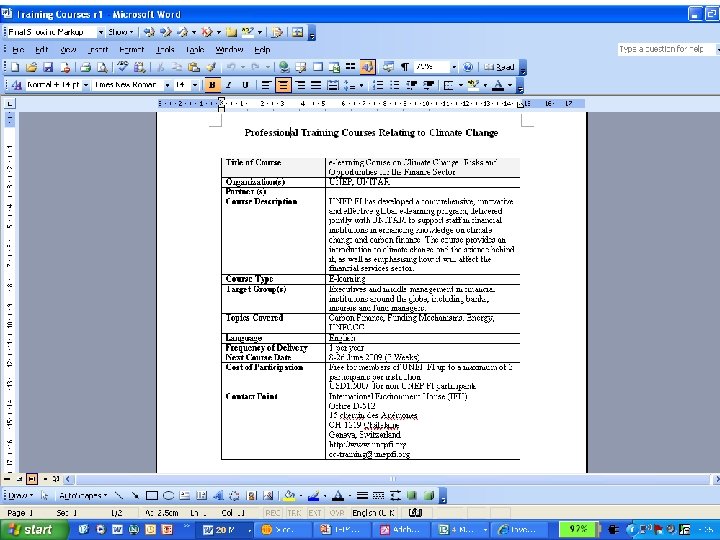
Knowledge Management and Networking 1. Searchable Inventory of UN Learning and Training Materials 2. Information on UN-supported climate change workshops and training (“in focus” “latest news”) 3. Sharing of experience and moderated discussions on specific topics (e. g. train-the-trainer strategies) 4. Develop network of CC training practitioners and institutions (community of practice)
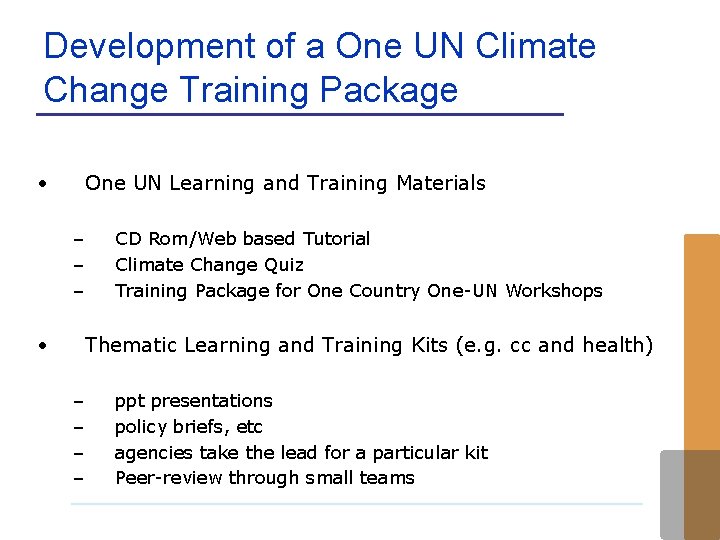
Development of a One UN Climate Change Training Package • One UN Learning and Training Materials – – – • CD Rom/Web based Tutorial Climate Change Quiz Training Package for One Country One-UN Workshops Thematic Learning and Training Kits (e. g. cc and health) – – ppt presentations policy briefs, etc agencies take the lead for a particular kit Peer-review through small teams
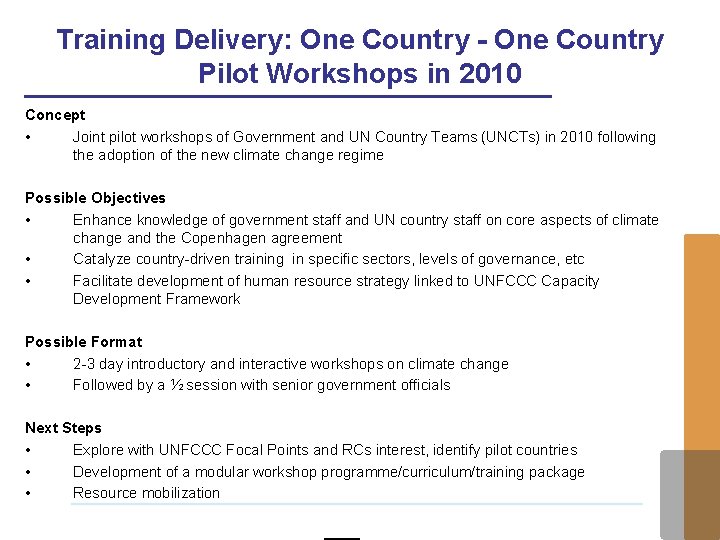
Training Delivery: One Country - One Country Pilot Workshops in 2010 Concept • Joint pilot workshops of Government and UN Country Teams (UNCTs) in 2010 following the adoption of the new climate change regime Possible Objectives • Enhance knowledge of government staff and UN country staff on core aspects of climate change and the Copenhagen agreement • Catalyze country-driven training in specific sectors, levels of governance, etc • Facilitate development of human resource strategy linked to UNFCCC Capacity Development Framework Possible Format • 2 -3 day introductory and interactive workshops on climate change • Followed by a ½ session with senior government officials Next Steps • Explore with UNFCCC Focal Points and RCs interest, identify pilot countries • Development of a modular workshop programme/curriculum/training package • Resource mobilization
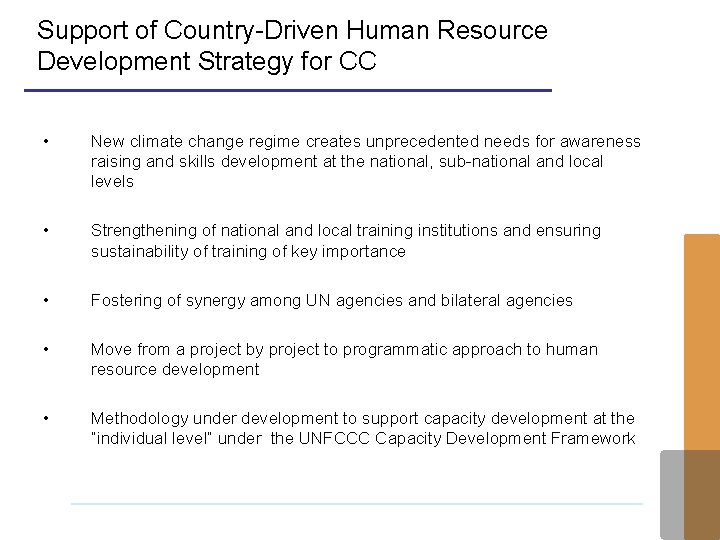
Support of Country-Driven Human Resource Development Strategy for CC • New climate change regime creates unprecedented needs for awareness raising and skills development at the national, sub-national and local levels • Strengthening of national and local training institutions and ensuring sustainability of training of key importance • Fostering of synergy among UN agencies and bilateral agencies • Move from a project by project to programmatic approach to human resource development • Methodology under development to support capacity development at the “individual level” under the UNFCCC Capacity Development Framework
TSP 4 CC Implementation and Contact Information • Steering committee of UNDP, UNEP, UNFCCC, UNSSC, CEB Secretariat, IFAD, UNHABITAT, UNFPA and UNITAR • Committee open to all UN organizations • Interest to engage in dialogue and collaboration with Member States and its training institutions • UNITAR provides “secretariat” and executing services for TSP 4 CC core activities • Workshop planned for September/October 2009 • Requests for information should be sent to untsp 4 cc@unitar. org
Thank you for your attention !