
Development of a DrugCoated Scoring Balloon Preliminary Results
Development of a Drug-Coated Scoring Balloon Preliminary Results from the PATENT-C FIM Study Gary Gershony, MD, FACC, FSCAI, FAHA, FRCPC Director of Cardiovascular Research, Education & Technology John Muir Health and Cardiovascular Institute, Concord, CA

Disclosure Statement of Financial Interest Within the past 12 months, I or my spouse/partner have had a financial interest/arrangement or affiliation with the organization(s) listed below. Affiliation/Financial Relationship Grant/Research Support Consulting Fees/Honoraria Major Stock Shareholder/Equity Royalty Income Ownership/Founder Intellectual Property Rights Other Financial Benefit Company Angio. Score, Inc.
CRT 2013 POBA Inadequacies – “Unmet Clinical Need” DES/BMS/BVS pre-dilatation (geographic miss, inadequate stent expansion/wall apposition) Heavily calcified/hard lesions ISR (balloon slippage/geographic miss, tissue recoil) Diffuse/small vessel disease (poor acute results) Bifurcation side branch ostial lesions Unpredictable results and high rate (≥ 40%) of uncontrolled dissections requiring bailout stenting High rate of restenosis (30 -50%)
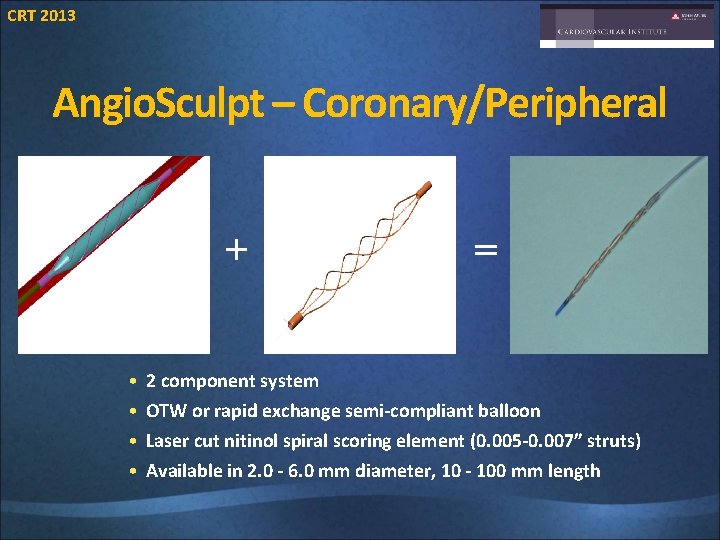
CRT 2013 Angio. Sculpt – Coronary/Peripheral + • • = 2 component system OTW or rapid exchange semi-compliant balloon Laser cut nitinol spiral scoring element (0. 005 -0. 007” struts) Available in 2. 0 - 6. 0 mm diameter, 10 - 100 mm length
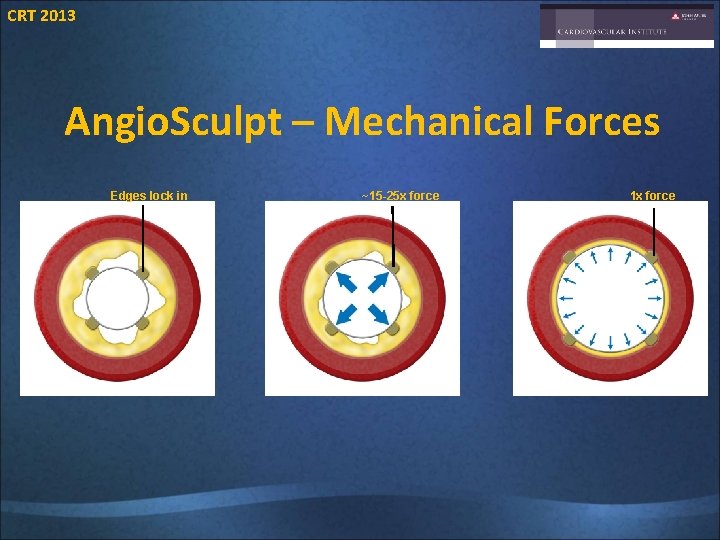
CRT 2013 Angio. Sculpt – Mechanical Forces Edges lock in ~15 -25 x force 1 x force

CRT 2013 Angio. Sculpt – Mechanism of Action Acute histopathology specimen of a patient post-POBA demonstrating extensive dissection and laceration (yellow arrows) Post-Angio. Sculpt scoring of porcine ISR (yellow arrows) Human IVUS demonstrating scoring post-Angio. Sculpt (yellow arrows)
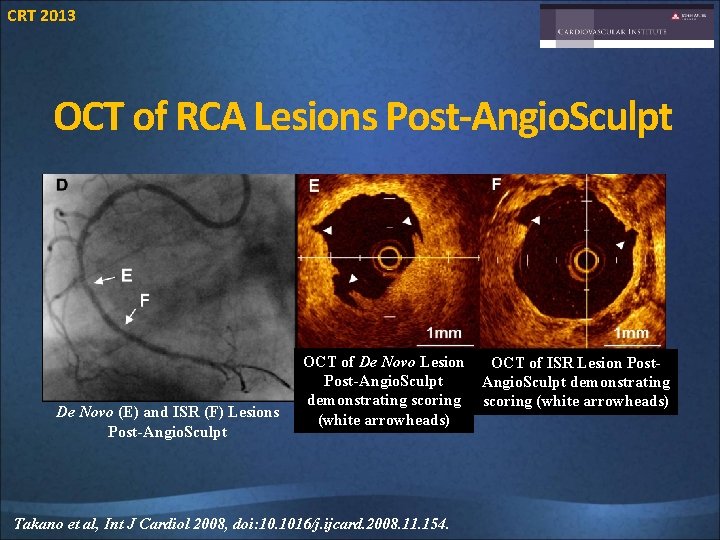
CRT 2013 OCT of RCA Lesions Post-Angio. Sculpt De Novo (E) and ISR (F) Lesions Post-Angio. Sculpt OCT of De Novo Lesion Post-Angio. Sculpt demonstrating scoring (white arrowheads) Takano et al, Int J Cardiol 2008, doi: 10. 1016/j. ijcard. 2008. 11. 154. OCT of ISR Lesion Post. Angio. Sculpt demonstrating scoring (white arrowheads)
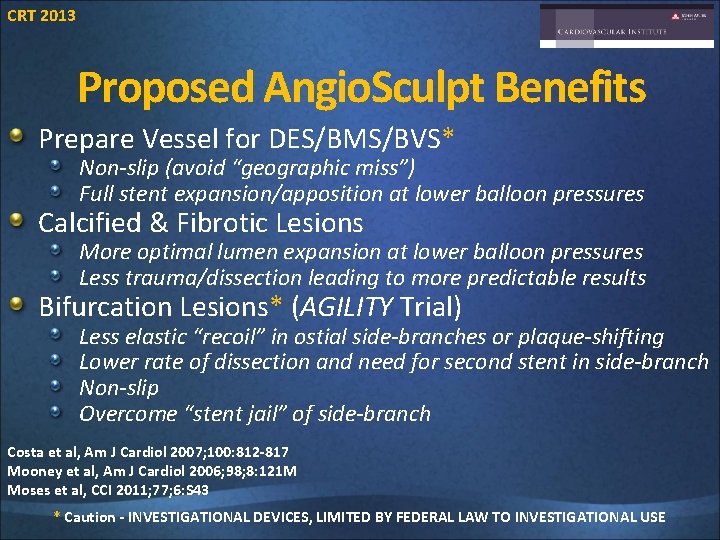
CRT 2013 Proposed Angio. Sculpt Benefits Prepare Vessel for DES/BMS/BVS* Non-slip (avoid “geographic miss”) Full stent expansion/apposition at lower balloon pressures Calcified & Fibrotic Lesions More optimal lumen expansion at lower balloon pressures Less trauma/dissection leading to more predictable results Bifurcation Lesions* (AGILITY Trial) Less elastic “recoil” in ostial side-branches or plaque-shifting Lower rate of dissection and need for second stent in side-branch Non-slip Overcome “stent jail” of side-branch Costa et al, Am J Cardiol 2007; 100: 812 -817 Mooney et al, Am J Cardiol 2006; 98; 8: 121 M Moses et al, CCI 2011; 77; 6: S 43 * Caution - INVESTIGATIONAL DEVICES, LIMITED BY FEDERAL LAW TO INVESTIGATIONAL USE
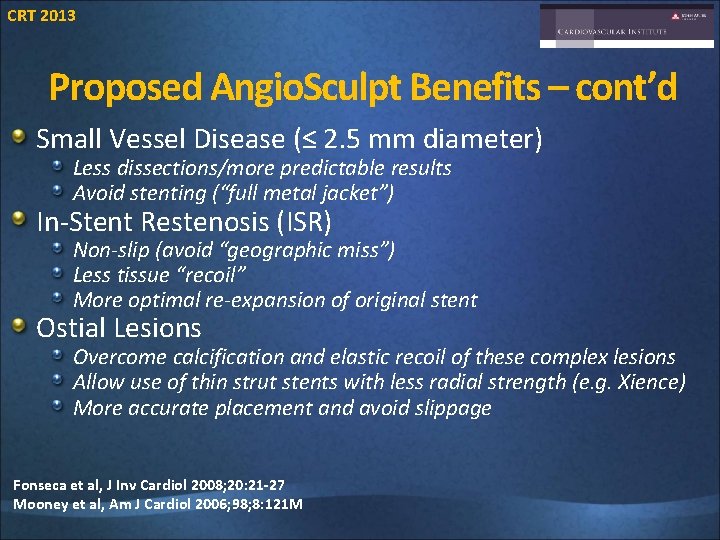
CRT 2013 Proposed Angio. Sculpt Benefits – cont’d Small Vessel Disease (≤ 2. 5 mm diameter) Less dissections/more predictable results Avoid stenting (“full metal jacket”) In-Stent Restenosis (ISR) Non-slip (avoid “geographic miss”) Less tissue “recoil” More optimal re-expansion of original stent Ostial Lesions Overcome calcification and elastic recoil of these complex lesions Allow use of thin strut stents with less radial strength (e. g. Xience) More accurate placement and avoid slippage Fonseca et al, J Inv Cardiol 2008; 20: 21 -27 Mooney et al, Am J Cardiol 2006; 98; 8: 121 M
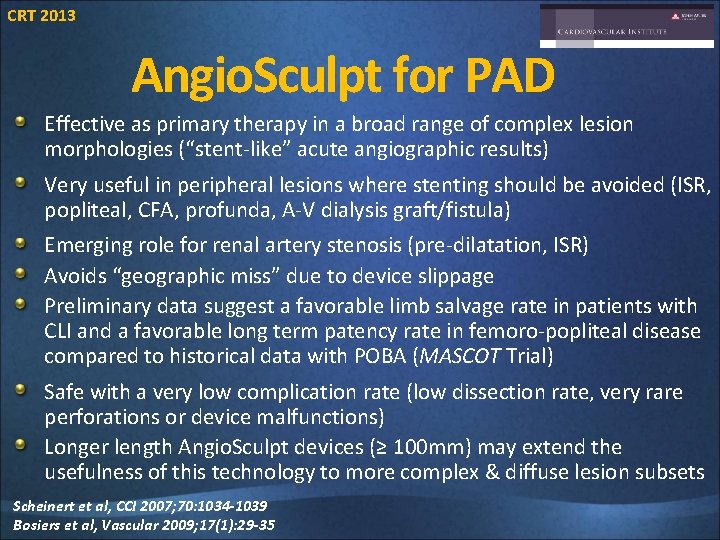
CRT 2013 Angio. Sculpt for PAD Effective as primary therapy in a broad range of complex lesion morphologies (“stent-like” acute angiographic results) Very useful in peripheral lesions where stenting should be avoided (ISR, popliteal, CFA, profunda, A-V dialysis graft/fistula) Emerging role for renal artery stenosis (pre-dilatation, ISR) Avoids “geographic miss” due to device slippage Preliminary data suggest a favorable limb salvage rate in patients with CLI and a favorable long term patency rate in femoro-popliteal disease compared to historical data with POBA (MASCOT Trial) Safe with a very low complication rate (low dissection rate, very rare perforations or device malfunctions) Longer length Angio. Sculpt devices (≥ 100 mm) may extend the usefulness of this technology to more complex & diffuse lesion subsets Scheinert et al, CCI 2007; 70: 1034 -1039 Bosiers et al, Vascular 2009; 17(1): 29 -35
CRT 2013 . . . but no proven benefit in reducing restenosis compared to POBA
CRT 2013 Why Consider a Drug-Coated Angio. Sculpt? • Results with drug-coated POBA (e. g. , Paccocath) are very promising • May be able to deliver drug more effectively with a scoring element • Better acute luminal results with Angio. Sculpt compared to POBA • More optimal re-expansion of original stent in ISR treatment • Lower rate of dissection with Angio. Sculpt compared to POBA • Minimal slippage or “geographic miss” with Angio. Sculpt • May be able to avoid adjunctive stenting All of the above may allow a drug-coated Angio. Sculpt to provide “stand alone” therapy for a wide range of coronary and peripheral arterial lesions with a significantly lower restenosis rate than POBA or allow the use of BMS/BVS rather than DES
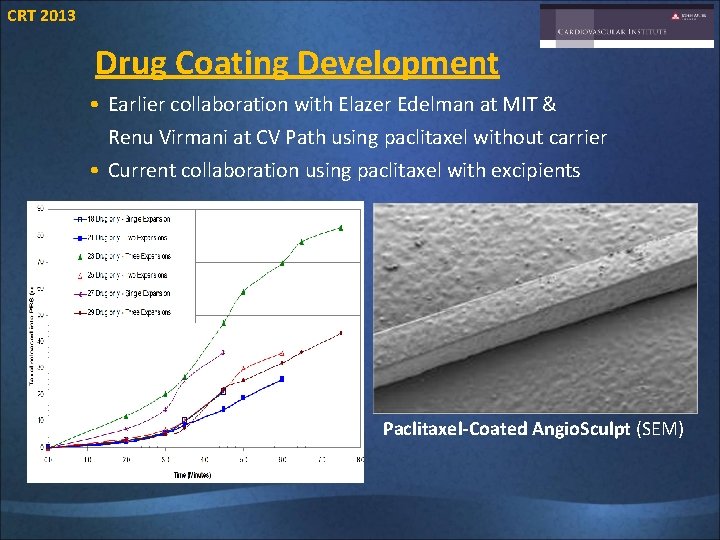
CRT 2013 Drug Coating Development • Earlier collaboration with Elazer Edelman at MIT & Renu Virmani at CV Path using paclitaxel without carrier • Current collaboration using paclitaxel with excipients Paclitaxel-Coated Angio. Sculpt (SEM)
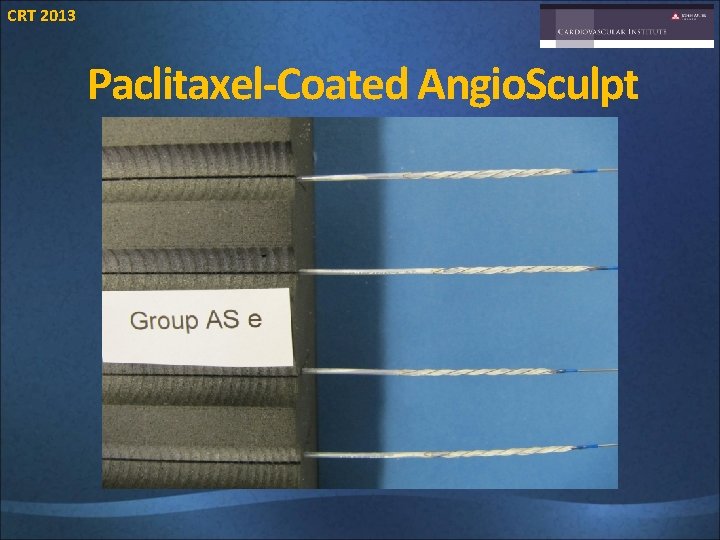
CRT 2013 Paclitaxel-Coated Angio. Sculpt
CRT 2013 Pre-Clinical Studies: Pharmaco-Kinetics Porcine coronary overstretch model (8 pigs, 24 vessels) Coatings: non-polymers used in other intra-vascular clinical applications Dose of paclitaxel: 3 µgm/mm 2 (similar to Paccocath) Angio. Sculpt 3. 5 x 20 mm balloons used without stents Loss of drug during transit was low (2 -15%, depending on coating) 8 -11% of initial drug was delivered to vessel wall acutely (@ 10 -30’ posttreatment) during 60 second inflation Residual drug on Angio. Sculpt was 11 -18%, depending on coating
CRT 2013 Successful Inhibition of Coronary Neo-Intimal Hyperplasia in Swine Using a Novel Paclitaxel. Coated Scoring Balloon Catheter Gary Gershony, Bruno Scheller, Ulrich Speck, Bodo Cremers John Muir CVI, Concord, CA, Klinik für Innere Medizin III, Universitätsklinikum des Saarlandes, Homburg/Saar, Germany, Abteilung für Radiologie, Experimentelle Radiologie, Charité, Universitätsklinikum, Berlin, Germany J Am Coll Cardiol 2011; 57; E 1662
CRT 2013 Pre-Clinical Studies: Chronic Efficacy Porcine coronary overstretch ISR model (~1. 2: 1) 30 pigs, 60 vessels (LAD, LCx) BMS (“Bx Velocity”) ~14 mm length 5 treatment arms: PTX*-coated POBA, “bare” Angio. Sculpt, PTXcoated Angio. Sculpt (3 versions), all 3. 5 x 20 mm PTX dose/balloon ~900 µgm (~3 µgm/mm 2) Follow-up QCA & quantitative histomorphometry at 30 days 3 animals died during f/u (1 control, 1 Paccocath & 1 coated ASC) *PTX = paclitaxel
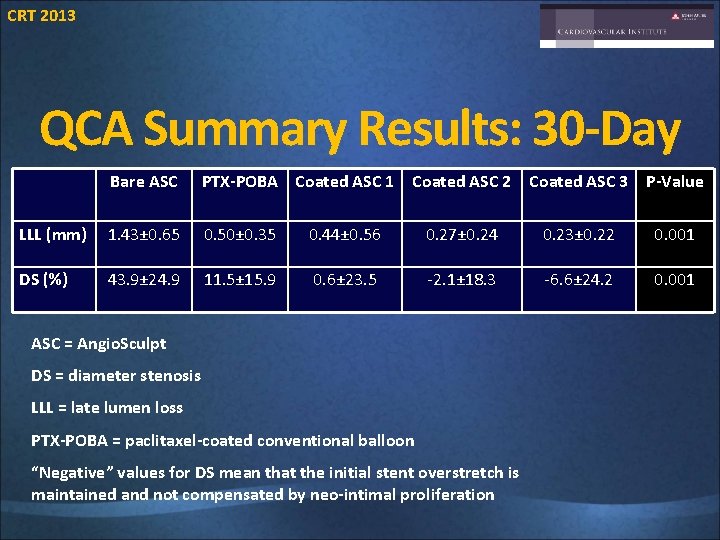
CRT 2013 QCA Summary Results: 30 -Day Bare ASC PTX-POBA Coated ASC 1 Coated ASC 2 Coated ASC 3 P-Value LLL (mm) 1. 43± 0. 65 0. 50± 0. 35 0. 44± 0. 56 0. 27± 0. 24 0. 23± 0. 22 0. 001 DS (%) 43. 9± 24. 9 11. 5± 15. 9 0. 6± 23. 5 -2. 1± 18. 3 -6. 6± 24. 2 0. 001 ASC = Angio. Sculpt DS = diameter stenosis LLL = late lumen loss PTX-POBA = paclitaxel-coated conventional balloon “Negative” values for DS mean that the initial stent overstretch is maintained and not compensated by neo-intimal proliferation
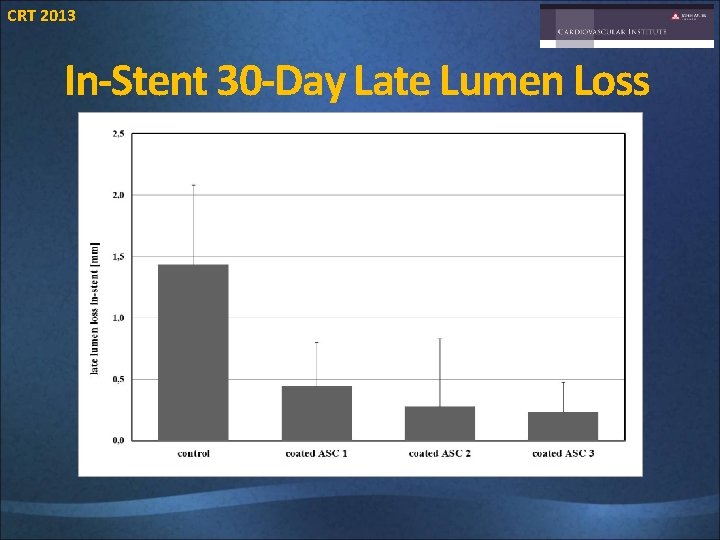
CRT 2013 In-Stent 30 -Day Late Lumen Loss
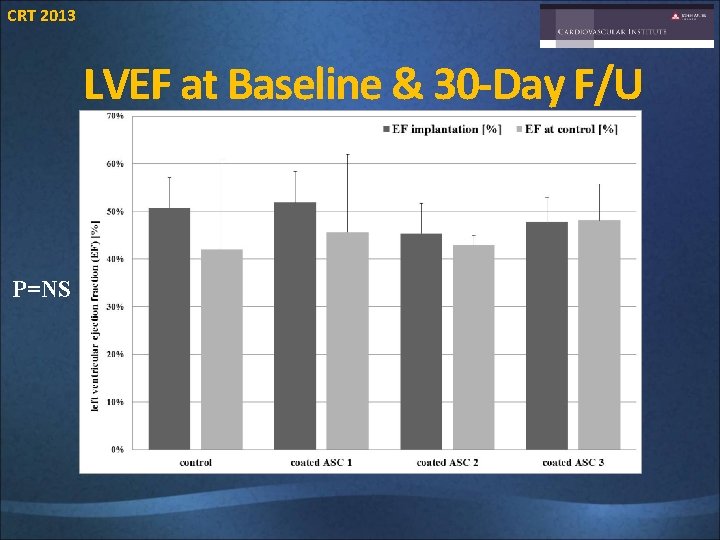
CRT 2013 LVEF at Baseline & 30 -Day F/U P=NS
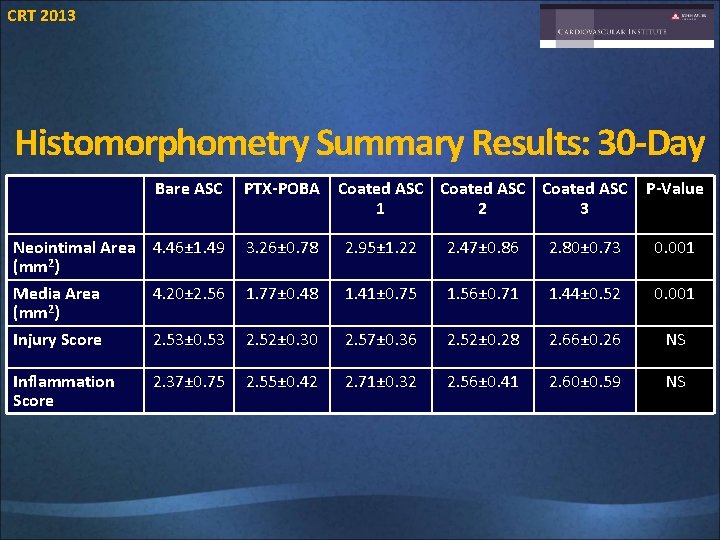
CRT 2013 Histomorphometry Summary Results: 30 -Day Bare ASC PTX-POBA Coated ASC 1 2 3 P-Value Neointimal Area 4. 46± 1. 49 (mm 2) Media Area 4. 20± 2. 56 (mm 2) Injury Score 2. 53± 0. 53 3. 26± 0. 78 2. 95± 1. 22 2. 47± 0. 86 2. 80± 0. 73 0. 001 1. 77± 0. 48 1. 41± 0. 75 1. 56± 0. 71 1. 44± 0. 52 0. 001 2. 52± 0. 30 2. 57± 0. 36 2. 52± 0. 28 2. 66± 0. 26 NS Inflammation Score 2. 55± 0. 42 2. 71± 0. 32 2. 56± 0. 41 2. 60± 0. 59 NS 2. 37± 0. 75
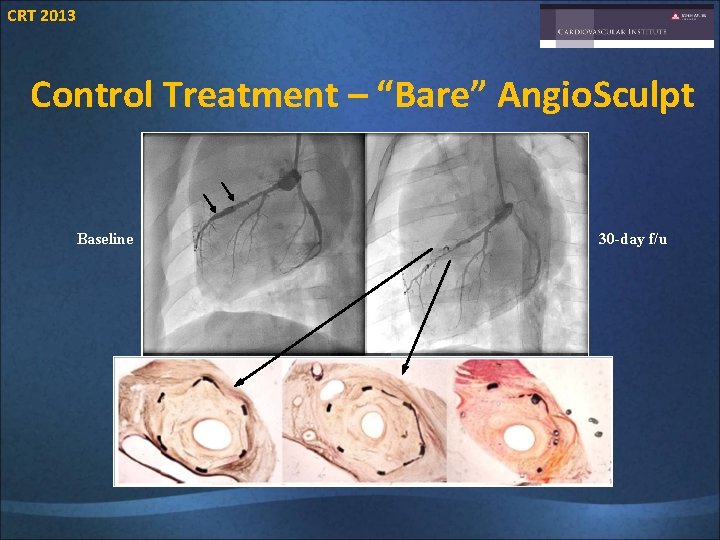
CRT 2013 Control Treatment – “Bare” Angio. Sculpt Baseline 30 -day f/u
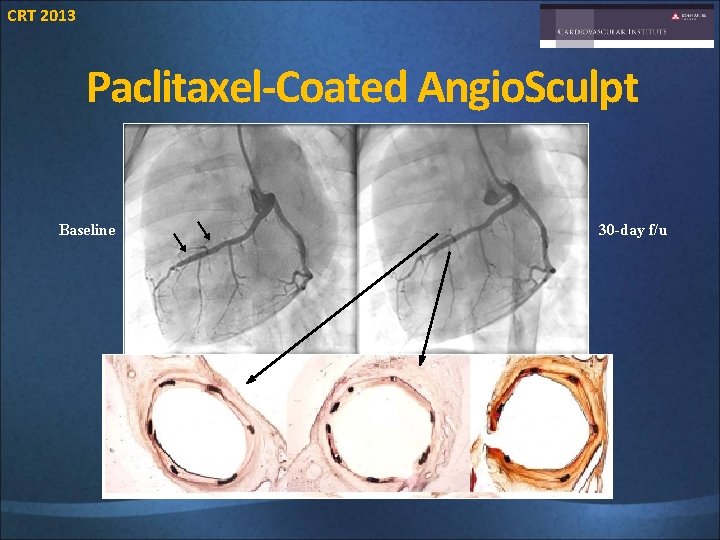
CRT 2013 Paclitaxel-Coated Angio. Sculpt Baseline 30 -day f/u
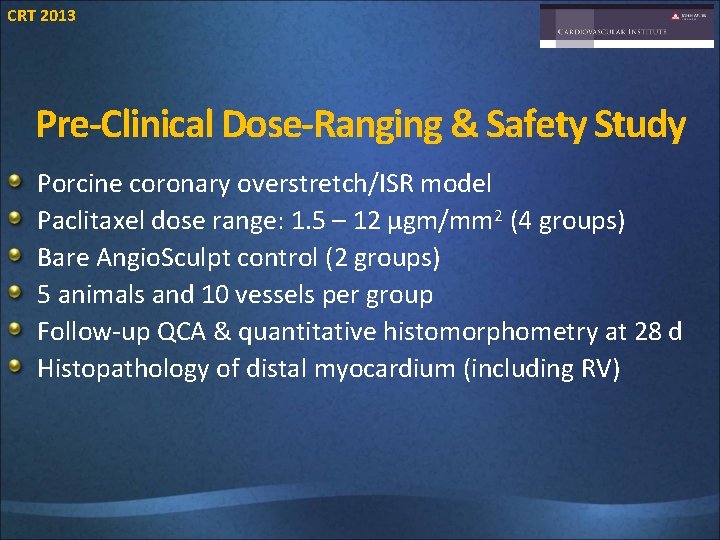
CRT 2013 Pre-Clinical Dose-Ranging & Safety Study Porcine coronary overstretch/ISR model Paclitaxel dose range: 1. 5 – 12 µgm/mm 2 (4 groups) Bare Angio. Sculpt control (2 groups) 5 animals and 10 vessels per group Follow-up QCA & quantitative histomorphometry at 28 d Histopathology of distal myocardium (including RV)
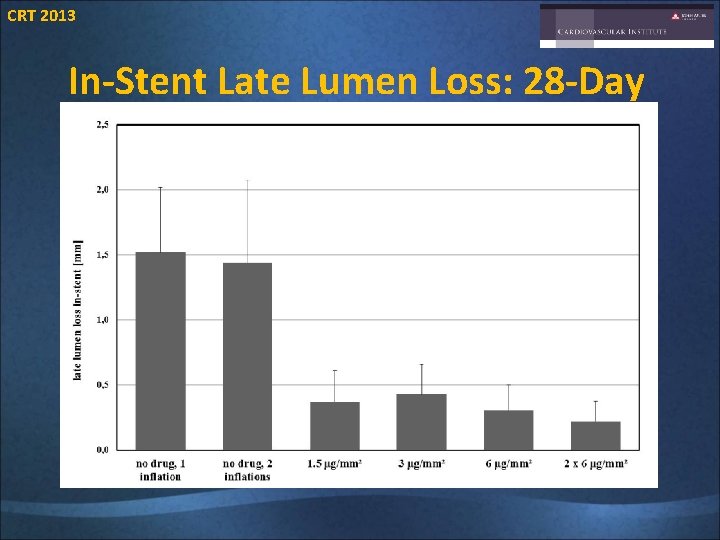
CRT 2013 In-Stent Late Lumen Loss: 28 -Day
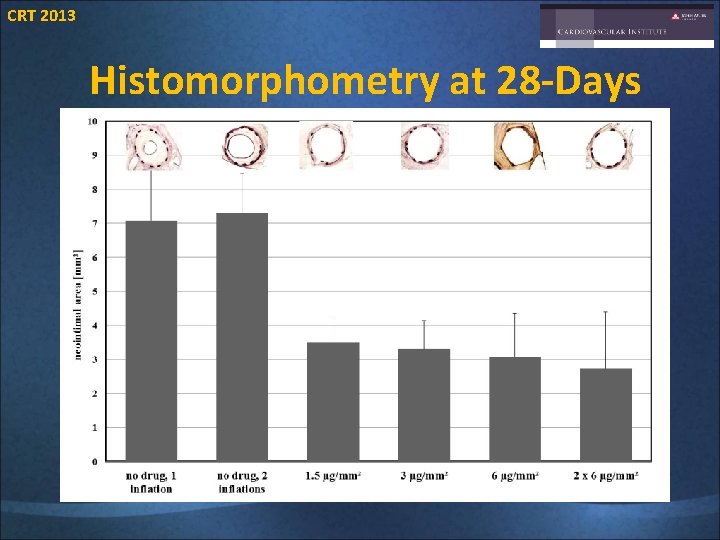
CRT 2013 Histomorphometry at 28 -Days
CRT 2013 Conclusions: Drug-Coated Angio. Sculpt Coating an Angio. Sculpt with paclitaxel is technically feasible Use of specific excipients in the coating is essential to provide the correct device-drug adhesiveness, release characteristics and tissue pharmaco-kinetics Animal studies demonstrate that a drug-coated Angio. Sculpt is at least as effective as the clinically proven Paccocath for inhibiting neo-intimal proliferation post-stenting A wide range of drug dosages is associated with safety & efficacy No evidence of local drug/carrier toxicity or adverse myocardial effects (EF, histopathology)
CRT 2013 FIM Study Design Coronary bare metal stent ISR Randomized controlled trial: PTX-Coated Angio. Sculpt vs. Bare Angio. Sculpt 60 patients, 5 sites (4 in Germany and one in Brazil) Primary endpoint: 6 month angiographic LLL (in-segment) Secondary endpoints: TLR, MACE, ST and other QCA and clinical data (patients will be followed for 2 years) Independent blinded QCA core lab & statistical analysis (CRF) Overall Study PI: Bruno Scheller, MD Chair of Steering Committee: Martin B. Leon, MD Current enrollment – 52 patients (February 22, 2013)
CRT 2013 FIM Study Sites Universitätsklinikum des Saarlandes, Homburg/Saar, Germany (Bruno Scheller - PI) Dante Pazzanese Cardiology Institute, Sao Paulo, Brazil (Alexandre Abizaid) Herzzentrum Leipzig, Germany (Sven Möbius-Winkler) Ernst von Bergmann Klinikum, Potsdam, Germany (Klaus Bonaventura) Vivantes, Berlin, Germany (Stefan Hoffmann)
CRT 2013 Key Inclusion Criteria § Clinical evidence of stable or unstable angina or an abnormal functional study demonstrating myocardial ischemia due to the target lesion(s) § Patients with ≤ 2 primary in-stent restenosis (ISR) lesions • ≥ 70% diameter stenosis • lesions located entirely within previously placed bare metal stents (BMS) in native coronary arteries* *Treatment of one additional lesion in a non-target vessel (non-ISR lesions), is permissible if the lesion is treated prior to the target lesion (ideally ≥ 24 hrs) without any evidence of post-procedural MACE
CRT 2013 Key Exclusion Criteria Target lesion within a previously placed drug-eluting stent (DES) Reference vessel diameter (RVD) < 2. 5 mm Target lesion stented segment length ≥ 30 mm (lesion should be located entirely within the stent) Intended treatment of more than 2 ISR lesions or a total of more than 3 lesions (including native vessel disease) per patient Acute myocardial infarction (MI) within the past 72 hours Left ventricular ejection fraction < 35% Women who are known or suspected to be pregnant
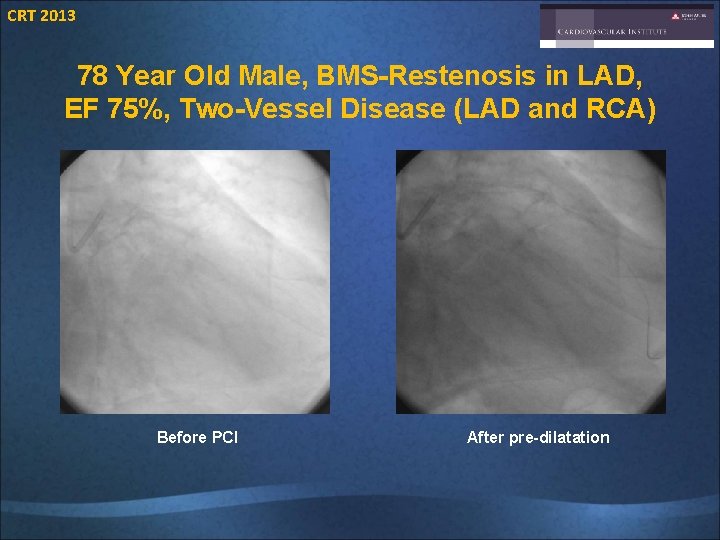
CRT 2013 78 Year Old Male, BMS-Restenosis in LAD, EF 75%, Two-Vessel Disease (LAD and RCA) Before PCI After pre-dilatation
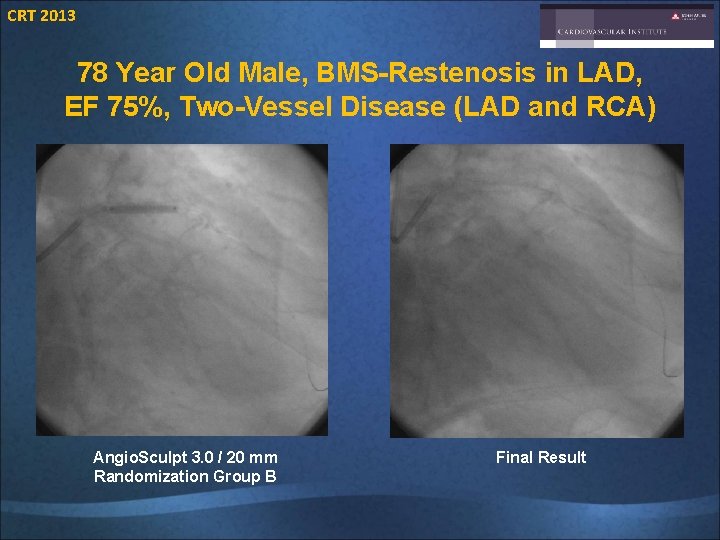
CRT 2013 78 Year Old Male, BMS-Restenosis in LAD, EF 75%, Two-Vessel Disease (LAD and RCA) Angio. Sculpt 3. 0 / 20 mm Randomization Group B Final Result
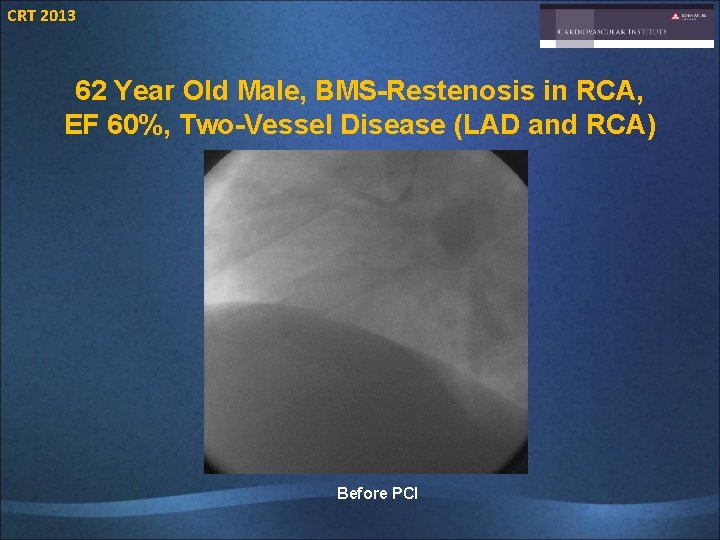
CRT 2013 62 Year Old Male, BMS-Restenosis in RCA, EF 60%, Two-Vessel Disease (LAD and RCA) Before PCI
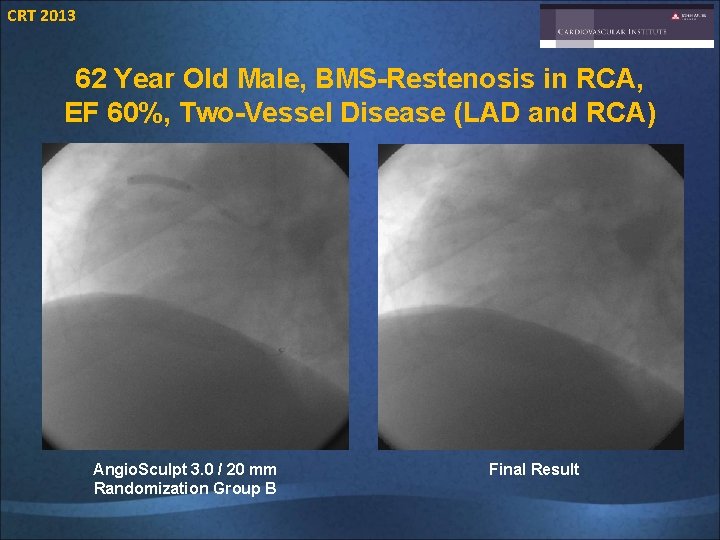
CRT 2013 62 Year Old Male, BMS-Restenosis in RCA, EF 60%, Two-Vessel Disease (LAD and RCA) Angio. Sculpt 3. 0 / 20 mm Randomization Group B Final Result
- Slides: 35