
Development of a CPD model for a childrens





- Slides: 18
Development of a CPD model for a children’s integrated workforce Janet Bardsley, Jenny Simpson, Dr Kenneth Bayley, Dr Sharif Haider
Knowledge Exchange Voucher The KEV scheme has been launched to encourage our academics to establish relationships with organisations who they have had no previous interaction with The voucher pays for a certain number of days of OU academic or Ph. D student time; enough to help the organisation find an answer or explore the options to a particularly pressing question or challenge. Or it can be used to help you to undertake a small piece of research, conduct a literature review, or a study or analyse their existing data sets. 2
Southampton City Council Background ● There a range of centrally driven agendas aimed at encouraging or requiring Local Authorities to organise services so that they place the needs of the child first, through the provision of early help, in a way which is more integrated across agencies (Df. E, 2015; Df. E/DH, 2015). ● There has also been a number of reviews seeking to articulate the skills, abilities and standards within the workforce, particularly registered social work practitioners (HCPC, 2011; TCSW, 2011; Narey, 2014; Croisdale-Appelby, 2014). ● At Southampton City Council the organisational shift has been initiated by the “Transformation Agenda” introduced in 2012. ● High turnover of staff 3
Southampton City Council Background ● 865 (total number of staff within Children’s Services) 177 (qualified social workers, of that 77 posts are filled) and 59 (non-registered social care staff) ● Qualified social workers and non-registered social care staff situated in a number of teams that include: - Multi-agency Safeguarding Hubs (MASH) - Early Help 5 -19 Education - Protection and Court Team (Pa. CT) - Youth Offending - Looked After Children - Adoption - Fostering 4
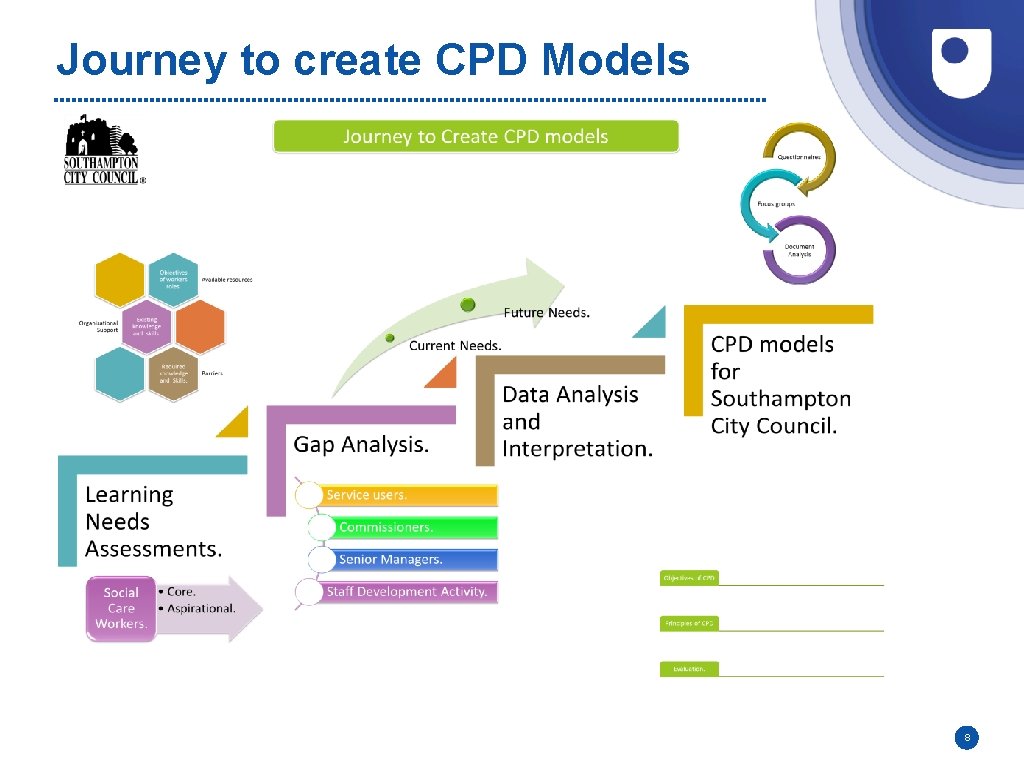
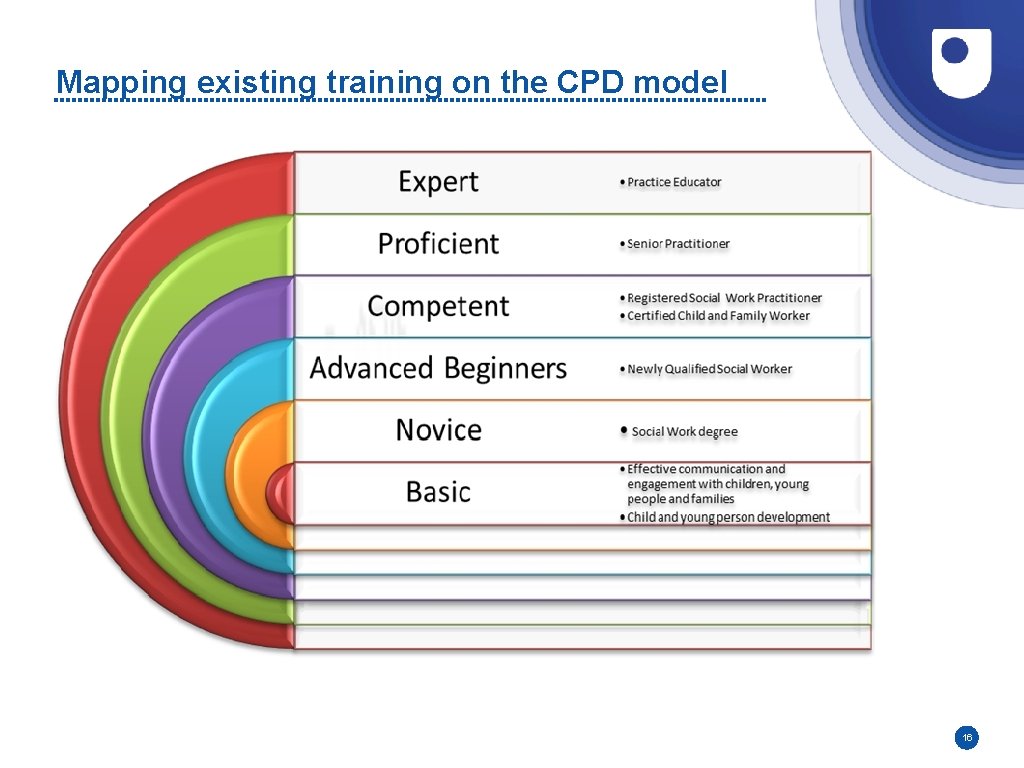
Research Question Aims ● To contribute to the knowledge and understanding of how Southampton City Council can respond to central government policy direction of development and delivery of social care services via an integrated children’s services model. ● To work in conjunction with Southampton City Council to develop a CPD model that begins with qualified social workers and non-registered social care staff and then broadens to the other members of the workforce within the Children’s Integrated Service. The purpose of the model being to map career pathways and their associated training and development. ● To develop a CPD model that will enable Southampton City Council to equip their staff to meet their statutory duties and enhance performance through its focus on development, staff support and retention. 5
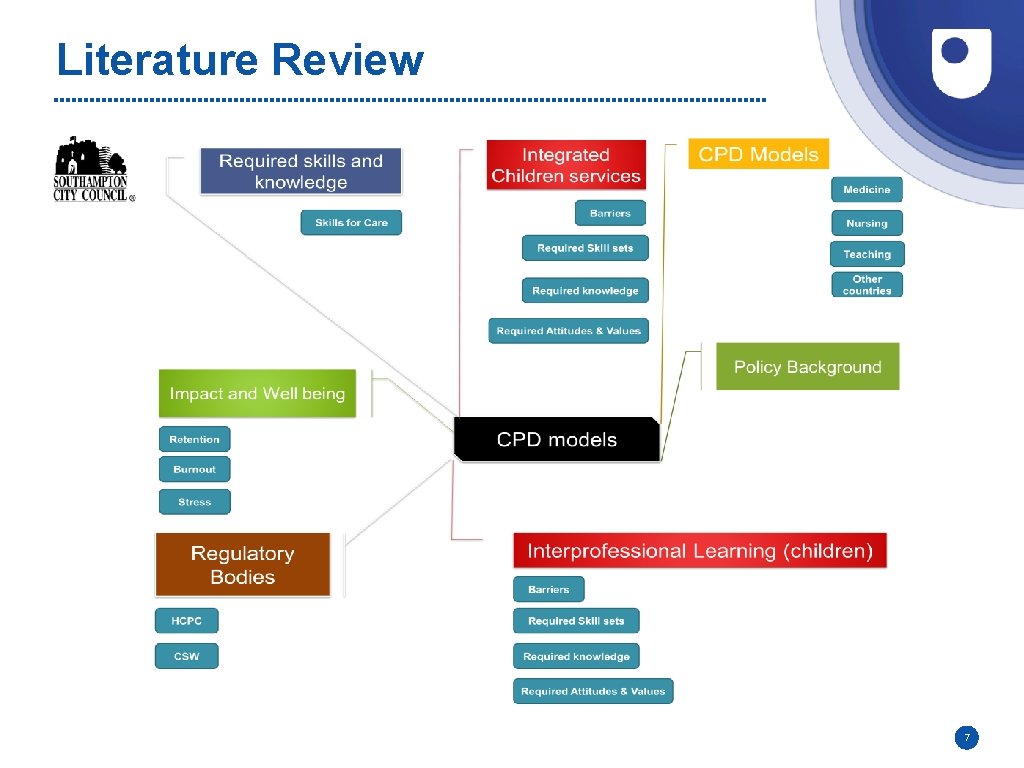
Research Question What models of CPD would provide Southampton City Council with a framework to support and develop their workforce within this context? 6
Literature Review 7
Journey to create CPD Models 8
Focus Groups Thematic Analysis 9
Findings 10
Findings 11
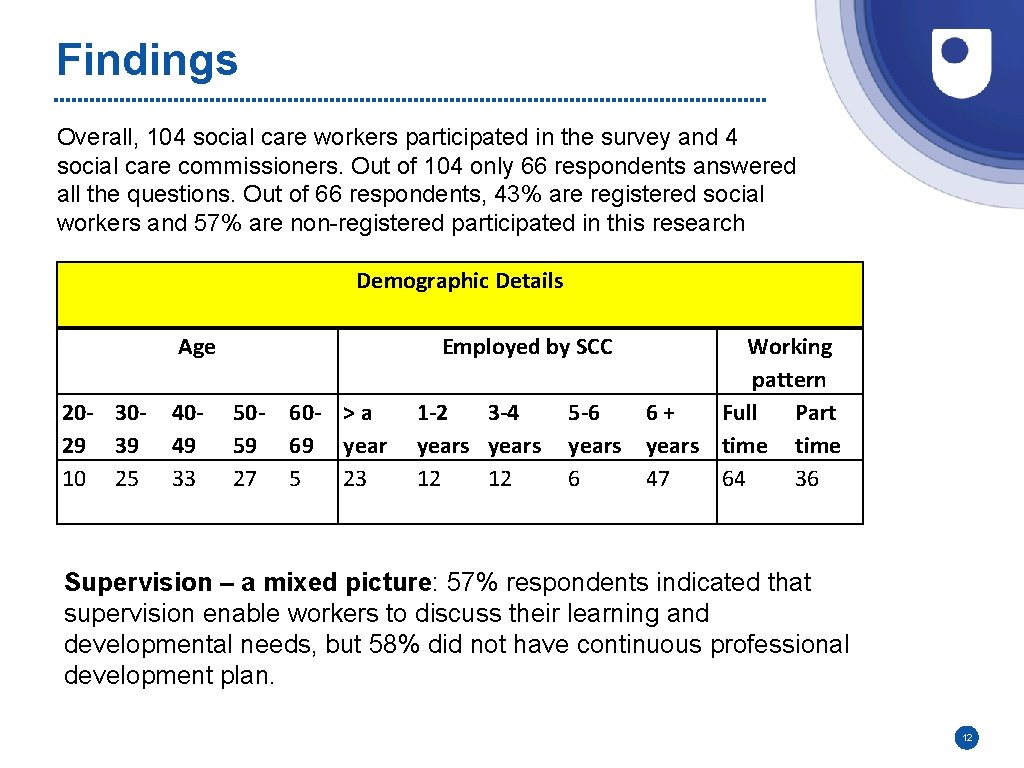
Findings Overall, 104 social care workers participated in the survey and 4 social care commissioners. Out of 104 only 66 respondents answered all the questions. Out of 66 respondents, 43% are registered social workers and 57% are non-registered participated in this research Demographic Details Age 20 - 3029 39 10 25 4049 33 Employed by SCC 5059 27 60 - > a 69 year 5 23 1 -2 3 -4 years 12 12 5 -6 years 6 Working pattern 6+ Full Part years time 47 64 36 Supervision – a mixed picture: 57% respondents indicated that supervision enable workers to discuss their learning and developmental needs, but 58% did not have continuous professional development plan. 12
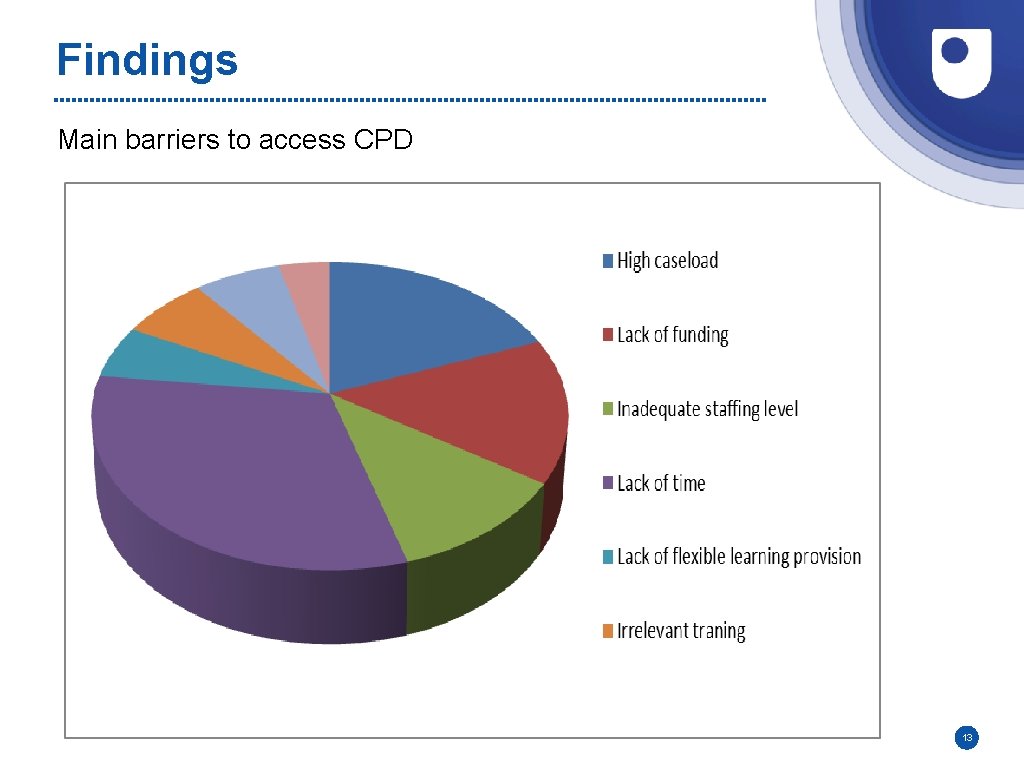
Findings Main barriers to access CPD 13
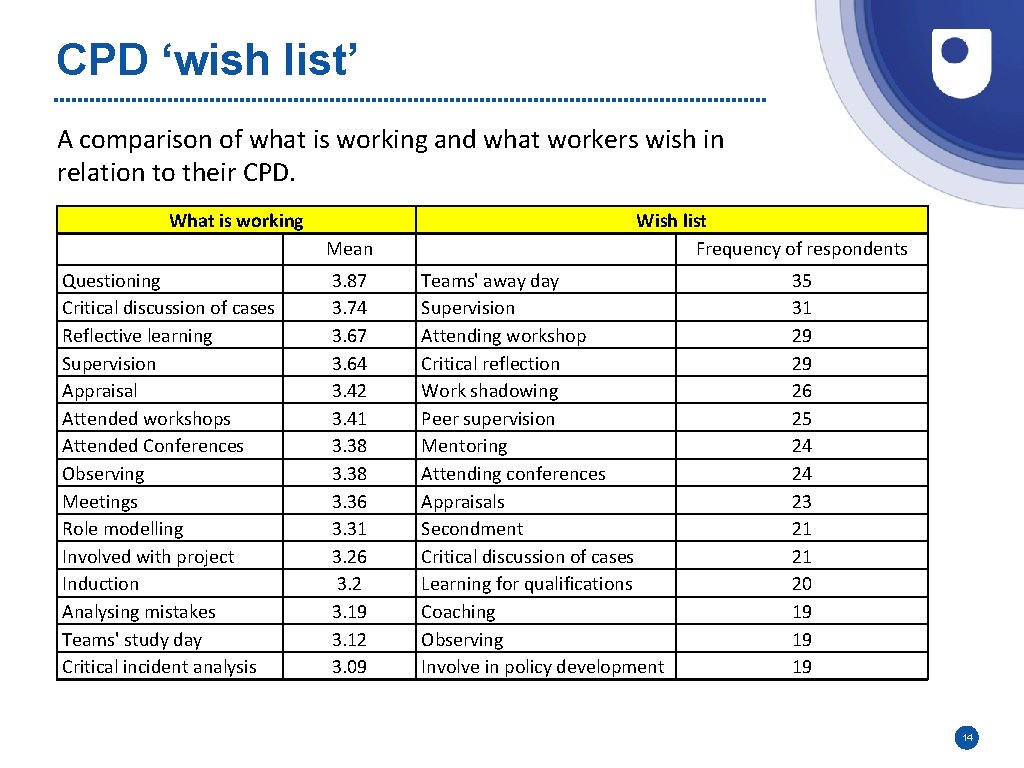
CPD ‘wish list’ A comparison of what is working and what workers wish in relation to their CPD. What is working Mean Questioning Critical discussion of cases Reflective learning Supervision Appraisal Attended workshops Attended Conferences Observing Meetings Role modelling Involved with project Induction Analysing mistakes Teams' study day Critical incident analysis 3. 87 3. 74 3. 67 3. 64 3. 42 3. 41 3. 38 3. 36 3. 31 3. 26 3. 2 3. 19 3. 12 3. 09 Wish list Frequency of respondents Teams' away day Supervision Attending workshop Critical reflection Work shadowing Peer supervision Mentoring Attending conferences Appraisals Secondment Critical discussion of cases Learning for qualifications Coaching Observing Involve in policy development 35 31 29 29 26 25 24 24 23 21 21 20 19 19 19 14
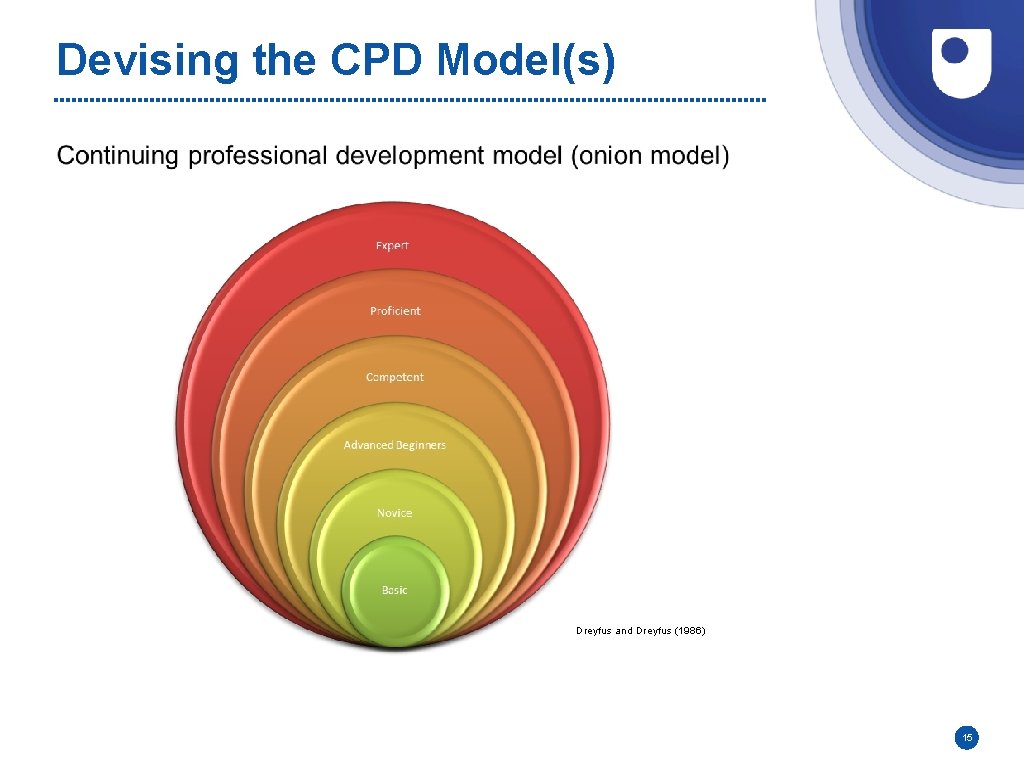
Devising the CPD Model(s) Dreyfus and Dreyfus (1986) 15
Mapping existing training on the CPD model 16
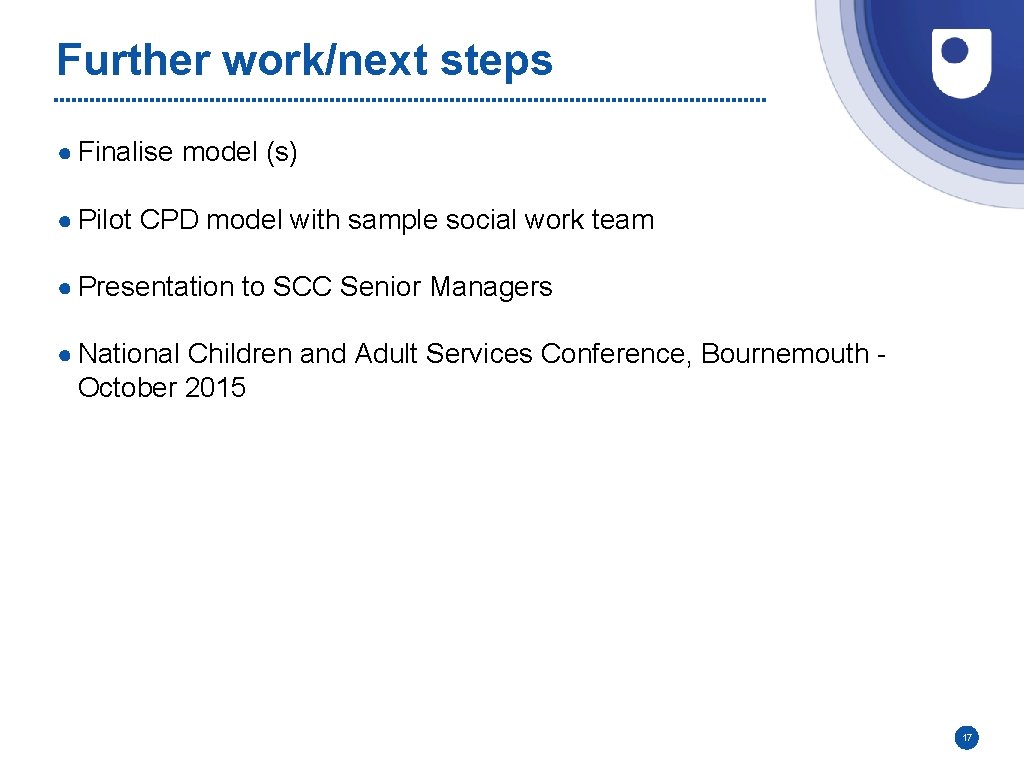
Further work/next steps ● Finalise model (s) ● Pilot CPD model with sample social work team ● Presentation to SCC Senior Managers ● National Children and Adult Services Conference, Bournemouth - October 2015 17
References Braun, V. and Clarke, V. (2006) ‘Using thematic analysis in psychology’ Qualitative Research in Psychology, 3: 2, 77 -101 Children’s Development Workforce Council (2010) Common Core of Skills and Knowledge Department of Education (2014) Skills and Knowledge Statement for Children and Families Dreyfus, H. L. and Dreyfus, S. E. (1986) Mind Over Machine: The Power of Human Intuition and Expertise in the Era of the Computer Greig, A. ; Taylor, J. and Mackay, T. (2007) ‘Doing research with children’, Sage, London Kitzinger, J. (1995) ‘Qualitative Research: Introducing focus groups’ British Medical Journal; 311: 299 Tuckett, A. G. (2005) ‘Applying thematic analysis theory to practice: A researcher’s experience’, Contemporary Nurse, 19: 1 -2, 75 -87 © The Open University 2015 18