
Development AP Biology Big Questions 1 How does
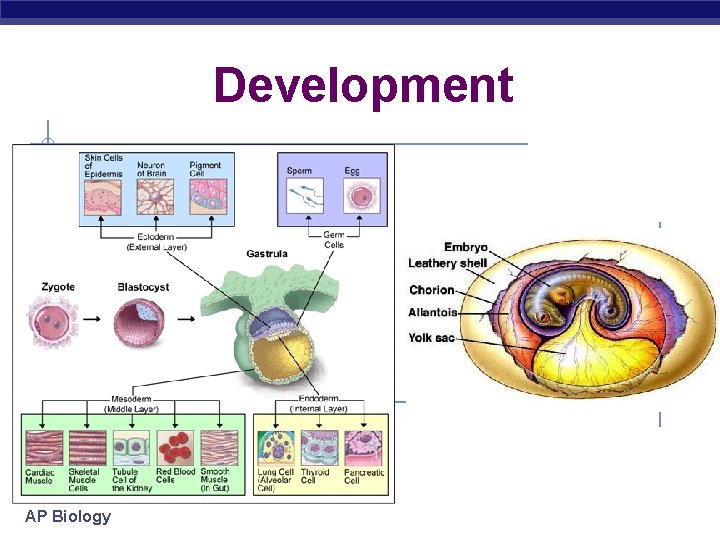
Development AP Biology
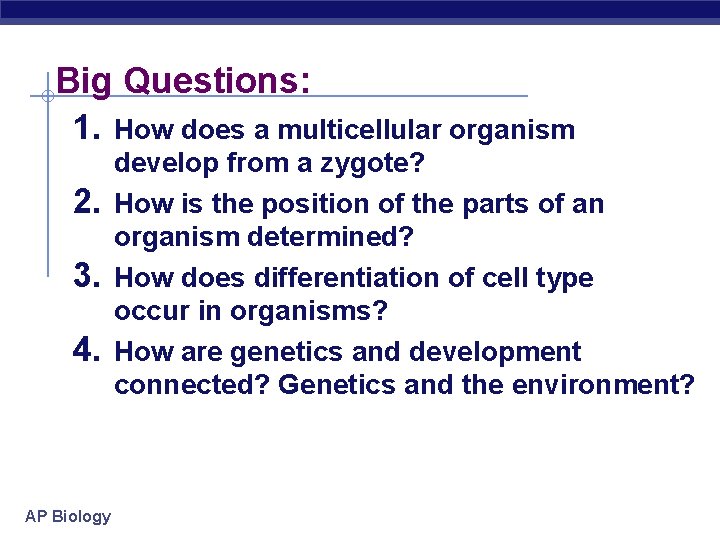
Big Questions: 1. How does a multicellular organism 2. 3. 4. AP Biology develop from a zygote? How is the position of the parts of an organism determined? How does differentiation of cell type occur in organisms? How are genetics and development connected? Genetics and the environment?

Development is Regulated § The development of § an organism is coordinated by sequential changes in gene expression. Multicellular organisms must regulate: Cell division u Differentiation u Morphogenesis u AP Biology

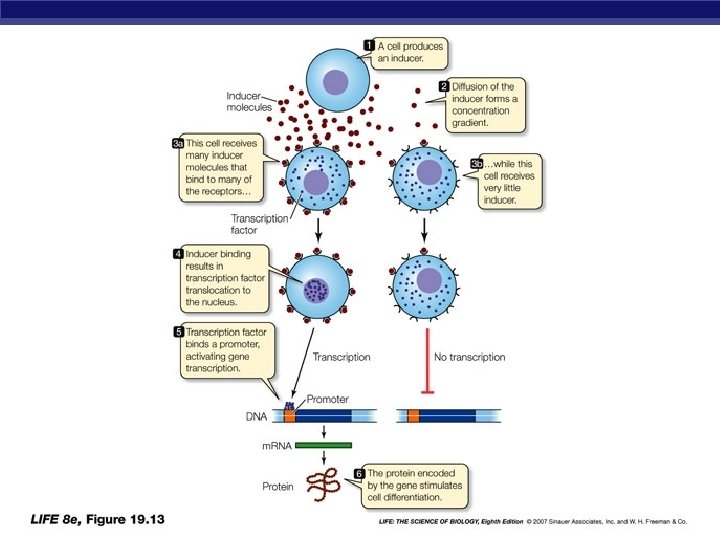
Early Developmental Pathways § Cytoplasmic Determinants u unequal distribution of m. RNA and proteins from mother § Embryonic Induction: u Local signaling by nearby cells send cells down a specific developmental path. AP Biology
AP Biology
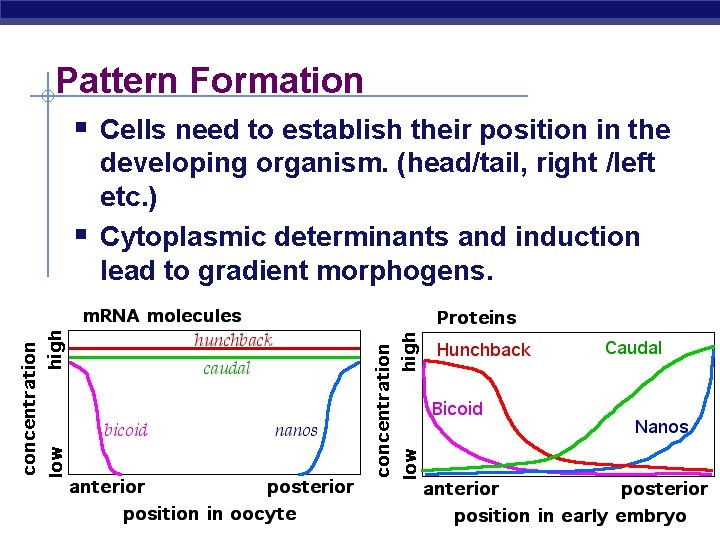
Pattern Formation § Cells need to establish their position in the § developing organism. (head/tail, right /left etc. ) Cytoplasmic determinants and induction lead to gradient morphogens. AP Biology
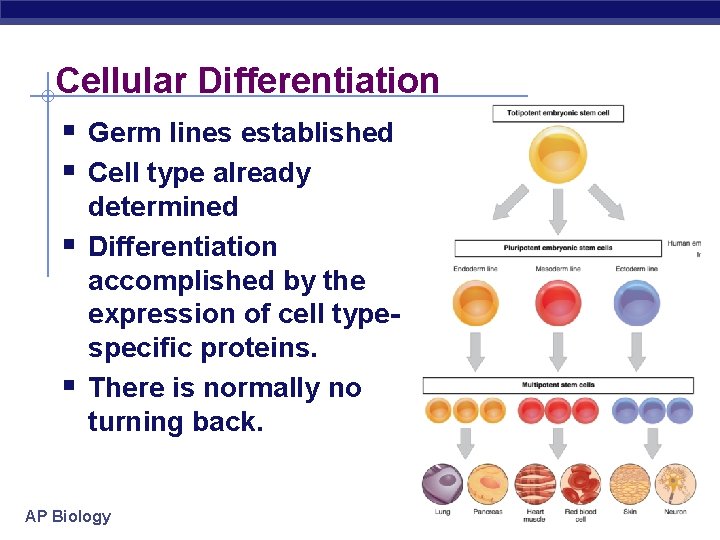
Cellular Differentiation § Germ lines established § Cell type already § § determined Differentiation accomplished by the expression of cell typespecific proteins. There is normally no turning back. AP Biology
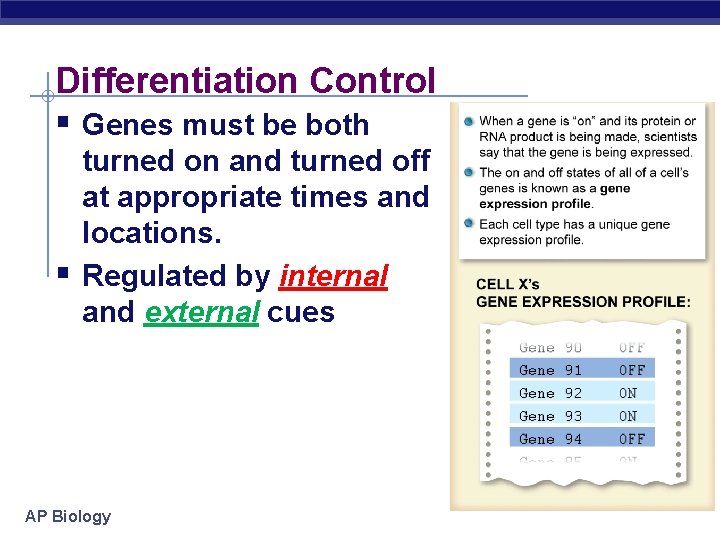
Differentiation Control § Genes must be both § turned on and turned off at appropriate times and locations. Regulated by internal and external cues AP Biology
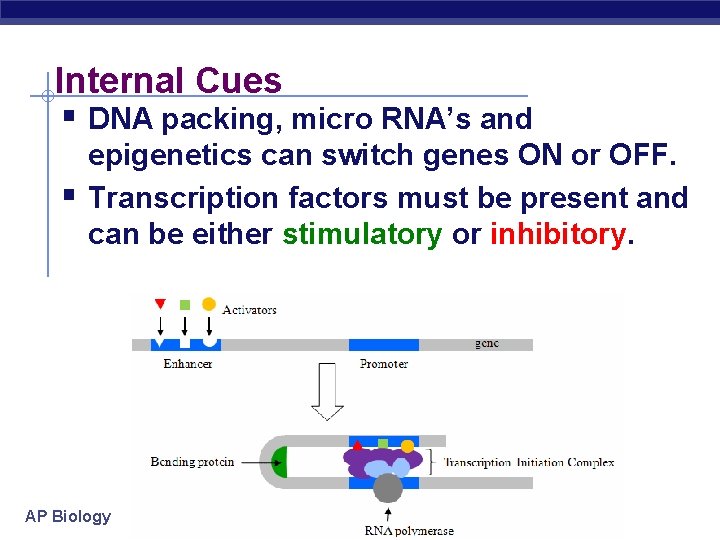
Internal Cues § DNA packing, micro RNA’s and § epigenetics can switch genes ON or OFF. Transcription factors must be present and can be either stimulatory or inhibitory. AP Biology
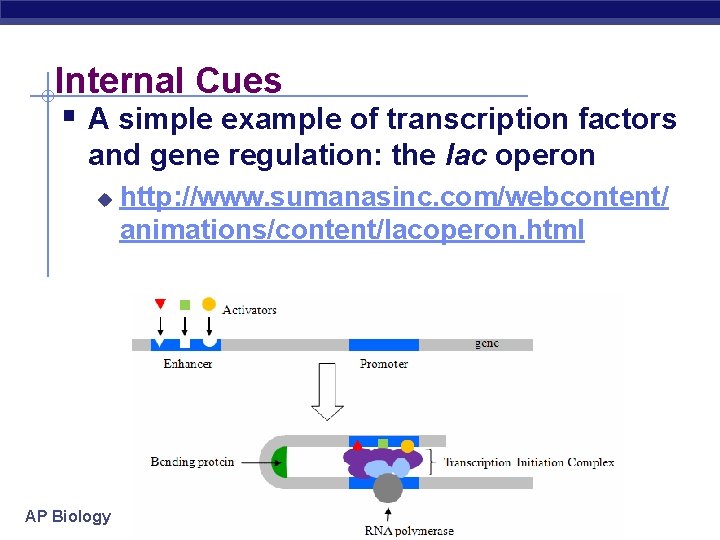
Internal Cues § A simple example of transcription factors and gene regulation: the lac operon u AP Biology http: //www. sumanasinc. com/webcontent/ animations/content/lacoperon. html
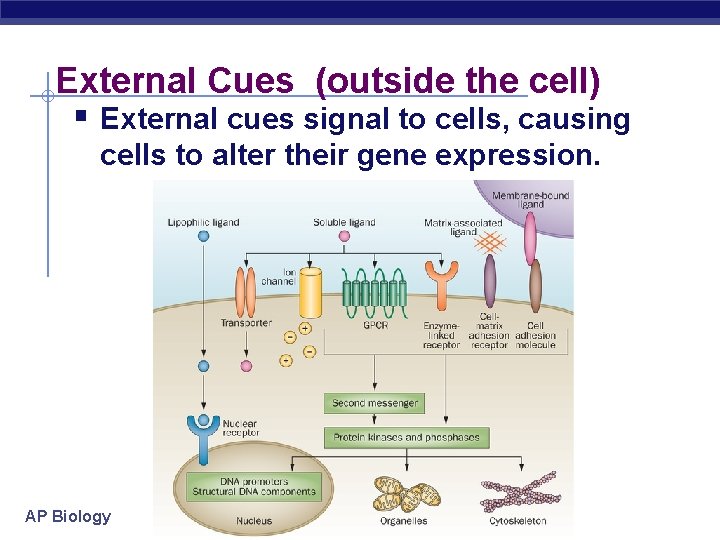
External Cues (outside the cell) § External cues signal to cells, causing cells to alter their gene expression. AP Biology
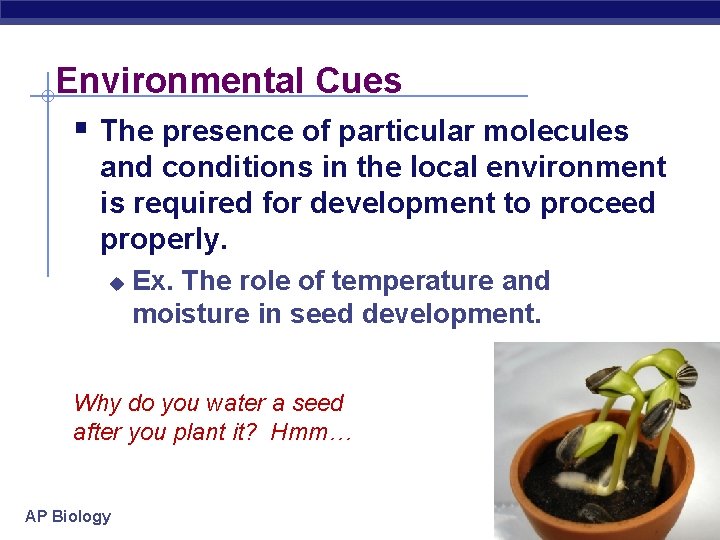
Environmental Cues § The presence of particular molecules and conditions in the local environment is required for development to proceed properly. u Ex. The role of temperature and moisture in seed development. Why do you water a seed after you plant it? Hmm… AP Biology
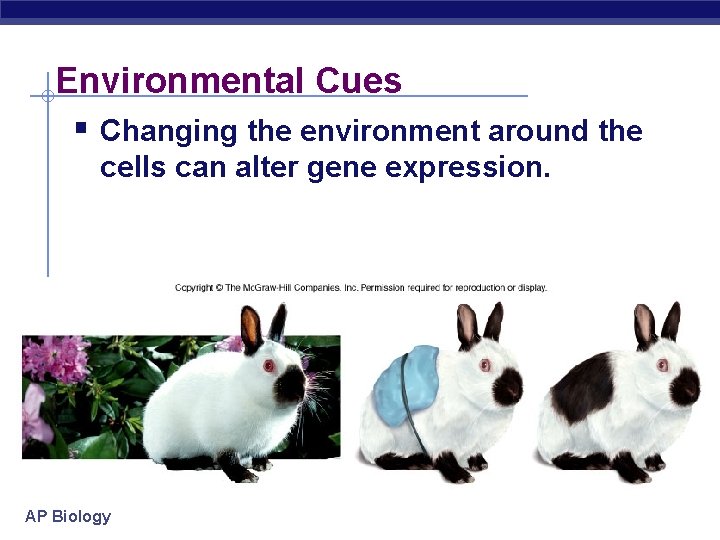
Environmental Cues § Changing the environment around the cells can alter gene expression. AP Biology
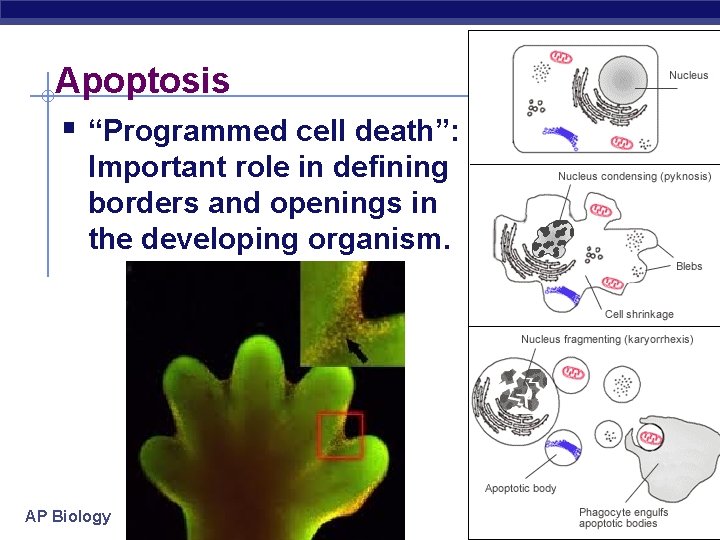
Apoptosis § “Programmed cell death”: Important role in defining borders and openings in the developing organism. AP Biology
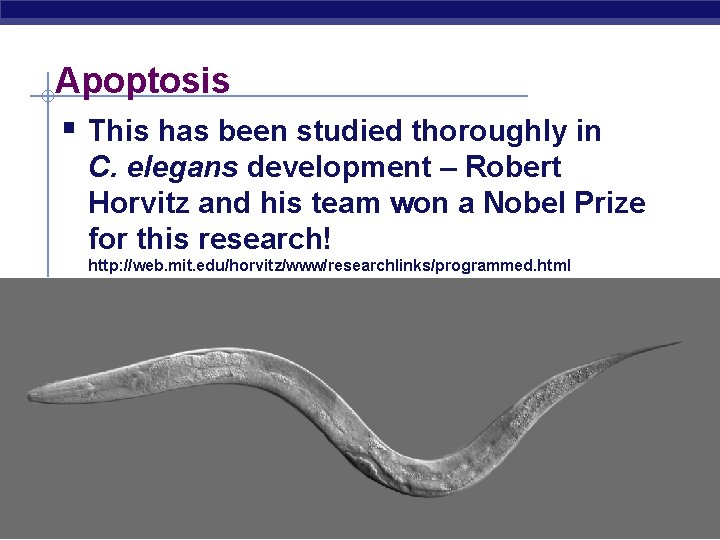
Apoptosis § This has been studied thoroughly in C. elegans development – Robert Horvitz and his team won a Nobel Prize for this research! http: //web. mit. edu/horvitz/www/researchlinks/programmed. html AP Biology
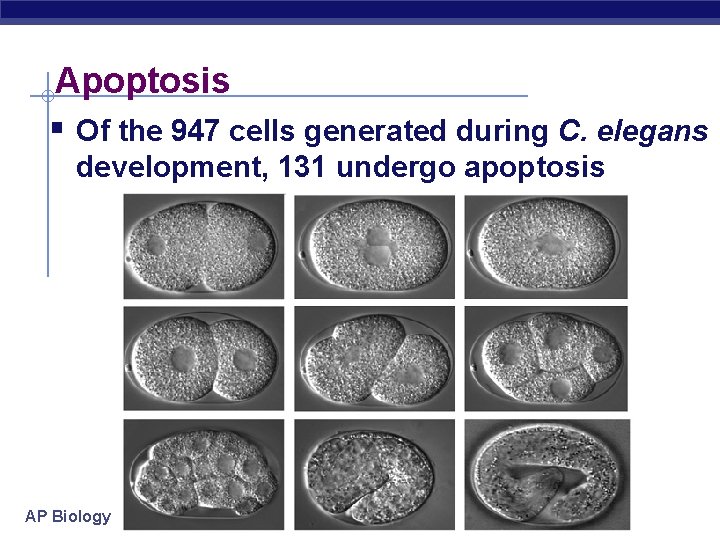
Apoptosis § Of the 947 cells generated during C. elegans development, 131 undergo apoptosis AP Biology
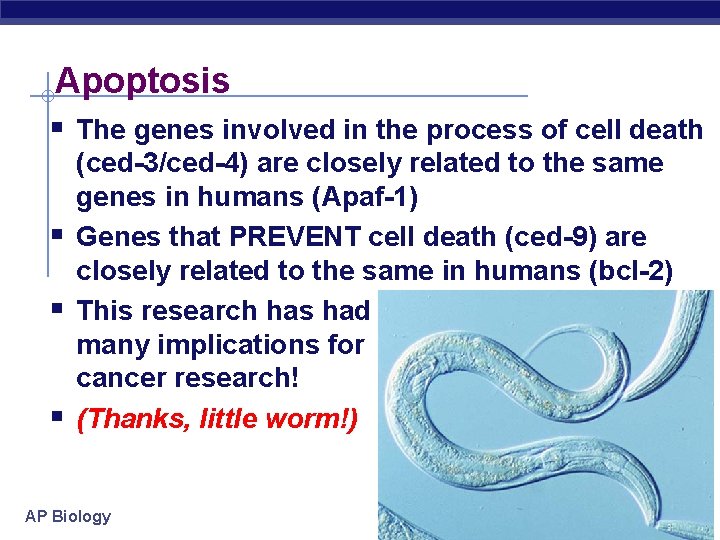
Apoptosis § The genes involved in the process of cell death § § § (ced-3/ced-4) are closely related to the same genes in humans (Apaf-1) Genes that PREVENT cell death (ced-9) are closely related to the same in humans (bcl-2) This research has had many implications for cancer research! (Thanks, little worm!) AP Biology
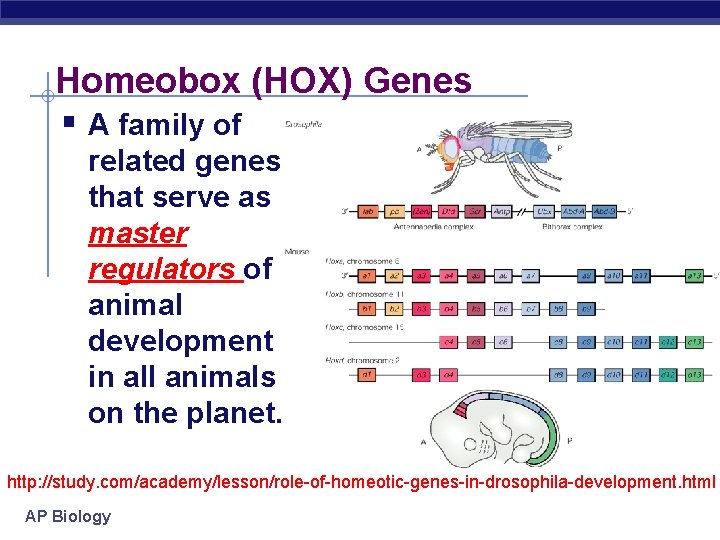
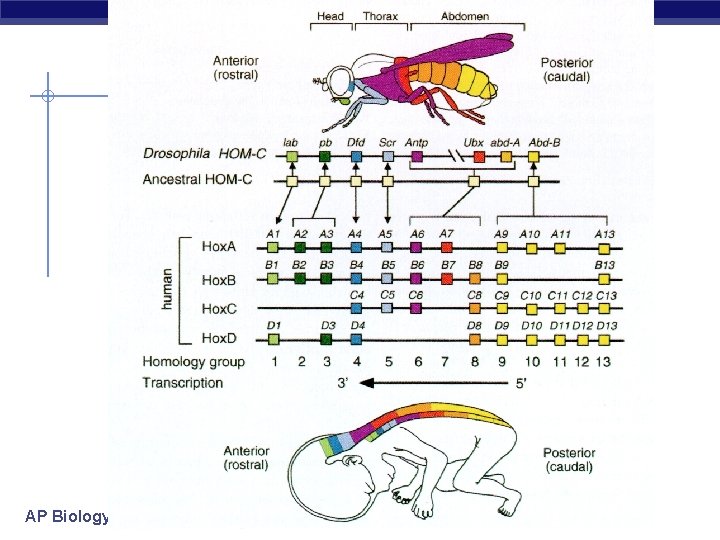
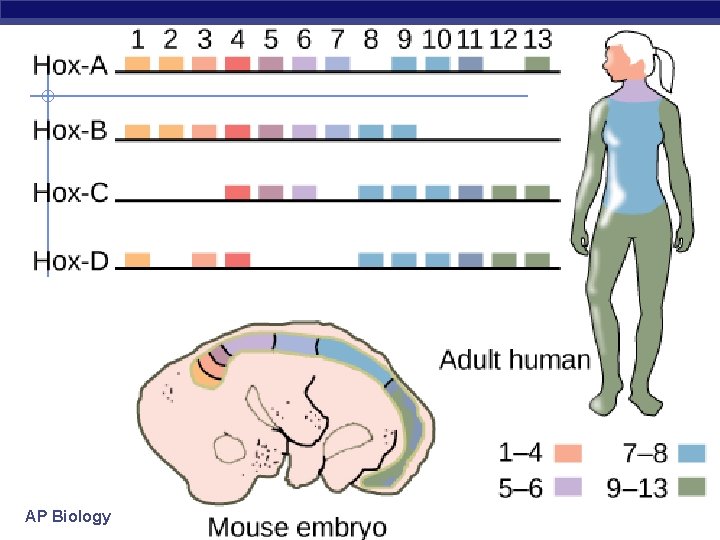
Homeobox (HOX) Genes § A family of related genes that serve as master regulators of animal development in all animals on the planet. http: //study. com/academy/lesson/role-of-homeotic-genes-in-drosophila-development. html AP Biology
AP Biology
AP Biology
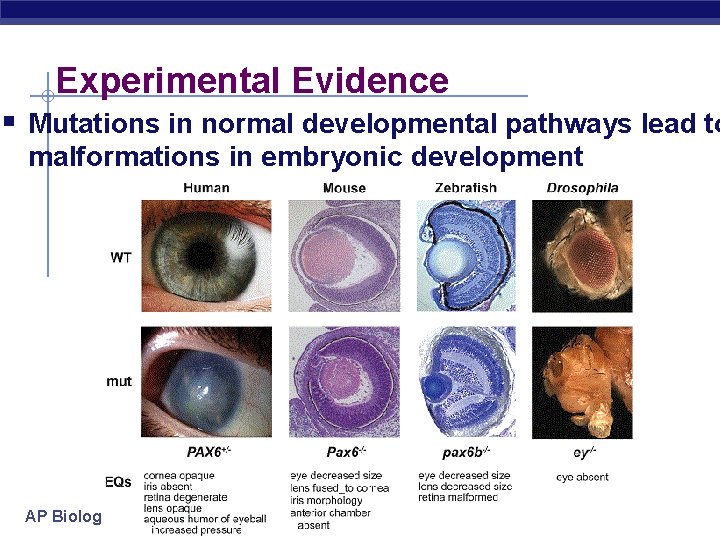
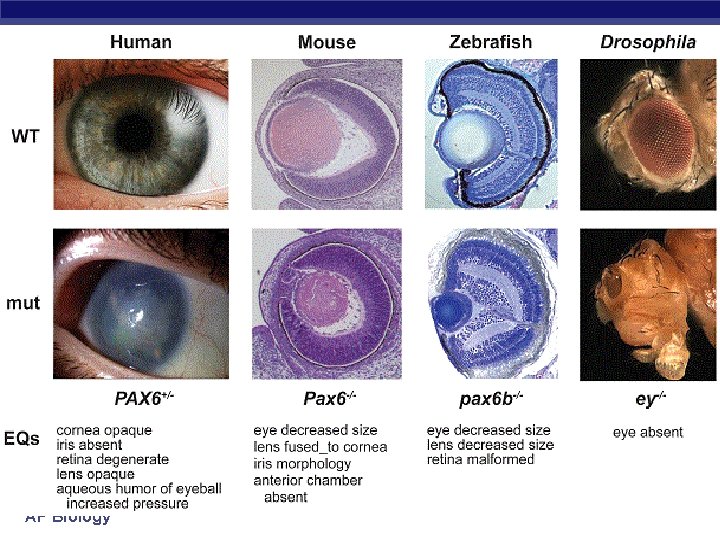
Experimental Evidence § Mutations in normal developmental pathways lead to malformations in embryonic development AP Biology
AP Biology
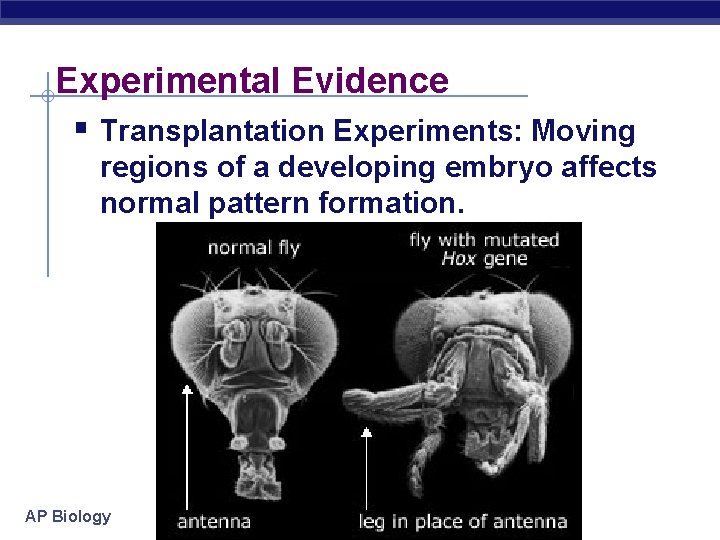
Experimental Evidence § Transplantation Experiments: Moving regions of a developing embryo affects normal pattern formation. AP Biology
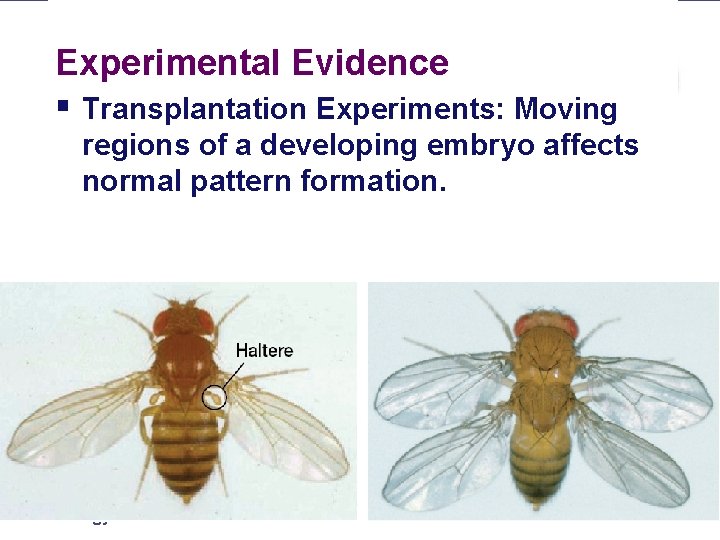
Experimental Evidence § Transplantation Experiments: Moving regions of a developing embryo affects normal pattern formation. AP Biology
- Slides: 24