
Development AP Biology 2004 2005 Whats the most
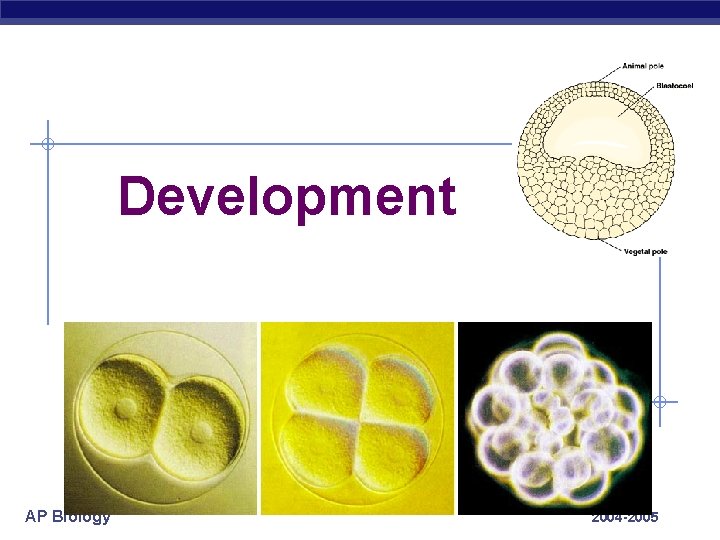
Development AP Biology 2004 -2005
What’s the most complex problem in biology? AP Biology
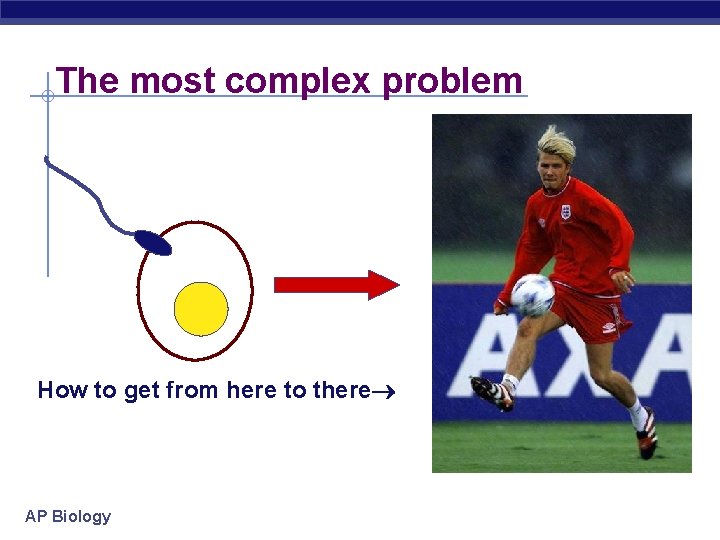
The most complex problem How to get from here to there AP Biology
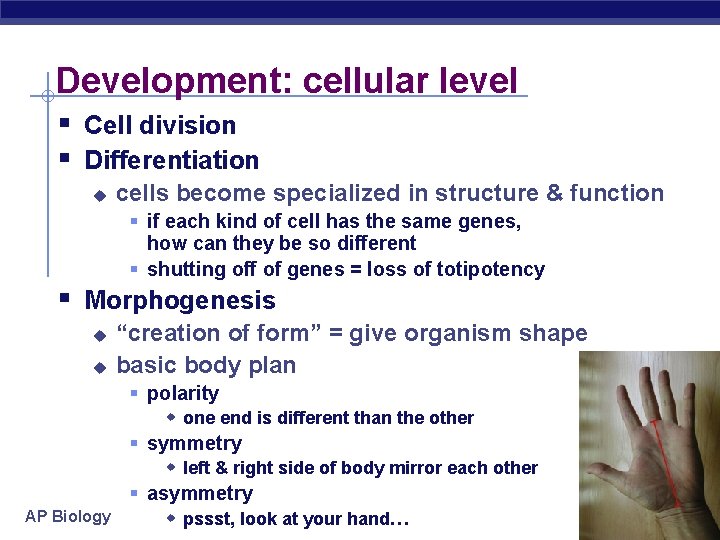
Development: cellular level § Cell division § Differentiation u cells become specialized in structure & function § if each kind of cell has the same genes, how can they be so different § shutting off of genes = loss of totipotency § Morphogenesis u u “creation of form” = give organism shape basic body plan § polarity w one end is different than the other § symmetry w left & right side of body mirror each other § asymmetry AP Biology w pssst, look at your hand… 2004 -2005
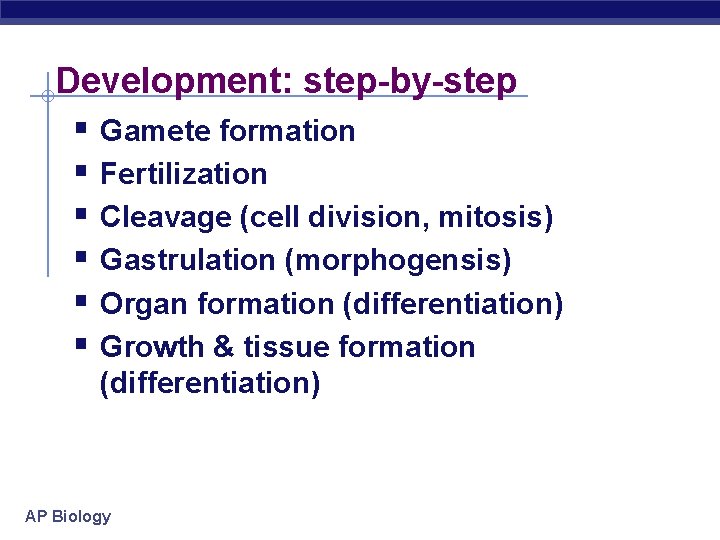
Development: step-by-step § Gamete formation § Fertilization § Cleavage (cell division, mitosis) § Gastrulation (morphogensis) § Organ formation (differentiation) § Growth & tissue formation (differentiation) AP Biology
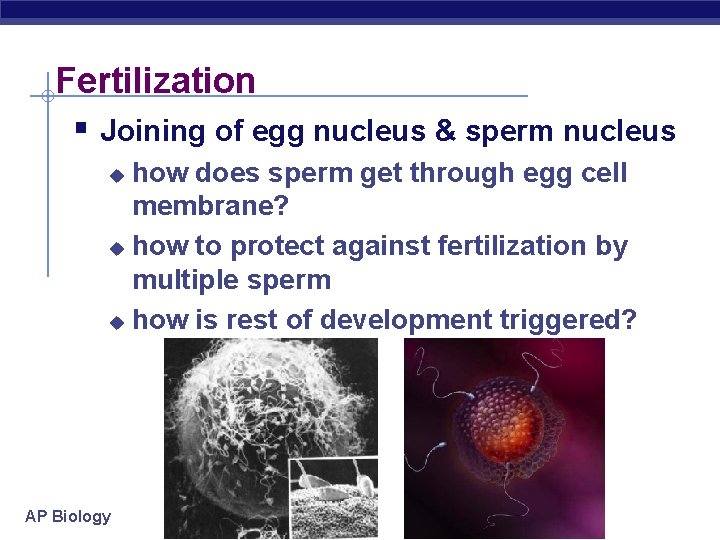
Fertilization § Joining of egg nucleus & sperm nucleus how does sperm get through egg cell membrane? u how to protect against fertilization by multiple sperm u how is rest of development triggered? u AP Biology
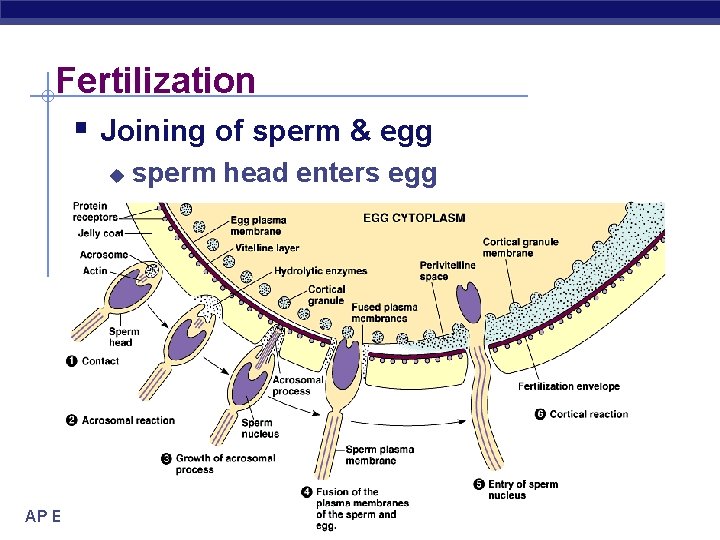
Fertilization § Joining of sperm & egg u AP Biology sperm head enters egg 2004 -2005
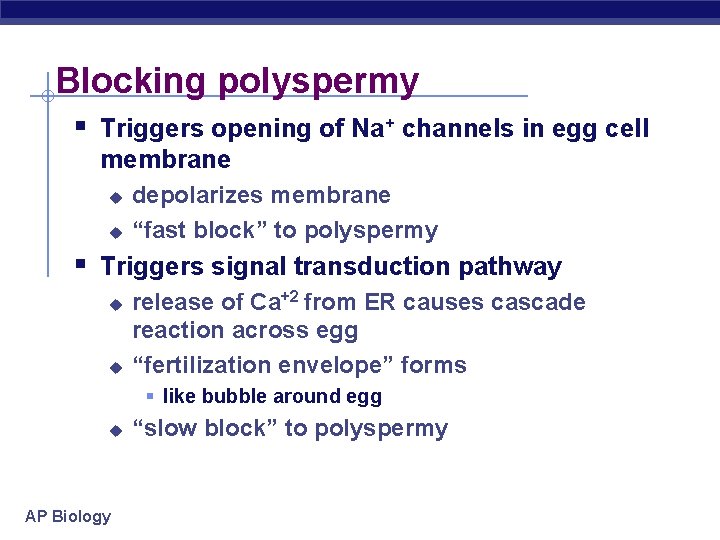
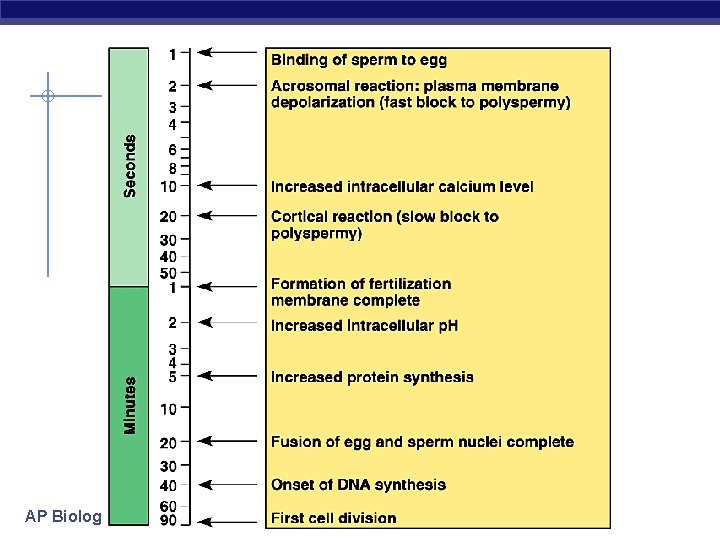
Blocking polyspermy § Triggers opening of Na+ channels in egg cell membrane u u depolarizes membrane “fast block” to polyspermy § Triggers signal transduction pathway u u release of Ca+2 from ER causes cascade reaction across egg “fertilization envelope” forms § like bubble around egg u AP Biology “slow block” to polyspermy
AP Biology
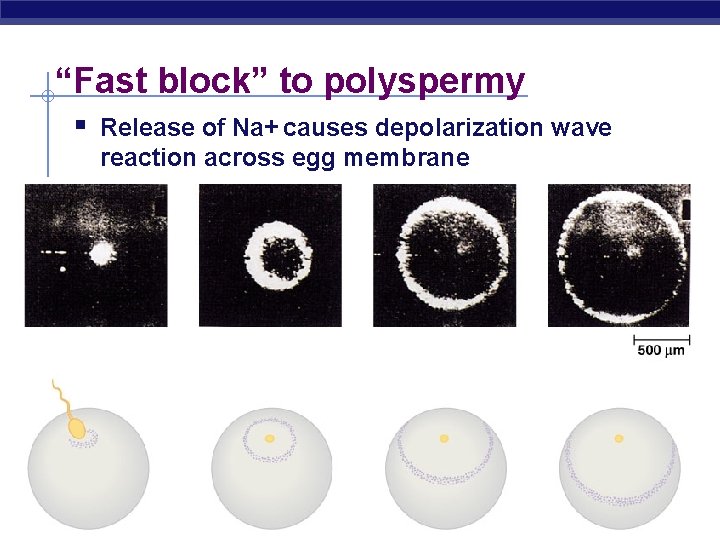
“Fast block” to polyspermy § Release of Na+ causes depolarization wave reaction across egg membrane AP Biology 2004 -2005
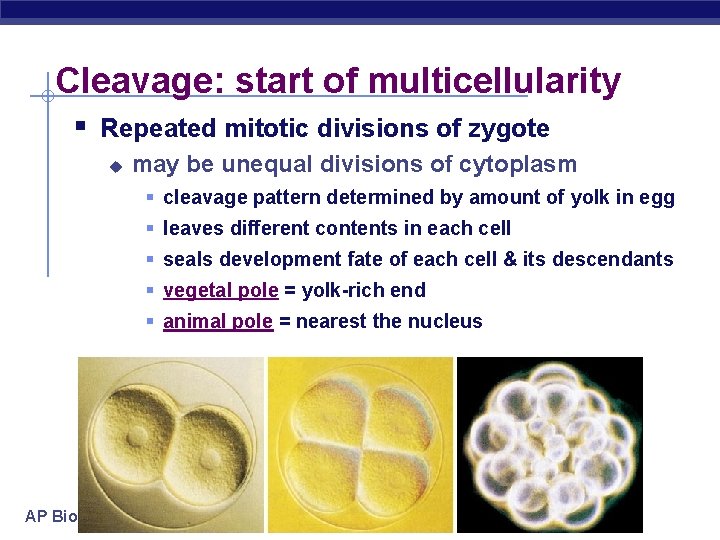
Cleavage: start of multicellularity § Repeated mitotic divisions of zygote u may be unequal divisions of cytoplasm § cleavage pattern determined by amount of yolk in egg § leaves different contents in each cell § seals development fate of each cell & its descendants § vegetal pole = yolk-rich end § animal pole = nearest the nucleus AP Biology
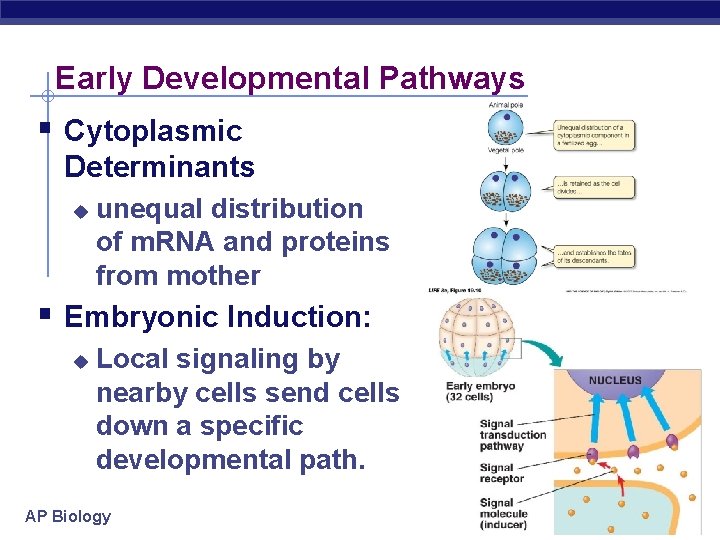
Early Developmental Pathways § Cytoplasmic Determinants u unequal distribution of m. RNA and proteins from mother § Embryonic Induction: u Local signaling by nearby cells send cells down a specific developmental path. AP Biology
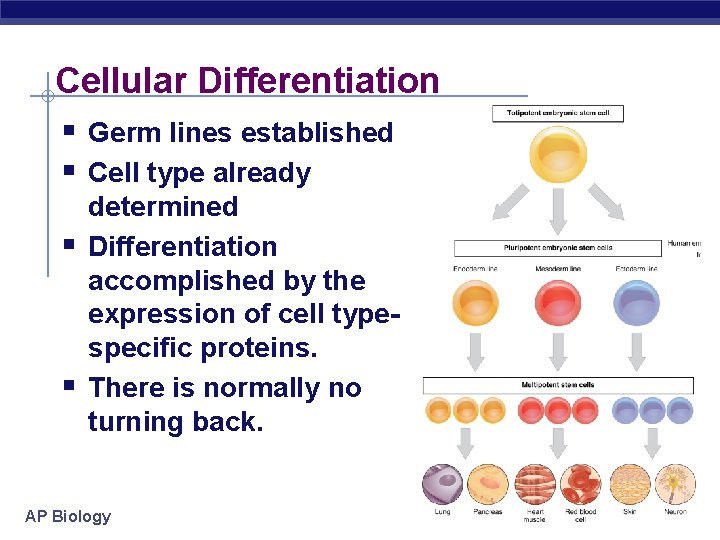
Cellular Differentiation § Germ lines established § Cell type already § § determined Differentiation accomplished by the expression of cell typespecific proteins. There is normally no turning back. AP Biology
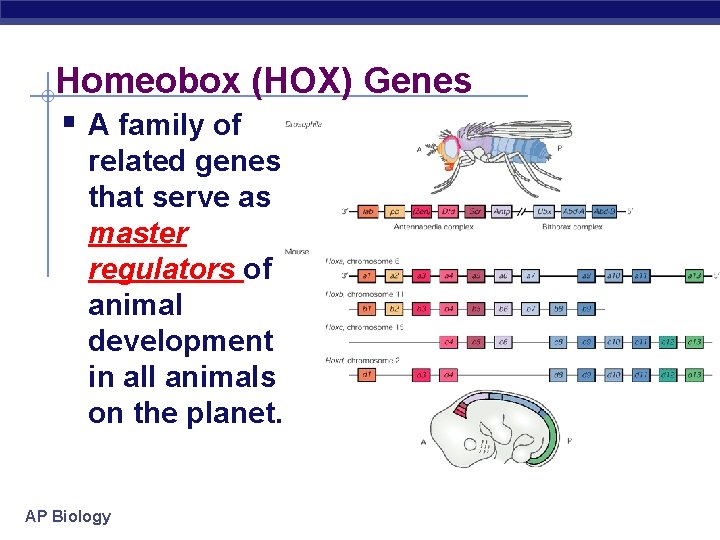
Homeobox (HOX) Genes § A family of related genes that serve as master regulators of animal development in all animals on the planet. AP Biology
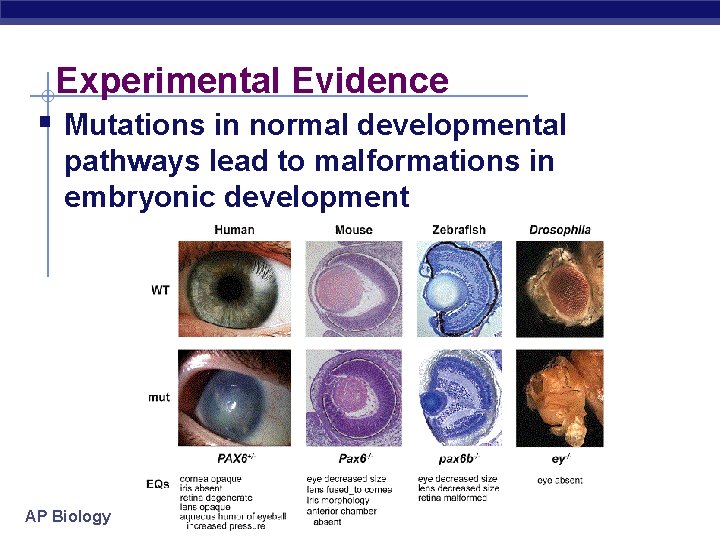
Experimental Evidence § Mutations in normal developmental pathways lead to malformations in embryonic development AP Biology
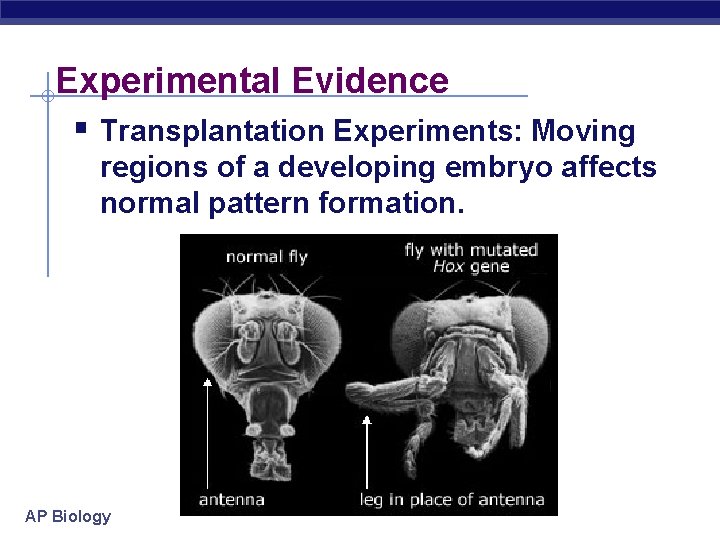
Experimental Evidence § Transplantation Experiments: Moving regions of a developing embryo affects normal pattern formation. AP Biology
Early embryonic stages § Morula u solid ball stage § Blastula u hollow fluid-filled ball stage § by time human embryo reaches uterus § Gastrula u AP Biology development of primitive digestive tract (gut) & tissue layers
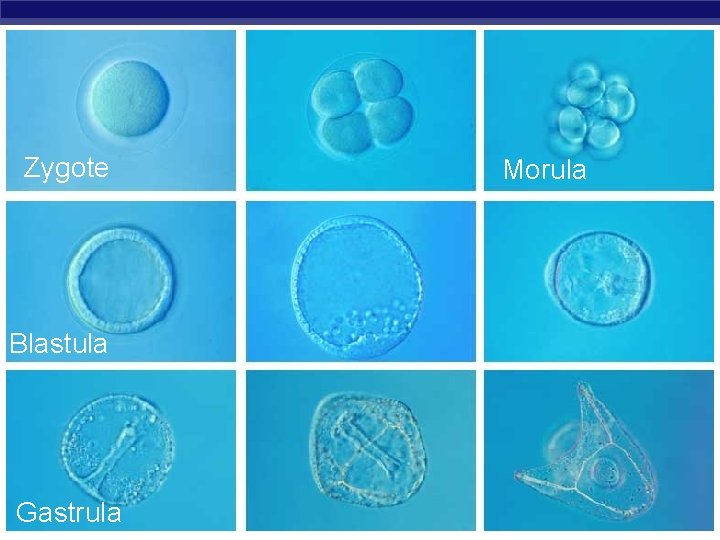
Zygote Morula Blastula Gastrula AP Biology 2004 -2005
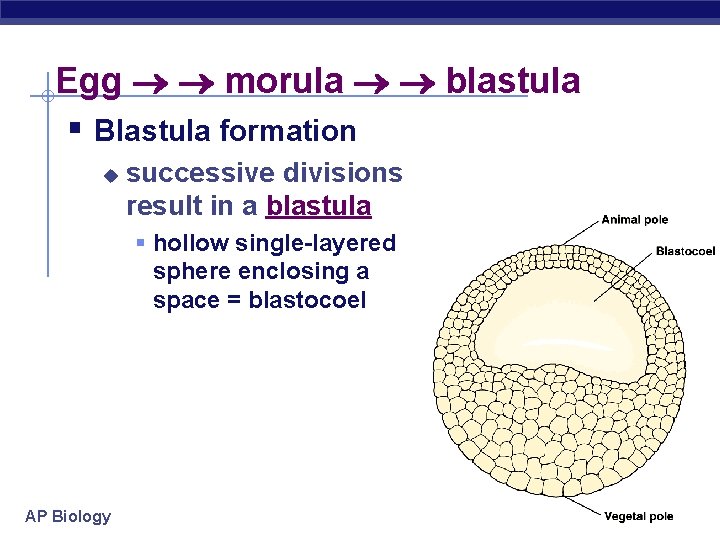
Egg morula blastula § Blastula formation u successive divisions result in a blastula § hollow single-layered sphere enclosing a space = blastocoel AP Biology 2004 -2005
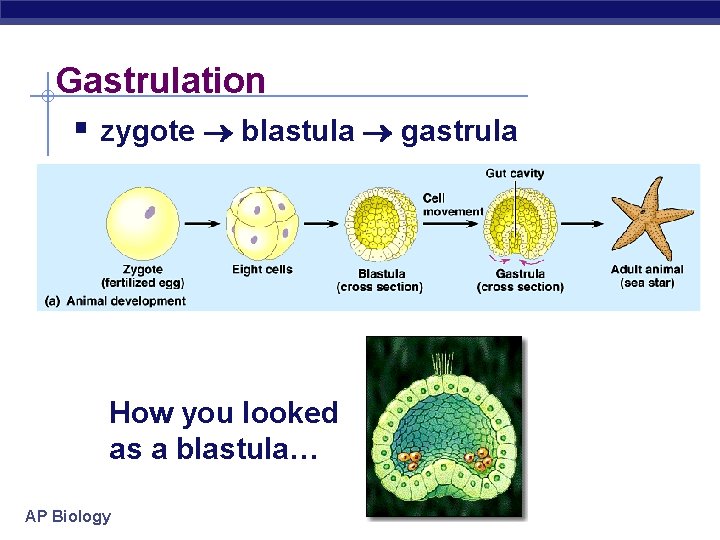
Gastrulation § zygote blastula gastrula How you looked as a blastula… AP Biology
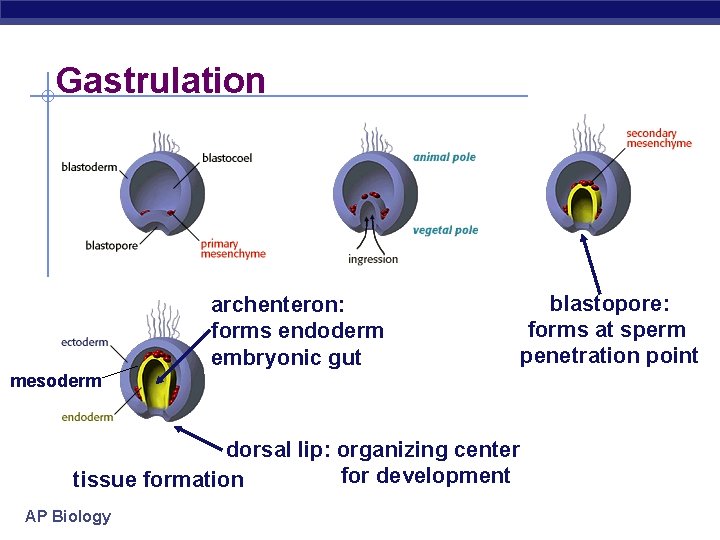
Gastrulation archenteron: forms endoderm embryonic gut mesoderm dorsal lip: organizing center for development tissue formation AP Biology blastopore: forms at sperm penetration point
Primary tissue or “germ” layers § ectoderm u external surfaces: skin § epidermis (skin); nails, hair & glands; tooth enamel; eye lens; epithelial lining of nose, mouth & rectum; nervous system § endoderm u internal lining § epithelial lining of digestive tract & respiratory systems; reproductive system & urinary tract; digestive organs § mesoderm u AP Biology middle tissues: muscle, blood & bone § notochord; skeletal, muscular, circulatory, lymphatic, excretory & reproductive systems; lining of body cavity
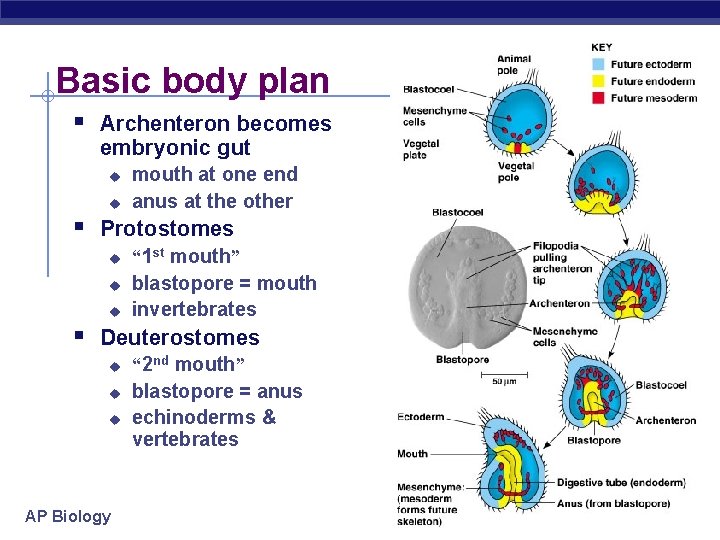
Basic body plan § Archenteron becomes embryonic gut u u mouth at one end anus at the other § Protostomes u u u “ 1 st mouth” blastopore = mouth invertebrates § Deuterostomes u u u AP Biology “ 2 nd mouth” blastopore = anus echinoderms & vertebrates 2004 -2005
Morphogenesis § organization of differentiated cells into § tissues & organs cell migration u by changes in shape § cells fold inward as pockets by changing shape u cell movements § cells move by pseudopods projecting from the cell body u signals from cues § guided by following chemical gradients § respond to adhesive cues from recognition proteins on adjacent cells AP Biology
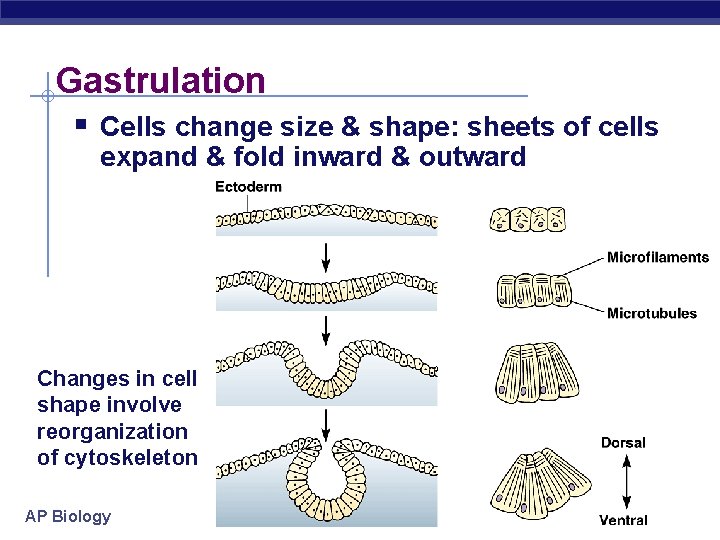
Gastrulation § Cells change size & shape: sheets of cells expand & fold inward & outward Changes in cell shape involve reorganization of cytoskeleton AP Biology 2004 -2005
Organ development § Organ development begins with the formation of: u neural tube § future spinal cord & brain u notochord § primitive skeleton, replaced by vertebrate spinal column u somites § bands of tissue that will become muscles & bones AP Biology
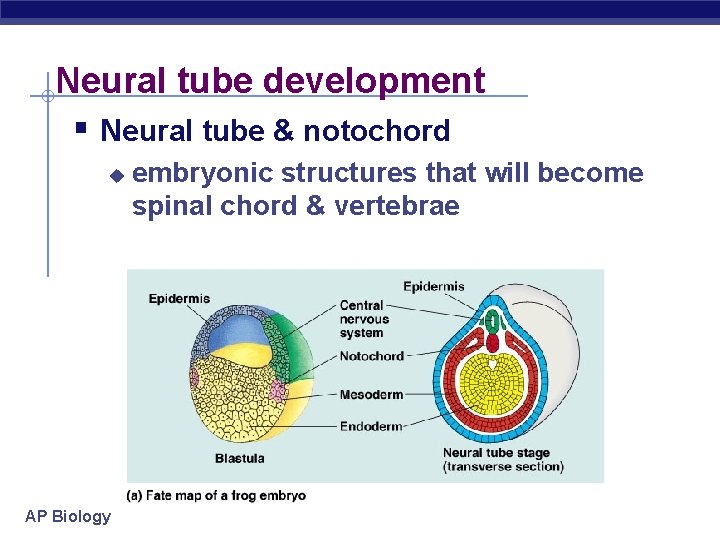
Neural tube development § Neural tube & notochord u AP Biology embryonic structures that will become spinal chord & vertebrae
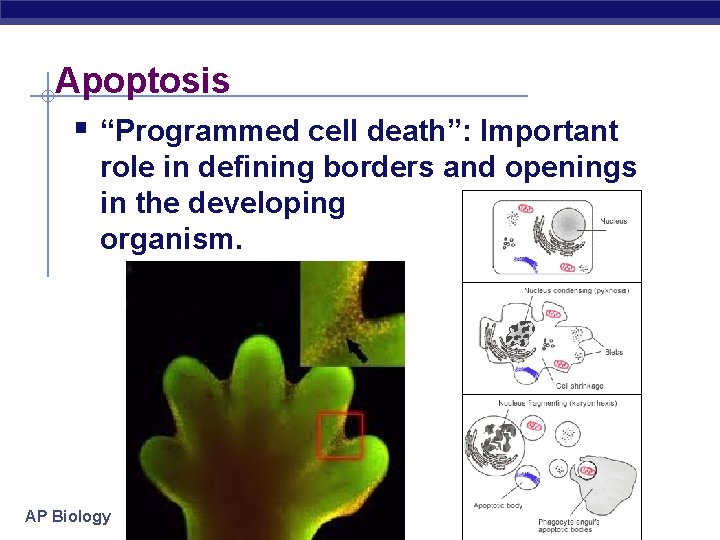
Apoptosis § “Programmed cell death”: Important role in defining borders and openings in the developing organism. AP Biology
- Slides: 28