
Development and the Tertiary Sector AP Human Geography

- Slides: 6
Development and the Tertiary Sector AP Human Geography Industrialization and Economic Development Unit
For today, 02/18 • Go to Socrative (ROOM 262479) and begin the activity. Do not consult any outside sources – hopefully you GET it!
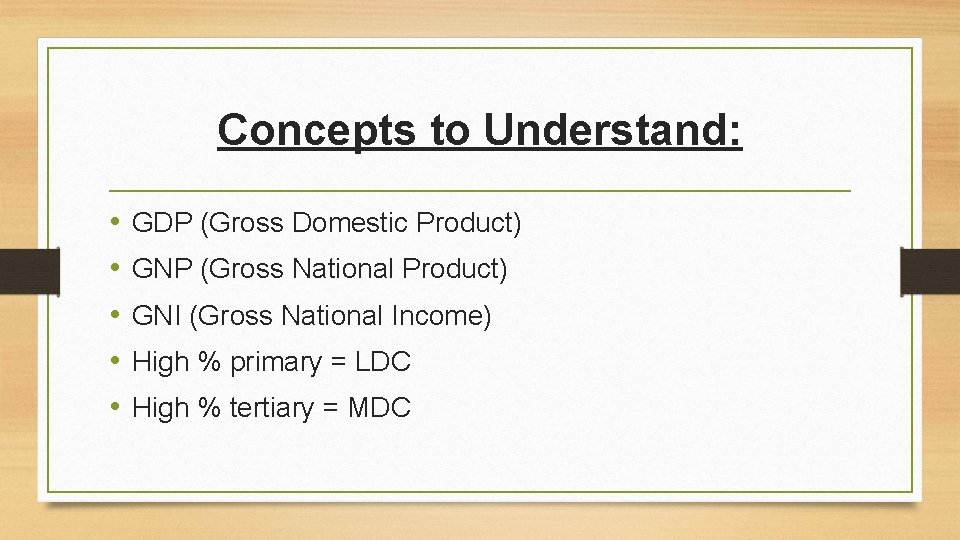
Concepts to Understand: • • • GDP (Gross Domestic Product) GNP (Gross National Product) GNI (Gross National Income) High % primary = LDC High % tertiary = MDC
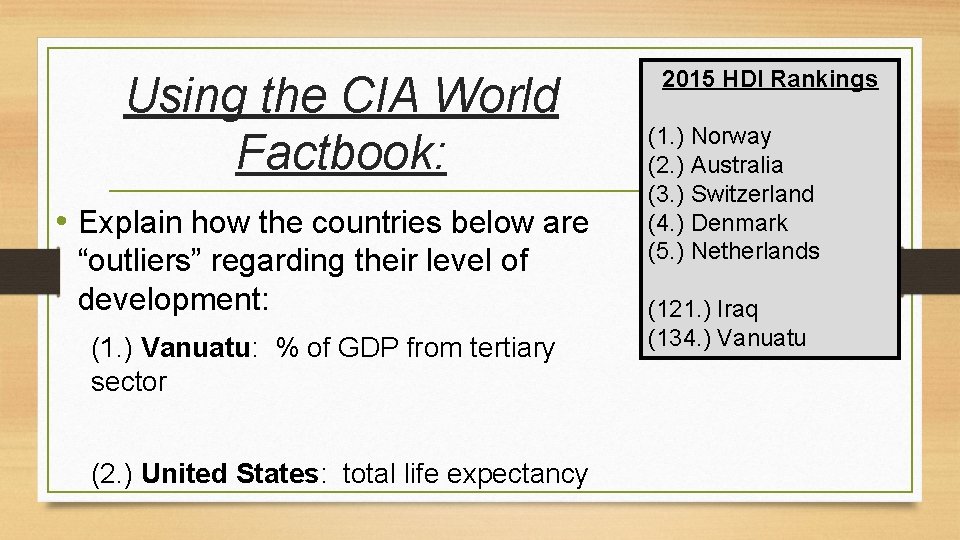
Using the CIA World Factbook: • Explain how the countries below are “outliers” regarding their level of development: (1. ) Vanuatu: % of GDP from tertiary sector (2. ) United States: total life expectancy 2015 HDI Rankings (1. ) Norway (2. ) Australia (3. ) Switzerland (4. ) Denmark (5. ) Netherlands (121. ) Iraq (134. ) Vanuatu
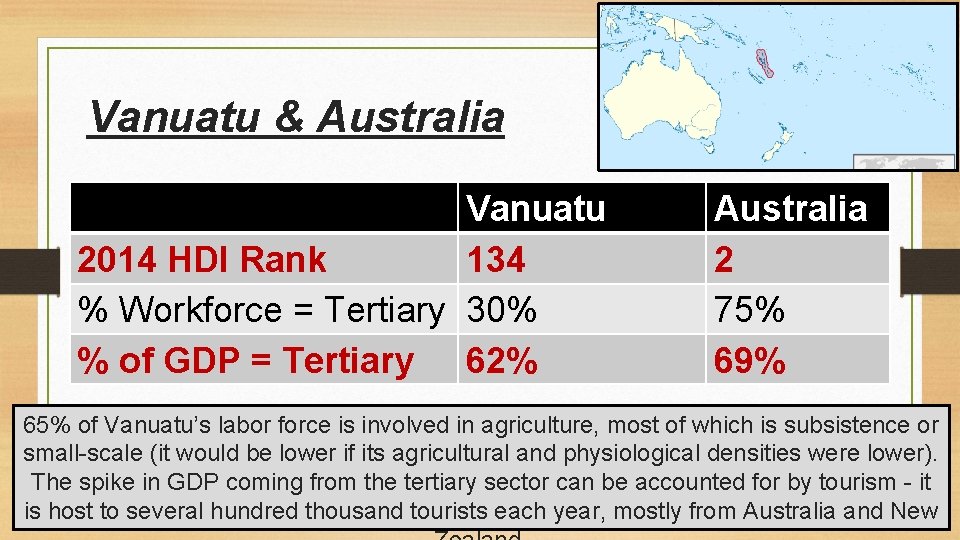
Vanuatu & Australia Vanuatu 2014 HDI Rank 134 % Workforce = Tertiary 30% % of GDP = Tertiary 62% Australia 2 75% 69% 65% of Vanuatu’s labor force is involved in agriculture, most of which is subsistence or small-scale (it would be lower if its agricultural and physiological densities were lower). The spike in GDP coming from the tertiary sector can be accounted for by tourism - it is host to several hundred thousand tourists each year, mostly from Australia and New
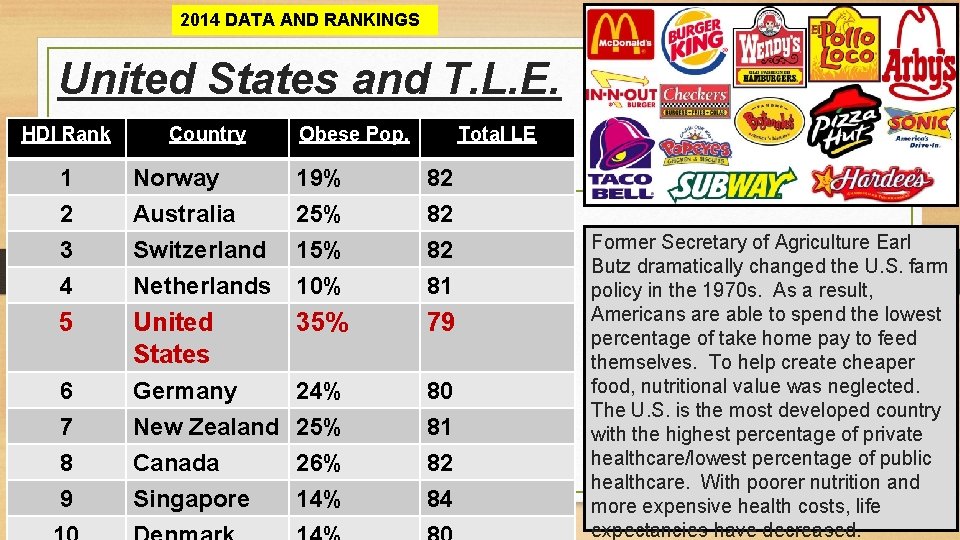
2014 DATA AND RANKINGS United States and T. L. E. HDI Rank Country Obese Pop. Total LE 1 2 3 Norway Australia Switzerland 19% 25% 15% 82 82 82 4 Netherlands 10% 81 5 United States 35% 79 6 7 8 9 Germany New Zealand Canada Singapore 24% 25% 26% 14% 80 81 82 84 Former Secretary of Agriculture Earl Butz dramatically changed the U. S. farm policy in the 1970 s. As a result, Americans are able to spend the lowest percentage of take home pay to feed themselves. To help create cheaper food, nutritional value was neglected. The U. S. is the most developed country with the highest percentage of private healthcare/lowest percentage of public healthcare. With poorer nutrition and more expensive health costs, life expectancies have decreased.