
DEVELOPMENT AND ASSESSMENT OF DEVELOPMENT Author Prof Dr


- Slides: 46
DEVELOPMENT AND ASSESSMENT OF DEVELOPMENT Author: Prof. Dr. M. D. RAVI Vice Principal, JSS Medical College Mysore. Reviewed by: Dr Piyush Gupta. Dr Mahadeviah
PRINCIPLES • Development is cephalocaudal- upper body muscles, neck, chest, arms, develop before lower body muscles. • Development is orderly – one skill or development precedes another in a specific sequence • Development proceeds from the large to the small- control over large muscles precedes control over small muscles
Principles Primitive reflexes need to be lost before voluntary movement can be achieved There may be a difference in the rate at which milestones are achieved or one milestone may be skipped, but the sequence of acquiring milestones is constant
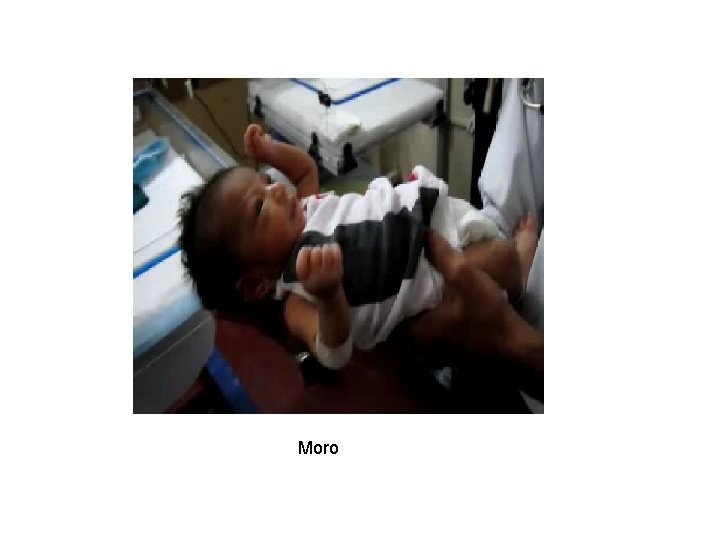
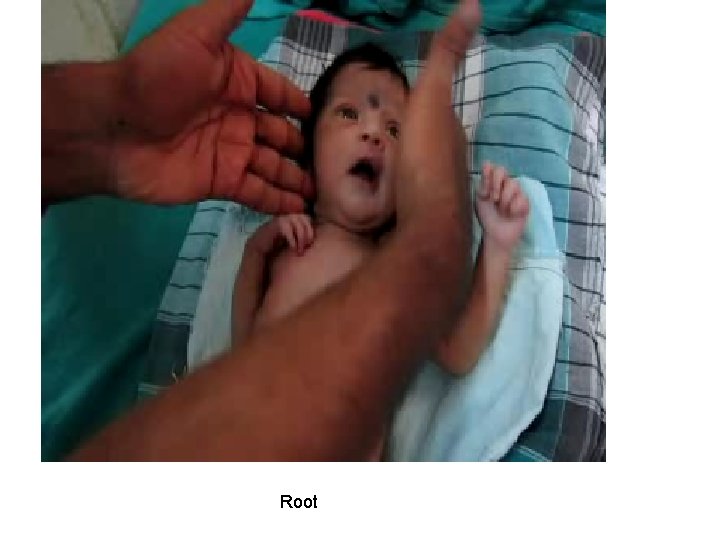
TIMING OF SOME REFLEXES Palmar grasp – app 28 wks disapp 2 -3 mo Rooting app 32 wks less prominent after 1 month Moro app 28 -32 wks disapp 5 -6 mo Tonic neck app 35 wks disapp 6 -7 months Parachute – app 7 -8 months remains throughout life Landau app 3 mo disapp around 1 yr
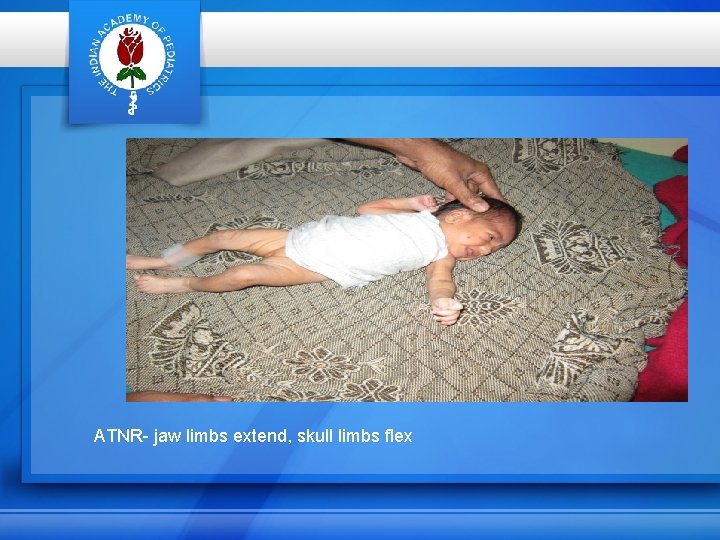
ATNR- jaw limbs extend, skull limbs flex
Moro
Root
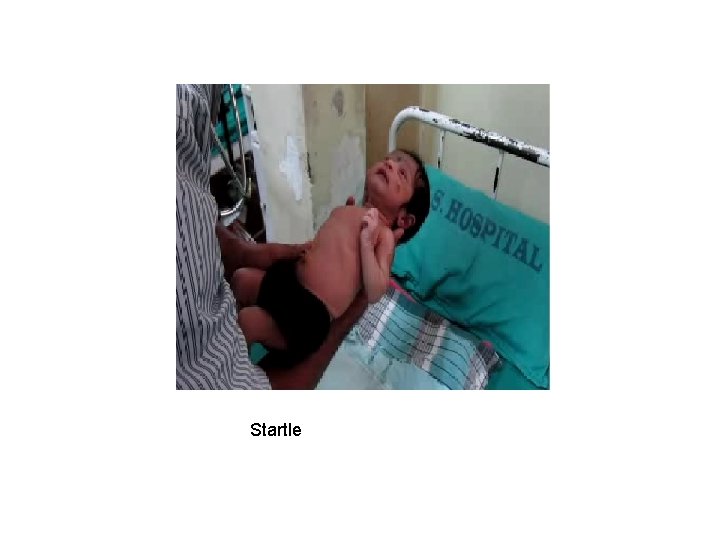
Startle
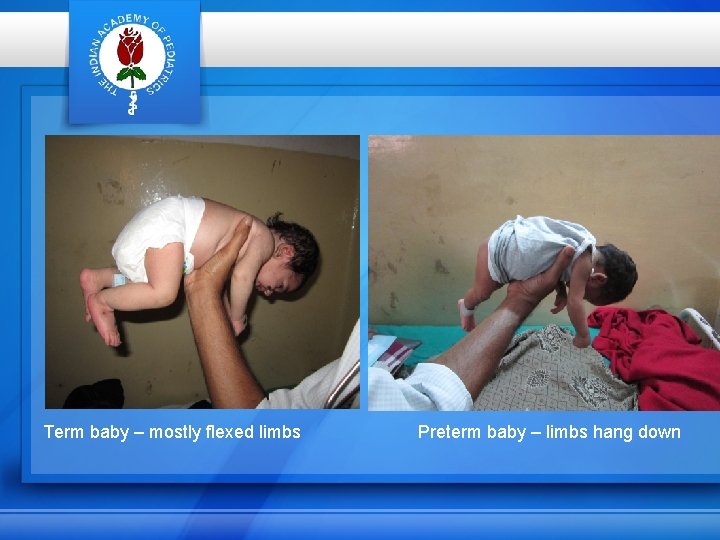
Differences between preterm and term Preterms have greater extensor tone, term babies have predominantly flexor tone In prone, the preterm is flat on bed while a term baby has knees flexed under trunk In ventral supension, a preterm’s limbs hang down, while a term baby has flexed knees and elbows and some neck extension
Term baby – mostly flexed limbs Preterm baby – limbs hang down
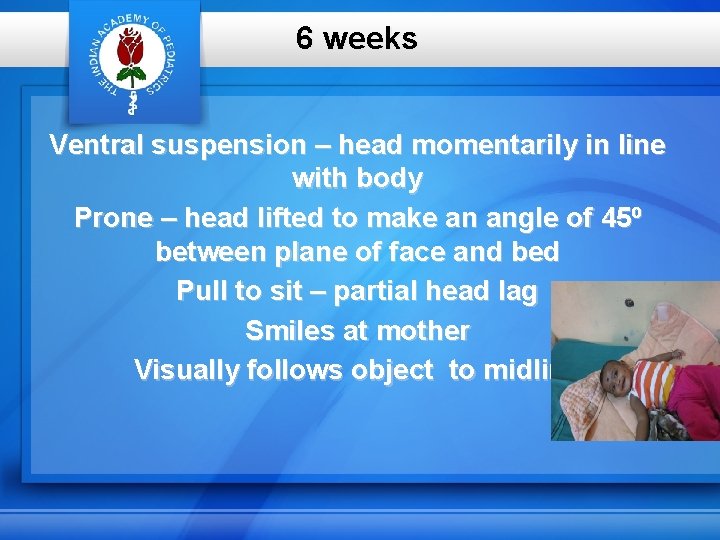
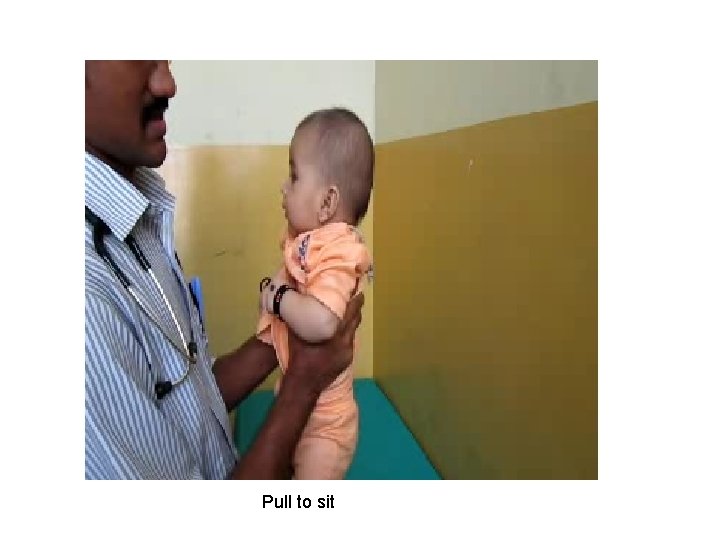
6 weeks Ventral suspension – head momentarily in line with body Prone – head lifted to make an angle of 45⁰ between plane of face and bed Pull to sit – partial head lag Smiles at mother Visually follows object to midline
Pull to sit
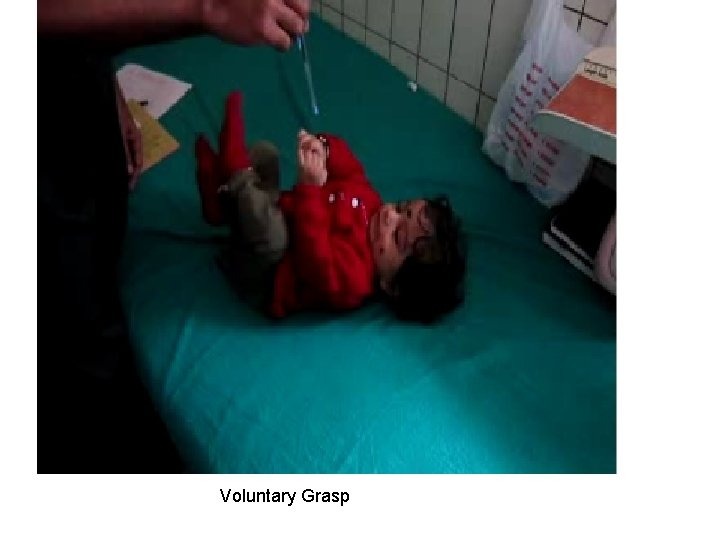
12 weeks Ventral suspension – head in line with or higher than body Prone – Plane of face at angle of 45 -90⁰, bears weight on forearm Holds object placed in hand voluntarily Follows dangling toy 180⁰ Vocalises with pleasure
Voluntary Grasp
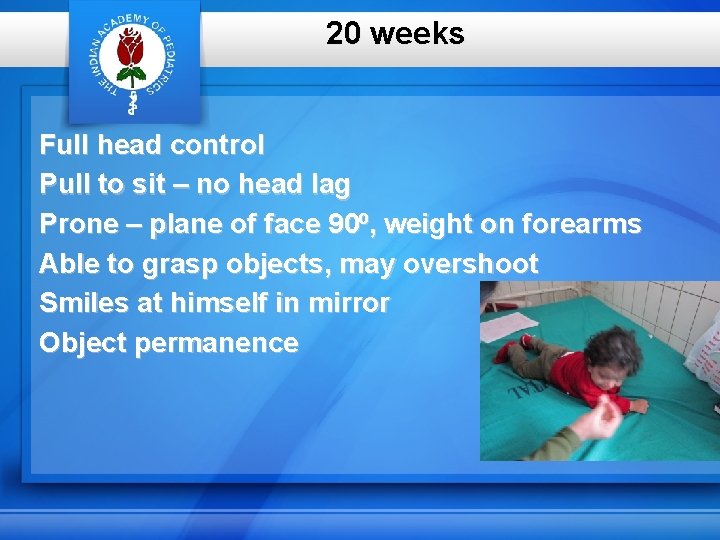
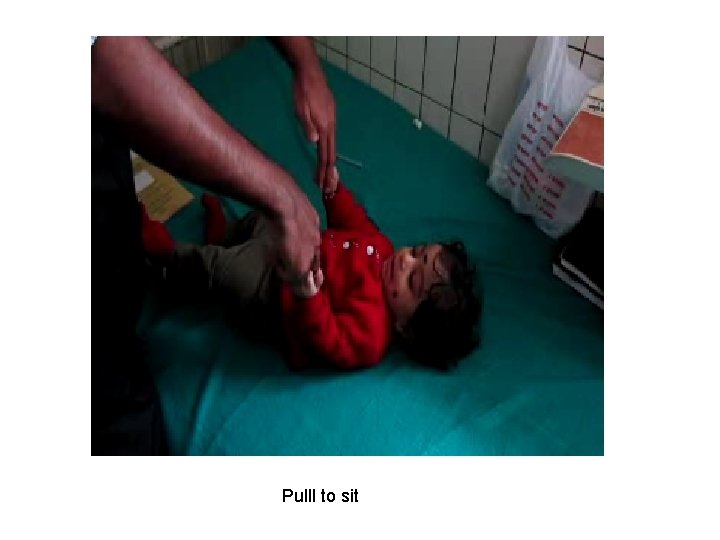
20 weeks Full head control Pull to sit – no head lag Prone – plane of face 90⁰, weight on forearms Able to grasp objects, may overshoot Smiles at himself in mirror Object permanence
Pulll to sit
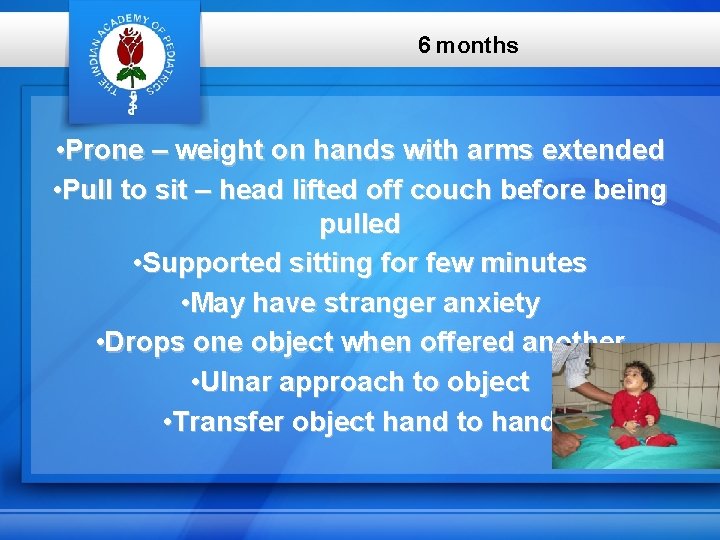
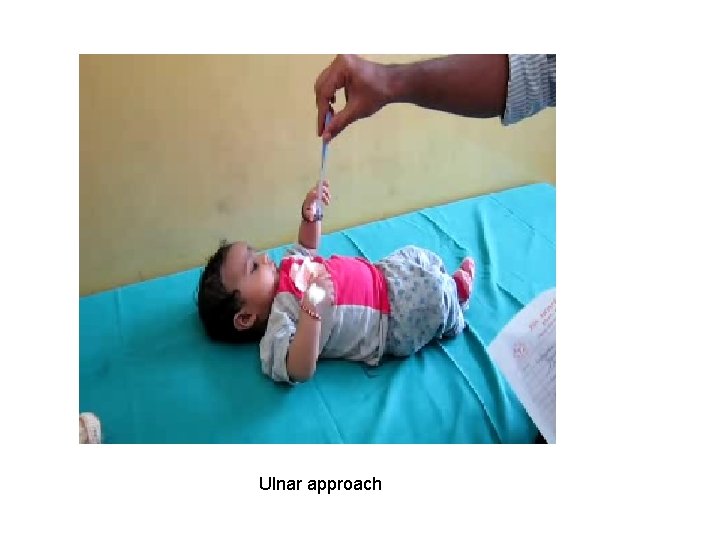
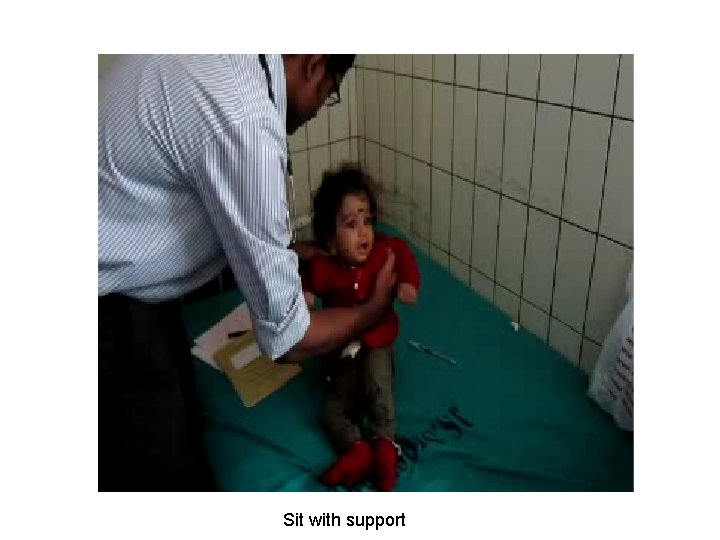
6 months • Prone – weight on hands with arms extended • Pull to sit – head lifted off couch before being pulled • Supported sitting for few minutes • May have stranger anxiety • Drops one object when offered another • Ulnar approach to object • Transfer object hand to hand
Ulnar approach
Sit with support
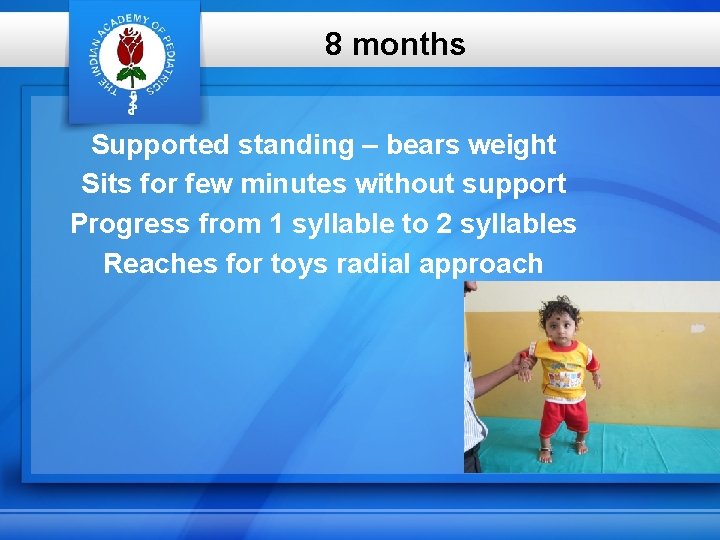
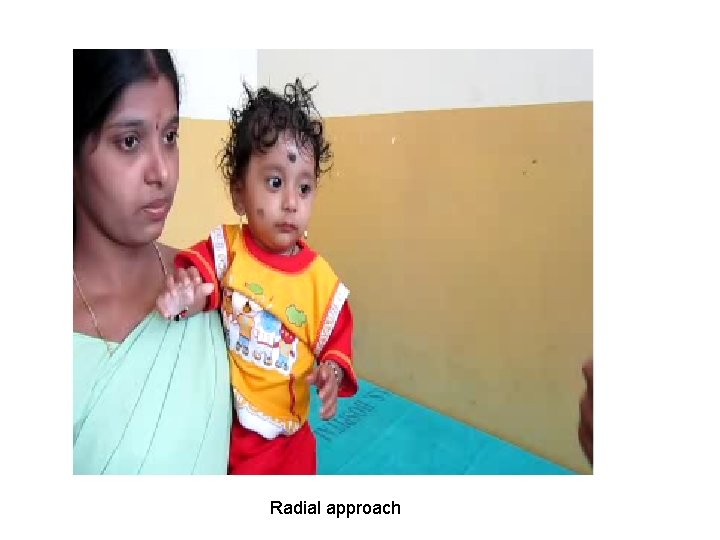
8 months Supported standing – bears weight Sits for few minutes without support Progress from 1 syllable to 2 syllables Reaches for toys radial approach
Radial approach
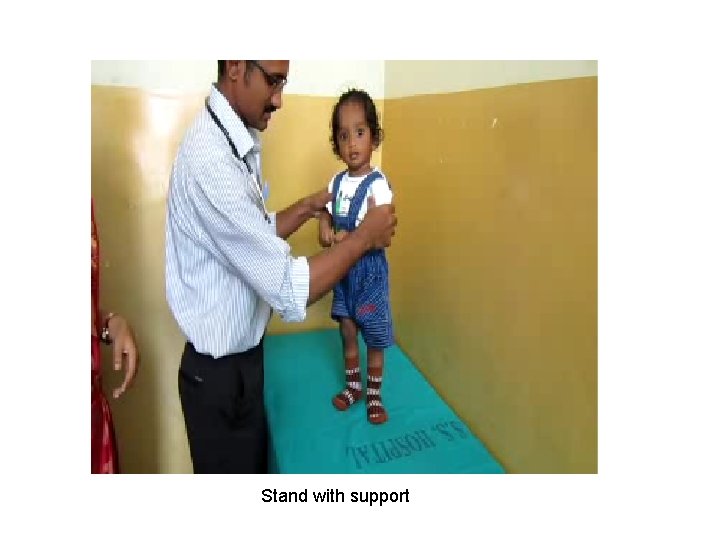
Stand with support
9 months Stands holding on to furniture Sits steadily for about 10 mins Tries to crawl, may go backwards or move by rolling Pincer grasp developing Goes for objects with index finger
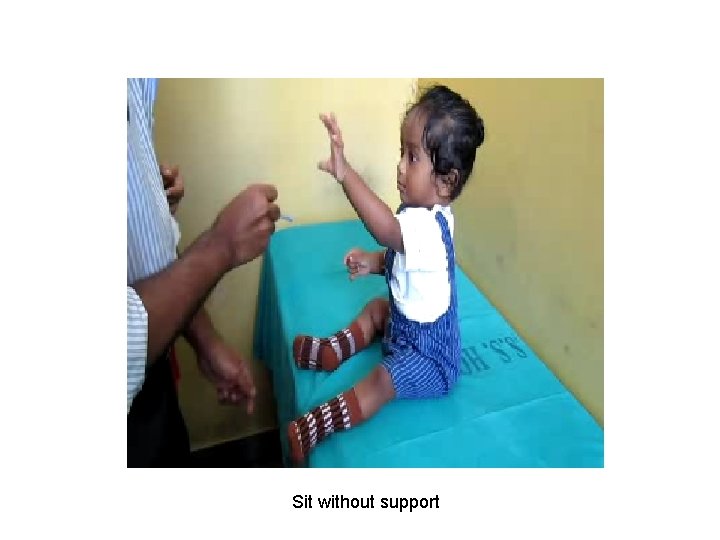
Sit without support
11 months Pulls self to sit or stand Stable sitting Creeps with abdomen off floor Places object into examiner’s hand, will not release it Casting One word with meaning
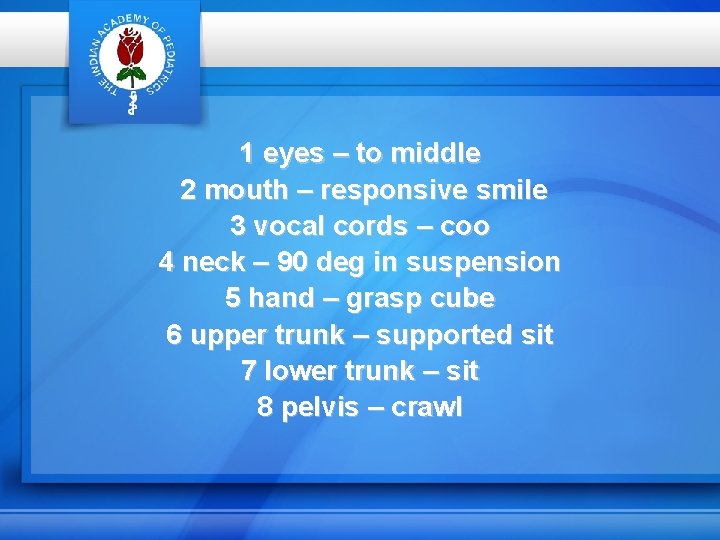
1 eyes – to middle 2 mouth – responsive smile 3 vocal cords – coo 4 neck – 90 deg in suspension 5 hand – grasp cube 6 upper trunk – supported sit 7 lower trunk – sit 8 pelvis – crawl
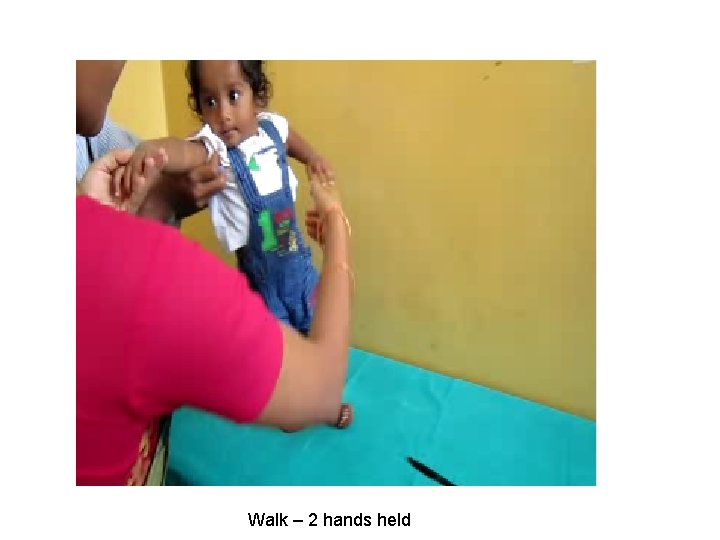
1 year Walks with 1 or 2 hands held Walks like a bear independently ( on hands and feet) 2 words with meaning
Walk – 2 hands held
15 months Can get up to stand without support Walks without help – broad based gait Tower of 2 cubes Feeds self Jargon speech
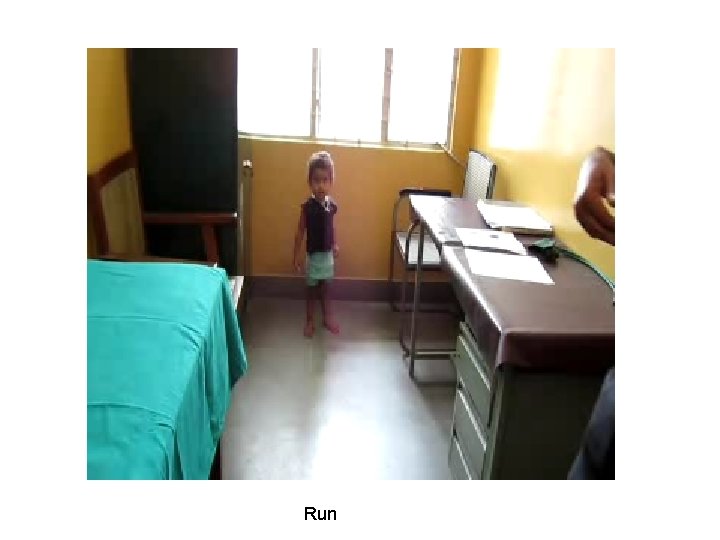
18 moths • Climbs stairs, runs • Throws ball • Gait more mature • Tower of 3 cubes • Scribbles • Points to pictures in book or parts of body, knows 1 • Joins 2 words
Run
2 yrs Goes up and down stairs, kicks ball 4 or more parts of body Builds train with cubes without chimmeny Tower 6 -7 cubes Puts on pants, shoes, socks Uses words I, me & you
3 yrs Jumps with both feet Goes upstairs one foot per step Rides tricycle Tower 9 cubes Dresses and undresses self Knows nursery rhymes
Older 3 to 4 years -Standing on one foot 5 to 6 years -Hopping 7 to 8 years – Can play skipping rope
Manipulation 6 months – transfer object hand to hand, palmar grasp of cube 9 months – index finger approach to object, pincer grasp 1 year mature grasp of cube 2 years – hold pen/pencil 3 -5 years - paints
DEVELOPMENTAL MILESTONES First years Revision Gross motor – Head steady in sitting – 2 mo Pull to sit, no head lag – 3 mo Hands together in midline – 3 mo ATNR gone – 4 mo Sits without support – 6 mo Rolls back to stomach – 6. 5 mo Walks alone – 12 mo Runs – 16 mo
DEVELOPMENTAL MILESTONES FIRS 2 yrs Fine motor – Grasps rattle – 3. 5 mo Reaches for object – 4 mo Palmar grasp gone – 4 mo Transfer object hand to hand – 5. 5 mo Thumb finger grasp – 8 mo Turns pages of book – 12 mo Scribbles – 13 mo Tower of 2 cubes – 15 mo Tower of 6 cubes – 22 mo
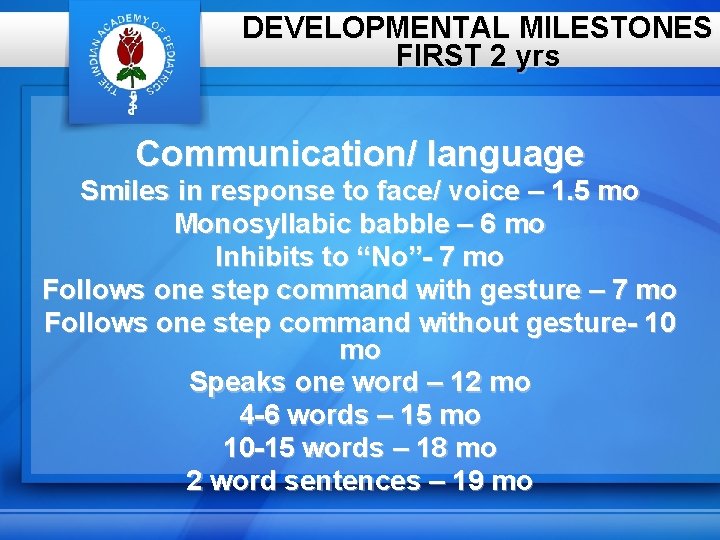
DEVELOPMENTAL MILESTONES FIRST 2 yrs Communication/ language Smiles in response to face/ voice – 1. 5 mo Monosyllabic babble – 6 mo Inhibits to “No”- 7 mo Follows one step command with gesture – 7 mo Follows one step command without gesture- 10 mo Speaks one word – 12 mo 4 -6 words – 15 mo 10 -15 words – 18 mo 2 word sentences – 19 mo
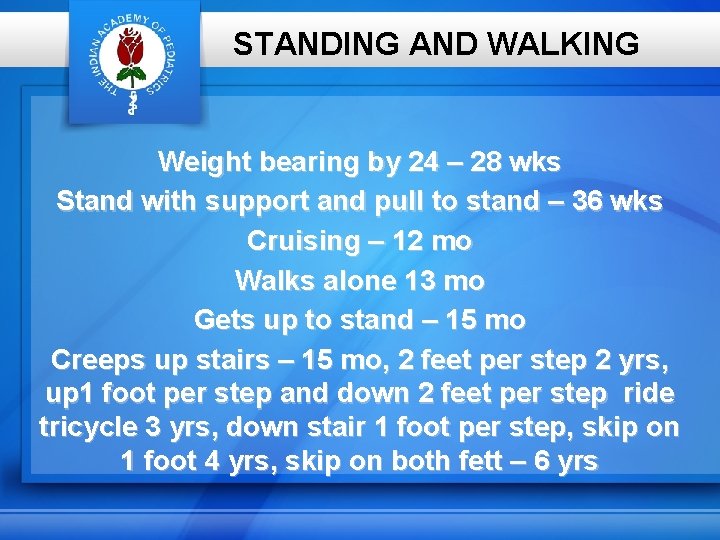
STANDING AND WALKING Weight bearing by 24 – 28 wks Stand with support and pull to stand – 36 wks Cruising – 12 mo Walks alone 13 mo Gets up to stand – 15 mo Creeps up stairs – 15 mo, 2 feet per step 2 yrs, up 1 foot per step and down 2 feet per step ride tricycle 3 yrs, down stair 1 foot per step, skip on 1 foot 4 yrs, skip on both fett – 6 yrs
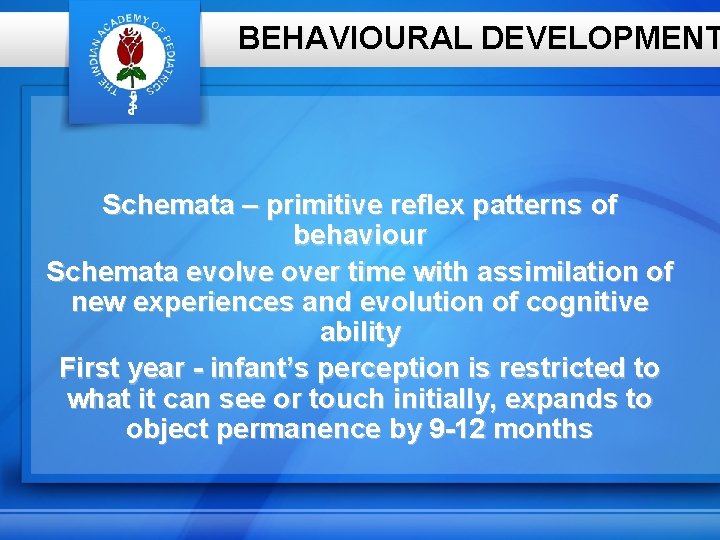
BEHAVIOURAL DEVELOPMENT Schemata – primitive reflex patterns of behaviour Schemata evolve over time with assimilation of new experiences and evolution of cognitive ability First year - infant’s perception is restricted to what it can see or touch initially, expands to object permanence by 9 -12 months
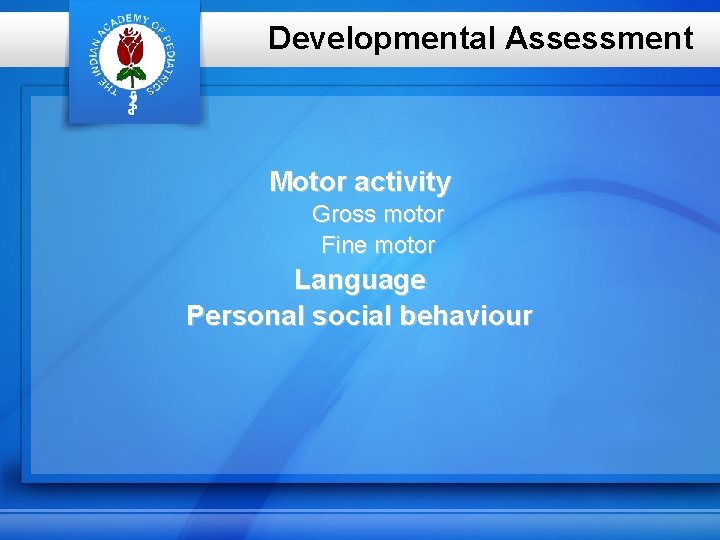
Developmental Assessment Motor activity Gross motor Fine motor Language Personal social behaviour
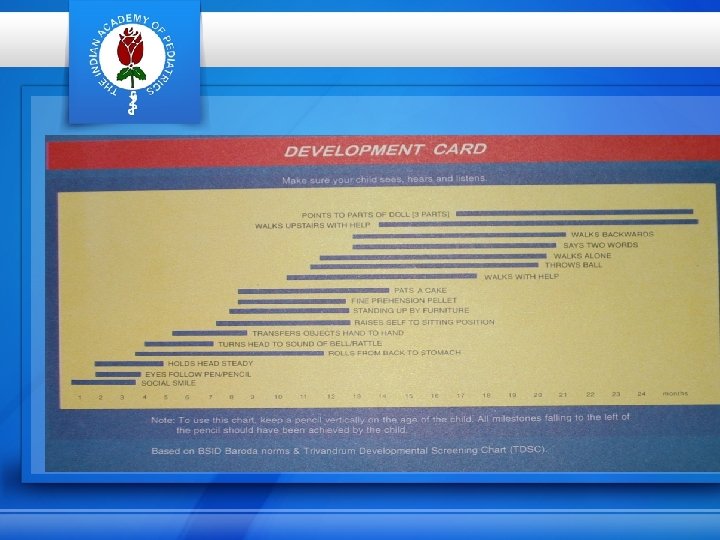
Scales Development Assesment Scales for Indian infants (Phatak scale or DASII) Denver Developmental Assesment Scale II Trivandrum Developmental Screening Chart Updated Amiel-Tison scale
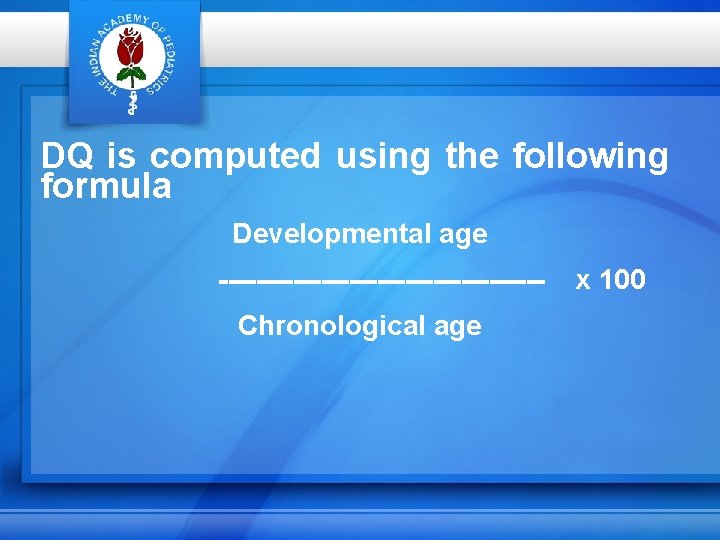
DQ is computed using the following formula Developmental age -----------------Chronological age x 100
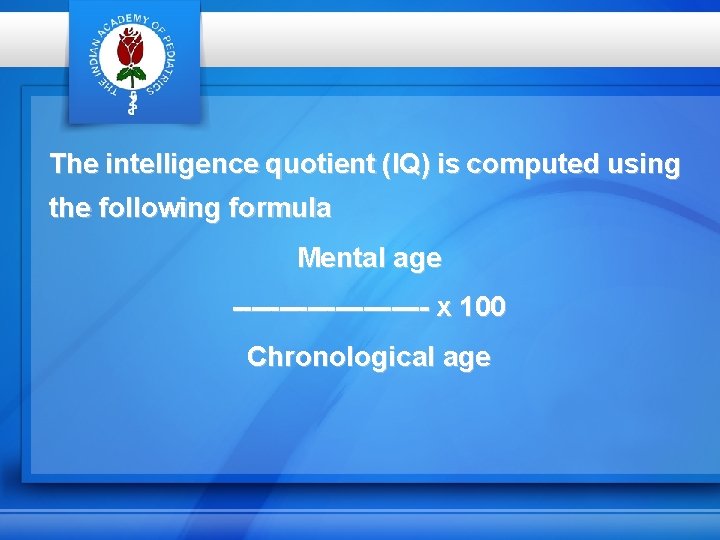
The intelligence quotient (IQ) is computed using the following formula Mental age ----------- x 100 Chronological age
Thank you