
Developing Trade Unions Advocacy Campaigns and Communication Strategy






- Slides: 26
Developing Trade Unions Advocacy, Campaigns and Communication Strategy By Naome Chakanya Senior Researcher Labour and Economic Research Institute of Zimbabwe (LEDRIZ)
Contents of the Presentation • • • Understanding advocacy Types of advocacy Steps in developing and advocacy strategy Practice- Developing and advocacy plan Practice – Communicating SDGs - Writing an SDG story
What is advocacy?
Influence Change Making changes to policies & practices to align to SDGs Directly and indirectly influence decision-makers and other stakeholders to support and implement actions SDGs Advoca cy Supporting achievement of SDGs Change How people perceive their ability to influence decisionmaking processes on SDGs
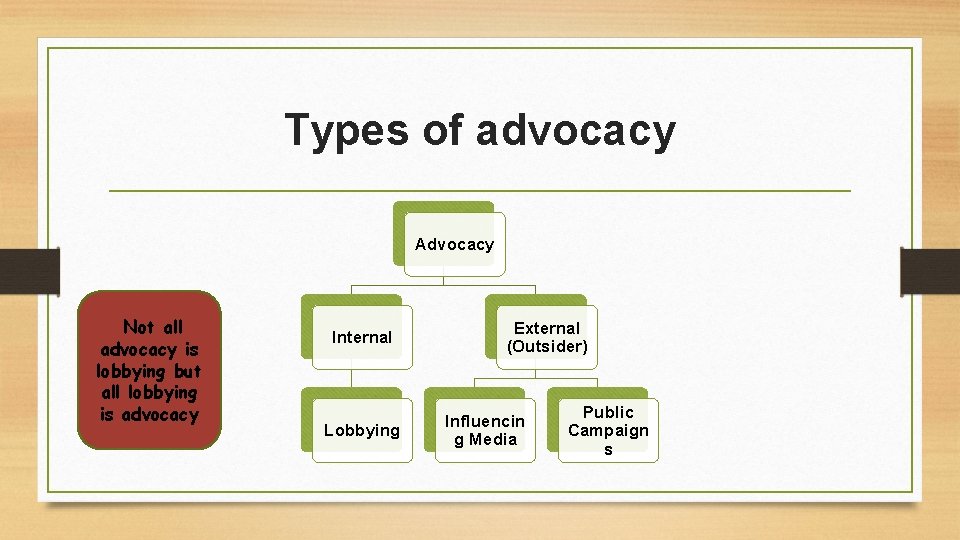
Types of advocacy Advocacy Not all advocacy is lobbying but all lobbying is advocacy Internal Lobbying External (Outsider) Influencin g Media Public Campaign s
What are the possible advocacy challenges?
Examples of advocacy challenges üWhat you are asking is not on the priority of the policy makers üLegitimacy / image as stakeholders üLack of appreciation of issues at hand üLack of well-informed positions / evidence based research üLack of mechanisms üNo collective approach at trade union level
Developing an Advocacy Strategy Questions to Address 1. Why you need a strategy for your advocacy? 2. How to develop your strategy? 3. How to implement your action plan?
Why you need a strategy for your advocacy? • Developing a strategy helps to: 1. Put resources (time, funds and skills) to their most effective use; 2. Minimise risks and maximise opportunities; 3. Identify opportunities for coordination and collaboration, and minimise duplication of effort; 4. Align advocacy with other areas of work and organisational objectives, both long term and short term.
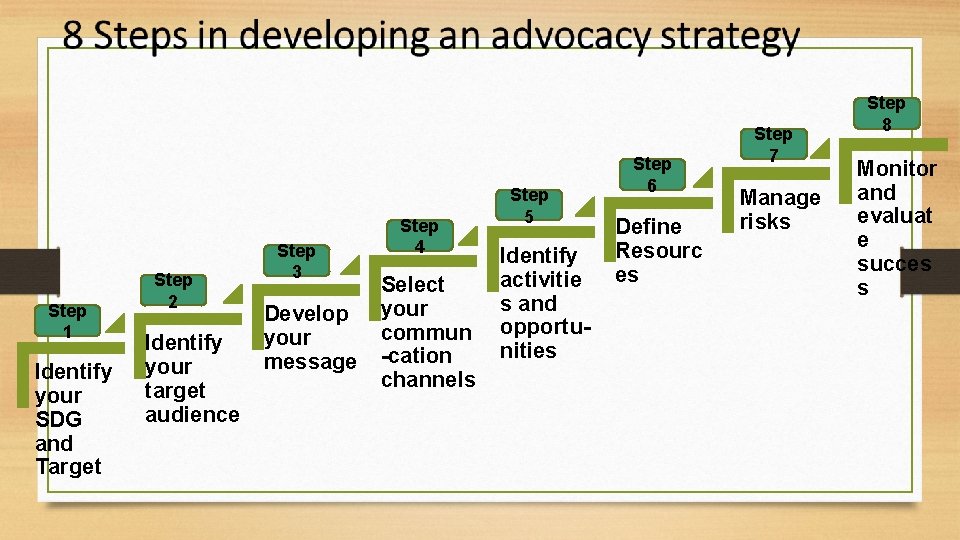
Step 1 Identify your SDG and Target Step 2 Identify your target audience Step 3 Develop your message Step 4 Select your commun -cation channels Step 5 Identify activitie s and opportunities Step 6 Define Resourc es Step 7 Manage risks Step 8 Monitor and evaluat e succes s
STEP 1: Identify your SDG and Target SMART analysis • Specific: what exactly do you want to happen? • Measurable: will you know when you have achieved it? • Achievable: is it realistic or even possible to achieve your objective, given your resources and time? • Relevant: is it relevant and appropriate to all stakeholders, and to the problem itself? • Time-bound: by when do you want it to happen?
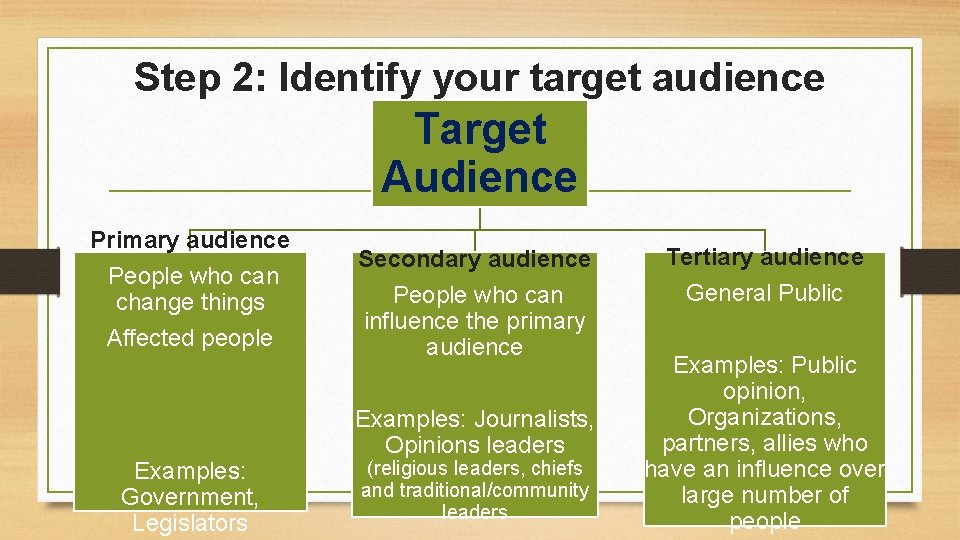
Step 2: Identify your target audience Target Audience Primary audience People who can change things Affected people Examples: Government, Legislators Secondary audience Tertiary audience People who can influence the primary audience General Public Examples: Journalists, Opinions leaders (religious leaders, chiefs and traditional/community leaders Examples: Public opinion, Organizations, partners, allies who have an influence over large number of people
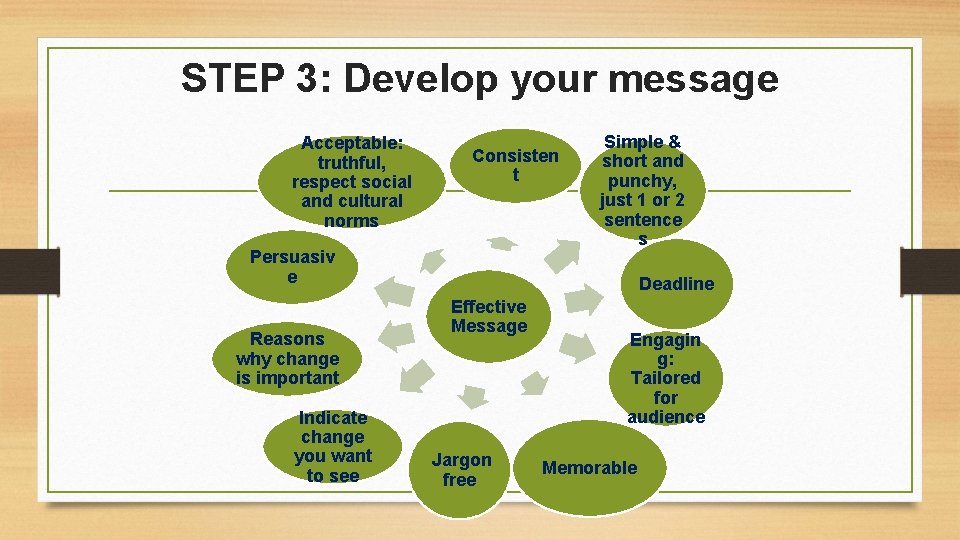
STEP 3: Develop your message Acceptable: truthful, respect social and cultural norms Consisten t Persuasiv e Reasons why change is important Indicate change you want to see Simple & short and punchy, just 1 or 2 sentence s Deadline Effective Message Jargon free Engagin g: Tailored for audience Memorable
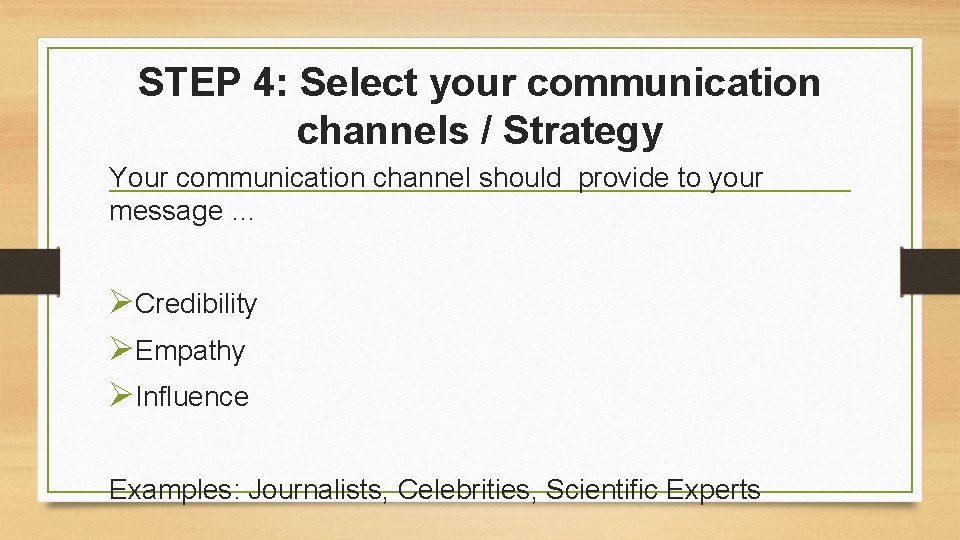
STEP 4: Select your communication channels / Strategy Your communication channel should provide to your message … ØCredibility ØEmpathy ØInfluence Examples: Journalists, Celebrities, Scientific Experts
STEP 5: Identify activities. Lobbying and Formal –meetings opportunities Informal- corridors, during events Activities Public campaigns Online, street action Media STEP 5 Interviews, press conference Opportunities Where? & when?
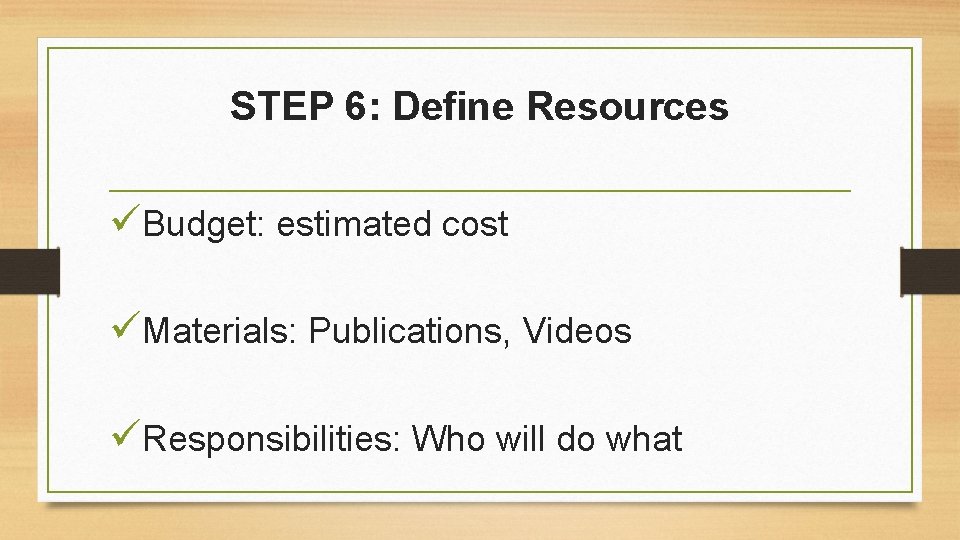
STEP 6: Define Resources üBudget: estimated cost üMaterials: Publications, Videos üResponsibilities: Who will do what
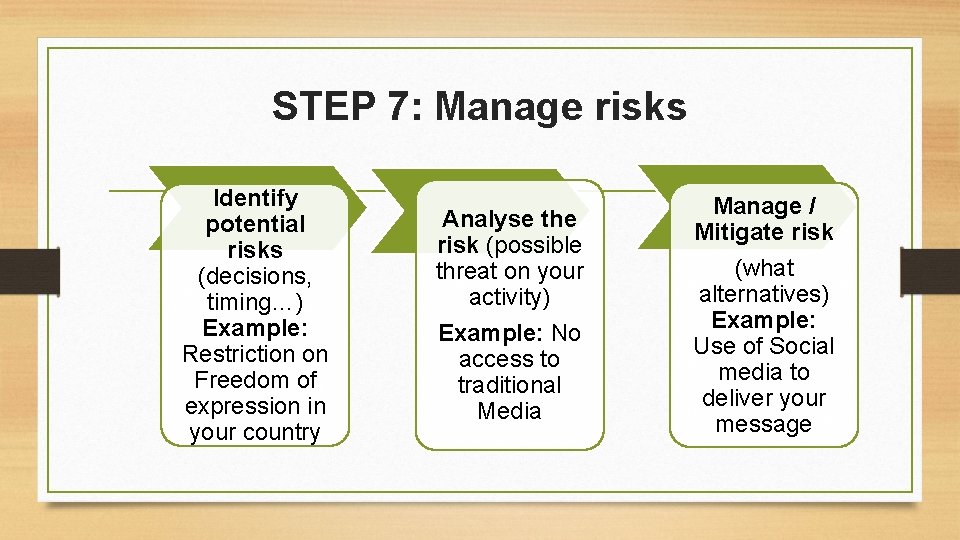
STEP 7: Manage risks Identify potential risks (decisions, timing…) Example: Restriction on Freedom of expression in your country Analyse the risk (possible threat on your activity) Example: No access to traditional Media Manage / Mitigate risk (what alternatives) Example: Use of Social media to deliver your message
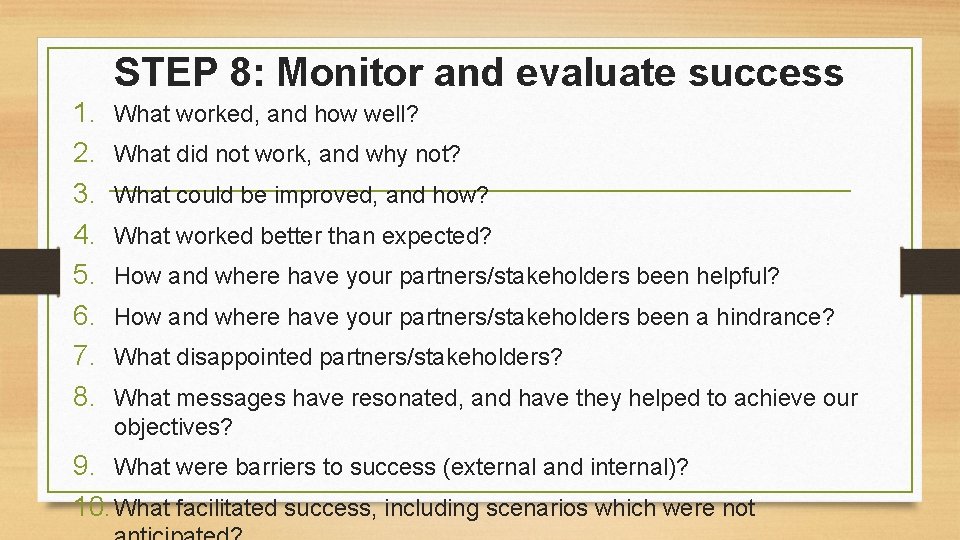
STEP 8: Monitor and evaluate success 1. 2. 3. 4. 5. 6. 7. 8. What worked, and how well? What did not work, and why not? What could be improved, and how? What worked better than expected? How and where have your partners/stakeholders been helpful? How and where have your partners/stakeholders been a hindrance? What disappointed partners/stakeholders? What messages have resonated, and have they helped to achieve our objectives? 9. What were barriers to success (external and internal)? 10. What facilitated success, including scenarios which were not
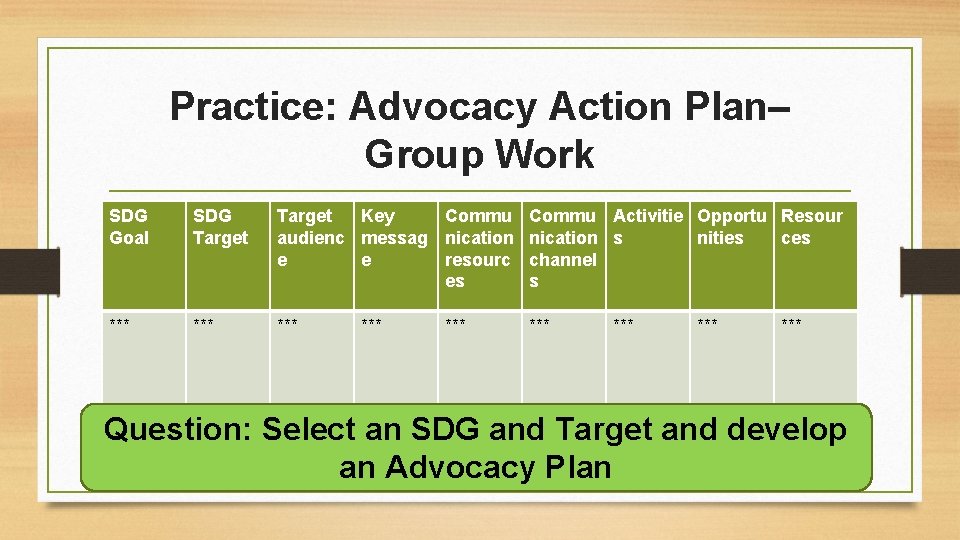
Practice: Advocacy Action Plan– Group Work SDG Goal SDG Target Key Commu Activitie Opportu Resour audienc messag nication s nities ces e e resourc channel es s *** *** *** Question: Select an SDG and Target and develop an Advocacy Plan
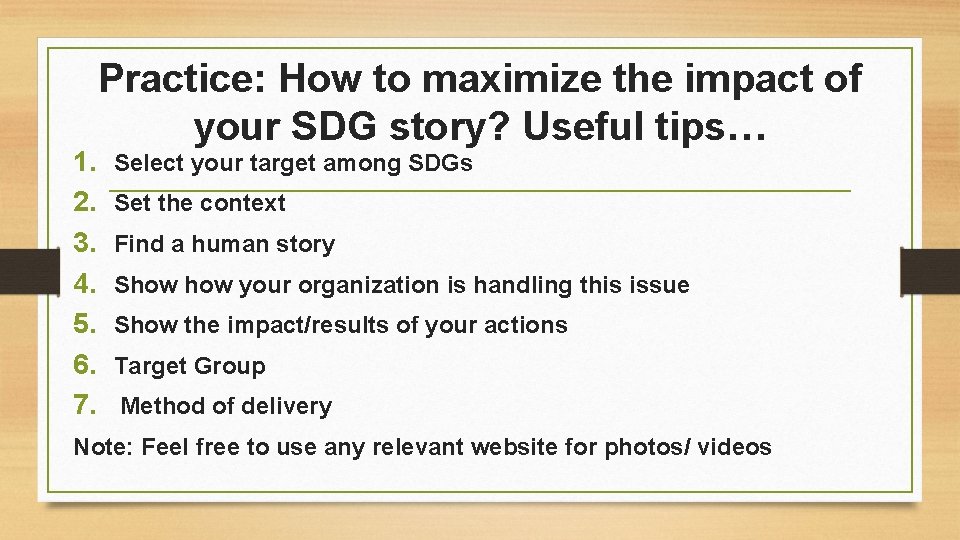
1. 2. 3. 4. 5. 6. 7. Practice: How to maximize the impact of your SDG story? Useful tips… Select your target among SDGs Set the context Find a human story Show your organization is handling this issue Show the impact/results of your actions Target Group Method of delivery Note: Feel free to use any relevant website for photos/ videos
Communication Strategy
COMMUNICATION STRATEGY
Communication Strategy Components: 1. How to you communicate differently?
Communication Strategy Components: 2. What are the Communication Methodologies?
Thank you!