
Developing the Leader Within You Written By John
Developing the Leader Within You Written By: John C. Maxwell
About the Author… n John C. Maxwell is an internationally recognized leadership expert, speaker, and author who has sold over 12 million books. His organizations have trained more than one million leaders worldwide!
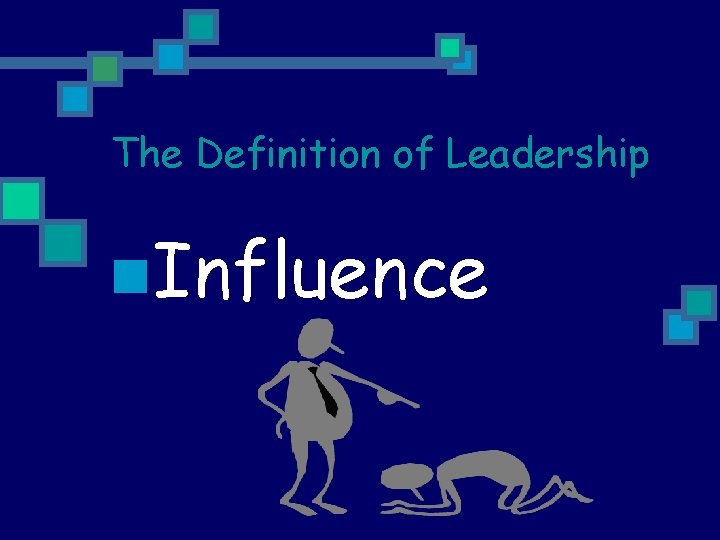
The Definition of Leadership n. Influence
“He who thinketh he leadeth and hath no one following him is only taking a walk. ” n n n Leadership is the ability to obtain followers We never know who or how much we influence Five levels of leadership: Position, Permission, Production, People Development, and Personhood
n n n 1. Position (RIGHTS)- influence comes with title, authority, training, often by appointment 2. Permission (RELATIONSHIPS)“Getting people to work for you when they’re not obligated” 3. Production (RESULTS)- resultsoriented, not always “qualified” 4. People Development (REPRODUCTION) - empowers others, superior performance, key leaders 5. Personhood (RESPECT)- people follow because of who you are and what you represent
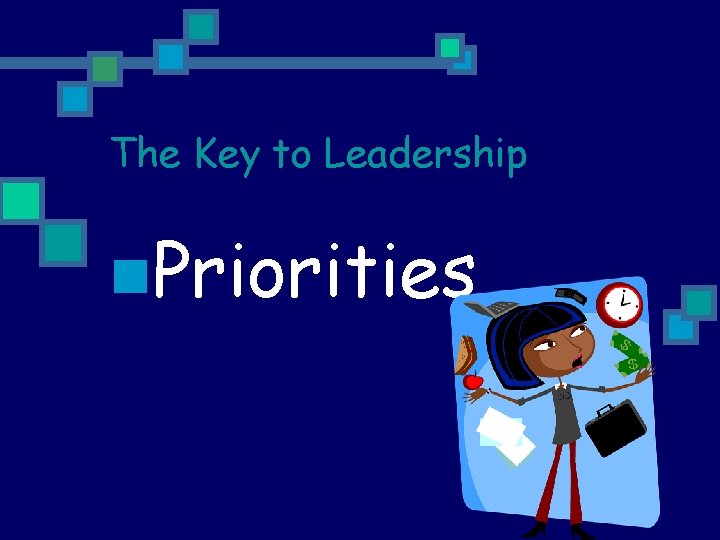
The Key to Leadership n. Priorities
“There are two things that are most difficult to get people to do: to think, and to do things in order of importance. ” n n 20/80 Principle- Ex. Spend 80% of your “people time” with the top 20% Prioritize assignments; high importance/high urgency first! Ask; What do I have to do that no one but me can do? A leader can give up anything except final responsibility.
n n n The effort expended should approximate the results expected (good return). Our best work takes place when we enjoy it. Be sure the 3 R’s are similar… (Requirements/Return/Reward) Utilize “planned neglect” Break the tie between two good options. “The reason most major goals are not achieved is that we spend our time doing second things first. ”
The Most Important Ingredients of Leadership n. Integrity
“The measure of a man’s real character is what he would do if he would never be found out. ” n n If what is said and done are the same, the results are consistent. Leaders must live by higher standards than their followers. We cannot lead anyone farther than we have been ourselves. We have become a nation of imitators, but there are few leaders worth imitating.
The Ultimate Test of Leadership n. Creating Positive Change
Change the leader, change the organization. Everything rises and falls on leadership. n n n When you’re through changing, you’re through. When the niche starts to change after we’ve become comfortable in it, it causes stress and insecurities. Resistance to change is universal, however, growth equals change.
n n n n Allow followers to give input and be part of the process of change. Make decisions at the lowest level possible. People view change according to the way they view the change agent. Ability to change deals with perspective. Focus on the VALUE of changing. Change is either revolution or evolution. Inform, Explain, Show Benefits, Ask, Communicate, Be Flexible & Adaptable
The Quickest Way to Gain Leadership n. Problem Solving
“In times like these it is always helpful to remember that there have always been times like these. ” n n n Two things to effectively solve problems: the right attitude and the right action plan. There is a difference between a person who has big problems, and a person who makes problems big. (Perspective!!) You cannot determine circumstances, but you CAN determine choice of attitude toward circumstances!
n n n Never solve a problem for a person; solve it with that person. How you think and feel about a problem will determine what you do about it. How to solve a problemn n Identify & Prioritize Define the Problem n n Ask questions Talk to the right people Get the Hard Facts Get INVOLVED in the process
The Extra Plus in Leadership n. Attitude
Life is 10% of what happens to me, and 90% how I react to it. n n n Leadership has less to do with position than it does with disposition. A leader’s attitude is caught by his or her followers more quickly than his or her actions. The leader’s attitude helps determine the attitudes of the followers.
n Six Stages of Attitude Change… n n n n Identify Problem Feelings Identify Problem Behavior Identify Problem Thinking Identify RIGHT thinking Make a Public Commitment to Right Thinking Develop a Plan for Right Thinking “Attitudes are nothing more than habits of thought, and can be acquired. ” n (Resolve, Reframe, Reenter, Repeat, Renewal)
Developing Your Most Appreciable Asset n. People
“No man will make a great leader who wants to do it all himself or to get all the credit for doing it. ” n n The more people you develop, the greater the extent of your dreams. The one who influences others to lead is a leader without limitations. People tend to become what the most important people in their lives think they will become. Motivation occurs in an environment in which people are free from influences that demotivate.
n n n Motivation is moving together for a mutual advantage. Confrontation is necessary when working with people, substitute “confront” with “clarify. ” Encourage people to work in areas of strength. #1 Motivational Principle- People DO what people SEE. The most valuable asset any company has is its people.
The Indispensable Quality of Leadership n. Vision
All great leaders possess two things: They know where they are going, and they are able to persuade others to follow. ” n n The credibility of a vision is determined by the leader. A vision is a clear picture of what the leader sees his or her group being or doing. Great goals are only reached by the united effort of many. Put the things THEY love in the picture.
“Man who says, ‘It cannot be done’ should not interrupt man who is doing it. ”
The Price Tag of Leadership n. Self- Discipline
n n n Discipline becomes the choice of achieving what you really want by doing things you now want to do. When we are wise, we want to conquer ourselves. Hard work is the accumulation of easy things you didn’t do when you should have. The will to prepare is more important than the will to succeed.
n n n Set your priorities and hold yourself accountable! Allow time for the unexpected. Work where you are the strongest 80% of the time. The higher a person rises in an organization, the less personal options and rights they should possess. Success depends not only on how well you do the things you enjoy, but how conscientiously you perform those duties you don’t. Good character is more to be praised than talent.
The Most Important Lesson of Leadership n. Staff Development
“The first method for estimating the intelligence of a ruler is to look at the men he has around him. ” n n n Only as we develop a team do we continually succeed. People repeat a pattern of behavior every time they accomplish something that they think they can do well and find deeply satisfying. Pick good people, tell then not to cut corners, and back them to the limits!
n n n The difference between playing to win and playing not to lose is the difference between success and mediocrity. Be a “not-survivor: ” take risks, make tough decisions, live on the edge, and make a difference. Understand the “personal agendas” of your team. Create a group identity, use “we” and “our, ” and share information with everyone that is affected. Wining teams keep improving!!

The End!!
- Slides: 32