
Developing Regulatory Impact Assessment In Azerbaijan Defining the
Developing Regulatory Impact Assessment In Azerbaijan Defining the problem (issue), the objectives and the options Baku, 21 -22 September 2016 Charles-Henri Montin, Smart Regulation Consultant Former Senior Regulatory Expert, Ministry of economy and finance, Paris blog: http: //smartregulation. net C. H. Montin, Baku, 18 -19 May 2015 1
Summary Ø Ø Ø Ø Importance of a good definition of the problem/issue to solve Example (motorbike accidents) How to identify and characterize the issue Example (rice paddies) Establish the need and rationale for action Formulating the policy objective Options and alternatives Selecting the best option 2
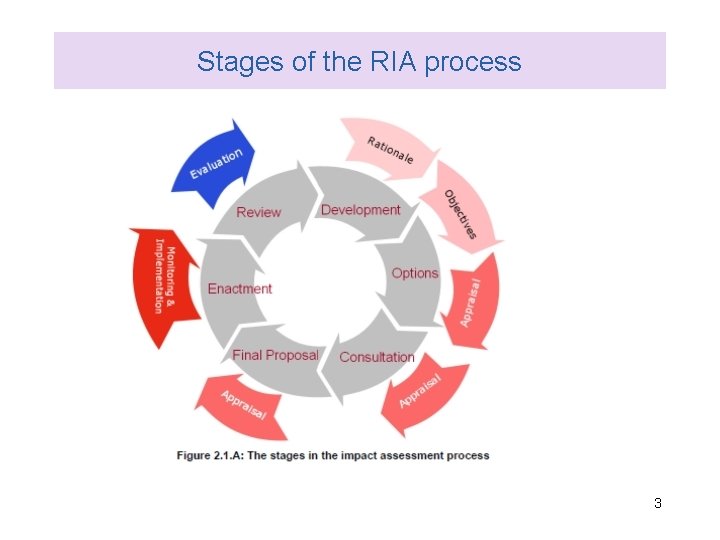
Stages of the RIA process 3
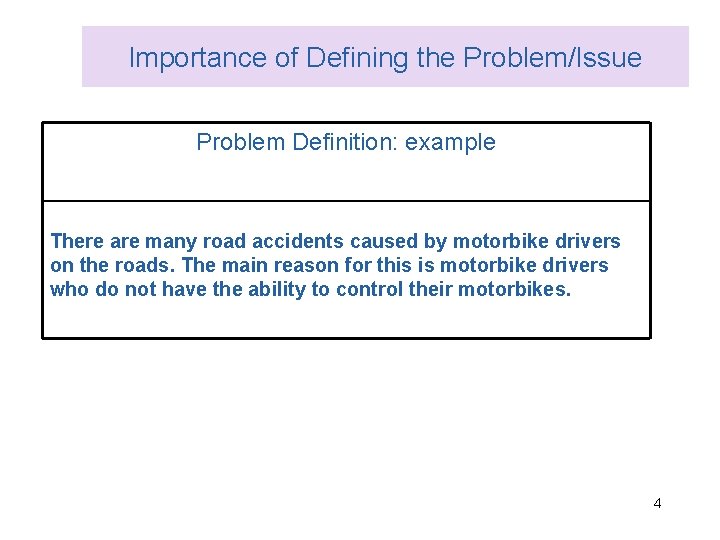
Importance of Defining the Problem/Issue Problem Definition: example There are many road accidents caused by motorbike drivers on the roads. The main reason for this is motorbike drivers who do not have the ability to control their motorbikes. 4
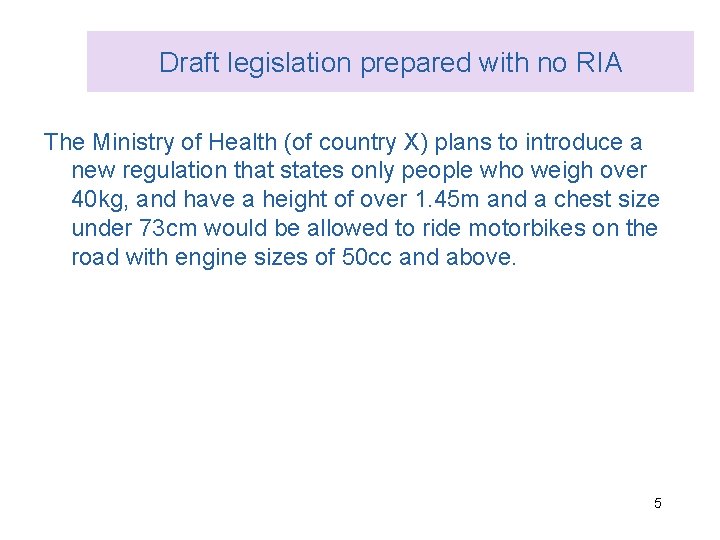
Draft legislation prepared with no RIA The Ministry of Health (of country X) plans to introduce a new regulation that states only people who weigh over 40 kg, and have a height of over 1. 45 m and a chest size under 73 cm would be allowed to ride motorbikes on the road with engine sizes of 50 cc and above. 5
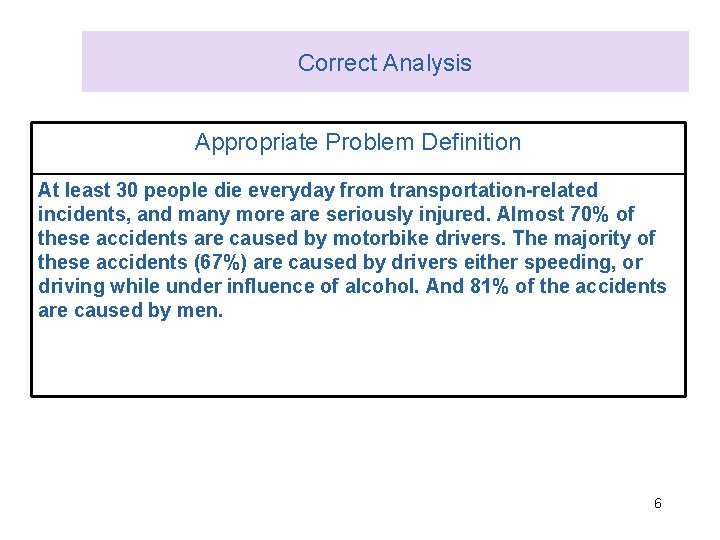
Correct Analysis Appropriate Problem Definition At least 30 people die everyday from transportation-related incidents, and many more are seriously injured. Almost 70% of these accidents are caused by motorbike drivers. The majority of these accidents (67%) are caused by drivers either speeding, or driving while under influence of alcohol. And 81% of the accidents are caused by men. 6
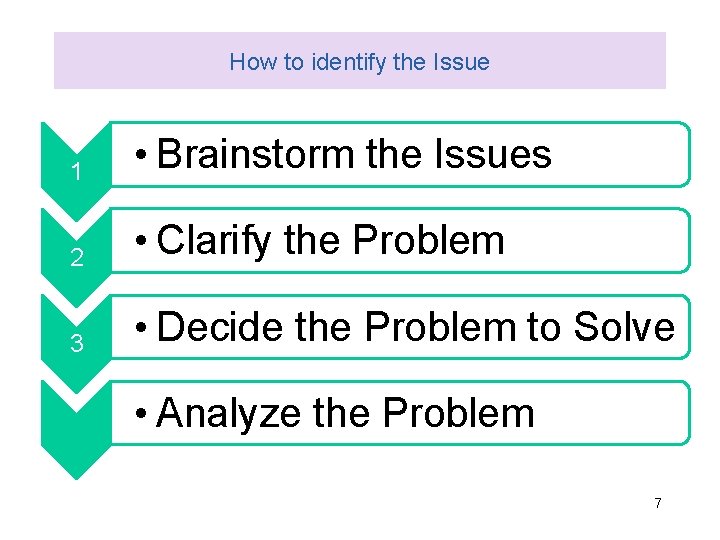
How to identify the Issue 1 • Brainstorm the Issues 2 • Clarify the Problem 3 • Decide the Problem to Solve • Analyze the Problem 7
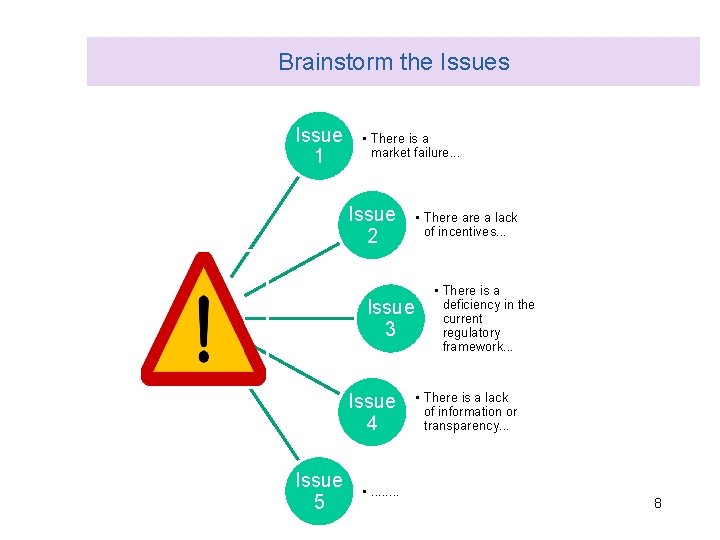
Brainstorm the Issues Issue 1 • There is a market failure. . . Issue 2 Issue 3 Issue 4 Issue 5 • . . . . • There a lack of incentives. . . • There is a deficiency in the current regulatory framework. . . • There is a lack of information or transparency. . . 8
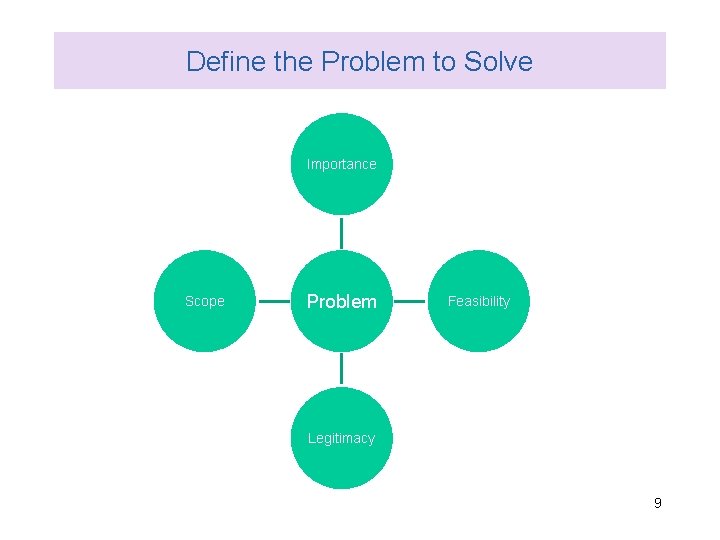
Define the Problem to Solve Importance Scope Problem Feasibility Legitimacy 9
Establish need for action and rationale for intervention Ø Ø Establish need for action (new regulation or policy): – Are there deficiencies in the regulations? e. g. a missing constitutional mandate, a legal vacuum produced by a a court ruling, a legislative mandate to develop regulation, a need to fulfill an electoral promise, etc. Is there a market failure ? – e. g. prices do not reflect the real costs and benefits to society ( "externalities" ); – insufficient supply of public goods; – little or no competition; – information insufficient for decision-makers ( including consumers and government ) 10
Problem definition: the process Identify and describe the issue – evidence about the nature of the problem – probability of the problem arising and frequency – who is impacted? – who is best placed to manage/resolve the problem Analyze and list the causes (examples) – longstanding known causes – new opportunities due to science and technology, – changes in attitudes – new awareness 11
Characteristics of a Problem/issue Ø Ø Ø When did the problem begin? What is the scale of the problem? Who is impacted by the problem? What regulations exist? Why is government intervention required? 12
Example Problem Definition There is a concern about Food Security due to the urbanization of agricultural land, particularly rice paddies. 13
Consequence of no RIA Ministry of Agriculture and Rural Development is proposing to increase the level of compensation payable to land owners of rice paddy fields to: 1) Deter developers from purchasing rice paddy fields 2) Provide higher and more equitable price for rice paddy fields 14
Correct Analysis Appropriate Problem Definition The production of rice is not an attractive business. The profitability of rice production is low. Often rice paddy fields vary in quality and are therefore also inefficient in their production. Therefore owners of rice paddy fields are choosing to sell their land find another source of income, possible in urban areas. 15
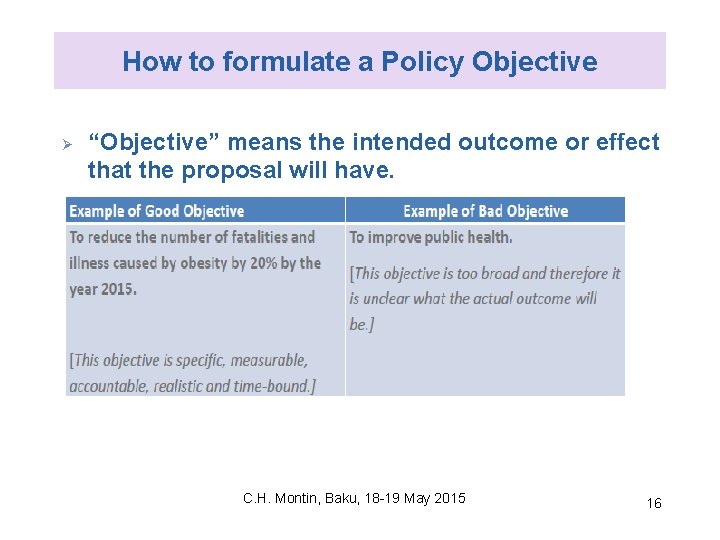
How to formulate a Policy Objective Ø “Objective” means the intended outcome or effect that the proposal will have. C. H. Montin, Baku, 18 -19 May 2015 16
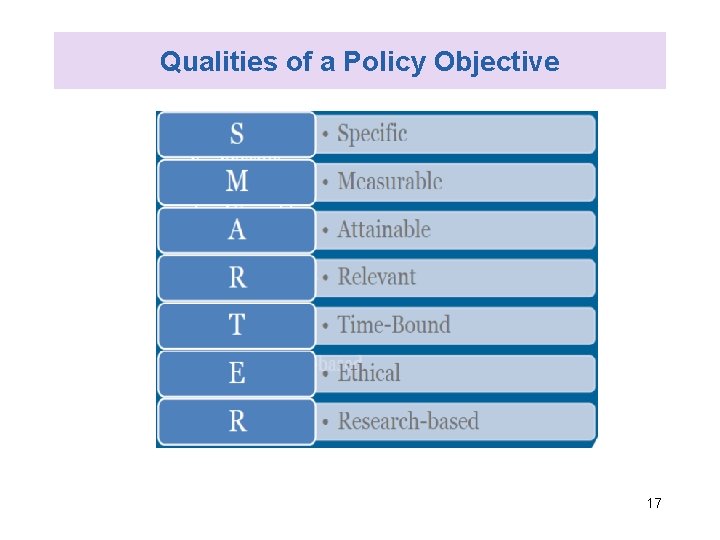
Qualities of a Policy Objective 17
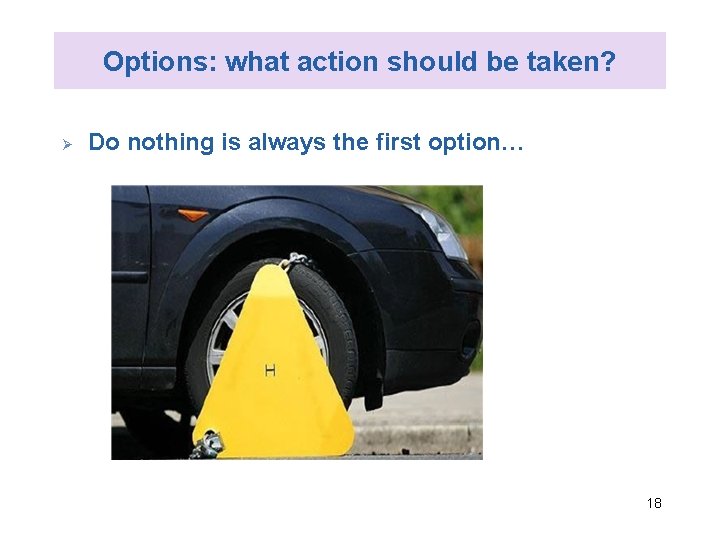
Options: what action should be taken? Ø Do nothing is always the first option… 18
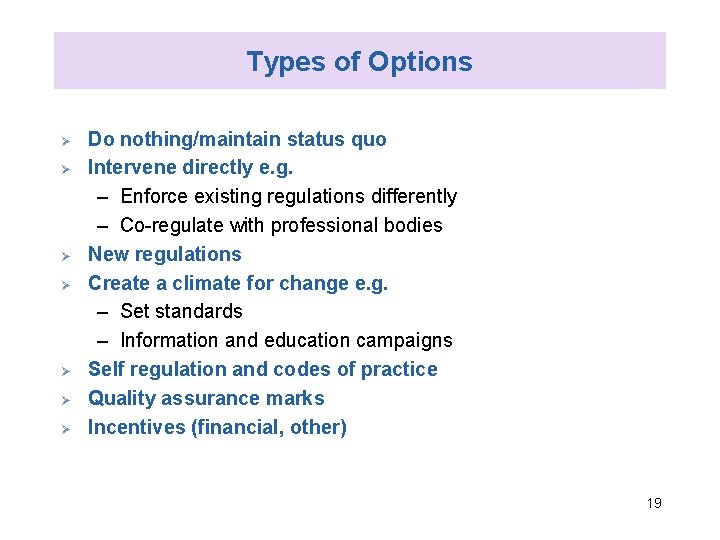
Types of Options Ø Ø Ø Ø Do nothing/maintain status quo Intervene directly e. g. – Enforce existing regulations differently – Co-regulate with professional bodies New regulations Create a climate for change e. g. – Set standards – Information and education campaigns Self regulation and codes of practice Quality assurance marks Incentives (financial, other) 19
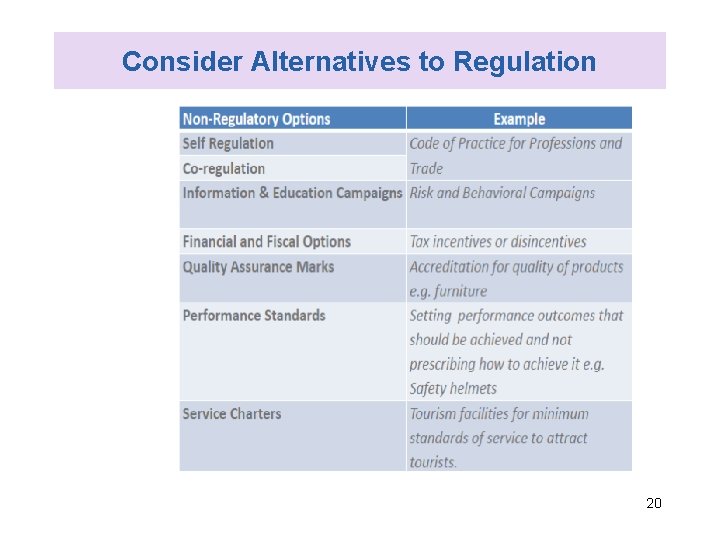
Consider Alternatives to Regulation 20
Selecting the right option You are looking for policy solutions that: Ø Address the defined problem (focused) Ø Will be effective in delivering the desired outcome (effective) Ø Are proportional to the problem Ø Fit with wider social, economic and environmental policy objectives Ø Give good value for money Ø Are enforceable 21
Conclusion Ø Ø How you intervene is as important as whether to intervene. You need to exercise logical judgement about which option to develop to take to a full Regulatory Impact Assessment 22
- Slides: 22