
Developing Positive Self Esteem Relationships 2 3 Objectives
Developing Positive Self Esteem Relationships 2. 3

Objectives �Differentiate between high and low self- esteem �Identify �List factors that influence self-esteem strategies for improving self-esteem
What Is Self-Esteem? �Self-esteem • Feeling of self-worth and value • Varies from person to person • Can vary according to life stage and lifestyle

Development of Self-Esteem �Partially hereditary • Some people are naturally more confident than others �Begins at birth �Continues �Fluctuates throughout life, depending on circumstances

High Self-Esteem Characteristics Ambitious Confident Sets Goals Loving and Kind Good Communication Skills “Attractive” to others
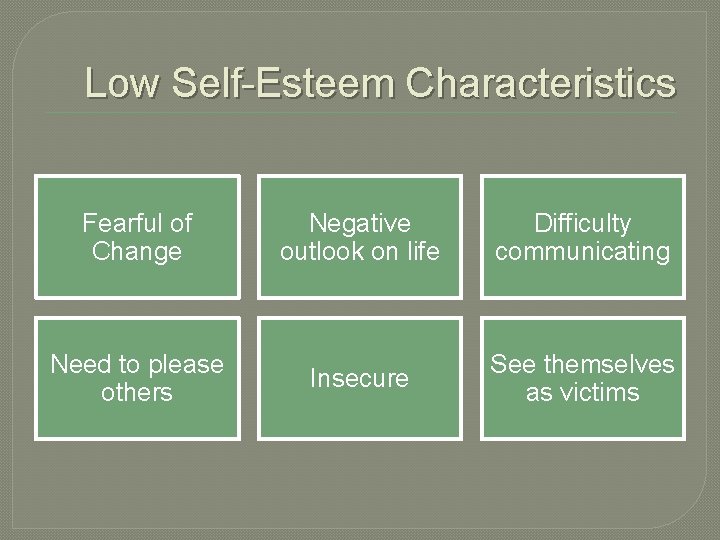
Low Self-Esteem Characteristics Fearful of Change Negative outlook on life Difficulty communicating Need to please others Insecure See themselves as victims
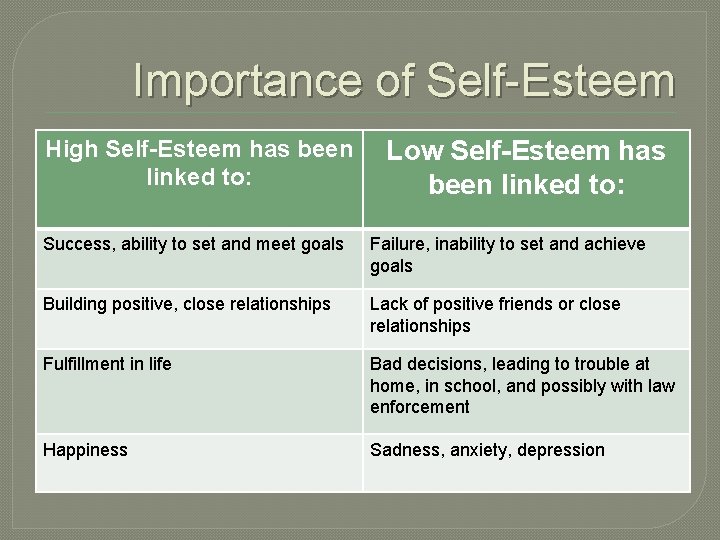
Importance of Self-Esteem High Self-Esteem has been linked to: Low Self-Esteem has been linked to: Success, ability to set and meet goals Failure, inability to set and achieve goals Building positive, close relationships Lack of positive friends or close relationships Fulfillment in life Bad decisions, leading to trouble at home, in school, and possibly with law enforcement Happiness Sadness, anxiety, depression
Cool Down �Using the information from the Mayo Clinic, identify three ways a person can start on the path to healthy self-esteem. �http: //www. mayoclinic. org. education 2020. u s/healthy-living/adult-health/in-depth/selfesteem/art-20045374
Reflection �In paragraph form, answer each question in 4 -6 sentences. �In your experience, what can boost an individual’s self-esteem? �Describe a time when you felt that your self -esteem was boosted.
- Slides: 9