
Developing pattern awareness in the early years Sue
- Slides: 67
Developing pattern awareness in the early years Sue Gifford
From last time: Develop a story to promote problem solving The doorbell rang Pat Hutchins The great pet sale Mike Inkpen Pirates’ gold NRICH Mouse Counts Ellen Stoll Walsh 9 ducks nine Sarah Hayes 5 friends counting Oxford. Owl web animation Caterpillar sandwiches, foxes and chicks. . Make up your own? How did you get on?
Shape space and measures: ELG Children use everyday language to talk about size, weight, capacity, position, distance, time and money to compare quantities and objects and to solve problems. They recognise, create and describe patterns. They explore characteristics of everyday objects and shapes and use mathematical language to describe them.
National curriculum Y 1 Number & place value: Guidance They recognise and create repeating patterns with objects and with shapes. . . counting in twos, fives and tens from different multiples to develop their recognition of patterns in the number system (for example, odd and even numbers) Y 2 Number & place value: Guidance As they become more confident with numbers up to 100, pupils are introduced to larger numbers to develop further their recognition of patterns within the number system and represent them in different ways, including spatial representations. Geometry: Statutory. . order and arrange combinations of mathematical objects in patterns and sequences Guidance. . work with patterns of shapes, including those in different orientations.
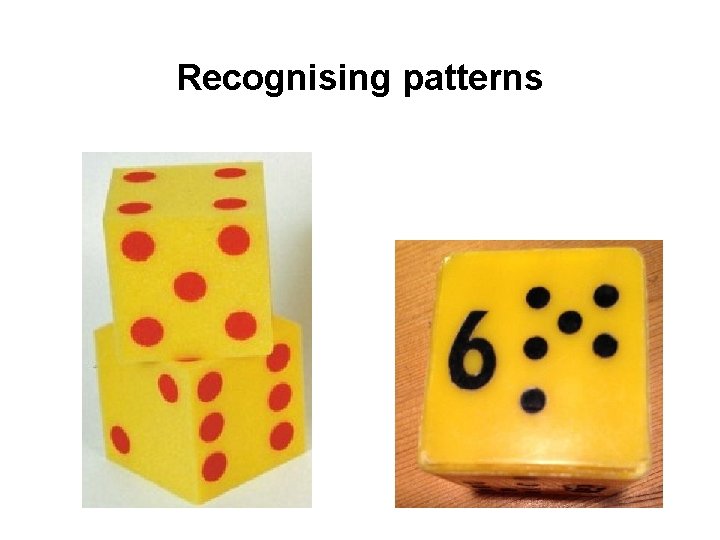
Recognising patterns
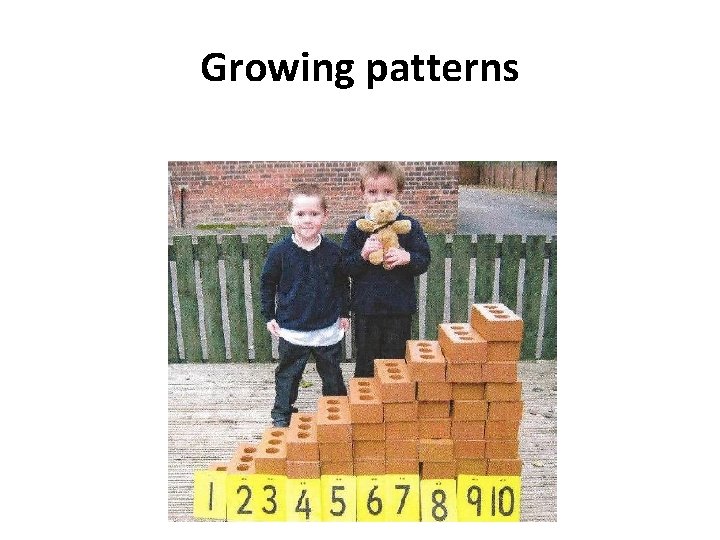
Growing patterns
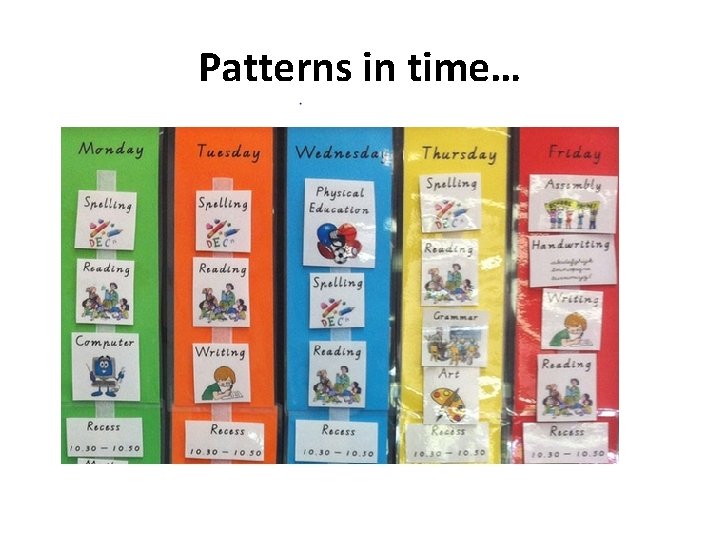
Patterns in time…
What is pattern? Any predictable regularity, usually involving numerical, spatial or logical relationships. . In early childhood. . Repeating patterns, spatial patterns, and growing patterns The way the pattern is organised is its structure Mulligan & Mitchelmore (2009: 34) The power of mathematics lies in relations and transformations which give rise to patterns and generalisations. Abstracting patterns is the basis of structural knowledge, the goal of mathematics learning (Warren 2005 cited by M&M)
Why is pattern important? • Pattern awareness predicts later mathematics achievement Rittle-Johnson et al (2016) • Students who recognise the structure of mathematical processes and representations acquire deep conceptual understanding. • High achievers are good at visualising, involving recognition of pattern and structure. • Low achievers produce poorly organised pictorial and iconic representations. High achievers use abstract notations with well–developed structures Mulligan & Mitchelmore (2009: 33)
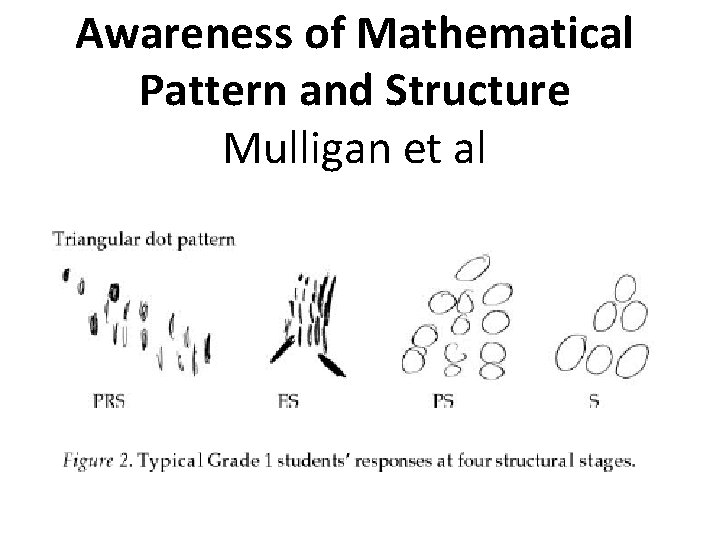
Awareness of Mathematical Pattern and Structure Mulligan et al
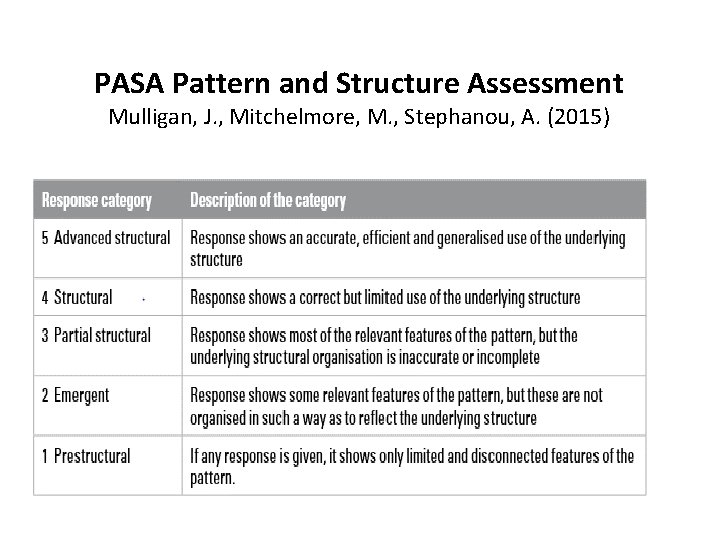
PASA Pattern and Structure Assessment Mulligan, J. , Mitchelmore, M. , Stephanou, A. (2015)
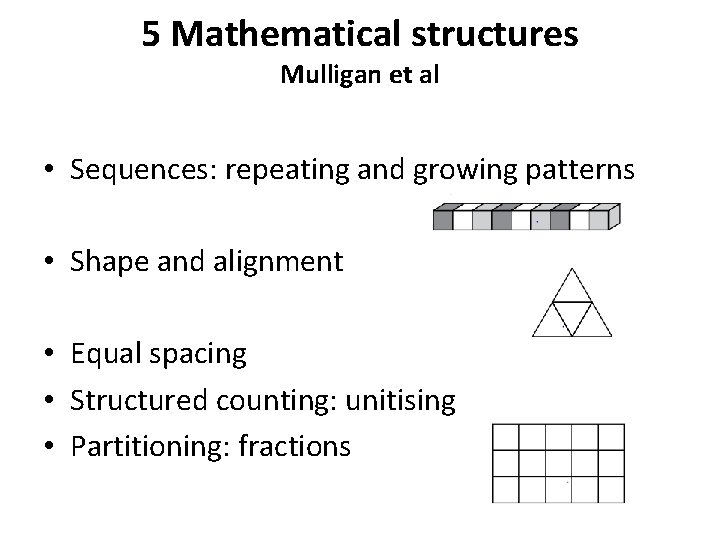
5 Mathematical structures Mulligan et al • Sequences: repeating and growing patterns • Shape and alignment • Equal spacing • Structured counting: unitising • Partitioning: fractions
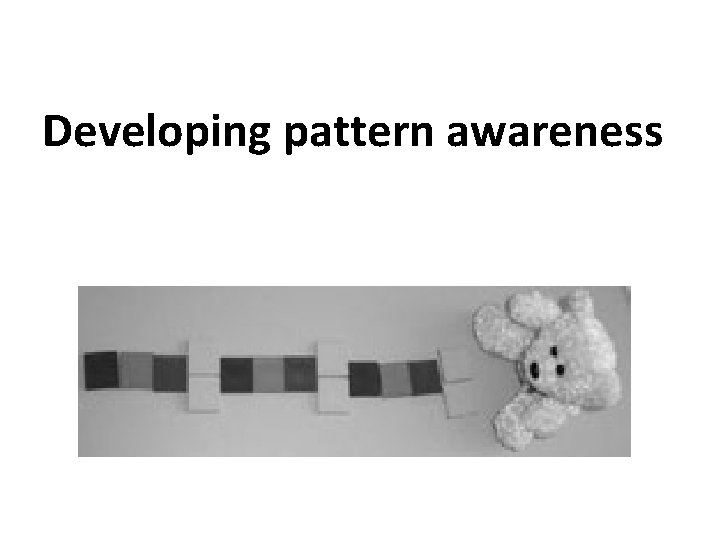
Developing pattern awareness
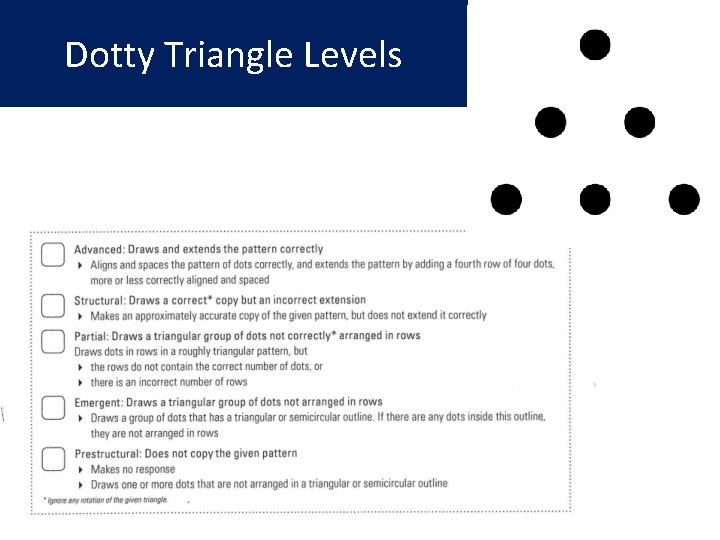
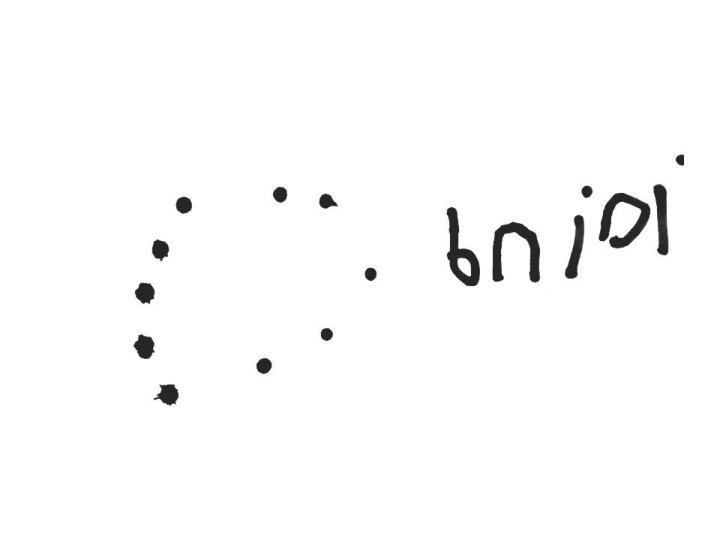
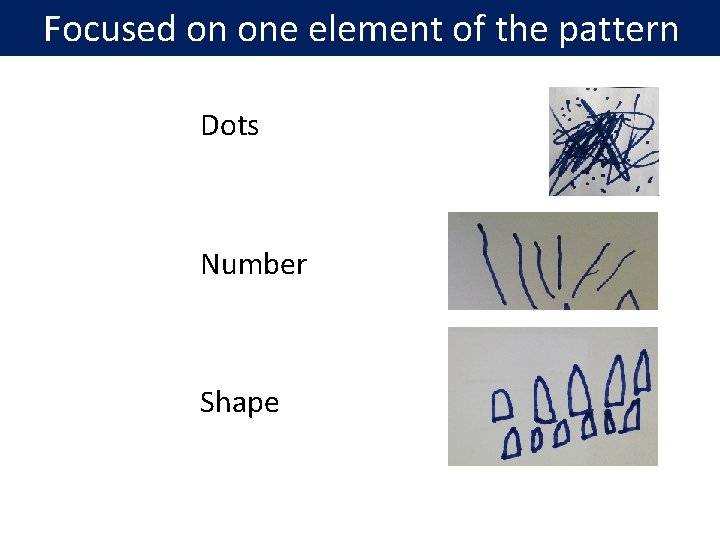
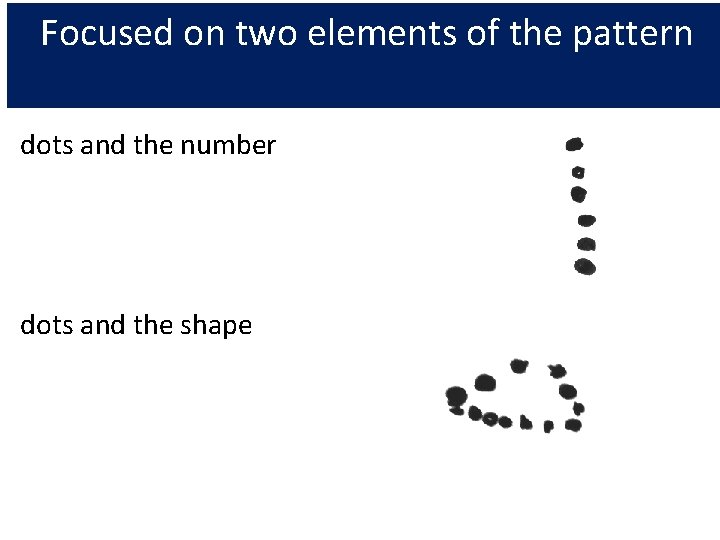
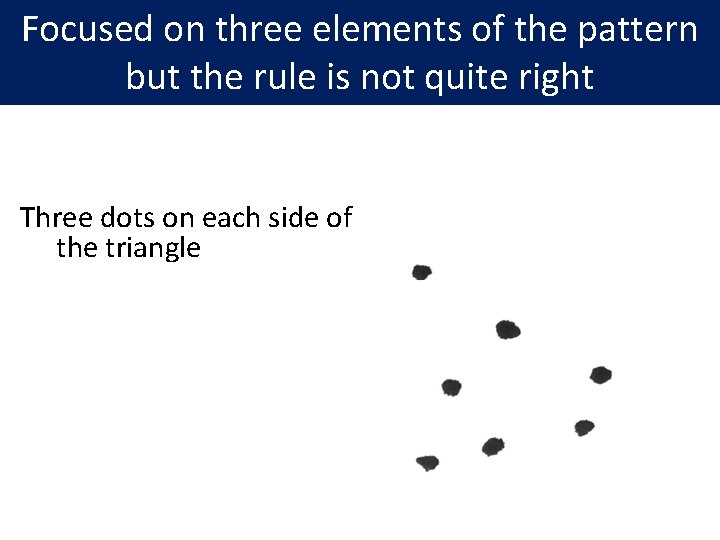
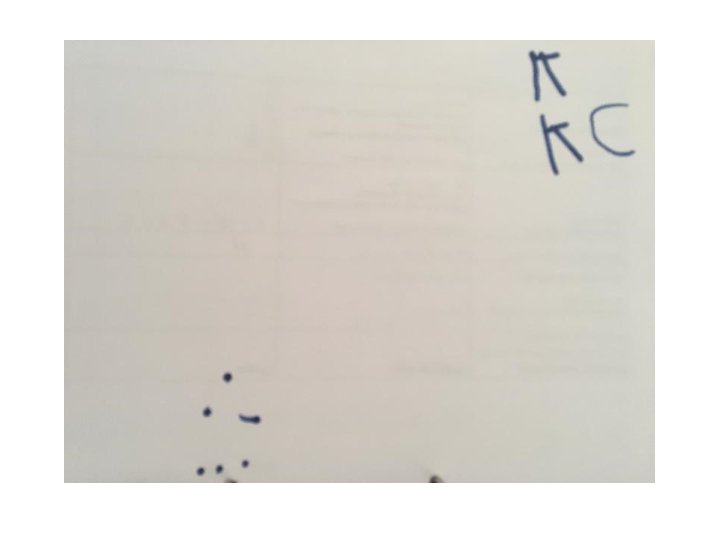
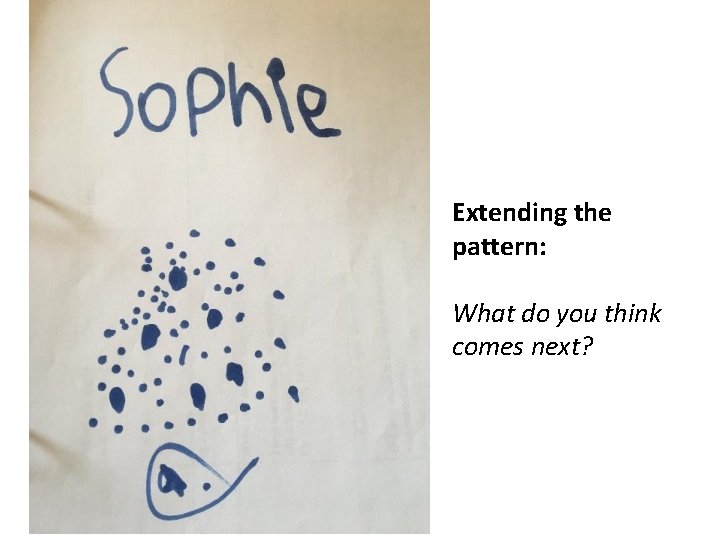
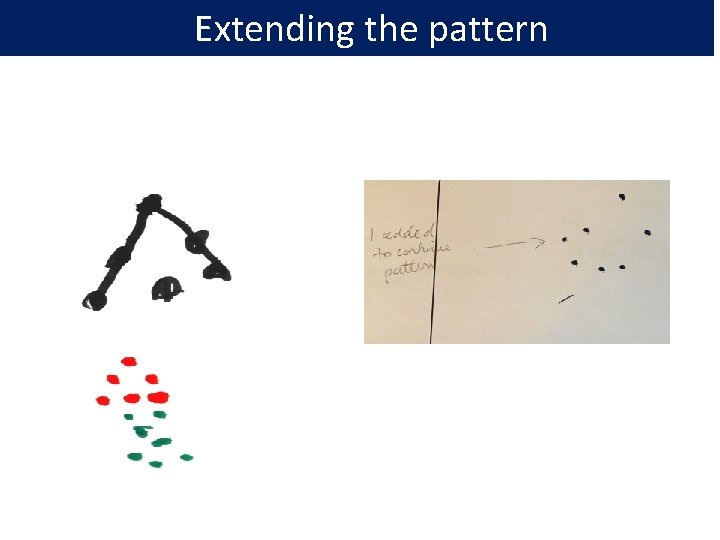
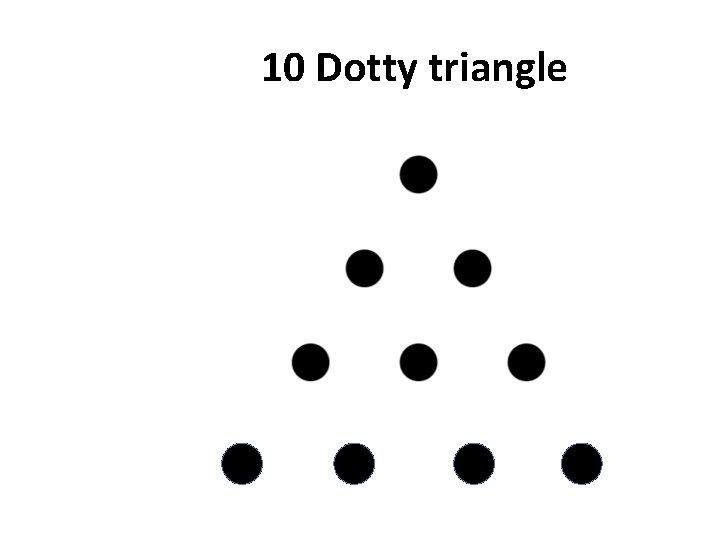
Dotty Triangle Levels
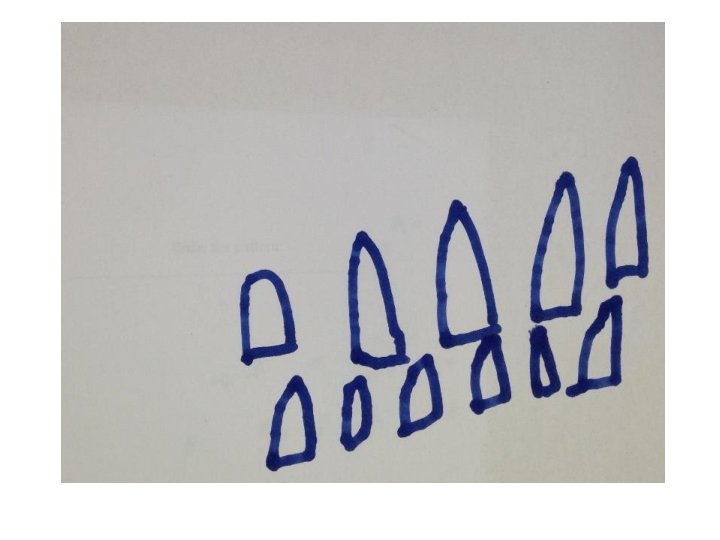
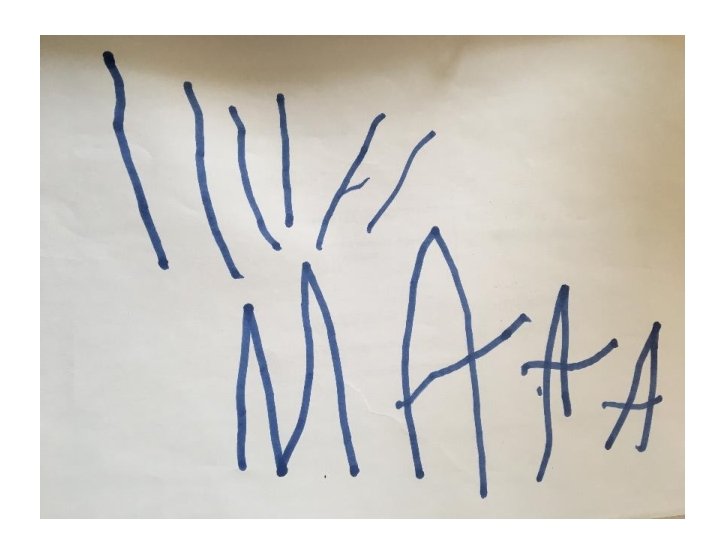
Focused on one element of the pattern Dots Number Shape
Focused on two elements of the pattern dots and the number dots and the shape
Focused on three elements of the pattern but the rule is not quite right Three dots on each side of the triangle
Extending the pattern: What do you think comes next?
Extending the pattern
10 Dotty triangle
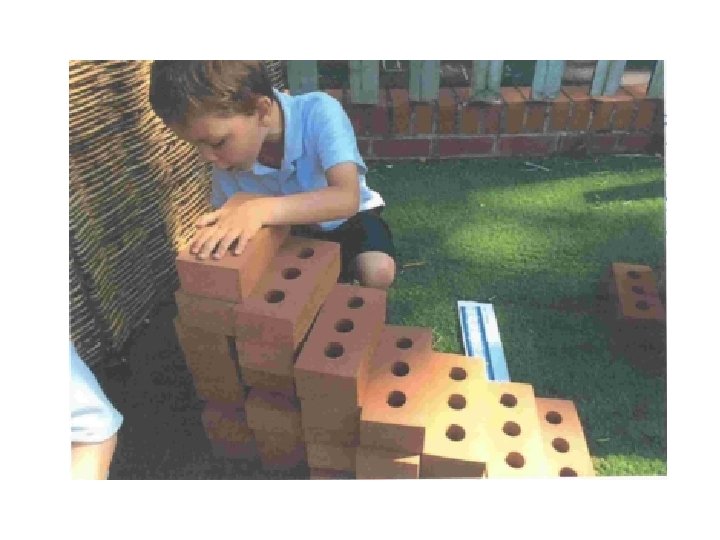
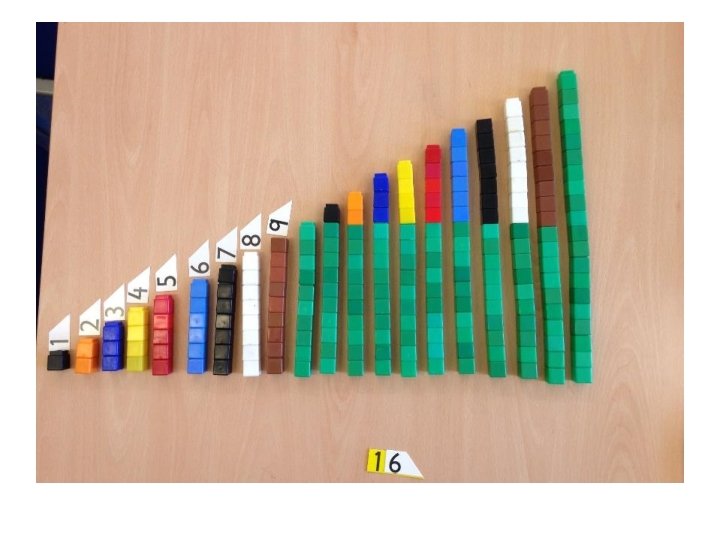
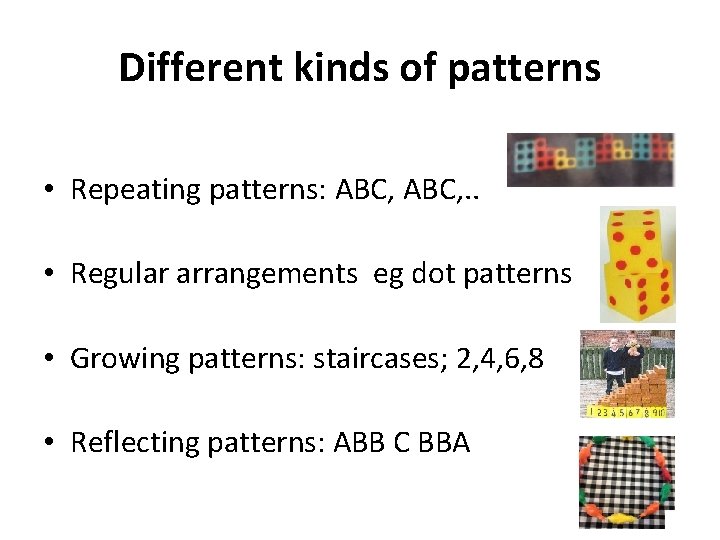
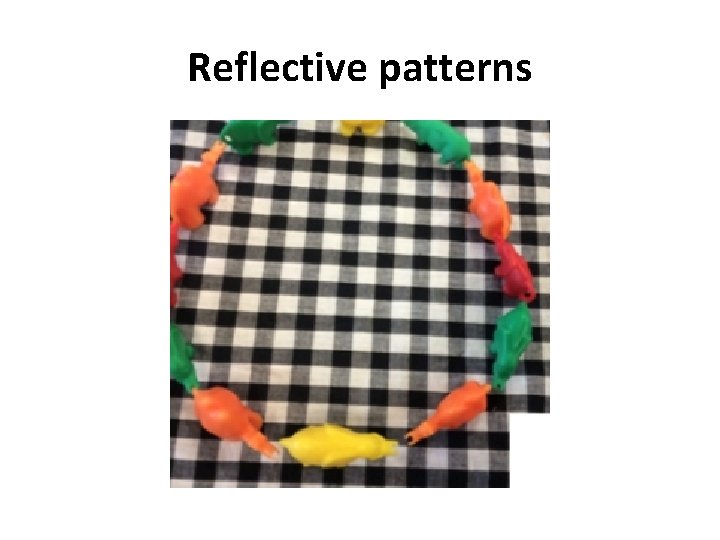
Different kinds of patterns • Repeating patterns: ABC, . . • Regular arrangements eg dot patterns • Growing patterns: staircases; 2, 4, 6, 8 • Reflecting patterns: ABB C BBA
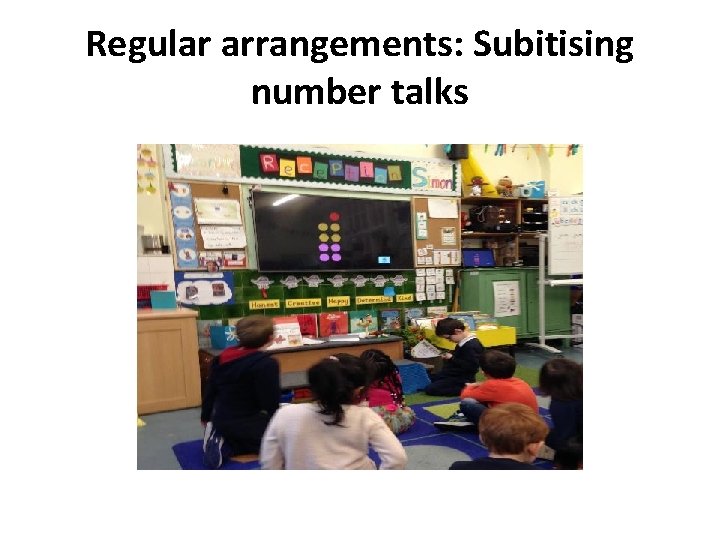
Regular arrangements: Subitising number talks
Repeating patterns Contexts: – trains, towers – stickers, stamps – found objects – action patterns – others?
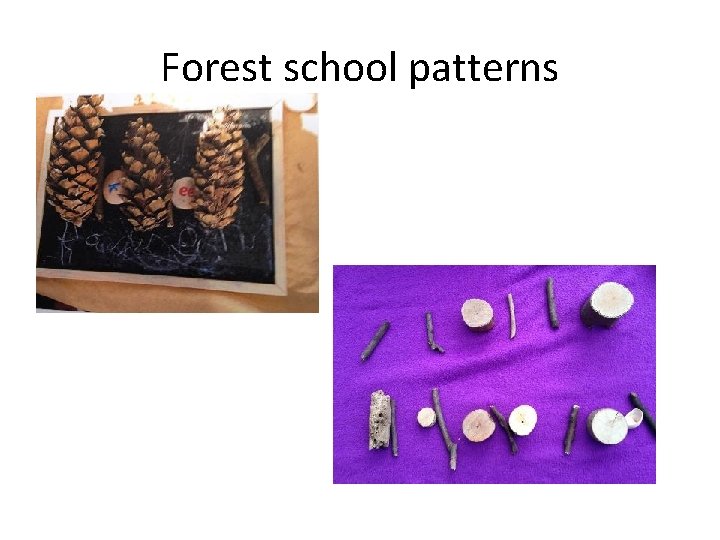
Forest school patterns
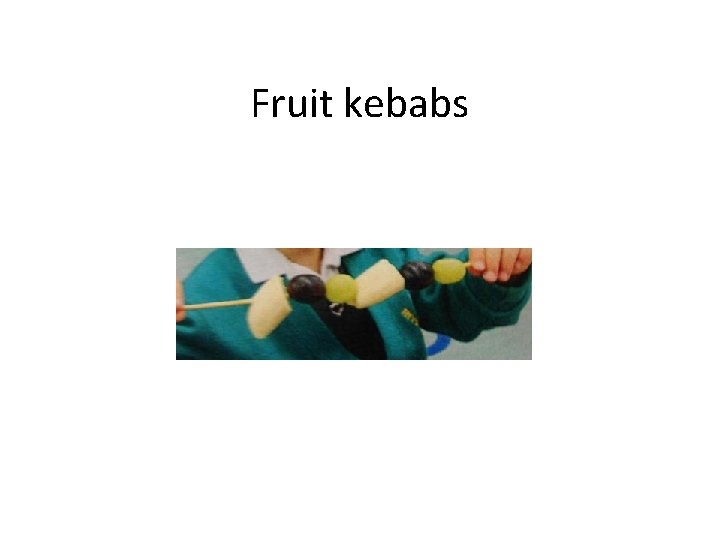
Fruit kebabs
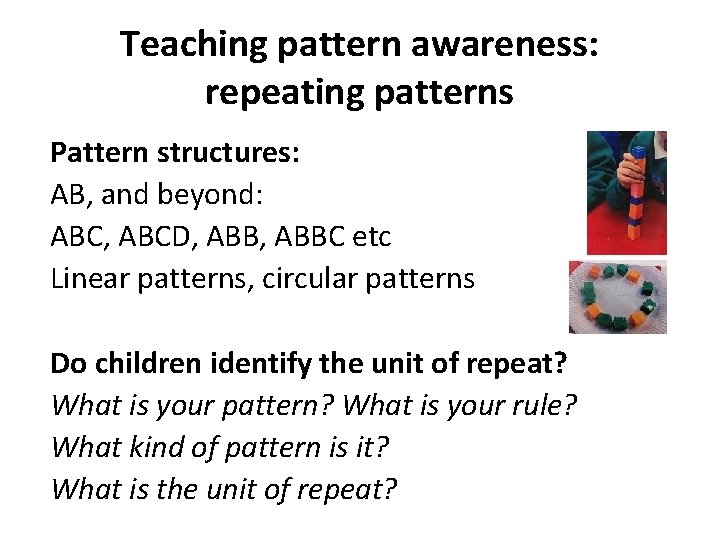
Teaching pattern awareness: repeating patterns Pattern structures: AB, and beyond: ABC, ABCD, ABBC etc Linear patterns, circular patterns Do children identify the unit of repeat? What is your pattern? What is your rule? What kind of pattern is it? What is the unit of repeat?
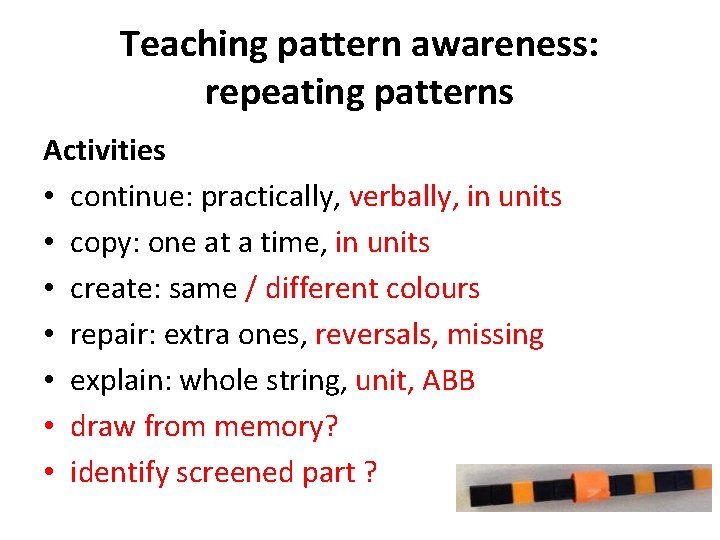
Teaching pattern awareness: repeating patterns Activities • continue: practically, verbally, in units • copy: one at a time, in units • create: same / different colours • repair: extra ones, reversals, missing • explain: whole string, unit, ABB • draw from memory? • identify screened part ?
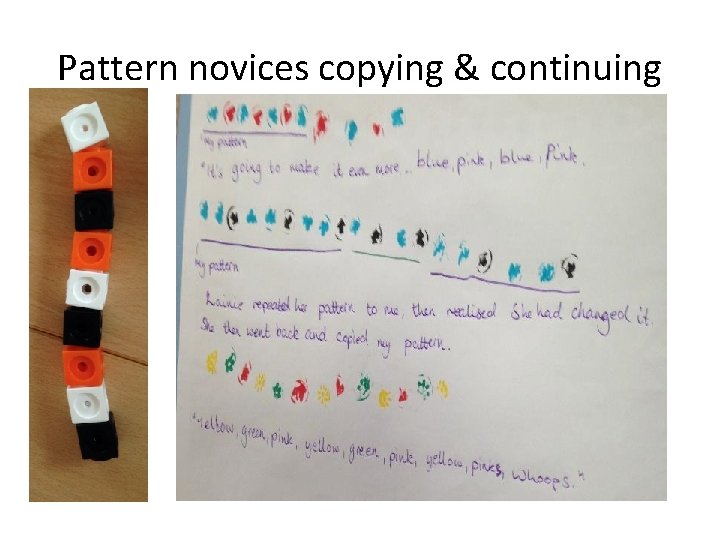
Pattern novices copying & continuing
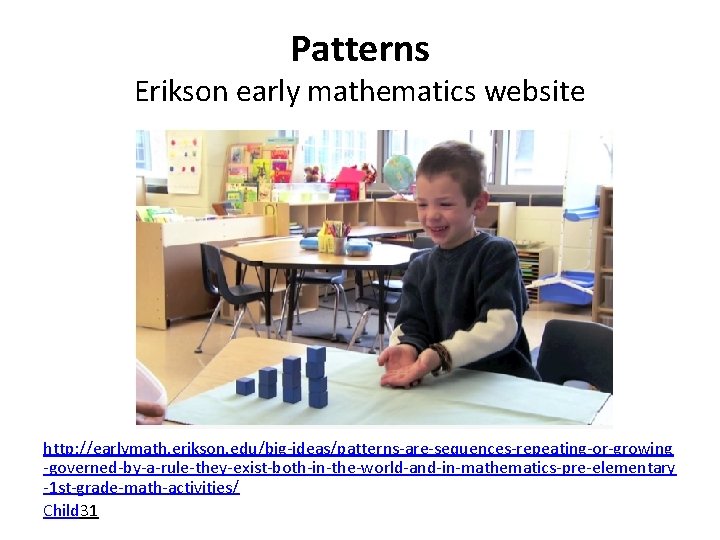
Patterns Erikson early mathematics website http: //earlymath. erikson. edu/big-ideas/patterns-are-sequences-repeating-or-growing -governed-by-a-rule-they-exist-both-in-the-world-and-in-mathematics-pre-elementary -1 st-grade-math-activities/ Child 31
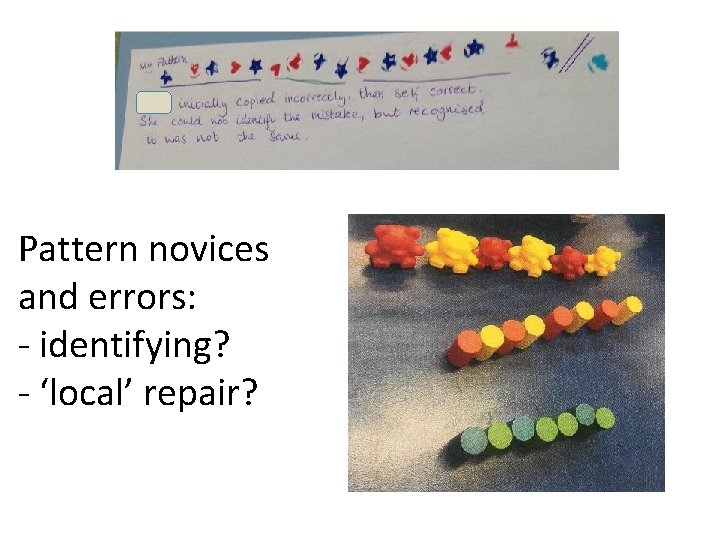
Pattern novices and errors: - identifying? - ‘local’ repair?
Pattern experts and errors: structural repair
Pattern expert: generalizing Sean made an ABBC pattern with bears. The teacher introduced the terminology of ‘ABBC pattern’. Sean: So it could be dog, cat, sheep?
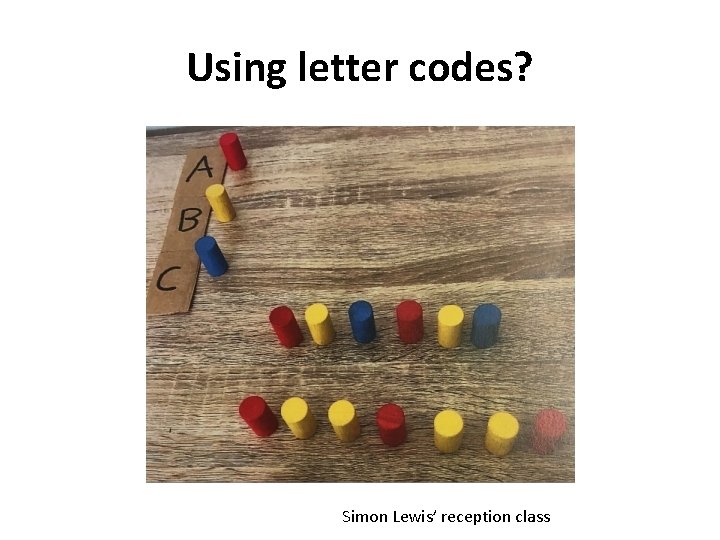
Using letter codes? Simon Lewis’ reception class
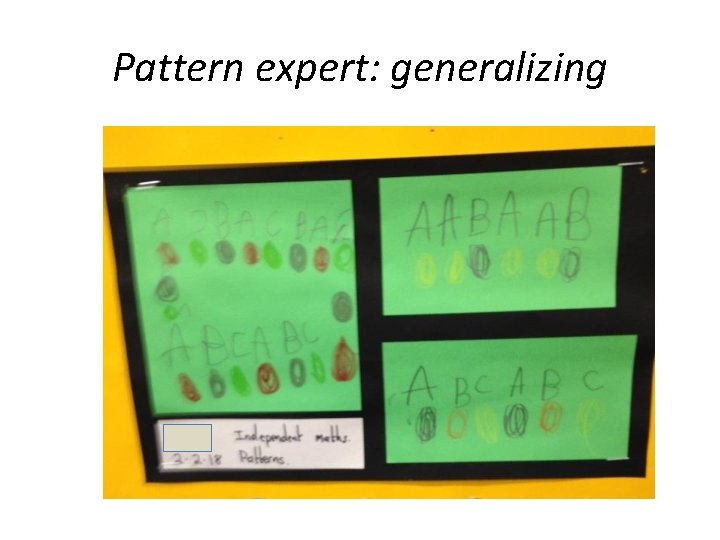
Pattern expert: generalizing
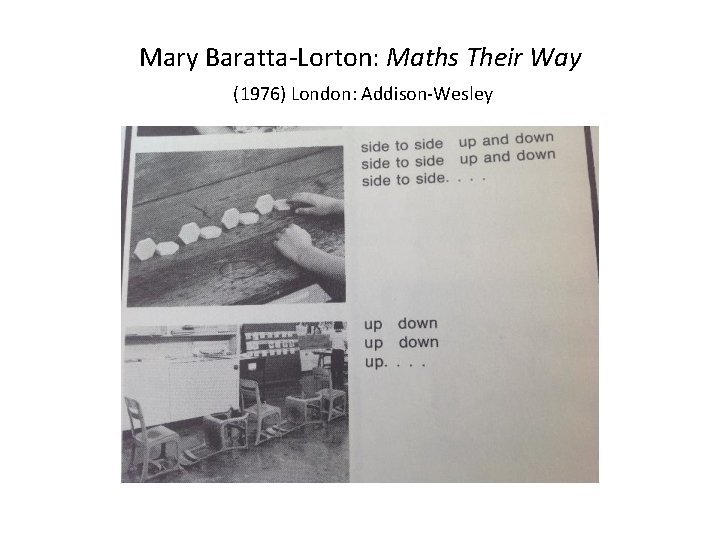
Mary Baratta-Lorton: Maths Their Way (1976) London: Addison-Wesley
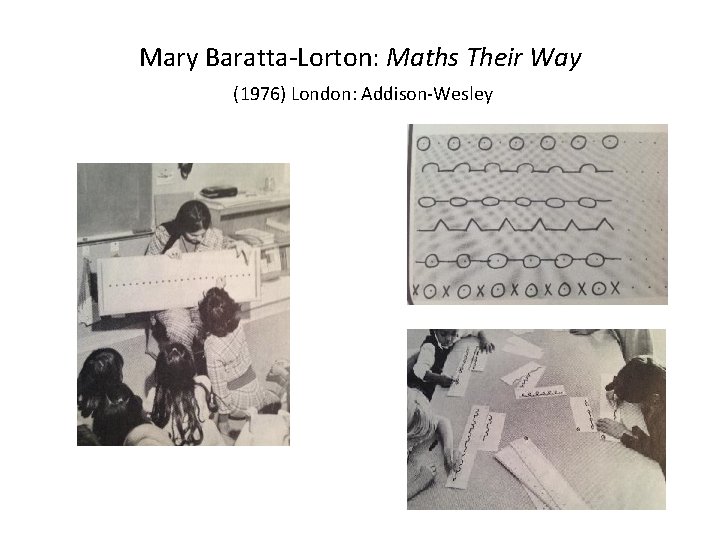
Mary Baratta-Lorton: Maths Their Way (1976) London: Addison-Wesley
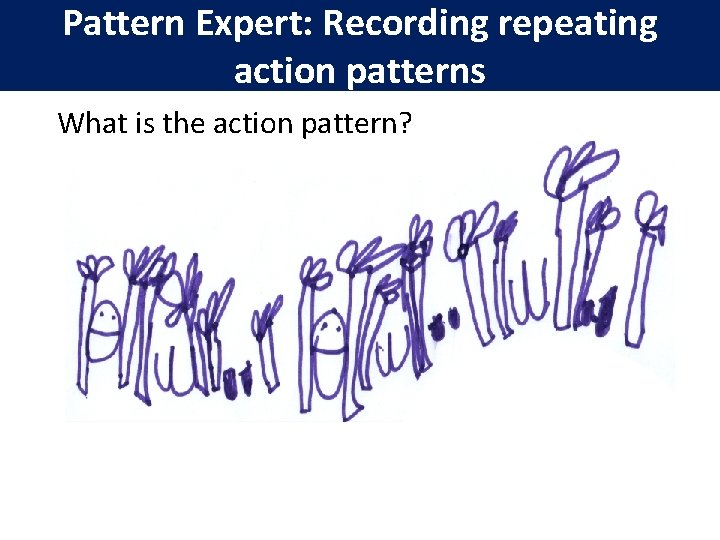
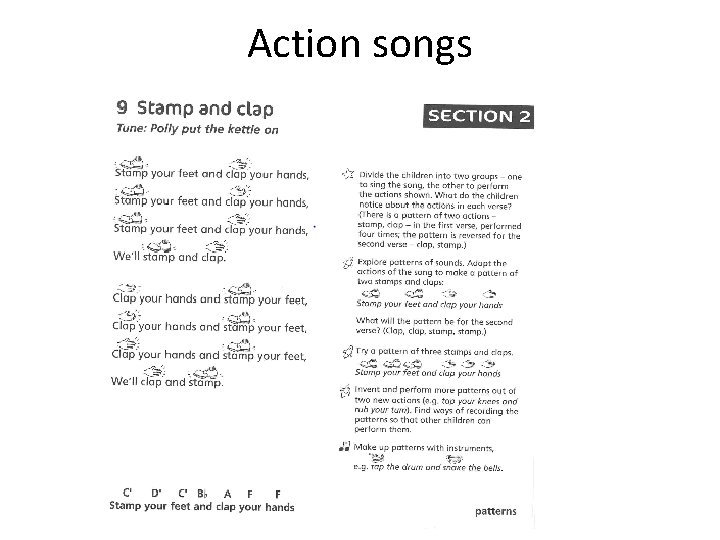
Pattern Expert: Recording repeating action patterns What is the action pattern?
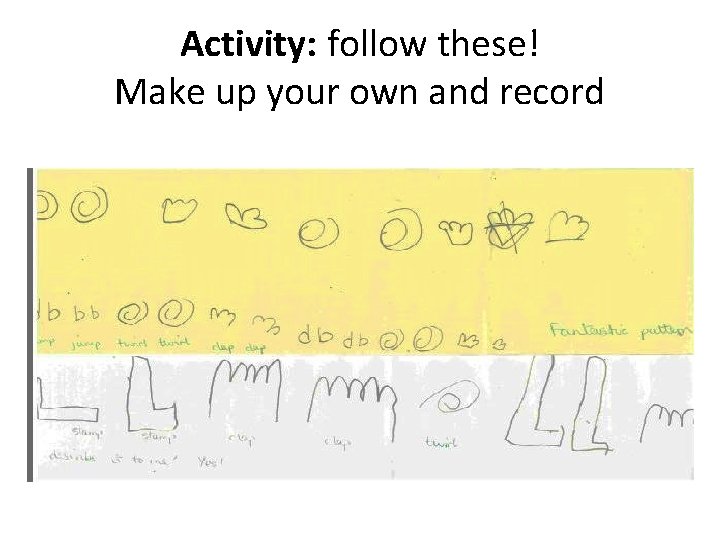
Activity: follow these! Make up your own and record
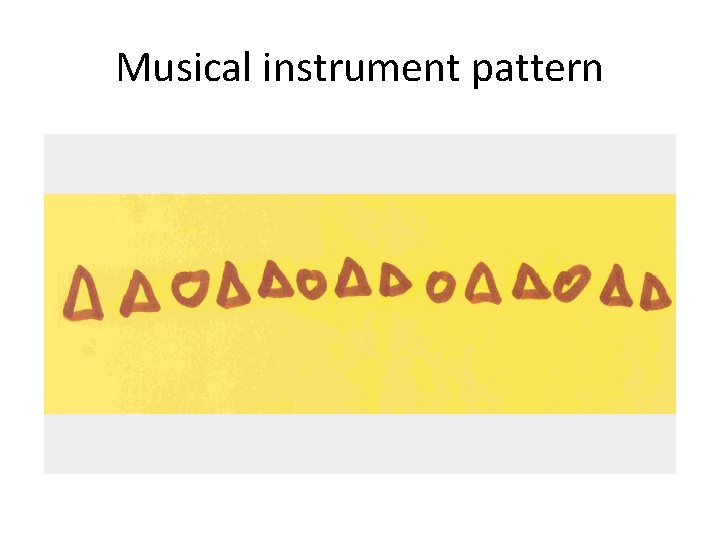
Musical instrument pattern
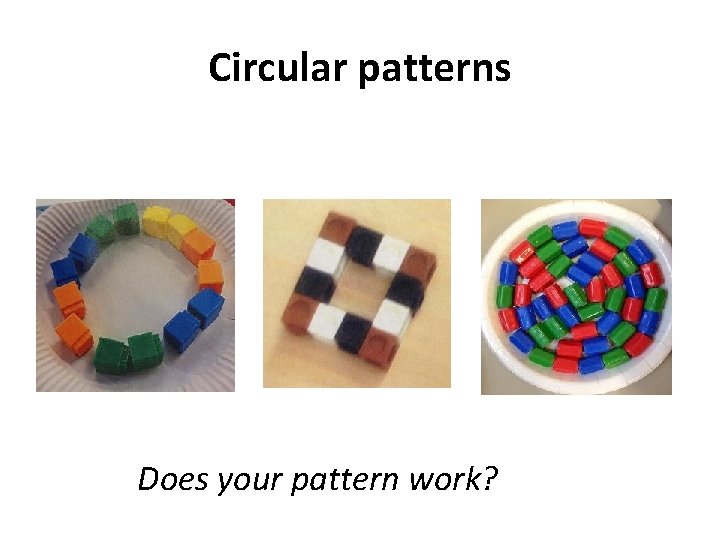
Activity • Using the materials at your table make a circular repeating pattern around a plate • What might a child learn? • What questions might you ask?
Circular patterns Does your pattern work?
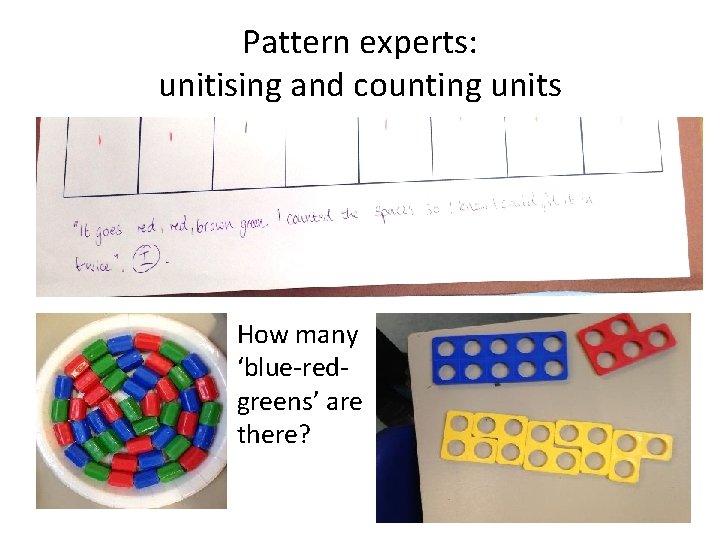
Pattern experts: unitising and counting units How many ‘blue-redgreens’ are there?
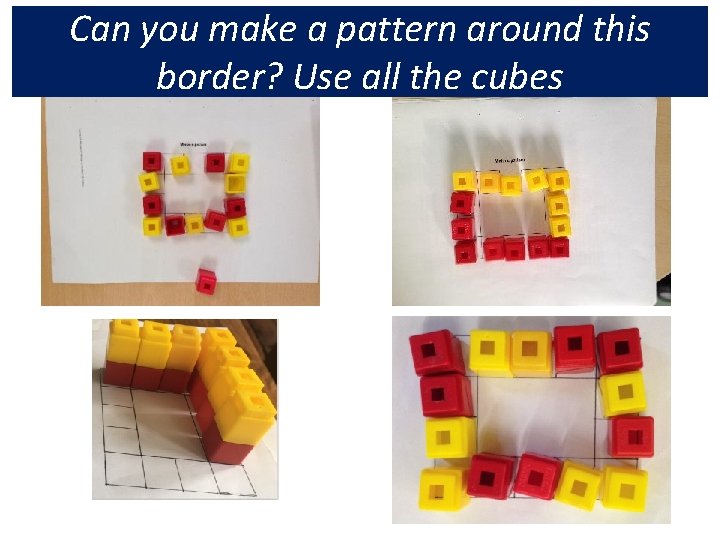
Can you make a pattern around this border? Use all the cubes
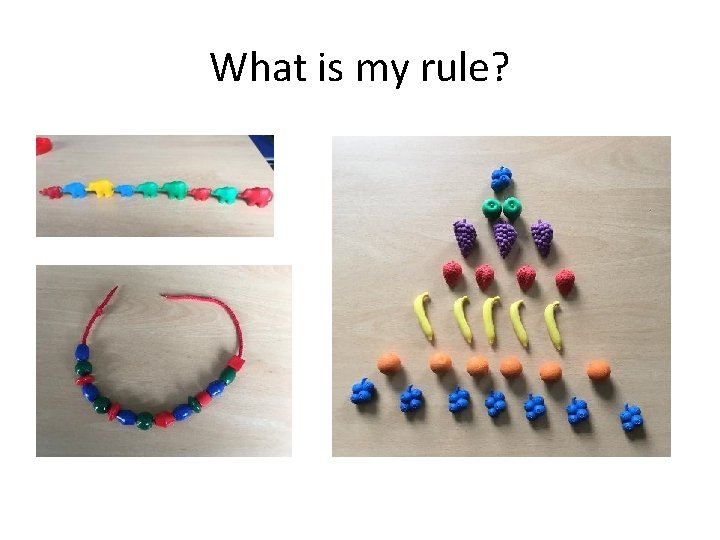
What is my rule?
Other pattern possibilities • Visual timetable, calendars • Songs and rhymes • Reflective patterns • Mirrors • Pattern blocks • Construction • Growing patterns • Stories?
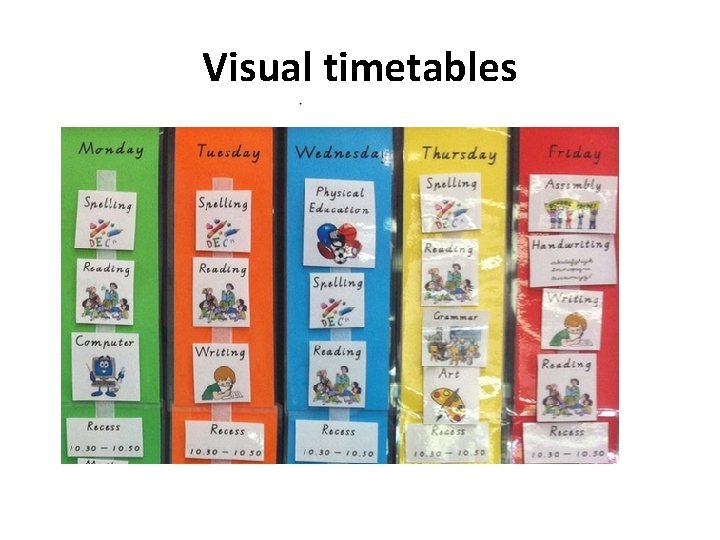
Visual timetables
Action songs
Reflective patterns
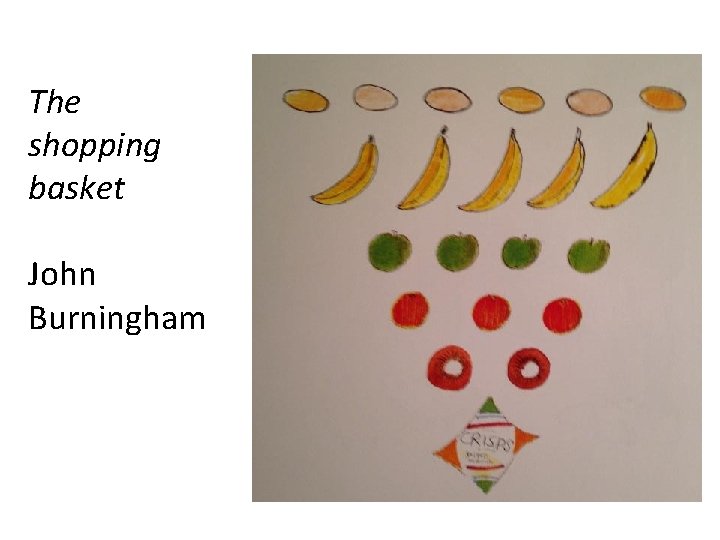
The shopping basket John Burningham
Video Burningham Shopping basket • Counting out the triangle • Fruit triangle
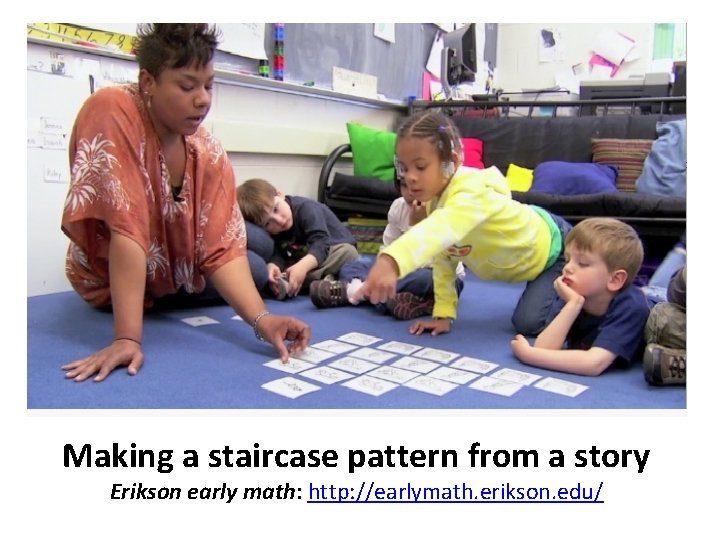
Making a staircase pattern from a story Erikson early math: http: //earlymath. erikson. edu/
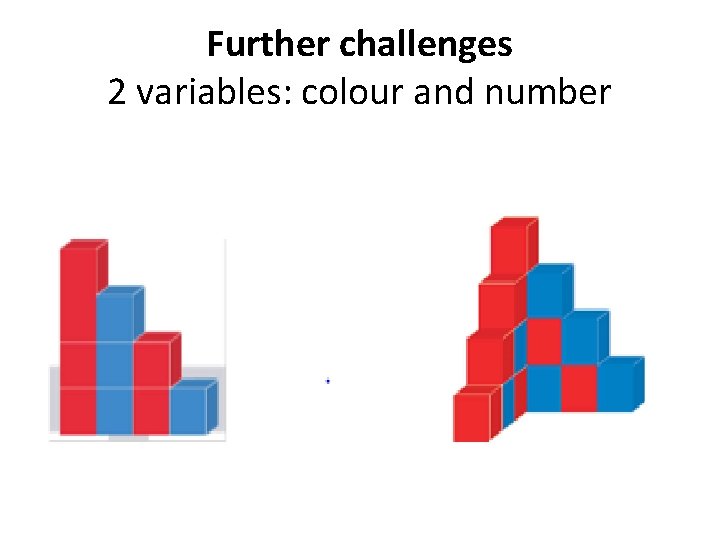
Further challenges 2 variables: colour and number
Key points in teaching pattern Copying and comparing patterns: noticing What is the same and what is different? Identifying repeated relationships Unit of repeat: underpins measuring (repeated units) and multiplication (counting groups) Abstracting and generalising: same structure, different context
Early algebraic thinking • noticing mathematical features • identifying the relationship between elements • observing regularities Blanton et al. (2015) cited by Kieran, Pang, Schifter & Ng (2016)
For next time • Please send examples of pattern activities and children’s responses. • (and anything else!) • Make sure you have permissions for pictures. • All published contributions will be gratefully acknowledged with your name and school. Thank you!
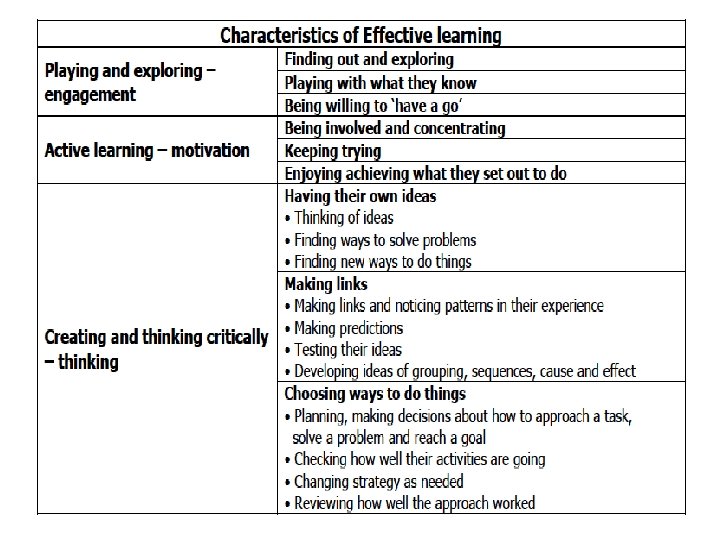
The Characteristics of Effective Learning • How to provide mathematical opportunities for these? • Develop some problem solving opportunities with shape, space and measures and report on these next time.