
DEVELOPING OCCLUSIONclinical implications and variations PREDENTATE PERIOD Gum


- Slides: 51
DEVELOPING OCCLUSION-clinical implications and variations.
PREDENTATE PERIOD
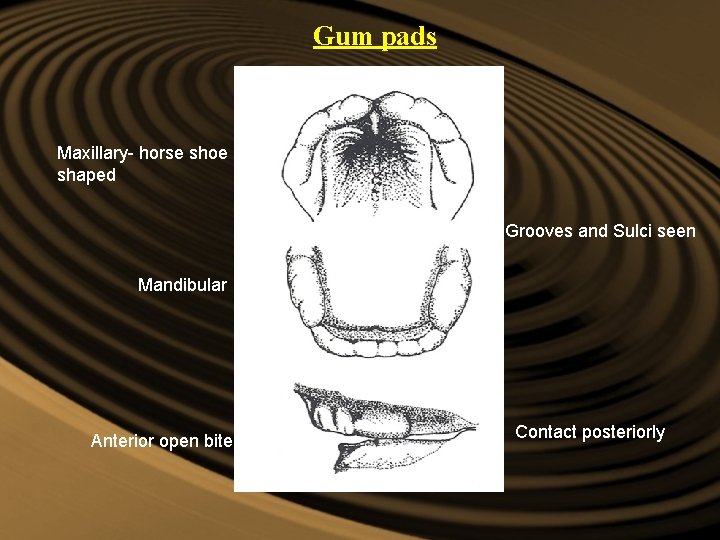
Gum pads They are pink, firm and fibrous Maxillary- horse shoe shaped Grooves and Sulci seen Mandibular Anterior open bite Contact posteriorly
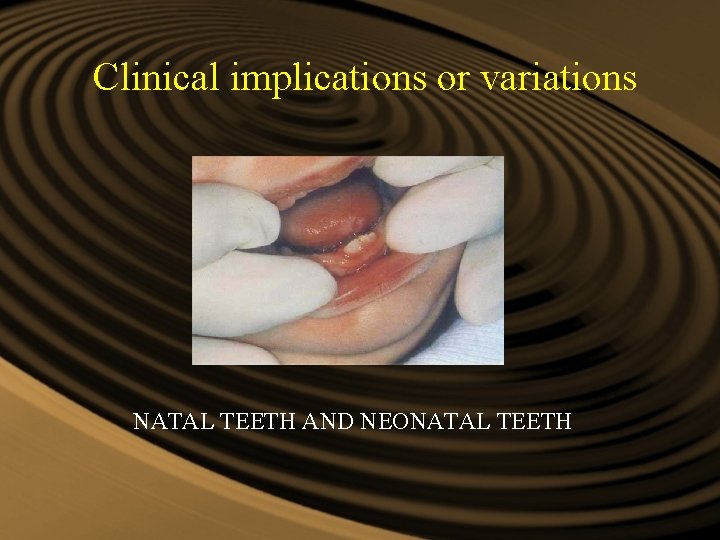
Clinical implications or variations NATAL TEETH AND NEONATAL TEETH
PRIMARY DENTITION: from 6 months to 6 years of age. As a general rule, the mandibular dentition precedes the maxillary dentition, except for the maxillary lateral incisors.
Chronology of eruption of primary teeth Lower central incisors Upper lateral incisors Lower lateral incisors First molars Canines Second molars
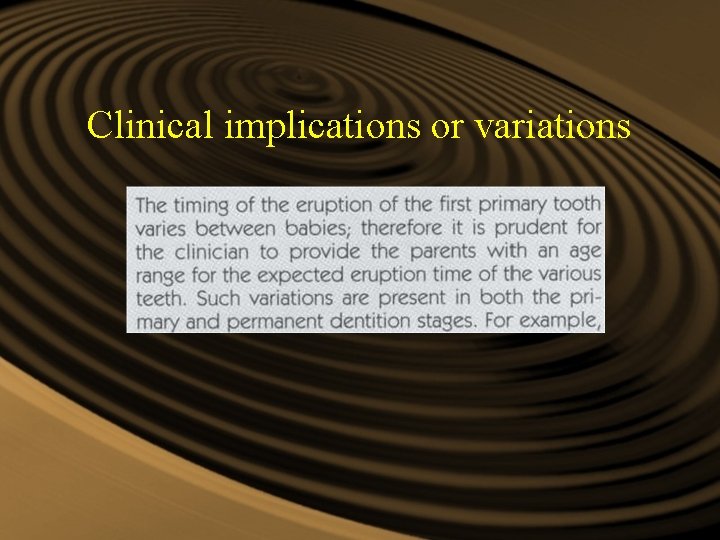
Clinical implications or variations
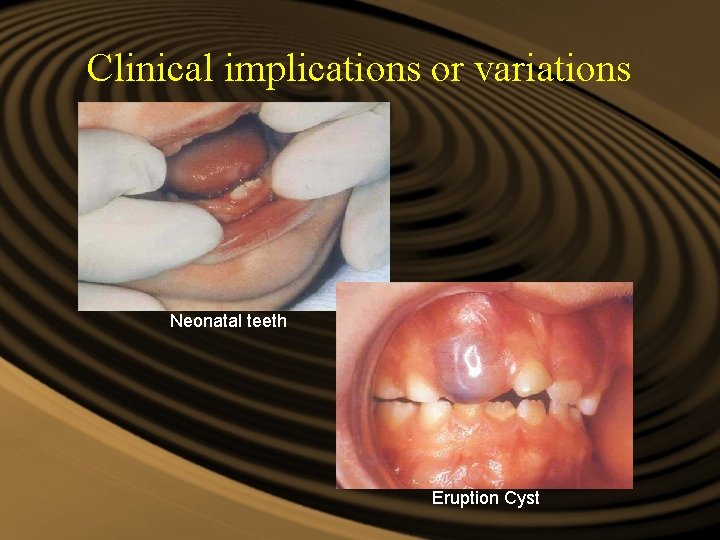
Clinical implications or variations Neonatal teeth Eruption Cyst
Characteristics of Primary Dentition • • OVERJET OVERBITE SPACES IN DENTITION RELATIONSHIP OF SECOND DECIDUOS MOLARS
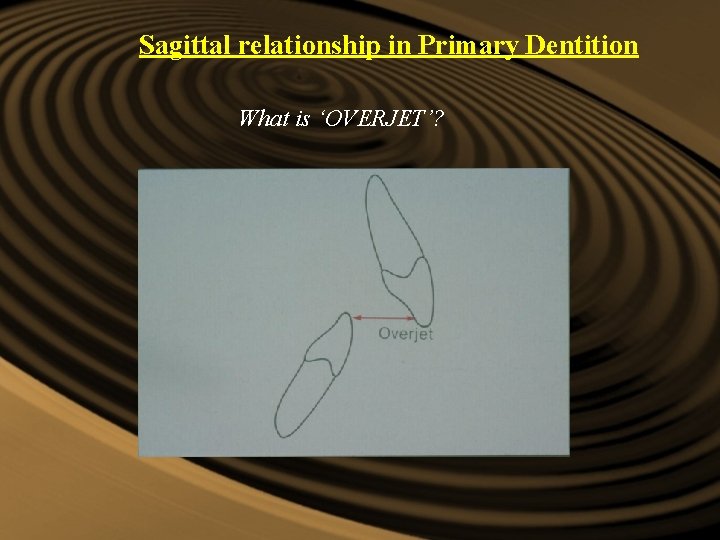
Sagittal relationship in Primary Dentition What is ‘OVERJET’?
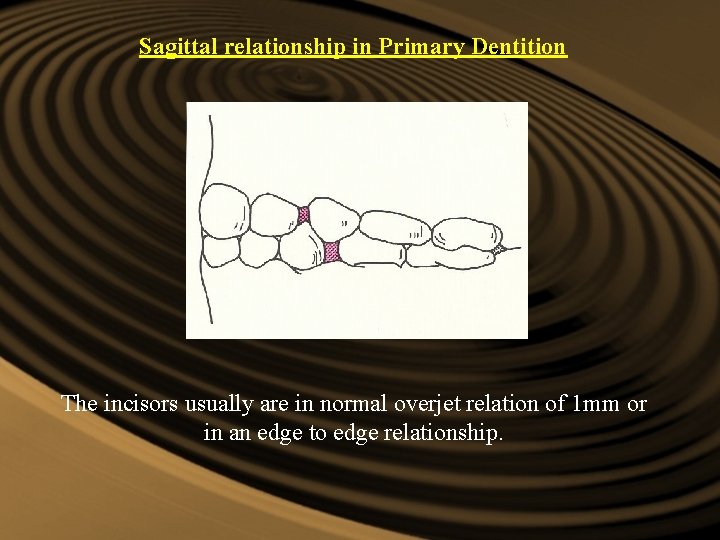
Sagittal relationship in Primary Dentition The incisors usually are in normal overjet relation of 1 mm or in an edge to edge relationship.
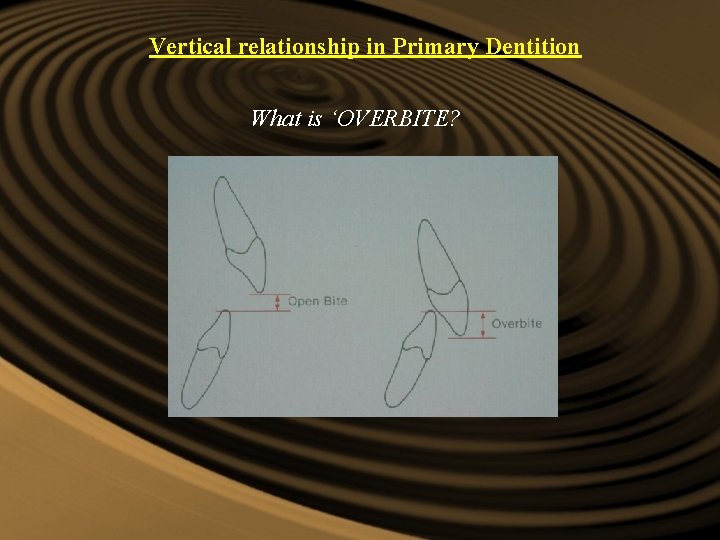
Vertical relationship in Primary Dentition What is ‘OVERBITE?
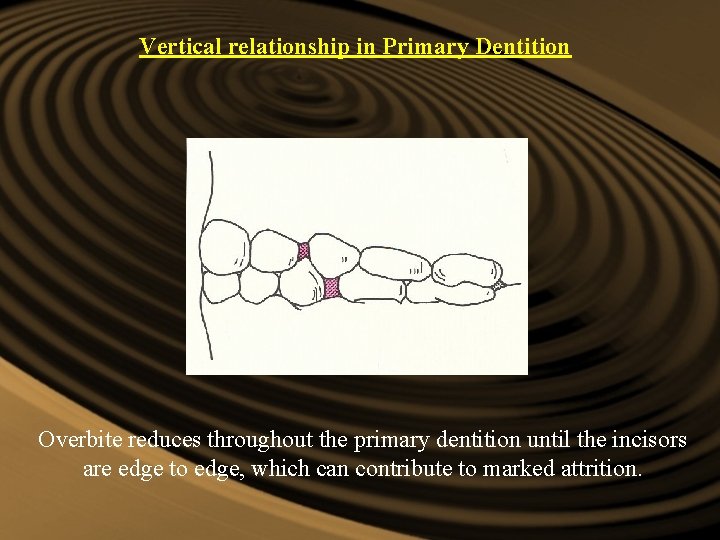
Vertical relationship in Primary Dentition Overbite reduces throughout the primary dentition until the incisors are edge to edge, which can contribute to marked attrition.
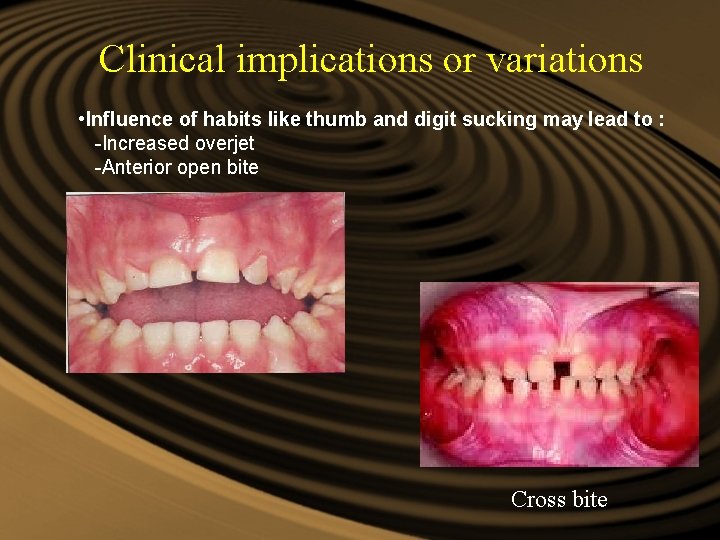
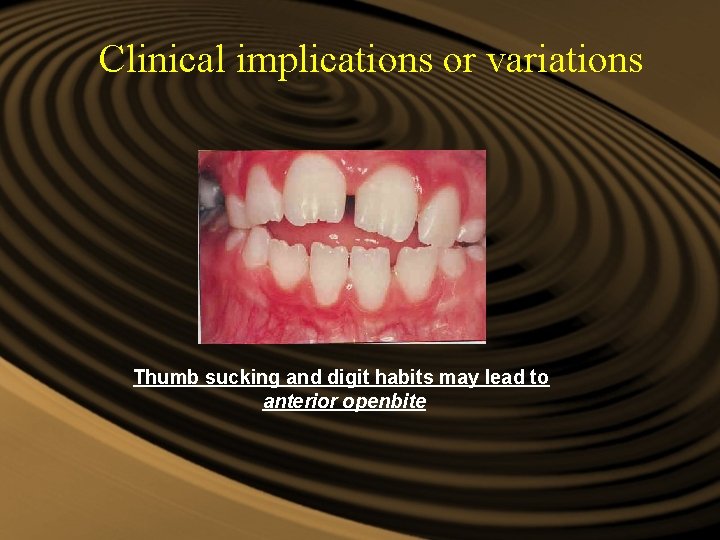
Clinical implications or variations • Influence of habits like thumb and digit sucking may lead to : -Increased overjet -Anterior open bite Cross bite
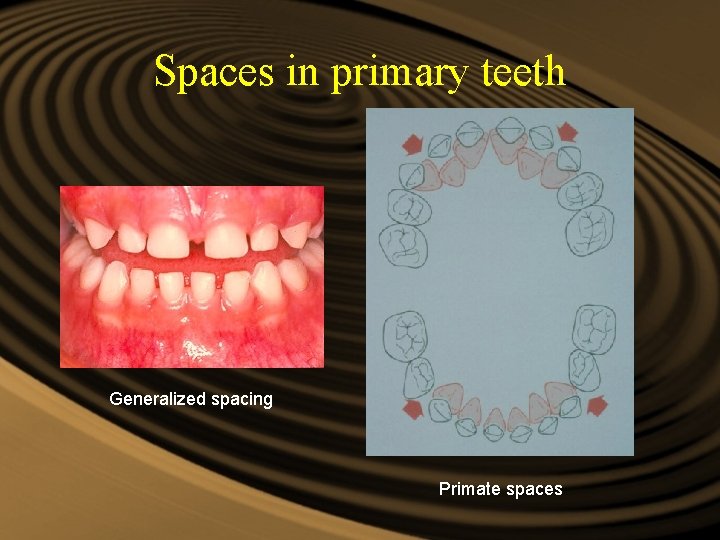
Spaces in primary teeth Generalized spacing Primate spaces
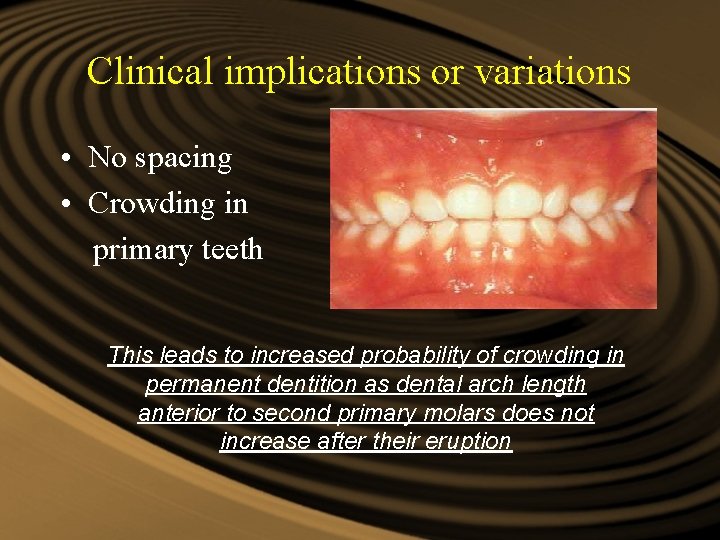
Clinical implications or variations • No spacing • Crowding in primary teeth This leads to increased probability of crowding in permanent dentition as dental arch length anterior to second primary molars does not increase after their eruption
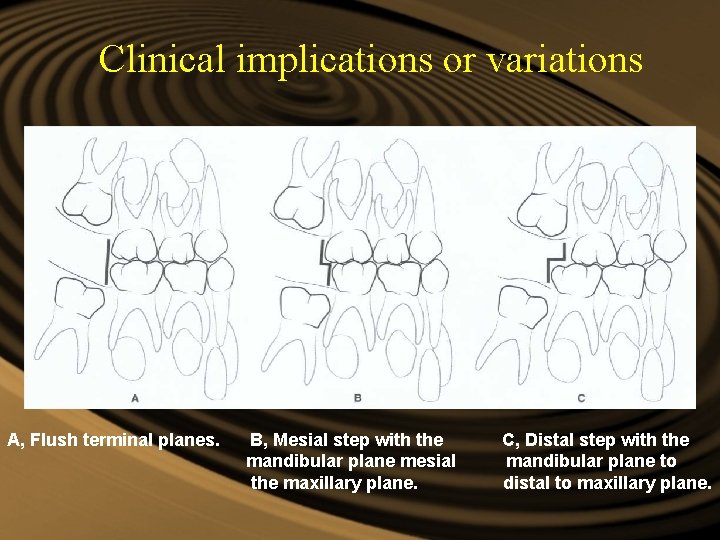
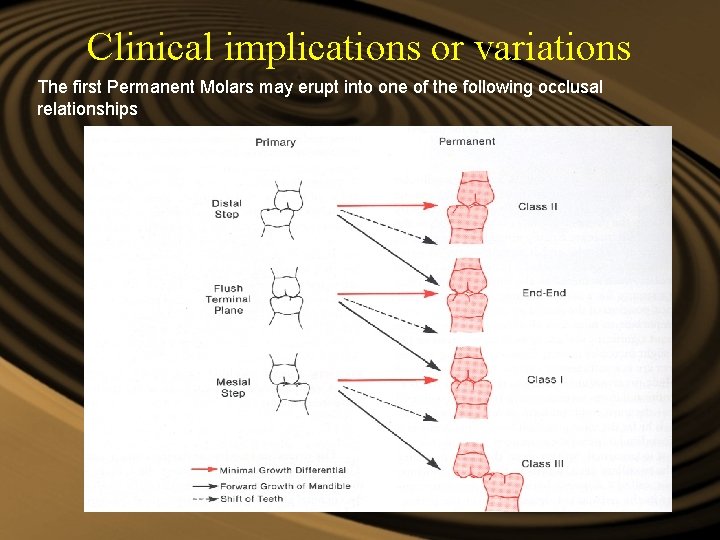
Terminal plane relationship between the distal surfaces of the maxillary and mandibular second primary molars. Usually because of larger mandibular second molars, the distal surfaces of the occluding second molars are flush, whereby the term "flush terminal plane" or straight terminal plane. Determining the terminal plane relationships in the primary dentition stage is of great importance as it guides the erupting first permanent molars into occlusion
Clinical implications or variations A, Flush terminal planes. B, Mesial step with the mandibular plane mesial the maxillary plane. C, Distal step with the mandibular plane to distal to maxillary plane.
MIXED DENTITION: from 6 years to 12 years of age. First transitional period Characterised by: Eruption of Permanent First Molars Eruption of Incisors
Chronology of eruption of permanent teeth
Clinical implications or variations
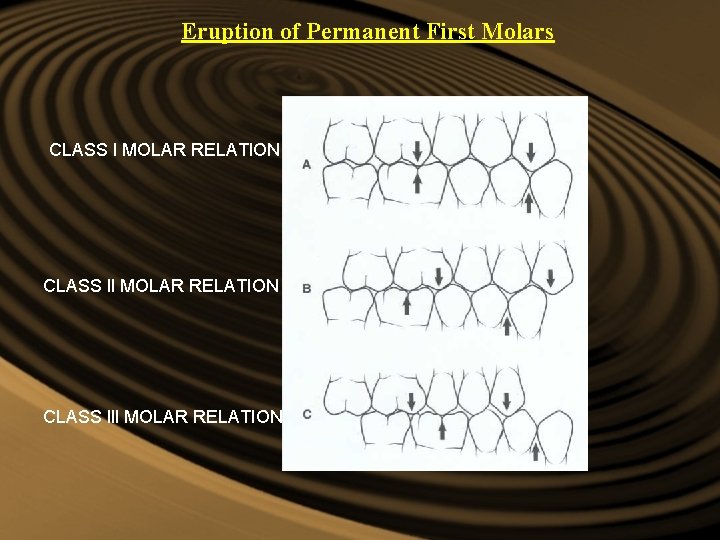
Eruption of Permanent First Molars CLASS l MOLAR RELATION CLASS lll MOLAR RELATION
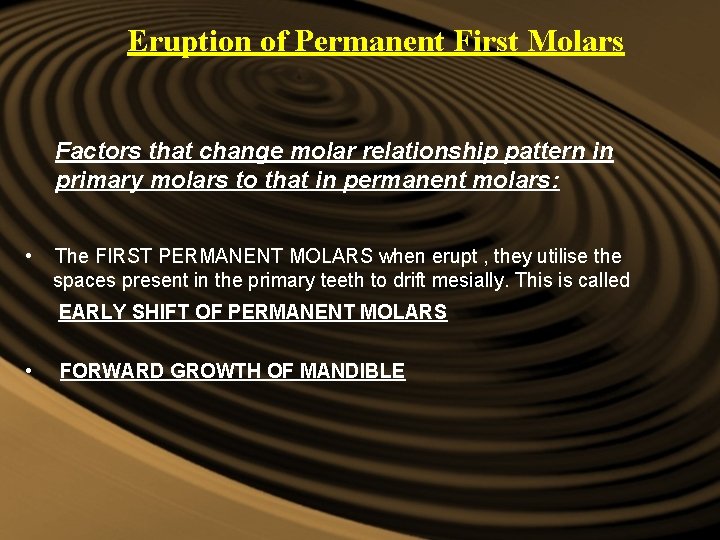
Eruption of Permanent First Molars Factors that change molar relationship pattern in primary molars to that in permanent molars: • The FIRST PERMANENT MOLARS when erupt , they utilise the spaces present in the primary teeth to drift mesially. This is called EARLY SHIFT OF PERMANENT MOLARS • FORWARD GROWTH OF MANDIBLE
Clinical implications or variations The first Permanent Molars may erupt into one of the following occlusal relationships
Eruption of Permanent Incisors The maxillary arch, on the average, has just enough space to accommodate the permanent lateral incisors when they erupt. In the mandibular arch, however, when the lateral incisors erupt, there is on the average 1. 6 mm less space available for the four mandibular incisors than would be required to perfectly align them. This difference between the amount of space needed for the incisors and the amount available for them is called the "incisor liability. " ‘INCISOR LIABILITY’
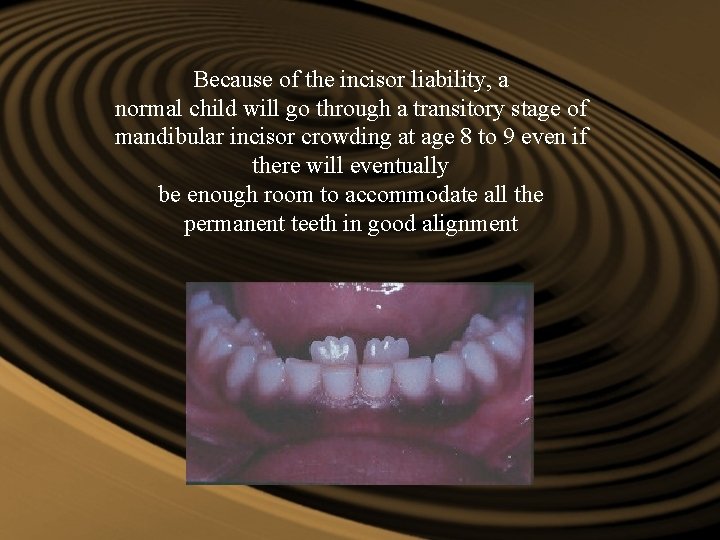
Because of the incisor liability, a normal child will go through a transitory stage of mandibular incisor crowding at age 8 to 9 even if there will eventually be enough room to accommodate all the permanent teeth in good alignment
Where did the extra space come from to align these mildly crowded lower incisors? Most jaw growth is in the posterior, and there is no mechanism by which the mandible can easily become longer in its anterior region. Rather than from jaw growth per se, the extra space comes from three sources: • • Proclination of incisors Eruption of incisors in a wider arc Utilization of spaces of primary dentition Increase in inter canine width
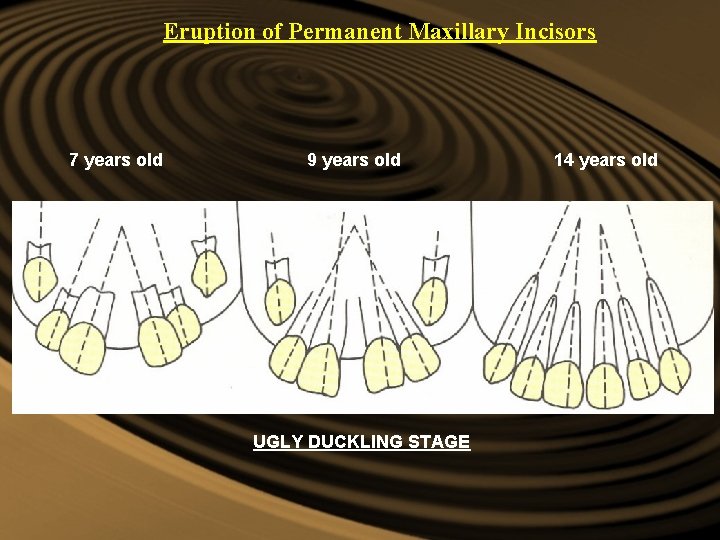
Eruption of Permanent Maxillary Incisors 7 years old 9 years old UGLY DUCKLING STAGE 14 years old
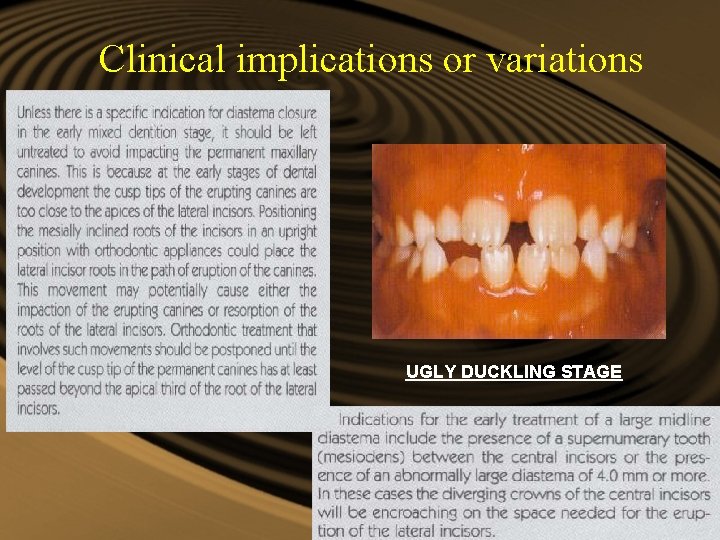
Clinical implications or variations UGLY DUCKLING STAGE
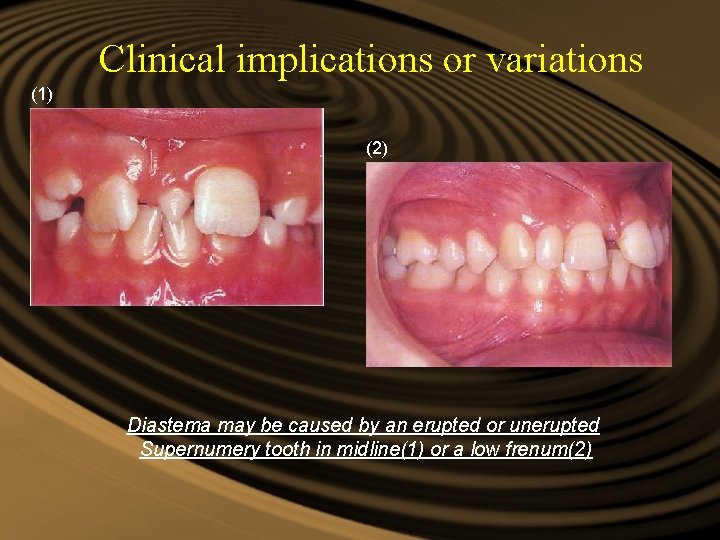
Clinical implications or variations (1) (2) Diastema may be caused by an erupted or unerupted Supernumery tooth in midline(1) or a low frenum(2)
Clinical implications or variations Thumb sucking and digit habits may lead to anterior openbite
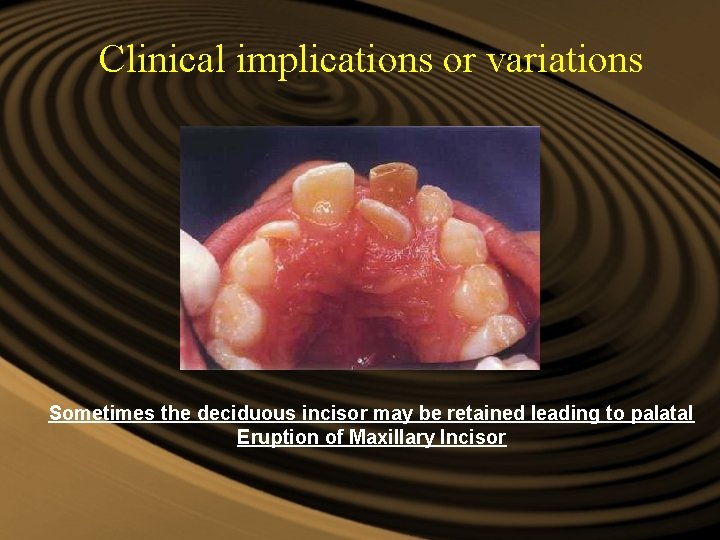
Clinical implications or variations Sometimes the deciduous incisor may be retained leading to palatal Eruption of Maxillary Incisor
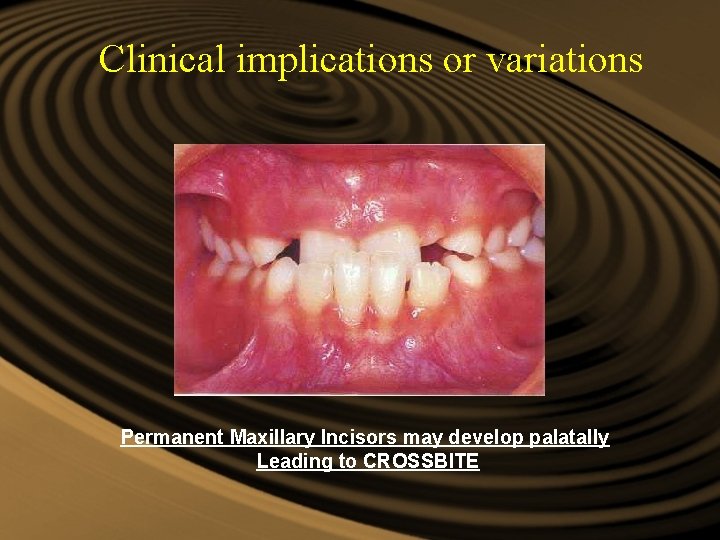
Clinical implications or variations Permanent Maxillary Incisors may develop palatally Leading to CROSSBITE
Intertransitional period This stage is characterized by continued eruption of already erupted permanent teeth. No significant changes occur.
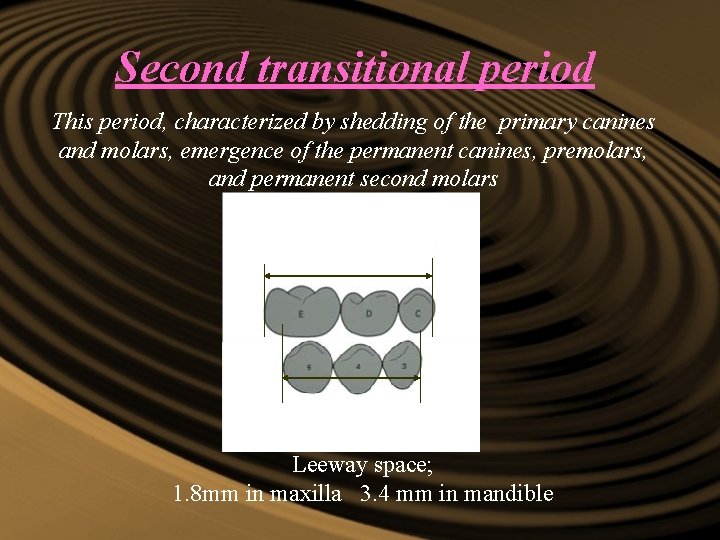
Second transitional period This period, characterized by shedding of the primary canines and molars, emergence of the permanent canines, premolars, and permanent second molars Leeway space; 1. 8 mm in maxilla 3. 4 mm in mandible
This leeway space is utilized by permanent molars as they drift mesially. This is called late mesial shift. So that a flush terminal relationship is converted into a class I molar relationship Mandibular molar normally moves mesially more than its maxillary counterpart.
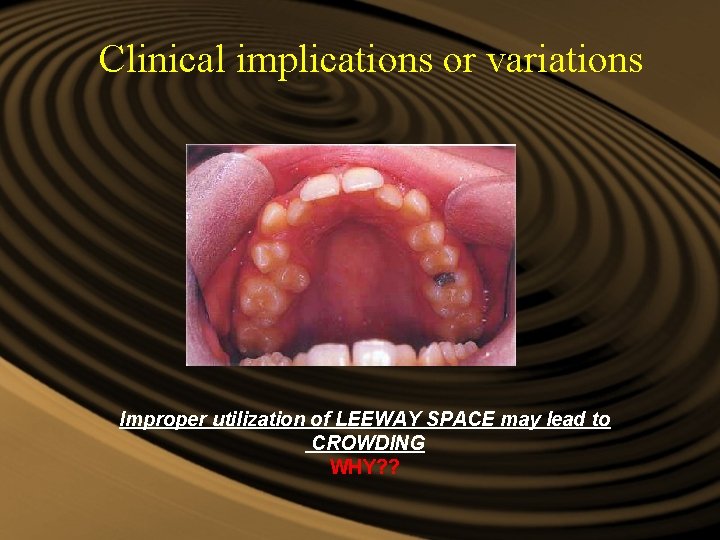
Clinical implications or variations Improper utilization of LEEWAY SPACE may lead to CROWDING WHY? ?
BECAUSE: Even if incisor crowding is present, the leeway space is normally taken up by mesial movement of the permanent molars. SOLUTION: An opportunity for orthodontic treatment is created at this time.
PERMANENT DENTITION: from 12 years of age to eruption of third molars
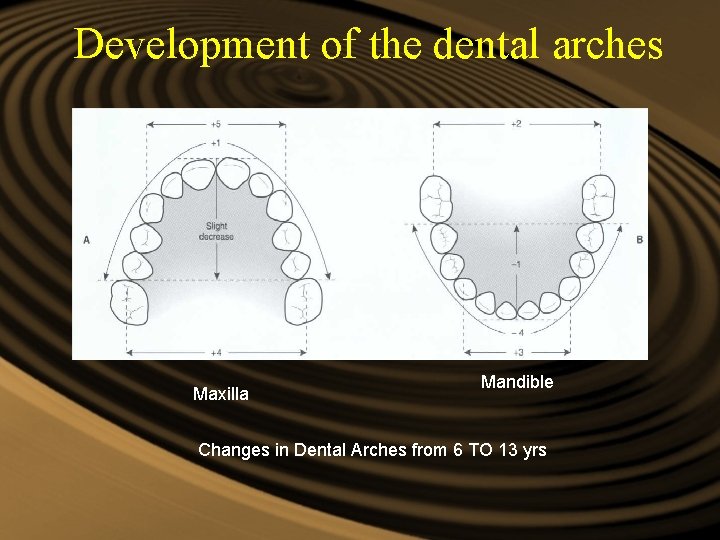
PERMANENT DENTITION The overbite often ranges between 10% and 50%, and the overjet ranges between 1. 0 and 3. 0 mm. Intercanine width : canine to canine. - ↑ 1 -2 mm during primary dentition. - ↑ 3 mm in mixed dentition. Growth is completed around 9 years.
Development of the dental arches Maxilla Mandible Changes in Dental Arches from 6 TO 13 yrs
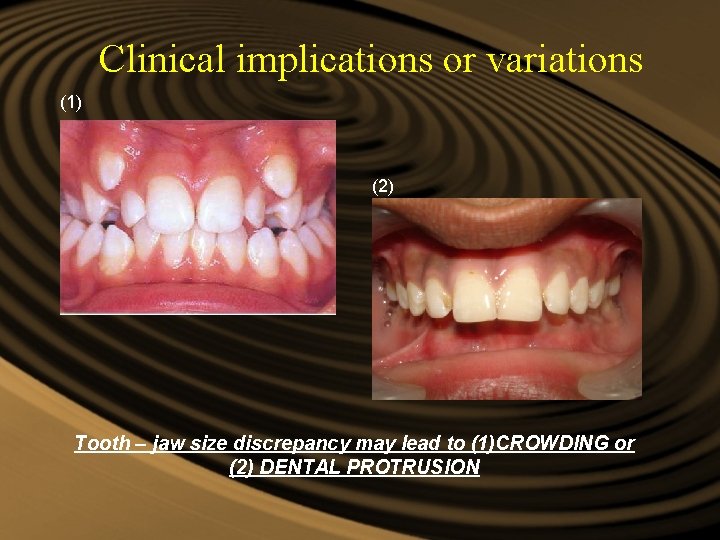
Clinical implications or variations (1) (2) Tooth – jaw size discrepancy may lead to (1)CROWDING or (2) DENTAL PROTRUSION
TEETHING
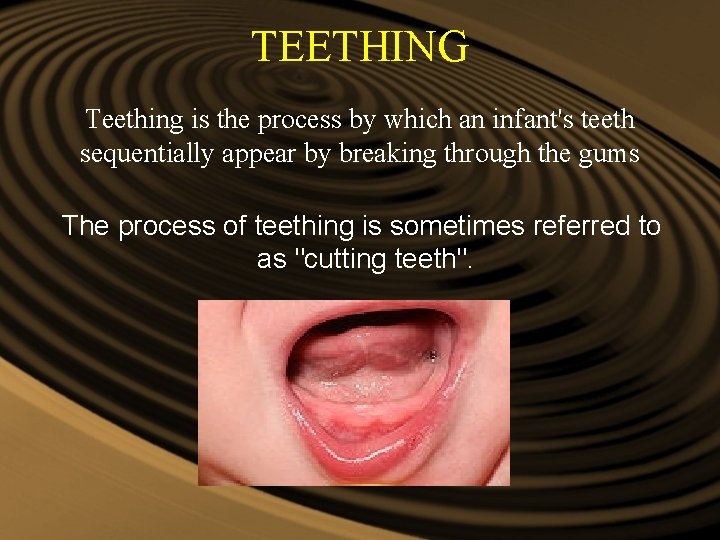
TEETHING Teething is the process by which an infant's teeth sequentially appear by breaking through the gums The process of teething is sometimes referred to as "cutting teeth".
TEETHING SIGNS: • • • General irritability Disturbed sleep Loss of appetite Chewing of objects Bruises/swelling in gums: Some blood and bruising during teething is common in most infants and babies: Not all babies bleed from the mouth when teething, but in some cases, a pocket of blood in the gum just above the tooth ruptures. eruption isn't any more painful than usual. It just looks scary to parents! • Excess salivation
• Running nose • Teething has not been shown to cause fever or diarrhea. A slight rise of temperature may occur when the teeth come through the gum, but this does not make a baby ill.
Historical management of teething • . Remedies that have been prescribed for teething through the ages have included blistering, bleeding, placing leeches on the gums, and applying cautery to the back of the head! • Lancing • Systemic medicaments Opiates and poisons such as lead acetate, mercurials and bromide. many of these compounds are actually causative of the symptoms associated with teething! • The teething relief method under constant debate is the age-old remedy of rubbing rum or whiskey on the baby's gums.
Current methods of the management of teething Non-pharmacological management • Teething rings • Hard, non-sweetened rusks made from flour and wheatgerm with no sugar or sweetener • Reassurance Pharmacological management • Topical agents • Systemic analgesics
‘Alternative' holistic medicine • acupressure, • aromatherapy, • and homeopathy
DIFFERENCES BETWEEN PRIMARY AND PERMANENT TEETH