
DEVELOPING NETWORK MODELS OF INDUSTRIAL SYMBIOSIS Thrse G
DEVELOPING NETWORK MODELS OF INDUSTRIAL SYMBIOSIS Thérèse G. Lee Chan, Venessa K. K. Bhagwat and David A. Janes Faculty of Engineering, The University of the West Indies, Trinidad ICon. ETech 2020, Faculty of Engineering, The UWI, St. Augustine, Trinidad and Tobago
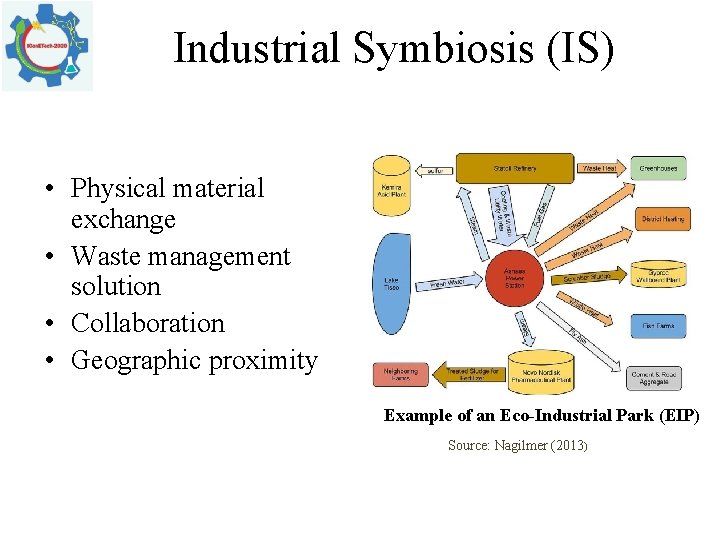
Industrial Symbiosis (IS) • Physical material exchange • Waste management solution • Collaboration • Geographic proximity Example of an Eco Industrial Park (EIP) Source: Nagilmer (2013)
Measurement of IS • Connectance and Symbiotic Utilisation (Hardy and Graedel, 2008) • Waste Recycling Rate (Tiejun, 2010; Gao et al. , 2013) • Environmental Impact Momentum (Felicio et al. , 2016)
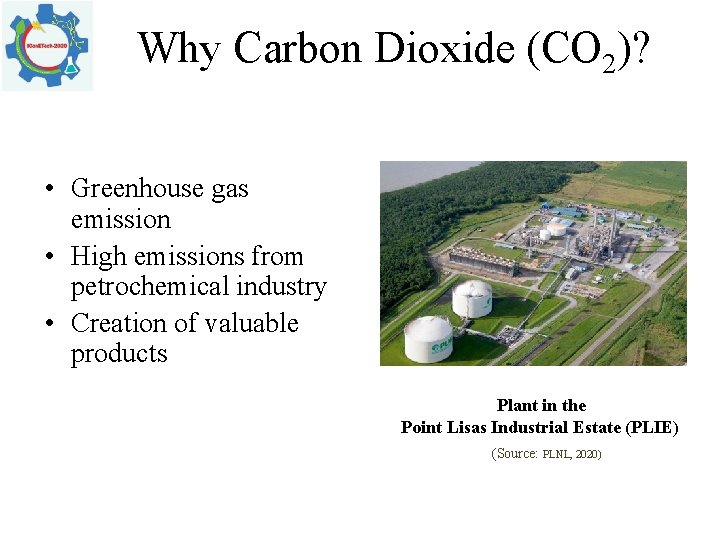
Why Carbon Dioxide (CO 2)? • Greenhouse gas emission • High emissions from petrochemical industry • Creation of valuable products Plant in the Point Lisas Industrial Estate (PLIE) (Source: PLNL, 2020)
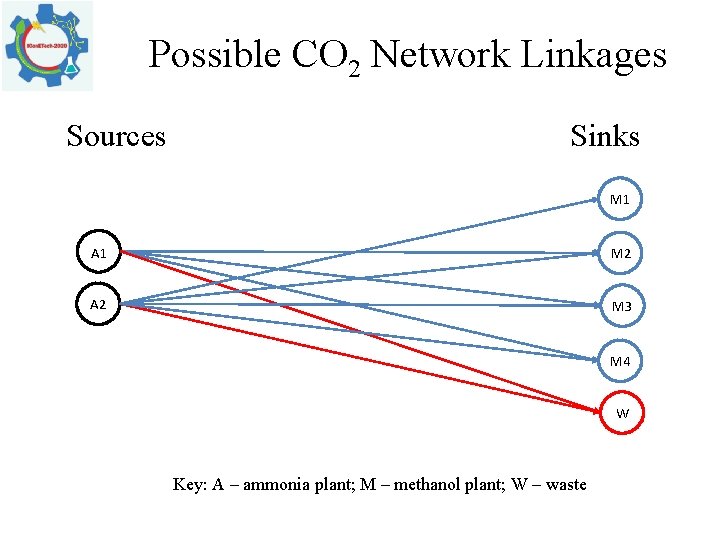
Possible CO 2 Network Linkages Sources Sinks M 1 A 1 M 2 A 2 M 3 M 4 W Key: A – ammonia plant; M – methanol plant; W – waste
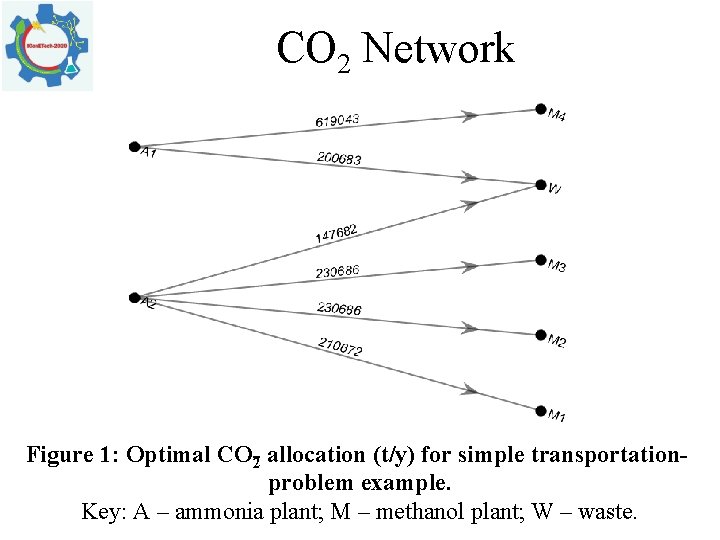
CO 2 Network Figure 1: Optimal CO 2 allocation (t/y) for simple transportation problem example. Key: A – ammonia plant; M – methanol plant; W – waste.
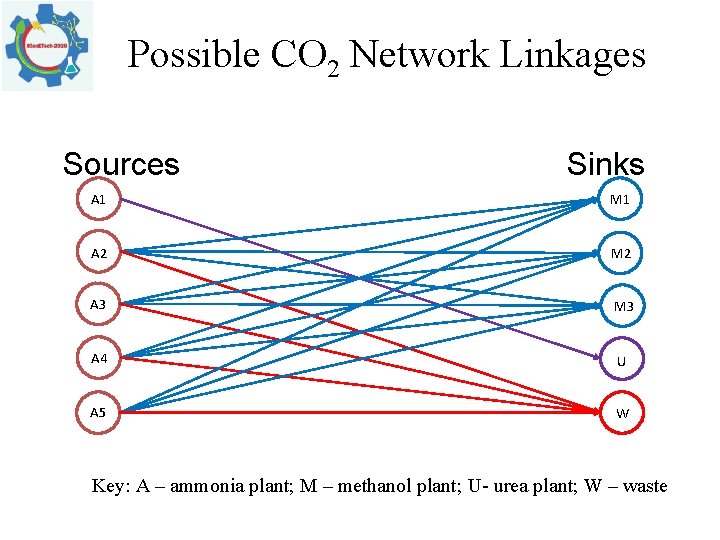
Possible CO 2 Network Linkages Sources Sinks A 1 M 1 A 2 M 2 A 3 M 3 A 4 U A 5 W Key: A – ammonia plant; M – methanol plant; U urea plant; W – waste
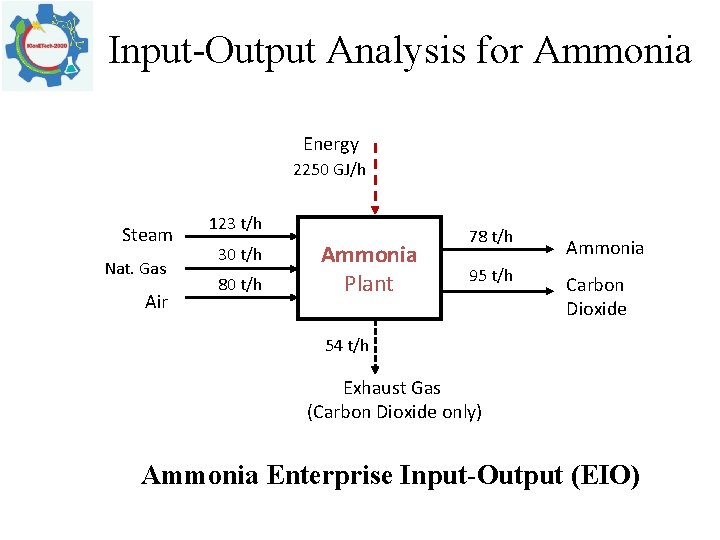
Input Output Analysis for Ammonia Energy 2250 GJ/h Steam Nat. Gas Air 123 t/h 30 t/h 80 t/h Ammonia Plant 78 t/h 95 t/h Ammonia Carbon Dioxide 54 t/h Exhaust Gas (Carbon Dioxide only) Ammonia Enterprise Input Output (EIO)
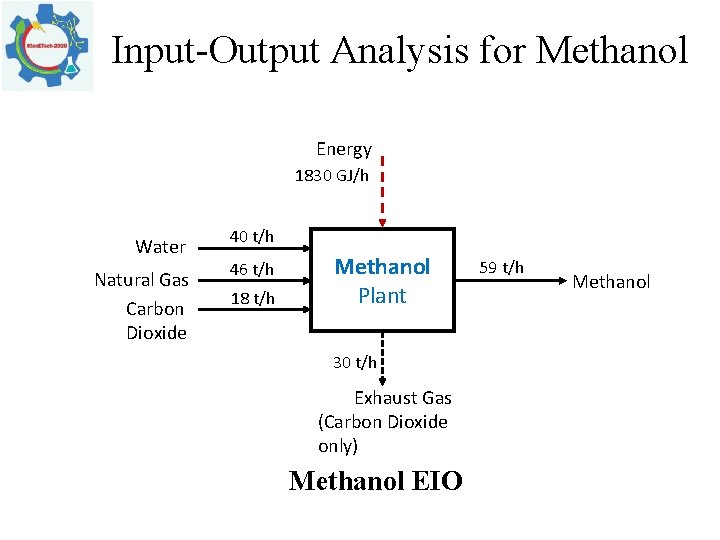
Input Output Analysis for Methanol Energy 1830 GJ/h Water Natural Gas Carbon Dioxide 40 t/h 46 t/h 18 t/h Methanol Plant 30 t/h Exhaust Gas (Carbon Dioxide only) Methanol EIO 59 t/h Methanol
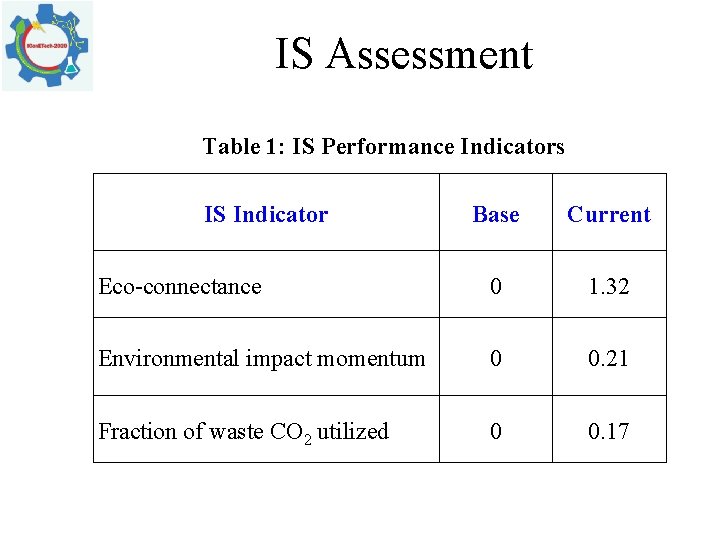
IS Assessment Table 1: IS Performance Indicators IS Indicator Base Current Eco connectance 0 1. 32 Environmental impact momentum 0 0. 21 Fraction of waste CO 2 utilized 0 0. 17
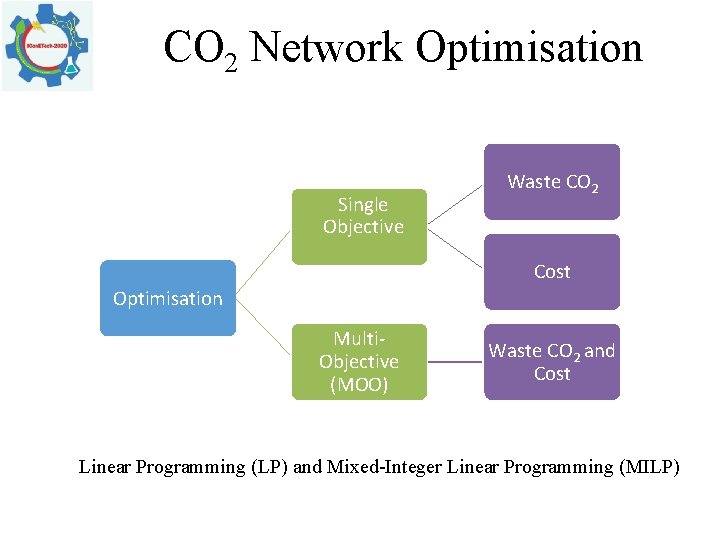
CO 2 Network Optimisation Single Objective Waste CO 2 Cost Optimisation Multi. Objective (MOO) Waste CO 2 and Cost Linear Programming (LP) and Mixed Integer Linear Programming (MILP)
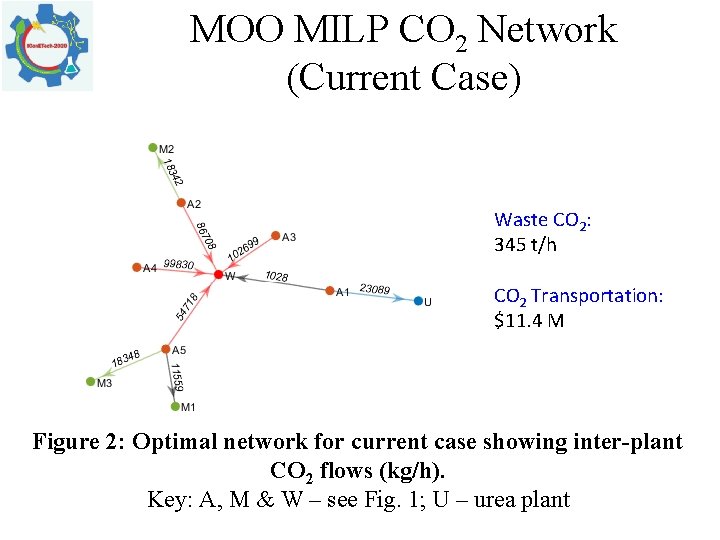
MOO MILP CO 2 Network (Current Case) Waste CO 2: 345 t/h CO 2 Transportation: $11. 4 M Figure 2: Optimal network for current case showing inter plant CO 2 flows (kg/h). Key: A, M & W – see Fig. 1; U – urea plant
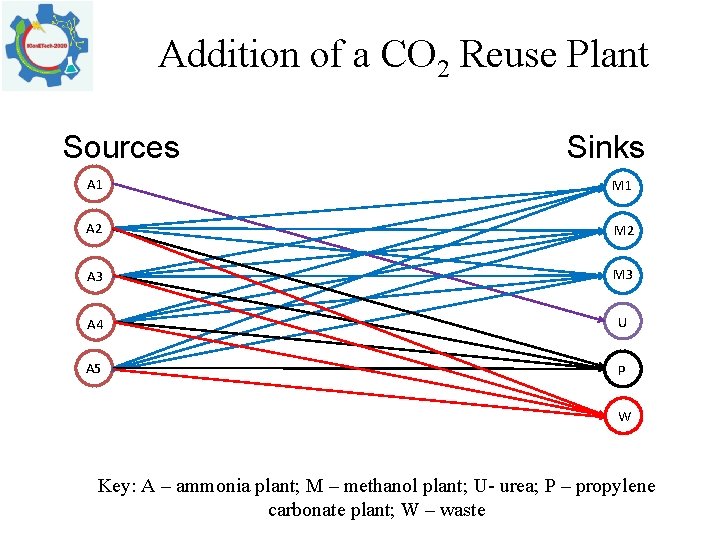
Addition of a CO 2 Reuse Plant Sources Sinks A 1 M 1 A 2 M 2 A 3 M 3 A 4 U A 5 P W Key: A – ammonia plant; M – methanol plant; U urea; P – propylene carbonate plant; W – waste
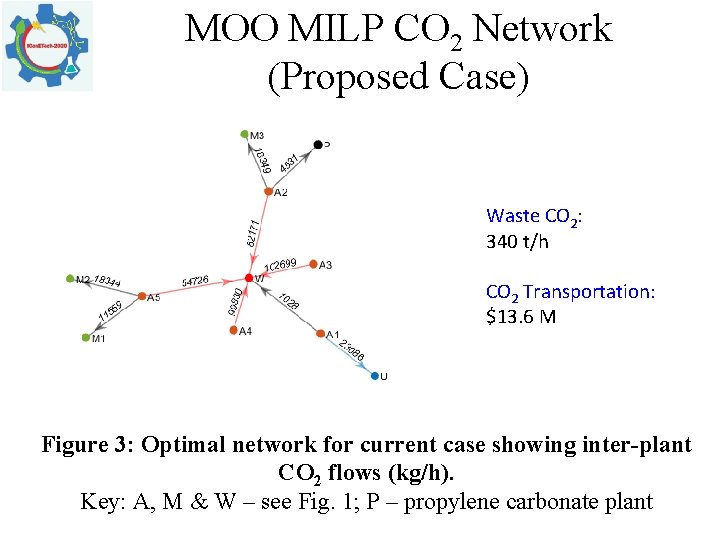
MOO MILP CO 2 Network (Proposed Case) Waste CO 2: 340 t/h CO 2 Transportation: $13. 6 M Figure 3: Optimal network for current case showing inter plant CO 2 flows (kg/h). Key: A, M & W – see Fig. 1; P – propylene carbonate plant
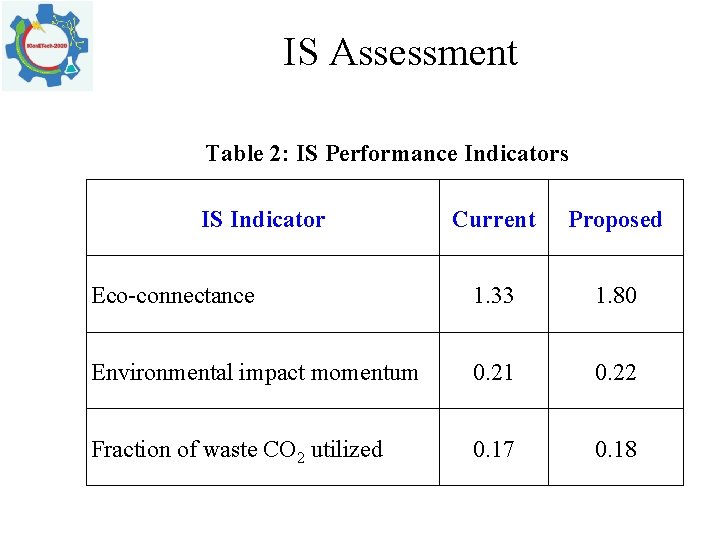
IS Assessment Table 2: IS Performance Indicators IS Indicator Current Proposed Eco connectance 1. 33 1. 80 Environmental impact momentum 0. 21 0. 22 Fraction of waste CO 2 utilized 0. 17 0. 18
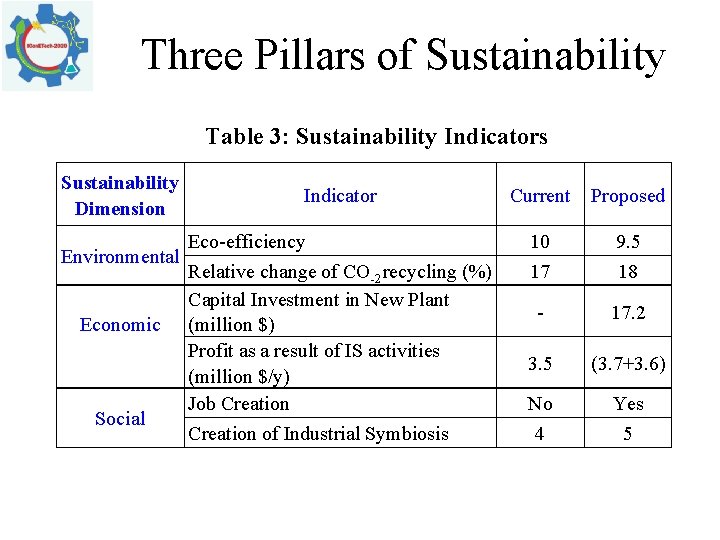
Three Pillars of Sustainability Table 3: Sustainability Indicators Sustainability Dimension Environmental Economic Social Indicator Current Proposed Eco efficiency Relative change of CO 2 recycling (%) Capital Investment in New Plant (million $) Profit as a result of IS activities (million $/y) Job Creation of Industrial Symbiosis 10 17 9. 5 18 17. 2 3. 5 (3. 7+3. 6) No 4 Yes 5
Conclusions • Linearized EIO models with process simulation data can be used to analyse and optimise potential IS scenarios • PLIE has some characteristics of an EIP • There is plenty of high purity CO 2 available for reuse on PLIE • Introducing a new CO 2 reuse plant into the network decreased CO 2 emissions by 1%. • Adding CO 2 reuse plants should lead to higher IS indicator values and further triple bottom line benefits
![References [1] D. M. Yazan, V. A. Romano, V. Albino. The design of industrial](http://slidetodoc.com/presentation_image_h/224a1d44ee3f059b01b678d90127b77d/image-18.jpg "References [1] D. M. Yazan, V. A. Romano, V. Albino. The design of industrial")
References [1] D. M. Yazan, V. A. Romano, V. Albino. The design of industrial symbiosis: an input–output approach. Journal of Cleaner Production no. 129, (2016) 537 547. [2] C. A. Boyle, B. W. Baetz. A prototype knowledge based decision support system for industrial waste management: Part II. Application to a Trinidadian industrial estate case study. Waste Management 17 no. 7, (1998) 411 428. [3] J. Ehrenfeld, N. Gertler. Industrial Ecology in Practice: The Evolution of Interdependence at Kalundborg. Journal of Industrial Ecology no. 1, (1997) 67– 79. [4] D. Boodlal. 2008. Trinidad and Tobago's CO 2 Inventory and Techno economic Evaluation of Carbon Capture Options for Emission Mitigation. 3 rd Tobago Gas Technology Conference, Lowlands, Tobago. [5] D. Tiejun, Two quantitative indices for the planning and evaluation of eco industrial parks. Resources, Conservation and Recycling 54 no. 7, (2010) 442 448. [6] H. S. Park, S. K. Behera. Methodological aspects of applying eco efficiency indicators to industrial symbiosis networks. J ournal of Cleaner Production no. 64, (2014) 478 485. [7] O. Yilmaz, E. Yontem, E. Alkaya. 2016. Industrial Symbiosis Indicators. FISSAC. [8] L. Fraccascia, V. Albino, C. A. Garavelli. Technical efficiency measures of industrial symbiosis networks using enterprise input output analysis. International Journal of Production Economics no. 183, (2017) 273 286. [9] L. Gao, M. Fang, H. Li, J. Hetland. Cost analysis of CO 2 transportation: Case study in China. Energy Procedia no. 4, (2011) 5974 5981. [10] S. K. Benn Ogeer, D. A. Janes, R. Deo. A Life Cycle Assessment (LCA) of the Production of Biofuels in Trinidad from Waste CO 2 with Microalgae, e-Journal of the Caribbean Academy of Sciences 8 no. 1, (2015). [11] Y. Demirel. Sustainability and Economic Analysis of Propylene Carbonate and Polypropylene Carbonate Production Processes Using CO 2 and Propylene Oxide. Chemical Engineering & Process Technology 6 no. 3, (2015) 236 243. [12] N. von der Assen, A. Bardow. Life cycle assessment of polyols for polyurethane production using CO 2 as feedstock: insights from an industrial case study. Green Chemistry no. 16, (2014) 3272 3280. [13] S. T. Mc. Coy, E. S. Rubin. An engineering economic model of pipeline transport of CO 2 with application to carbon capture and storage. International Journal of Greenhouse Gas Control 2 no. 2, (2008) 219 229. [14] E. E. Williams, 1970. The Future of the Caribbean. In From Columbus to Castro: The History of the Caribbean, 1492– 1969. Harper and Row. [15] C. Hardy, T. Graedel. Industrial Ecosystems as Food Webs. Journal of Industrial Ecology no. 6, (2008) 29 38. [16] M. Felicio, D. Amaral, K. Esposto, X. Gabarrell Durany. Industrial symbiosis indicators to manage eco industrial parks as dynamic systems. Journal of Cleaner Production no. 118, (2016) 54 64.

THANK YOU! ICon. ETech 2020, Faculty of Engineering, The UWI, St. Augustine, Trinidad and Tobago
- Slides: 19