
Developing Key Worker Skills and Knowledge in Early




- Slides: 26
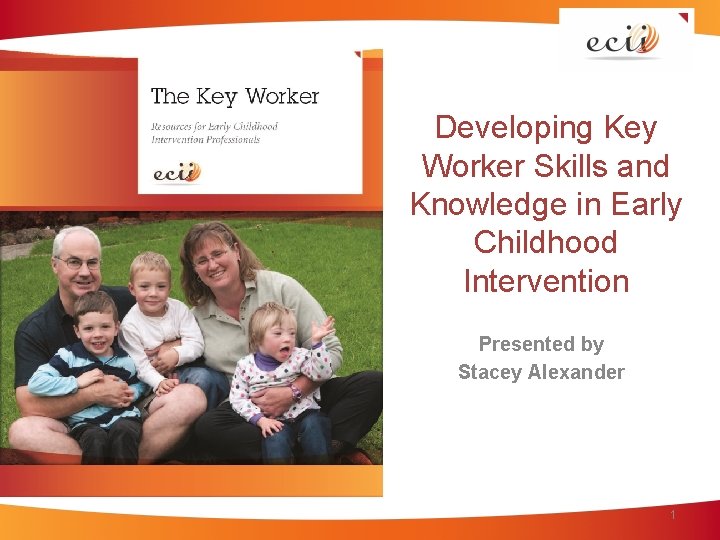
Developing Key Worker Skills and Knowledge in Early Childhood Intervention Presented by Stacey Alexander 1
ECII • What is ecii? • www. ecii. org. au copyright Noah's Ark Inc 2012 2
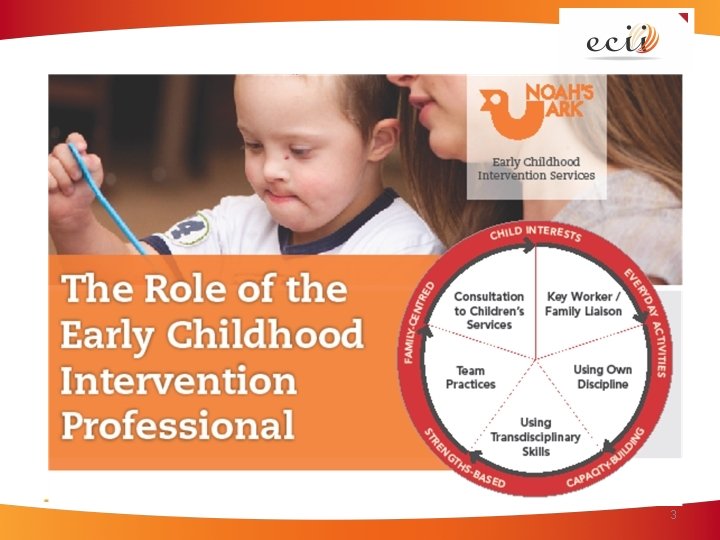
3
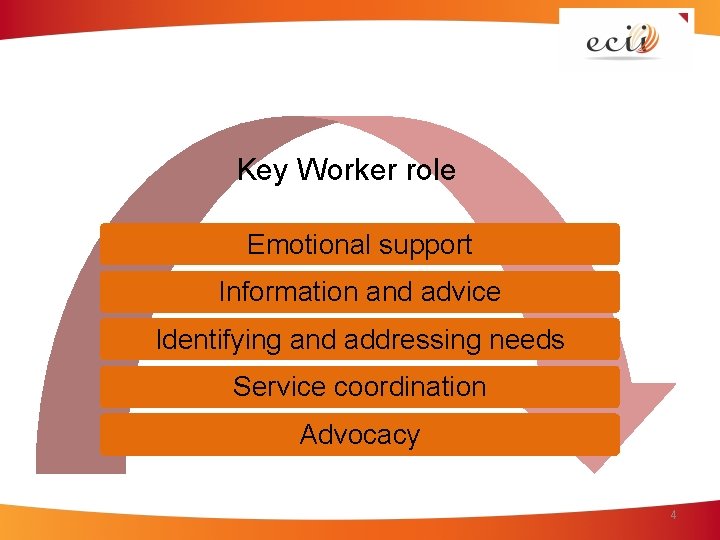
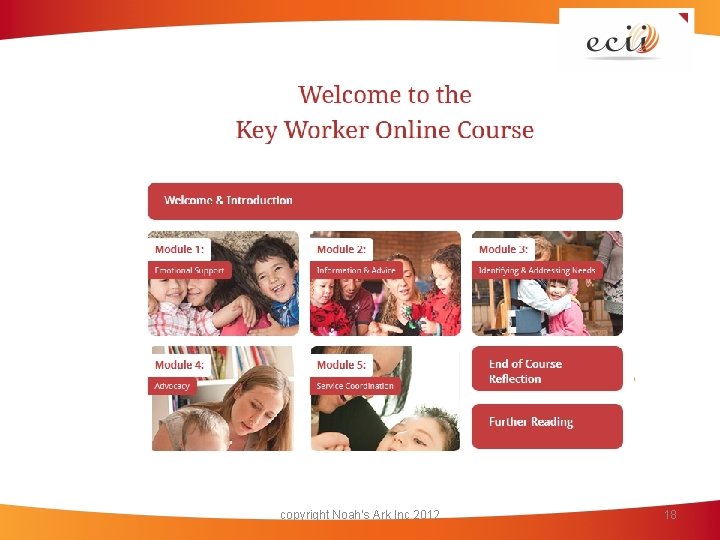
Key Worker role Emotional support Information and advice Identifying and addressing needs Service coordination Advocacy 4
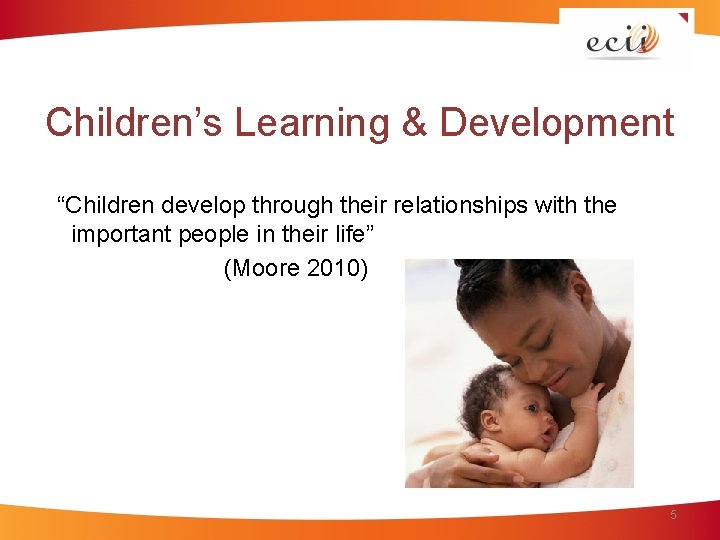
Children’s Learning & Development “Children develop through their relationships with the important people in their life” (Moore 2010) 5
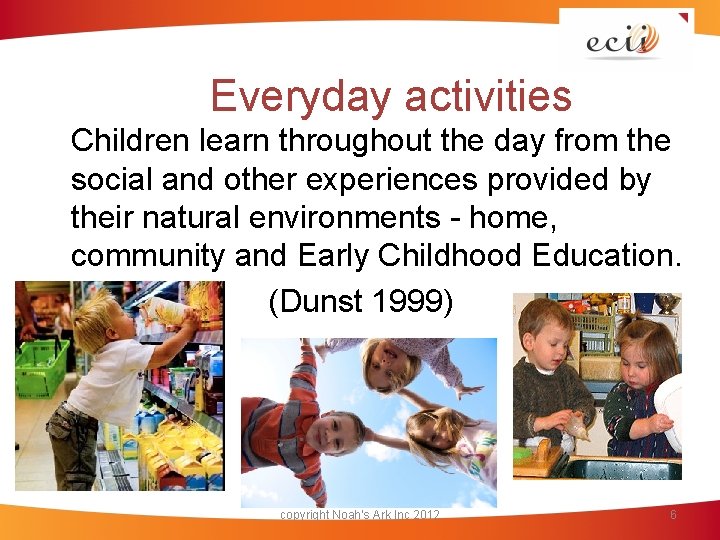
Everyday activities Children learn throughout the day from the social and other experiences provided by their natural environments - home, community and Early Childhood Education. (Dunst 1999) copyright Noah's Ark Inc 2012 6
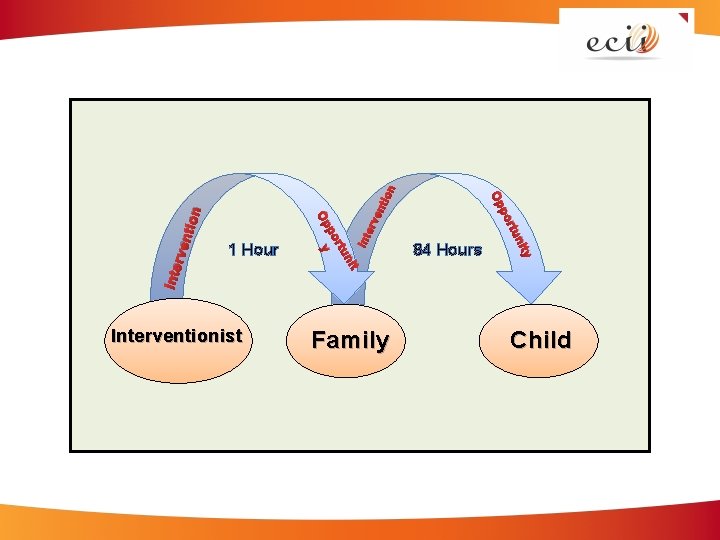
y en Int erv n ntio rve nit 84 Hours it Inte rtu n rtu po y Interventionist po Op 1 Hour Op tio n CONSULTATIVE MODEL Family Child
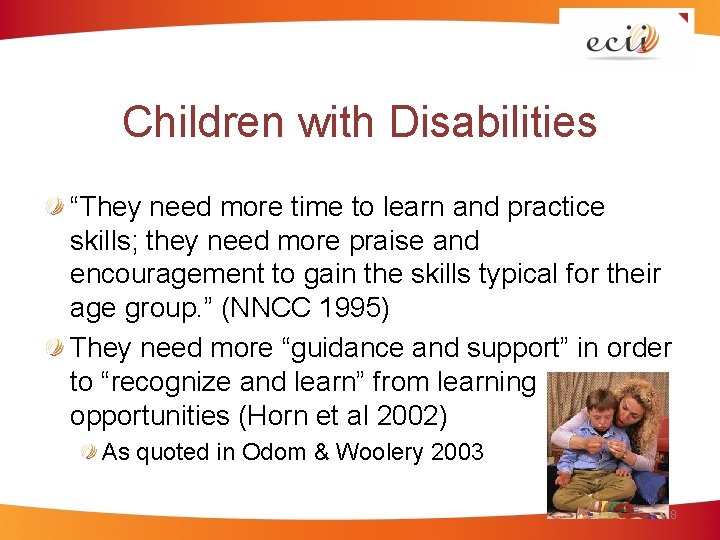
Children with Disabilities “They need more time to learn and practice skills; they need more praise and encouragement to gain the skills typical for their age group. ” (NNCC 1995) They need more “guidance and support” in order to “recognize and learn” from learning opportunities (Horn et al 2002) As quoted in Odom & Woolery 2003 8
Family Patterns of Interaction • The quality of the parent/child transactions • Family orchestrated child experiences • Health and safety provided by the family Guralnick (2005) 9
Stressors Information needs Interpersonal and emotional distress Resource Needs Confidence threats Guralnick (2005) 10
Australian Social Trends (2008) • • 33% reported strained relationships 52% lacking time with immediate family 26% losing touch with friends 18% diagnosed with stress-related illness Reduced workforce participation Lower socio-economic status (Sloper & Beresford 2006) estimate caring for a child with disability is triple the cost of raising a child without a disability. 11
Emotional Support • to engage the parent to understand the importance of their role • to motivate the parent to want to do what they need to do to meet their child’s additional needs • to build the parent’s knowledge, skills and confidence • to build the parent’s capacity so that they can continue to do what they need to do long after ECIS is gone • to minimise family stressors that may act as a barrier to any of the above 12
Information & Advice to Families • Families report this is as their primary and most immediate need. • What does this diagnosis mean? • How do I get the resources I need? • What am I meant to be doing with my child? • Knowledge empowers parents to make informed decisions and actions 13
Identifying & Addressing Needs • Family beliefs, routines, culture and preferences • Goals and dreams • Emotional, material and informational support • Stresses • Strengths 14
Advocacy • • The need for other services Access or availability Building skills and confidence Understanding their rights 15
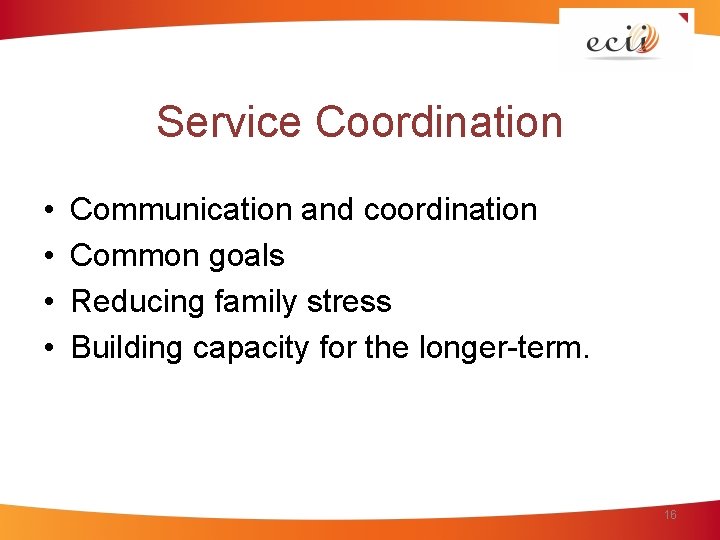
Service Coordination • • Communication and coordination Common goals Reducing family stress Building capacity for the longer-term. 16
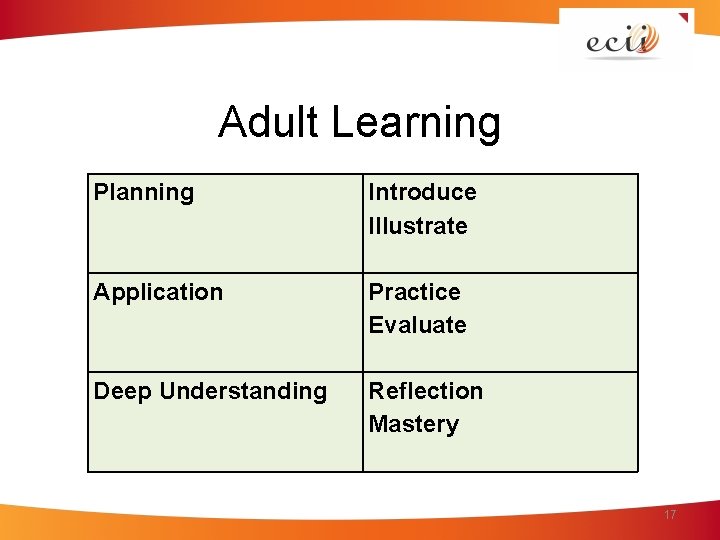
Adult Learning Planning Introduce Illustrate Application Practice Evaluate Deep Understanding Reflection Mastery 17
copyright Noah's Ark Inc 2012 18
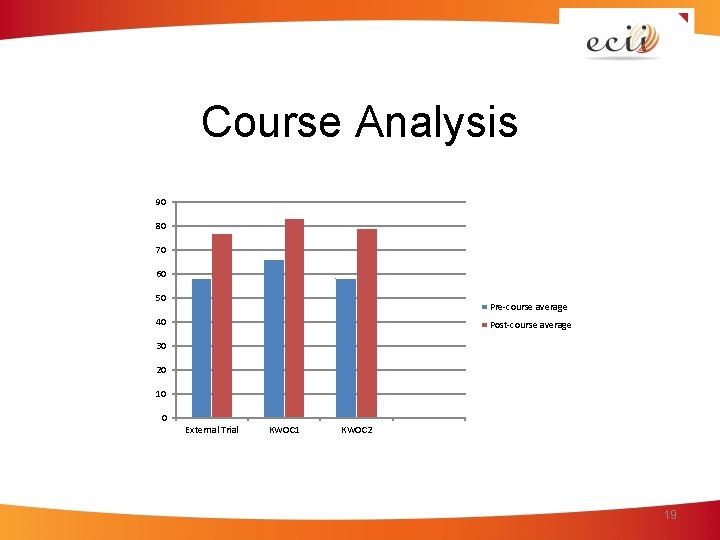
Course Analysis 90 80 70 60 50 Pre-course average 40 Post-course average 30 20 10 0 External Trial KWOC 1 KWOC 2 19
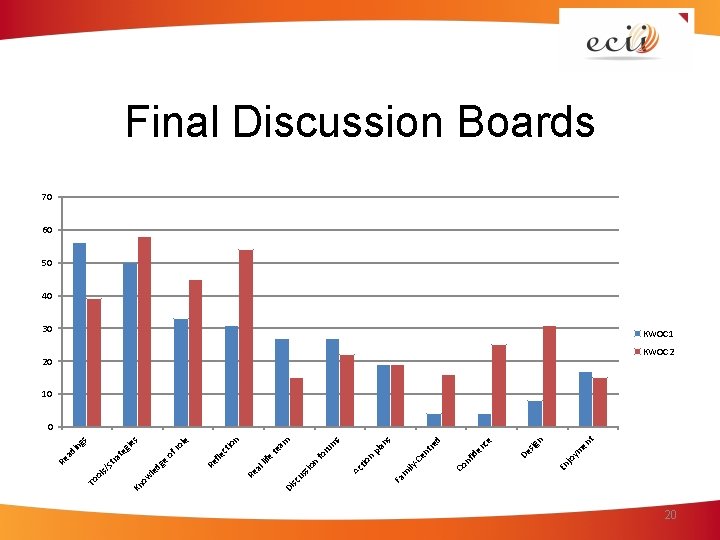
m oy En j t en n sig De ce en nf id d tre s s an pl en -C ily Co m Fa n Ac tio um fo r am n io te s le ro gie ct fle of lif e n us sio sc Di al Re Re e dg le w Kn o gs in te ra St ls/ To o ad Re Final Discussion Boards 70 60 50 40 30 KWOC 1 20 KWOC 2 10 0 20
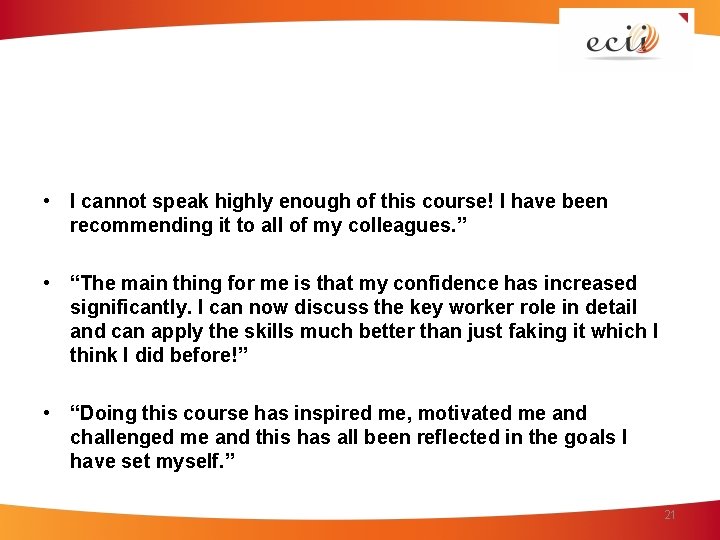
• I cannot speak highly enough of this course! I have been recommending it to all of my colleagues. ” • “The main thing for me is that my confidence has increased significantly. I can now discuss the key worker role in detail and can apply the skills much better than just faking it which I think I did before!” • “Doing this course has inspired me, motivated me and challenged me and this has all been reflected in the goals I have set myself. ” 21
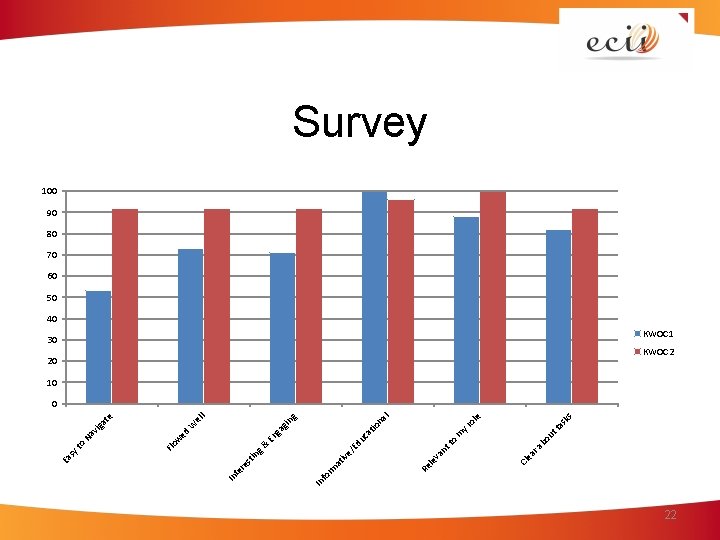
to sk s ta ol e yr m ut bo ra ea Cl nt va le l na tio ca gin g ga l el W e vig at ed En w Na du /E ive at m Re fo r In g& in st re In te to Flo sy Ea Survey 100 90 80 70 60 50 40 30 KWOC 1 20 KWOC 2 10 0 22
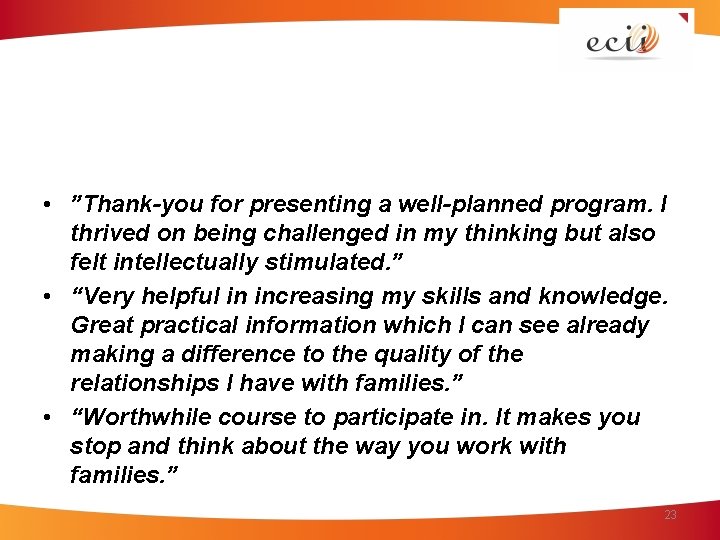
• ”Thank-you for presenting a well-planned program. I thrived on being challenged in my thinking but also felt intellectually stimulated. ” • “Very helpful in increasing my skills and knowledge. Great practical information which I can see already making a difference to the quality of the relationships I have with families. ” • “Worthwhile course to participate in. It makes you stop and think about the way you work with families. ” 23
Summary • Parents’ role is crucial • Children with disabilities or developmental delays need additional support • Stress on parents can impact their capacity to meet these additional support needs. • Key Worker role aims to redress the balance. 24
Summary continued § KNOWLEDGE § CONFIDENCE § PRACTICAL TOOLS & STRATEGIES § REFLECTIVE PRACTICE § TEAM DISCUSSION 25
Thank You For further discussion contact: Stacey Alexander stacey. alexander@noahsarkinc. org. au or go to http: //www. ecii. org. au/ 26