
Developing Intercultural Awareness and Competency Presenter Charleon A
![Cultural Competence is also NOT… • Essentialism – “Essentially all [insert noun] are…” -](https://slidetodoc.com/presentation_image_h/93c56dfe9631b2c35d95044ffaa5308f/image-5.jpg "Cultural Competence is also NOT… • Essentialism – “Essentially all [insert noun] are…” -")
- Slides: 32
Developing Intercultural Awareness and Competency Presenter: Charleon A. Jeffries cxj 164@psu. edu 2015
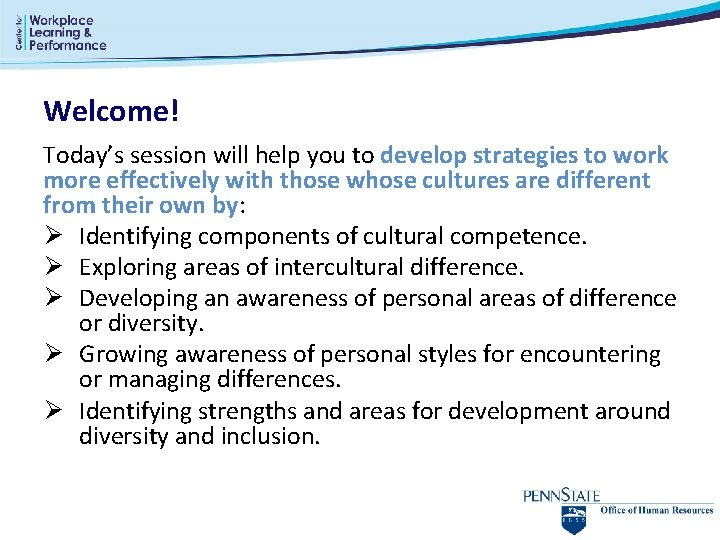
Welcome! Today’s session will help you to develop strategies to work more effectively with those whose cultures are different from their own by: Ø Identifying components of cultural competence. Ø Exploring areas of intercultural difference. Ø Developing an awareness of personal areas of difference or diversity. Ø Growing awareness of personal styles for encountering or managing differences. Ø Identifying strengths and areas for development around diversity and inclusion.
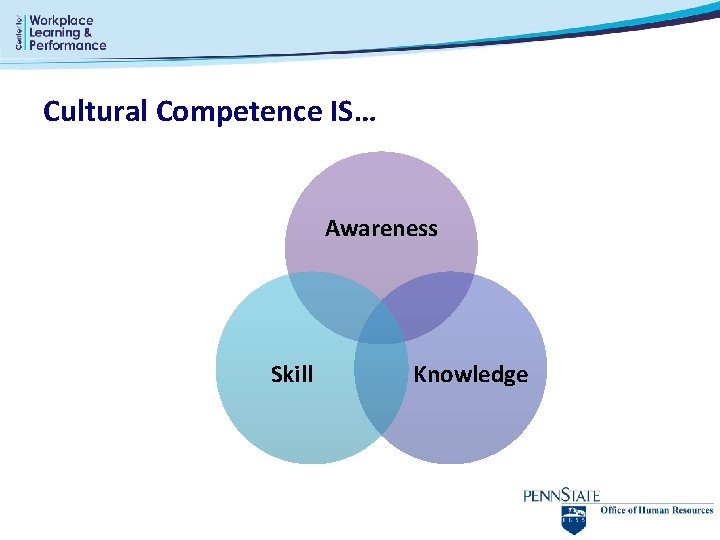
Cultural Competence IS… Awareness Skill Knowledge
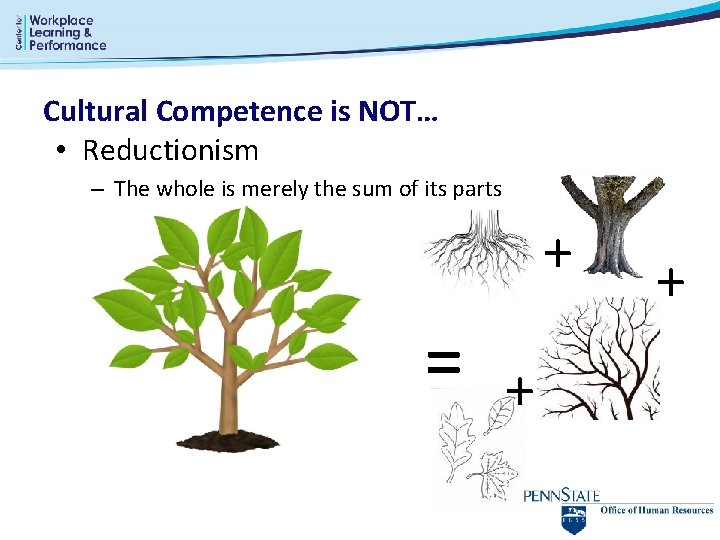
Cultural Competence is NOT… • Reductionism – The whole is merely the sum of its parts + = + +
Cultural Competence is also NOT… • Essentialism – “Essentially all [insert noun] are…” - Tall Leafy Strong Massive Provide Shade
6 Agenda • Awareness – Affirmative Introspection • Knowledge – Dimensions of Diversity – Intercultural Literacy • Skill – Social Architecting
Components of Cultural Competence Awareness Ø Understanding of self is key in understanding how we view and interact with others. Ø Lens? Ø Blind Spots? Knowledge The more knowledge we have about people of different cultures, the more likely we are able to avoid stepping on cross-cultural “toes. ” Knowing how culture impacts problem solving, managing people, asking for help, etc. can keep us connected
Components of Cultural Competence Attitude Values & beliefs impact cross-cultural effectiveness because they convey the extent to which we are open to differing values and opinions. The stronger we feel about our V&B, the more likely we will react emotionally when they collide with cultural differences Skills or Behaviors One can have the “right” attitude, considerable self-awareness, and a lot of knowledge about cultural differences, yet still lack the ability to effectively manage differences. Skills are learned and then practiced in order to be developed.
Awareness Affirmative Introspection “We can travel the world over, but we take ourselves with us“ - Ralph Waldo Emerson
What is Affirmative Introspection? Ø Knowing what makes me tick Ø Being comfortable in my own skin Ø Being in tune with my own biases and hot buttons
What Makes Me Tick? Ø Experiences and messages that have shaped your values, philosophy of life & motivations behind your behaviors Ø Knowing what makes you tick helps you to communicate more clearly who you are and why you are responding in a certain way. Ø You expand the range of your reactions and responses for any number of situations
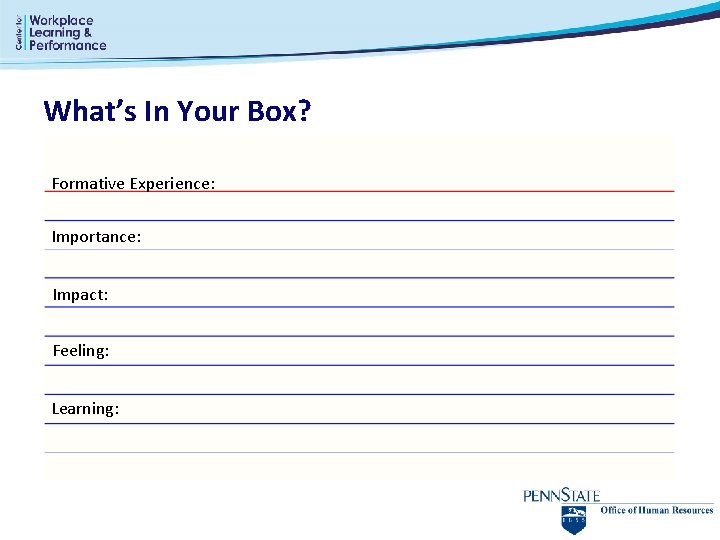
What’s In Your Box? Formative Experience: Importance: Impact: Feeling: Learning:
Knowledge Intercultural Literacy “Nothing is either good or bad, but thinking makes it so“ - Shakespeare
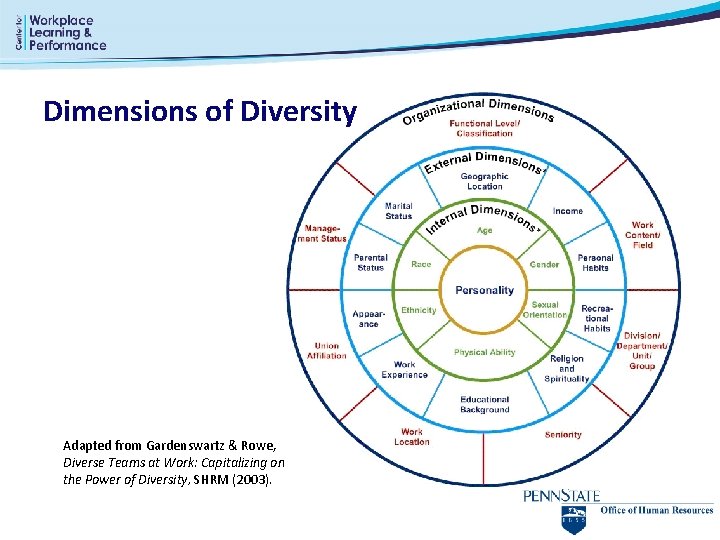
Dimensions of Diversity Adapted from Gardenswartz & Rowe, Diverse Teams at Work: Capitalizing on the Power of Diversity, SHRM (2003).
Exploring Intercultural Values Core Cultural Values Ø The principles or standards of importance to us that tell us how we should behave based on queues and input from our culture Values Ø Terminal Ø Instrumental
Mapping your Cultural Orientation Of the 8 pairs of cultural value comparisons on the slides to follow, place an “X” along the continuum that reflects your personal belief or orientation with those values.
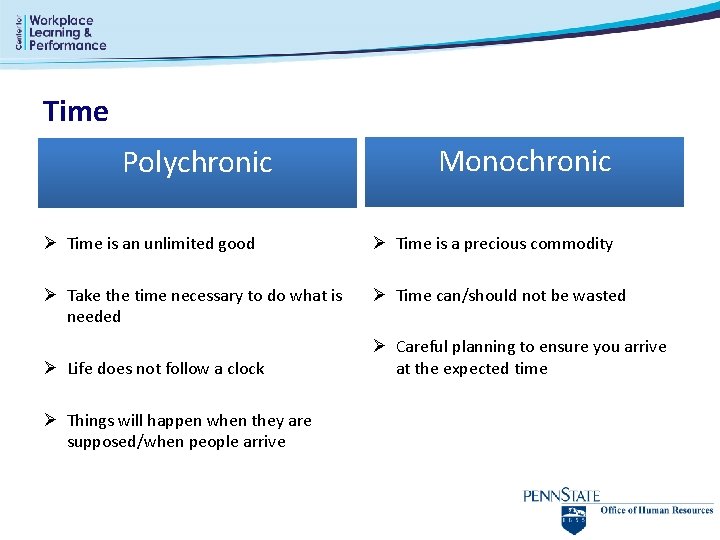
Time Polychronic Monochronic Ø Time is an unlimited good Ø Time is a precious commodity Ø Take the time necessary to do what is needed Ø Time can/should not be wasted Ø Life does not follow a clock Ø Things will happen when they are supposed/when people arrive Ø Careful planning to ensure you arrive at the expected time
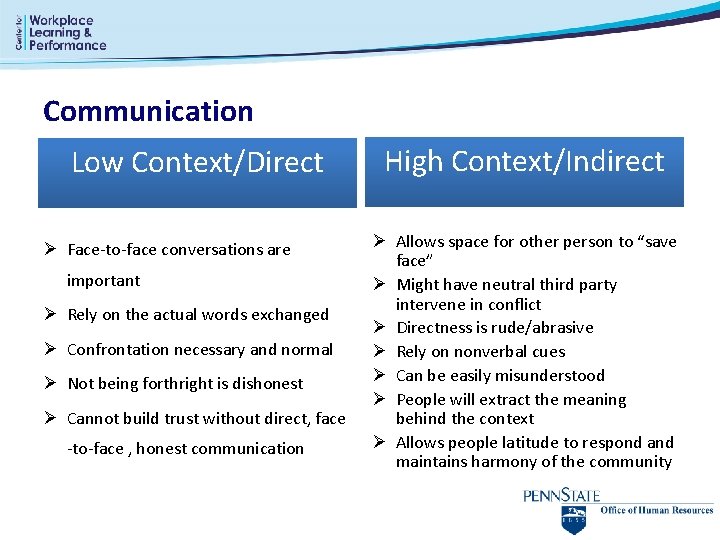
Communication Low Context/Direct Ø Face-to-face conversations are important Ø Rely on the actual words exchanged Ø Confrontation necessary and normal Ø Not being forthright is dishonest Ø Cannot build trust without direct, face -to-face , honest communication High Context/Indirect Ø Allows space for other person to “save face” Ø Might have neutral third party intervene in conflict Ø Directness is rude/abrasive Ø Rely on nonverbal cues Ø Can be easily misunderstood Ø People will extract the meaning behind the context Ø Allows people latitude to respond and maintains harmony of the community
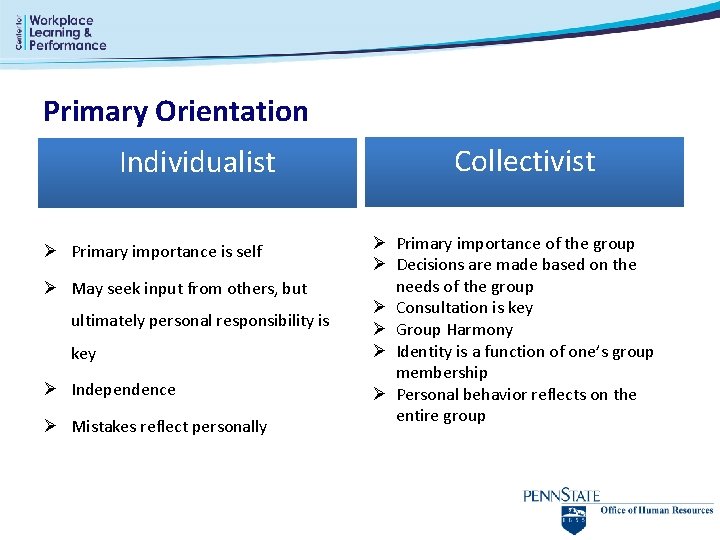
Primary Orientation Individualist Ø Primary importance is self Ø May seek input from others, but ultimately personal responsibility is key Ø Independence Ø Mistakes reflect personally Collectivist Ø Primary importance of the group Ø Decisions are made based on the needs of the group Ø Consultation is key Ø Group Harmony Ø Identity is a function of one’s group membership Ø Personal behavior reflects on the entire group
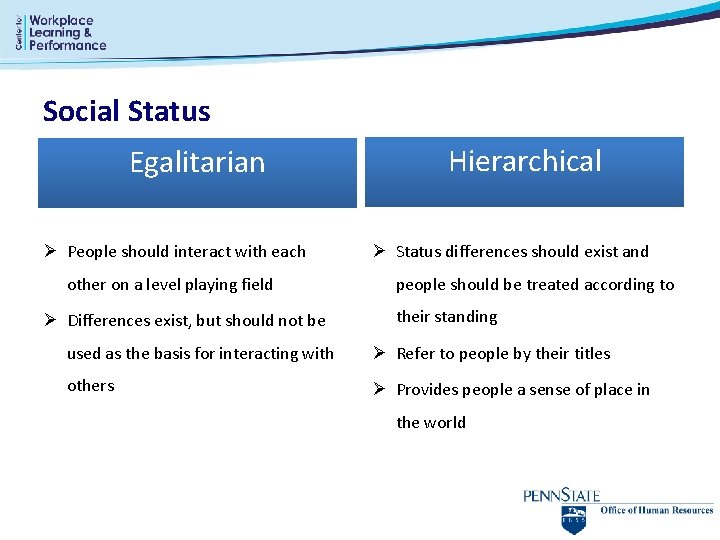
Social Status Egalitarian Ø People should interact with each other on a level playing field Ø Differences exist, but should not be Hierarchical Ø Status differences should exist and people should be treated according to their standing used as the basis for interacting with Ø Refer to people by their titles others Ø Provides people a sense of place in the world
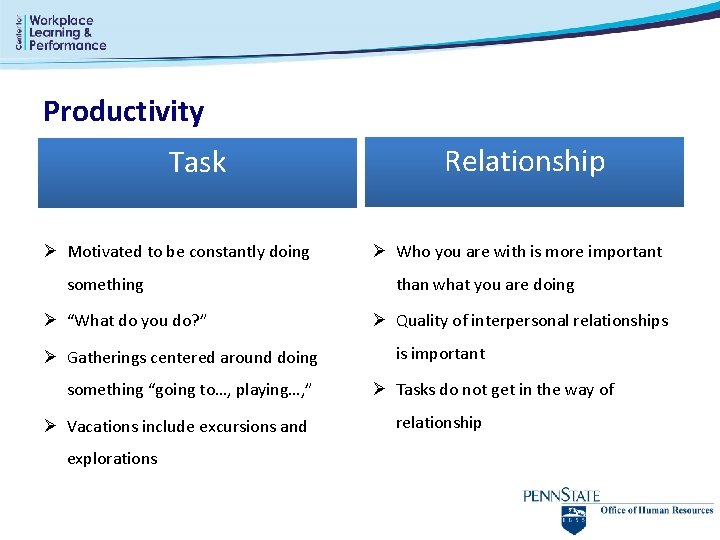
Productivity Task Ø Motivated to be constantly doing something Ø “What do you do? ” Ø Gatherings centered around doing something “going to…, playing…, ” Ø Vacations include excursions and explorations Relationship Ø Who you are with is more important than what you are doing Ø Quality of interpersonal relationships is important Ø Tasks do not get in the way of relationship
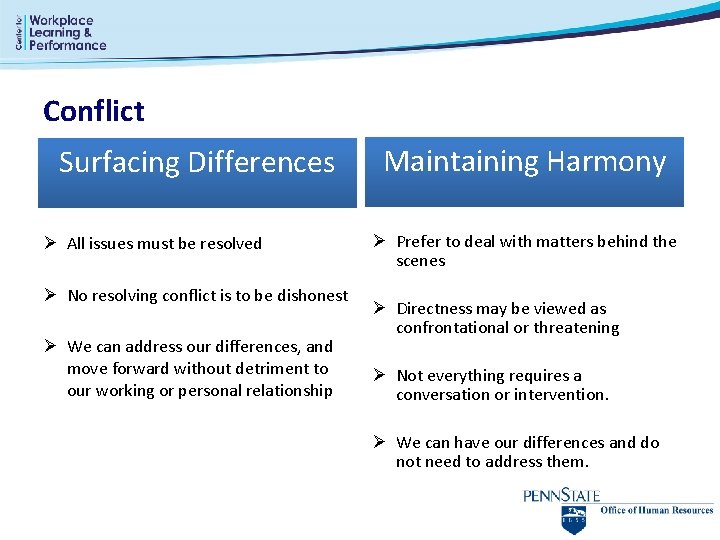
Conflict Surfacing Differences Ø All issues must be resolved Ø No resolving conflict is to be dishonest Ø We can address our differences, and move forward without detriment to our working or personal relationship Maintaining Harmony Ø Prefer to deal with matters behind the scenes Ø Directness may be viewed as confrontational or threatening Ø Not everything requires a conversation or intervention. Ø We can have our differences and do not need to address them.
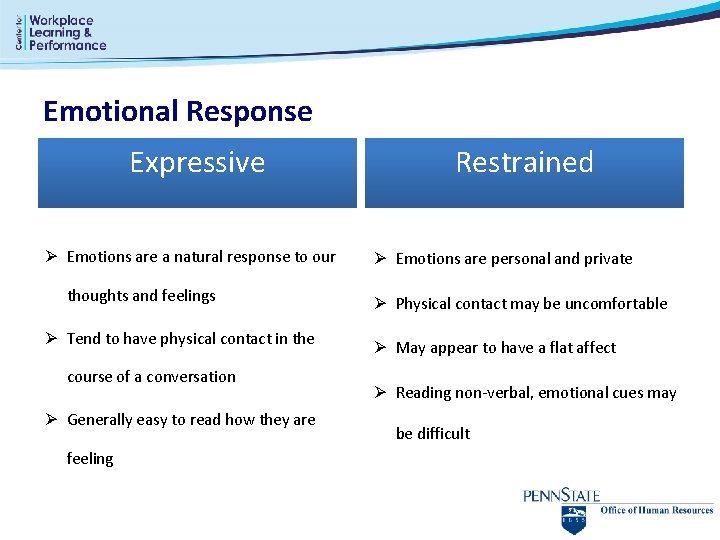
Emotional Response Expressive Ø Emotions are a natural response to our thoughts and feelings Ø Tend to have physical contact in the course of a conversation Ø Generally easy to read how they are feeling Restrained Ø Emotions are personal and private Ø Physical contact may be uncomfortable Ø May appear to have a flat affect Ø Reading non-verbal, emotional cues may be difficult
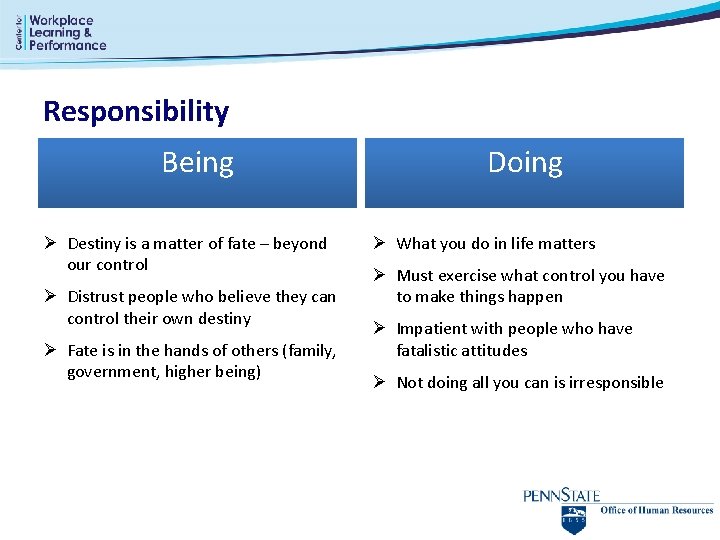
Responsibility Being Ø Destiny is a matter of fate – beyond our control Ø Distrust people who believe they can control their own destiny Ø Fate is in the hands of others (family, government, higher being) Doing Ø What you do in life matters Ø Must exercise what control you have to make things happen Ø Impatient with people who have fatalistic attitudes Ø Not doing all you can is irresponsible
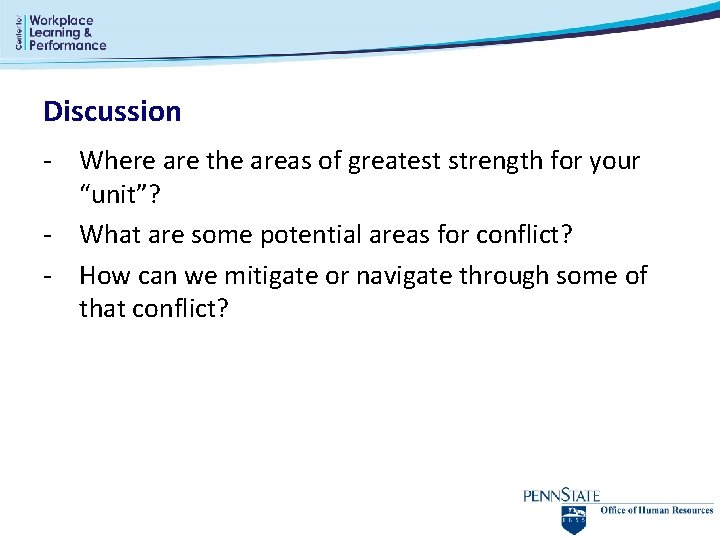
Discussion - Where are the areas of greatest strength for your “unit”? - What are some potential areas for conflict? - How can we mitigate or navigate through some of that conflict?
Behaviors & Skills Social Architecting “No culture can live if it attempts to be exclusive” - Mahatma Gandhi
Social Architecting Ø Serving as a cultural interpreter Ø Communicating effectively and resolving conflicts in diverse settings Ø Structuring a synergistic and compelling environment
Serving as a Cultural Interpreter Ø Understand the relationship between values and behaviors Ø Be aware of a “first reaction” Ø Consider alternate points of view – suspend immediate judgment Ø Be willing to advocate for awareness and understanding
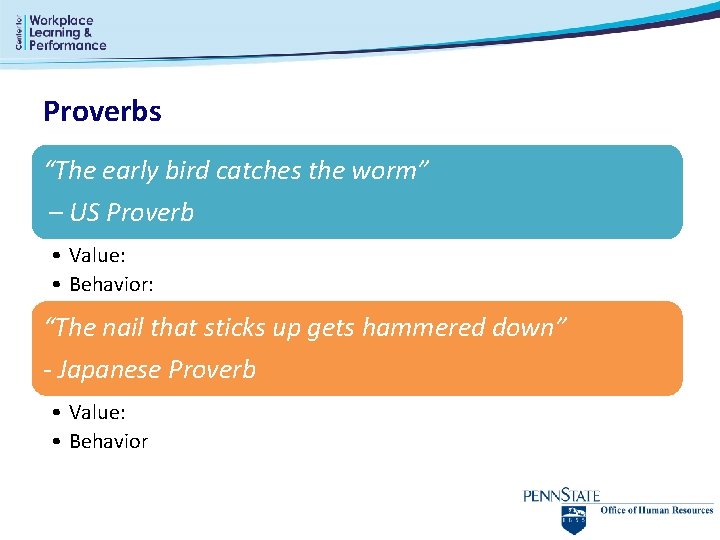
Proverbs “The early bird catches the worm” – US Proverb • Value: • Behavior: “The nail that sticks up gets hammered down” - Japanese Proverb • Value: • Behavior
Communicating Through Conflict Ø One size does NOT fit all Ø Culture and diversity brings variation to communication styles in multiple ways Ø Style Ø Content Ø Non-Verbals Ø What works for you vs What works for others
Closing Thoughts… Awareness – Affirmative Introspection You start with your lens Knowledge – Intercultural Literacy What do I know about “other-ness” What do I need/want to know Behaviors/Skills – Social Architecting Bringing people together
Questions? Charleon A. Jeffries Coordinator, Diversity Education Affirmative Action Office 328 Boucke Bldg (814) 863 -0471 cxj 164@psu. edu