
Developing Implementing an Intentional Inclusion Pre K Program



- Slides: 28
Developing & Implementing an Intentional Inclusion Pre. K Program: A Team Approach Office of Early Learning and Exceptional Children Division, NC Department of Public Instruction with Cumberland County Schools
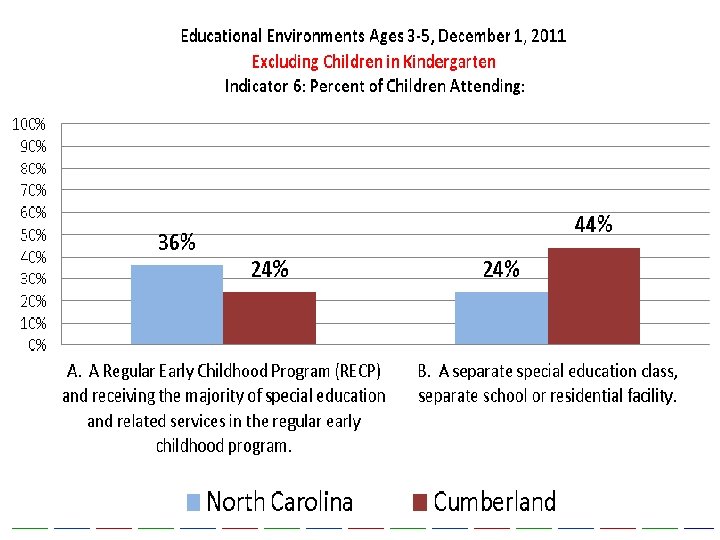
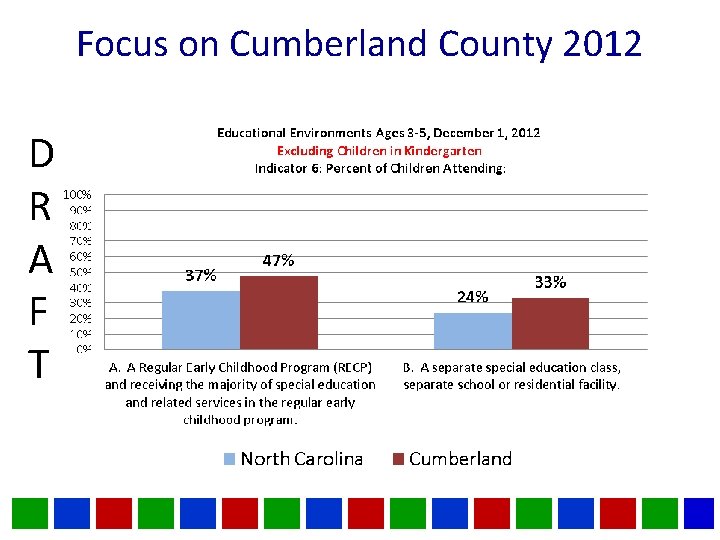
Educational Environments Indicator 6: Percent of children aged 3 through 5 with IEPs attending: A. Regular early childhood program and receiving the majority of special education and related services in the regular early childhood program; and B. Separate special education class, separate school or residential facility. (20 U. S. C. 1416(a)(3)(A))
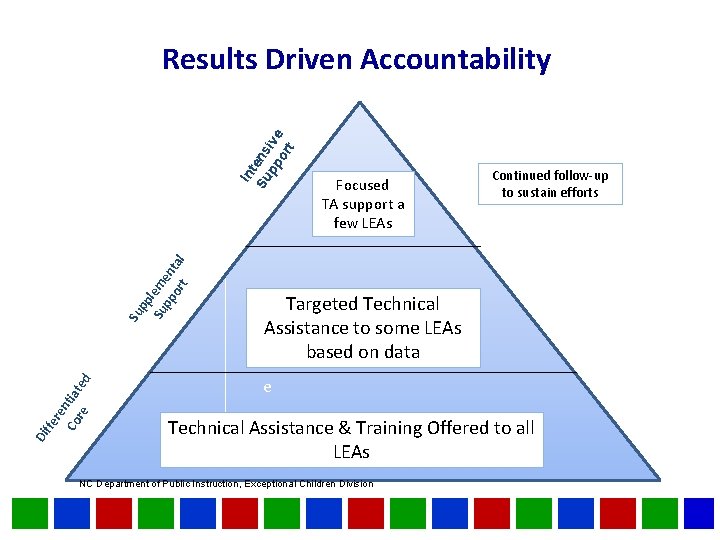
Di ff er e Co ntiat re ed Su pp Su lem pp en or tal t In t Su ens pp ive or t Results Driven Accountability Focused TA support a few LEAs Continued follow-up to sustain efforts Targeted Technical Assistance to some LEAs based on data e Technical Assistance & Training Offered to all LEAs NC Department of Public Instruction, Exceptional Children Division
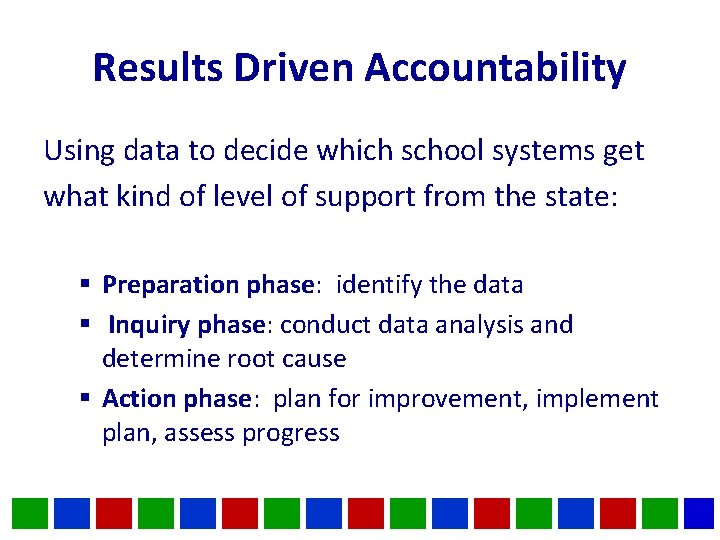
Results Driven Accountability Using data to decide which school systems get what kind of level of support from the state: § Preparation phase: identify the data § Inquiry phase: conduct data analysis and determine root cause § Action phase: plan for improvement, implement plan, assess progress
Inclusion Journey Cumberland County Schools’ RDA Process
Cumberland County Schools’ Inclusion Journey Early Development § 1987 § 1990 § 2010 Just glad to be here (PL 99 -457) Added two separate classes Had grown to 24 separate classes and 3 inclusive classes administered by the special education department
Cumberland County Schools’ Inclusion Journey 2010 Initial Attempts § Possible decrease in funding from the state. § Implemented 5 Title I and Special Education blended classes. § No plan for classroom support nor professional development to prepare teachers.
Stages of Implementation § Exploration and Adoption between 2010 and 2012 § Program Installation August 2012 § Initial Implementation 2012 - 2013 § Full Operation (We’re working on it. ) § Innovation (We know we can. ) § Sustainability (Will be the legacy of our work!)
Exploration and Adoption 2010 -2011 Inquiry Phase 1. Creating the Preschool Inclusion Initiative Cross -Sector Leadership Team 2. Taking Stock -- Assessment of Strengths and Needs 3. Mapping where the children with IEPs are served with the group
Program Installation 2011 -2012 Action Phase 1. Developing the strategic classroom/staffing plan through a Title I and Special Education agreement at the Director level using existing resources.
Program Installation 2011 -2012 Action Phase 2. Developed a rubric with factors for IEP teams to consider when making LRE decisions: § § Child language developmental levels Child social developmental levels Ability to make transitions Classroom curriculum requirements and accommodations/supports needed
Program Installation 2011 -2012 3. Implemented New Classroom Configurations
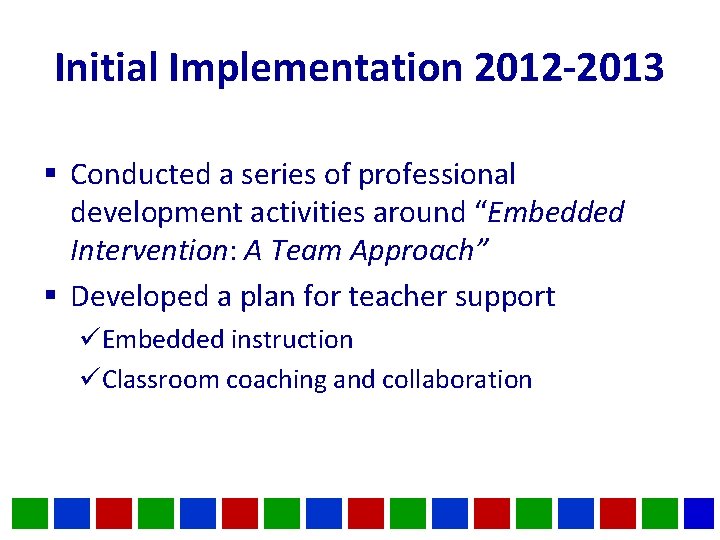
Initial Implementation 2012 -2013 § Conducted a series of professional development activities around “Embedded Intervention: A Team Approach” § Developed a plan for teacher support üEmbedded instruction üClassroom coaching and collaboration
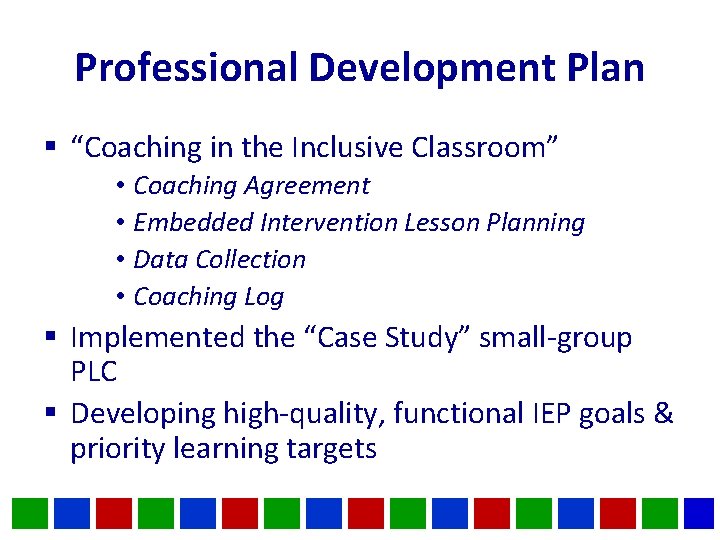
Professional Development Plan § “Coaching in the Inclusive Classroom” • Coaching Agreement • Embedded Intervention Lesson Planning • Data Collection • Coaching Log § Implemented the “Case Study” small-group PLC § Developing high-quality, functional IEP goals & priority learning targets
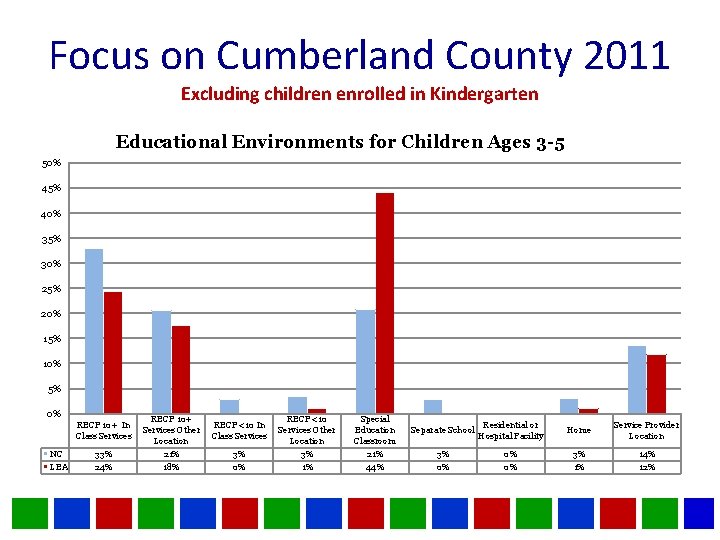
Focus on Cumberland County 2011 Excluding children enrolled in Kindergarten Educational Environments for Children Ages 3 -5 50% 45% 40% 35% 30% 25% 20% 15% 10% 5% 0% NC LEA RECP 10+ In Class Services 33% 24% RECP 10+ Services Other Location 21% 18% RECP <10 In Class Services 3% 0% RECP <10 Services Other Location 3% 1% Special Education Classroom 21% 44% Separate School Residential or Hospital Facility Home Service Provider Location 3% 0% 0% 0% 3% 1% 14% 12%
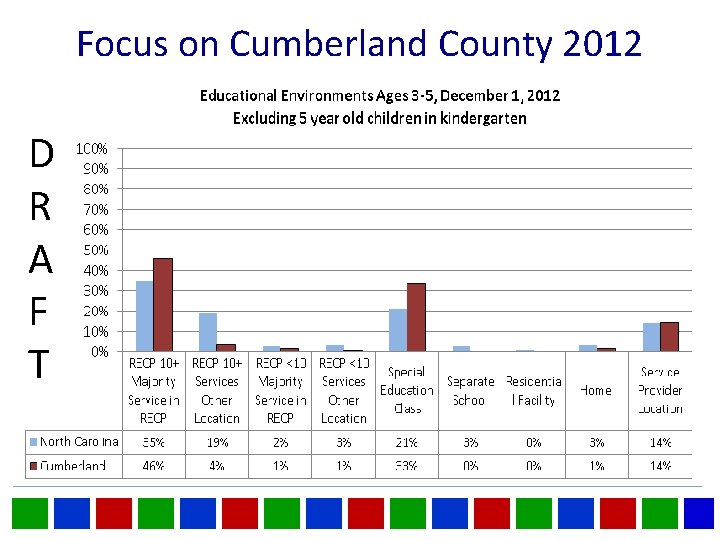
Focus on Cumberland County 2012 D R A F T
Focus on Cumberland County 2012 D R A F T
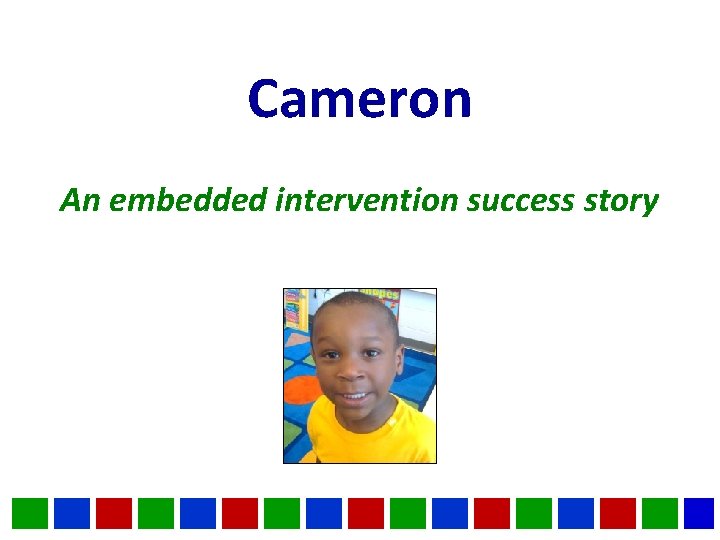
Cameron An embedded intervention success story
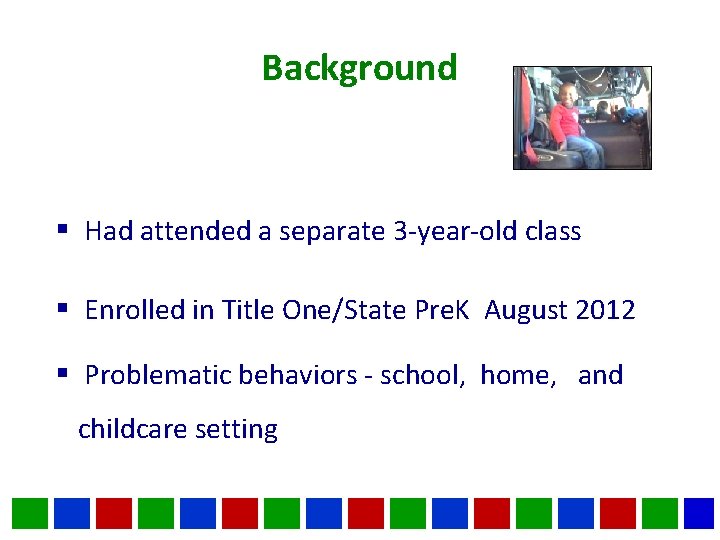
Background § Had attended a separate 3 -year-old class § Enrolled in Title One/State Pre. K August 2012 § Problematic behaviors - school, home, and childcare setting
Presenting Behaviors, August 2012 Mother § Behaviors interfere with learning and interacting with peers. § Tantrums § Verbal communication § For the future: – Functioning on level with typical peers – Success in all areas of development. Teacher & Itinerant § Toilet training § Safety for self and others § Communication (receptive and expressive) § Social Skills (interacting with peers appropriately) § Sensory (calming strategies)
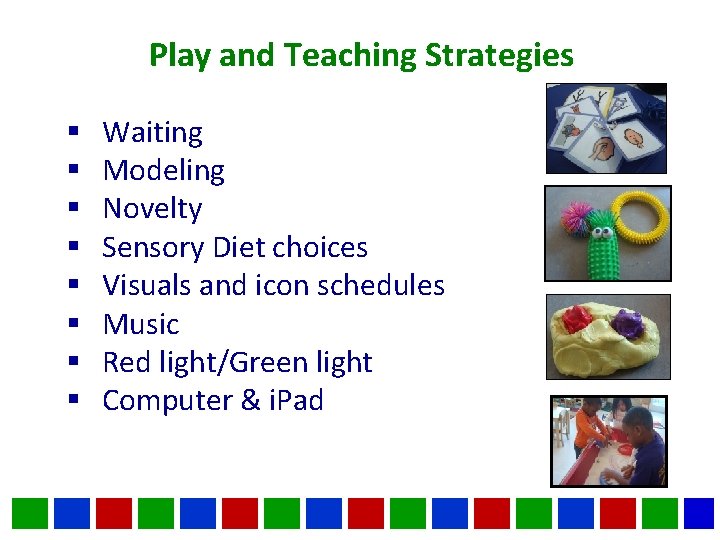
Play and Teaching Strategies § § § § Waiting Modeling Novelty Sensory Diet choices Visuals and icon schedules Music Red light/Green light Computer & i. Pad
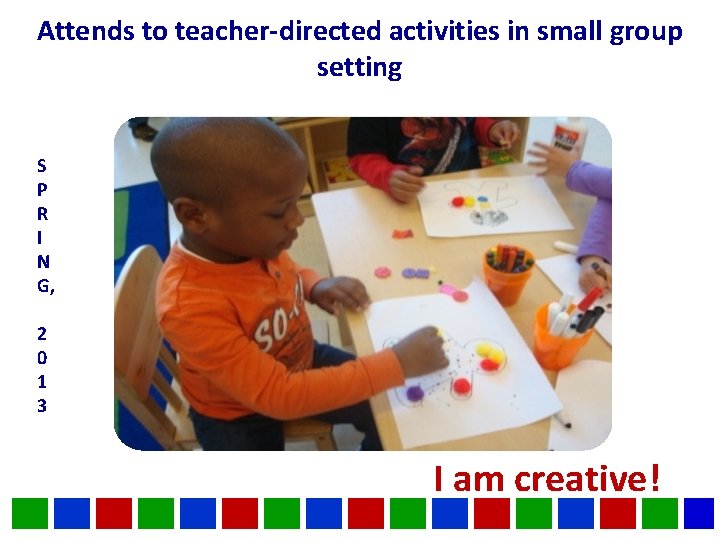
Attends to teacher-directed activities in small group setting S P R I N G, 2 0 1 3 I am creative!
Initiates conversations with peers & adults S P R I N G, 2 0 1 3 My friends help when I ask.
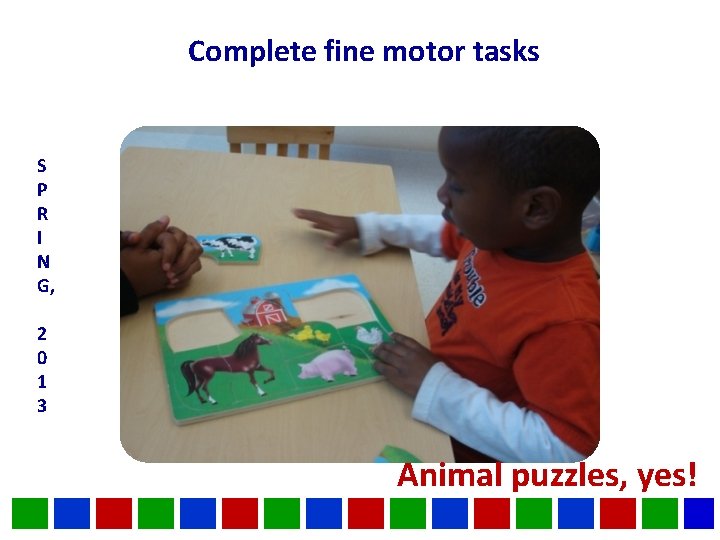
Complete fine motor tasks S P R I N G, 2 0 1 3 Animal puzzles, yes!
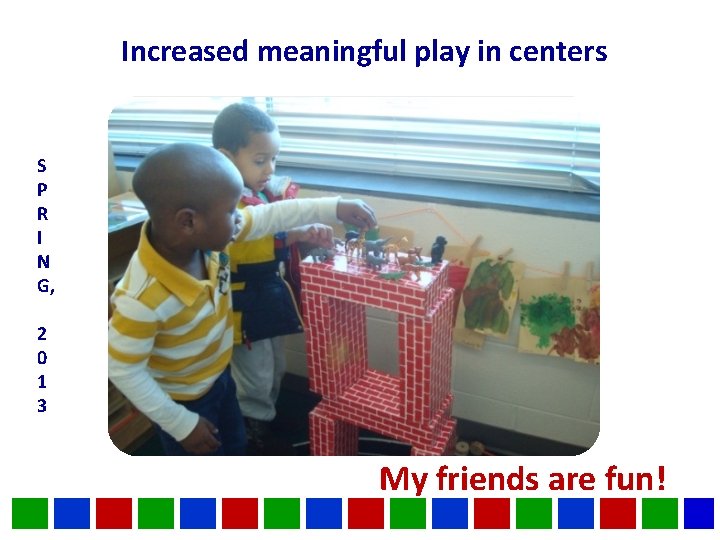
Increased meaningful play in centers S P R I N G, 2 0 1 3 My friends are fun!
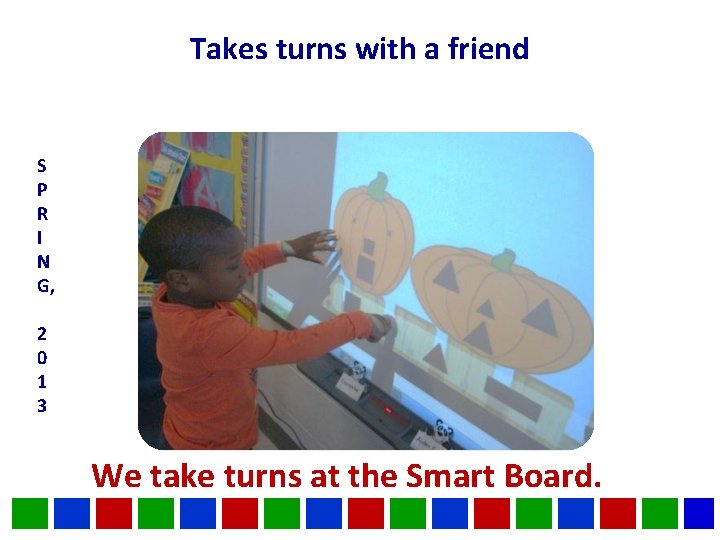
Takes turns with a friend S P R I N G, 2 0 1 3 We take turns at the Smart Board.
Listen to my story……