
Developing Homologous Animal Models for the Discovery of




- Slides: 24
Developing Homologous Animal Models for the Discovery of Treatments for Cognitive Deficits in Schizophrenia
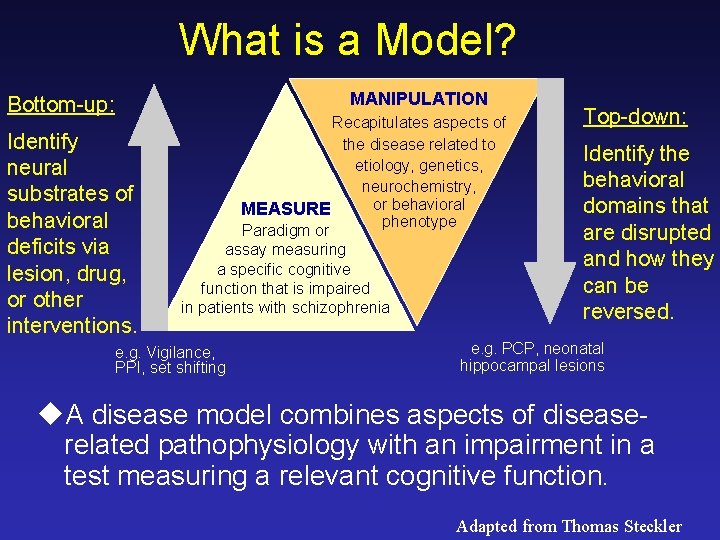
What is a Model? MANIPULATION Bottom-up: Identify neural substrates of behavioral deficits via lesion, drug, or other interventions. Recapitulates aspects of the disease related to etiology, genetics, neurochemistry, or behavioral MEASURE phenotype Paradigm or assay measuring a specific cognitive function that is impaired in patients with schizophrenia e. g. Vigilance, PPI, set shifting Top-down: Identify the behavioral domains that are disrupted and how they can be reversed. e. g. PCP, neonatal hippocampal lesions u. A disease model combines aspects of diseaserelated pathophysiology with an impairment in a test measuring a relevant cognitive function. Adapted from Thomas Steckler
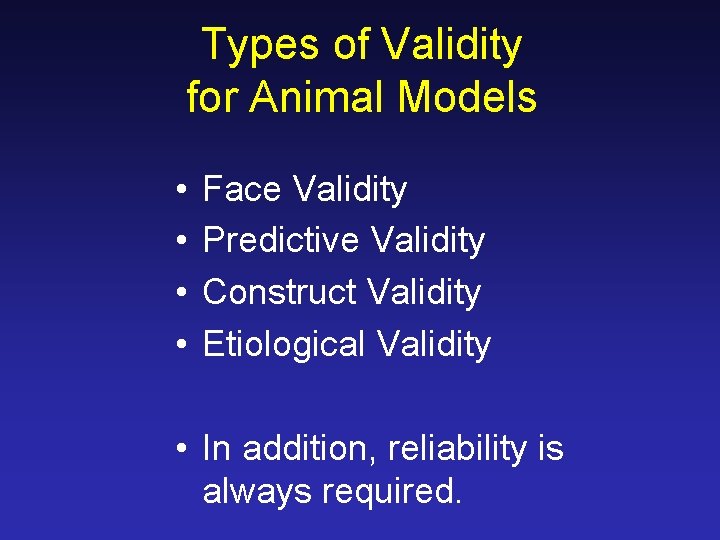
Types of Validity for Animal Models • • Face Validity Predictive Validity Construct Validity Etiological Validity • In addition, reliability is always required.
Face Validity • The model "resembles" the condition or specific features of the condition. • Note: “resemblance” is in the eye of the beholder and might reflect species-specific processes that are quite distinct from those underlying the "target" condition in humans. • Face validity provides important heuristic guidance, but is seldom the source of empirical validation.
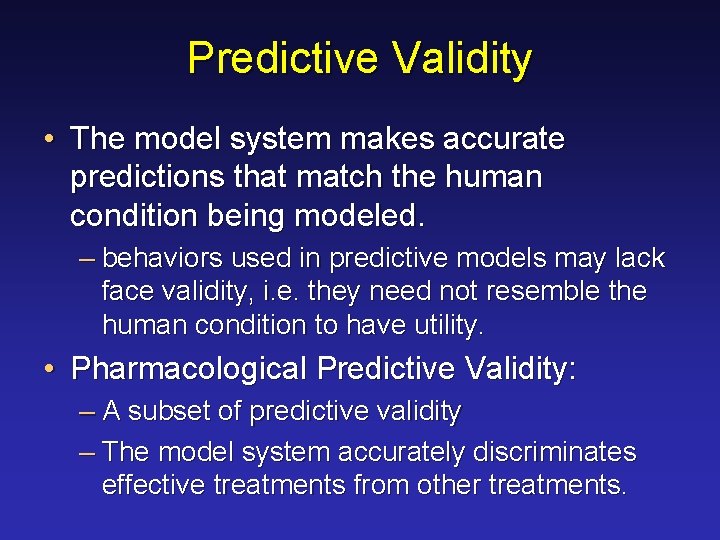
Predictive Validity • The model system makes accurate predictions that match the human condition being modeled. – behaviors used in predictive models may lack face validity, i. e. they need not resemble the human condition to have utility. • Pharmacological Predictive Validity: – A subset of predictive validity – The model system accurately discriminates effective treatments from other treatments.
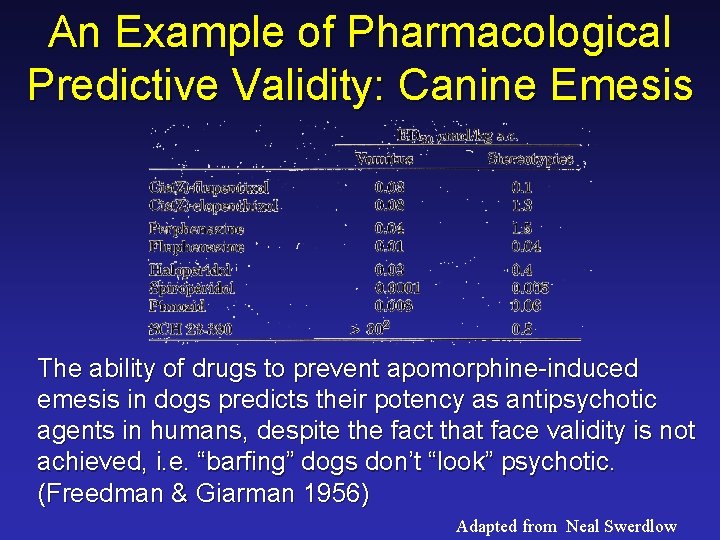
An Example of Pharmacological Predictive Validity: Canine Emesis The ability of drugs to prevent apomorphine-induced emesis in dogs predicts their potency as antipsychotic agents in humans, despite the fact that face validity is not achieved, i. e. “barfing” dogs don’t “look” psychotic. (Freedman & Giarman 1956) Adapted from Neal Swerdlow
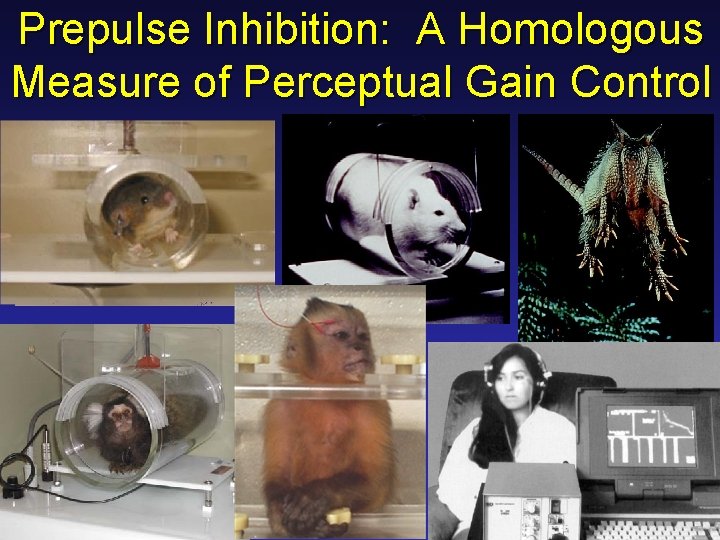
Prepulse Inhibition: A Homologous Measure of Perceptual Gain Control
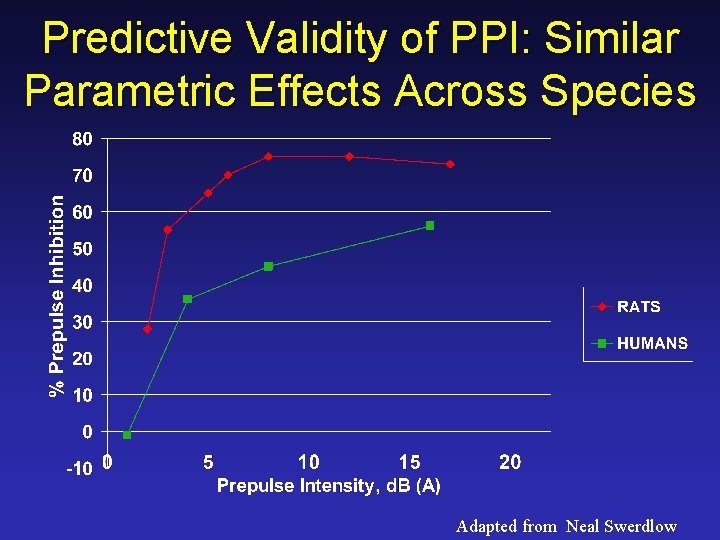
Predictive Validity of PPI: Similar Parametric Effects Across Species Adapted from Neal Swerdlow
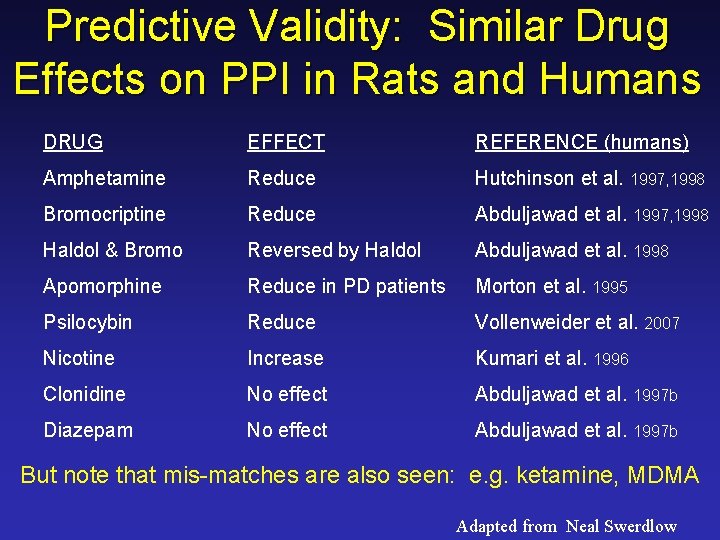
Predictive Validity: Similar Drug Effects on PPI in Rats and Humans DRUG EFFECT REFERENCE (humans) Amphetamine Reduce Hutchinson et al. 1997, 1998 Bromocriptine Reduce Abduljawad et al. 1997, 1998 Haldol & Bromo Reversed by Haldol Abduljawad et al. 1998 Apomorphine Reduce in PD patients Morton et al. 1995 Psilocybin Reduce Vollenweider et al. 2007 Nicotine Increase Kumari et al. 1996 Clonidine No effect Abduljawad et al. 1997 b Diazepam No effect Abduljawad et al. 1997 b But note that mis-matches are also seen: e. g. ketamine, MDMA Adapted from Neal Swerdlow
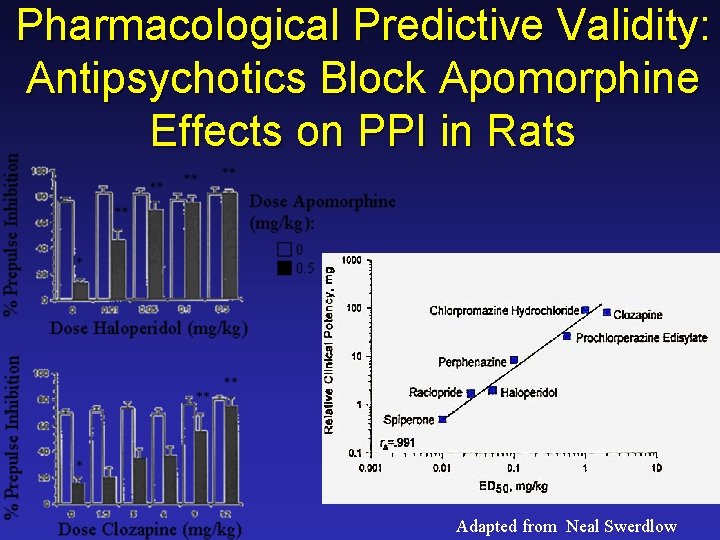
Pharmacological Predictive Validity: Antipsychotics Block Apomorphine Effects on PPI in Rats Adapted from Neal Swerdlow
Construct & Etiological Validity • Referring to a Measure: – CONSTRUCT VALIDITY – ala Cronbach & Meehl: The measure accurately assesses that which it is intended to measure. • Referring to a Manipulation: – ETIOLOGICAL VALIDITY – i. e. the model system reflects the appropriate biological substrates (i. e. exhibits homology) – The model system reflects the pathophysiology of the human disorder.
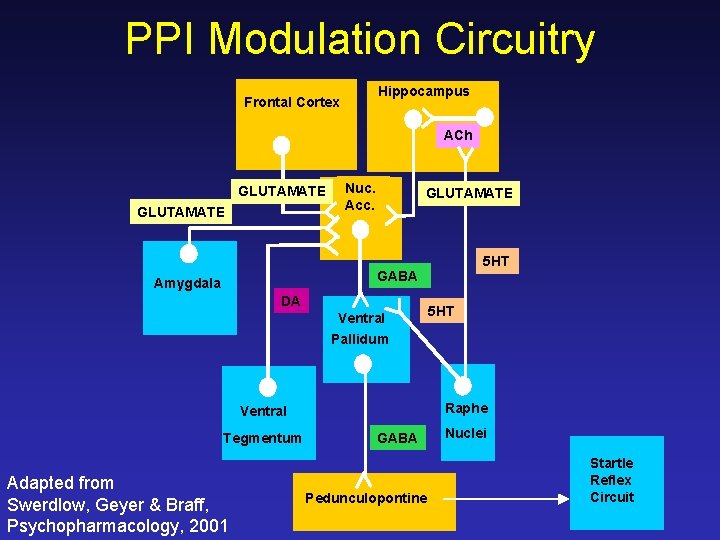
PPI Modulation Circuitry Hippocampus Frontal Cortex ACh GLUTAMATE Nuc. Acc. GLUTAMATE 5 HT GABA Amygdala DA Ventral 5 HT Pallidum Raphe Ventral Tegmentum Adapted from Swerdlow, Geyer & Braff, Psychopharmacology, 2001 GABA Pedunculopontine Nuclei Startle Reflex Circuit
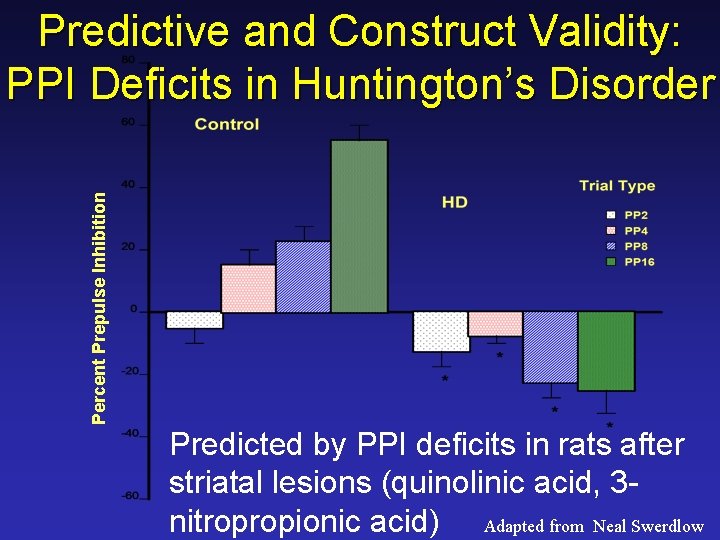
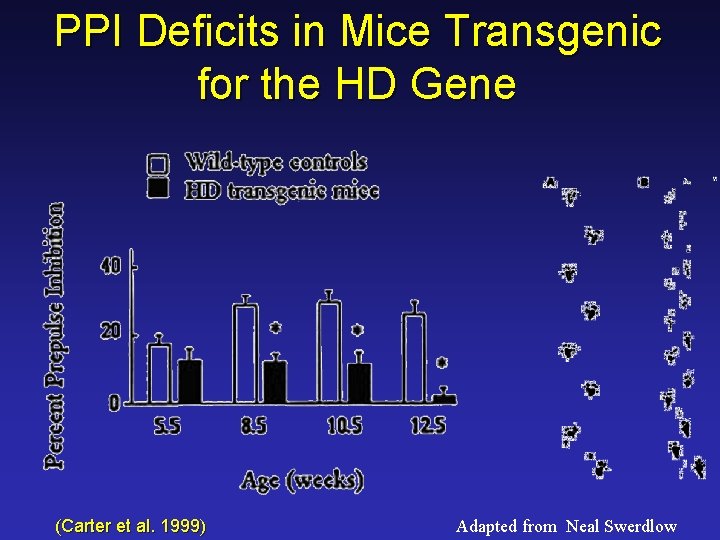
Percent Prepulse Inhibition Predictive and Construct Validity: PPI Deficits in Huntington’s Disorder Predicted by PPI deficits in rats after striatal lesions (quinolinic acid, 3 nitropropionic acid) Adapted from Neal Swerdlow
PPI Deficits in Mice Transgenic for the HD Gene (Carter et al. 1999) Adapted from Neal Swerdlow
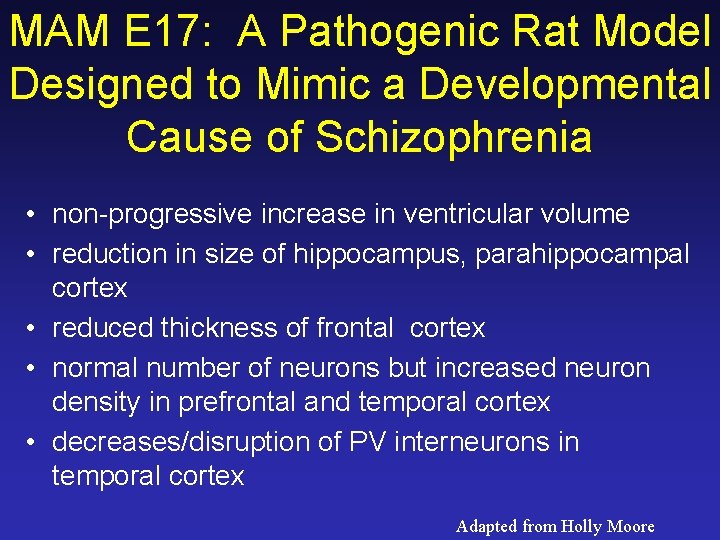
MAM E 17: A Pathogenic Rat Model Designed to Mimic a Developmental Cause of Schizophrenia • non-progressive increase in ventricular volume • reduction in size of hippocampus, parahippocampal cortex • reduced thickness of frontal cortex • normal number of neurons but increased neuron density in prefrontal and temporal cortex • decreases/disruption of PV interneurons in temporal cortex Adapted from Holly Moore
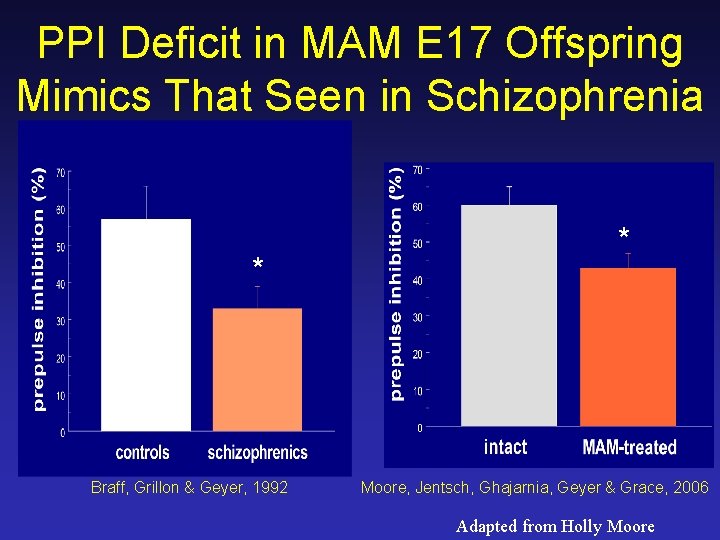
PPI Deficit in MAM E 17 Offspring Mimics That Seen in Schizophrenia * Braff, Grillon & Geyer, 1992 * Moore, Jentsch, Ghajarnia, Geyer & Grace, 2006 Adapted from Holly Moore
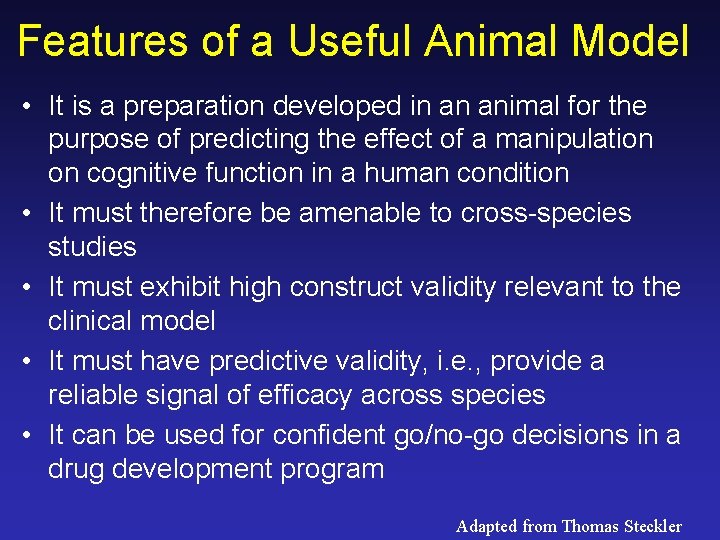
Features of a Useful Animal Model • It is a preparation developed in an animal for the purpose of predicting the effect of a manipulation on cognitive function in a human condition • It must therefore be amenable to cross-species studies • It must exhibit high construct validity relevant to the clinical model • It must have predictive validity, i. e. , provide a reliable signal of efficacy across species • It can be used for confident go/no-go decisions in a drug development program Adapted from Thomas Steckler
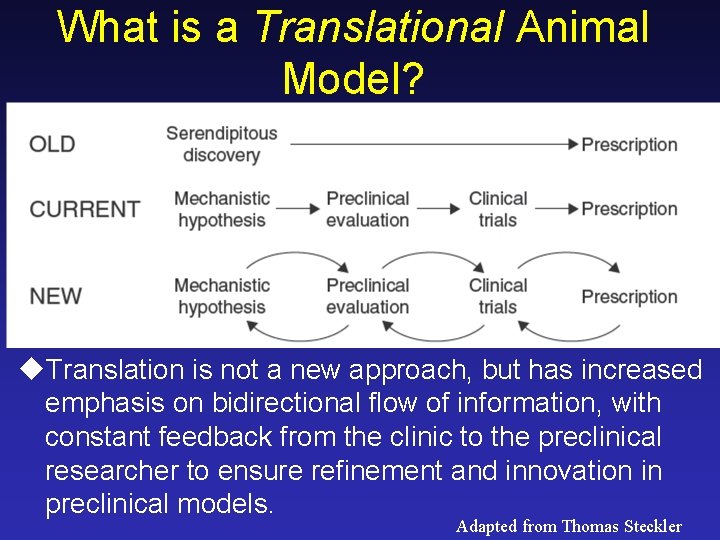
What is a Translational Animal Model? u. Translation is not a new approach, but has increased emphasis on bidirectional flow of information, with constant feedback from the clinic to the preclinical researcher to ensure refinement and innovation in preclinical models. Adapted from Thomas Steckler
DAY ONE: MEASURES • Focus on Dependent Variables: • i. e. measures of the relevant construct • Construct validation: • ala Cronbach & Meehl • i. e. does the test measure the construct it is intended to measure? • Homology: • in the sense of comparability of neural substrates across species
DAY TWO: MANIPULATIONS • Focus on Independent Variables: • Perturbations affecting the substrates of the cognitive construct • Perturbations relevant to pathophysiology of schizophrenia • Homology, related both to: • Comparability of neural substrates • Etiological validity vis-à-vis schizophrenia • Specificity of treatments for the schizophrenia population
Challenges for Pro-cognitive Treatments for Schizophrenia • Our understanding of the neuroscience behind cognitive changes in schizophrenia is limited. • There is no unitary hypothesis for the cause(s) of cognitive deficits • The diagnostic syndrome may reflect many different etiologies • No consensus on the underlying neurobiology • Cognition is not a unitary concept. • 5 – 12 cognitive domains are affected, each with different substrates • Is it realistic to seek treatments that will improve cognition globally? • What would be the most relevant domains that need to improve? • No reliable and valid biomarkers for cognitive dysfunction have been validated as yet. • No validated drug targets exist for improving cognition that can be used as positive controls, although many suspected targets exist Adapted from Thomas Steckler