
Developing Effective Leaders Managing Challenging Situations and People


- Slides: 26
Developing Effective Leaders Managing Challenging Situations and People Renée A. Daugherty, Ph. D. Sue E. Williams, Ph. D.
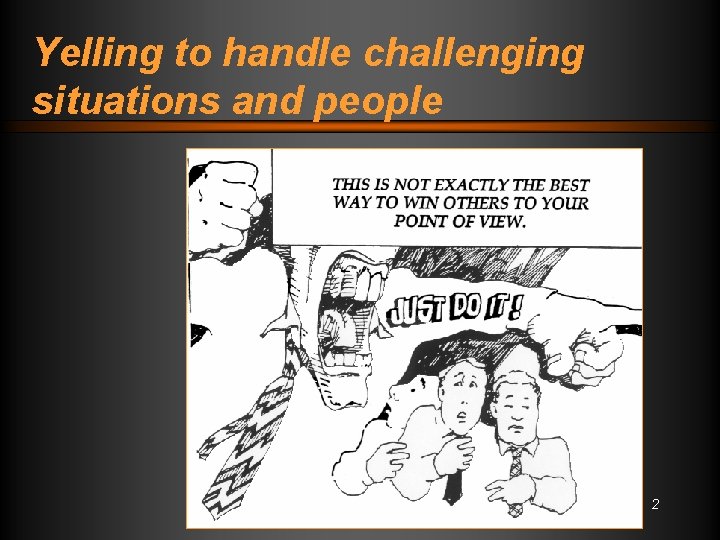
Yelling to handle challenging situations and people 2
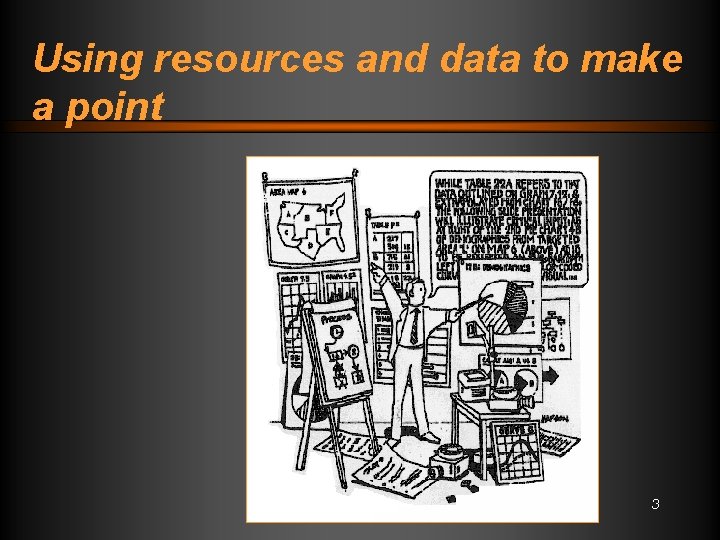
Using resources and data to make a point 3
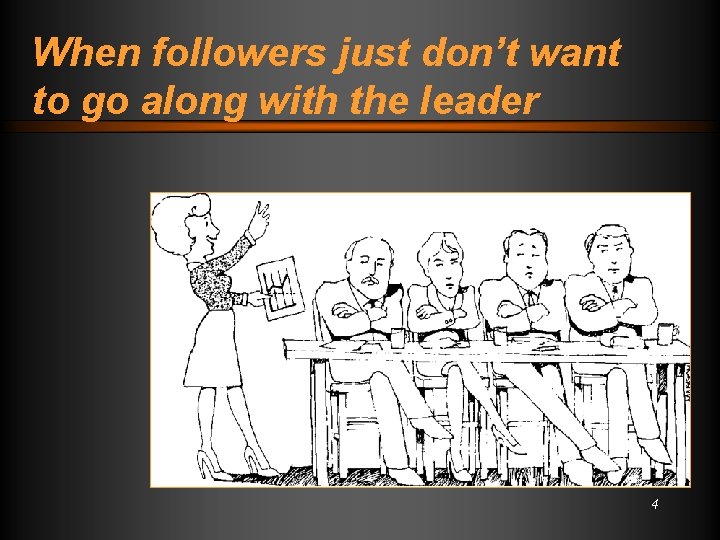
When followers just don’t want to go along with the leader 4
Using physical force or threats to persuade others 5
Objectives l Recognize the personal and professional benefits l l of successfully working with challenging people and situations. Understand your own approaches to managing conflict. Identify the characteristics of challenging people and situations. Manage interpersonal differences. Manage false agreement when setting personal and organizational goals. 6
Conflict as Opportunity l An opportunity for: u personal & organization change u learning u growth u improved performance l Points out existing barriers to success. 7
Do you understand your own beliefs, attitudes, and values? l People react differently to the same challenging situations. l Understanding your tolerance and acceptance level is key to managing challenging situations and people effectively. Activity: The Gold Watch 8
Managing Conflict Creatively l What is your conflict management style? u Aggressive/Confrontive u Assertive/Persuasive u Observant/Introspective u Avoidant/Reactive Activity: Activity Your Conflict Management Style 9
Conflict Resolution Teams The secret of managing is to keep the guys who hate you away from the guys who are undecided. Casey Stengel 10
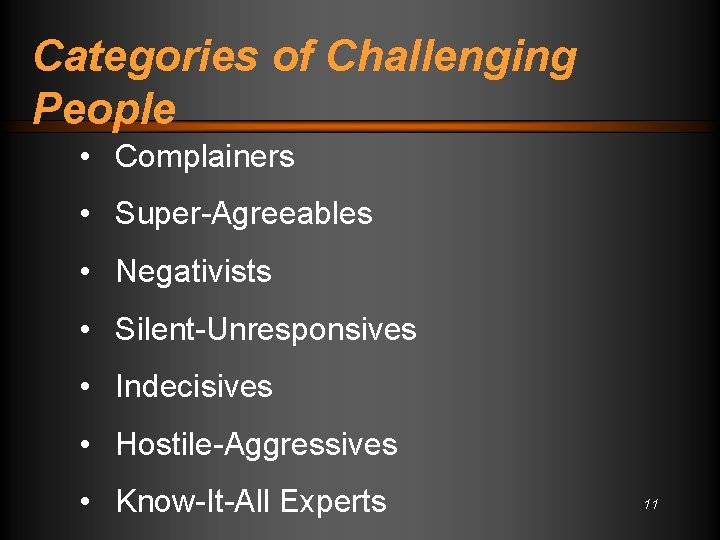
Categories of Challenging People • Complainers • Super-Agreeables • Negativists • Silent-Unresponsives • Indecisives • Hostile-Aggressives • Know-It-All Experts 11
Complainers Twenty percent of the people will be against anything. Robert Kennedy U. S. Attorney General 12
Super-Agreeables There’s nothing I’m afraid of like scared people. Robert Frost 13
Negativists It takes a clever man to turn a cynic and a wise man to be clever enough not to. Fannie Hurst 14
Silent-Unresponsives Silence is the best tactic for him who distrusts himself. Francois, Duc de La Rochefoucauld 1613 -1680 15
Indecisives There is no more miserable human being than one in whom nothing is habitual but indecision. William James 1842 -1910 16
Hostile-Aggressives Anybody can become angry - that is easy; but to be angry with the right person, to the right degree, at the right time, for the right purpose, and in the right way that is not within everybody’s power and is not easy. 17 Aristotle
Know-It-All Experts They spend their time mostly looking forward to the past. John Osborne in Look Back in Anger 18
10 General Strategies 1. Put problem people in proper perspective. 2. Take your pick -- positive or negative. 3. Don’t expect difficult people to change. 4. Learn to respond as well as listen. 5. Give and request frequent feedback. 6. Look first at policies and procedures. 7. Deal directly and discreetly. 8. Document for self-protection. 9. Be straightforward and unemotional. 10. Be gracious. 19
Communicating One-on-One l Spend time on rapport. l Minimize interruptions. l Watch out for psychological barriers. l Be aware of your posture. l Use intensity to your advantage. l Go to the other person’s turf. 20
Listening As important as talking… l Pay respectful attention. l Let the speaker know how you interpret his/her message through: u interested silence u body language u verbal responses 21
“I” and “You” Messages l “You” messages are: u Directed at the other person. u Highly likely to put the recipient down. u Going to make the recipient feel: • guilty • like their needs are unimportant • resistant to change l “You” messages remove the responsibility for behavior change from 22 the other person.
“I” Messages l Parts of an “I” message: 1. Specific behavior or situation 2. Your resulting feeling 3. Tangible effect on you 23
False Agreement l “On the Road to Abilene” l The Abilene Paradox l Moral of the story: u There is a difference between real and phony conflict. u False agreement is as damaging as disagreement. u Skills in agreement management include “Owning up” and “Risk taking. ” 24
Case Studies and Activities 25
Closing Thoughts l You can control yourself. l You can manage the situation. l However, you cannot control another person. 26