
Developing Creativity through Conceptual Structural Design Joseph Rizzuto

- Slides: 34
Developing Creativity through Conceptual Structural Design Joseph Rizzuto BSc MSc Ph. D Cert. Ed CEng MICE MIStruct. E MCIHT School of Computing and Engineering Festival of Teaching and Learning, 27 June 2018
Summary • • Introduction Structures prime purpose High-profile projects Factors in Conceptual Design Learn from failures Field Courses Conclusions
Introduction The Civil Engineering Profession • • Fundamental to economic and social prosperity Creates and manages the built environment – Covers the design and supervision of construction of all kinds of structures – Every construction project is unique • Profession requires well-qualified and motivated people • Universities make graduates ready to embark on a career as a professional civil and or structural engineer • Important to inspire and make engineering fun
Structures • Basic need as food and clothing • Hallmark of civilization Classification • Residential – houses, apartments, hotels • Commercial – offices, banks, shopping centres, carparks • Institutional – schools, universities, hospitals, prisons • Exhibition – theatres, museums, sports stadia • Industrial – factories, aircraft hangers, power stations • Bridges – truss, arch, cable, suspension • Towers – pylons, water towers, telecommunications • Special Structures – offshore structures, radio telescopes
Structures Prime Purpose • Carry loads and transfer them safely to the ground • Each of these structures can be constructed using a variety of materials, structural forms or systems • Primary aim of all structural design is to ensure that the structure will perform satisfactorily during its design life.
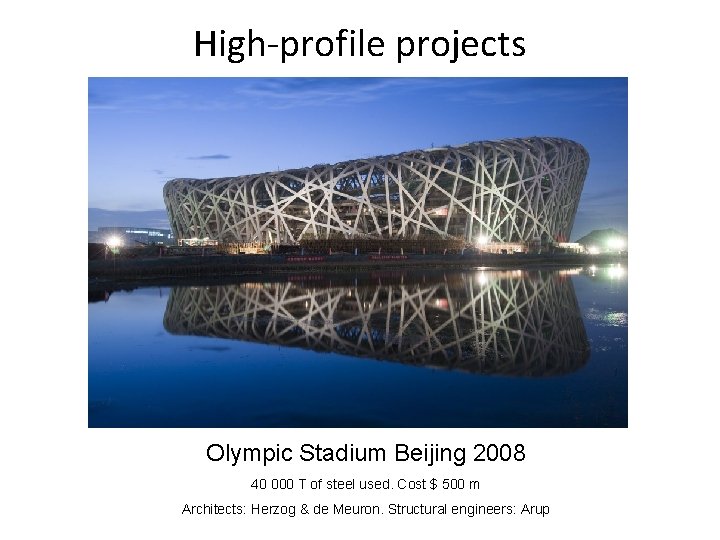
High-profile projects Olympic Stadium Beijing 2008 40 000 T of steel used. Cost $ 500 m Architects: Herzog & de Meuron. Structural engineers: Arup
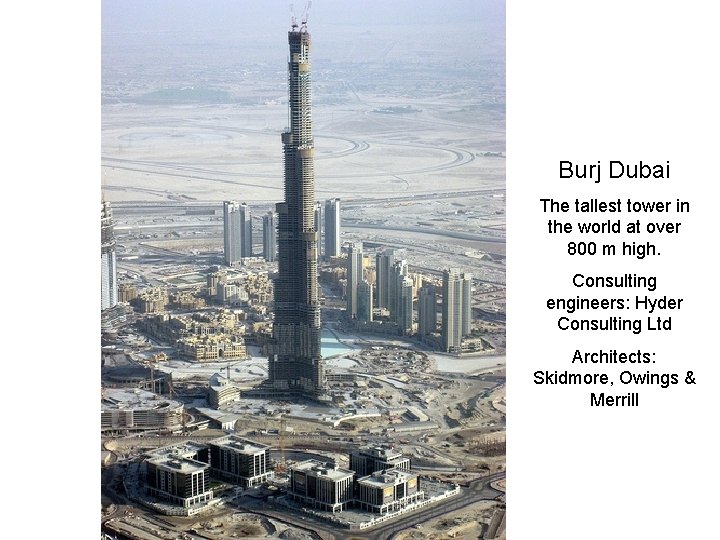
Burj Dubai The tallest tower in the world at over 800 m high. Consulting engineers: Hyder Consulting Ltd Architects: Skidmore, Owings & Merrill
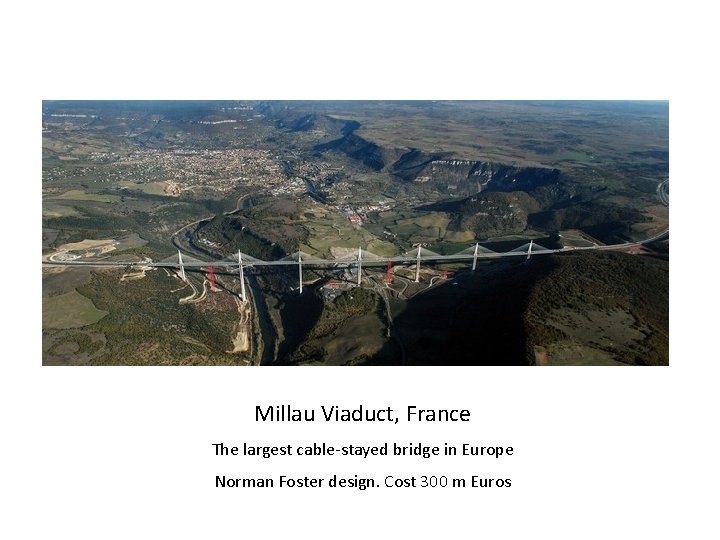
Millau Viaduct, France The largest cable-stayed bridge in Europe Norman Foster design. Cost 300 m Euros
Educational preparation • Aim to produce graduates – Ability to deal with the complexities of the industry – Accept a high level of responsibility – Imaginative, innovative, versatile • Degree courses designed – To develop graduates who provide the future leadership of the profession – To have a clear thread of design running through them – Design experience developed through the levels of study
Factors in Design • • Buildability Durability Performance – Structural Form – Load Transfer – Structural Behaviour – Structural Stability Whole-life costs Health and Safety Risk Management Sustainable Construction Principles Aesthetics
Physical modelling and studio-based learning • Earlier students are exposed to design the more beneficial the experience – Students able to explore and exploit their creativity and imagination – Physical modelling enables students to augment their understanding of structures – Enables consideration of structural complexity, load transfer, stability and element connection – Develops a feel for structural response – Experienced designers from practice
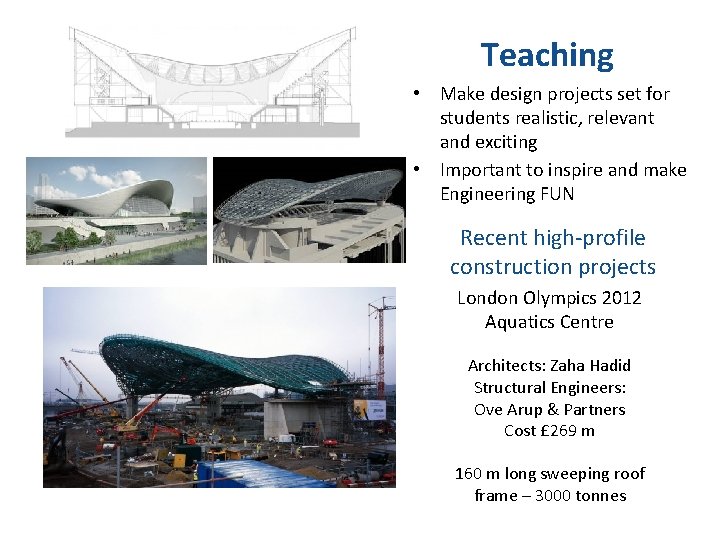
Teaching • Make design projects set for students realistic, relevant and exciting • Important to inspire and make Engineering FUN Recent high-profile construction projects London Olympics 2012 Aquatics Centre Architects: Zaha Hadid Structural Engineers: Ove Arup & Partners Cost £ 269 m 160 m long sweeping roof frame – 3000 tonnes
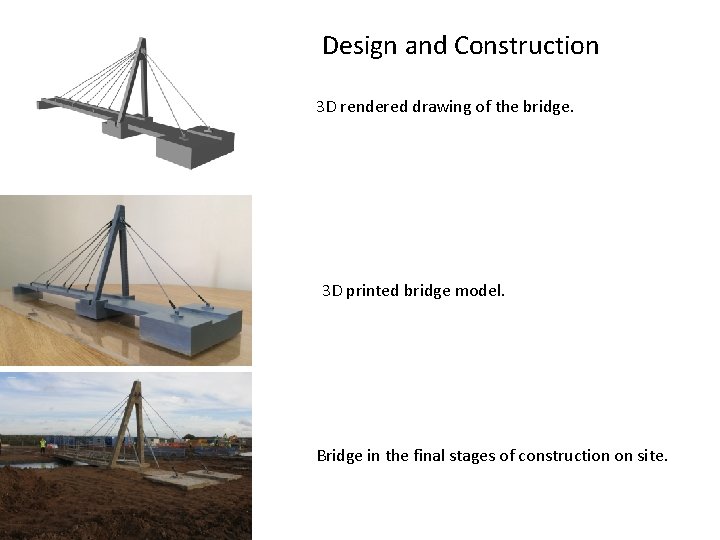
Design and Construction 3 D rendered drawing of the bridge. 3 D printed bridge model. Bridge in the final stages of construction on site.
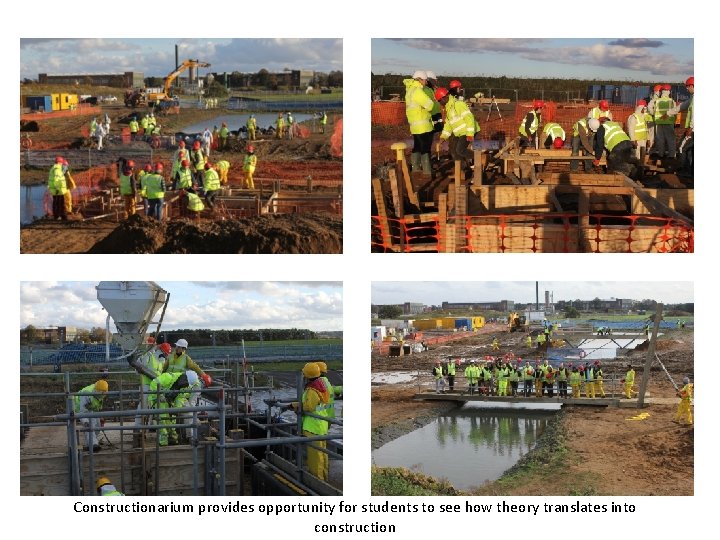
Constructionarium provides opportunity for students to see how theory translates into construction
Student creativity and imagination n Work as part of a team n Develop ability to cope with the uncertainties • Engineering is about making systems that are fit for purpose - not fit for purpose if it is unsafe n Legal and professional responsibilities for safety (Health & Safety at Work, CDM) n Knowledge of historical precedent important n Understand that there are limits to what we know and what that may imply for safety – learn from failures
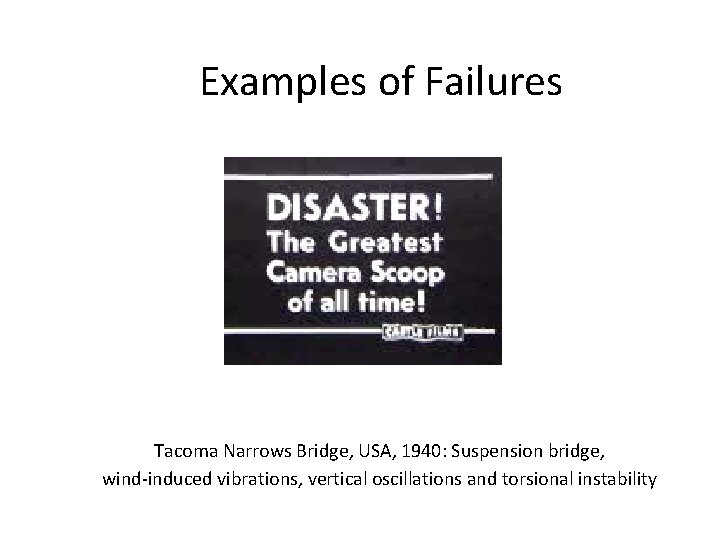
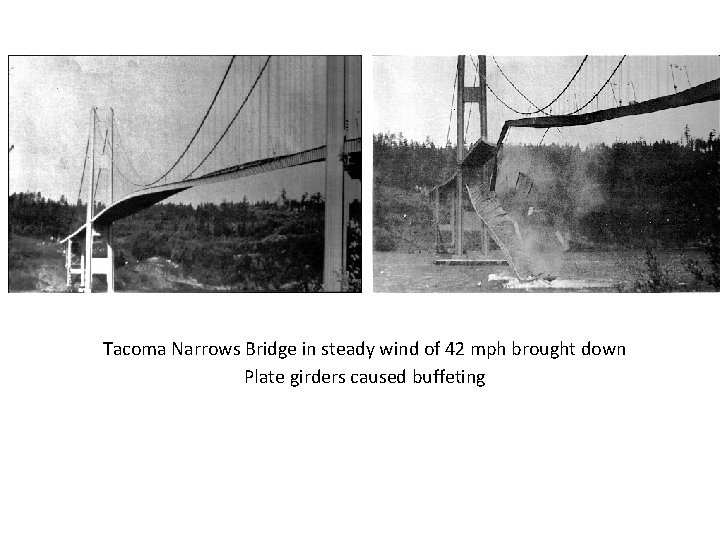
Examples of Failures Tacoma Narrows Bridge, USA, 1940: Suspension bridge, wind-induced vibrations, vertical oscillations and torsional instability
Tacoma Narrows Bridge in steady wind of 42 mph brought down Plate girders caused buffeting
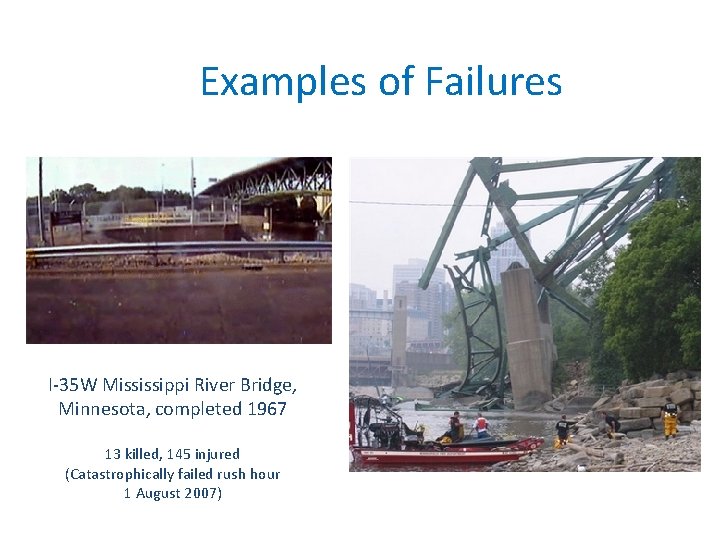
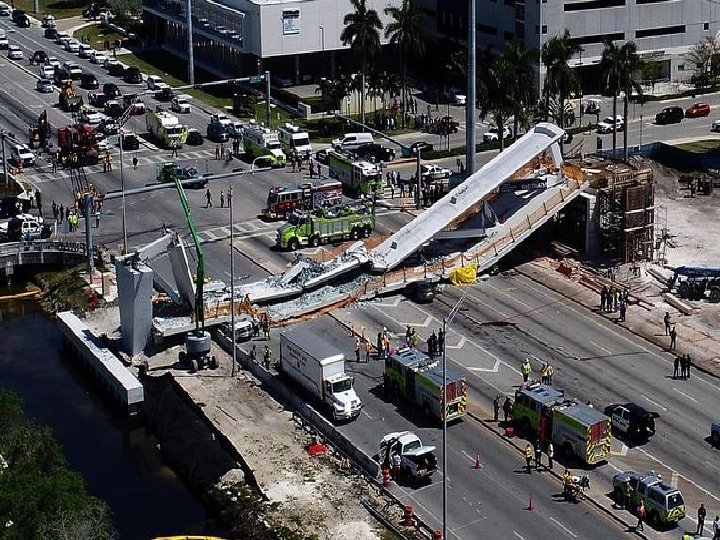
Examples of Failures I-35 W Mississippi River Bridge, Minnesota, completed 1967 13 killed, 145 injured (Catastrophically failed rush hour 1 August 2007)
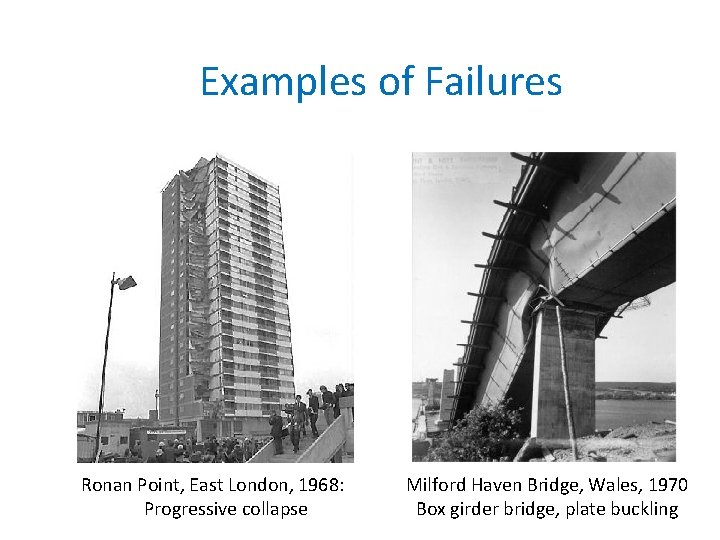
Examples of Failures Ronan Point, East London, 1968: Progressive collapse Milford Haven Bridge, Wales, 1970 Box girder bridge, plate buckling
Codes of Practice and Research • Codes regarded as a consensus of what is acceptable at the time written – Contain a balance between accepted practice and recent research – Amended in light of new knowledge • Research has considerable importance – Means of advancing knowledge – Important underpinning to the teaching process and the quality and development of courses
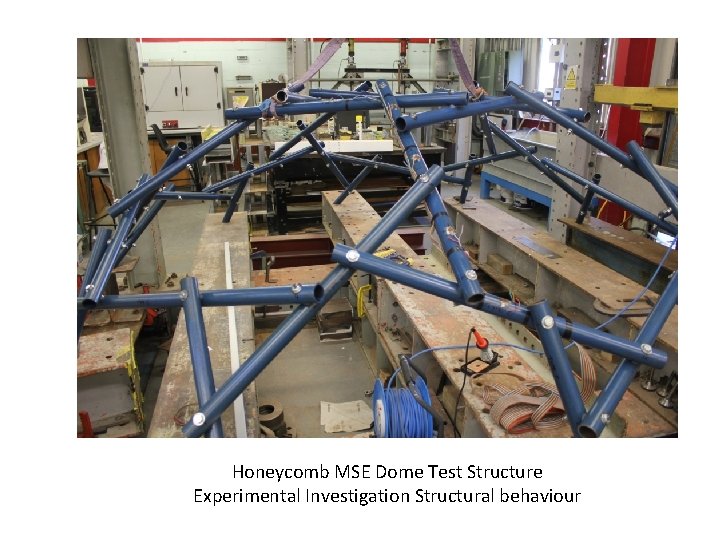
Honeycomb MSE Dome Test Structure Experimental Investigation Structural behaviour
Links with Industry • Guest Lectures by practitioners • Collaboration on research and development work • Consultancy • Arranging site visits • Mentoring and supporting students’ final year projects • Industrial Placements • Recruitment (employment of graduates) • Interaction with academic and research staff
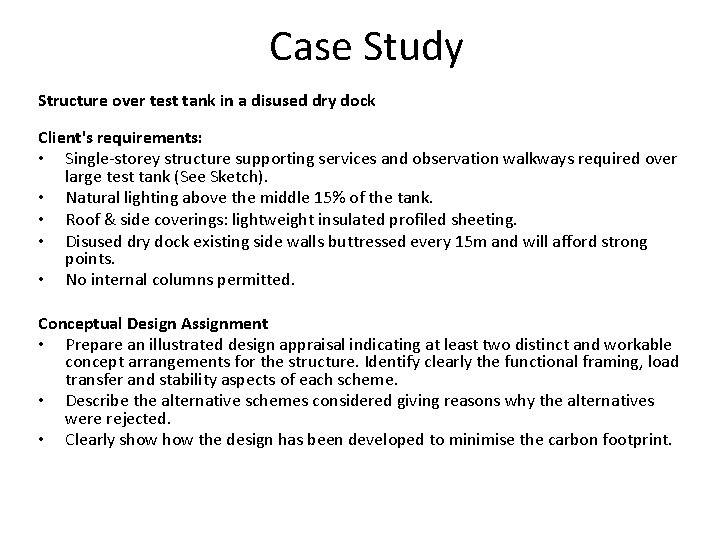
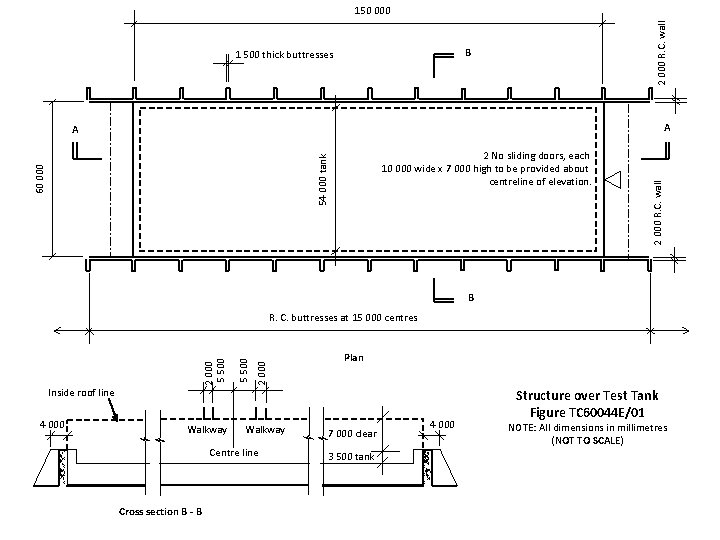
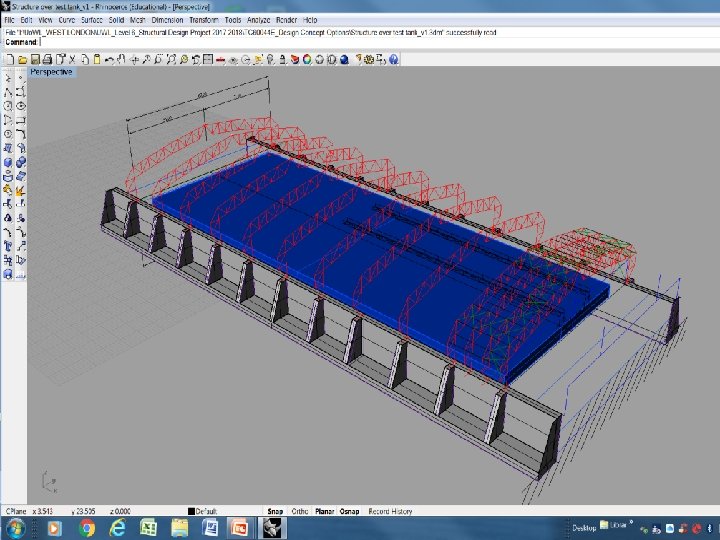
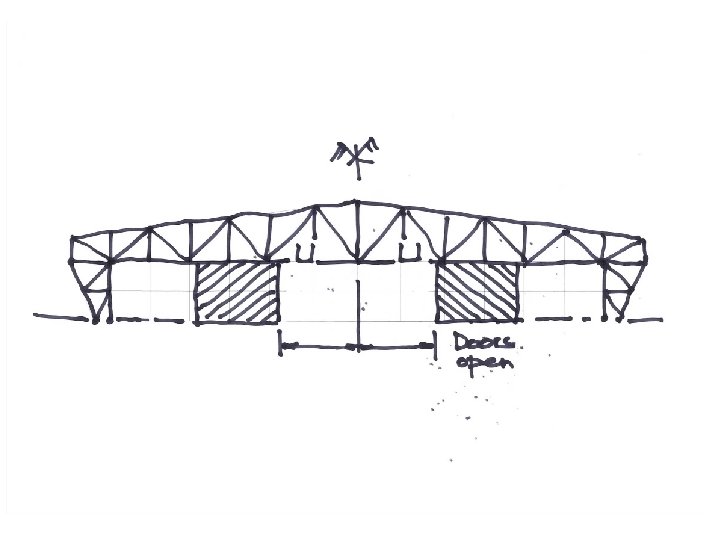
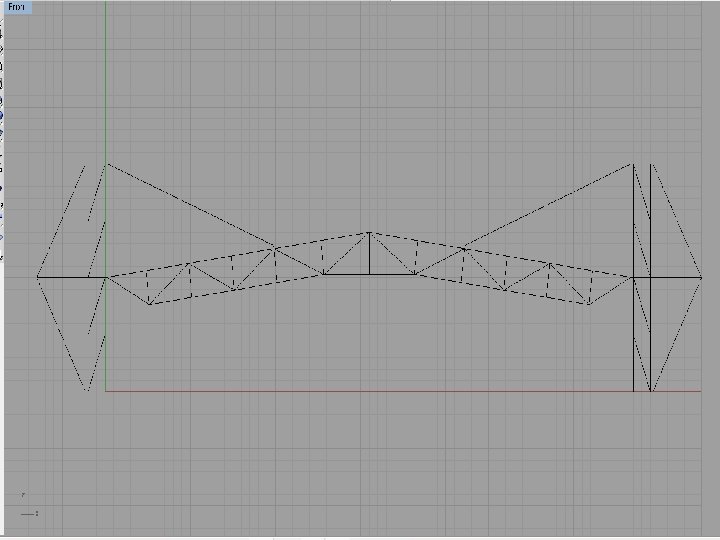
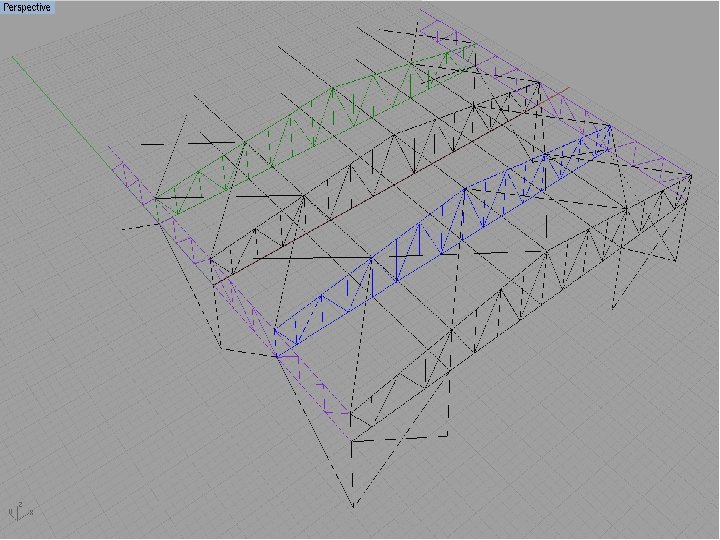
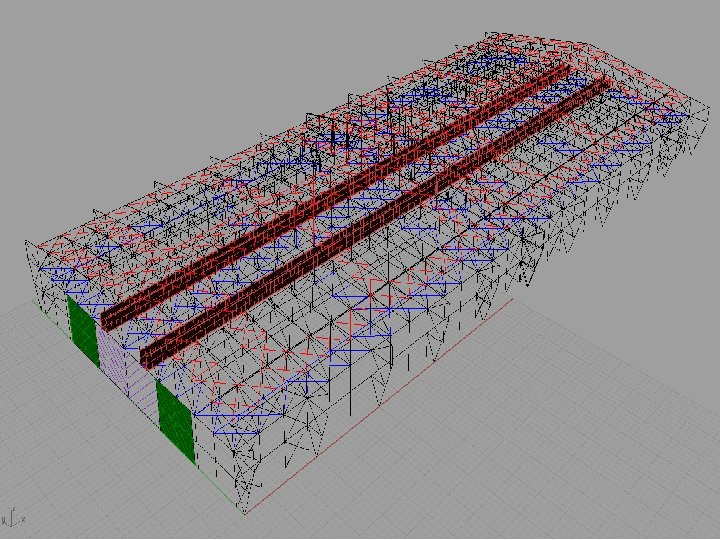
Case Study Structure over test tank in a disused dry dock Client's requirements: • Single-storey structure supporting services and observation walkways required over large test tank (See Sketch). • Natural lighting above the middle 15% of the tank. • Roof & side coverings: lightweight insulated profiled sheeting. • Disused dry dock existing side walls buttressed every 15 m and will afford strong points. • No internal columns permitted. Conceptual Design Assignment • Prepare an illustrated design appraisal indicating at least two distinct and workable concept arrangements for the structure. Identify clearly the functional framing, load transfer and stability aspects of each scheme. • Describe the alternative schemes considered giving reasons why the alternatives were rejected. • Clearly show the design has been developed to minimise the carbon footprint.
2 000 R. C. wall 150 000 B 1 500 thick buttresses A 60 000 54 000 tank 2 No sliding doors, each 10 000 wide x 7 000 high to be provided about centreline of elevation. 2 000 R. C. wall A B 4 000 Walkway 5 500 2 000 Inside roof line 2 000 5 500 R. C. buttresses at 15 000 centres Walkway Centre line Cross section B - B Plan 7 000 clear 3 500 tank 4 000 Structure over Test Tank Figure TC 60044 E/01 NOTE: All dimensions in millimetres (NOT TO SCALE)
Conclusions • Design experience developed through levels of study • Emphasis on studio-based learning • Designers brought in from practice • Practical experience essential for graduate employability • Learn from historical precedent and failures