
Developing Clinical Questions Clinton Pong MD Randi Sokol
- Slides: 34
Developing Clinical Questions Clinton Pong, MD Randi Sokol, MD, MPH http: //img. timeinc. net/time/daily/2007/0702/a_scevidence_0214. jpg
Introductory Case: • • • A 45 year old male with hypertension presents to your clinic for follow up. At a prior visit he was screened for diabetes. • His hemoglobin A 1 C has been 7. 0% on two occasions, which is a new diagnosis of diabetes • His blood pressure is well controlled at 125/80 • He has no evidence of microalbuminuria or kidney disease You recall from medical school that ACEi are good for preventing diabetic kidney disease, but you’re not sure if this fact applies to this patient. You want to find this answer. • This module will walk you through the process of developing a clinical question!
By the end of this session, you will be able to: • Explain the difference between • Background and foreground questions • Differentiate between • Patient-oriented evidence and disease-oriented evidence • Identify foreground questions and then apply the PICO format to create searchable clinical queries • Population, Intervention/Comparison, Outcome
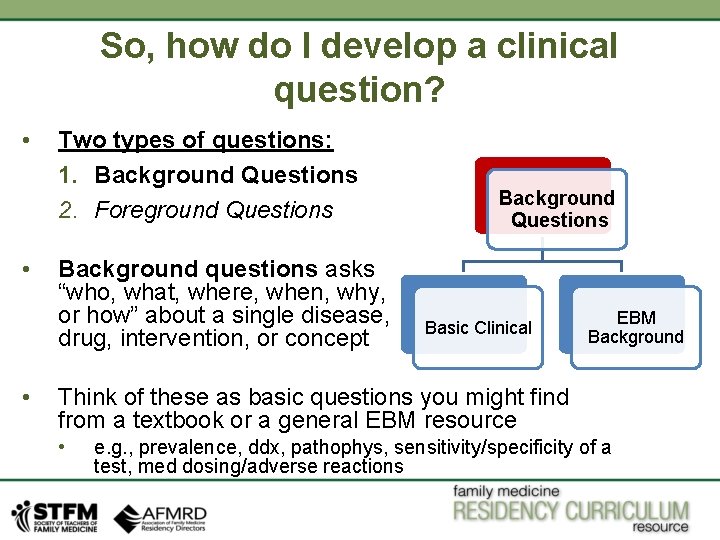
So, how do I develop a clinical question? • • • Two types of questions: 1. Background Questions 2. Foreground Questions Background questions asks “who, what, where, when, why, or how” about a single disease, drug, intervention, or concept Background Questions Basic Clinical EBM Background Think of these as basic questions you might find from a textbook or a general EBM resource • e. g. , prevalence, ddx, pathophys, sensitivity/specificity of a test, med dosing/adverse reactions
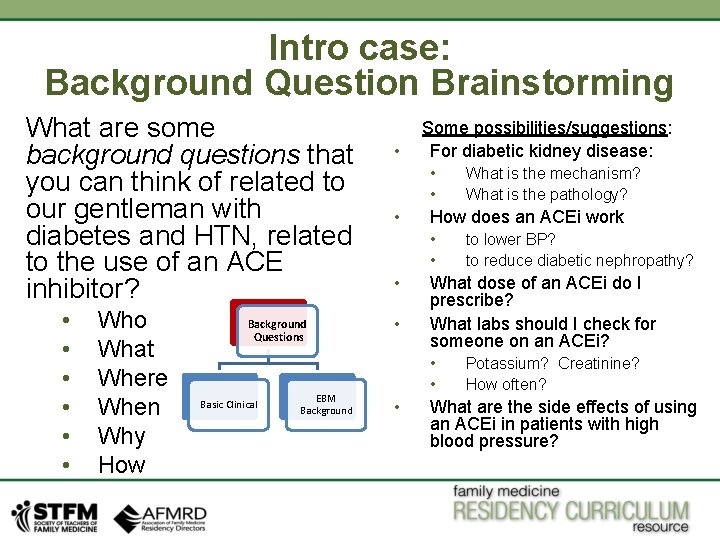
Intro case: Background Question Brainstorming What are some background questions that you can think of related to our gentleman with diabetes and HTN, related to the use of an ACE inhibitor? • • • Who What Where When Why How Background Questions Basic Clinical EBM Background • Some possibilities/suggestions: For diabetic kidney disease: • • • How does an ACEi work • • to lower BP? to reduce diabetic nephropathy? What dose of an ACEi do I prescribe? What labs should I check for someone on an ACEi? • • • What is the mechanism? What is the pathology? Potassium? Creatinine? How often? What are the side effects of using an ACEi in patients with high blood pressure?
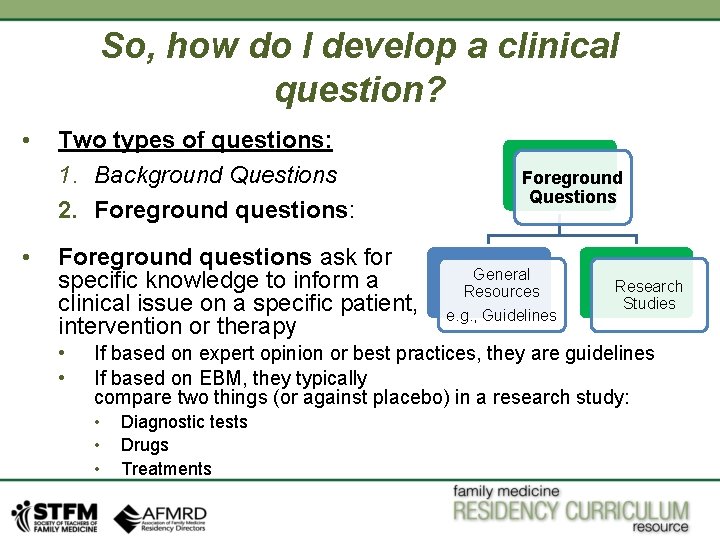
So, how do I develop a clinical question? • • Two types of questions: 1. Background Questions 2. Foreground questions: Foreground questions ask for specific knowledge to inform a clinical issue on a specific patient, intervention or therapy • • Foreground Questions General Resources e. g. , Guidelines Research Studies If based on expert opinion or best practices, they are guidelines If based on EBM, they typically compare two things (or against placebo) in a research study: • • • Diagnostic tests Drugs Treatments
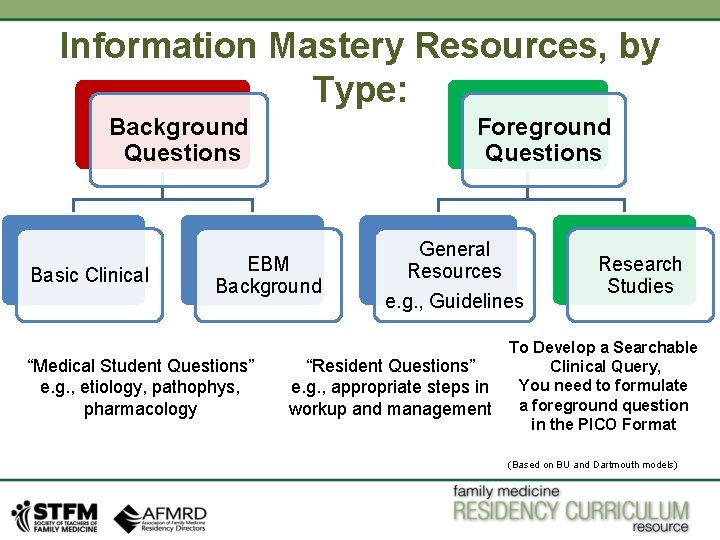
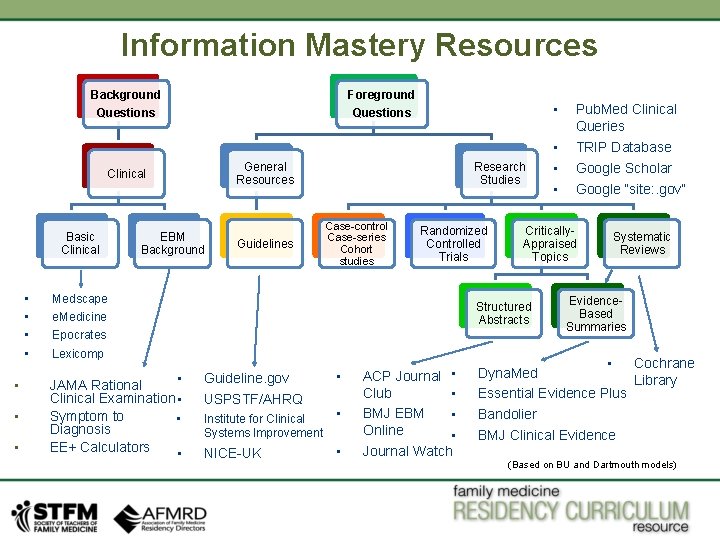
Information Mastery Resources, by Type: Background Questions Basic Clinical Foreground Questions EBM Background “Medical Student Questions” e. g. , etiology, pathophys, pharmacology General Resources e. g. , Guidelines Research Studies To Develop a Searchable “Resident Questions” Clinical Query, e. g. , appropriate steps in You need to formulate a foreground question workup and management in the PICO Format (Based on BU and Dartmouth models)
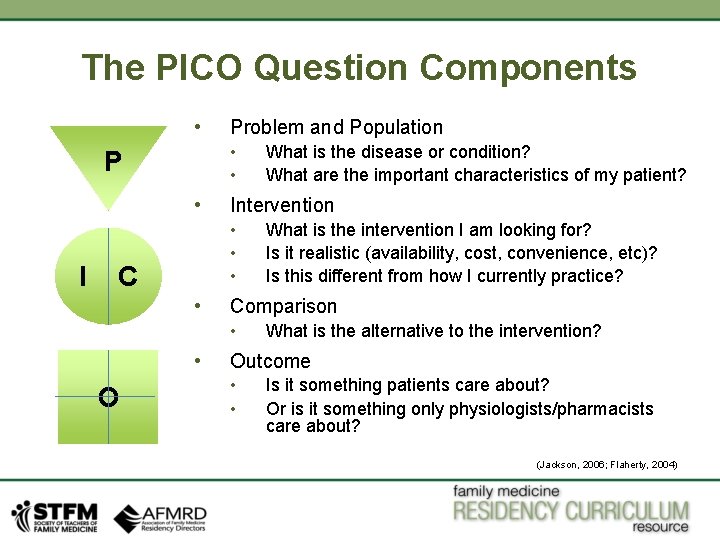
The PICO Question Components • • • P • I Problem and Population Intervention • • • C • O What is the intervention I am looking for? Is it realistic (availability, cost, convenience, etc)? Is this different from how I currently practice? Comparison • • What is the disease or condition? What are the important characteristics of my patient? What is the alternative to the intervention? Outcome • • Is it something patients care about? Or is it something only physiologists/pharmacists care about? (Jackson, 2006; Flaherty, 2004)
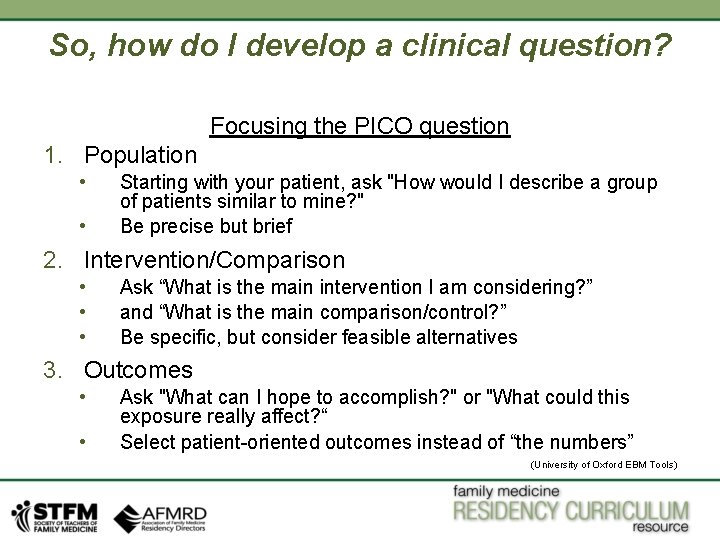
So, how do I develop a clinical question? Focusing the PICO question 1. Population • • Starting with your patient, ask "How would I describe a group of patients similar to mine? " Be precise but brief 2. Intervention/Comparison • • • Ask “What is the main intervention I am considering? ” and “What is the main comparison/control? ” Be specific, but consider feasible alternatives 3. Outcomes • • Ask "What can I hope to accomplish? " or "What could this exposure really affect? “ Select patient-oriented outcomes instead of “the numbers” (University of Oxford EBM Tools)
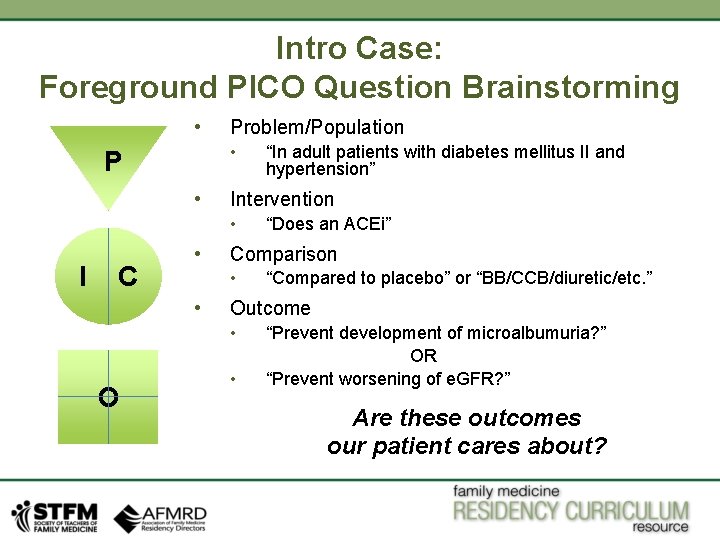
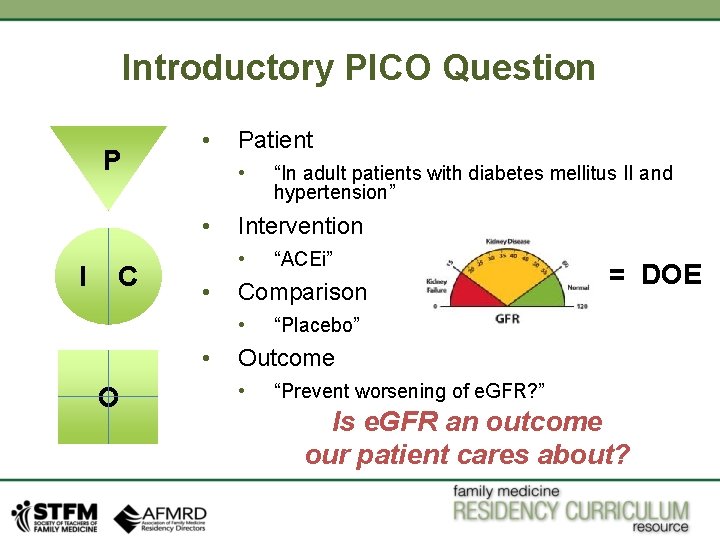
Intro Case: Foreground PICO Question Brainstorming • Problem/Population • P • Intervention • I C • O “Does an ACEi” Comparison • • “In adult patients with diabetes mellitus II and hypertension” “Compared to placebo” or “BB/CCB/diuretic/etc. ” Outcome • “Prevent development of microalbumuria? ” OR • “Prevent worsening of e. GFR? ” Are these outcomes our patient cares about?
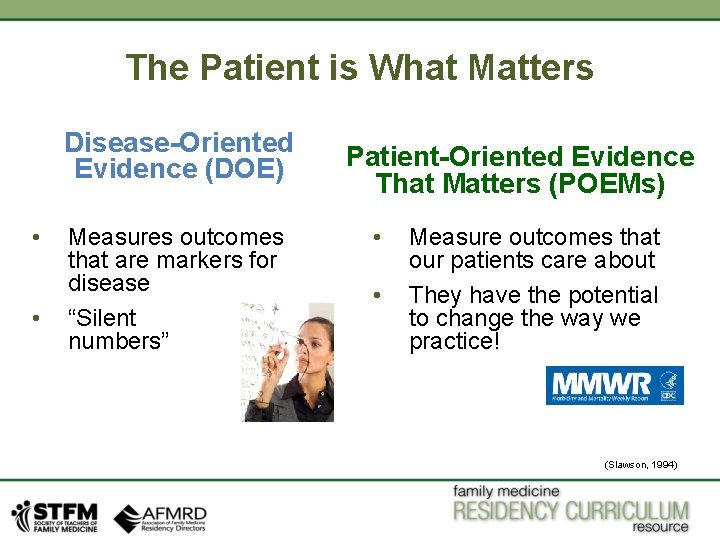
The Patient is What Matters Disease-Oriented Evidence (DOE) • • Measures outcomes that are markers for disease “Silent numbers” Patient-Oriented Evidence That Matters (POEMs) • • Measure outcomes that our patients care about They have the potential to change the way we practice! (Slawson, 1994)
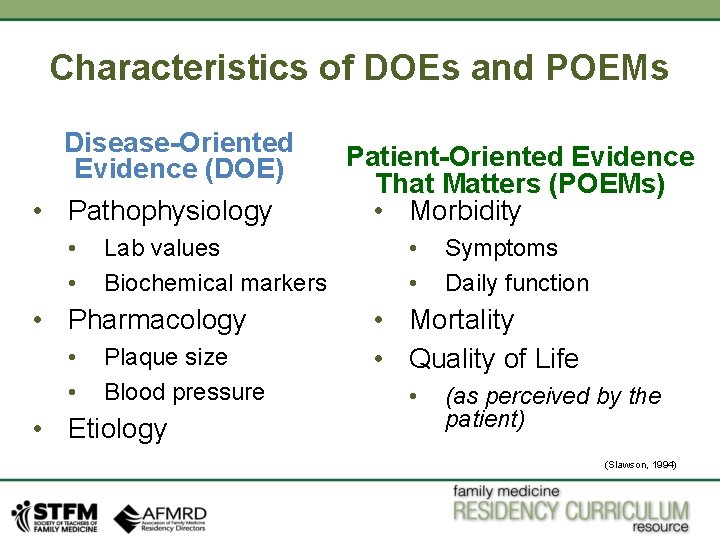
Characteristics of DOEs and POEMs Disease-Oriented Evidence (DOE) • Pathophysiology • • Lab values Biochemical markers • Pharmacology • • Plaque size Blood pressure • Etiology Patient-Oriented Evidence That Matters (POEMs) • Morbidity • • Symptoms Daily function • Mortality • Quality of Life • (as perceived by the patient) (Slawson, 1994)
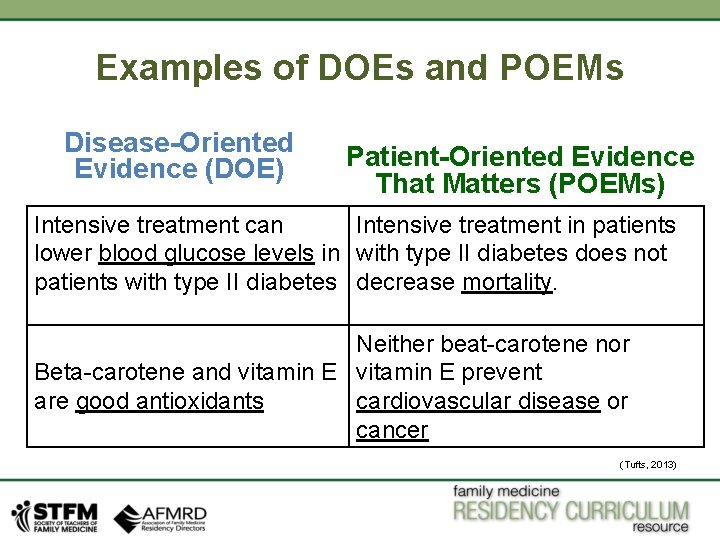
Examples of DOEs and POEMs Disease-Oriented Evidence (DOE) Patient-Oriented Evidence That Matters (POEMs) Intensive treatment can Intensive treatment in patients lower blood glucose levels in with type II diabetes does not patients with type II diabetes decrease mortality. Neither beat-carotene nor Beta-carotene and vitamin E prevent are good antioxidants cardiovascular disease or cancer (Tufts, 2013)
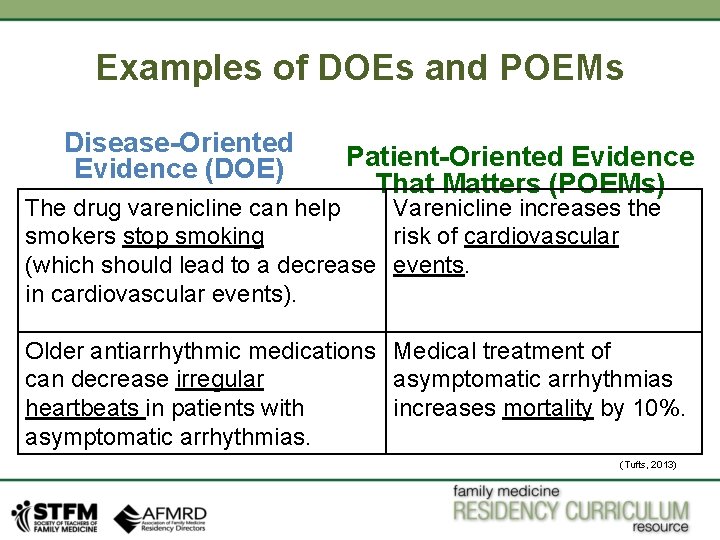
Examples of DOEs and POEMs Disease-Oriented Evidence (DOE) Patient-Oriented Evidence That Matters (POEMs) The drug varenicline can help Varenicline increases the smokers stop smoking risk of cardiovascular (which should lead to a decrease events. in cardiovascular events). Older antiarrhythmic medications Medical treatment of can decrease irregular asymptomatic arrhythmias heartbeats in patients with increases mortality by 10%. asymptomatic arrhythmias. (Tufts, 2013)
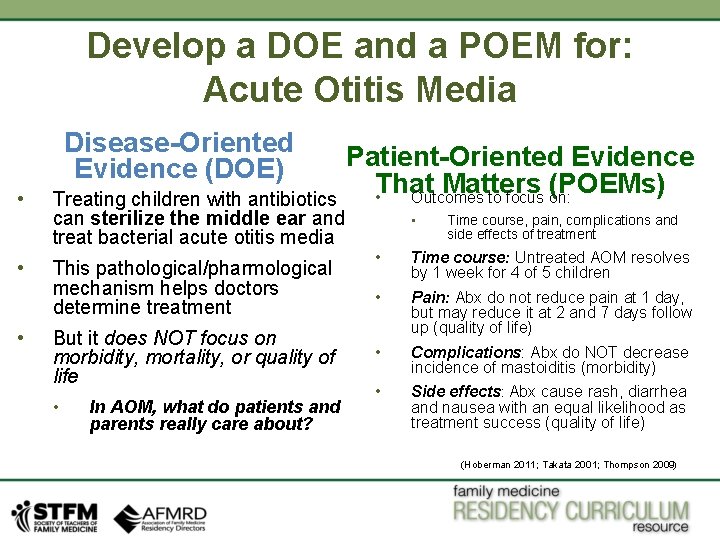
Develop a DOE and a POEM for: Acute Otitis Media Disease-Oriented Evidence (DOE) • • • Patient-Oriented Evidence That Matters (POEMs) • Outcomes to focus on: Treating children with antibiotics can sterilize the middle ear and treat bacterial acute otitis media This pathological/pharmological mechanism helps doctors determine treatment But it does NOT focus on morbidity, mortality, or quality of life • In AOM, what do patients and parents really care about? • Time course, pain, complications and side effects of treatment • Time course: Untreated AOM resolves by 1 week for 4 of 5 children • Pain: Abx do not reduce pain at 1 day, but may reduce it at 2 and 7 days follow up (quality of life) • Complications: Abx do NOT decrease incidence of mastoiditis (morbidity) • Side effects: Abx cause rash, diarrhea and nausea with an equal likelihood as treatment success (quality of life) (Hoberman 2011; Takata 2001; Thompson 2009)
Introductory PICO Question P • • • I C Patient Intervention • • O “ACEi” Comparison • • “In adult patients with diabetes mellitus II and hypertension” = DOE “Placebo” Outcome • “Prevent worsening of e. GFR? ” Is e. GFR an outcome our patient cares about?
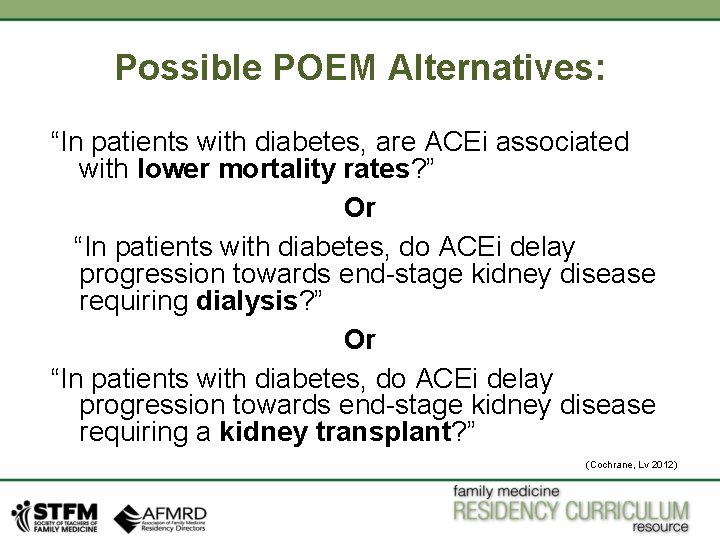
Possible POEM Alternatives: “In patients with diabetes, are ACEi associated with lower mortality rates? ” Or “In patients with diabetes, do ACEi delay progression towards end-stage kidney disease requiring dialysis? ” Or “In patients with diabetes, do ACEi delay progression towards end-stage kidney disease requiring a kidney transplant? ” (Cochrane, Lv 2012)
Alternate Clinical Queries • After developing a “best” case-based PICO question, the next step is exploring other searchable clinical queries. P I C O • These are a list of flexible alternative questions since the answer to your precise question may not match the current scientific literature • Typically the alternatives involve reasonable variations of your interventions/comparison or alternative outcomes (Cochrane, Lv 2012)
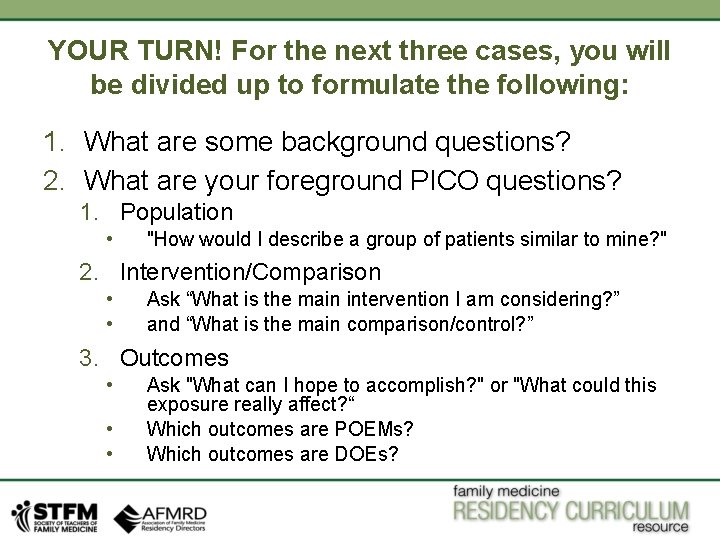
YOUR TURN! For the next three cases, you will be divided up to formulate the following: 1. What are some background questions? 2. What are your foreground PICO questions? 1. Population • "How would I describe a group of patients similar to mine? " 2. Intervention/Comparison • • Ask “What is the main intervention I am considering? ” and “What is the main comparison/control? ” 3. Outcomes • • • Ask "What can I hope to accomplish? " or "What could this exposure really affect? “ Which outcomes are POEMs? Which outcomes are DOEs?
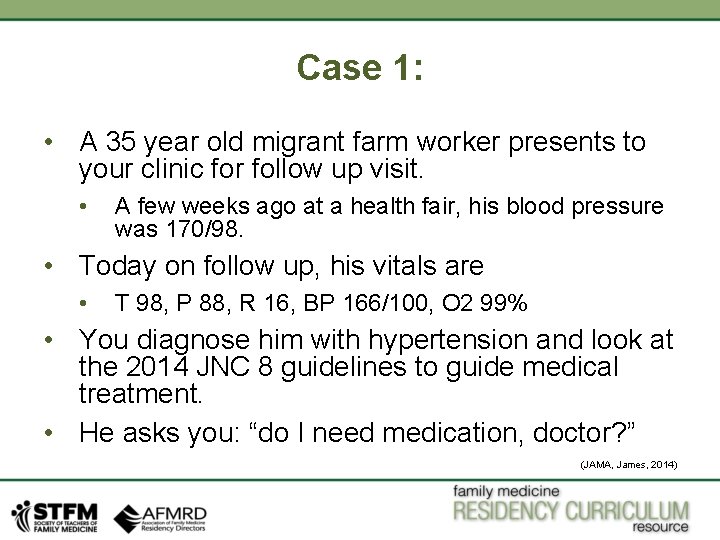
Case 1: • A 35 year old migrant farm worker presents to your clinic for follow up visit. • A few weeks ago at a health fair, his blood pressure was 170/98. • Today on follow up, his vitals are • T 98, P 88, R 16, BP 166/100, O 2 99% • You diagnose him with hypertension and look at the 2014 JNC 8 guidelines to guide medical treatment. • He asks you: “do I need medication, doctor? ” (JAMA, James, 2014)
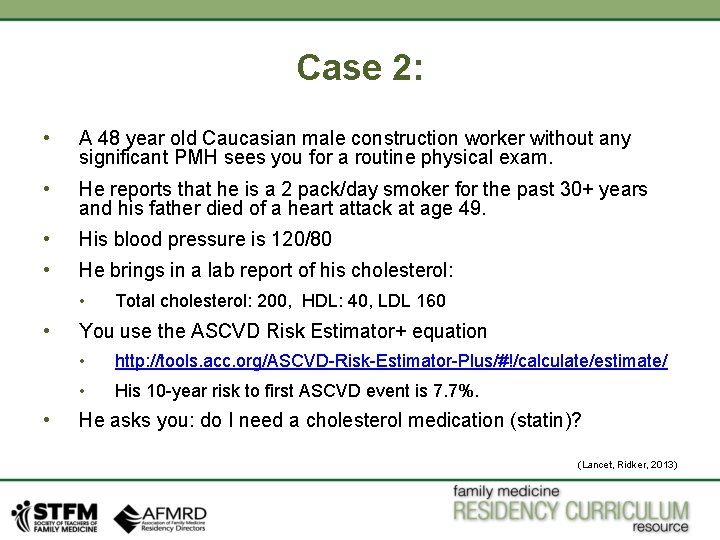
Case 2: • A 48 year old Caucasian male construction worker without any significant PMH sees you for a routine physical exam. • He reports that he is a 2 pack/day smoker for the past 30+ years and his father died of a heart attack at age 49. • His blood pressure is 120/80 • He brings in a lab report of his cholesterol: • • • Total cholesterol: 200, HDL: 40, LDL 160 You use the ASCVD Risk Estimator+ equation • http: //tools. acc. org/ASCVD-Risk-Estimator-Plus/#!/calculate/estimate/ • His 10 -year risk to first ASCVD event is 7. 7%. He asks you: do I need a cholesterol medication (statin)? (Lancet, Ridker, 2013)
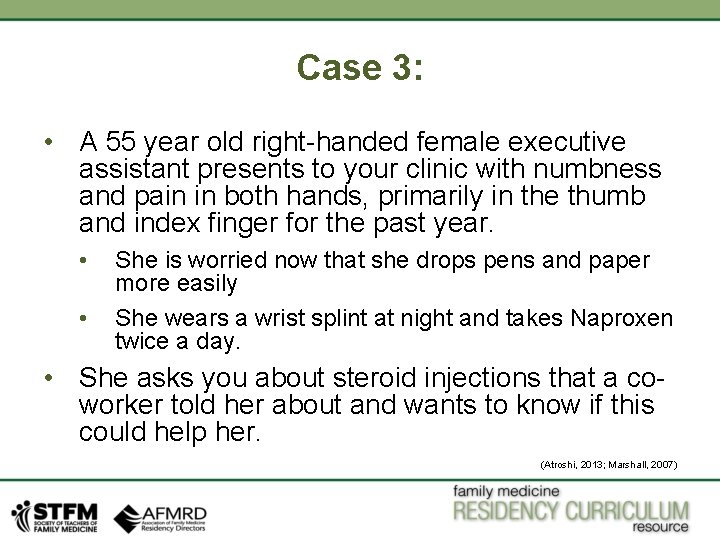
Case 3: • A 55 year old right-handed female executive assistant presents to your clinic with numbness and pain in both hands, primarily in the thumb and index finger for the past year. • • She is worried now that she drops pens and paper more easily She wears a wrist splint at night and takes Naproxen twice a day. • She asks you about steroid injections that a coworker told her about and wants to know if this could help her. (Atroshi, 2013; Marshall, 2007)
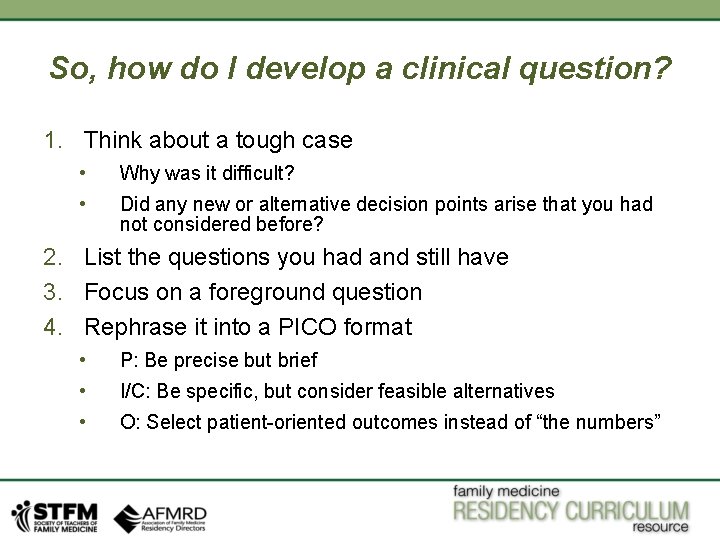
So, how do I develop a clinical question? 1. Think about a tough case • Why was it difficult? • Did any new or alternative decision points arise that you had not considered before? 2. List the questions you had and still have 3. Focus on a foreground question 4. Rephrase it into a PICO format • P: Be precise but brief • I/C: Be specific, but consider feasible alternatives • O: Select patient-oriented outcomes instead of “the numbers”
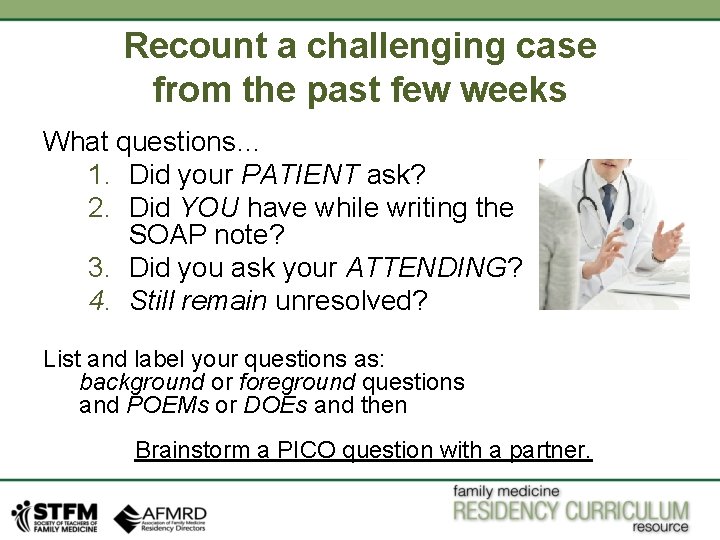
Recount a challenging case from the past few weeks What questions… 1. Did your PATIENT ask? 2. Did YOU have while writing the SOAP note? 3. Did you ask your ATTENDING? 4. Still remain unresolved? List and label your questions as: background or foreground questions and POEMs or DOEs and then Brainstorm a PICO question with a partner.
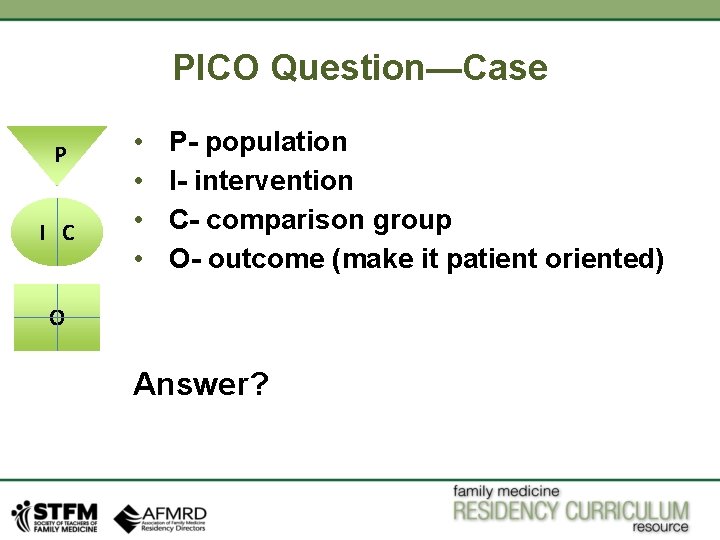
PICO Question—Case P I C • • P- population I- intervention C- comparison group O- outcome (make it patient oriented) O Answer?
Your Challenge • For the next week, at the end of every day • Write down a foreground PICO question based on your patients • Focus on patient unmet needs [PUNs] • To help you identify your (doctor’s) educational needs [DENs]
Foreground Question Searches • “Developing Clinical Questions” is just the beginning of information mastery on how to answer clinical questions • See the accompanying module on “Finding Answers to Clinical Questions” • • To minimize your work in selecting sources To locate valid and relevant information To maximize your learning in navigating information mastery search engines and resources To help you answer the questions you’ve developed today!
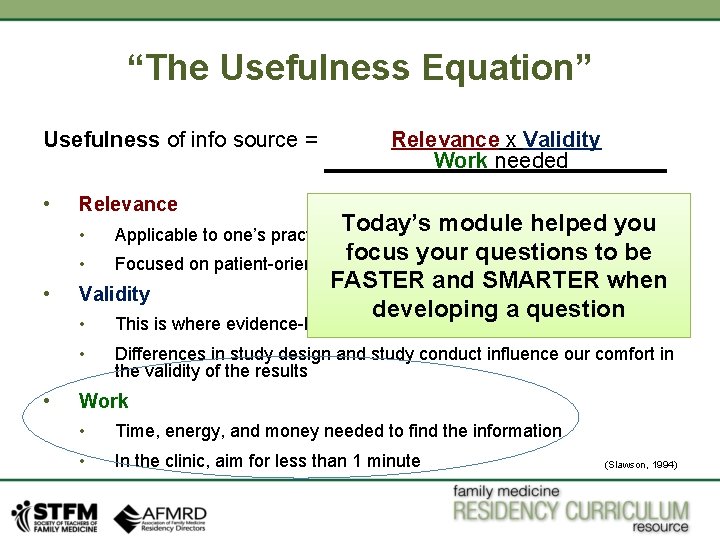
“The Usefulness Equation” Usefulness of info source = Relevance x Validity Work needed • • • Relevance Today’s module helped you focus your questions to be • Focused on patient-oriented evidence that matters FASTER and SMARTER when Validity developing a question • Applicable to one’s practice • This is where evidence-based medicine techniques are helpful • Differences in study design and study conduct influence our comfort in the validity of the results Work • Time, energy, and money needed to find the information • In the clinic, aim for less than 1 minute (Slawson, 1994)
Information Mastery Resources Background Foreground Questions General Resources Clinical Basic Clinical • • EBM Background Guidelines Research Studies Case-control Case-series Cohort studies Randomized Controlled Trials Medscape Epocrates Lexicomp • JAMA Rational Clinical Examination • Symptom to • Diagnosis EE+ Calculators • Critically. Appraised Topics Structured Abstracts e. Medicine Guideline. gov USPSTF/AHRQ Institute for Clinical Systems Improvement NICE-UK • • • ACP Journal • Club • BMJ EBM • Online • Journal Watch • • • Pub. Med Clinical Queries TRIP Database Google Scholar Google “site: . gov” Systematic Reviews Evidence. Based Summaries • Cochrane Dyna. Med Library Essential Evidence Plus Bandolier BMJ Clinical Evidence (Based on BU and Dartmouth models)
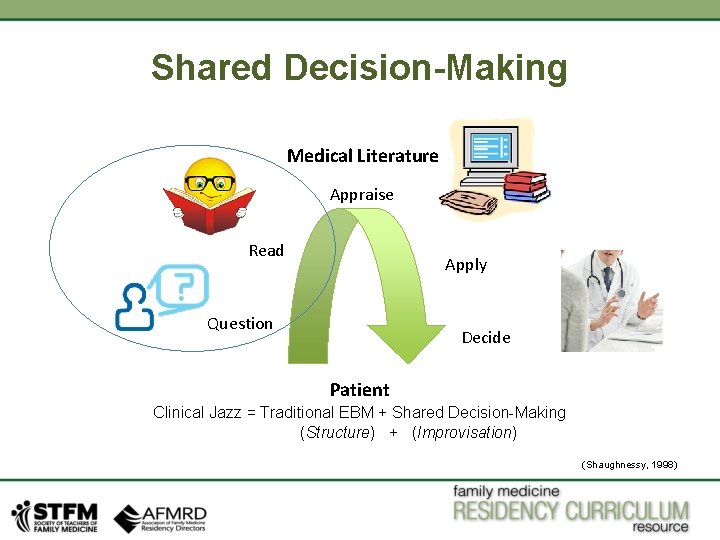
Shared Decision-Making Medical Literature Appraise Read Apply Question Decide Patient Clinical Jazz = Traditional EBM + Shared Decision-Making (Structure) + (Improvisation) (Shaughnessy, 1998)
Congratulations! You are now able to: • Explain the difference between foreground and background questions • Differentiate between patient-oriented evidence and disease-oriented evidence • Identify a foreground question and apply the PICO format to create a searchable clinical query
Resources • AAFP. EBM Toolkit • http: //www. aafp. org/journals/afp/authors/ebmtoolkit/resources. html • University of Oxford. EBM toolkit • http: //www. cebm. net/index. aspx? o=1023 • PUNs and DENs worksheet • http: //www. networks. nhs. uk/nhs-networks/mkimpacte/documents/Puns%20 and%20 Dens%20 book let%20 v 2. 4. pdf
References • Boston University School of Medicine. (2013) Curricular Innovations: Finding Information Framework. [Online] Available from: http: //medlib. bu. edu/busm/fif/ and http: //www. bumc. bu. edu/oaa/files/2013/10/BUSM-FIF. pdf [Accessed 11 th November 2013]. • Dartmouth College Biomedical Libraries. (2012) Evidence-Based Medicine Resources: Finding Evidence-Based Answers to Clinical Questions Quickly and Effectively. [Online] Available from http: //www. dartmouth. edu/~biomed/resources. htmld/guides/ebm_resources. shtml and http: //www. dartmouth. edu/~biomed/resources. htmld/guides/Finding. Good. Answers. pdf [Accessed 11 th November 2013]. • Tufts University School of Medicine: Department of Family Medicine: Center for Information Mastery: Concepts of Information Mastery. (2013). [Online] Available from http: //medicine. tufts. edu/Education/Academic-Departments/Clinical-Departments/Family. Medicine/Center-for-Information-Mastery/Concepts-of-Information-Mastery [Accessed 11 th November 2013]. • University of Oxford. (2013) Centre for Evidence Based Medicine: EBM tools. [Online] Available from http: //www. cebm. net/index. aspx? o=1023 [Accessed 11 th November 2013]. • Jackson R, et al. The GATE frame: critical appraisal with pictures. ACP Journal Club 2006 Mar/Apr: 144
References • • • Atroshi I, Flondell M, Hofer M, Ranstam J. Methylprednisolone injections for the carpal tunnel syndrome: a randomized, placebo-controlled trial. Ann Intern Med 2013; 159(5): 309 -17. Chan LS, Takata GS, Shekelle P, et al. Evidence assessment of management of acute otitis media: II. Research gaps and priorities for future research. Pediatrics 2001; 108: 248 -54. Flaherty RJ. A simple method for evaluating the clinical literature. Fam Pract Manag 2004 May; 11(5): 47 -52. James PA, Oparil S, Carter BL, et al. Evidence-based guideline for the management of high blood pressure in adults: report from the panel members appointed to the Eighth Joint National Committee (JNC 8). JAMA 2014. doi: 10. 1001/jama. 2013. 284427. Lv J, Perkovic V, Foote CV, Craig ME, Craig JC, Strippoli GF. (). Antihypertensive agents for preventing diabetic kidney disease. Cochrane Database Syst Rev 2012 Dec 12; 23: CD 004136. Marshall SC, Tardif G, Ashworth NL. Local corticosteroid injection for carpal tunnel syndrome. Cochrane Database Syst Rev 2007; 2: CD 001554. Ridker PM, Cook NR. Statins: new American guidelines for prevention of cardiovascular disease. Lancet 2013; 13: 62388 -0. Slawson D, Shaughnessy A, Bennett J. Becoming a medical information master: feeling good about not knowing everything. J Fam Pract 1994; 38(5): 505 -13. Slawson D, Shaughnessy A, Bennett J. Becoming an information master: a guidebook to the medical information jungle. J Fam Pract 2004; 39(5): 489 -99. Shaughnessy AF, Slawson DC, Becker L. Clinical jazz: harmonizing clinical experience and evidence-based medicine. J Fam Pract 1998; 47: 425 -8. Thompson PL, Gilbert RE, Long PF, Saxena S, Sharland M, Wong IC. Effects of antibiotics for otitis media on mastoiditis in children: a retrospective cohort study using the United Kingdom General Practice Research Database. Pediatrics 2009; 123(2): 424 -30.