
Developing classroom practice Learning lessons from leadership literature



- Slides: 11
Developing classroom practice: Learning lessons from leadership literature Hester Mannion, Claire Vogan and Judy Mc. Kimm
What this talk is about…? • Followership and leadership • What is followership theory? • How might followership theory inform classroom practice? • Who are ‘star followers’, how might students be encouraged into that role?
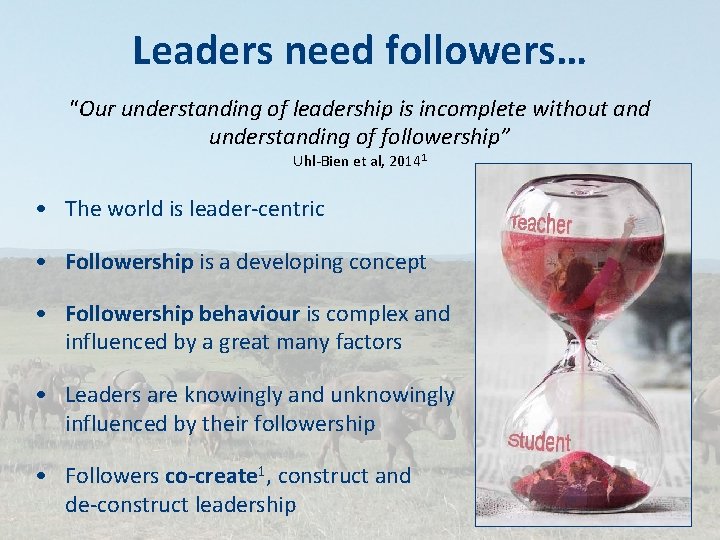
Leaders need followers… “Our understanding of leadership is incomplete without and understanding of followership” Uhl-Bien et al, 20141 • The world is leader-centric • Followership is a developing concept • Followership behaviour is complex and influenced by a great many factors • Leaders are knowingly and unknowingly influenced by their followership • Followers co-create 1, construct and de-construct leadership
What is followership theory? • Robert E Kelley published ‘In Praise of Followers’ in the Harvard Business Review in 19882 • Kelley published his model for categorising follower types in 20083 • Barbara Kellerman also published a model in 20084
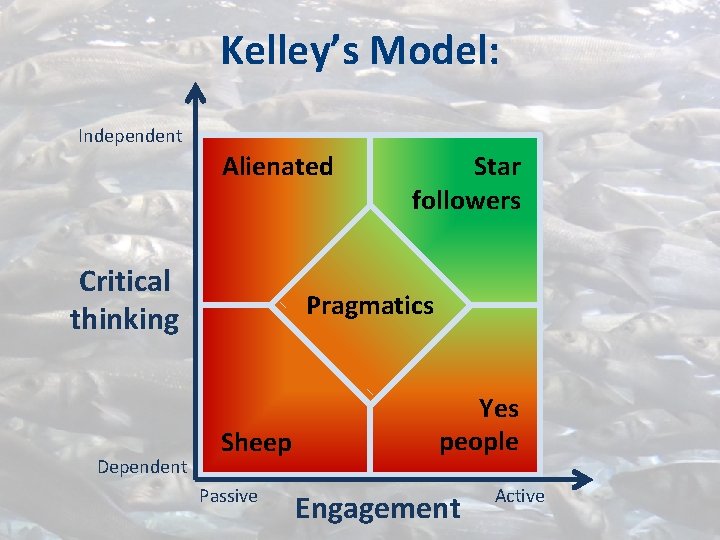
Kelley’s Model: Independent Alienated Critical thinking Dependent Star followers Pragmatics Sheep Passive Yes people Engagement Active
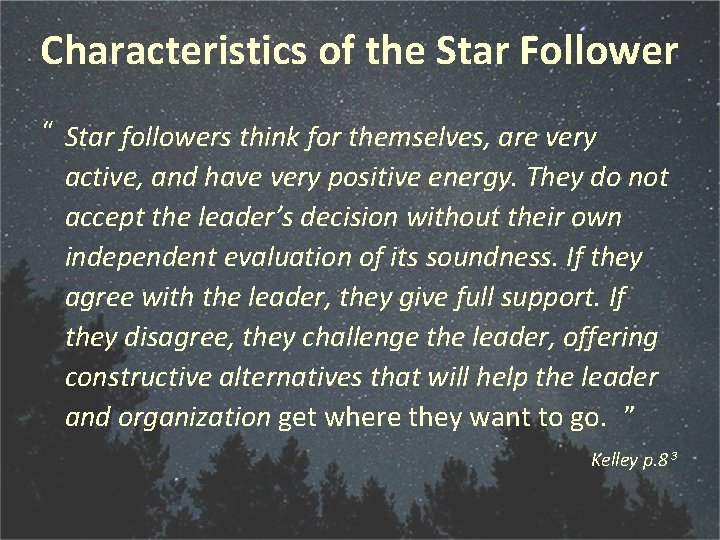
Characteristics of the Star Follower “ Star followers think for themselves, are very active, and have very positive energy. They do not accept the leader’s decision without their own independent evaluation of its soundness. If they agree with the leader, they give full support. If they disagree, they challenge the leader, offering constructive alternatives that will help the leader and organization get where they want to go. ” Kelley p. 8 3
Kelley’s Model:
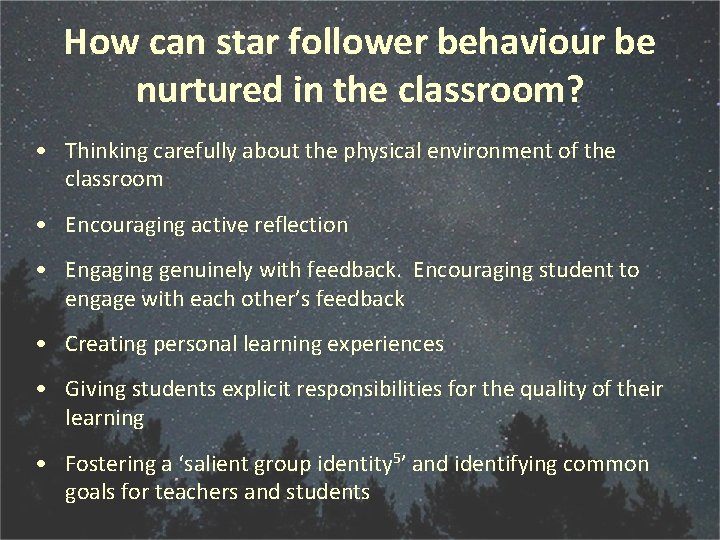
How can star follower behaviour be nurtured in the classroom? • Thinking carefully about the physical environment of the classroom • Encouraging active reflection • Engaging genuinely with feedback. Encouraging student to engage with each other’s feedback • Creating personal learning experiences • Giving students explicit responsibilities for the quality of their learning • Fostering a ‘salient group identity 5’ and identifying common goals for teachers and students
In conclusion… • Followership theory examines the influence of followers on leadership behaviour and outcomes • The term ‘Star followers’ describes those followers who are actively and critically engaged with leaders and share common goals • In drawing parallels between the leader/follower, teacher/student dynamic it may be possible to use this model to better understand how to develop classroom practice
References 1. Uhl-Bien M, Riggio RE, Lowe KB, Carsten MK. Followership theory: a review and research agenda. Leadership Quarterly 25: 83– 104. 2014 2. Kelley RE. In Praise of Followers. Harvard Business Review. 66: 142 -148. 1988. 3. Kelley RE. Rethinking followership. In: Riggio RE, Chaleff I, Lipman-Blumen J, eds. The Art of Followership: how great followers create great leaders and organizations. Jossey-Bass, San Francisco: 1– 15. 2008. 4. Kellerman B. Followership: How followers are creating change and changing leaders, Harvard Business Press, Boston. 2008. 5. Tee EYJ, Paulsen N, Ashkanasy NM. Revisiting followership through a social identity perspective: The role of collective follower emotion and action. Leadership Quarterly 24: 902– 18. 2013.
Acknowledgements All images are either the authors own or have creative commons attributes to the public domain (©)