
Developing Cervical Cancer Screening Programs that Meet Womens
- Slides: 19
Developing Cervical Cancer Screening Programs that Meet Women’s Needs Original source: Alliance for Cervical Cancer Prevention (ACCP) www. alliance-cxca. org
Overview: z Screening, treatment, and follow-up services need to address women’s cultural, emotional, and practical needs and concerns. z Community involvement is essential for: y. Building a discourse with women y. Reducing their fear of screening and treatment y. Strengthening women’s understanding of prevention y. Improving women’s experience with services
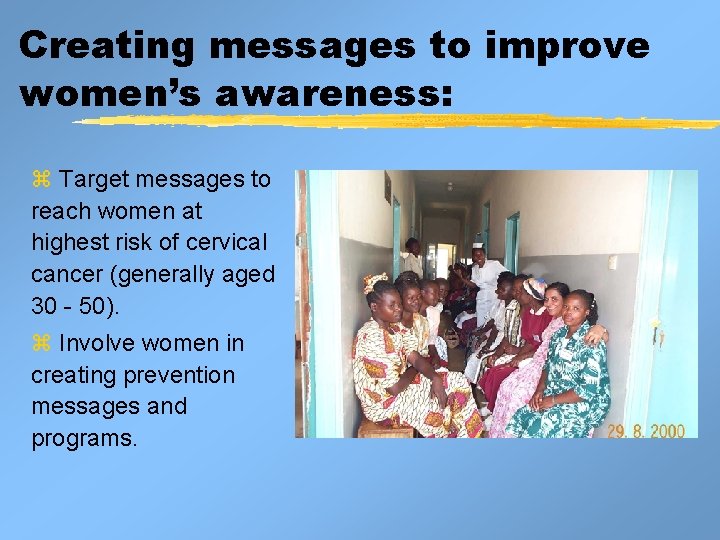
Creating messages to improve women’s awareness: z Target messages to reach women at highest risk of cervical cancer (generally aged 30 - 50). z Involve women in creating prevention messages and programs.
Barriers to women’s participation in screening: z Little understanding of cervical cancer z Limited understanding of female reproductive organs and associated diseases z Lack of access to services z Shame and fear of a vaginal exam z Fear of death from cancer z Lack of trust in health care system z Lack of community and family support z Concept of “preventive care” is foreign
Common misconceptions about cervical cancer: z People often do not know that it is preventable z Belief that screening involves STI/HIV screening z Belief that a positive/abnormal Pap smear result means a woman will die z Research found that: y. In South Africa and Kenya, women often think a positive screening test means they have HIV y. In Mexico, women fear that treatment will leave them sexually disabled
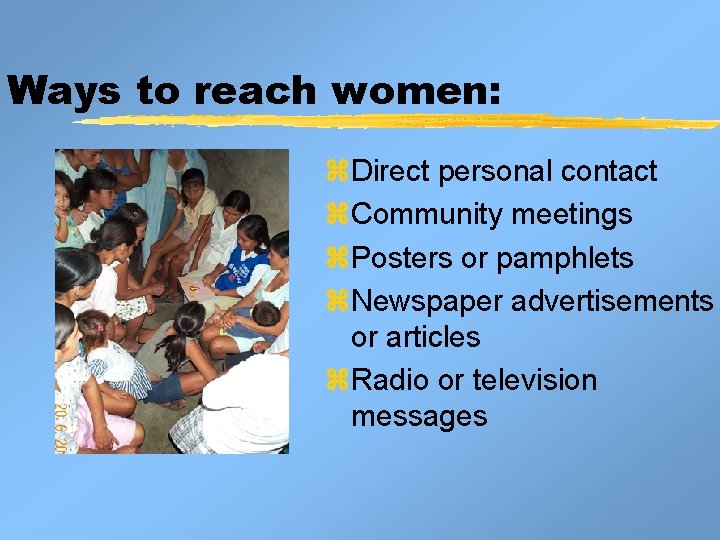
Ways to reach women: z. Direct personal contact z. Community meetings z. Posters or pamphlets z. Newspaper advertisements or articles z. Radio or television messages
Key sources of information: z. Peers who have received messages or been screened z. Leaders or members of women’s groups z. Midwives and traditional healers z. Community health promoters z. Community leaders z. Nurses, nurse practitioners, or doctors
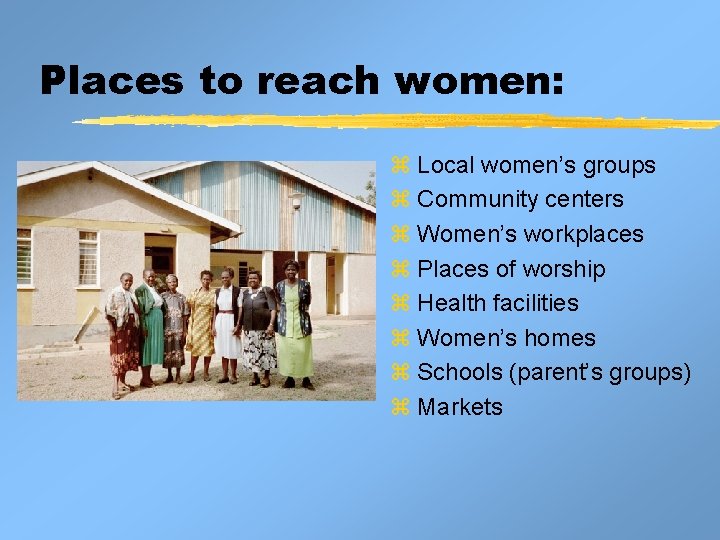
Places to reach women: z Local women’s groups z Community centers z Women’s workplaces z Places of worship z Health facilities z Women’s homes z Schools (parent’s groups) z Markets
Key cervical cancer prevention messages: z Good health practices can help prevent cancer. z Cervical cancer develops slowly and is preventable. z Screening can detect treatable, precancerous lesions before they progress to cancer. z Women aged 30 and older are more likely to develop cervical cancer than younger women. z Women in their 30 s and 40 s should be screened at least once.
Key messages (continued): z The screening procedure is relatively simple, quick, and is not painful. z The small number of women who need treatment after screening can receive a simple procedure to remove the lesion. z A screening test that is positive is not a death sentence! y. It provides the opportunity to eliminate abnormal cells before they become cancerous.
Helping women discuss cervical cancer: z Community health or outreach workers can facilitate communication at the community level. z Counseling by health care providers can both inform women and help them talk to their families. z Women who receive treatment for precancerous lesions and who must abstain from sexual intercourse for several weeks especially need good counseling.
Ensure women’s positive experiences with screening: z Build and maintain positive provider-client relationships. z Women are more likely to participate when: ythey are treated well; yhealth care providers are sensitive, responsive and respectful; yhealth care providers develop a respectful rapport with clients; z Women with positive experiences become advocates when talking to other women.
Important counseling tips: z Listening and encouraging women to express their concerns z Being sensitive to cultural and religious considerations z Expressing support through non-verbal communication, such as nodding z Keeping messages simple z Face-to-face time is essential
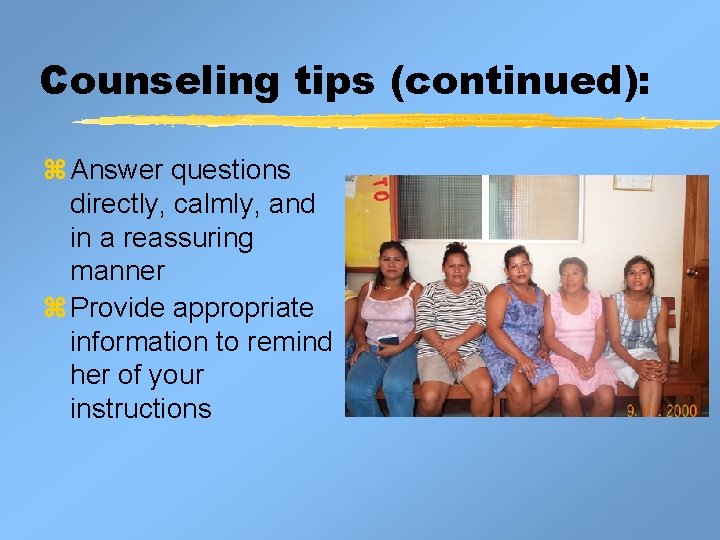
Counseling tips (continued): z Answer questions directly, calmly, and in a reassuring manner z Provide appropriate information to remind her of your instructions
Making services accessible and appropriate: z Review internal policies and procedures to ensure that programs are accessible and friendly to women. z Have female health care providers in settings where women are uncomfortable with male health care providers, if possible.
Making services accessible and appropriate: z. Ensure: y. Affordability y. Confidentiality and privacy y. Availability in local languages y. Availability at locations and times convenient for women
Involving women helps ensure success: z. Involve women in developing, implementing, and evaluating programs and messages. z. Consult an advisory team of women and other key community members. z. Exit interviews provide valuable feedback.
Conclusion: z. Meeting women’s cultural, emotional and practical needs is fundamental to: yincreasing women’s awareness of and willingness to seek services; yimproving women’s experience with cervical cancer prevention services; yincreasing program participation among women at risk.
For more information on cervical cancer prevention: z The Alliance for Cervical Cancer Prevention (ACCP) www. alliance-cxca. org z ACCP partner organizations: y. Engender. Health www. engenderhealth. org y. International Agency for Research on Cancer (IARC) www. iarc. fr y. JHPIEGO www. jhpiego. org y. Pan American Health Organization (PAHO) www. paho. org y. Program for Appropriate Technology in Health (PATH) www. path. org