
Developing and Using Evaluation Checklists to Improve Evaluation

- Slides: 29
Developing and Using Evaluation Checklists to Improve Evaluation Practice Wes Martz, Nadini Persaud, & Daniela Schröter
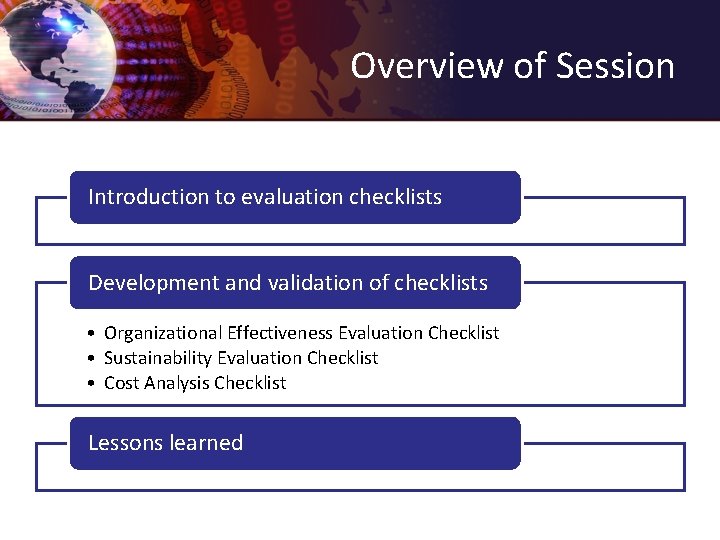
Overview of Session Introduction to evaluation checklists Development and validation of checklists • Organizational Effectiveness Evaluation Checklist • Sustainability Evaluation Checklist • Cost Analysis Checklist Lessons learned
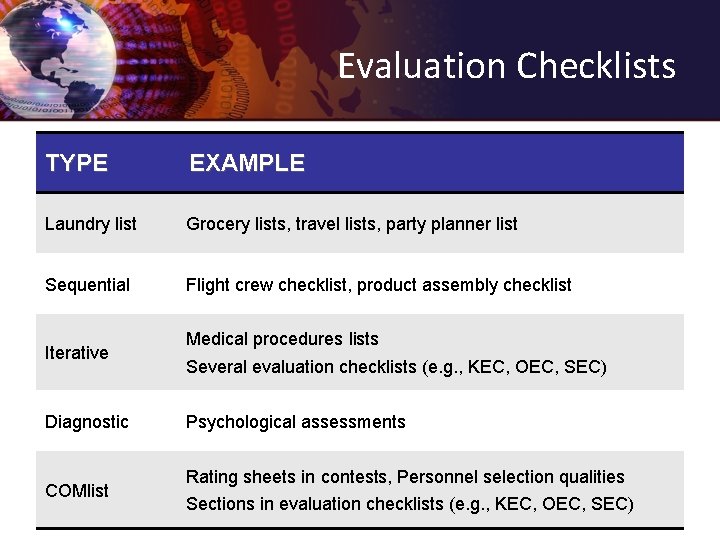
Evaluation Checklists TYPE EXAMPLE Laundry list Grocery lists, travel lists, party planner list Sequential Flight crew checklist, product assembly checklist Iterative Diagnostic COMlist Medical procedures lists Several evaluation checklists (e. g. , KEC, OEC, SEC) Psychological assessments Rating sheets in contests, Personnel selection qualities Sections in evaluation checklists (e. g. , KEC, OEC, SEC)
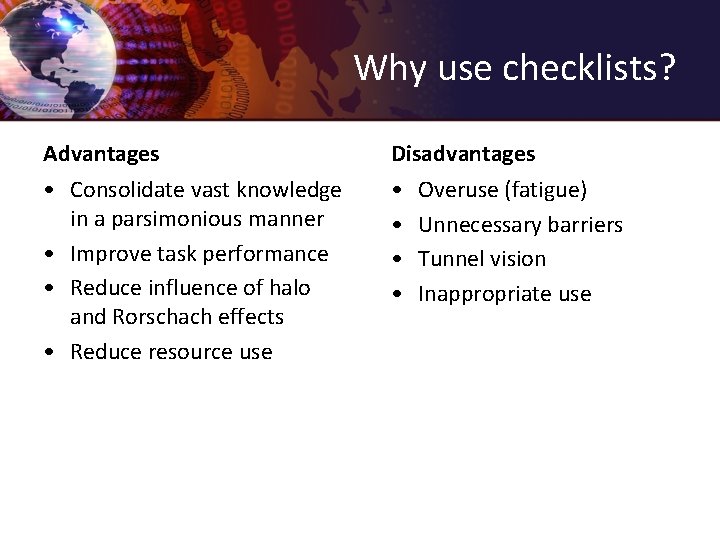
Why use checklists? Advantages Disadvantages • Consolidate vast knowledge in a parsimonious manner • Improve task performance • Reduce influence of halo and Rorschach effects • Reduce resource use • • Overuse (fatigue) Unnecessary barriers Tunnel vision Inappropriate use
Available at www. Evaluative. Organization. com Wes Martz, Ph. D. ORGANIZATIONAL EFFECTIVENESS EVALUATION CHECKLIST (OEC)
OEC Overview • • Organizational evaluation process framework Iterative, explicit, weakly sequential Six steps, 29 checkpoints Criteria of merit checklist – 12 universal criteria of merit – 84 suggested measures
OEC Validation Process • Phase 1: Expert panel review – Critical feedback survey – Written comments made on checklist • Phase 2: Field test – Single-case study – Semi-structured interview
Expert Panel Overview • Study participants – Subject matter experts (organizational and evaluation theorists) – Targeted users (professional evaluators, organizational consultants, managers) • • Review OEC for providing critical feedback Identify strengths and weaknesses Complete the critical feedback survey Write comments directly on the checklist
Expert Panel Data Analyses • Critical feedback survey – Descriptive statistics – Parametric and nonparametric analysis of variance • Written comments on checklist – Hermeneutic interpretation – Thematic analysis to cluster and impose meaning – Triangulation across participants to corroborate or falsify the imposed categories
Field Test Overview • • • Evaluation client was a for-profit organization Conducted evaluation using revised OEC Strictly followed the OEC to ensure fidelity Post-evaluation semi-structured client interview A formative metaevaluation to detect and correct deficiencies in the process
Observations from Field Test • Structured format minimized “scope-creep” • Identified several areas to clarify in OEC • Reinforced need for multiple measures, transparency in standards • Minimal disruption to the organization
OEC Validation Method* • Strengths – Relatively quick validation process – Based on relevant evaluative criteria – Features a real-world application • Weaknesses – Single-case field study – Selection of the case study – Selection of the expert panel members * Martz, W. (2009). Validating an evaluation checklist using a mixed method design. Evaluation & Program Planning (in press).
Available at www. sustainabilityeval. net Daniela Schröter, Ph. D. SUSTAINABILITY EVALUATION CHECKLIST (SEC)
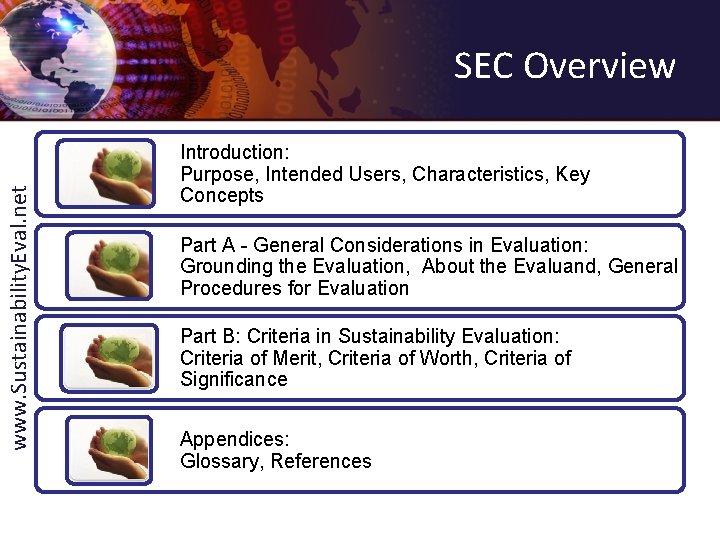
www. Sustainability. Eval. net SEC Overview Introduction: Purpose, Intended Users, Characteristics, Key Concepts Part A - General Considerations in Evaluation: Grounding the Evaluation, About the Evaluand, General Procedures for Evaluation Part B: Criteria in Sustainability Evaluation: Criteria of Merit, Criteria of Worth, Criteria of Significance Appendices: Glossary, References
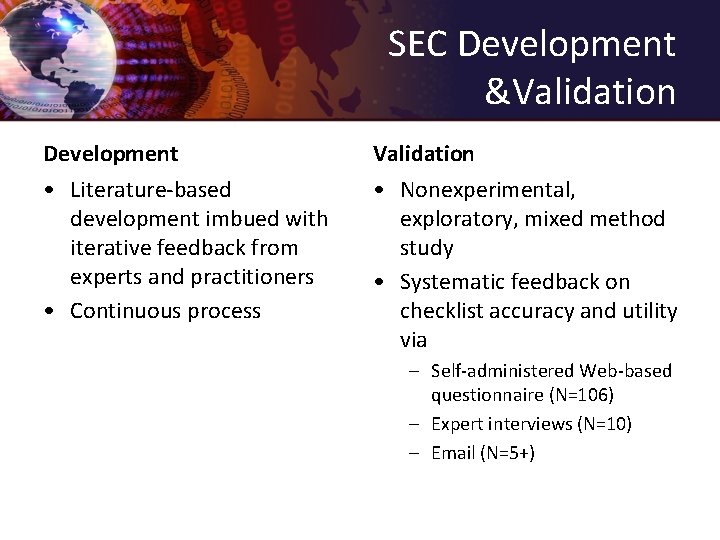
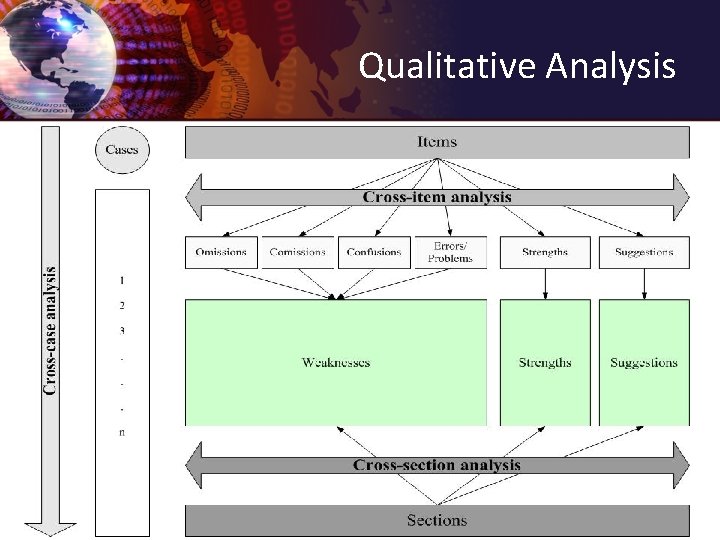
SEC Development &Validation Development Validation • Literature-based development imbued with iterative feedback from experts and practitioners • Continuous process • Nonexperimental, exploratory, mixed method study • Systematic feedback on checklist accuracy and utility via – Self-administered Web-based questionnaire (N=106) – Expert interviews (N=10) – Email (N=5+)
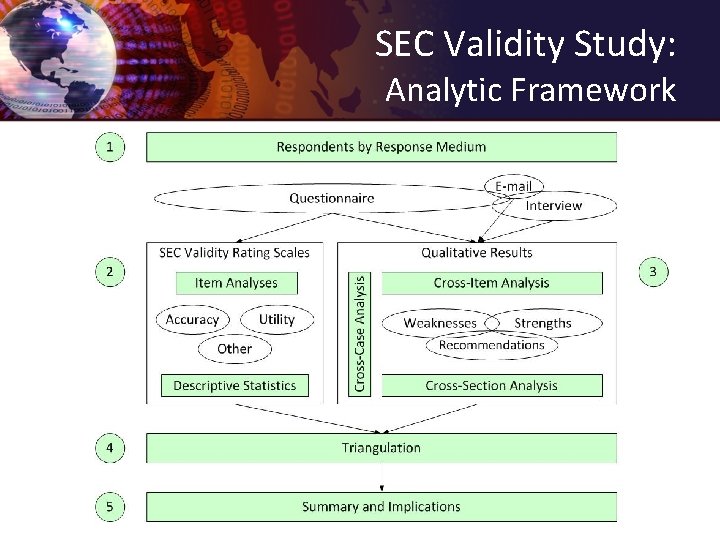
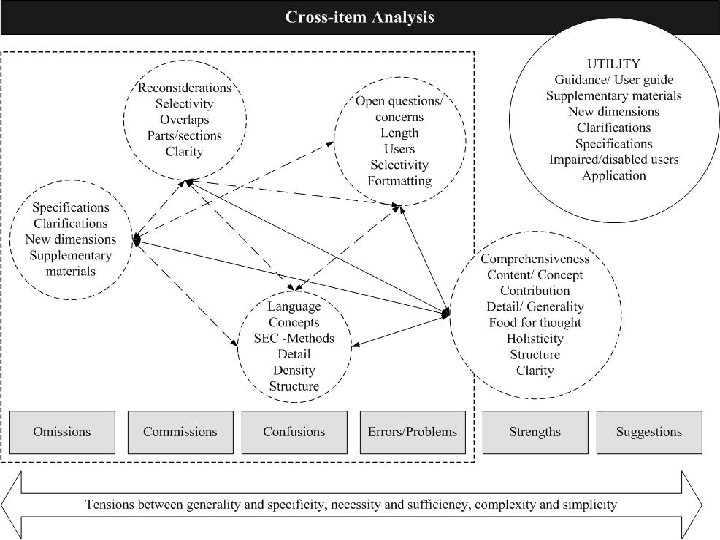
SEC Validity Study: Analytic Framework
Qualitative Analysis
Cross Item Analysis
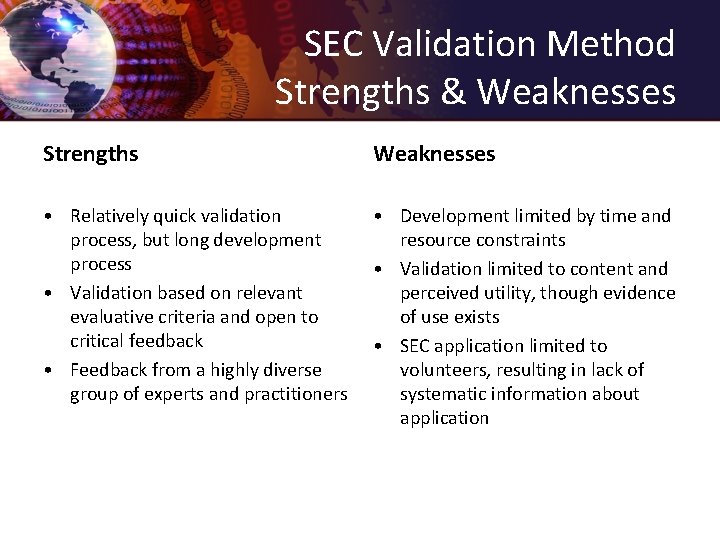
SEC Validation Method Strengths & Weaknesses Strengths Weaknesses • Relatively quick validation process, but long development process • Validation based on relevant evaluative criteria and open to critical feedback • Feedback from a highly diverse group of experts and practitioners • Development limited by time and resource constraints • Validation limited to content and perceived utility, though evidence of use exists • SEC application limited to volunteers, resulting in lack of systematic information about application
Nadini Persaud, Ph. D. COST ANALYSIS CHECKLIST
Cost Analysis—Importance “Demonstration of a positive result, even one that is statistically significant and casually linked to a program, is not sufficient in itself to logically justify continuation of the program” (Weiss, 1998, p. 246). Knowing that a program is responsible for certain outcomes is of little value if cost is not taken into account. IMPORTANT QUESTION IN A POLITICAL ENVIRONMENT: “HOW COST-EFFECTIVE IS THE PROGRAM COMPARED TO SIMILAR PROGRAMS”.
Cost Analysis—Utilization “. . . Not widely used at present among evaluators, in comparison with economists” (Levin, 2005, p. 90). “. . . Efficiency analyses is a logical follow-on from evaluation, it is a specialized craft that few evaluators have mastered” (Weiss, 1998, p. 247). “The different methods for valuing and comparing costs, so familiar to auditors and accountants and economists, should be seriously studied by evaluation students…. question in a political environment…is, What is the program or system’s costeffectiveness, compared with other programs or systems” (Chelimsky, 1997, p. 65).
Cost Analysis—Utilization “Is rarely done—let alone done well” (Scriven, 1991, p. 108). Economic rates of return computations are “. . . not done at all, or done only superficially” (Cracknell, 2000, p. 142). Imperative that evaluators develop cost analysis skills so that they can demonstrate why one program is better than the other (Royce et al. , 2001). Many evaluators practically ignore costs and are not even familiar with the sources that should be tapped to obtain cost information (Rossi et al. , 2004).
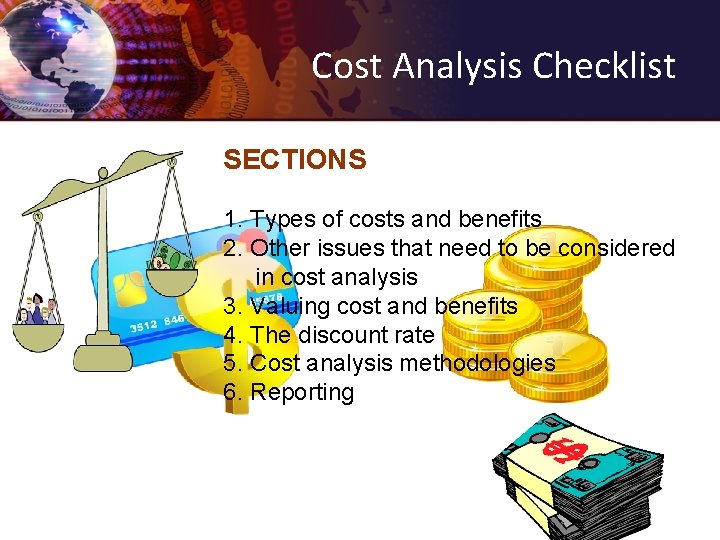
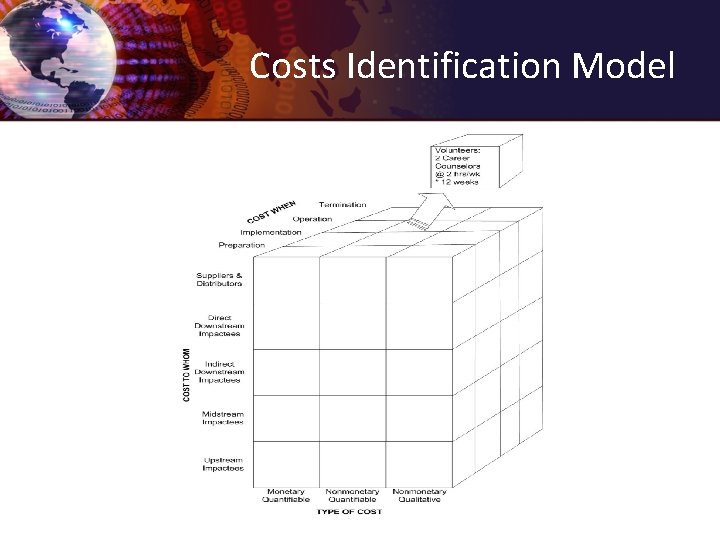
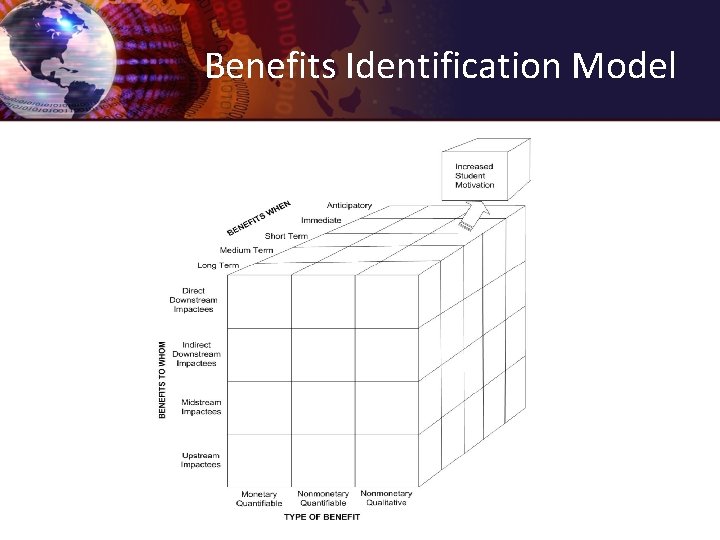
Cost Analysis Checklist SECTIONS 1. Types of costs and benefits 2. Other issues that need to be considered in cost analysis 3. Valuing cost and benefits 4. The discount rate 5. Cost analysis methodologies 6. Reporting
Costs Identification Model
Benefits Identification Model
Development and Validation LESSONS LEARNED
Lessons Learned • Checklist development should address unique attributes of the evaluand • Sampling frame is critical • Checklist validation should be grounded in theory, practice, and use • Mixed method approach provides increased confidence in validation conclusions • All checklists are a “work-in-process”
Thank You! martz@Evaluative. Organization. com npersaud 07@yahoo. com daniela. schroeter@gmail. com