
Developing and Supporting the Diversity of Chairperson Roles


- Slides: 19
Developing and Supporting the Diversity of Chairperson Roles Interactive Session 34 th Academic Chairpersons Conference New Orleans, LA February 9, 2017 Jean Pawl, Richard Griner, Deborah Richardson, and Beth Ne. Smith Augusta University, Augusta, Georgia
Objectives: • Describe the Chair Professional Development program at Augusta University. • Highlight the challenges and outcomes of the program. • Demonstrate a typical exercise used by the program to develop Chairpersons. • Invite participants to consider how a similar program does or could operate in your institutions.
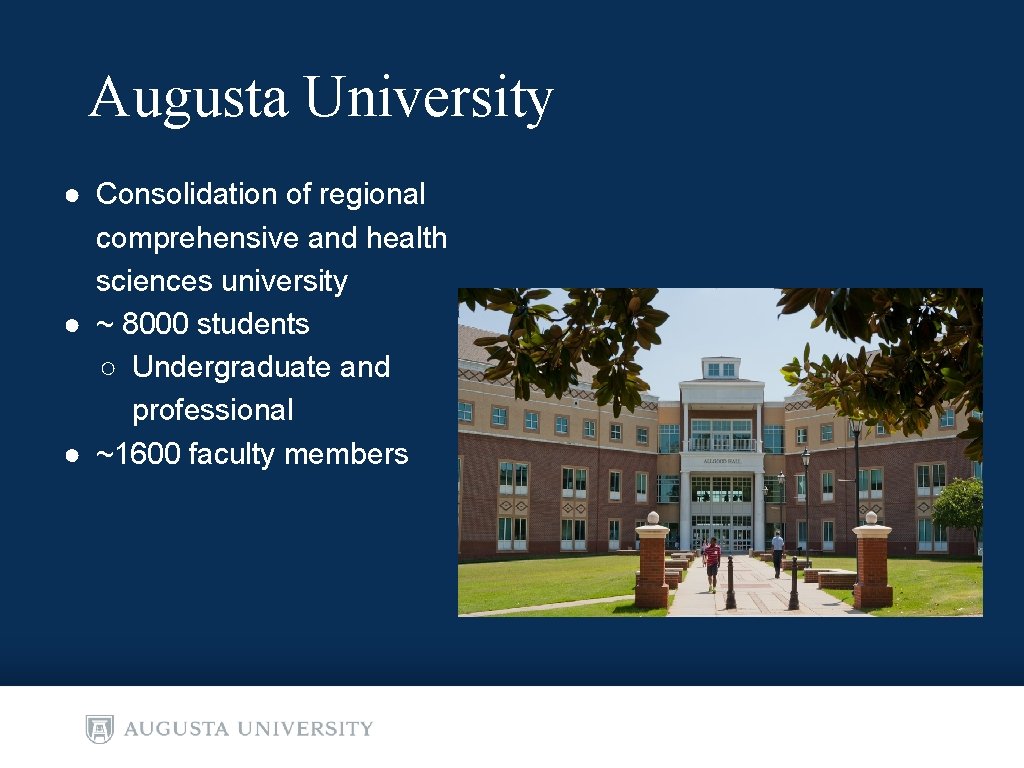
Augusta University ● Consolidation of regional comprehensive and health sciences university ● ~ 8000 students ○ Undergraduate and professional ● ~1600 faculty members
OFDTE Office of Faculty Development and Teaching Excellence Mission. . . to provide, support, and communicate opportunities for professional development for faculty as educators, as scholars, and as administrators; to recognize and reward accomplishments and achievements; to enhance collegiality, collaboration, and a sense of community among all Augusta University faculty.
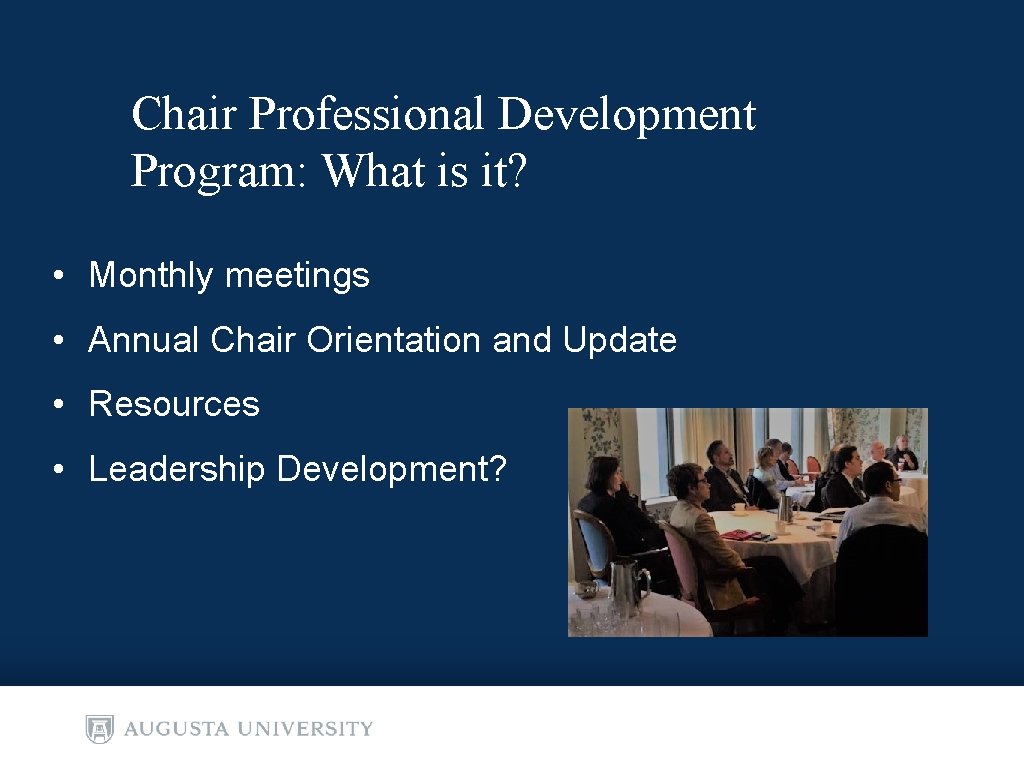
Chair Professional Development Program: What is it? • Monthly meetings • Annual Chair Orientation and Update • Resources • Leadership Development?
Chair Professional Development: Why? • Request from Provost to Director for Faculty Development • Communication from higher administration to chairs • Opportunity for networking among chairs from different campuses
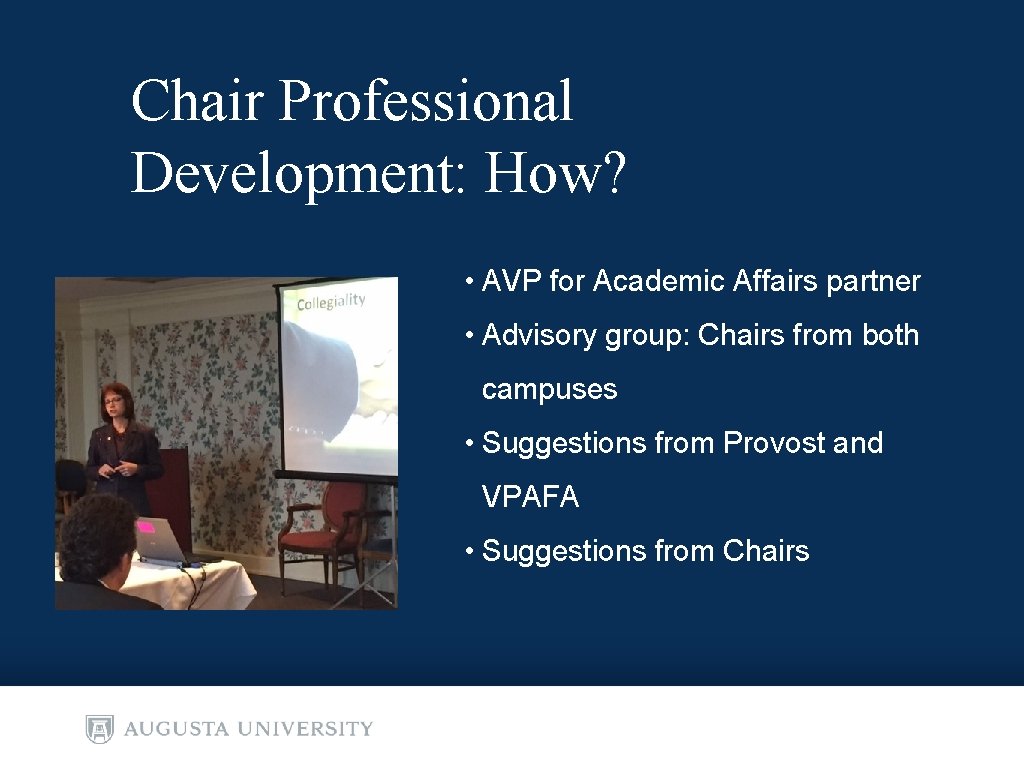
Chair Professional Development: How? • AVP for Academic Affairs partner • Advisory group: Chairs from both campuses • Suggestions from Provost and VPAFA • Suggestions from Chairs
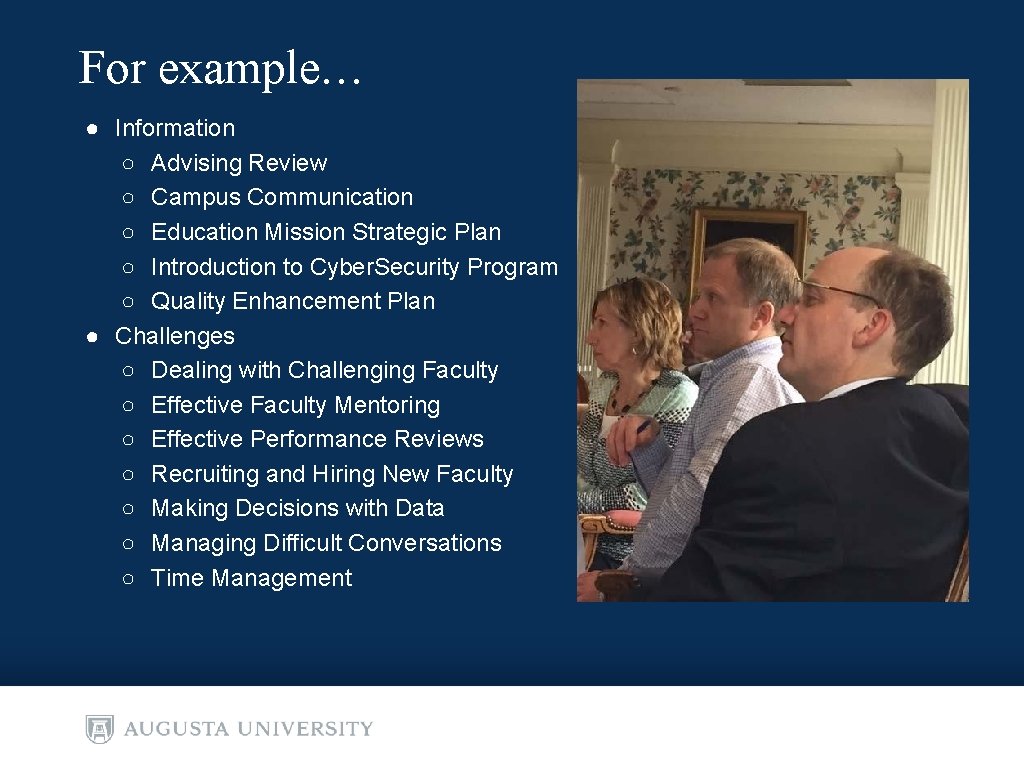
For example. . . ● Information ○ Advising Review ○ Campus Communication ○ Education Mission Strategic Plan ○ Introduction to Cyber. Security Program ○ Quality Enhancement Plan ● Challenges ○ Dealing with Challenging Faculty ○ Effective Faculty Mentoring ○ Effective Performance Reviews ○ Recruiting and Hiring New Faculty ○ Making Decisions with Data ○ Managing Difficult Conversations ○ Time Management
What do chairs want? • We ask frequently… • Preference for interactive sessions
Exercise 1: Diversity of the group Name of your department? Record the range at your table for each of the following: • Number of years as chair • Number of faculty in your department • Number of departments in your college • Number of majors enrolled in your department • Number of different undergraduate/graduate academic programs in your department • Number of support staff members in your department
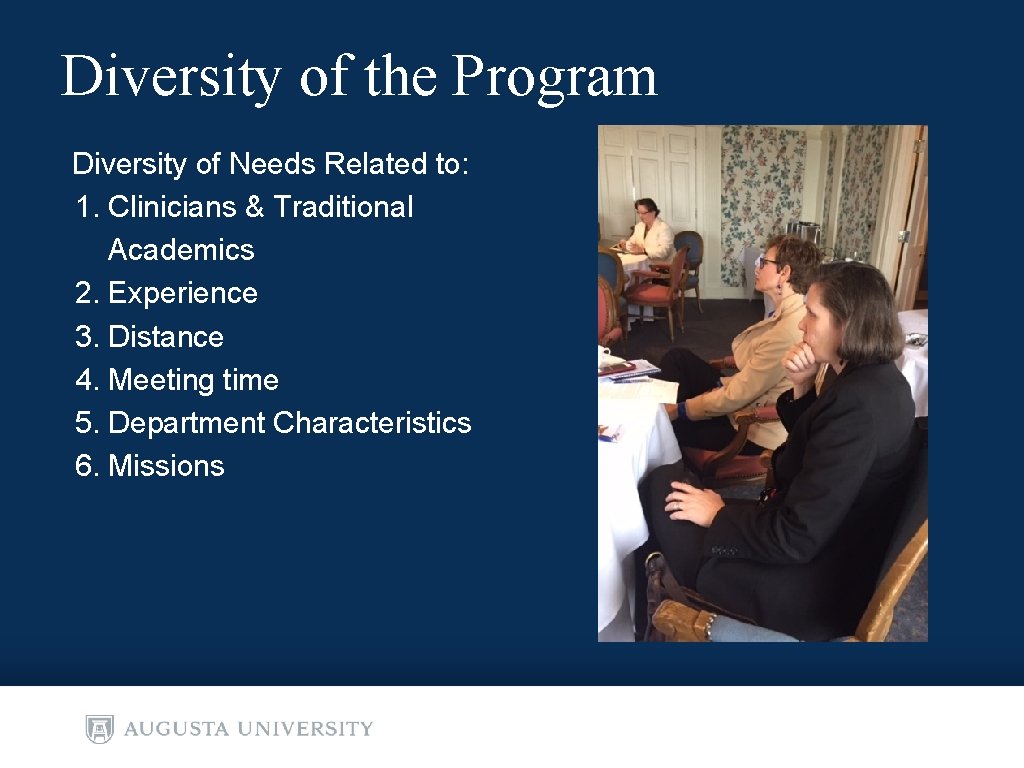
Diversity of the Program Diversity of Needs Related to: 1. Clinicians & Traditional Academics 2. Experience 3. Distance 4. Meeting time 5. Department Characteristics 6. Missions
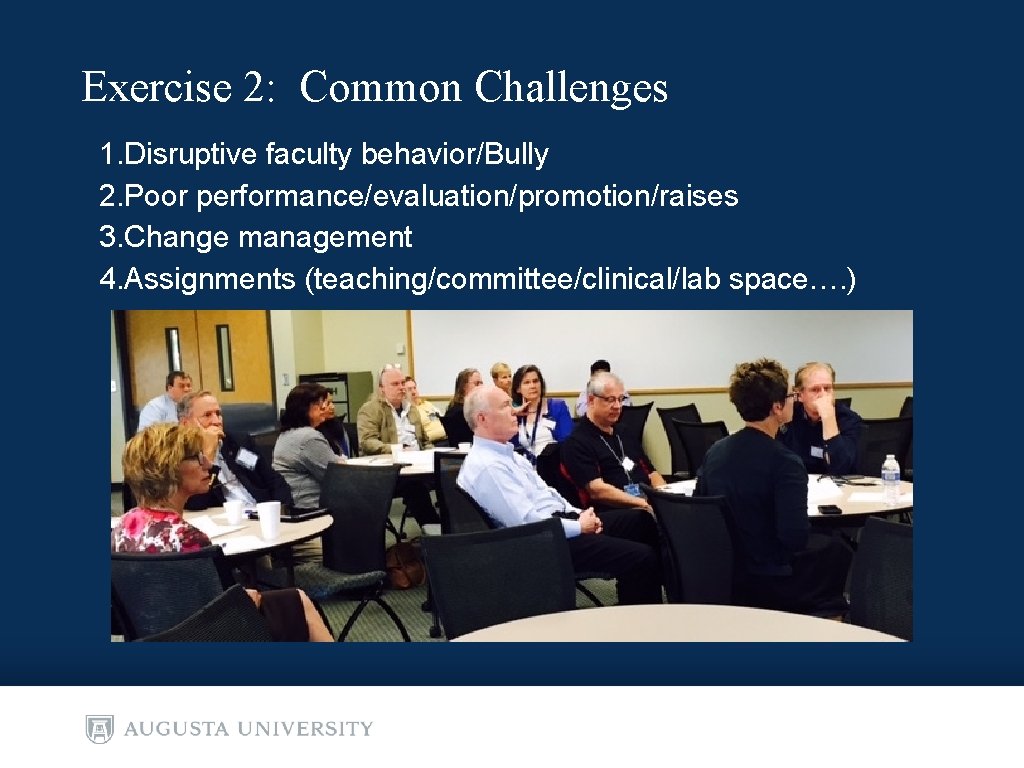
Exercise 2: Common Challenges 1. Disruptive faculty behavior/Bully 2. Poor performance/evaluation/promotion/raises 3. Change management 4. Assignments (teaching/committee/clinical/lab space…. )
Disruptive Faculty Behavior/Bully Dr. Roberts, a senior faculty member in your department, is a bully. She intimidates junior faculty by threatening that if they do not do what she wants, she will not support them for promotion. She has “asked” Dr. Young, a jr faculty member, to (join her research team; use her textbook; teach her course; adopt her pedagogy, etc). Dr. Y has come to you to seek guidance. She has no interest in Dr. R’s ______and she has her own productive program of research or teaching style that is just getting underway.
Poor Performance, Evaluations, Promotion, Raises, etc. You are doing annual evaluations. One of your faculty members has not met the goals from the prior year, has very poor evaluations from the learners and has failed to produce the curriculum for the new program for next year. In addition, they have not completed their time and attendance forms, learner evaluations or attended a faculty meeting since their last evaluation. Their first comment at the evaluation is “I have been here for 5 yrs and have not gotten a raise”. I deserve a 10% raise and I want more resources.
Change Management A new program is about to be launched in your dept. This will result in changes to every faculty member’s schedule, reallocation of faculty offices and changes in the assignments of admin assts. Two trusted advisors have counseled you how to present this to the faculty. One argues “blame the dean”. . create culture of blame. The other says demonstrate your authority “ new sheriff in town”. . . create a culture of fear. The public announcement of these changes goes out on email tomorrow morning at 9 AM from the Dean’s office.
Assignments Teaching, Committee, Clinical, Lab space, etc Brad is a faculty member who has been given an assignment (teach a basic course, sit on a committee, supervise students in clinical, or relocate to a different lab). Although qualified to complete the assignment, he would prefer to (teach an upper level course, not sit on a committee, not go to clinical, not move his lab, etc). His failure to comply will have a ripple effect on other faculty assignments. Others have more seniority and tenure. Brad insists he is being abused by the chair and being assigned in an unfair manner. Two colleagues are defending Brad, b/c he recently taught at a prestigious institution.
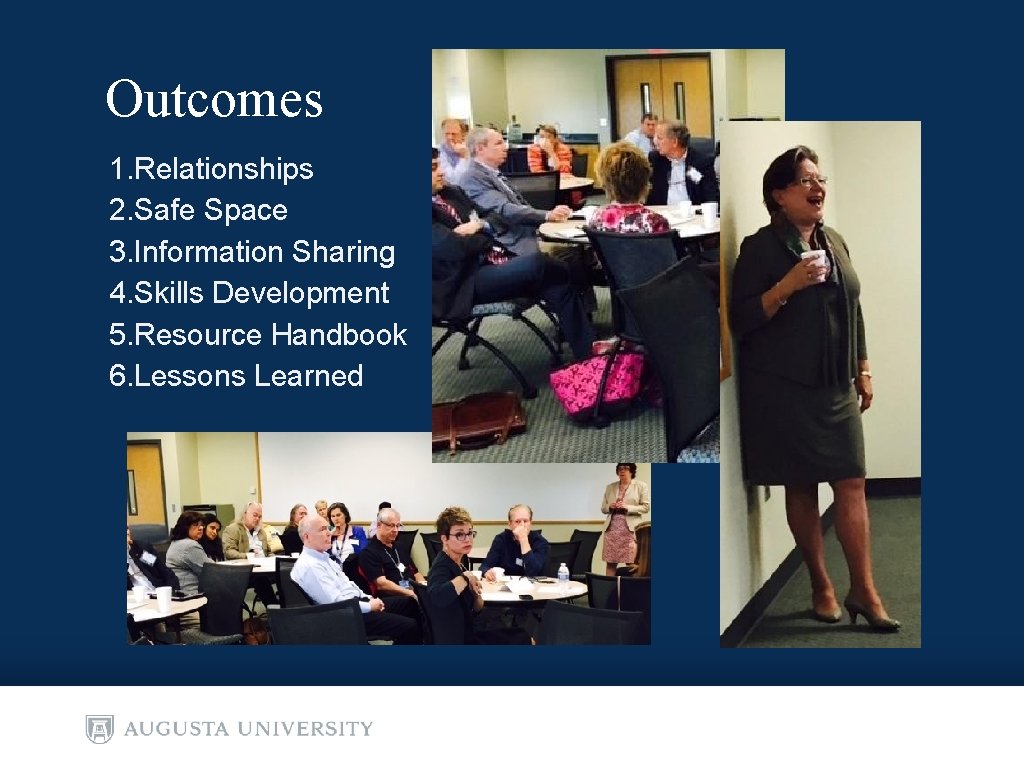
Outcomes 1. Relationships 2. Safe Space 3. Information Sharing 4. Skills Development 5. Resource Handbook 6. Lessons Learned
Would a program like this work at your university?