
Developing an e Portfolio culture from the early
- Slides: 26
Developing an e. Portfolio culture from the early years Primary teacher Elizabeth Hartnell-Young elizabeth. hartnell-young@nottingham. ac. uk Learning Sciences Research Institute
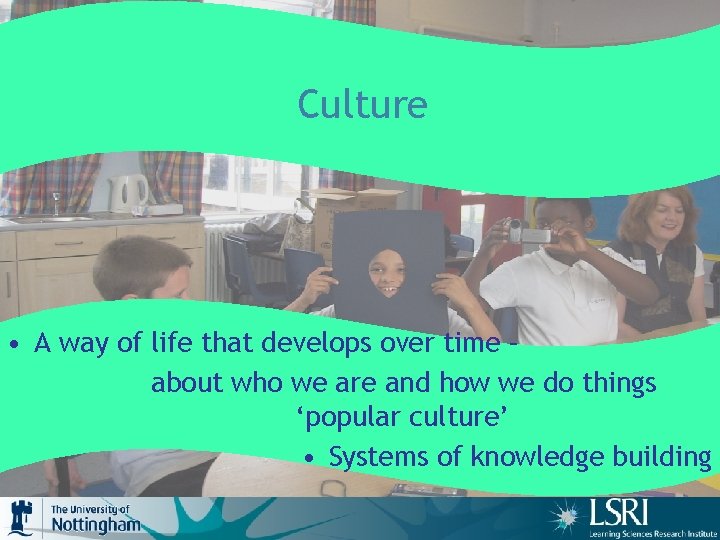
Culture • A way of life that develops over time – about who we are and how we do things ‘popular culture’ • Systems of knowledge building
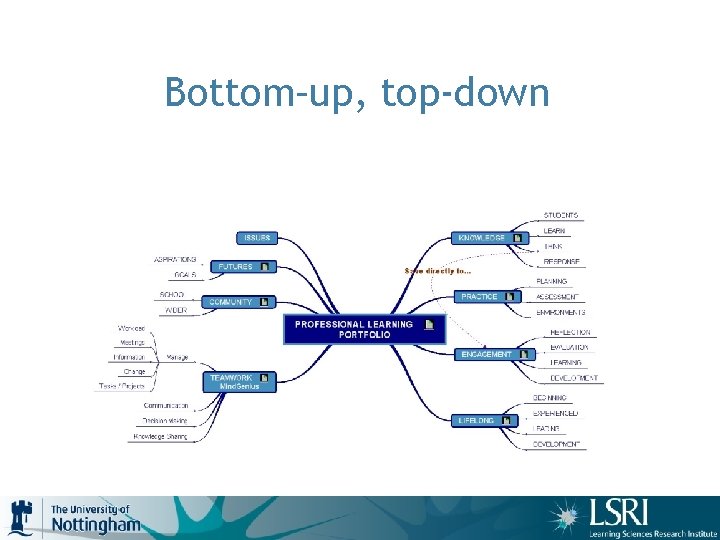
Bottom–up, top-down
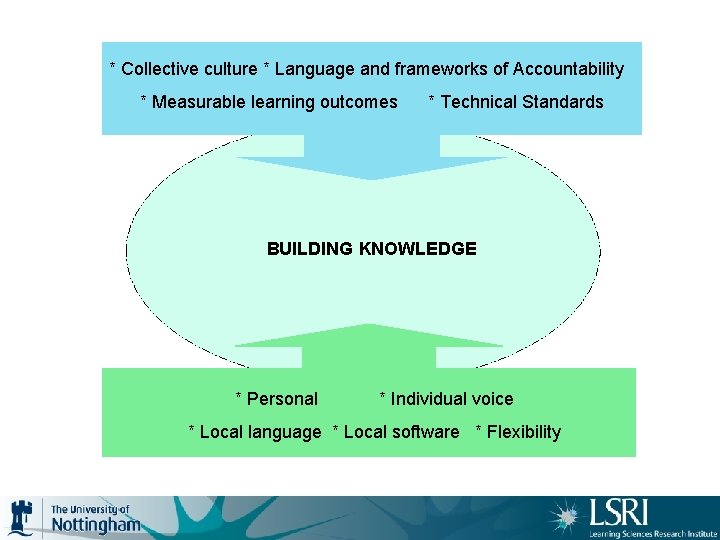
* Collective culture * Language and frameworks of Accountability * Measurable learning outcomes * Technical Standards BUILDING KNOWLEDGE * Personal * Individual voice * Local language * Local software * Flexibility
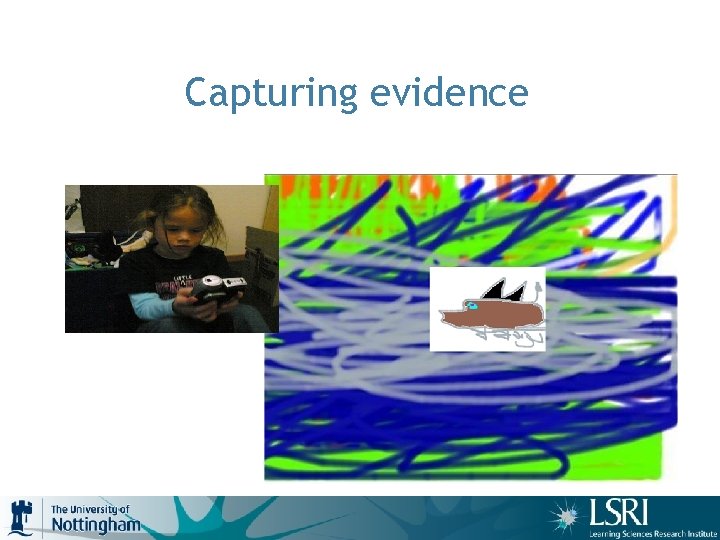
Elements of an e. Portfolio culture • all members have access to a wide range of resources of software and content that assist planning, creativity and skill development, • all members are able to capture evidence of processes and outcomes ‘as they happen’, • teachers scaffold and value reflection in many forms, • learners monitor their own learning,
Elements of an e. Portfolio culture • all members understand of various purposes and audiences for e. Portfolios, • all engage in feedback and collaboration within and beyond institutional boundaries, • teachers and students take account of the potentially sensitive nature of the personal information in e. Portfolios, clarifying security, privacy, copyright and ownership issues from the outset.
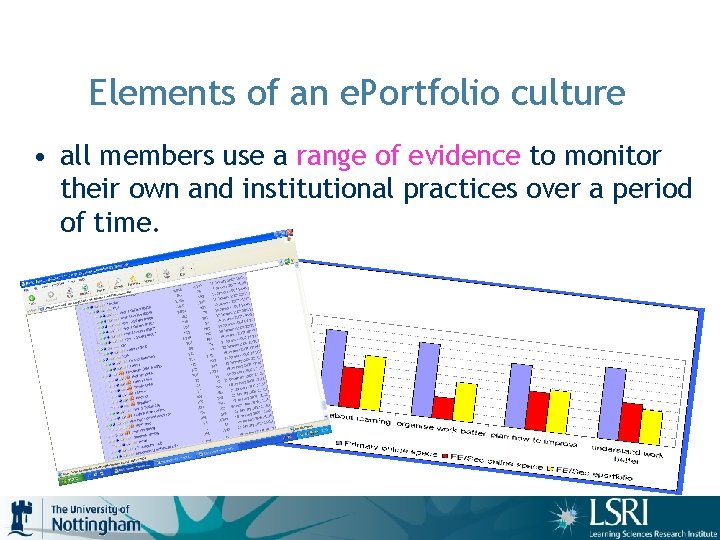
Elements of an e. Portfolio culture • all members use a range of evidence to monitor their own and institutional practices over a period of time.
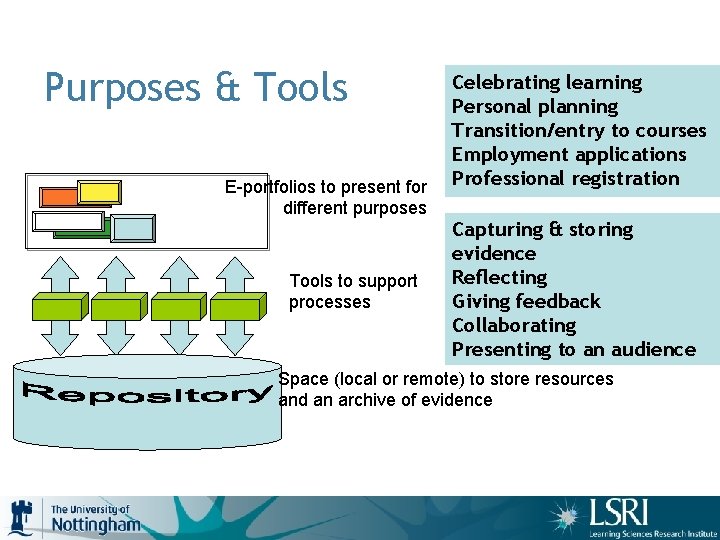
Purposes & Tools E-portfolios to present for different purposes Tools to support processes Celebrating learning Personal planning Transition/entry to courses Employment applications Professional registration Capturing & storing evidence Reflecting Giving feedback Collaborating Presenting to an audience Space (local or remote) to store resources and an archive of evidence
Capturing evidence
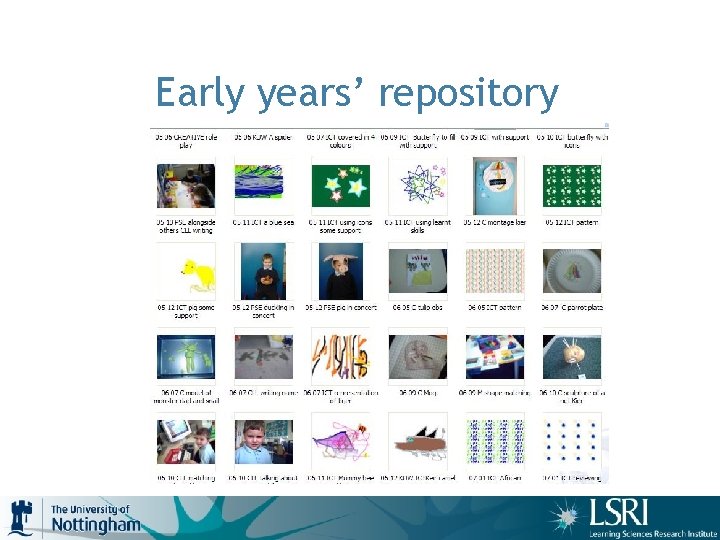
Early years’ repository
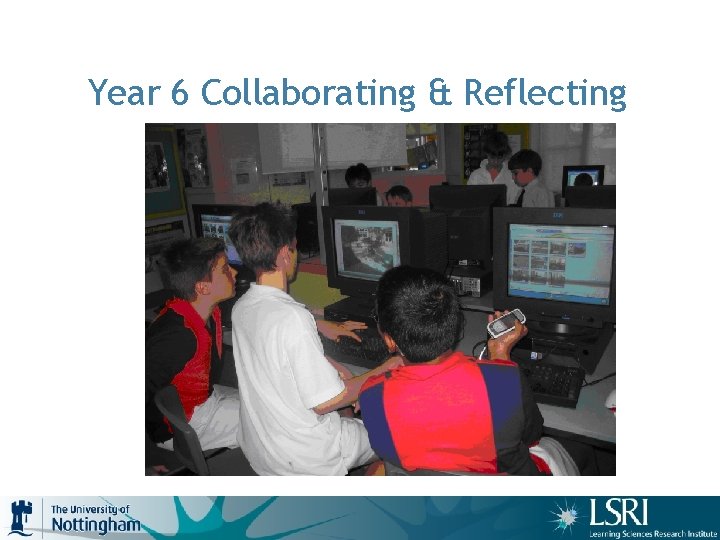
Year 6 Collaborating & Reflecting
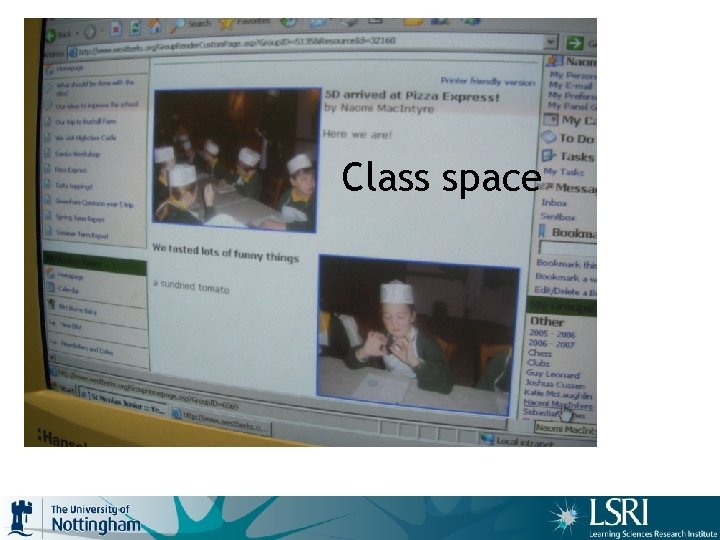
Class space
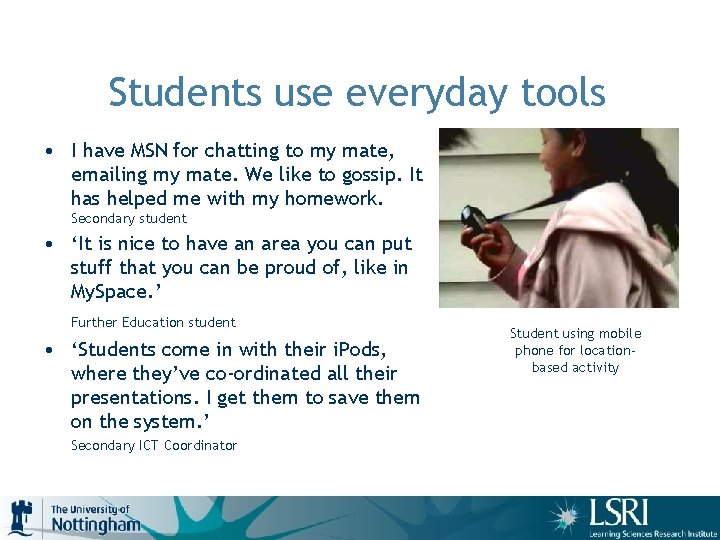
Students use everyday tools • I have MSN for chatting to my mate, emailing my mate. We like to gossip. It has helped me with my homework. Secondary student • ‘It is nice to have an area you can put stuff that you can be proud of, like in My. Space. ’ Further Education student • ‘Students come in with their i. Pods, where they’ve co-ordinated all their presentations. I get them to save them on the system. ’ Secondary ICT Coordinator Student using mobile phone for locationbased activity
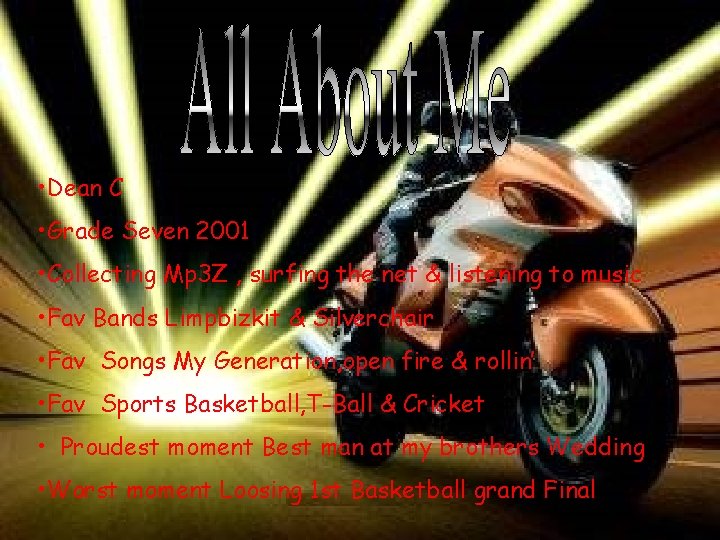
• Dean C • Grade Seven 2001 • Collecting Mp 3 Z , surfing the net & listening to music • Fav Bands Limpbizkit & Silverchair • Fav Songs My Generation, open fire & rollin’ • Fav Sports Basketball, T-Ball & Cricket • Proudest moment Best man at my brothers Wedding • Worst moment Loosing 1 st Basketball grand Final
Teachers create e. Portfolios • ‘I thought it would be a good way to a keep a portfolio of evidence of work on the website. So here is my portfolio. If OFSTED comes in and asks me about where is my evidence of work it’s on here. And then I can get rid of those myriad bits of paper that we collect. ’
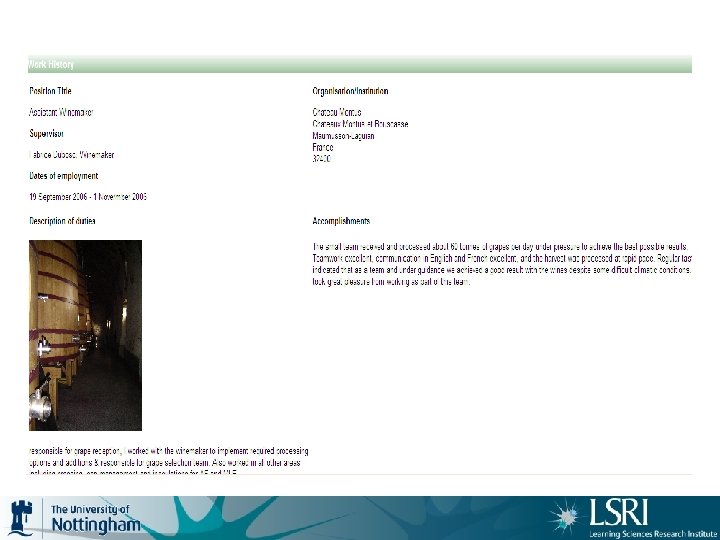
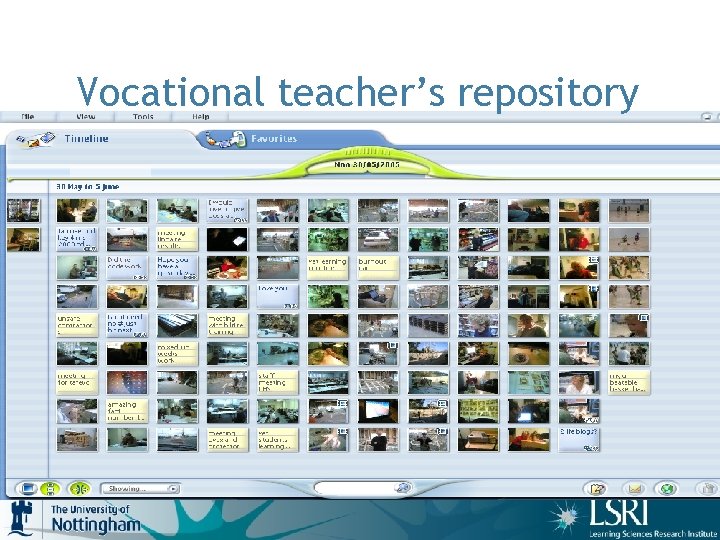
Vocational teacher’s repository
Assessment for learning • a way of ‘valuing things around here’. Making judgements about what is communicated through e. Portfolios at different points on the lifelong learning journey. • ‘It has to reflect the curriculum, otherwise there’s no point, it’s just an extra. And if it’s seen as an extra it’s not going to be used. ’ Teacher • Next, we need to use the knowledge to influence curriculum change about what is valued.
The audience’s task • How to interpret? Making sense of the outcomes of whatever observations or measurements or impressions we gather, explaining, appreciating and attaching meaning to the raw ‘events’ of assessment. • How to respond? Finding appropriate ways of expressing our response to whatever has been assessed and of communicating it to the person concerned and others (Rowntree, 1977, p 81)
You are the audience • How to interpret? • How to respond? • What first impressions do you gain about the author from an artefact? • What comments do you have on the form of the eportfolio? • What learning does the content display? • What problems are there in communicating learning in this way?
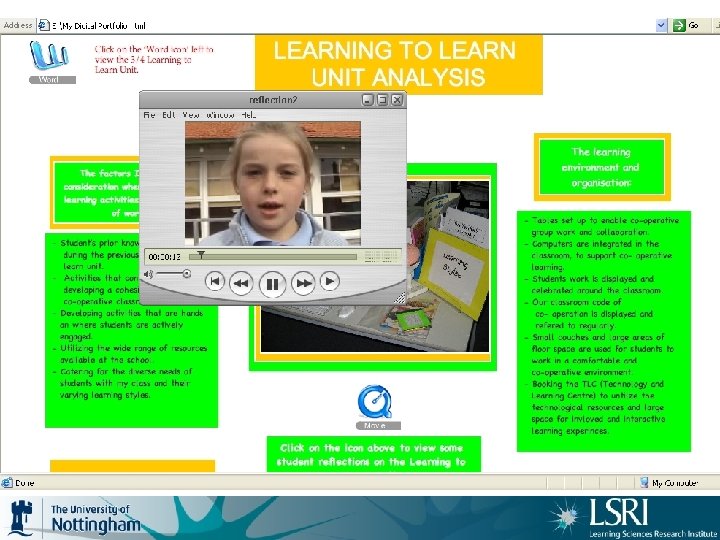
e. Portfolio artefacts • Movies of students – ABC on mobile phone – Early years 1 – Early years 2 – Young game designers • Reflective E-journals of university students – PPT – movie
samples • Web format – Beginning teacher’s e. Portfolio – University students’ e. Portfolios • Movie format – Secondary student’s e. Portfolio
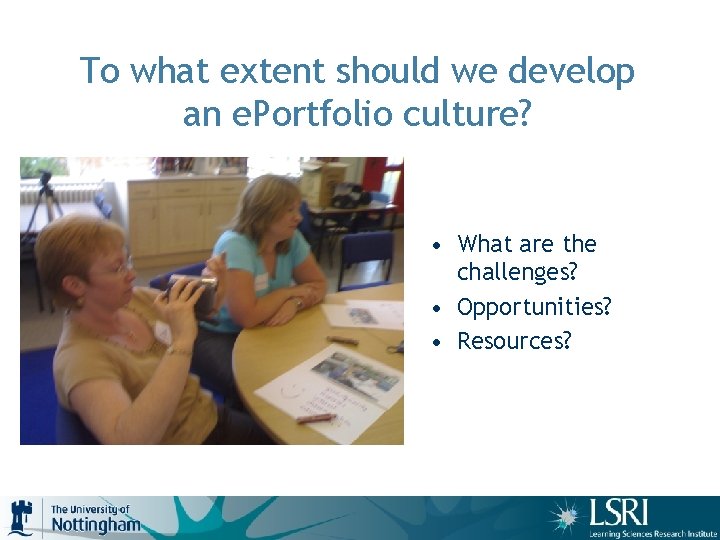
To what extent should we develop an e. Portfolio culture? • What are the challenges? • Opportunities? • Resources?
Acknowledgements • LSRI e. Portfolio research team • Peta Wyeth, LSRI; Chris Evans, University of Technology Sydney; Adrian Hall, Steljes • Students of University of Technology, Sydney; Carr Hill Primary School, Notts; Debney Park Secondary School, Victoria; West Berkshire schools; Kormilda College, NT, Australia • Becta
References • Becta report (forthcoming). Impact of e-portfolios on learning. • Green, H, . & Hannon, C. (2007). Their space: education for a digital generation. London: DEMOS. http: //www. demos. co. uk/publications/theirspace • Hartnell-Young, E. (Ed. ) (2007). e. Portfolio Australia: Imagining new literacies. Melbourne: e. Portfolio Australia. • Hartnell-Young, E. , & Morriss, M. (2007). Digital Portfolios: Powerful Tools for Professional Growth and Reflection. Thousand Oaks: Corwin. • Hartnell-Young, E. , & Ellis, J. (2006). Bottom up meets Top down: e. Portfolios in Australian schools. e. Portfolio Oxford, October. • Rowntree, D. (1977). Assessing Students: How shall we know them? London, Harper and Row. elizabeth. hartnell-young@nottingham. ac. uk