
Developing a Whole College Approach to Student Support



- Slides: 30
Developing a Whole College Approach to Student Support Robin Mc. Gregor Director of Learning
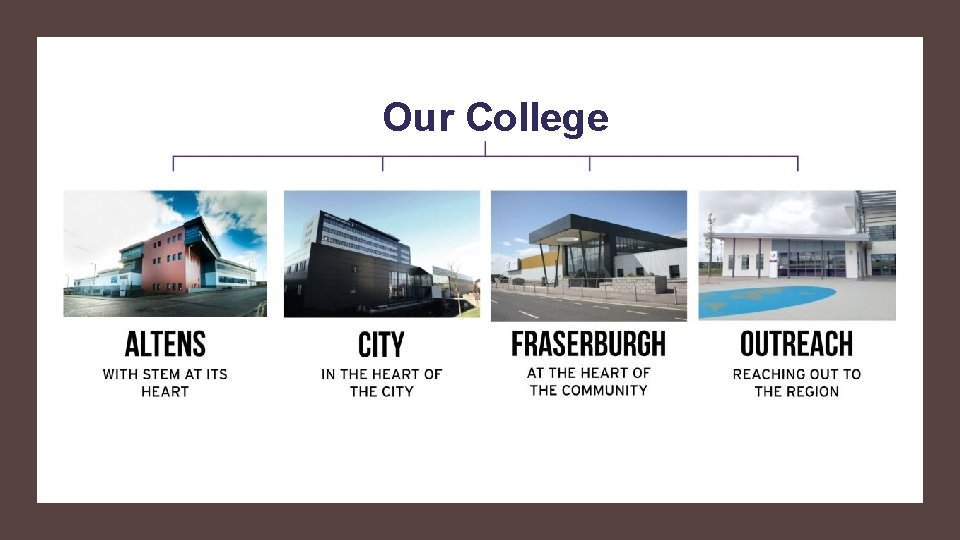
Our College
6500 FULL TIME LEARNERS 350 PERMANENT TEACHING STAFF Key NESCol Facts 350 SUPPORT STAFF TOTAL ACTIVITY TARGET OF 136, 873 CREDITS
A “Whole College” approach to Student Support • Cohesive, collective and collaborative action • in and by the College community • Strategically constructed to improve student learning, behaviour and wellbeing, and • Establish sustainable conditions that support these.
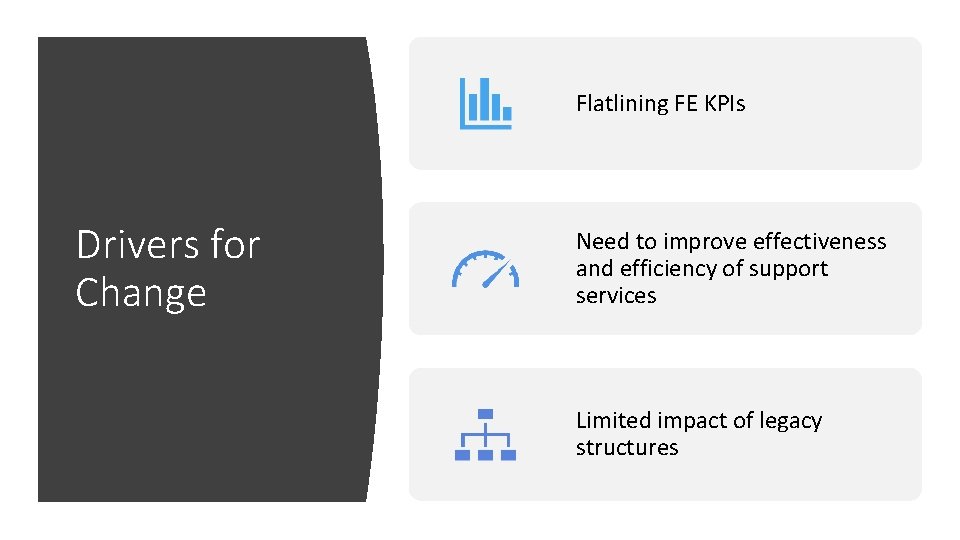
Flatlining FE KPIs Drivers for Change Need to improve effectiveness and efficiency of support services Limited impact of legacy structures
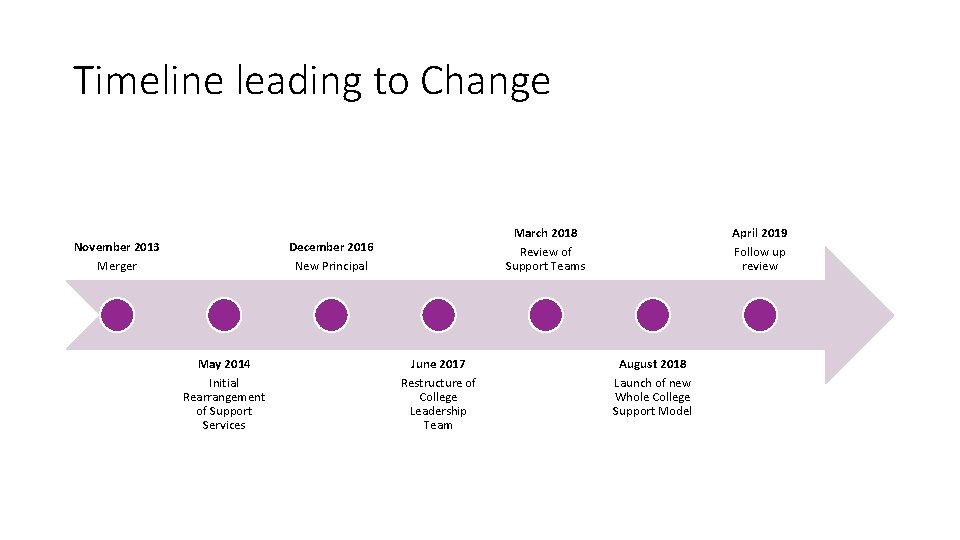
Timeline leading to Change November 2013 Merger March 2018 Review of Support Teams December 2016 New Principal May 2014 Initial Rearrangement of Support Services June 2017 Restructure of College Leadership Team April 2019 Follow up review August 2018 Launch of new Whole College Support Model
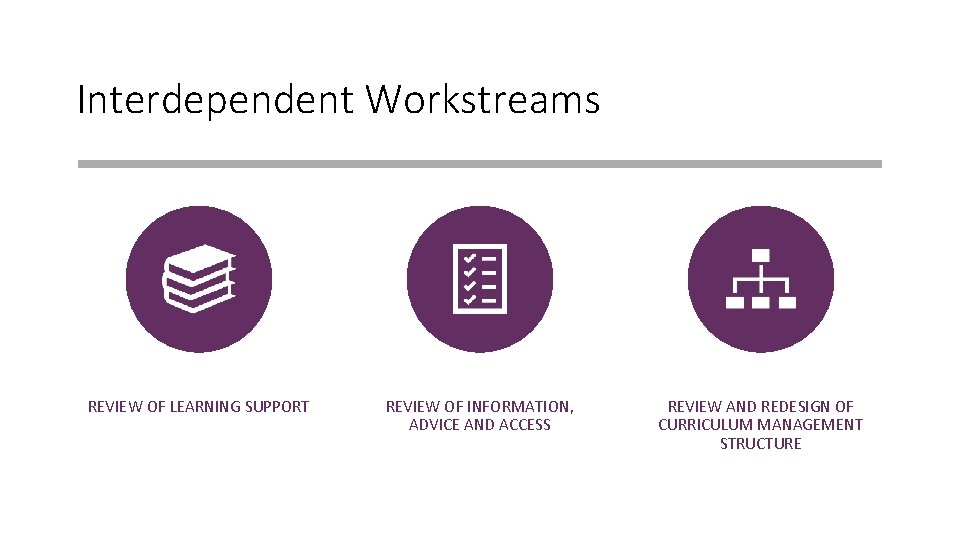
Interdependent Workstreams REVIEW OF LEARNING SUPPORT REVIEW OF INFORMATION, ADVICE AND ACCESS REVIEW AND REDESIGN OF CURRICULUM MANAGEMENT STRUCTURE
• Short-life working groups formed Review Methodology • Facilitated review workshops – KISS, SWOT, PESTLE analysis • Review of team structures, roles, responsibilities procedures and business processes • Focus groups • Desktop review of literature and existing data • An analysis of service-user feedback;
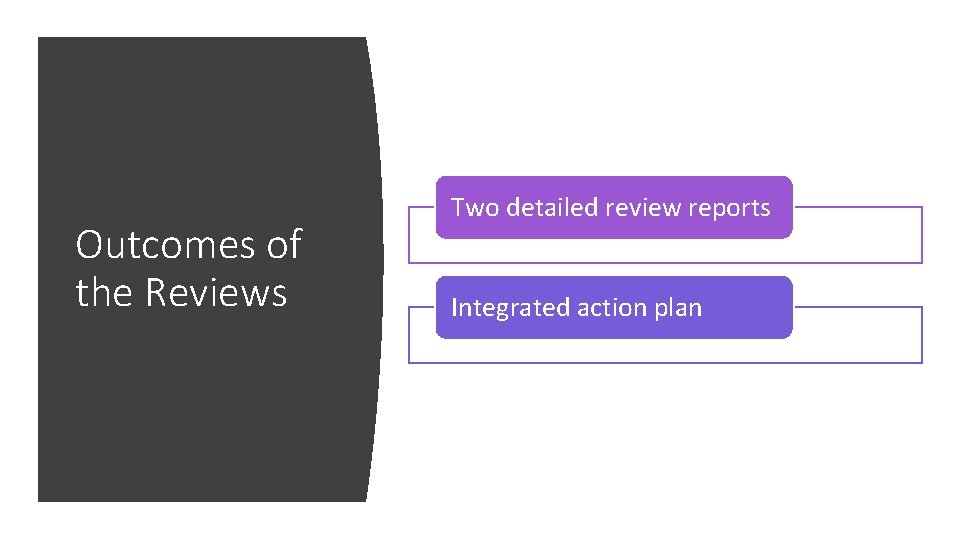
Outcomes of the Reviews Two detailed review reports Integrated action plan
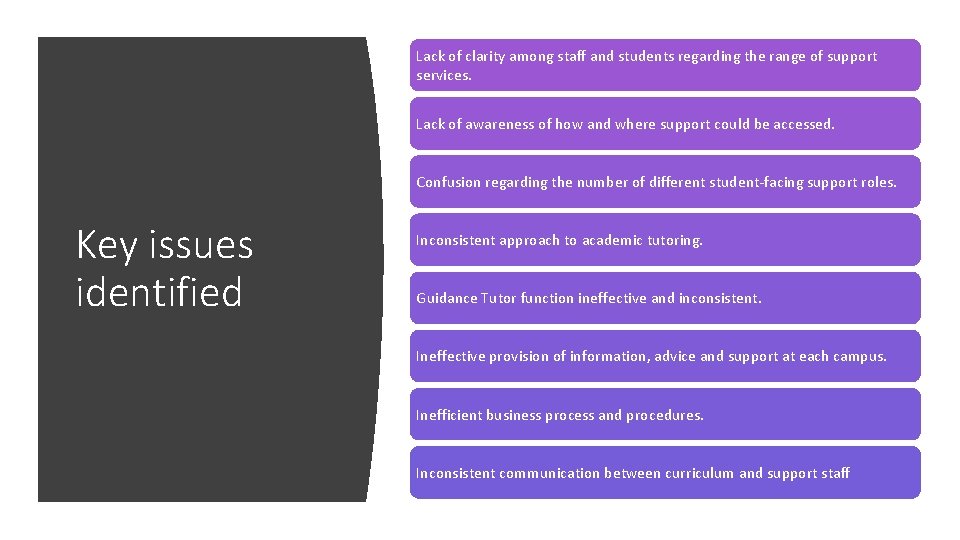
Lack of clarity among staff and students regarding the range of support services. Lack of awareness of how and where support could be accessed. Confusion regarding the number of different student-facing support roles. Key issues identified Inconsistent approach to academic tutoring. Guidance Tutor function ineffective and inconsistent. Ineffective provision of information, advice and support at each campus. Inefficient business process and procedures. Inconsistent communication between curriculum and support staff
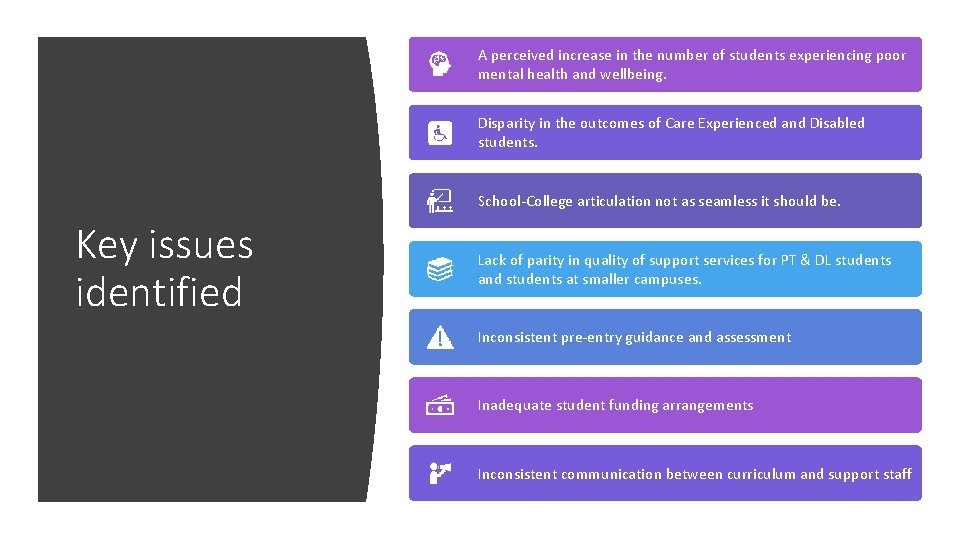
A perceived increase in the number of students experiencing poor mental health and wellbeing. Disparity in the outcomes of Care Experienced and Disabled students. School-College articulation not as seamless it should be. Key issues identified Lack of parity in quality of support services for PT & DL students and students at smaller campuses. Inconsistent pre-entry guidance and assessment Inadequate student funding arrangements Inconsistent communication between curriculum and support staff
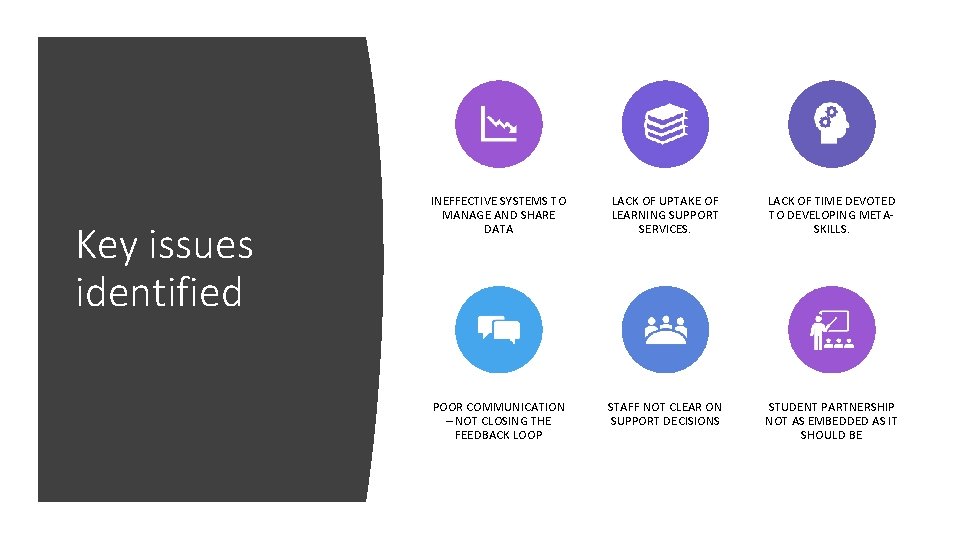
Key issues identified INEFFECTIVE SYSTEMS TO MANAGE AND SHARE DATA LACK OF UPTAKE OF LEARNING SUPPORT SERVICES. LACK OF TIME DEVOTED TO DEVELOPING METASKILLS. POOR COMMUNICATION – NOT CLOSING THE FEEDBACK LOOP STAFF NOT CLEAR ON SUPPORT DECISIONS STUDENT PARTNERSHIP NOT AS EMBEDDED AS IT SHOULD BE
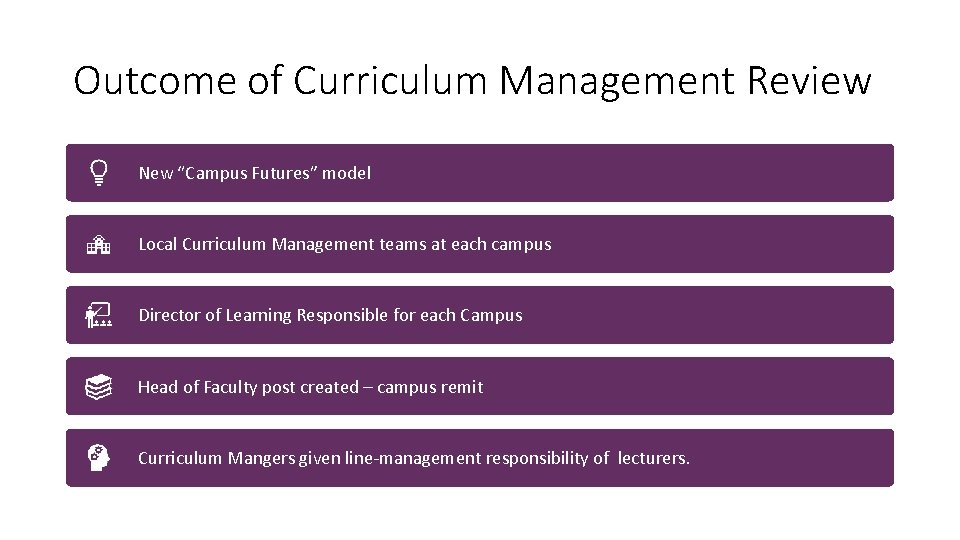
Outcome of Curriculum Management Review New “Campus Futures” model Local Curriculum Management teams at each campus Director of Learning Responsible for each Campus Head of Faculty post created – campus remit Curriculum Mangers given line-management responsibility of lecturers.
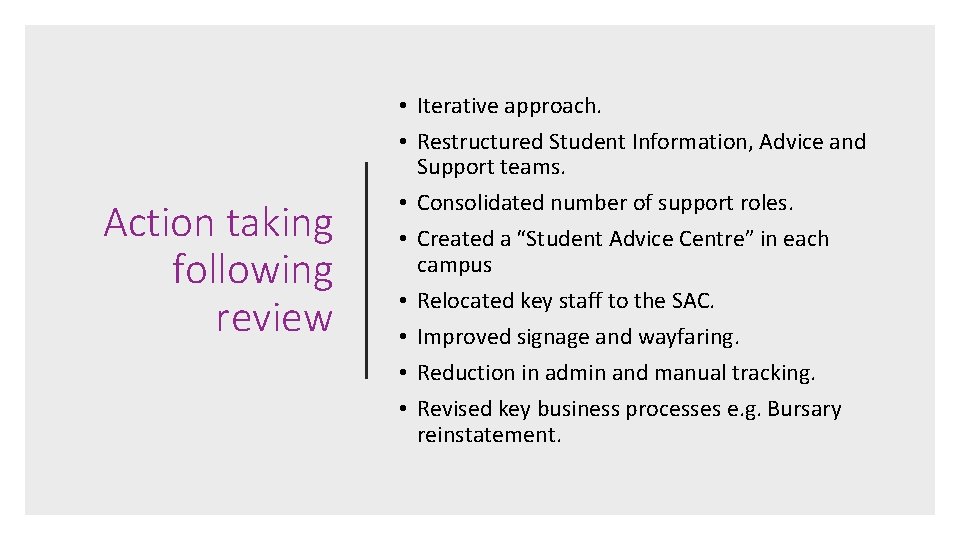
Action taking following review • Iterative approach. • Restructured Student Information, Advice and Support teams. • Consolidated number of support roles. • Created a “Student Advice Centre” in each campus • Relocated key staff to the SAC. • Improved signage and wayfaring. • Reduction in admin and manual tracking. • Revised key business processes e. g. Bursary reinstatement.
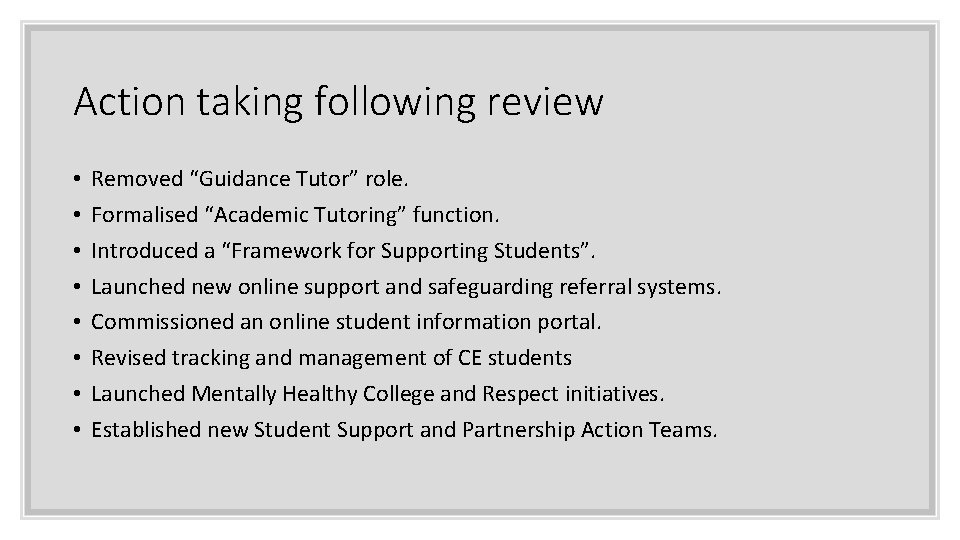
Action taking following review • • Removed “Guidance Tutor” role. Formalised “Academic Tutoring” function. Introduced a “Framework for Supporting Students”. Launched new online support and safeguarding referral systems. Commissioned an online student information portal. Revised tracking and management of CE students Launched Mentally Healthy College and Respect initiatives. Established new Student Support and Partnership Action Teams.
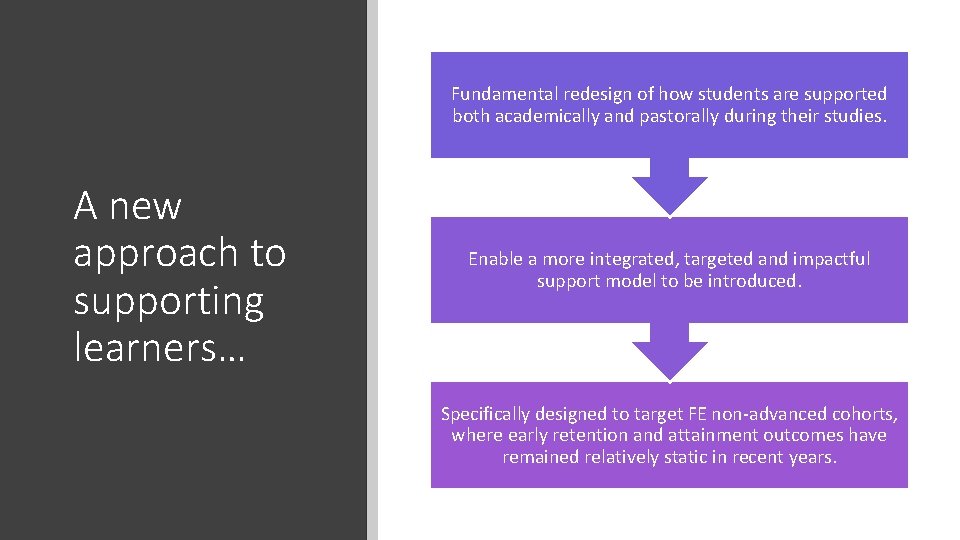
Fundamental redesign of how students are supported both academically and pastorally during their studies. A new approach to supporting learners… Enable a more integrated, targeted and impactful support model to be introduced. Specifically designed to target FE non-advanced cohorts, where early retention and attainment outcomes have remained relatively static in recent years.
The new College-Wide Approach to Student Support comprises: Revised support services: The creation of Student Advice Centre at each campus: A revised approach to Academic Tutoring: A more targeted, risk-based approach to the provision of additional support: • Student Advice and Support Team • Student Admissions and Funding Team • College Administration and Examinations Team • Ensuring parity of experience and support • Local support team and local management of key services • Empowers teaching staff to take greater ownership of initial academic and pastoral support. • Timetabled for all FE non-advanced groups • Less ad-hoc one-to-one learning support • More planned, in-class academic support
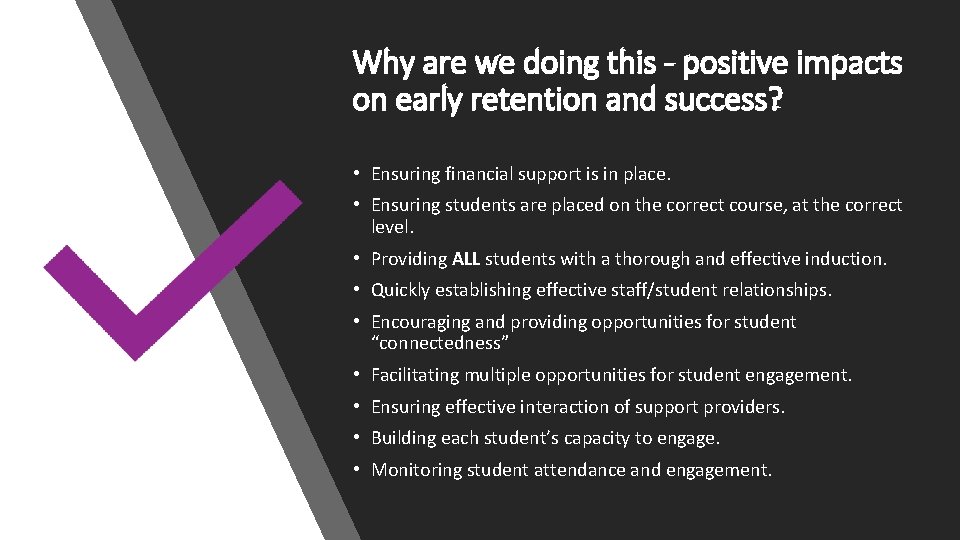
Why are we doing this - positive impacts on early retention and success? • Ensuring financial support is in place. • Ensuring students are placed on the correct course, at the correct level. • Providing ALL students with a thorough and effective induction. • Quickly establishing effective staff/student relationships. • Encouraging and providing opportunities for student “connectedness” • Facilitating multiple opportunities for student engagement. • Ensuring effective interaction of support providers. • Building each student’s capacity to engage. • Monitoring student attendance and engagement.
Academic Tutoring • Teaching staff are in a powerful position to impact positively on student attendance, engagement and attainment. • The key Lecturer responsibilities relating to the provision of guidance and support are outlined in the professional Standards for Lecturers in Scotland’s College (2006) and in the recent update. • All College staff have a “Corporate Parenting” responsibility to ensure that the wellbeing of Care Experienced students is attended to so that they have the same chance to succeed as others.
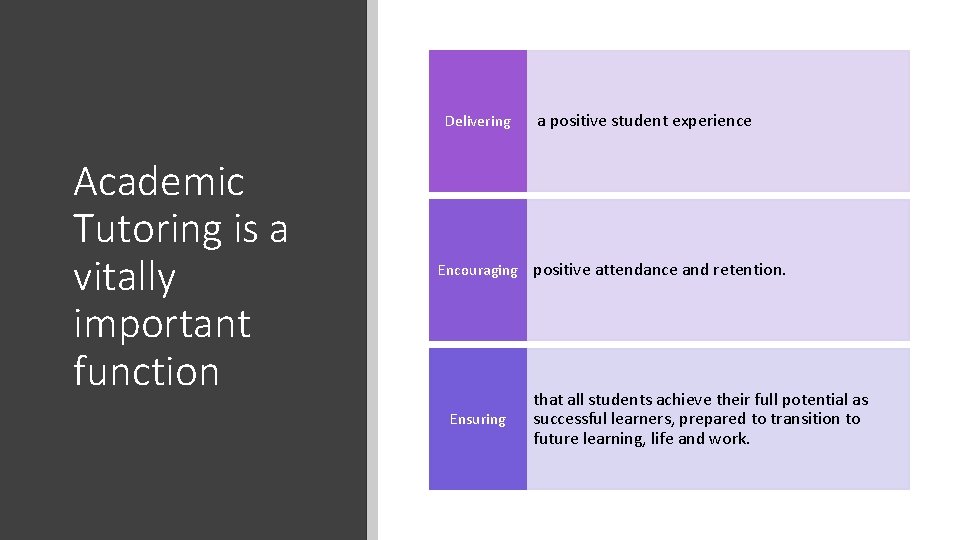
Delivering Academic Tutoring is a vitally important function a positive student experience Encouraging positive attendance and retention. Ensuring that all students achieve their full potential as successful learners, prepared to transition to future learning, life and work.
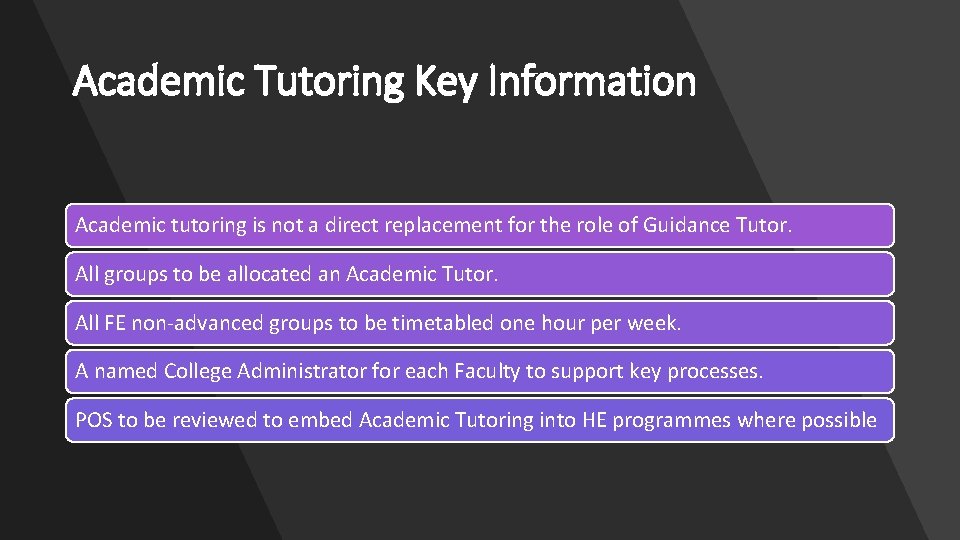
Academic Tutoring Key Information Academic tutoring is not a direct replacement for the role of Guidance Tutor. All groups to be allocated an Academic Tutor. All FE non-advanced groups to be timetabled one hour per week. A named College Administrator for each Faculty to support key processes. POS to be reviewed to embed Academic Tutoring into HE programmes where possible
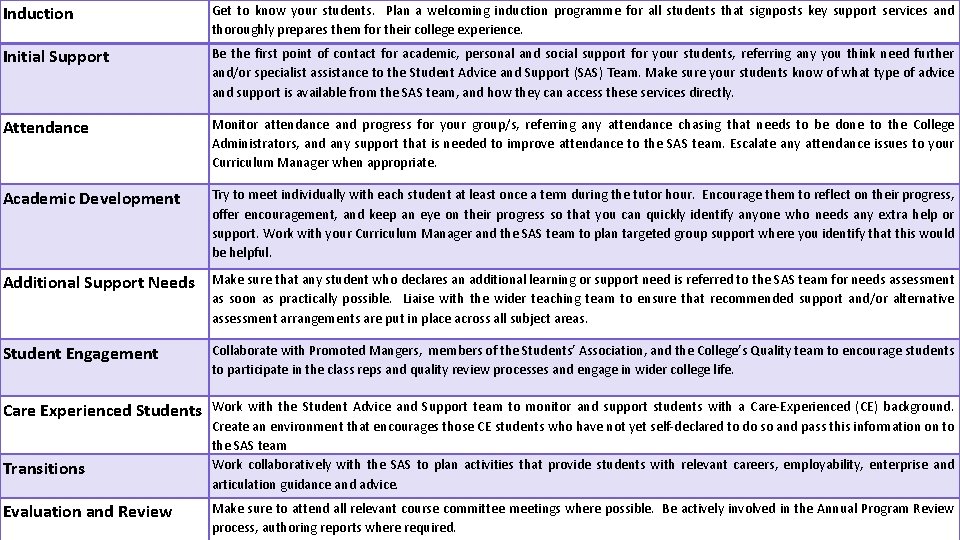
Induction Get to know your students. Plan a welcoming induction programme for all students that signposts key support services and thoroughly prepares them for their college experience. Initial Support Be the first point of contact for academic, personal and social support for your students, referring any you think need further and/or specialist assistance to the Student Advice and Support (SAS) Team. Make sure your students know of what type of advice and support is available from the SAS team, and how they can access these services directly. Attendance Monitor attendance and progress for your group/s, referring any attendance chasing that needs to be done to the College Administrators, and any support that is needed to improve attendance to the SAS team. Escalate any attendance issues to your Curriculum Manager when appropriate. Academic Development Try to meet individually with each student at least once a term during the tutor hour. Encourage them to reflect on their progress, offer encouragement, and keep an eye on their progress so that you can quickly identify anyone who needs any extra help or support. Work with your Curriculum Manager and the SAS team to plan targeted group support where you identify that this would be helpful. Additional Support Needs Make sure that any student who declares an additional learning or support need is referred to the SAS team for needs assessment as soon as practically possible. Liaise with the wider teaching team to ensure that recommended support and/or alternative assessment arrangements are put in place across all subject areas. Student Engagement Collaborate with Promoted Mangers, members of the Students’ Association, and the College’s Quality team to encourage students to participate in the class reps and quality review processes and engage in wider college life. Care Experienced Students Work with the Student Advice and Support team to monitor and support students with a Care-Experienced (CE) background. Create an environment that encourages those CE students who have not yet self-declared to do so and pass this information on to the SAS team Work collaboratively with the SAS to plan activities that provide students with relevant careers, employability, enterprise and articulation guidance and advice. Transitions Evaluation and Review Make sure to attend all relevant course committee meetings where possible. Be actively involved in the Annual Program Review process, authoring reports where required.
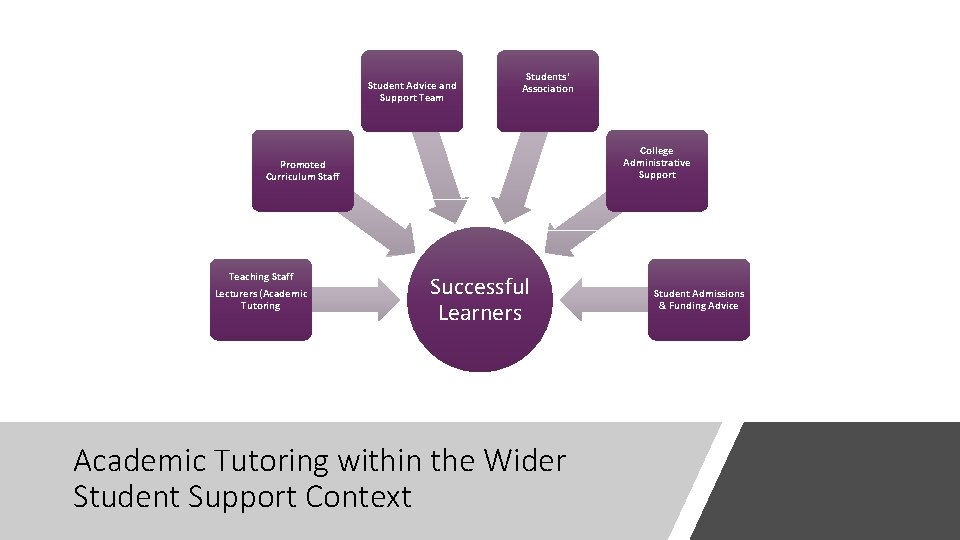
Student Advice and Support Team Students' Association College Administrative Support Promoted Curriculum Staff Teaching Staff Lecturers (Academic Tutoring Successful Learners Academic Tutoring within the Wider Student Support Context Student Admissions & Funding Advice
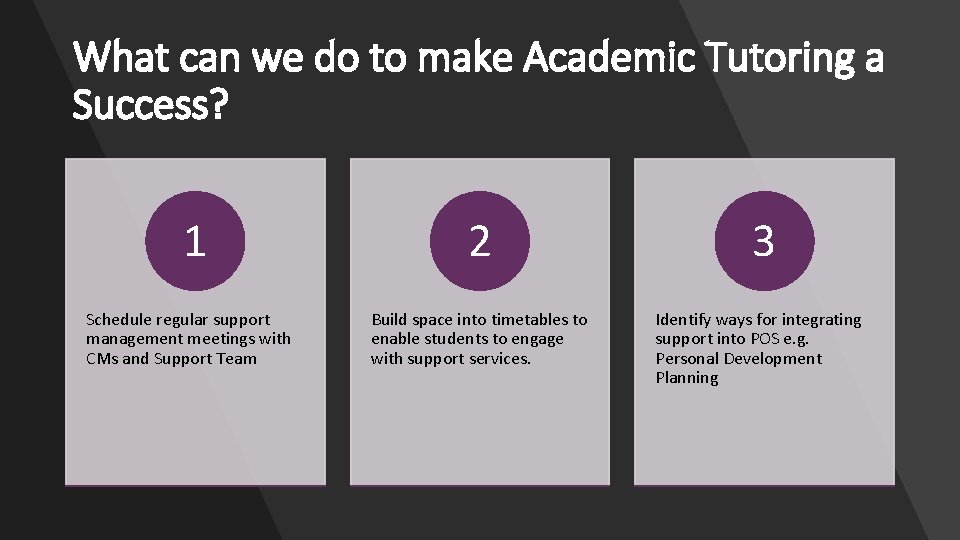
What can we do to make Academic Tutoring a Success? 1 Schedule regular support management meetings with CMs and Support Team 2 Build space into timetables to enable students to engage with support services. 3 Identify ways for integrating support into POS e. g. Personal Development Planning
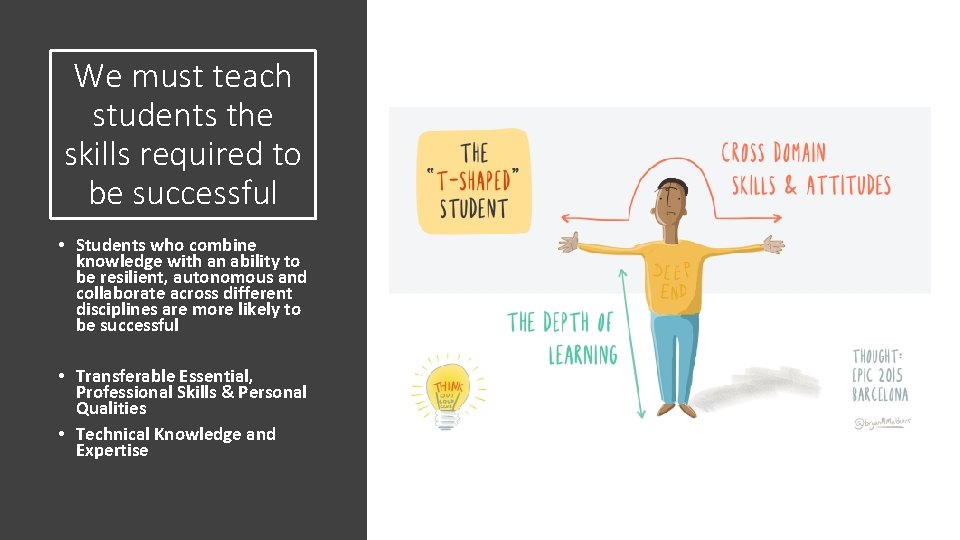
We must teach students the skills required to be successful • Students who combine knowledge with an ability to be resilient, autonomous and collaborate across different disciplines are more likely to be successful • Transferable Essential, Professional Skills & Personal Qualities • Technical Knowledge and Expertise
Impact of new “Whole-College” approach It’s a bit early to tell… Early retention…remained static at 7%. Student satisfaction remains very high (93%). Vast majority of students are happy with the support and guidance that they receive (93%). • New online referral systems highly effective. • •
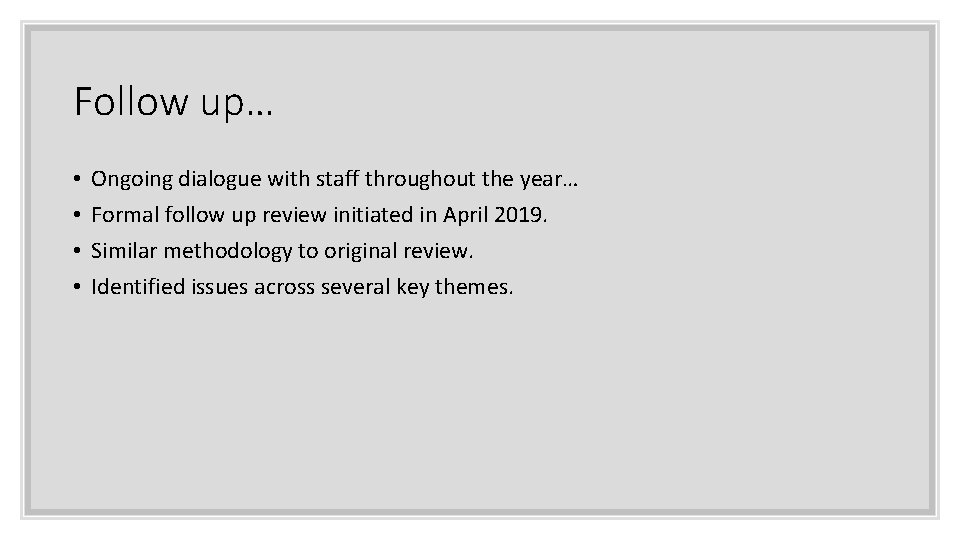
Follow up… • • Ongoing dialogue with staff throughout the year… Formal follow up review initiated in April 2019. Similar methodology to original review. Identified issues across several key themes.
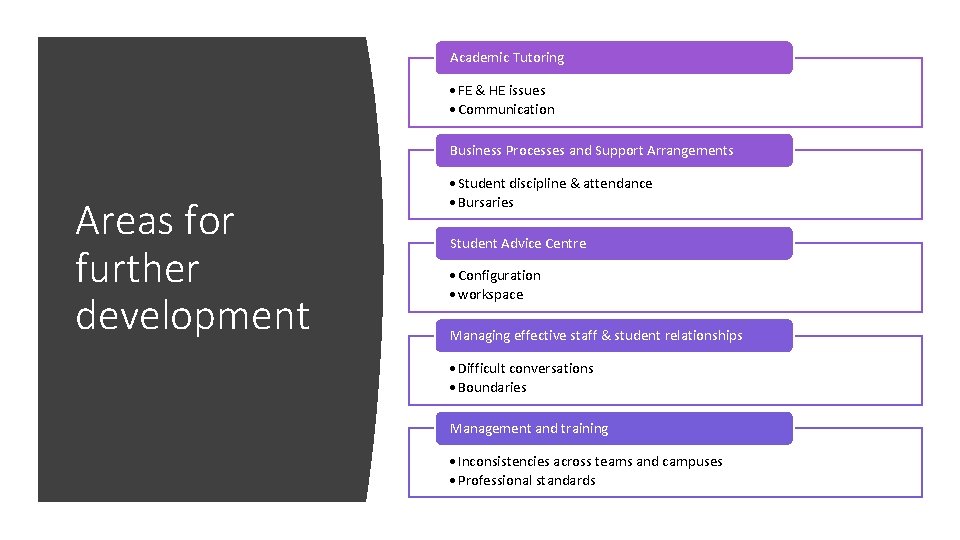
Academic Tutoring • FE & HE issues • Communication Business Processes and Support Arrangements Areas for further development • Student discipline & attendance • Bursaries Student Advice Centre • Configuration • workspace Managing effective staff & student relationships • Difficult conversations • Boundaries Management and training • Inconsistencies across teams and campuses • Professional standards
Any Questions?