
Developing a Strategic Plan for Statewide Implementation Sustainability
Developing a Strategic Plan for Statewide Implementation, Sustainability, and Capacity Building for PBIS Stakeholder Feedback Kimberly Yanek, Ph. D kyanek@midatlanticpbis. org
Workshop Outcomes • Develop a shared understanding of PBIS and provide feedback • Explore possibilities for greater efficiency & effectiveness through alignment and provide feedback • Explore sustainability and scaling up and provide feedback

Getting to Know You…
Nobody loves vanity license plates Develop a Shared This quite like Virginians… Virginia is the birthplace of one bothwas revoked The state’s academic calendar is Understanding streaking and frats. largely determined by amusement parks.
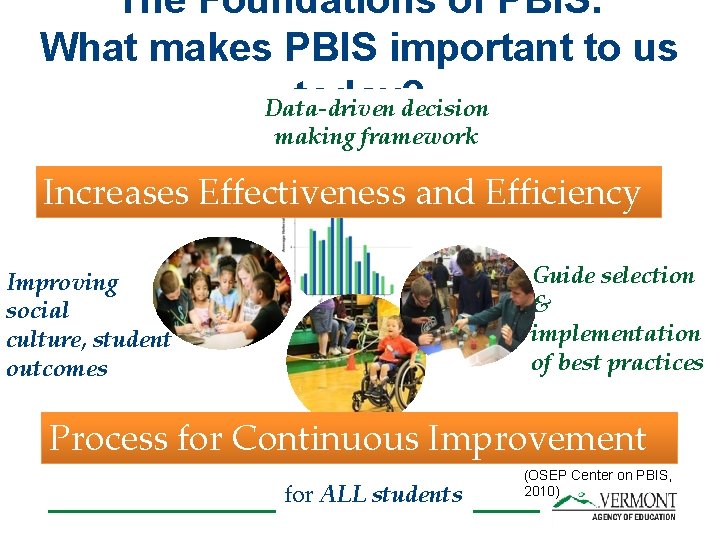
The Foundations of PBIS: What makes PBIS important to us today? Data-driven decision making framework Increases Effectiveness and Efficiency Guide selection & implementation of best practices Improving social culture, student outcomes Process for Continuous Improvement for ALL students (OSEP Center on PBIS, 2010)
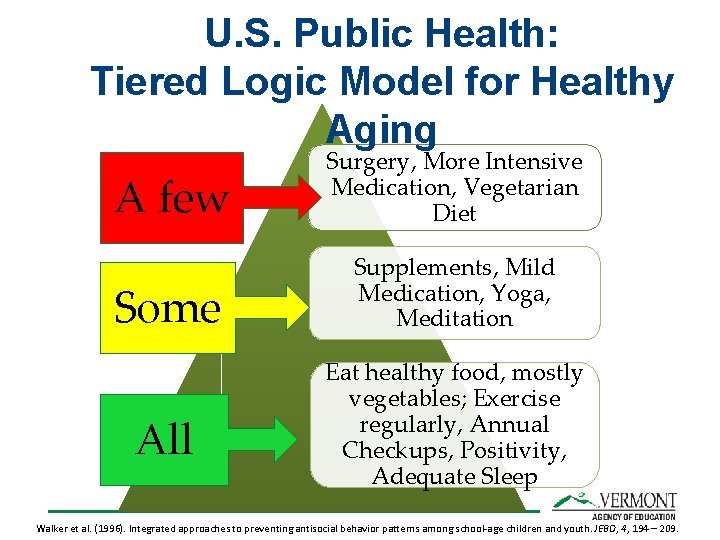
U. S. Public Health: Tiered Logic Model for Healthy Aging A few Surgery, More Intensive Medication, Vegetarian Diet Some Supplements, Mild Medication, Yoga, Meditation All Eat healthy food, mostly vegetables; Exercise regularly, Annual Checkups, Positivity, Adequate Sleep Walker et al. (1996). Integrated approaches to preventing antisocial behavior patterns among school-age children and youth. JEBD, 4, 194 – 209.
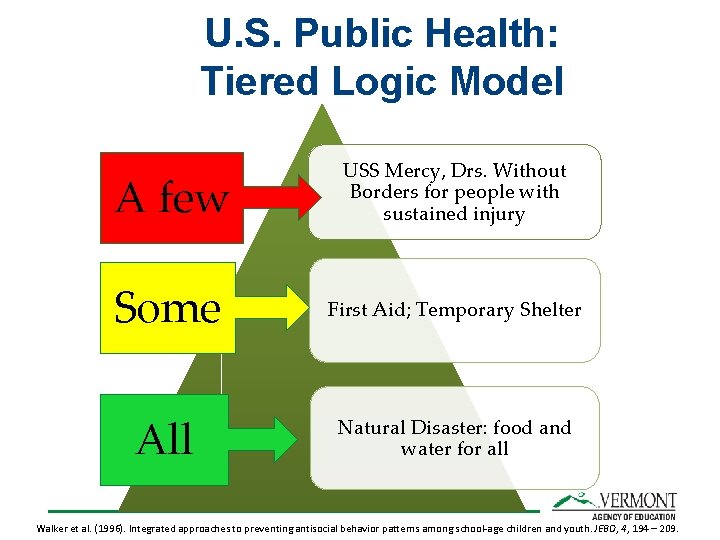
U. S. Public Health: Tiered Logic Model A few USS Mercy, Drs. Without Borders for people with sustained injury Some First Aid; Temporary Shelter All Natural Disaster: food and water for all Walker et al. (1996). Integrated approaches to preventing antisocial behavior patterns among school-age children and youth. JEBD, 4, 194 – 209.
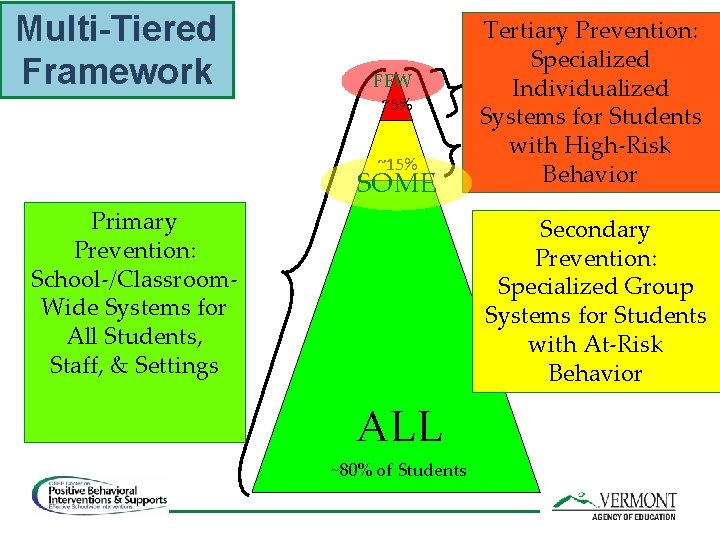
Multi-Tiered Framework FEW ~5% ~15% SOME Primary Prevention: School-/Classroom. Wide Systems for All Students, Staff, & Settings Tertiary Prevention: Specialized Individualized Systems for Students with High-Risk Behavior Secondary Prevention: Specialized Group Systems for Students with At-Risk Behavior ALL ~80% of Students
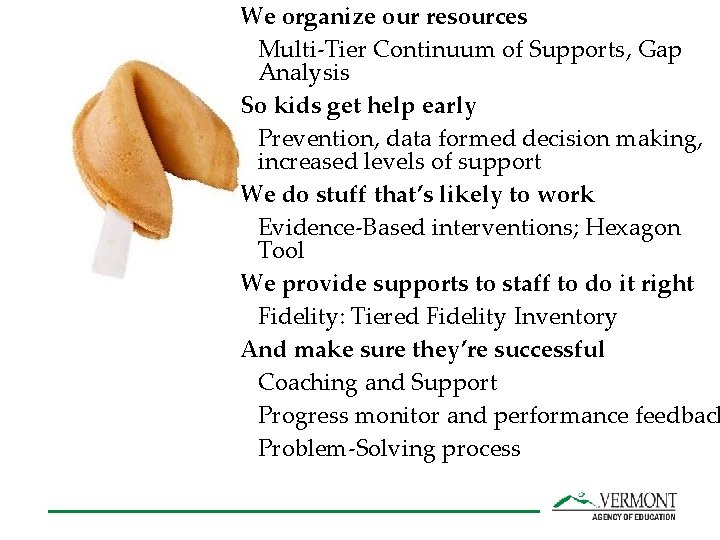
We organize our resources Multi-Tier Continuum of Supports, Gap Analysis So kids get help early Prevention, data formed decision making, increased levels of support We do stuff that’s likely to work Evidence-Based interventions; Hexagon Tool We provide supports to staff to do it right Fidelity: Tiered Fidelity Inventory And make sure they’re successful Coaching and Support Progress monitor and performance feedback Problem-Solving process
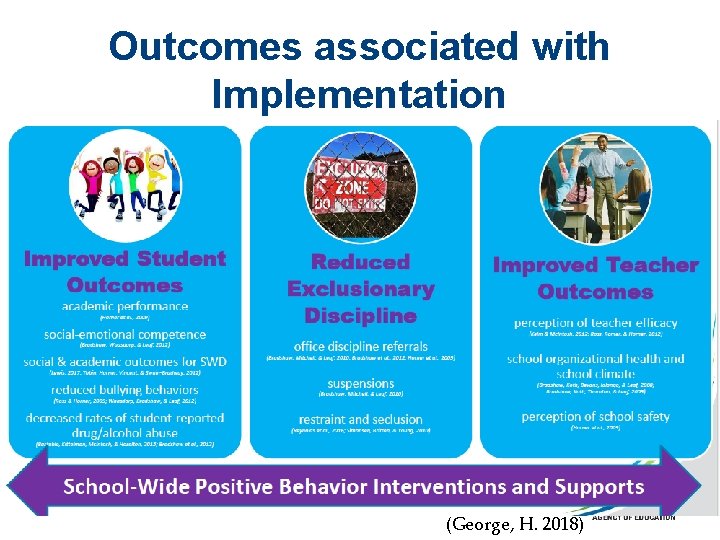
Outcomes associated with Implementation (George, H. 2018)
Reflect & Share Feedback • What is your why for implementing PBIS? • What data points are you hoping to impact through implementation? • What is your perception/understanding of the differences and/or similarities between”MTSS”, “Rt. I”, and “PBIS”? • From your perspective, what are barriers to implementing PBIS at the school level? At the Scholl Union level? State Level?
Explore possibilities for greater efficiency & effectiveness through alignment
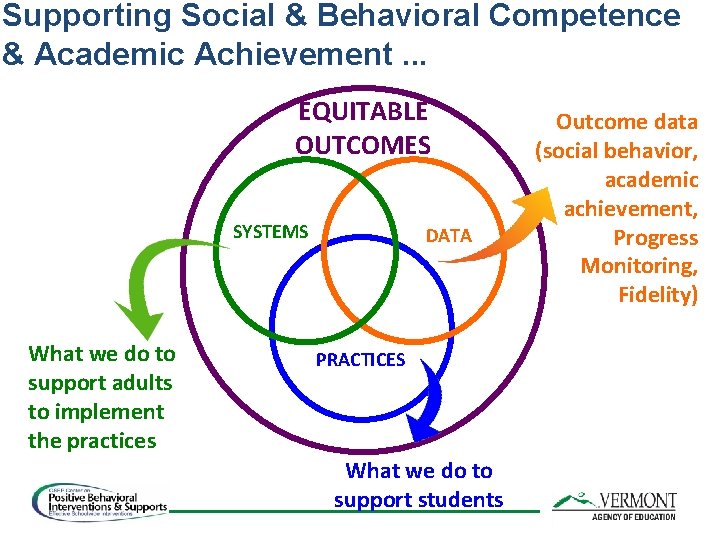
Supporting Social & Behavioral Competence & Academic Achievement. . . EQUITABLE OUTCOMES SYSTEMS What we do to support adults to implement the practices DATA PRACTICES What we do to support students Outcome data (social behavior, academic achievement, Progress Monitoring, Fidelity)
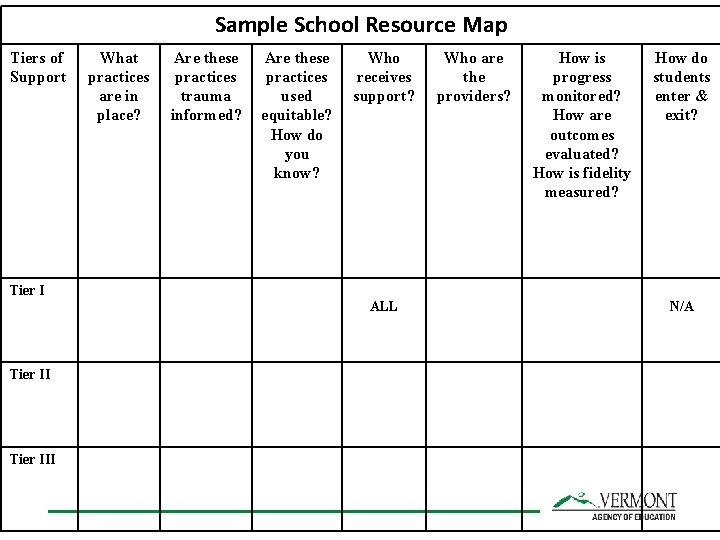
Sample School Resource Map Tiers of Support What practices are in place? Are these practices trauma informed? Are these practices used equitable? How do you know? Who receives support? Who are the providers? How is progress monitored? How are outcomes evaluated? How is fidelity measured? How do students enter & exit? Tier I ALL Tier III N/A
What if ? School Employed and Community Employed Staff use community and school data to assess the needs of young people in their school community and, together as an integrated team, select evidence based practices that match specific social emotional behavioral needs…
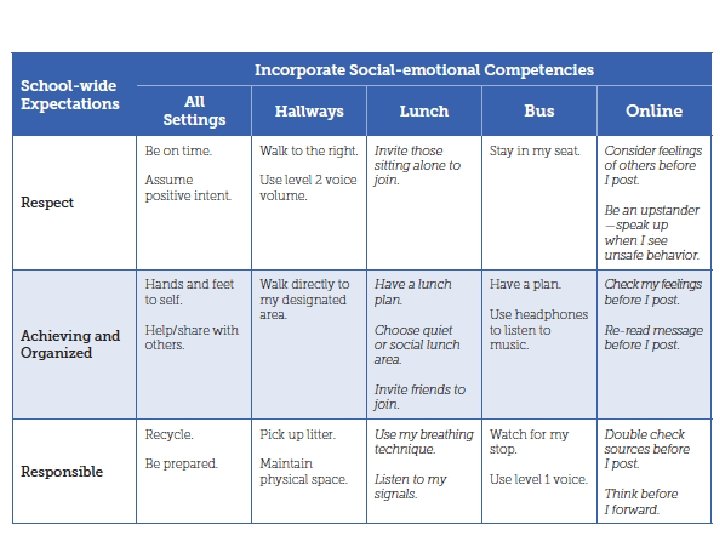

Classroom Matrix om Pro ocial o r ss es S al / a l l a C utin i (Attention n Classroom Signal: 1 -2 -3 Eyes on Me) c o o i s ot Ro m E Morning When you feel How to Transition/ Small Group e id n w Theol- atio ho ect c Wilson S xp s E Way Classroom Rules Be Responsible Be Respectful Be Safe upset … • Stay on task • Clean up area • Apologize for mistakes § • Raise hand • Listen to speaker • Follow directions • Use appropriate voice level § § § Recognize what you’re feeling “I feel…” Stop and take a few deep breaths Classroom Ask for a break if you Rules need a moment Express your feelings appropriately Routine § § Line Up Turn in homework Put instructional materials in desk § Say “good morning” to teacher and classmates Talk in soft § § § Work Put materials away Get materials ready for next activity § Listen for direction to next activity Be silent § § voices § § • Walk quietly • Keep hands and feet to self § Talk to someone if you need help Talk to someone if it § Put personal belongings in designated areas § § § Stand up Push in chair Wait for group to be called to line up § Do your fair share Manage time carefully Listen to understand your peers Take turns speaking Use kind words with feedback Speak only to group members Clean up area when time is up
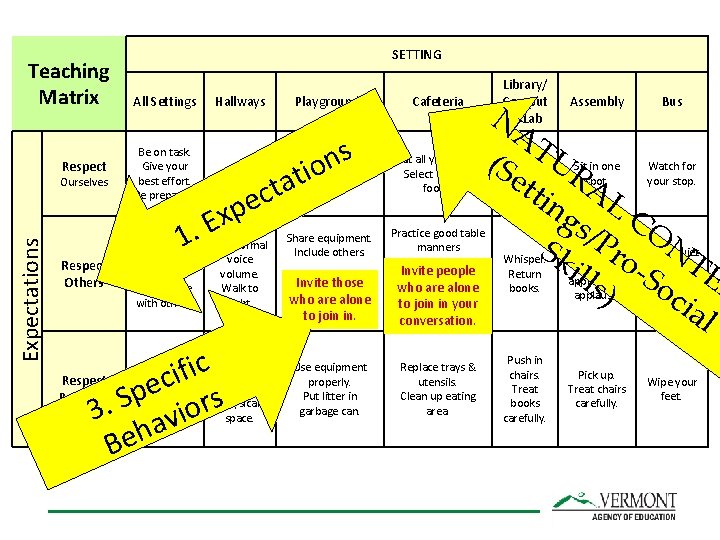
Teaching Matrix Respect Expectations Ourselves SETTING All Settings Hallways Be on task. Give your best effort. Be prepared. Respect Others 1 Be kind. Hands/feet to self. Help/share with others. Use normal voice volume. Walk to right. c i f i Respect c Property Spe 3. aviors Beh Recycle. Clean up after self. Assembly Bus s n io Have a plan. Eat all your food. Select healthy foods. Study, read, compute. Sit in one spot. Watch for your stop. Share equipment. Include others. Practice good table manners Whisper. Return books. Listen/watch. Use appropriate applause. Use a quiet voice. Stay in your seat. Push in chairs. Treat books carefully. Pick up. Treat chairs carefully. Wipe your feet. Playgrounds t a t ec Walk. p x. E Cafeteria Library/ Comput er Lab Pick up litter. Maintain physical space. Invite those who are alone to join in. Use equipment properly. Put litter in garbage can. NA T (S UR ett A in L gs CO / Sk Pro NT Invite people ill -S EX who are alone s o ) cia to join in your conversation. l Replace trays & utensils. Clean up eating area.
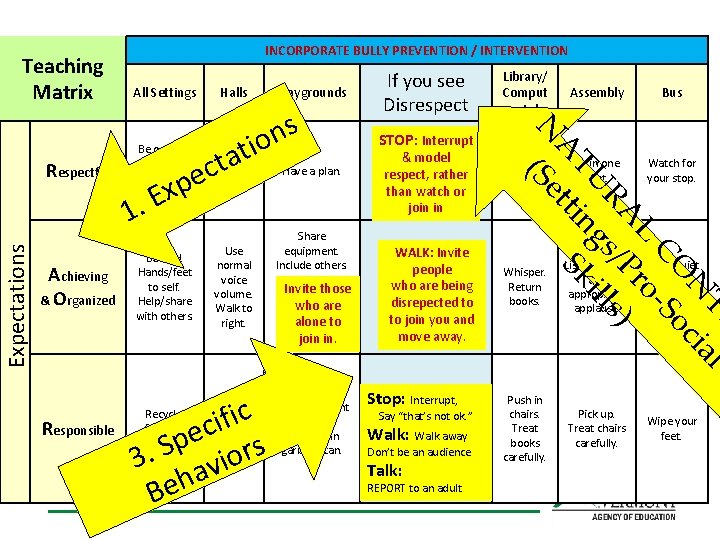
Teaching Matrix All Settings Responsible Expectations Playgrounds s n io t a t c e p x E Be on task. Give your best effort. Be prepared. Walk. Be kind. Hands/feet to self. Help/share with others. Use normal voice volume. Walk to right. 1. Achieving & Organized Halls c i f i c e p 3. S aviors Beh Recycle. Clean up after self. Pick up litter. Maintain physical space. Have a plan. Share equipment. Include others. Invite those who are alone to join in. Use equipment properly. Put litter in garbage can. If you see Disrespect STOP: Interrupt & model respect, rather than watch or join in WALK: Invite people who are being disrepected to to join you and move away. Stop: Interrupt, Say “that’s not ok. ” Walk: Walk away Don’t be an audience Talk: REPORT to an adult Library/ Comput er Lab Assembly Bus TE l N ia oc CO -S L ro RA s/P lls) g TU n ki A tti S N (Se Respectful INCORPORATE BULLY PREVENTION / INTERVENTION Study, read, compute. Sit in one spot. Watch for your stop. Whisper. Return books. Listen/watch. Use appropriate applause. Use a quiet voice. Stay in your seat. Push in chairs. Treat books carefully. Pick up. Treat chairs carefully. Wipe your feet.
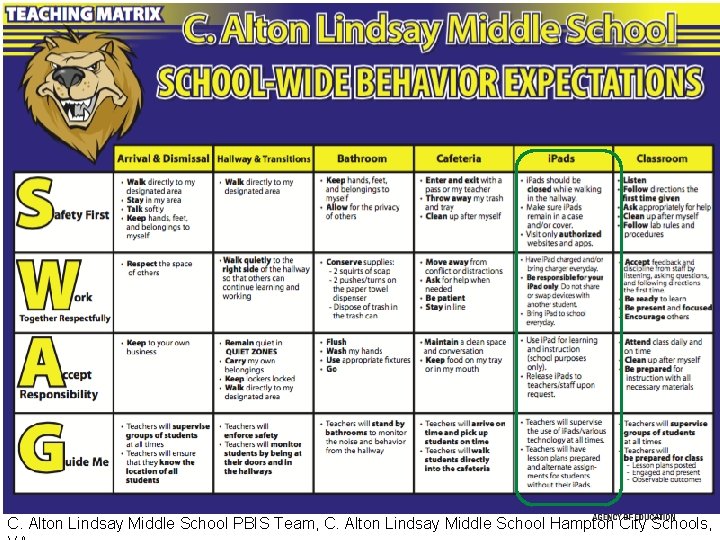
C. Alton Lindsay Middle School PBIS Team, C. Alton Lindsay Middle School Hampton City Schools,
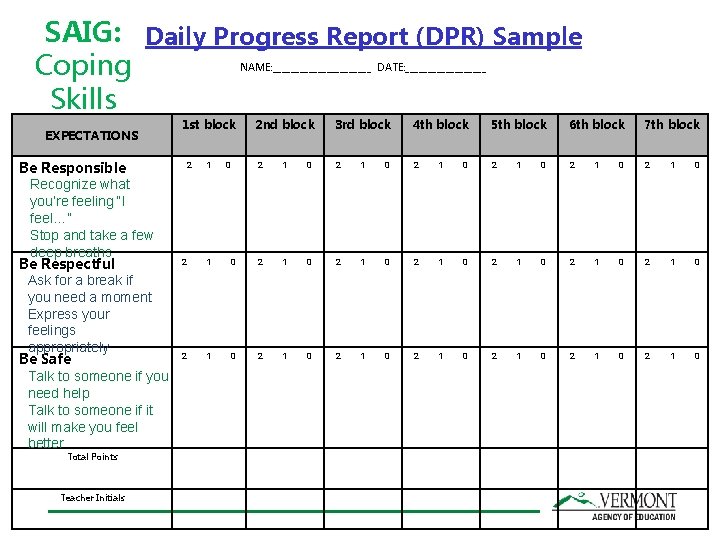
SAIG: Daily Progress Report (DPR) Sample Coping Skills NAME: ___________ DATE: _________ EXPECTATIONS Be Responsible Recognize what you’re feeling “I feel…” Stop and take a few deep breaths Be Respectful Ask for a break if you need a moment Express your feelings appropriately Be Safe Talk to someone if you need help Talk to someone if it will make you feel better Total Points Teacher Initials 1 st block 2 1 0 2 nd block 3 rd block 4 th block 5 th block 6 th block 7 th block 2 1 0 2 1 0 2 1 0 2 1 0 2 1 0
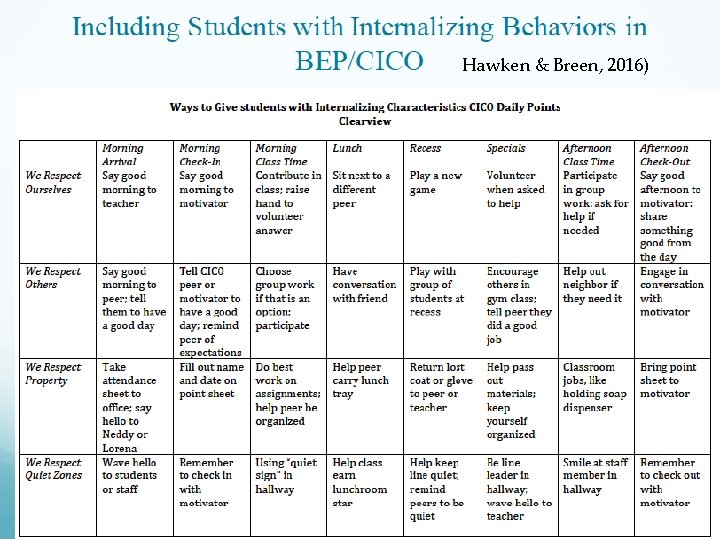
Hawken & Breen, 2016)
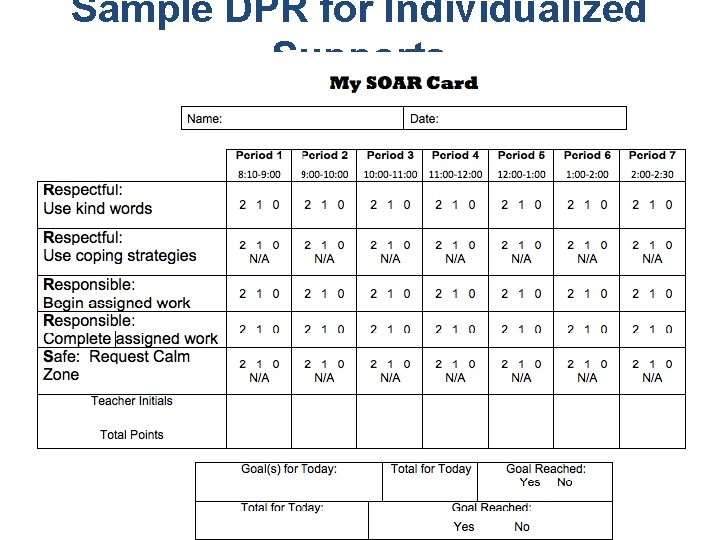
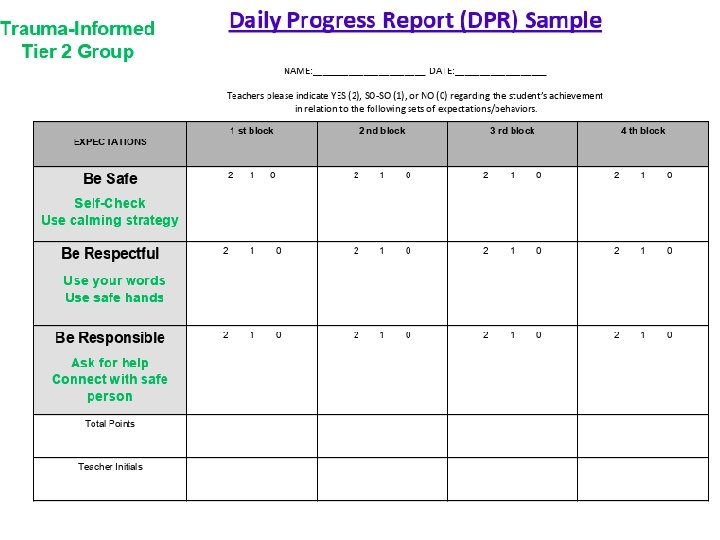
Sample DPR for Individualized Supports
Reflect & Share Feedback • What possibilities around alignment would support greater efficiency & effectiveness? • What support would be needed to help you align data, practices, systems? • What are your perceived barriers around aligning and/or integrating data, practices, and/or systems?
Share feedback to inform state strategic plan development
Vermont AOE PBIS Goals • Develop a strategic plan that defines a comprehensive system of services for implementation and state-wide scale up of PBIS from Pre-K through 12 th grade as a part of a multi-tiered system of supports.
Vermont AOE PBIS Objectives • 5 year plan that supports capacity building, maintaining fidelity, and is financially sustainable • Plan includes enhancing and expanding capacity of trainers and coaches • Plan includes alignment of initiatives (e. g. , mental health, SEL, academics, bully prevention, trauma informed practices, equity, etc. )
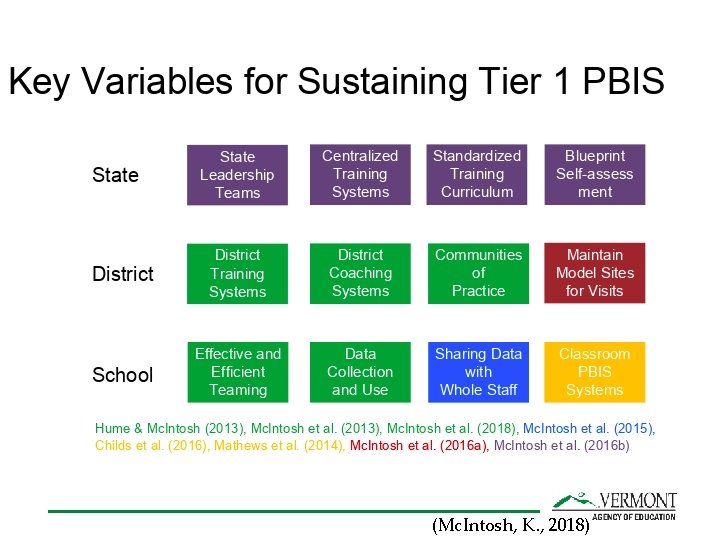
(Mc. Intosh, K. , 2018)
PBIS Implementer’s Blueprint
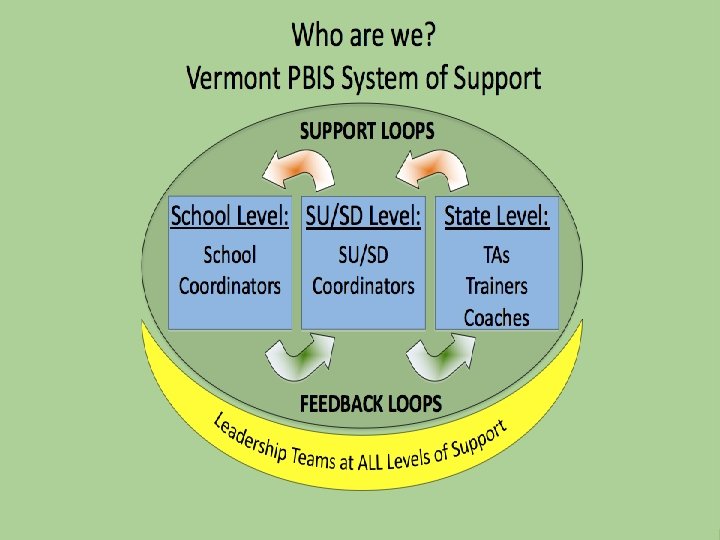
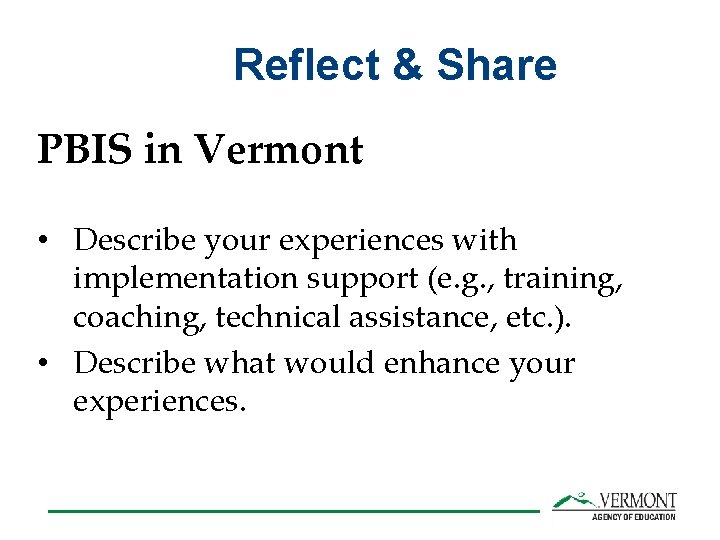
Reflect & Share PBIS in Vermont • Describe your experiences with implementation support (e. g. , training, coaching, technical assistance, etc. ). • Describe what would enhance your experiences.
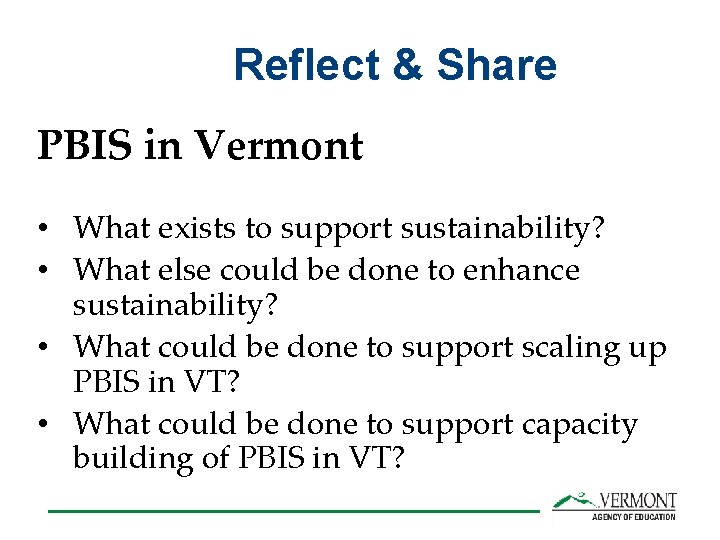
Reflect & Share PBIS in Vermont • What exists to support sustainability? • What else could be done to enhance sustainability? • What could be done to support scaling up PBIS in VT? • What could be done to support capacity building of PBIS in VT?

What additional considerations, thoughts, or questions would you like to share?
- Slides: 35