
DEVELOPING A RESEARCH QUESTION AND HYPOTHESIS 1 RESEARCH

- Slides: 11
DEVELOPING A RESEARCH QUESTION AND HYPOTHESIS 1
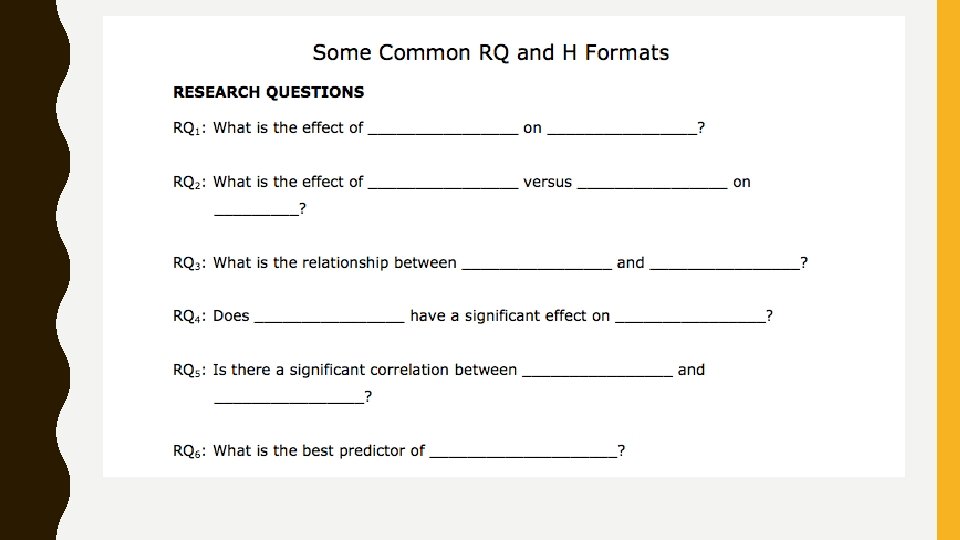
RESEARCH QUESTION HOW TO CREATE A GOOD RESEARCH QUESTION
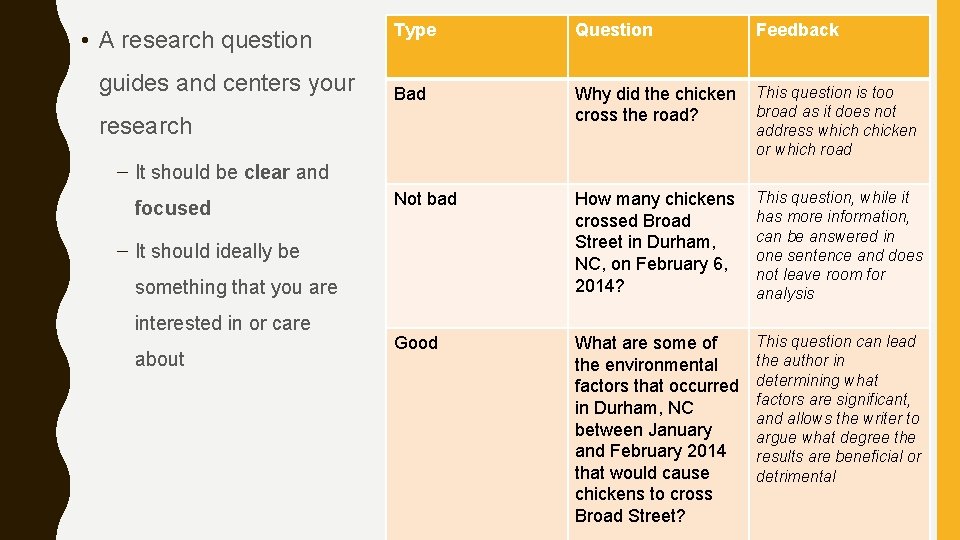
• A research question guides and centers your Type Question Feedback Bad Why did the chicken cross the road? This question is too broad as it does not address which chicken or which road Not bad How many chickens crossed Broad Street in Durham, NC, on February 6, 2014? This question, while it has more information, can be answered in one sentence and does not leave room for analysis Good What are some of the environmental factors that occurred in Durham, NC between January and February 2014 that would cause chickens to cross Broad Street? This question can lead the author in determining what factors are significant, and allows the writer to argue what degree the results are beneficial or detrimental research – It should be clear and focused – It should ideally be something that you are interested in or care about 3
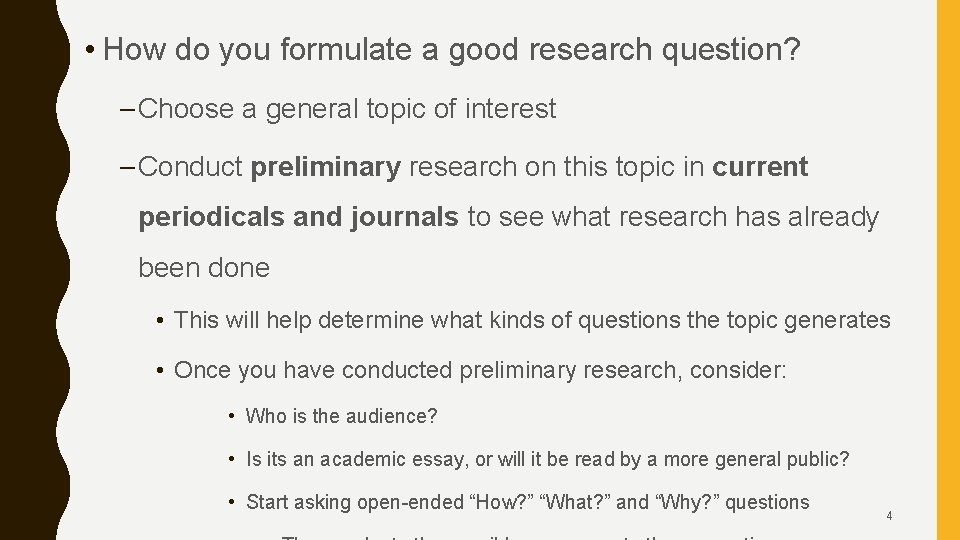
• How do you formulate a good research question? – Choose a general topic of interest – Conduct preliminary research on this topic in current periodicals and journals to see what research has already been done • This will help determine what kinds of questions the topic generates • Once you have conducted preliminary research, consider: • Who is the audience? • Is its an academic essay, or will it be read by a more general public? • Start asking open-ended “How? ” “What? ” and “Why? ” questions 4
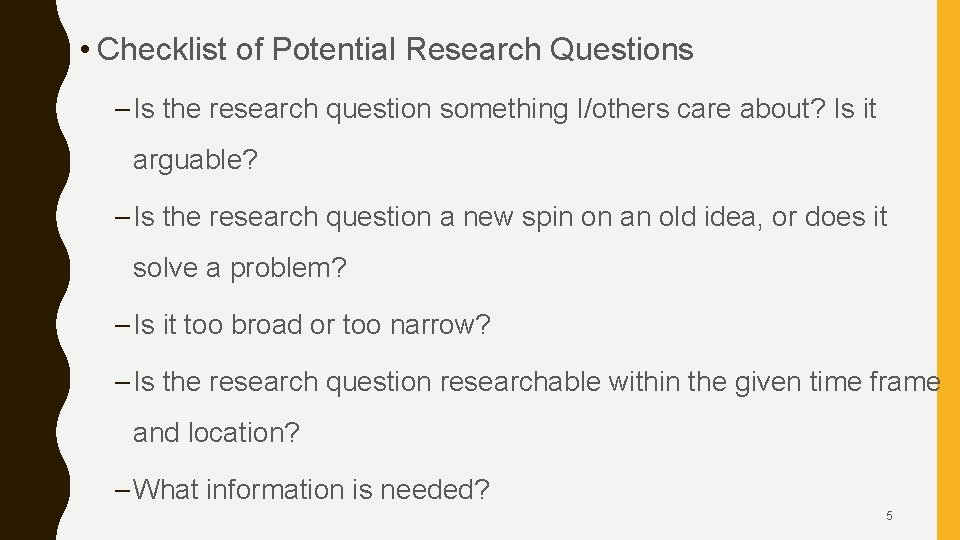
• Checklist of Potential Research Questions – Is the research question something I/others care about? Is it arguable? – Is the research question a new spin on an old idea, or does it solve a problem? – Is it too broad or too narrow? – Is the research question researchable within the given time frame and location? – What information is needed? 5
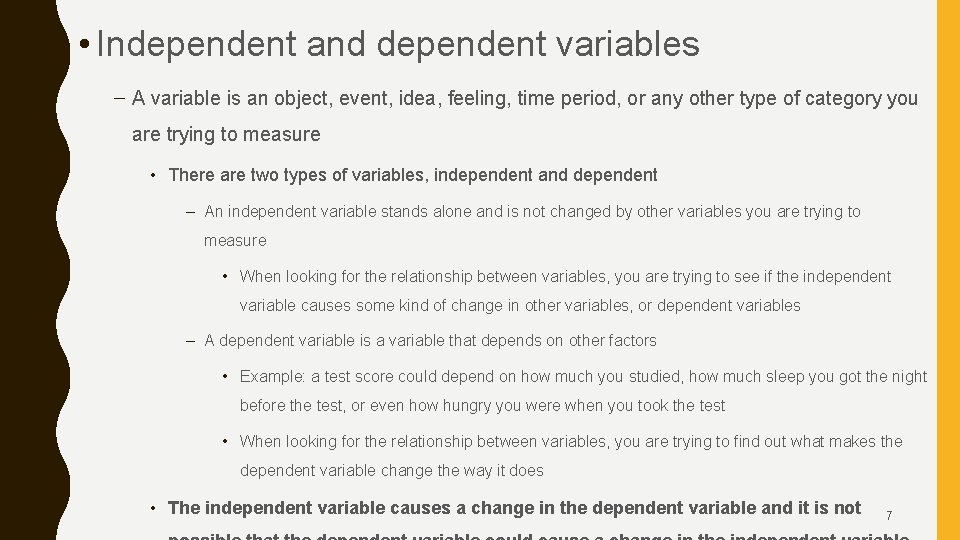
• Independent and dependent variables – A variable is an object, event, idea, feeling, time period, or any other type of category you are trying to measure • There are two types of variables, independent and dependent – An independent variable stands alone and is not changed by other variables you are trying to measure • When looking for the relationship between variables, you are trying to see if the independent variable causes some kind of change in other variables, or dependent variables – A dependent variable is a variable that depends on other factors • Example: a test score could depend on how much you studied, how much sleep you got the night before the test, or even how hungry you were when you took the test • When looking for the relationship between variables, you are trying to find out what makes the dependent variable change the way it does • The independent variable causes a change in the dependent variable and it is not 7
HYPOTHESIS HOW TO CREATE A GOOD SCIENTIFIC ANSWER TO THE QUESTION
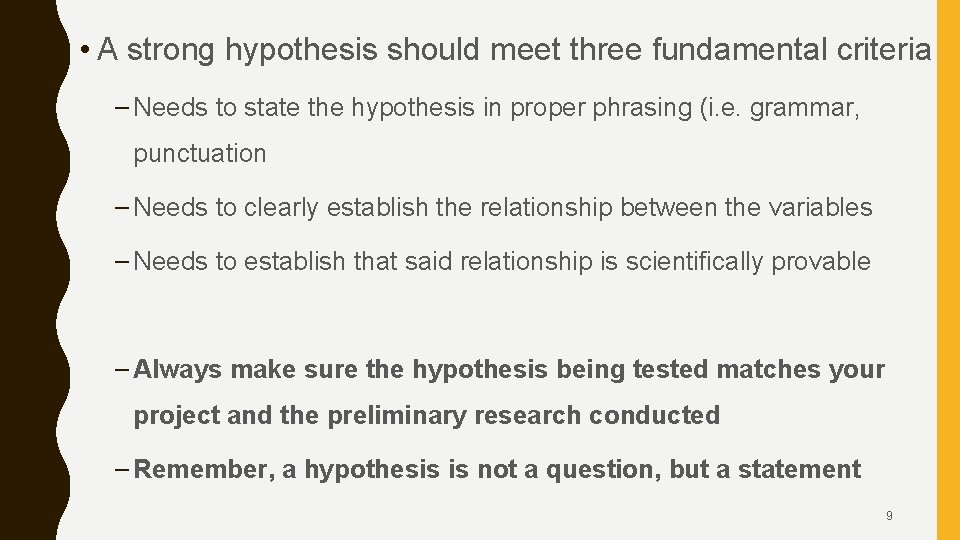
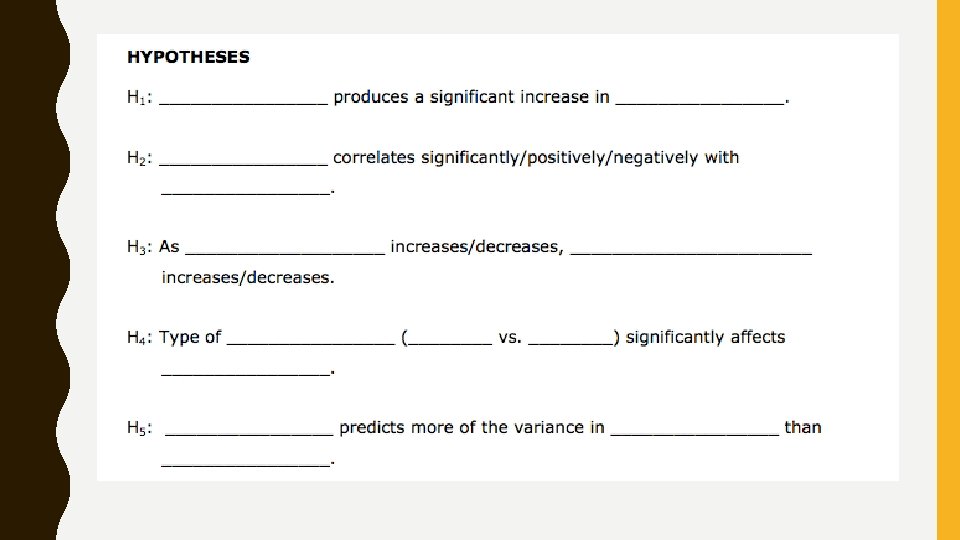
• A strong hypothesis should meet three fundamental criteria – Needs to state the hypothesis in proper phrasing (i. e. grammar, punctuation – Needs to clearly establish the relationship between the variables – Needs to establish that said relationship is scientifically provable – Always make sure the hypothesis being tested matches your project and the preliminary research conducted – Remember, a hypothesis is not a question, but a statement 9
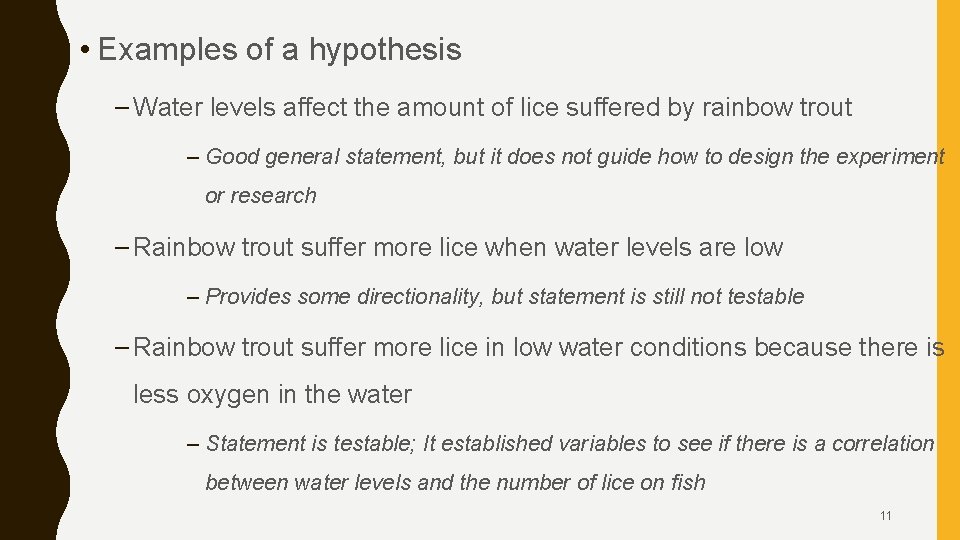
• Examples of a hypothesis – Water levels affect the amount of lice suffered by rainbow trout – Good general statement, but it does not guide how to design the experiment or research – Rainbow trout suffer more lice when water levels are low – Provides some directionality, but statement is still not testable – Rainbow trout suffer more lice in low water conditions because there is less oxygen in the water – Statement is testable; It established variables to see if there is a correlation between water levels and the number of lice on fish 11