
Developing a Remote Data Link for an Integrated

- Slides: 23
Developing a Remote Data Link for an Integrated Ocean Observing System Stephen R. Piotrowicz Ocean. US The National Office for Integrated and Sustained Ocean Observations
THE SLOCUM MISSION By: Henry Stommel This science fiction article, by the late Dr. Henry Stommel, was published in Oceanography, April 1989.
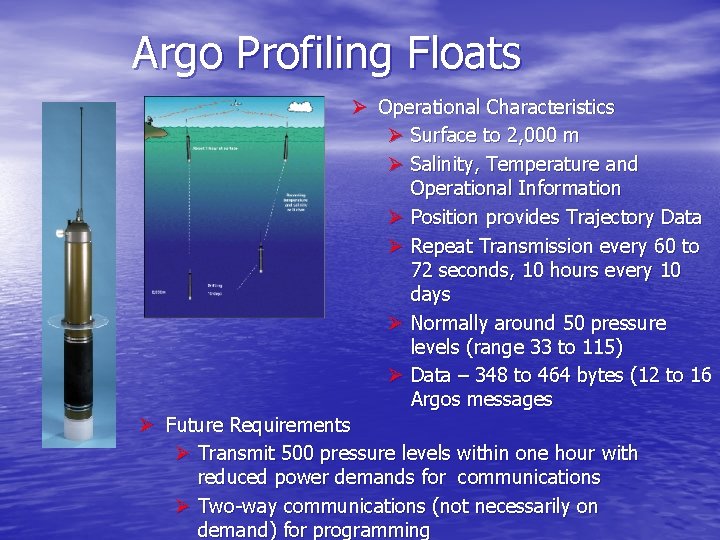
Argo Profiling Floats Ø Operational Characteristics Ø Surface to 2, 000 m Ø Salinity, Temperature and Operational Information Ø Position provides Trajectory Data Ø Repeat Transmission every 60 to 72 seconds, 10 hours every 10 days Ø Normally around 50 pressure levels (range 33 to 115) Ø Data – 348 to 464 bytes (12 to 16 Argos messages Ø Future Requirements Ø Transmit 500 pressure levels within one hour with reduced power demands for communications Ø Two-way communications (not necessarily on demand) for programming
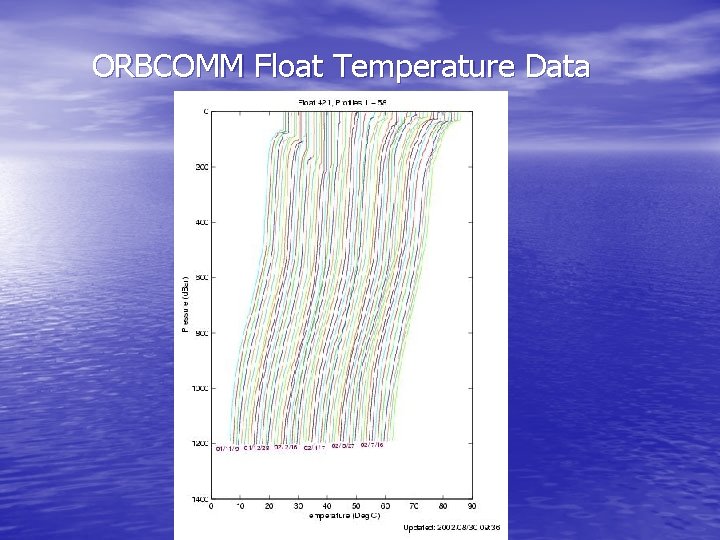
ORBCOMM Float Temperature Data
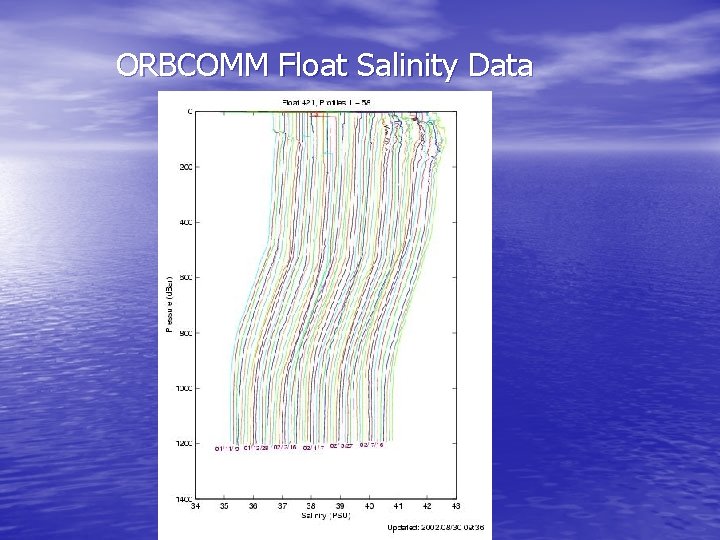
ORBCOMM Float Salinity Data
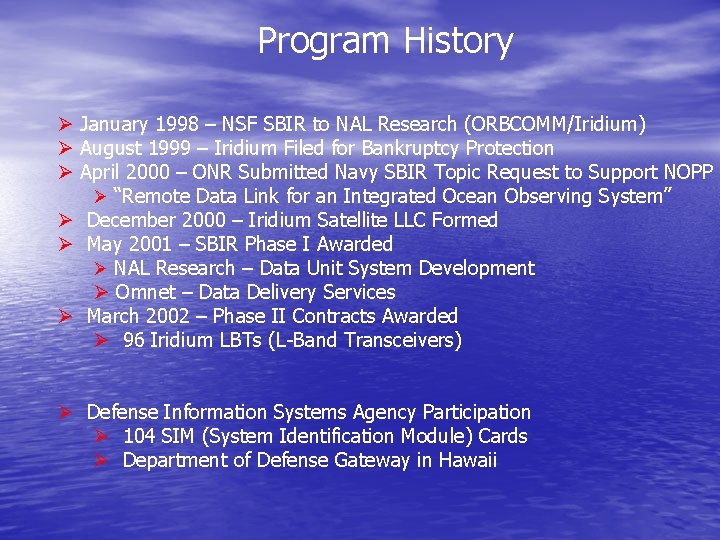
Program History Ø January 1998 – NSF SBIR to NAL Research (ORBCOMM/Iridium) Ø August 1999 – Iridium Filed for Bankruptcy Protection Ø April 2000 – ONR Submitted Navy SBIR Topic Request to Support NOPP Ø “Remote Data Link for an Integrated Ocean Observing System” Ø December 2000 – Iridium Satellite LLC Formed Ø May 2001 – SBIR Phase I Awarded Ø NAL Research – Data Unit System Development Ø Omnet – Data Delivery Services Ø March 2002 – Phase II Contracts Awarded Ø 96 Iridium LBTs (L-Band Transceivers) Ø Defense Information Systems Agency Participation Ø 104 SIM (System Identification Module) Cards Ø Department of Defense Gateway in Hawaii
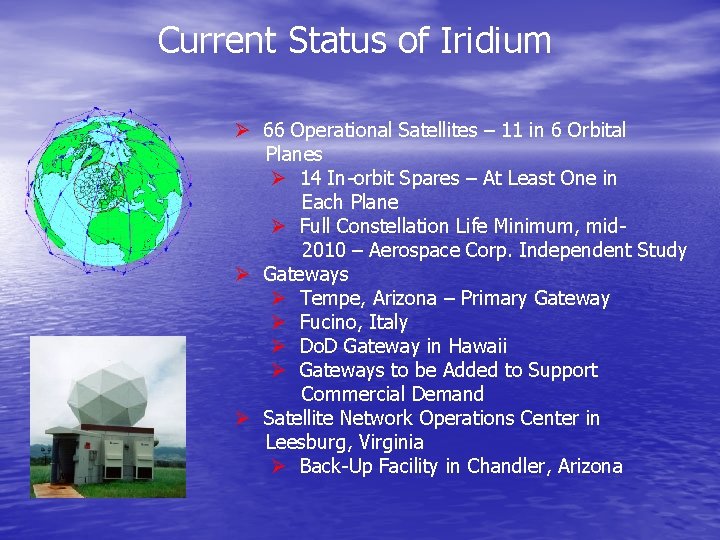
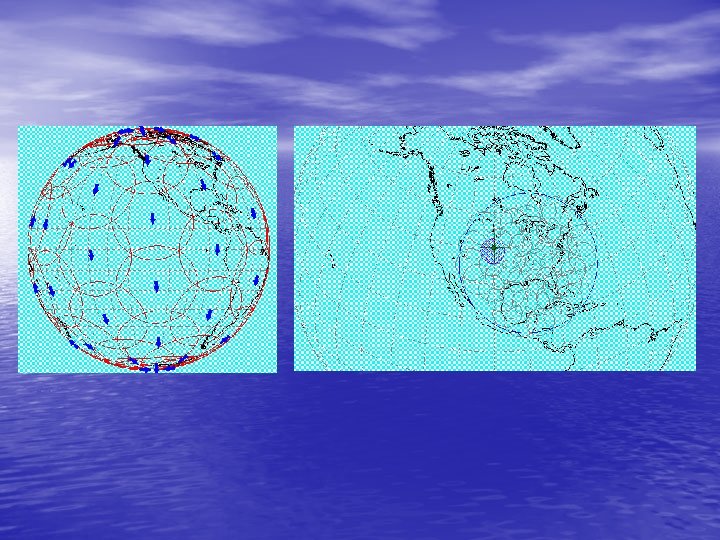
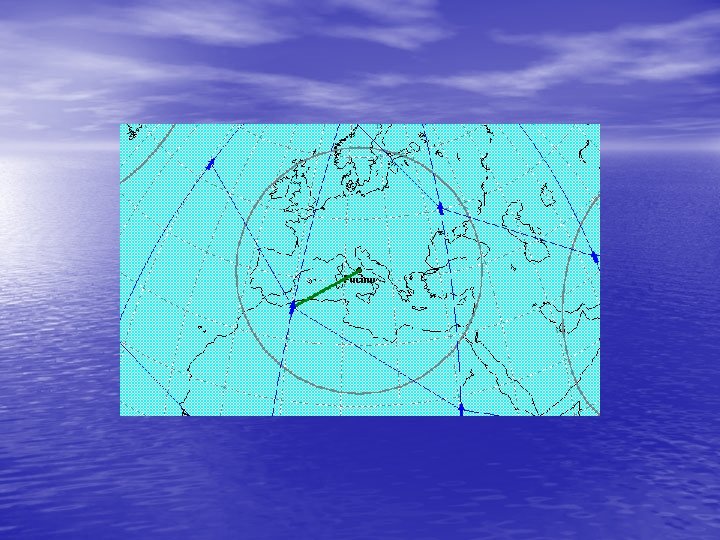
Current Status of Iridium Ø 66 Operational Satellites – 11 in 6 Orbital Planes Ø 14 In-orbit Spares – At Least One in Each Plane Ø Full Constellation Life Minimum, mid 2010 – Aerospace Corp. Independent Study Ø Gateways Ø Tempe, Arizona – Primary Gateway Ø Fucino, Italy Ø Do. D Gateway in Hawaii Ø Gateways to be Added to Support Commercial Demand Ø Satellite Network Operations Center in Leesburg, Virginia Ø Back-Up Facility in Chandler, Arizona
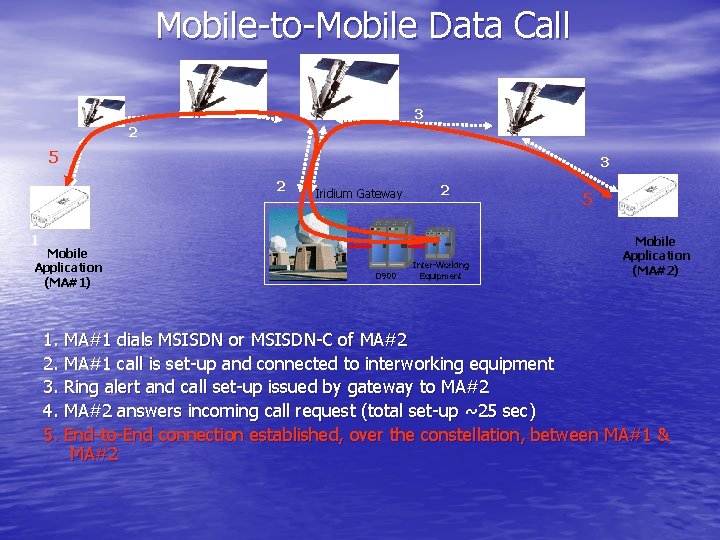
Mobile-to-Mobile Data Call 3 2 5 3 2 Iridium Gateway 2 1 1 Mobile Application (MA#1) D 900 Inter-Working Equipment 5 4 Mobile Application (MA#2) 1. MA#1 dials MSISDN or MSISDN-C of MA#2 2. MA#1 call is set-up and connected to interworking equipment 3. Ring alert and call set-up issued by gateway to MA#2 4. MA#2 answers incoming call request (total set-up ~25 sec) 5. End-to-End connection established, over the constellation, between MA#1 & MA#2
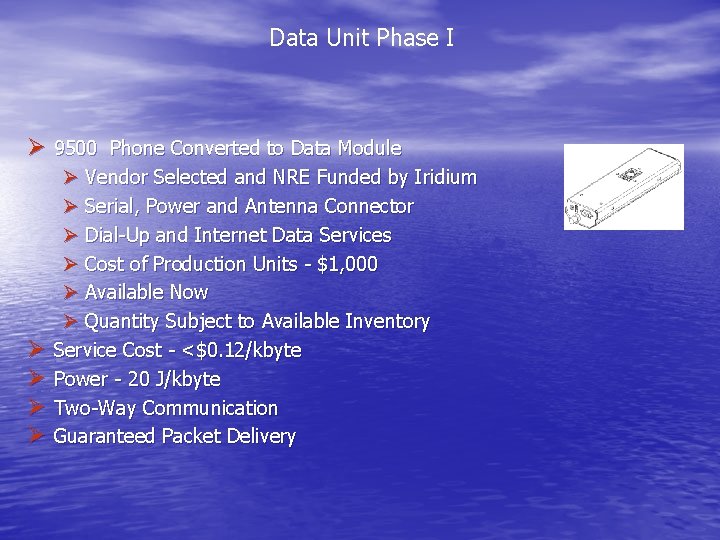
Data Unit Phase I Ø 9500 Phone Converted to Data Module Ø Ø Ø Vendor Selected and NRE Funded by Iridium Ø Serial, Power and Antenna Connector Ø Dial-Up and Internet Data Services Ø Cost of Production Units - $1, 000 Ø Available Now Ø Quantity Subject to Available Inventory Service Cost - <$0. 12/kbyte Power - 20 J/kbyte Two-Way Communication Guaranteed Packet Delivery
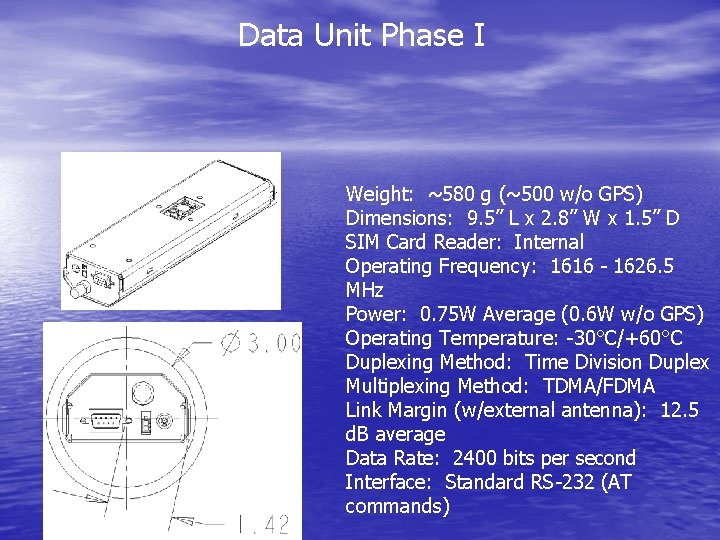
Data Unit Phase I Weight: ~580 g (~500 w/o GPS) Dimensions: 9. 5” L x 2. 8” W x 1. 5” D SIM Card Reader: Internal Operating Frequency: 1616 - 1626. 5 MHz Power: 0. 75 W Average (0. 6 W w/o GPS) Operating Temperature: -30°C/+60°C Duplexing Method: Time Division Duplex Multiplexing Method: TDMA/FDMA Link Margin (w/external antenna): 12. 5 d. B average Data Rate: 2400 bits per second Interface: Standard RS-232 (AT commands)
Data Unit Phase II – Next Generation Ø 9505 Based Product Ø Leverage Current Handset Production Ø Work with Celestica and Third Party Vendor to Obtain Board Level product. Ø 30% Reduction in Physical Size as compared with 9500 Ø 15% Less Power Consumption during data calls Ø Dial-up and PPP Internet Access Data Services Ø Short Burst Data Capable Ø Next Generation
Program Status Ø Distributing 96 L-Band Transceivers and 104 SIM Cards Ø Web Solicitation for Potential Applications Ø Objective is a Spectrum of Platforms, Environments, and Data Delivery Requirements Ø Participants Selected in June Ø Distribution of Conventional Data Units Began in June 2002 Ø Distribution of GPS Capable Units Began February 2003 Ø Global Ø Participation Ø International – Australia and U. K. ; 5 Investigators/6 Projects Ø United States – 33 Projects Ø 18 Academic (Navy, NSF, State) Ø 8 NOAA Ø 3 Department of Defense (2 Navy, 1 SACLANT) Ø 3 Commercial Ø 1 NASA
Argo Profiling Floats Ø 22 GPS-Equipped Units Ø Short-Burst Data Ø Operational Implementation Ø Cost and Billing Ø Data Dissemination Ø Command Control
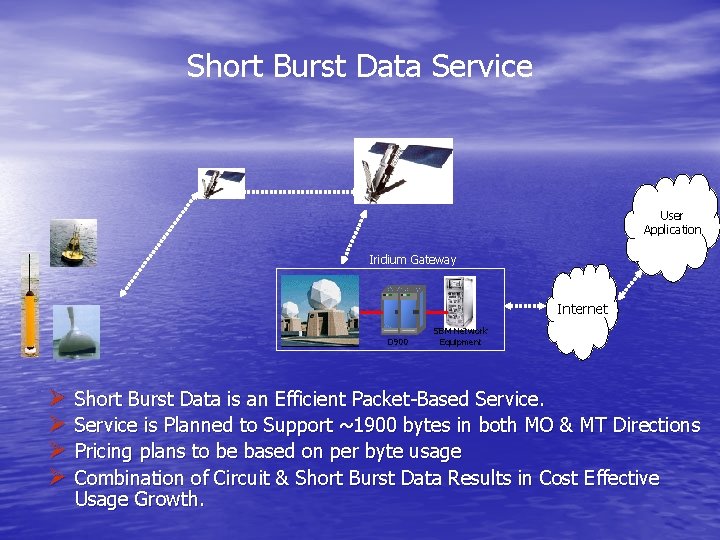
Short Burst Data Service User Application Iridium Gateway Internet D 900 SBM Network Equipment Ø Short Burst Data is an Efficient Packet-Based Service. Ø Service is Planned to Support ~1900 bytes in both MO & MT Directions Ø Pricing plans to be based on per byte usage Ø Combination of Circuit & Short Burst Data Results in Cost Effective Usage Growth.
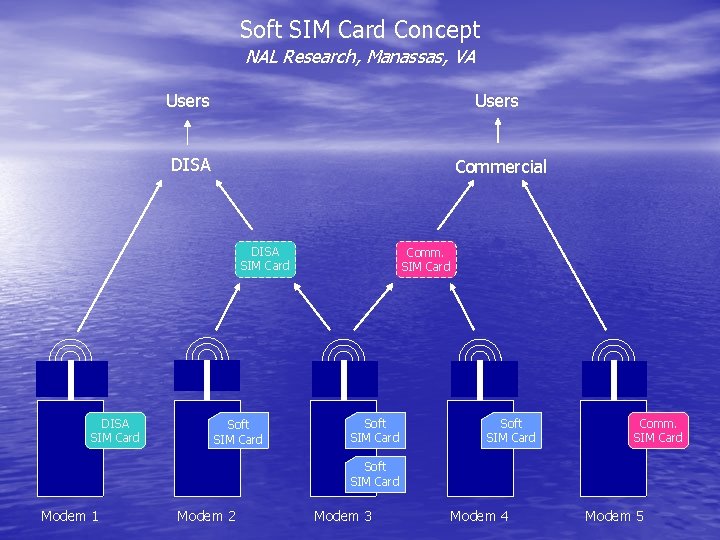
Soft SIM Card Concept NAL Research, Manassas, VA Users DISA Commercial DISA SIM Card Soft SIM Card Comm. SIM Card Soft SIM Card Modem 1 Modem 2 Modem 3 Modem 4 Modem 5
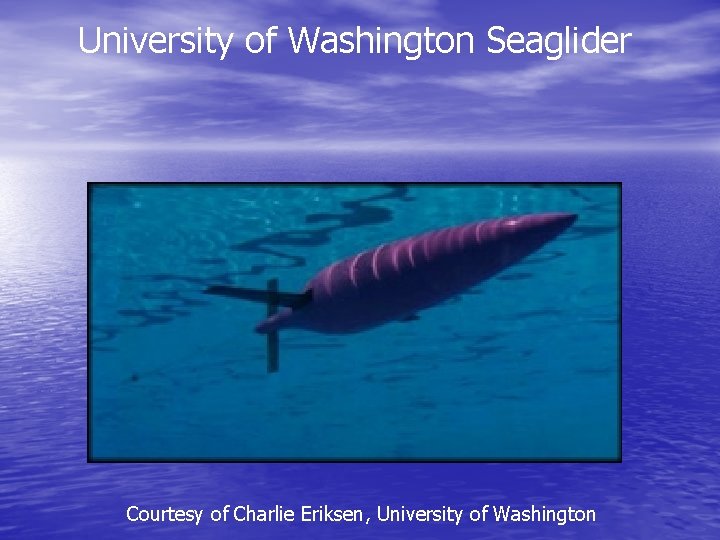
University of Washington Seaglider Courtesy of Charlie Eriksen, University of Washington
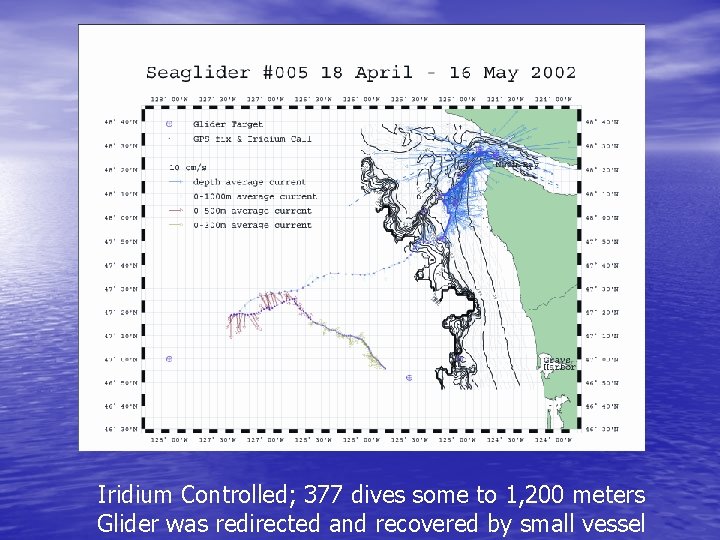
Iridium Controlled; 377 dives some to 1, 200 meters Glider was redirected and recovered by small vessel
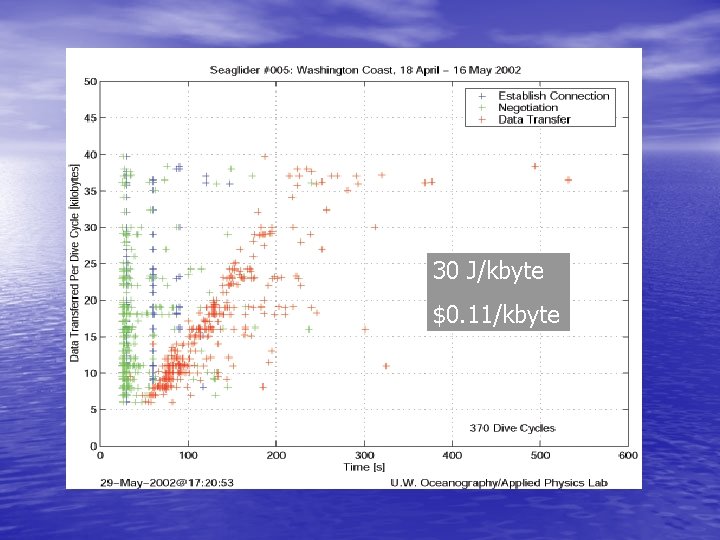
30 J/kbyte $0. 11/kbyte
Some Issues for the Community Ø Hardware Configuration and Design Ø Antennas Ø LBTs Ø Other (e. g. , PC Board) Ø Transmission Protocols Ø Common Needs Ø Data Routing Ø Data Distribution Ø Data Storage Ø Technical Working Group (? ) Ø National Ø International Ø Other Telemetry Technologies Ø Input Into Future Developments Ø Fourth Generation LBT! Ø Costs
MUOS (Multiple User Objectives System) Ø Ø Operational in 2013 Flying/Beta Testing ? Global, Real-Time, Two-Way, Etc. Iridium-Compatible, Plug-In Modules