
Developing a Project Plan Chapter 6 Developing the
- Slides: 38
Developing a Project Plan Chapter 6
Developing the Project Plan � The Project Network � A flow chart that graphically depicts the sequence, interdependencies, and start and finish times of the project job plan of activities that is the critical path through the network �Provides the basis for scheduling labor and equipment �Provides an estimate of the project’s duration �Provides a basis for budgeting cash flow �Highlights activities that are “critical” and should not be delayed �Help managers get and stay on plan
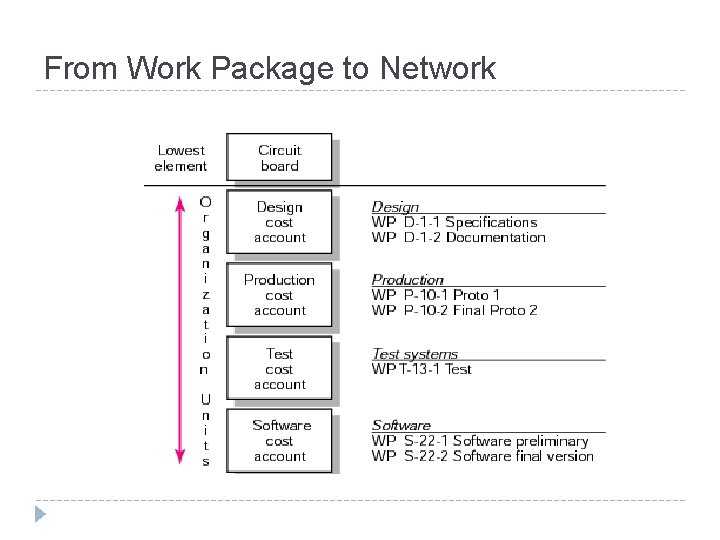
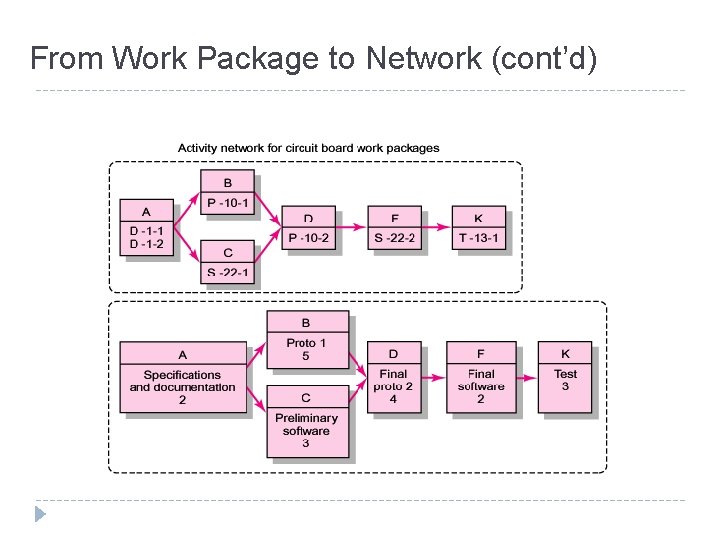
From Work Package to Network WBS/Work Packages to Network FIGURE 6. 1
From Work Package to Network (cont’d) WBS/Work Packages to Network (cont’d) FIGURE 6. 1 (cont’d)
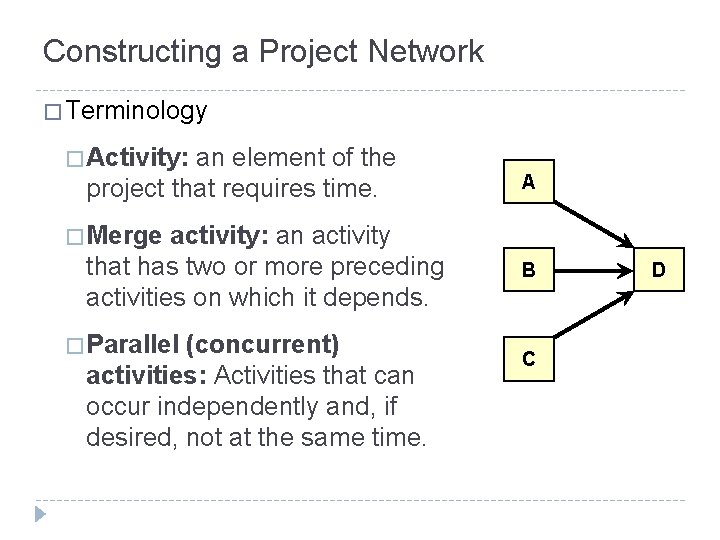
Constructing a Project Network � Terminology � Activity: an element of the project that requires time. activity: an activity that has two or more preceding activities on which it depends. A � Merge � Parallel (concurrent) activities: Activities that can occur independently and, if desired, not at the same time. B C D
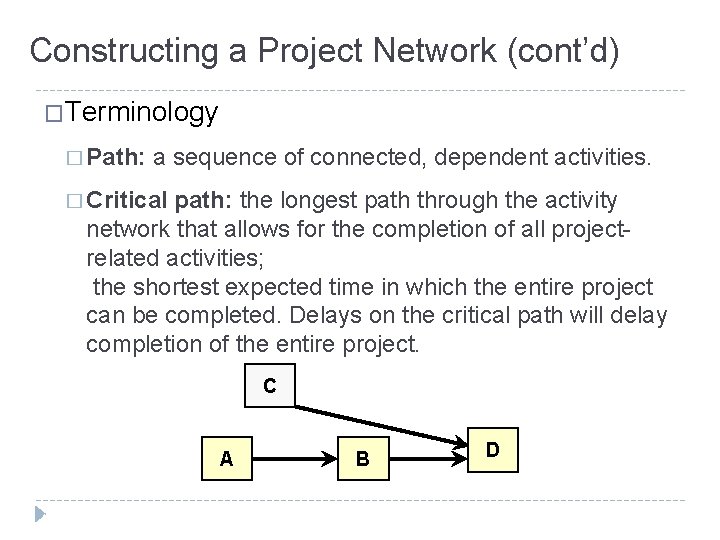
Constructing a Project Network (cont’d) �Terminology � Path: a sequence of connected, dependent activities. � Critical path: the longest path through the activity network that allows for the completion of all projectrelated activities; the shortest expected time in which the entire project can be completed. Delays on the critical path will delay completion of the entire project. C A B (Assumes that minimum of A + B > minimum of C in length of times to complete activities. ) D
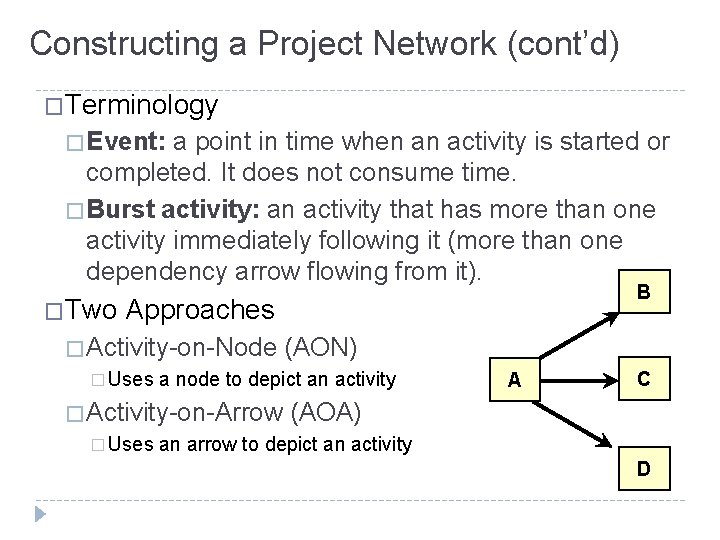
Constructing a Project Network (cont’d) �Terminology � Event: a point in time when an activity is started or completed. It does not consume time. � Burst activity: an activity that has more than one activity immediately following it (more than one dependency arrow flowing from it). �Two B Approaches � Activity-on-Node (AON) � Uses a node to depict an activity A C � Activity-on-Arrow (AOA) � Uses an arrow to depict an activity D
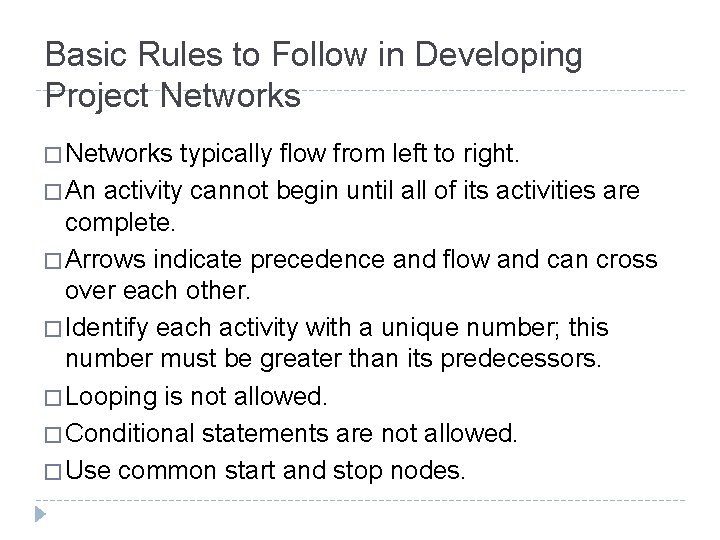
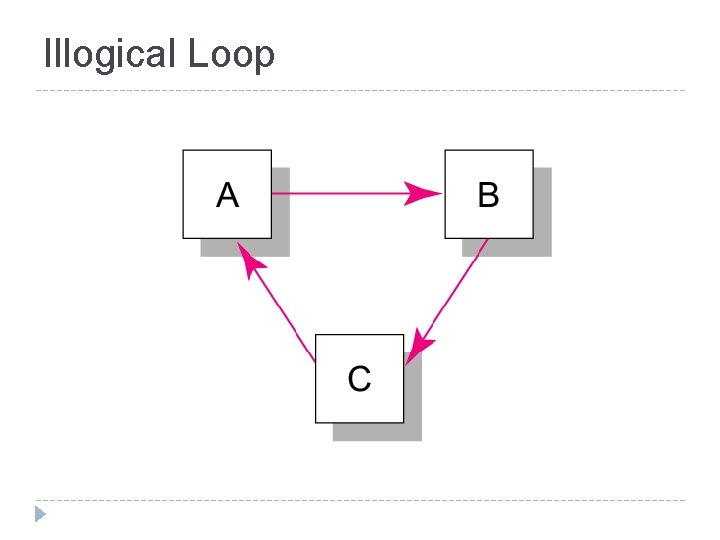
Basic Rules to Follow in Developing Project Networks � Networks typically flow from left to right. � An activity cannot begin until all of its activities are complete. � Arrows indicate precedence and flow and can cross over each other. � Identify each activity with a unique number; this number must be greater than its predecessors. � Looping is not allowed. � Conditional statements are not allowed. � Use common start and stop nodes.
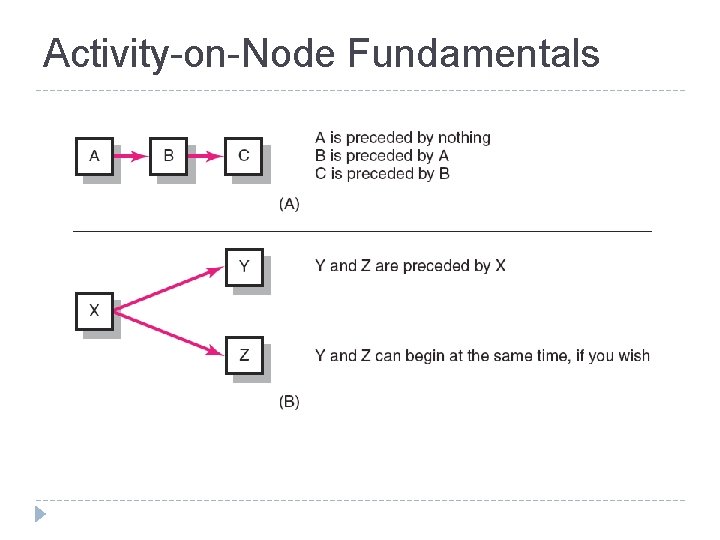
Activity-on-Node Fundamentals FIGURE 6. 2
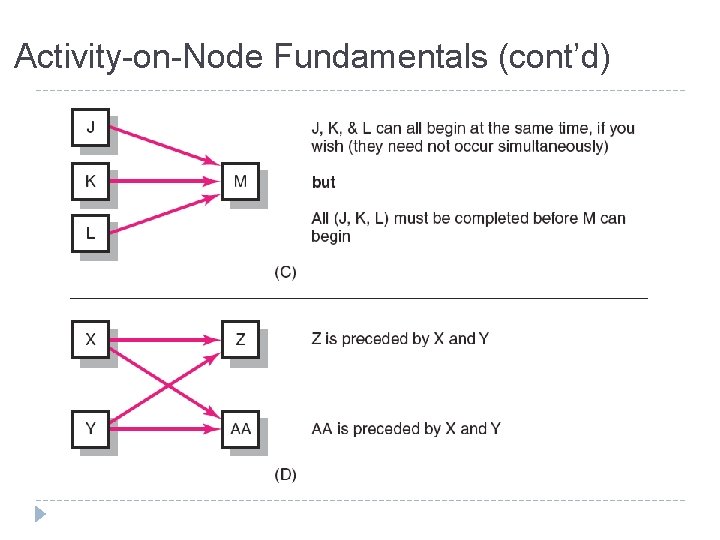
Activity-on-Node Fundamentals (cont’d) FIGURE 6. 2 (cont’d)
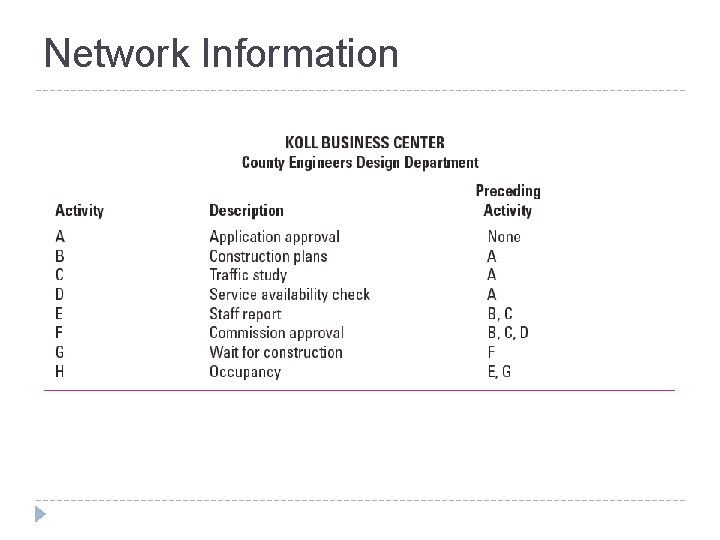
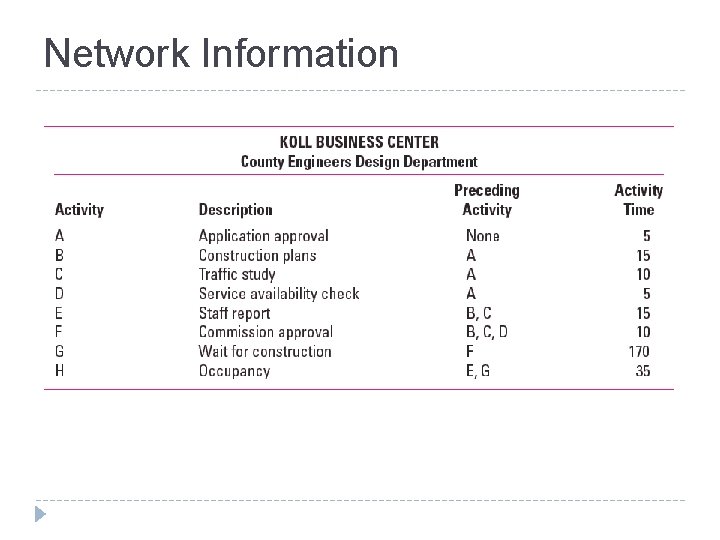
Network Information TABLE 6. 1
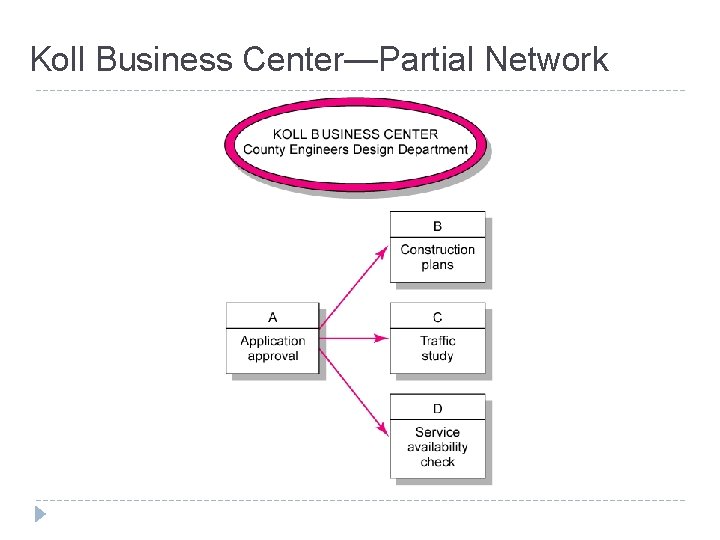
Koll Business Center—Partial Network FIGURE 6. 3
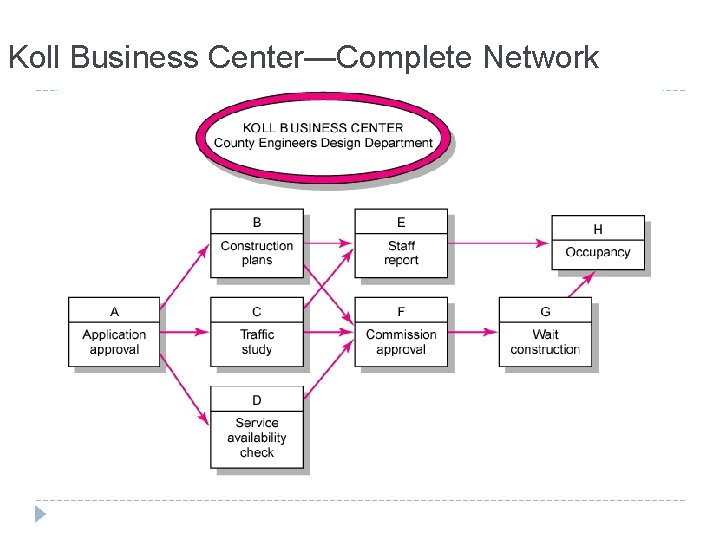
Koll Business Center—Complete Network FIGURE 6. 4
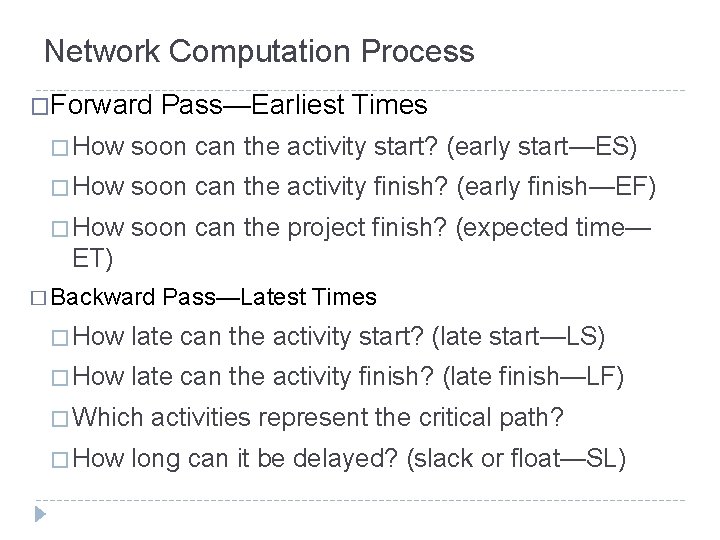
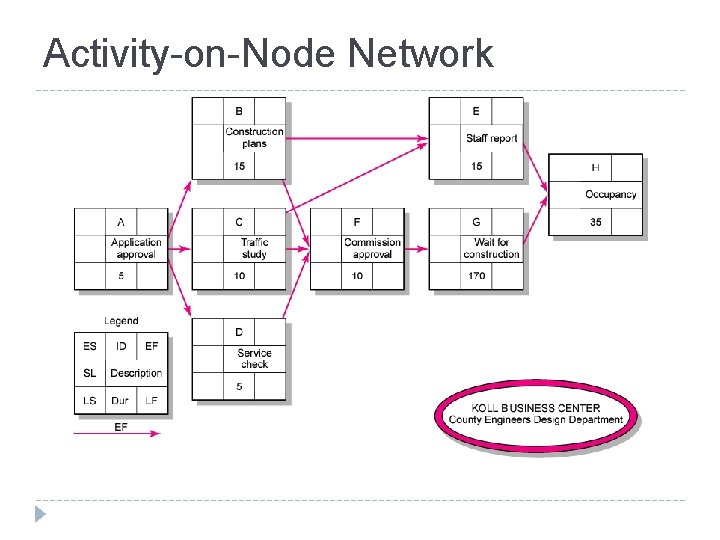
Network Computation Process �Forward Pass—Earliest Times � How soon can the activity start? (early start—ES) � How soon can the activity finish? (early finish—EF) � How soon can the project finish? (expected time— ET) � Backward Pass—Latest Times � How late can the activity start? (late start—LS) � How late can the activity finish? (late finish—LF) � Which � How activities represent the critical path? long can it be delayed? (slack or float—SL)
Network Information TABLE 6. 2
Activity-on-Node Network FIGURE 6. 5
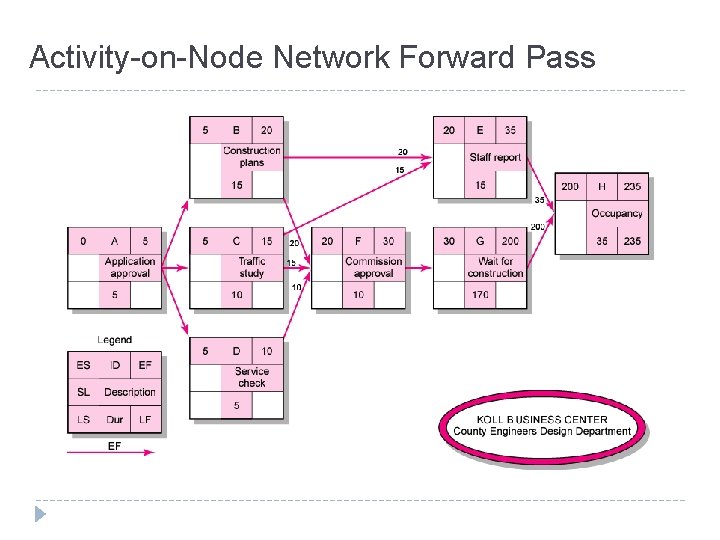
Activity-on-Node Network Forward Pass FIGURE 6. 6
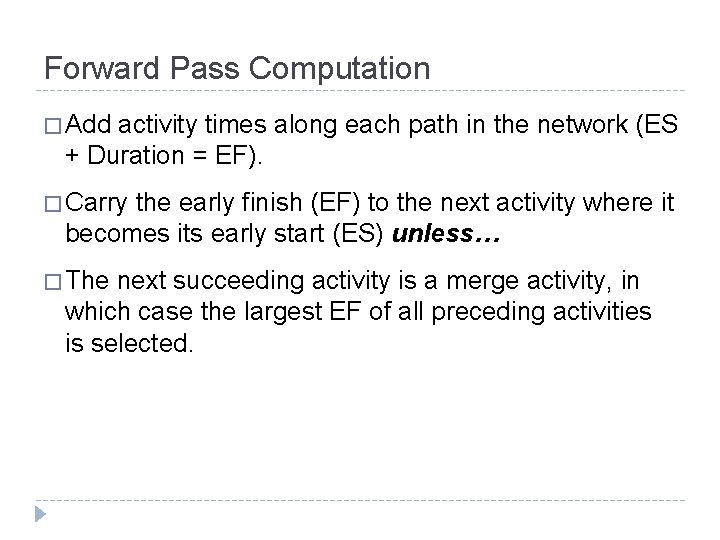
Forward Pass Computation � Add activity times along each path in the network (ES + Duration = EF). � Carry the early finish (EF) to the next activity where it becomes its early start (ES) unless… � The next succeeding activity is a merge activity, in which case the largest EF of all preceding activities is selected.
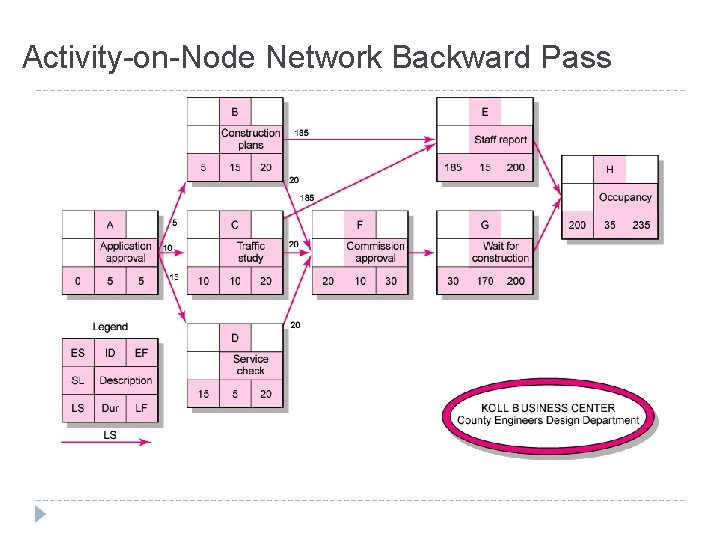
Activity-on-Node Network Backward Pass FIGURE 6. 7
Backward Pass Computation � Subtract activity times along each path in the network (LF - Duration = LS). � Carry the late start (LS) to the next activity where it becomes its late finish (LF) unless. . . � The next succeeding activity is a burst activity, in which case the smallest LF of all preceding activities is selected.
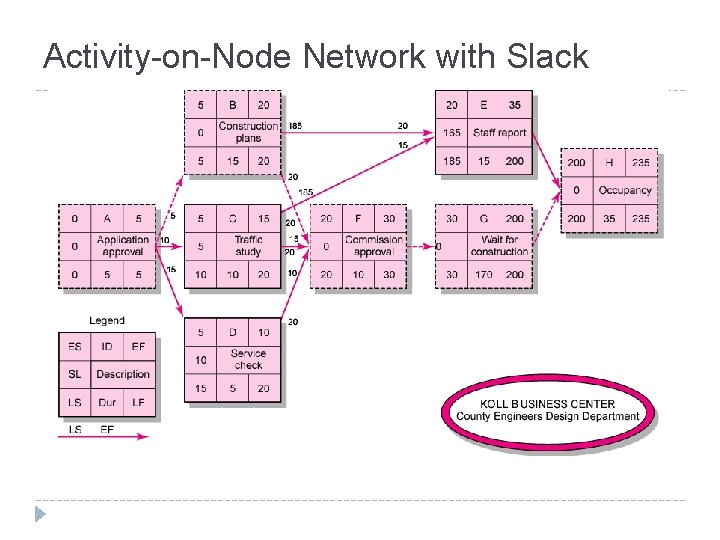
Determining Slack (or Float) � Free Slack (or Float) � The amount of time an activity can be delayed without delaying connected successor activities � Total Slack � The amount of time an activity can be delayed without delaying the entire project � The critical path is the network path(s) that has (have) the least slack in common.
Sensitivity of a Network � The likelihood the original critical path(s) will change once the project is initiated. � Function �The of: number of critical paths �The amount of slack across near critical activities
Activity-on-Node Network with Slack FIGURE 6. 8
Practical Considerations � Network logic errors � Activity numbering � Use of computers to develop networks � Calendar dates � Multiple starts and multiple projects
Illogical Loop FIGURE 6. 9
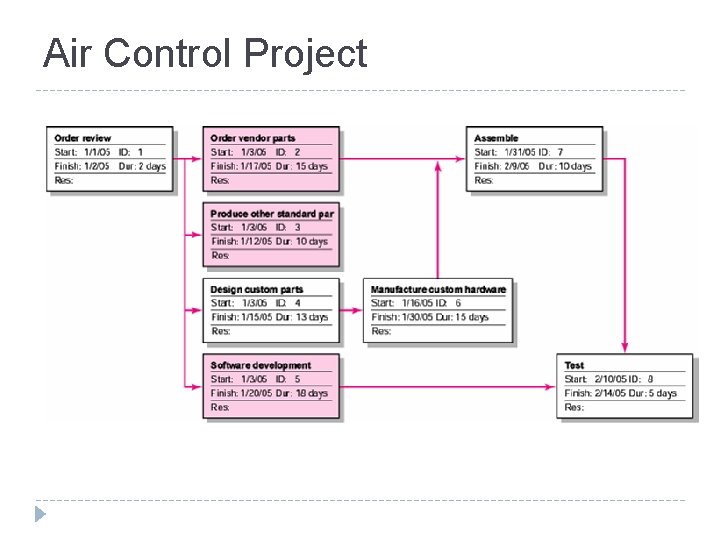
Air Control Project FIGURE 6. 10
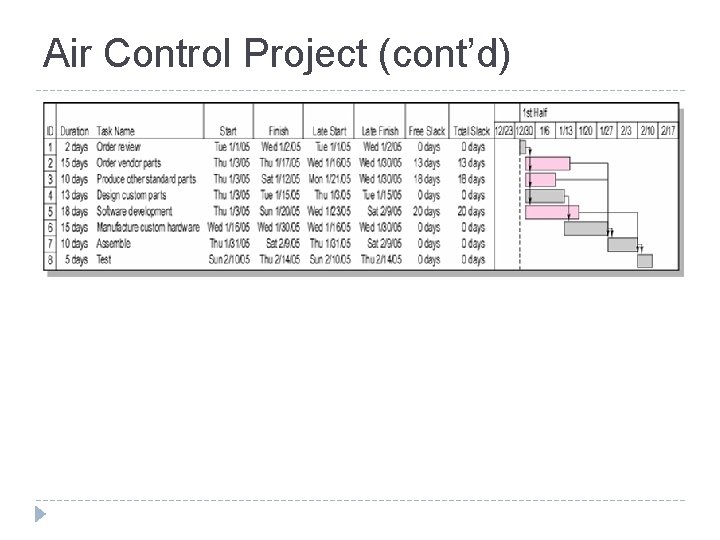
Air Control Project (cont’d) FIGURE 6. 11
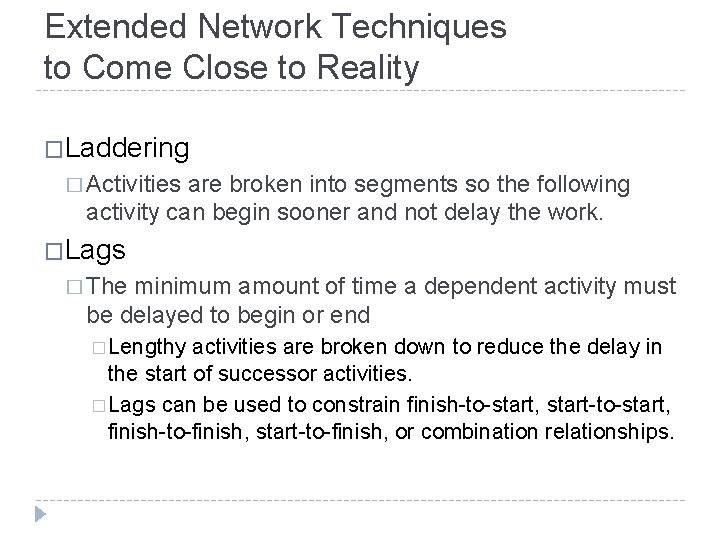
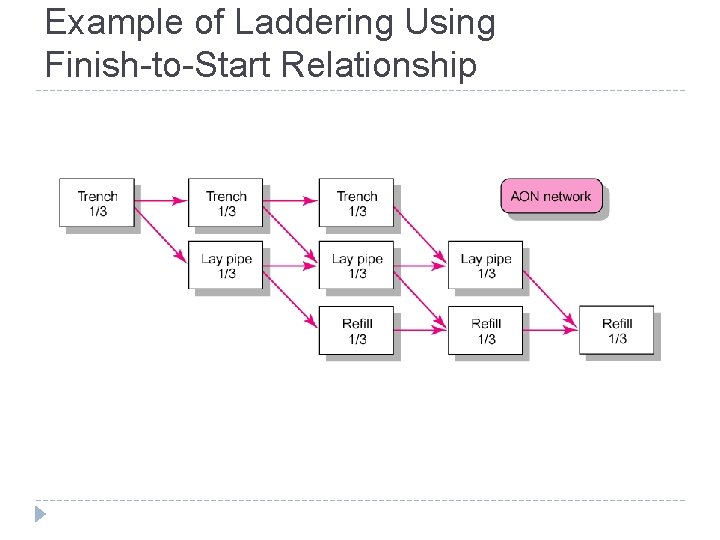
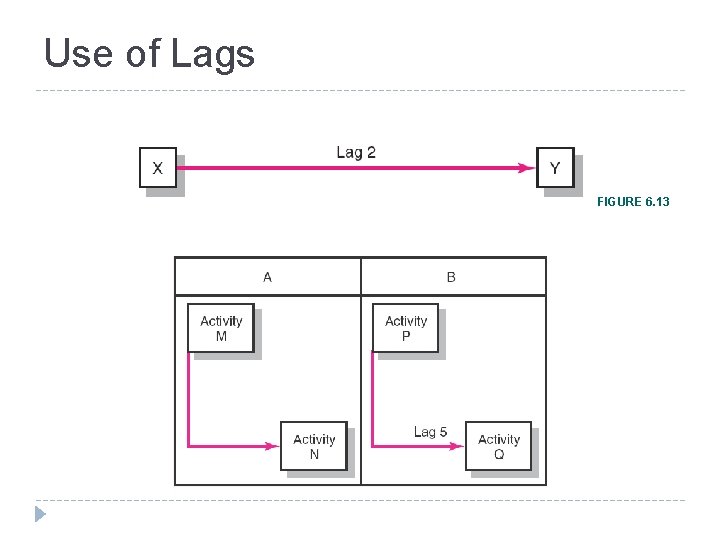
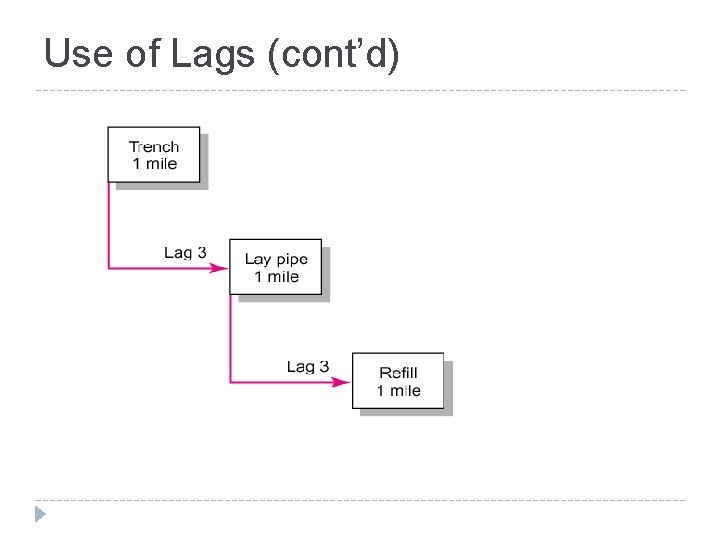
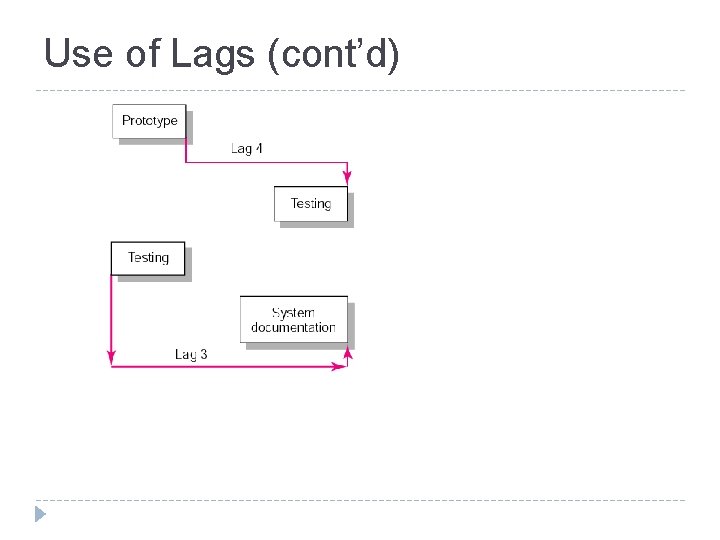
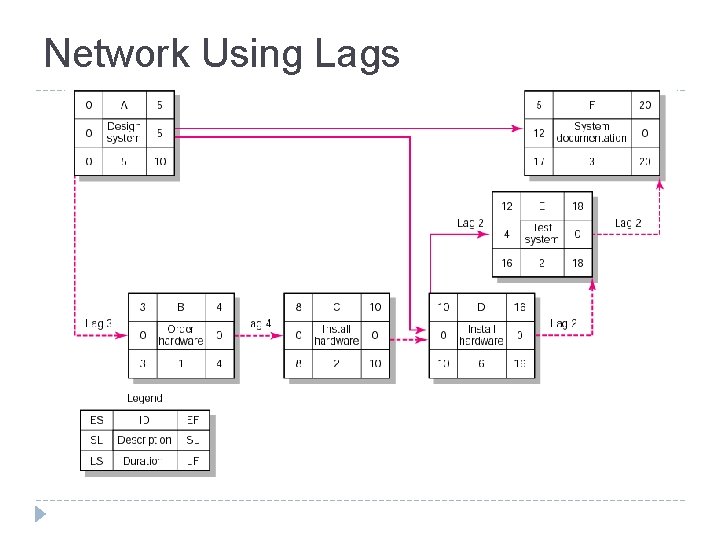
Extended Network Techniques to Come Close to Reality �Laddering � Activities are broken into segments so the following activity can begin sooner and not delay the work. �Lags � The minimum amount of time a dependent activity must be delayed to begin or end � Lengthy activities are broken down to reduce the delay in the start of successor activities. � Lags can be used to constrain finish-to-start, start-to-start, finish-to-finish, start-to-finish, or combination relationships.
Example of Laddering Using Finish-to-Start Relationship FIGURE 6. 12
Use of Lags Finish-to-Start Relationship FIGURE 6. 13 Start-to-Start Relationship FIGURE 6. 14
Use of Lags (cont’d) Use of Lags to Reduce Detail FIGURE 6. 15
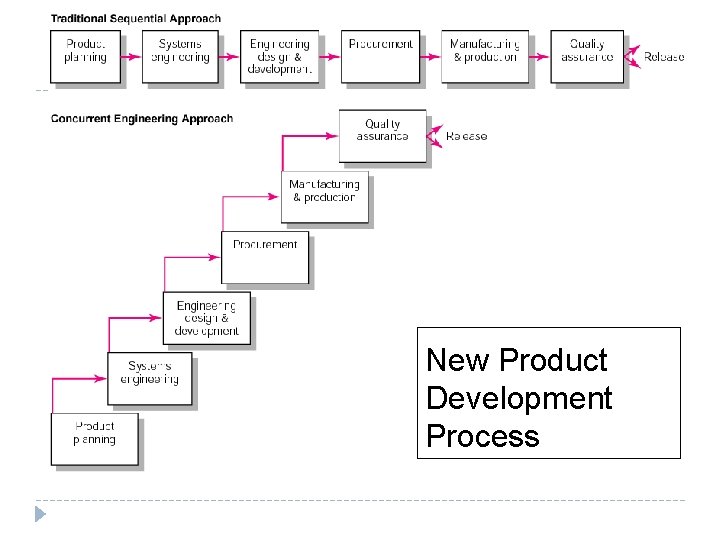
New Product Development Process FIGURE 6. 16
Use of Lags (cont’d) Finish-to-Finish Relationship FIGURE 6. 17 Start-to-Finish Relationship FIGURE 6. 18
Network Using Lags FIGURE 6. 20
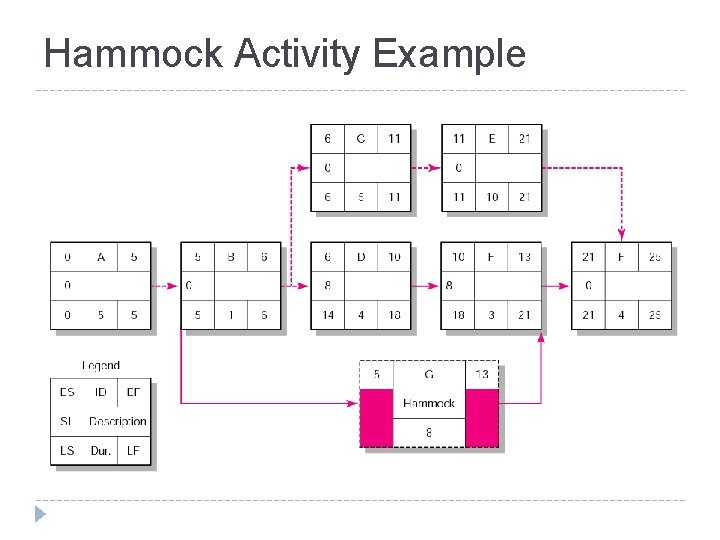
Hammock Activities � Hammock � An Activity activity that spans over a segment of a project � Duration of hammock activities is determined after the network plan is drawn. � Hammock activities are used to aggregate sections of the project to facilitate getting the right amount of detail for specific sections of a project.
Hammock Activity Example FIGURE 6. 21
Key Terms Activity-on-arrow (AOA) Activity-on-node (AON) Burst activity Concurrent engineering Critical path Early and late times Gantt chart Hammock activity Lag relationship Merge activity Network sensitivity Parallel activity Slack/float—total and free