
Developing a Lesson Plan Identify elements that can
- Slides: 26
Developing a Lesson Plan Identify elements that can make up a successful lesson. Design a lesson to meet the needs of a specific group of learners. On your green post-it, describe your group of students.
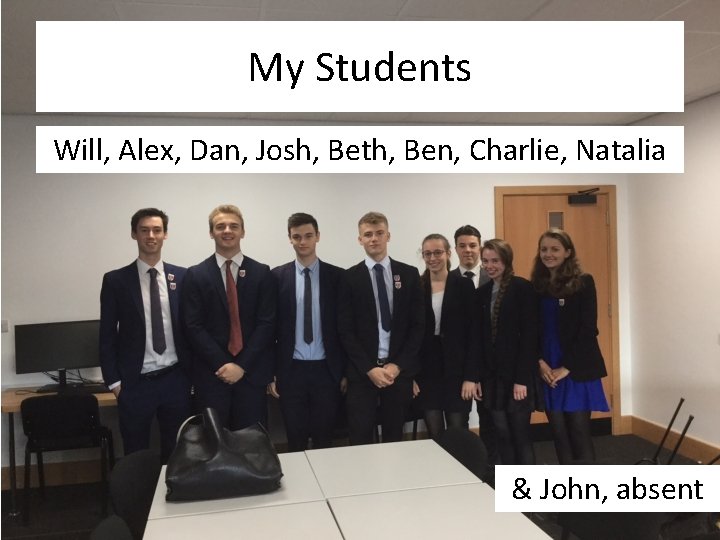
My Students Will, Alex, Dan, Josh, Beth, Ben, Charlie, Natalia & John, absent
My Students
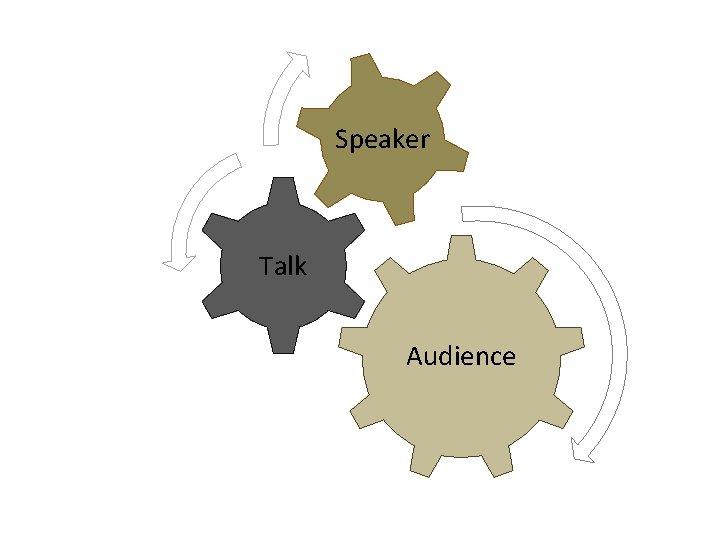
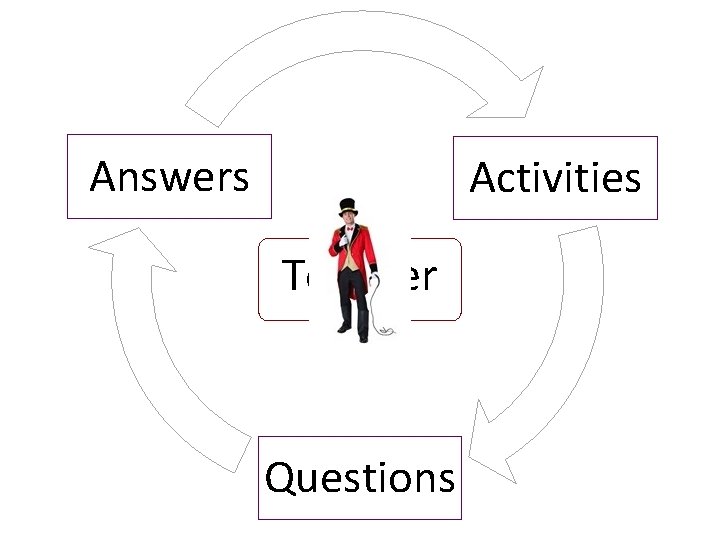
Teaching vs ‘Giving a Talk’
Speaker Talk Audience
Answers Activities Teacher Questions
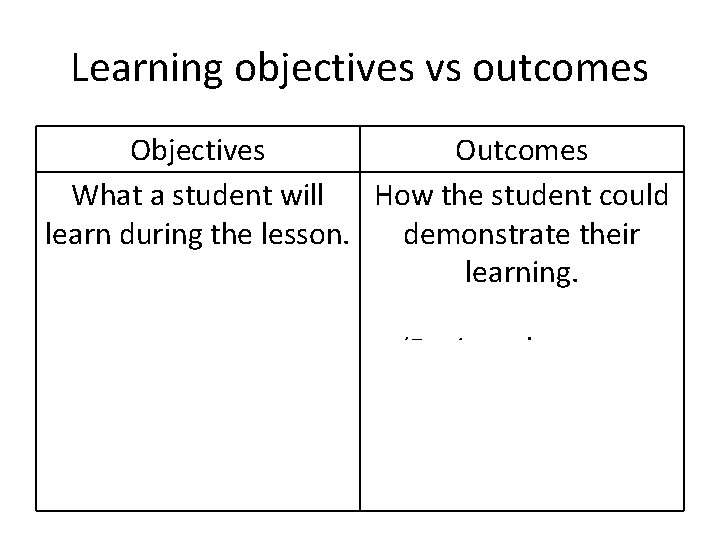
Learning objectives vs outcomes Objectives Outcomes What a student will How the student could learn during the lesson. demonstrate their learning. ‘Identify elements that can make up a successful lesson. ’ ‘Design a lesson to meet the needs of a specific group of learners. ’
Your learning objectives E. g. ‘Understand the concept of a RCT and how to critically appraise one’ Write on your first pink post-it
Your learning outcomes • How do you assess what your students have learned? • Is this idea of assessment common in your teaching practice? If not, is there a reason why not? If you can identify a learning outcome, write on your second pink post-it
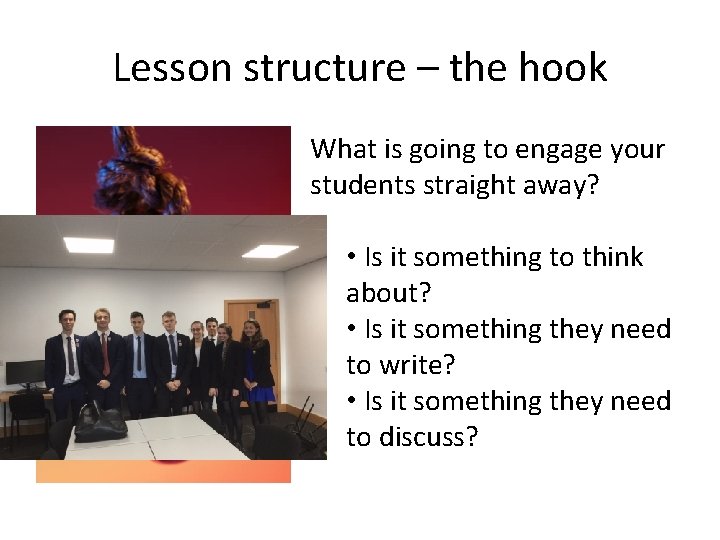
Lesson structure – the hook What is going to engage your students straight away? • Is it something to think about? • Is it something they need to write? • Is it something they need to discuss?
Lesson structure – the hook With the person next to you, spend 2 minutes discussing your hook. Then write it on your first yellow post-it. Don’t forget to consider your students and your lesson objective!
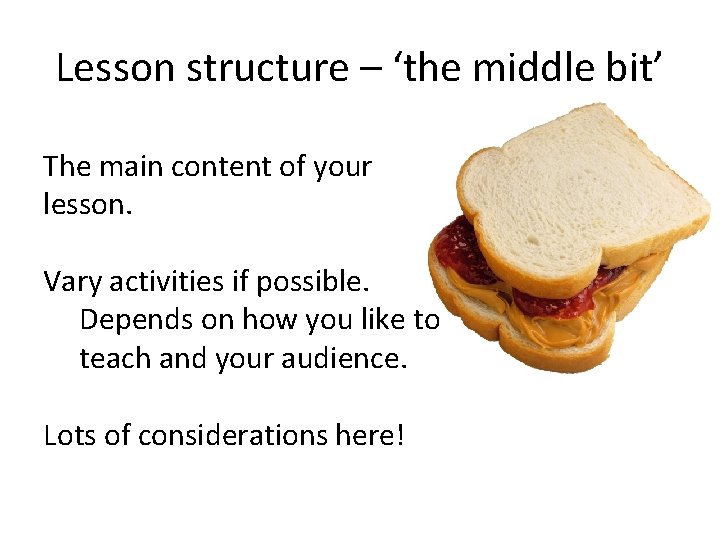
Lesson structure – ‘the middle bit’ The main content of your lesson. Vary activities if possible. Depends on how you like to teach and your audience. Lots of considerations here!
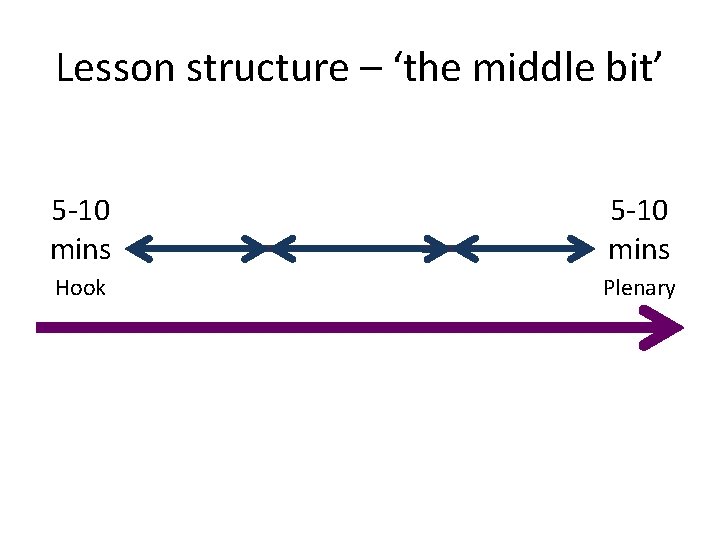
Lesson structure – ‘the middle bit’ 5 -10 mins Hook Plenary
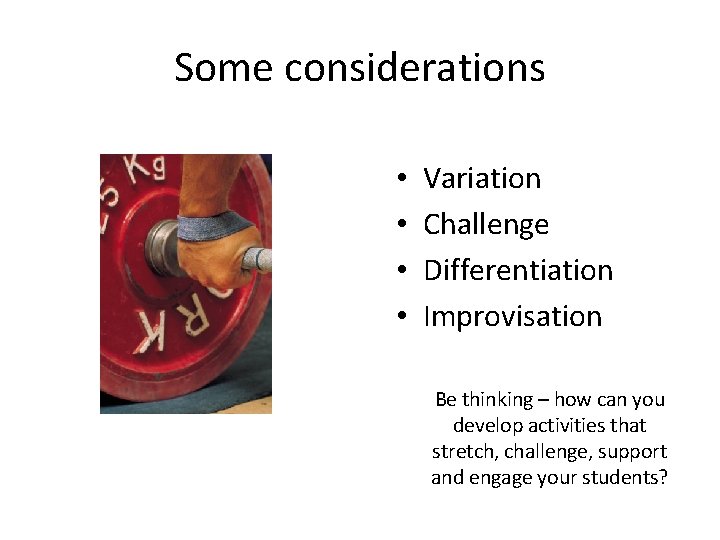
Some considerations • • Variation Challenge Differentiation Improvisation Be thinking – how can you develop activities that stretch, challenge, support and engage your students?
Variation Varying activities allows learners to engage in the material in different ways. • Q&A • Discussion (pairs, groups, whole class) • Critical reading • Analysis • Summarising • Practical planning • Debate • Role play
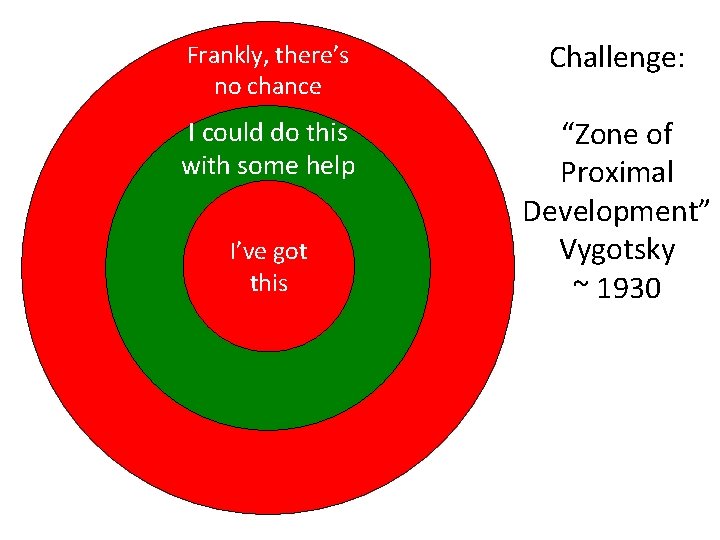
Frankly, there’s no chance Challenge: I could do this with some help “Zone of Proximal Development” Vygotsky ~ 1930 I’ve got this
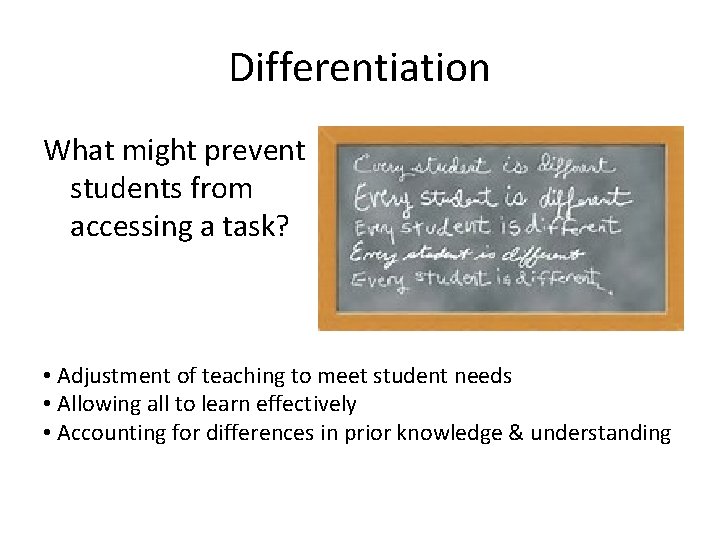
Differentiation What might prevent students from accessing a task? • Adjustment of teaching to meet student needs • Allowing all to learn effectively • Accounting for differences in prior knowledge & understanding
Ways to support students • Modeling – Running through an example yourself in front of the group, before asking them to try it themselves • Worked examples – Providing samples of pre-completed tasks for them to compare their own work against • Scaffolding – Giving structured steps for students to complete – breaking a task down into manageable chunks
Improvisation
Ideas about content Consider your students and your lesson objective(s). On your orange post-its, briefly describe two activities that could help your students to understand your objective.
Lesson structure – the plenary Plenarius = complete Wrapping up • Summarise the lesson • Refer back to the learning objective • How do they know what they know? • How do you know what they know?
Lesson structure – the plenary With the person next to you, spend 2 minutes discussing your plenary. Then write it on your second yellow post-it.
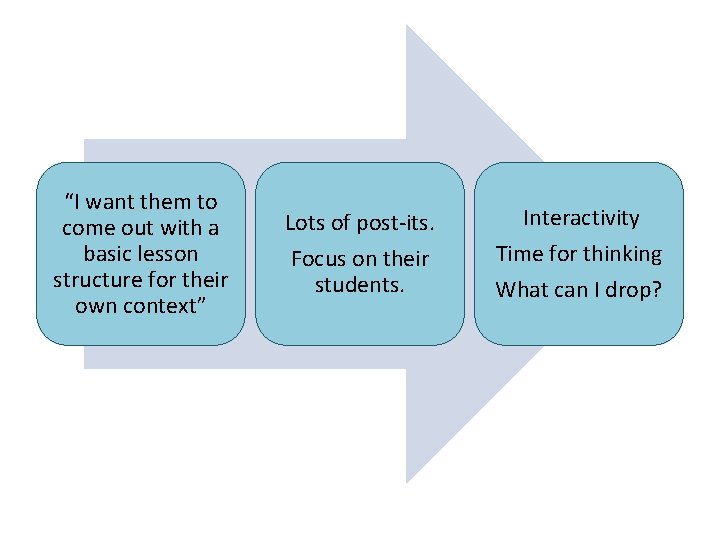
“I want them to come out with a basic lesson structure for their own context” Lots of post-its. Focus on their students. Interactivity Time for thinking What can I drop?
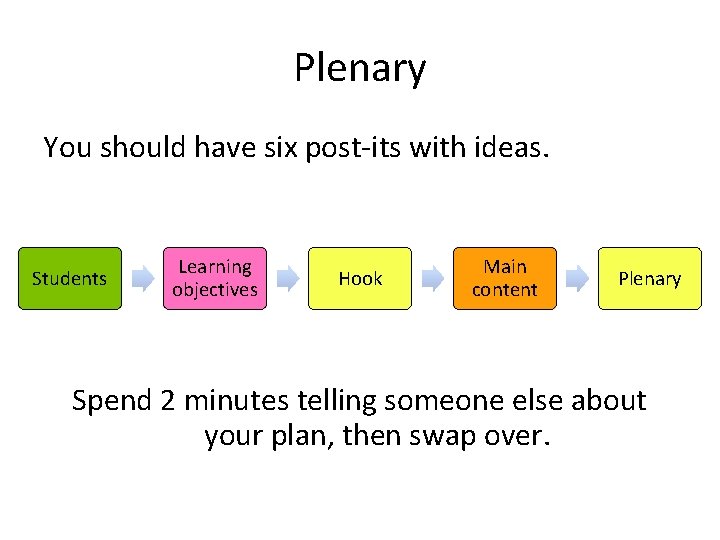
Plenary You should have six post-its with ideas. Students Learning objectives Hook Main content Plenary Spend 2 minutes telling someone else about your plan, then swap over.
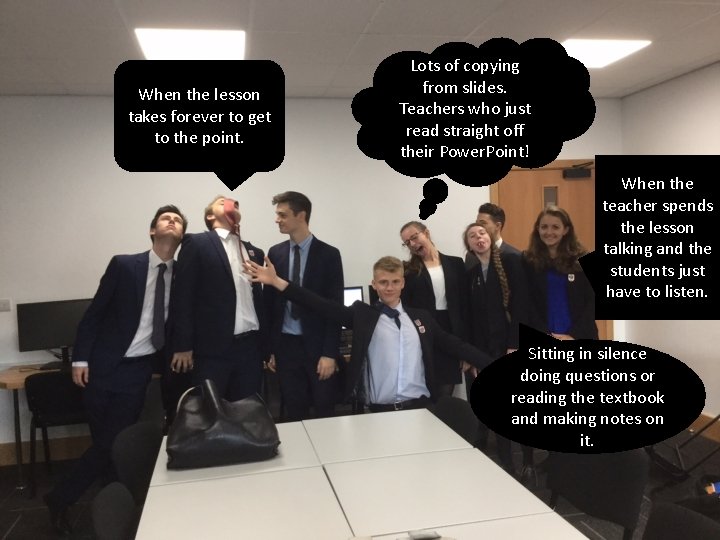
When the lesson takes forever to get to the point. Lots of copying from slides. Teachers who just read straight off their Power. Point! When the teacher spends the lesson talking and the students just have to listen. Sitting in silence doing questions or reading the textbook and making notes on it.
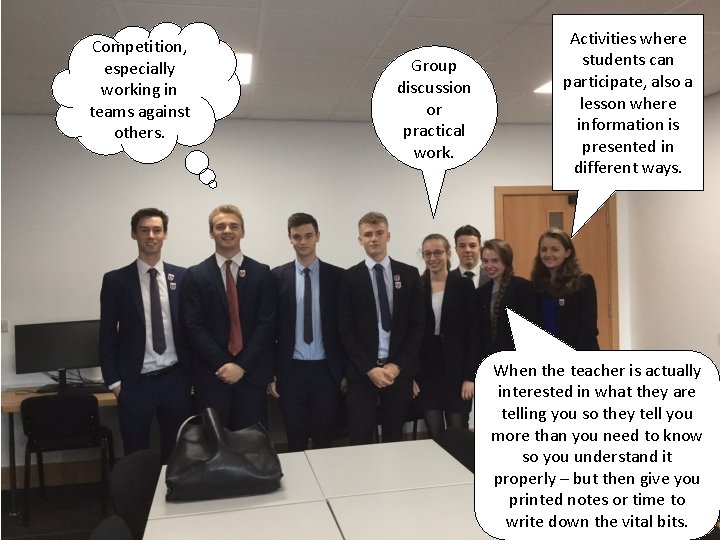
Competition, especially working in teams against others. Group discussion or practical work. Activities where students can participate, also a lesson where information is presented in different ways. When the teacher is actually interested in what they are telling you so they tell you more than you need to know so you understand it properly – but then give you printed notes or time to write down the vital bits.