
Developing a growth mindset Session 1 Defining growth

- Slides: 33
Developing a growth mindset Session 1: Defining ‘growth mindset’, its benefits and the role of effort
Session objectives 1. Introduce the concept of ‘growth mindset’ 2. Dispel any myths around growth mindset 3. Explore the benefits of growth mindset 4. Explore the role of effort 2
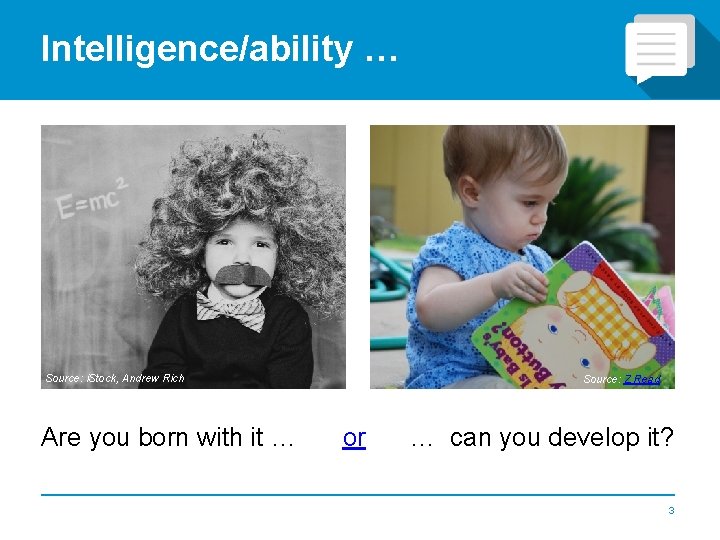
Intelligence/ability … Source: i. Stock, Andrew Rich Are you born with it … Source: Z Read or … can you develop it? 3
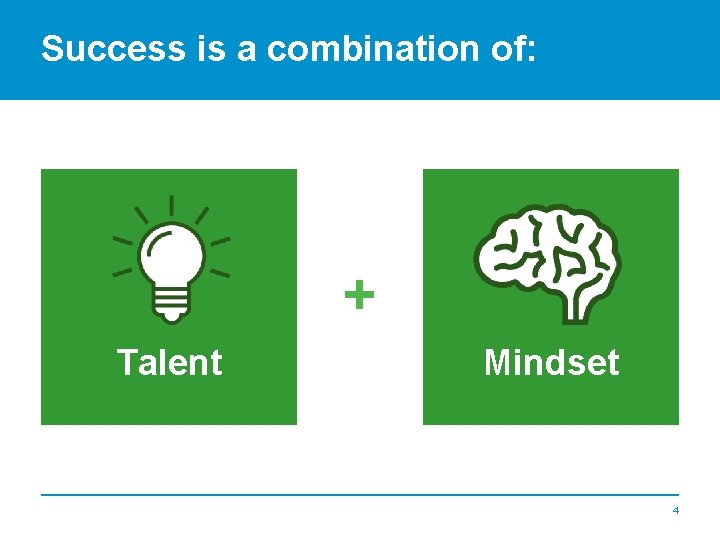
Success is a combination of: + Talent Mindset 4
Mindset: talent matrix Underachiever Ordinary Champion Overachiever Mindset 5
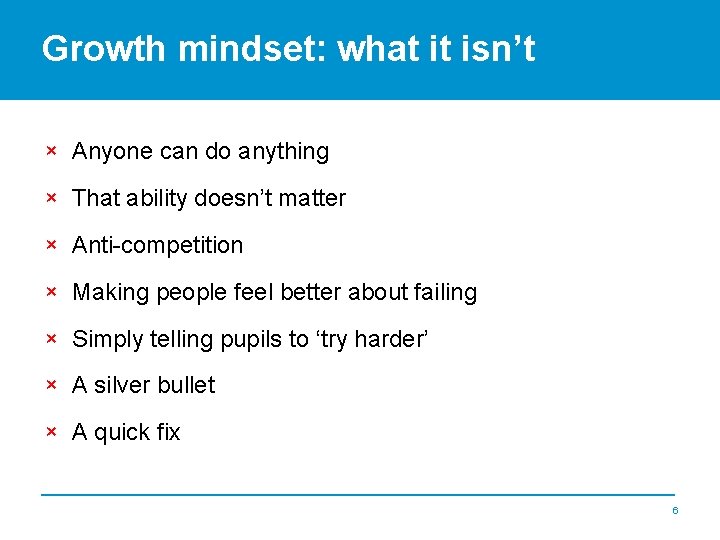
Growth mindset: what it isn’t × Anyone can do anything × That ability doesn’t matter × Anti-competition × Making people feel better about failing × Simply telling pupils to ‘try harder’ × A silver bullet × A quick fix 6
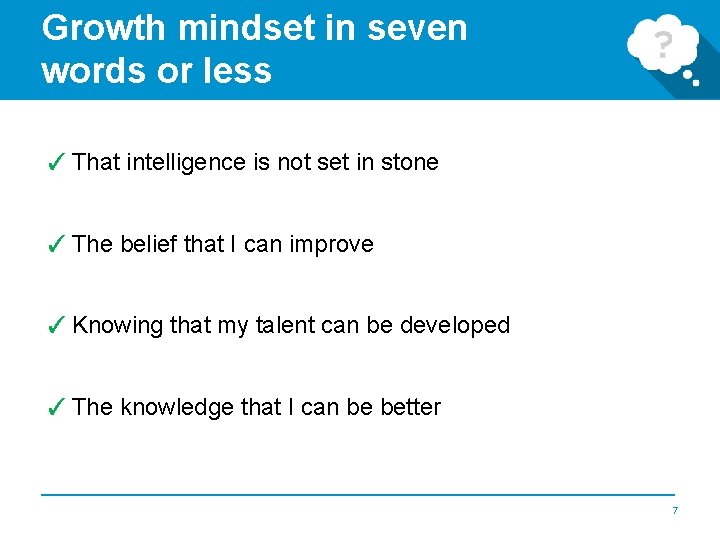
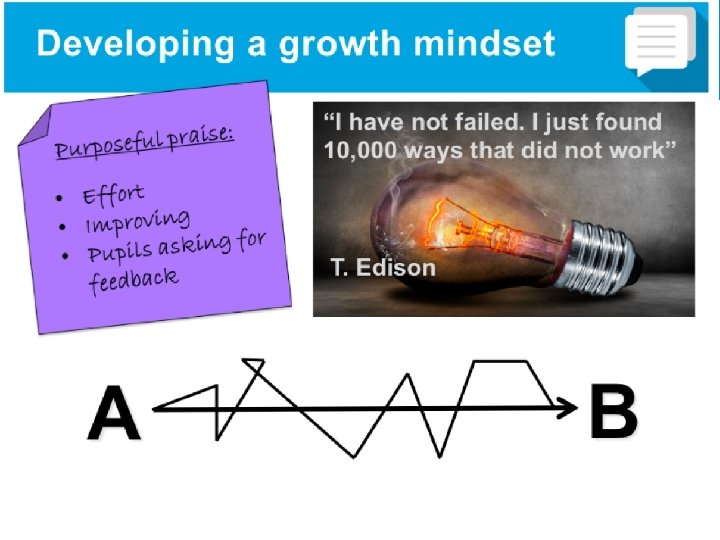
Growth mindset in seven words or less ✓ That intelligence is not set in stone ✓ The belief that I can improve ✓ Knowing that my talent can be developed ✓ The knowledge that I can be better 7
What are the benefits? If someone believes they can improve, what behaviours could this lead to? 8
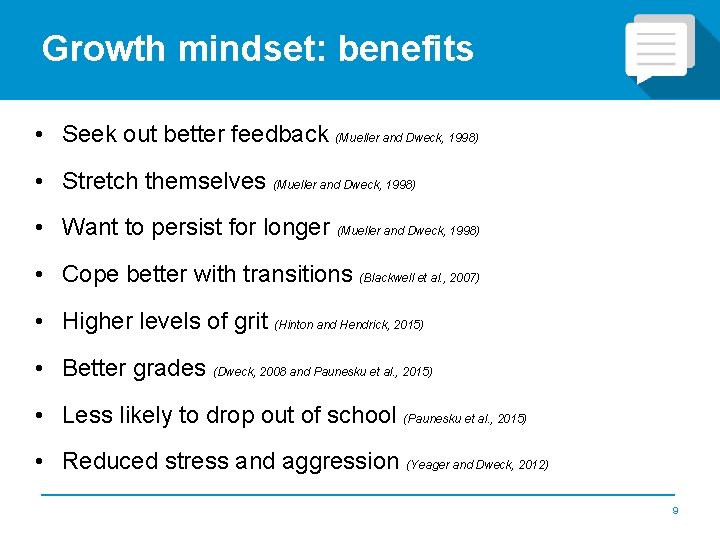
Growth mindset: benefits • Seek out better feedback (Mueller and Dweck, 1998) • Stretch themselves (Mueller and Dweck, 1998) • Want to persist for longer (Mueller and Dweck, 1998) • Cope better with transitions (Blackwell et al. , 2007) • Higher levels of grit (Hinton and Hendrick, 2015) • Better grades (Dweck, 2008 and Paunesku et al. , 2015) • Less likely to drop out of school (Paunesku et al. , 2015) • Reduced stress and aggression (Yeager and Dweck, 2012) 9
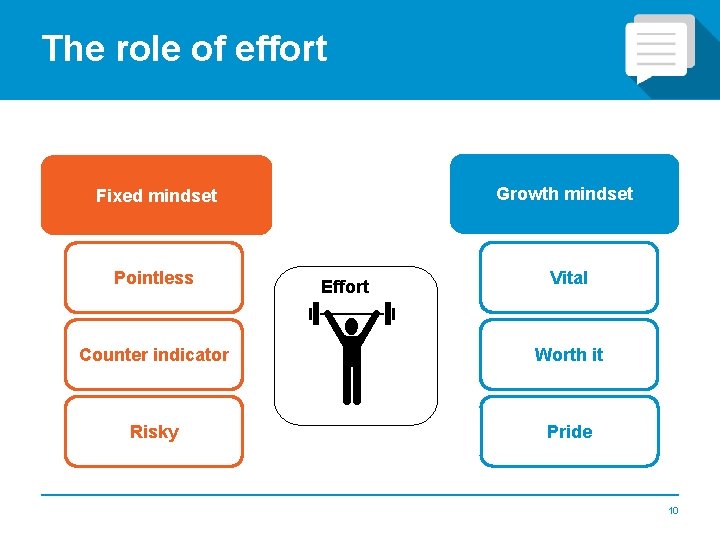
The role of effort Growth mindset Fixed mindset Pointless Counter indicator Risky Effort Vital Worth it Pride 10
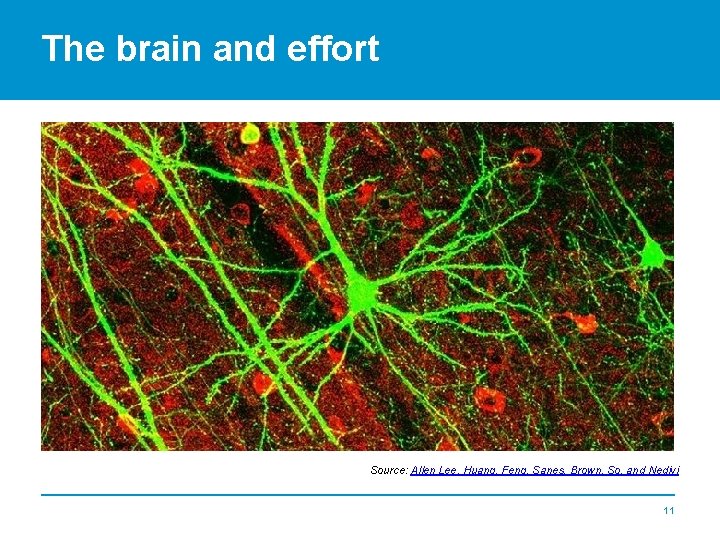
The brain and effort Source: Allen Lee, Huang, Feng, Sanes, Brown, So, and Nedivi 11
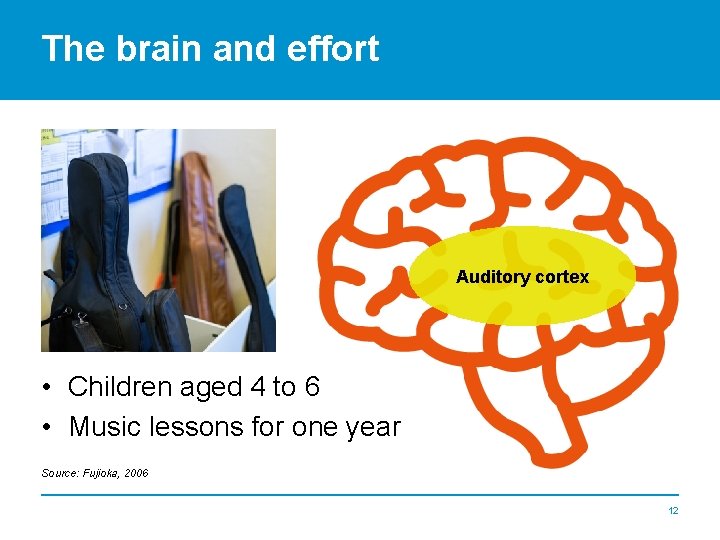
The brain and effort Auditory cortex • Children aged 4 to 6 • Music lessons for one year Source: Fujioka, 2006 12
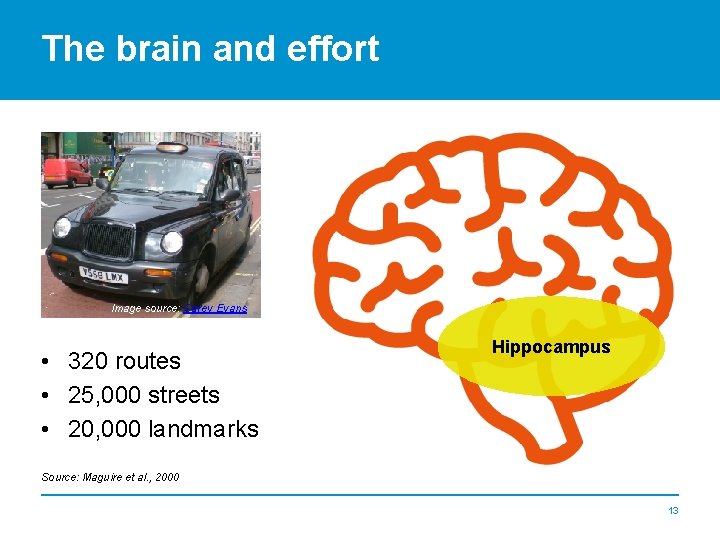
The brain and effort Image source: Carey Evans • 320 routes • 25, 000 streets • 20, 000 landmarks Hippocampus Source: Maguire et al. , 2000 13
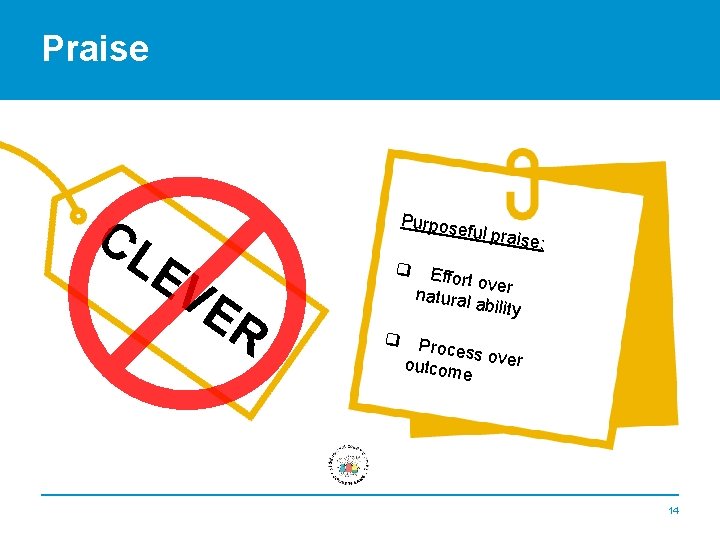
Praise CL Purpos EV ER eful pra ise: ❑ Eff ort over natural ability ❑ Pro cess ov er outcom e 14
Praise © The Key CPD Toolkit | Inner. Drive 15
The Pygmalion effect 16
The Pygmalion effect 17
The Pygmalion effect 18
Part 2 19
What do we want for our children? We want our children to be inspired by the world around them and be taught exciting and engaging lessons. We want our children to make great progress and be proud of the things they have learnt and the work that they have done. 20
Reasons for changing the way that we mark and give feedback. We noticed that the books from 2016 -17 had lots of marking in them that hadn’t been responded to - either the children didn’t know what they needed to do or they hadn’t been given the time to complete it to the best of their ability. The children were making progress but we felt that it could be improved upon. I visited other schools from outside the borough who had implemented effective feedback and could immediately see the great progress evident in books all across the school. The children that I spoke to were really enthusiastic about the benefits of being given verbal feedback instead of traditional marking. 21
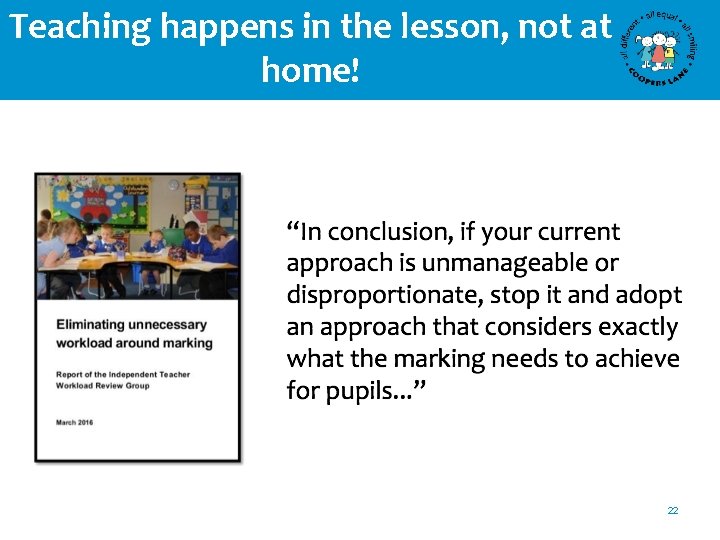
Teaching happens in the lesson, not at home! 22
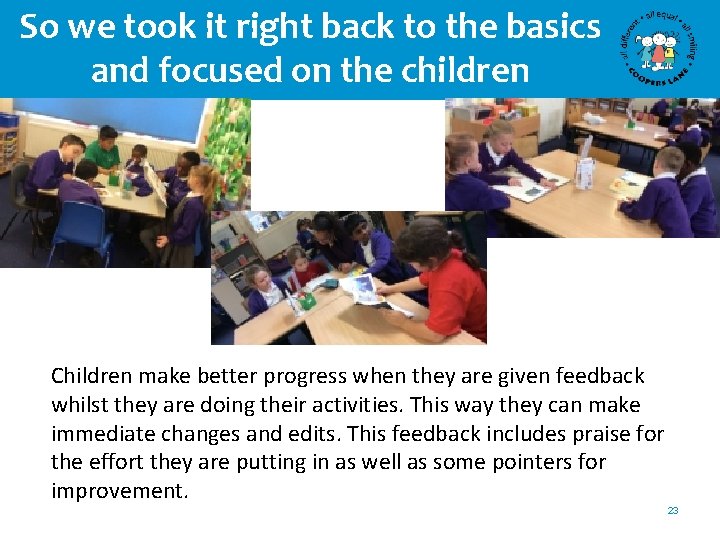
So we took it right back to the basics and focused on the children Children make better progress when they are given feedback whilst they are doing their activities. This way they can make immediate changes and edits. This feedback includes praise for the effort they are putting in as well as some pointers for improvement. 23
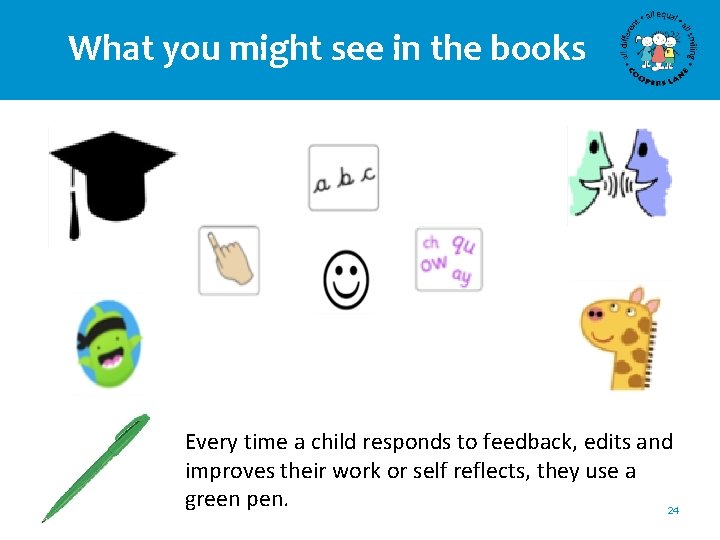
What you might see in the books Every time a child responds to feedback, edits and improves their work or self reflects, they use a green pen. 24
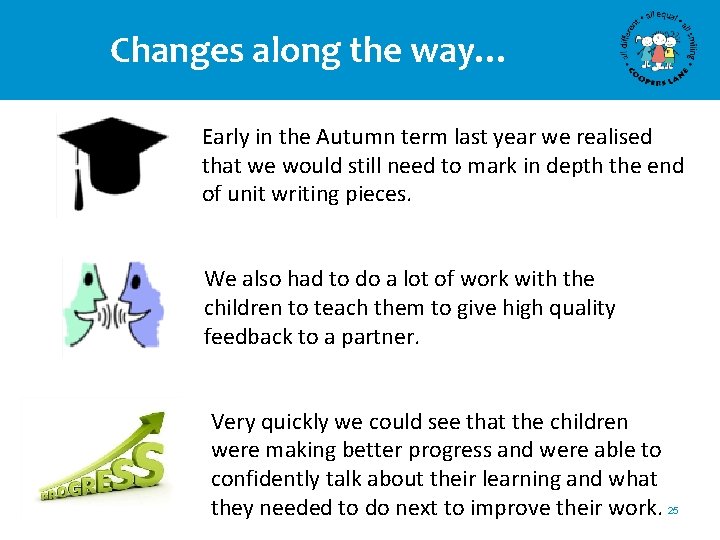
Changes along the way… Early in the Autumn term last year we realised that we would still need to mark in depth the end of unit writing pieces. We also had to do a lot of work with the children to teach them to give high quality feedback to a partner. Very quickly we could see that the children were making better progress and were able to confidently talk about their learning and what they needed to do next to improve their work. 25
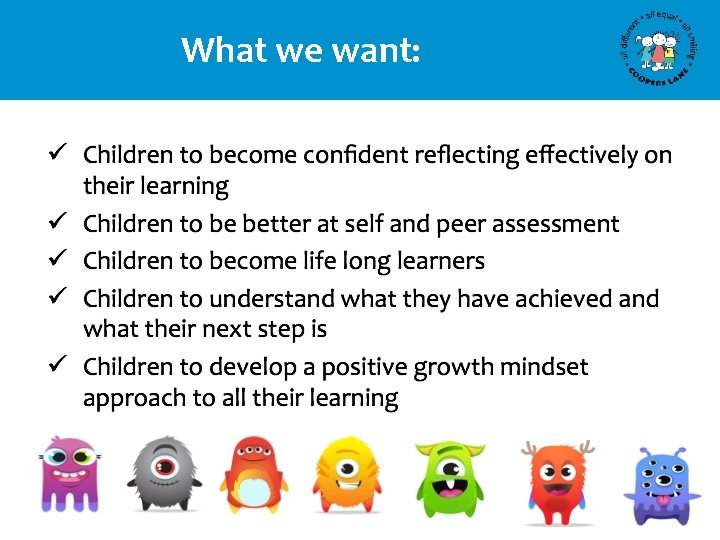
What we want: 26
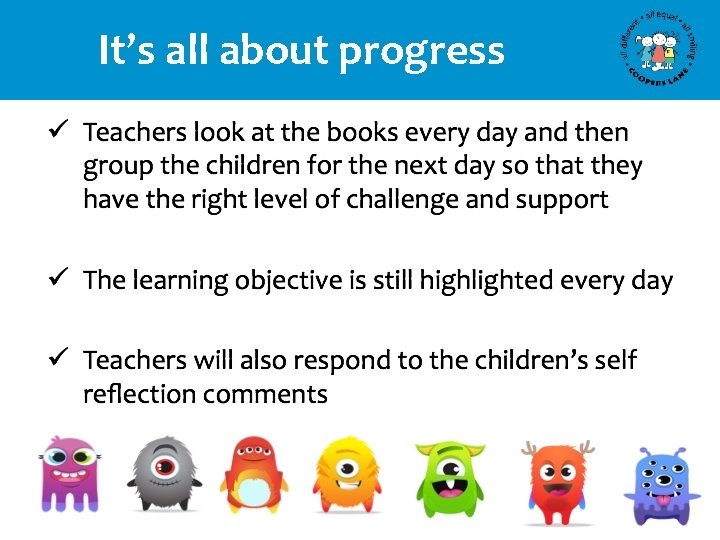
It’s all about progress 27
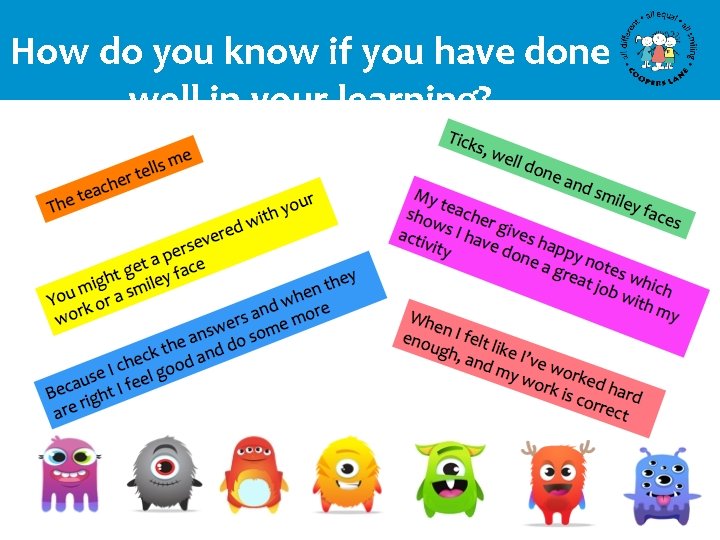
How do you know if you have done well in your learning? 28
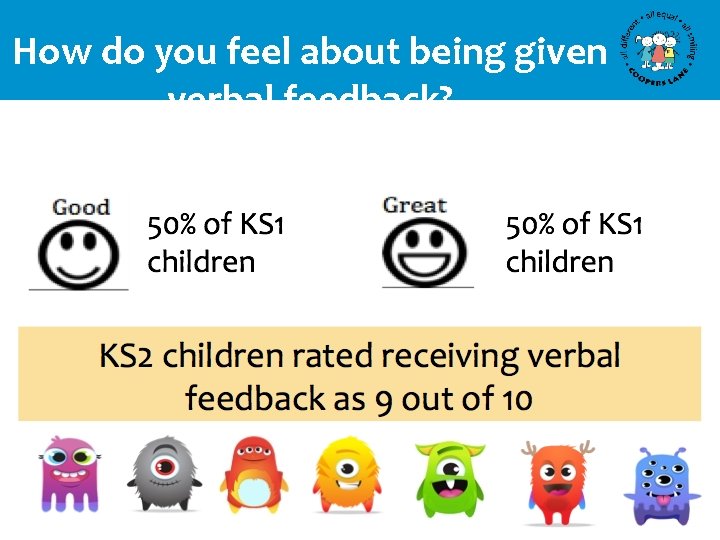
How do you feel about being given verbal feedback? 29
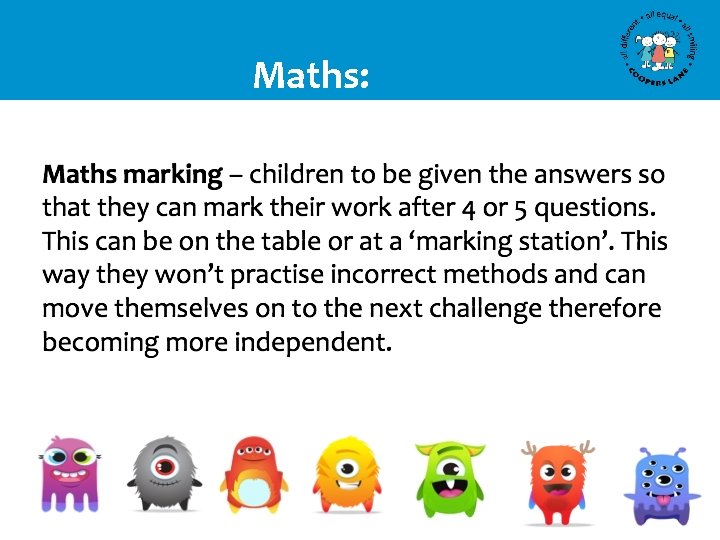
Maths: 30
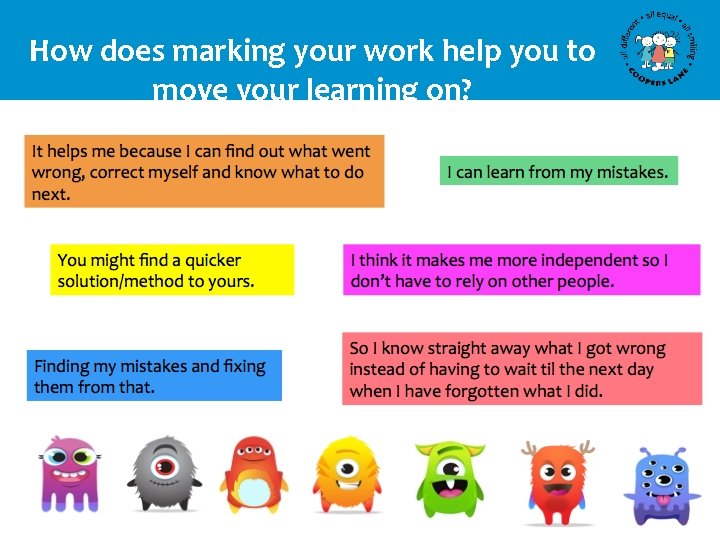
How does marking your work help you to move your learning on? 31
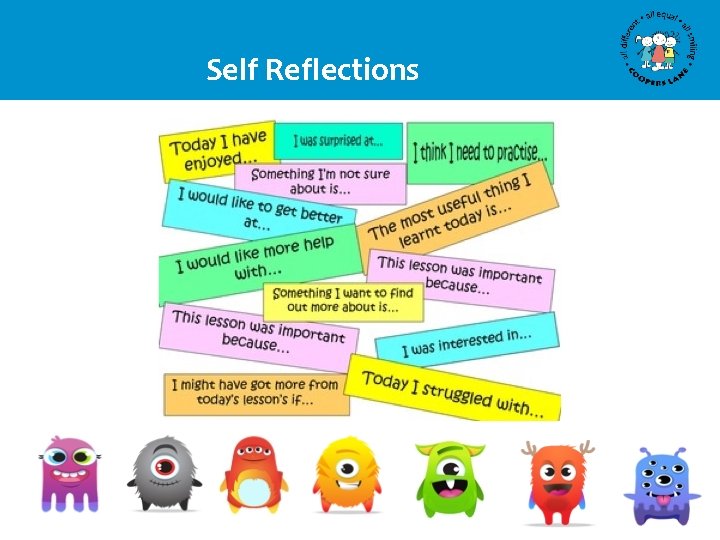
Self Reflections 32
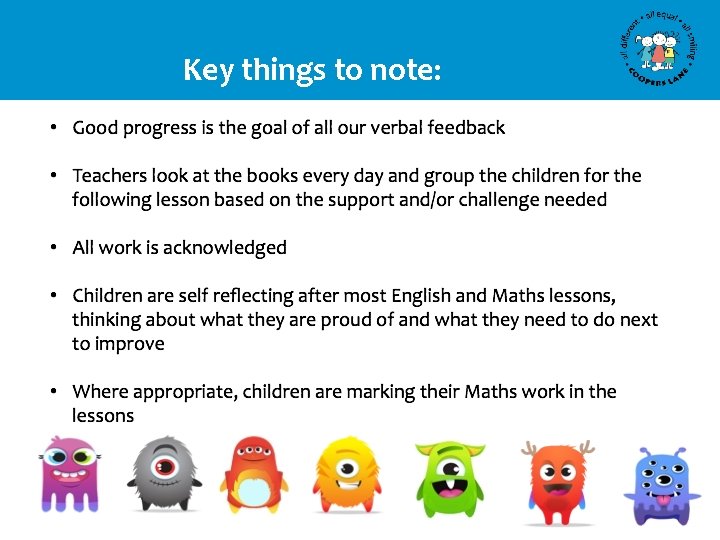
Key things to note: 33