
Developing a Fundraising Strategy Course Outline Why plan



- Slides: 55
Developing a Fundraising Strategy
Course Outline Why plan? Strategy Development Process 7 step process for developing a fundraising strategy - tools/examples/activities related to each step Korean case-study Group Exercises Q&A
Why do we need a Plan?
Why do we need a Plan? Provides a road map Sets direction Helps gain commitment from all stakeholders Helps Board and Management make informed choices Determines how resources are used Helps to ascertain criteria to be tracked and evaluated
Strategy Development Process
GROUP ACTIVITY What are the key components of strategy development? https: //www. youtube. com/watch? v=7 b 0 ASMc 2 s. WA
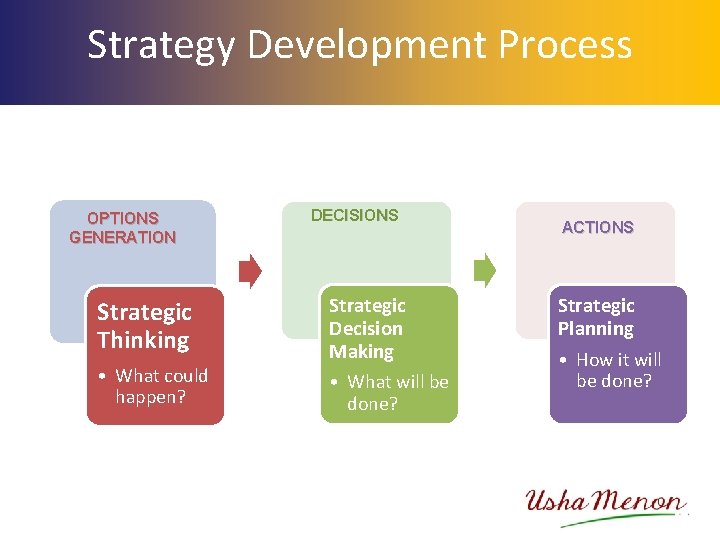
Strategy Development Process OPTIONS GENERATION Strategic Thinking • What could happen? DECISIONS Strategic Decision Making • What will be done? ACTIONS Strategic Planning • How it will be done?
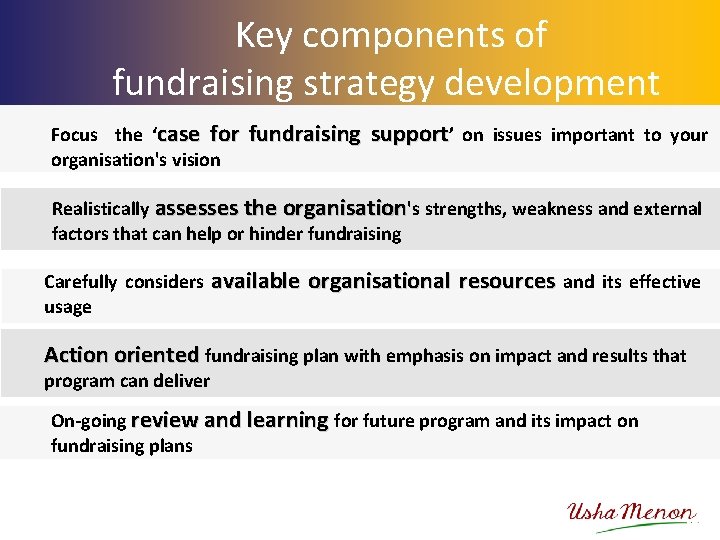
Key components of fundraising strategy development Focus the ‘case for organisation's vision fundraising support’ on issues important to your Realistically assesses the organisation's strengths, weakness and external factors that can help or hinder fundraising Carefully considers usage available organisational resources and its effective Action oriented fundraising plan with emphasis on impact and results that program can deliver On-going review and learning for future program and its impact on fundraising plans
The Korean Experience
Developing a Fundraising Strategy
A step by step process Where are we now? Where are we going? How will we get there?
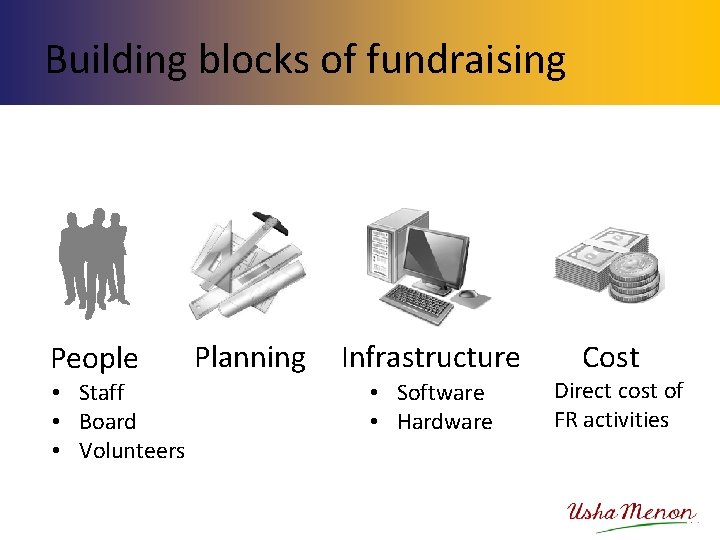
Building blocks of fundraising People • Staff • Board • Volunteers Planning Infrastructure • Software • Hardware Cost Direct cost of FR activities
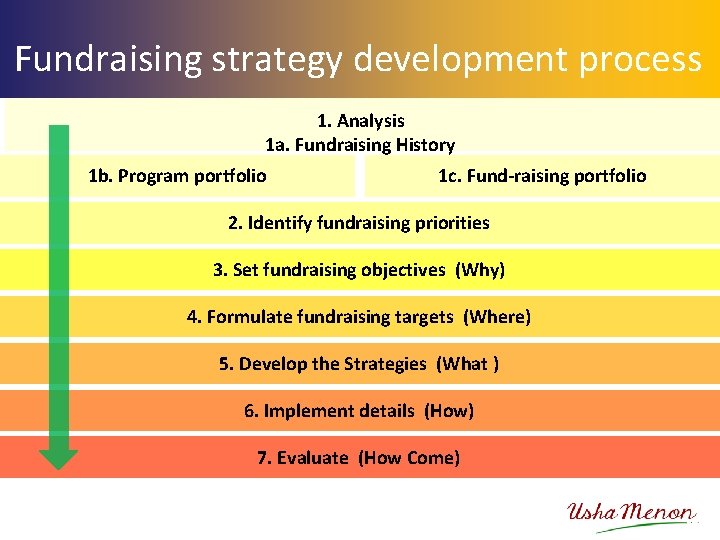
Fundraising strategy development process 1. Analysis 1 a. Fundraising History 1 b. Program portfolio 1 c. Fund-raising portfolio 2. Identify fundraising priorities 3. Set fundraising objectives (Why) 4. Formulate fundraising targets (Where) 5. Develop the Strategies (What ) 6. Implement details (How) 7. Evaluate (How Come)
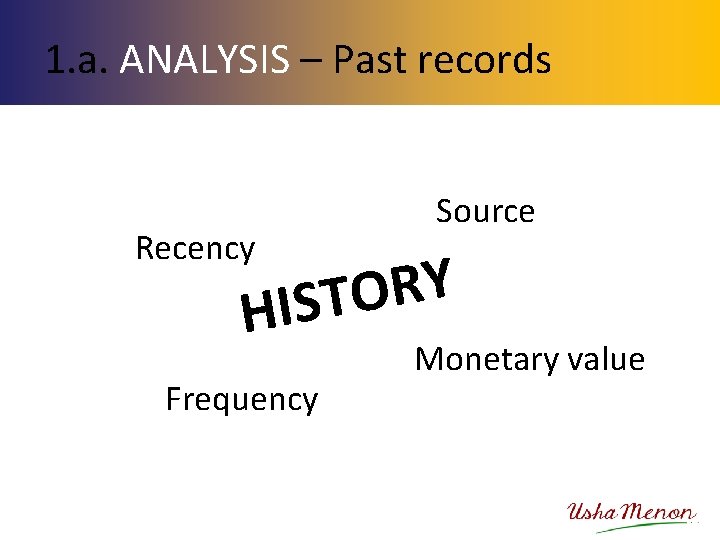
1. a. ANALYSIS – Past records Recency Source Y R O T S I H Frequency Monetary value
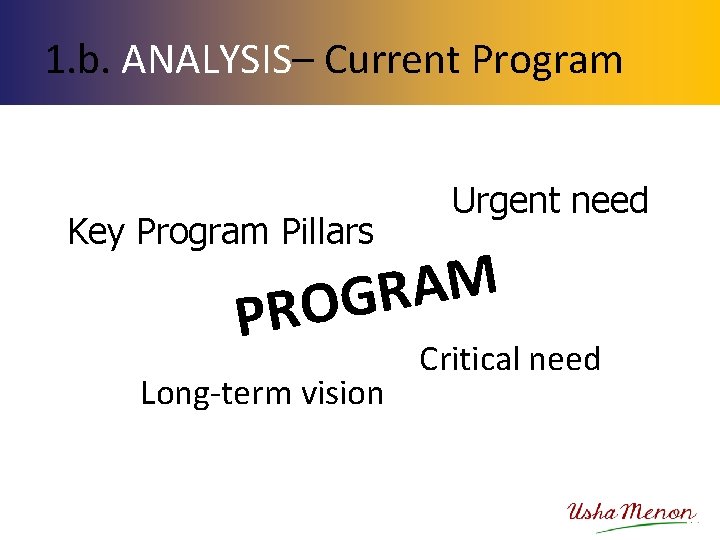
1. b. ANALYSIS– Current Program Key Program Pillars Urgent need M A R G O R P Long-term vision Critical need
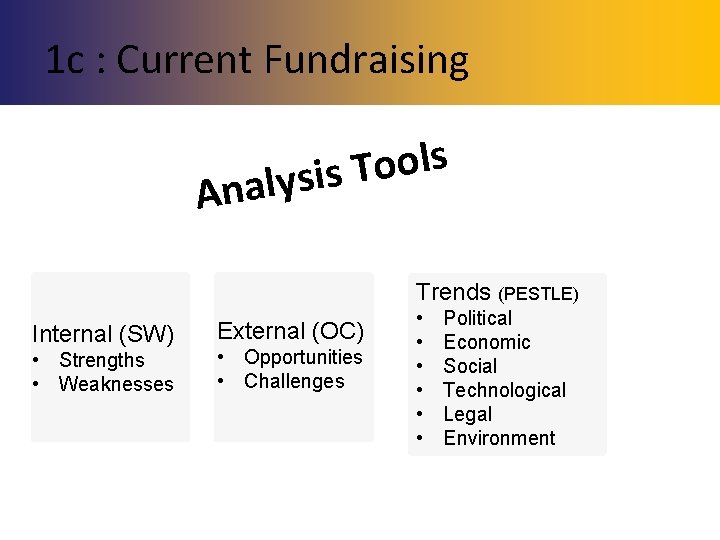
1 c : Current Fundraising s l o o T s i s y l na A Trends (PESTLE) Internal (SW) • Strengths • Weaknesses External (OC) • Opportunities • Challenges • • • Political Economic Social Technological Legal Environment
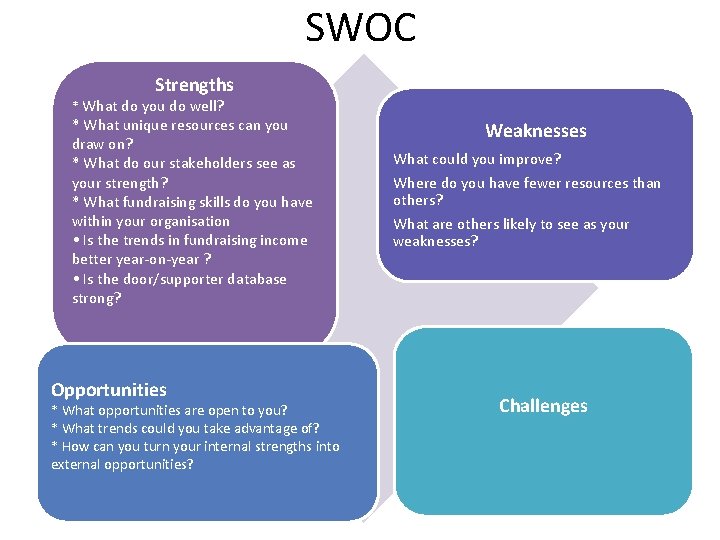
SWOC Strengths * What do you do well? * What unique resources can you draw on? * What do our stakeholders see as your strength? * What fundraising skills do you have within your organisation • Is the trends in fundraising income better year-on-year ? • Is the door/supporter database strong? Opportunities * What opportunities are open to you? * What trends could you take advantage of? * How can you turn your internal strengths into external opportunities? Weaknesses What could you improve? Where do you have fewer resources than others? What are others likely to see as your weaknesses? Challenges
2. IDENTIFY FR PRIORITIES “ What is your income mix?
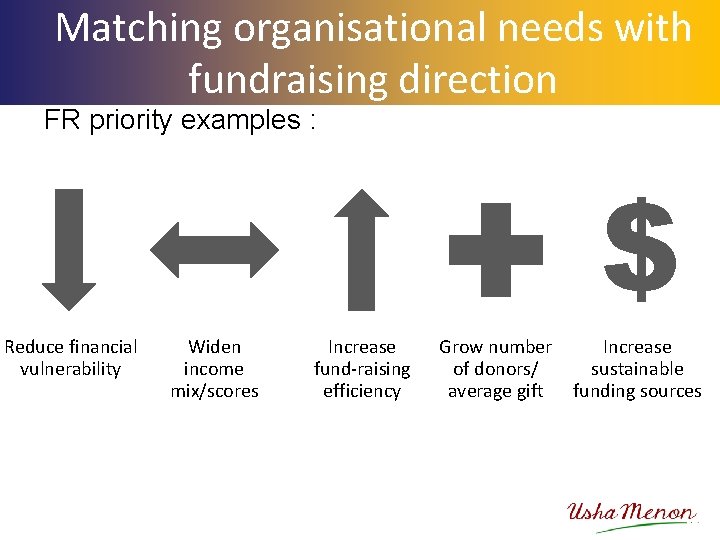
Matching organisational needs with fundraising direction FR priority examples : $ Reduce financial vulnerability Widen income mix/scores Increase fund-raising efficiency Grow number Increase of donors/ sustainable average gift funding sources
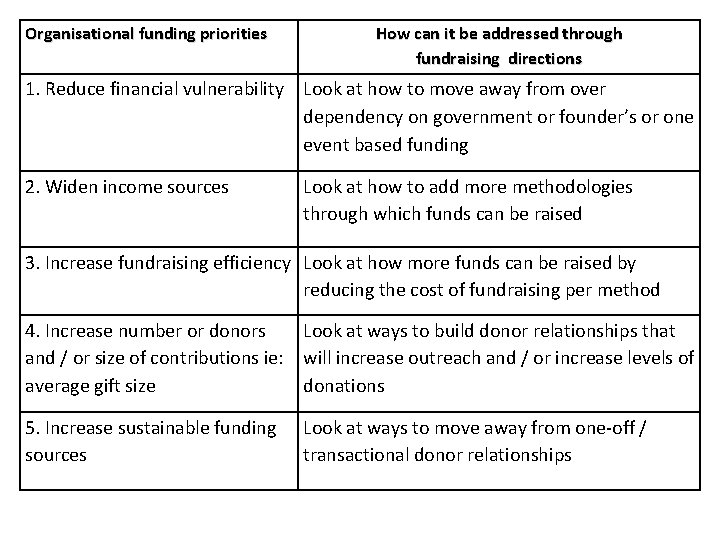
Organisational funding priorities How can it be addressed through fundraising directions 1. Reduce financial vulnerability Look at how to move away from over dependency on government or founder’s or one event based funding 2. Widen income sources Look at how to add more methodologies through which funds can be raised 3. Increase fundraising efficiency Look at how more funds can be raised by reducing the cost of fundraising per method 4. Increase number or donors Look at ways to build donor relationships that and / or size of contributions ie: will increase outreach and / or increase levels of average gift size donations 5. Increase sustainable funding sources Look at ways to move away from one-off / transactional donor relationships
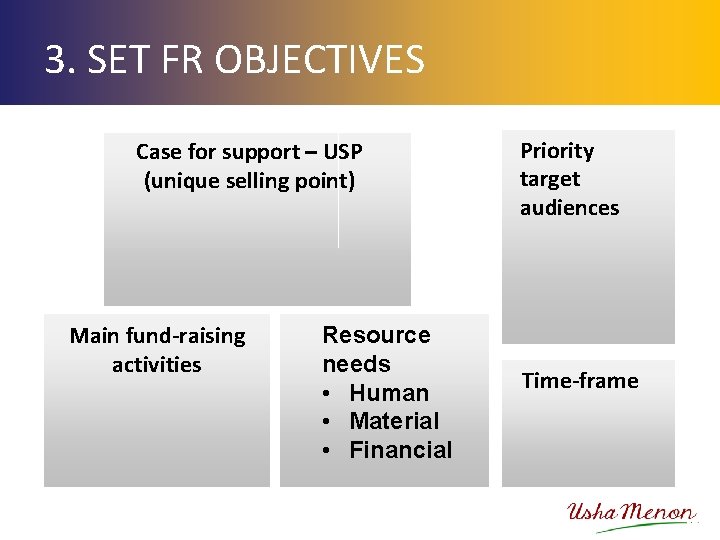
3. SET FR OBJECTIVES Case for support – USP (unique selling point) Main fund-raising activities Resource needs • Human • Material • Financial Priority target audiences Time-frame
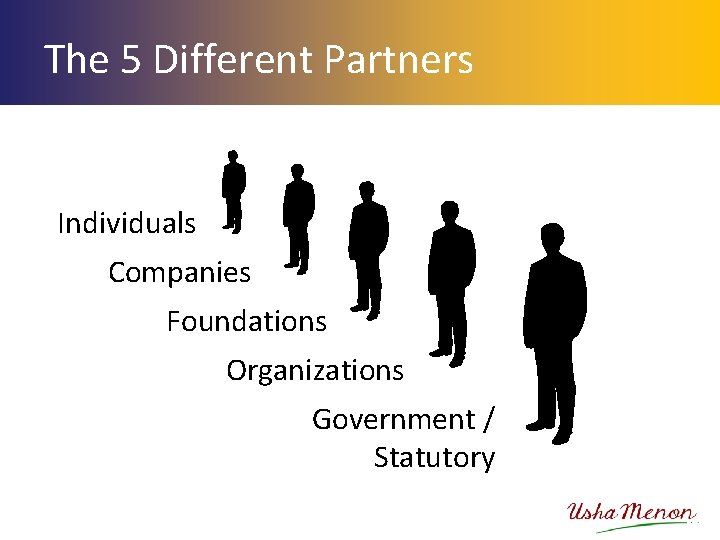
The 5 Different Partners Individuals Companies Foundations Organizations Government / Statutory
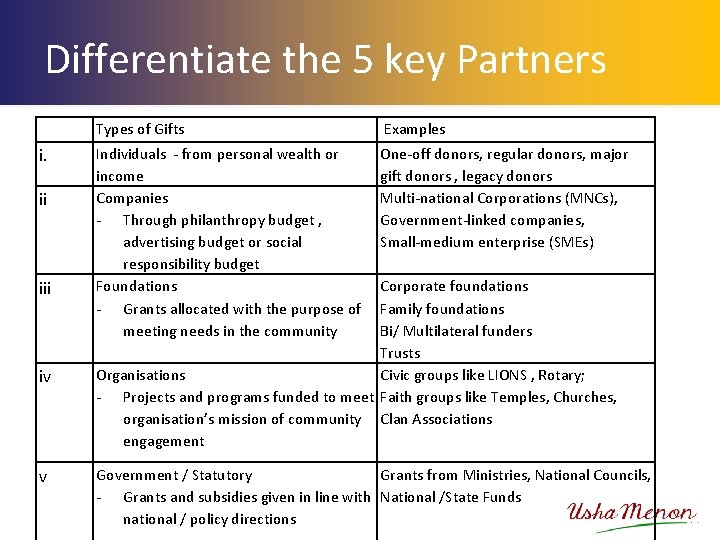
Differentiate the 5 key Partners i. ii iv v Types of Gifts Examples Individuals - from personal wealth or income Companies - Through philanthropy budget , advertising budget or social responsibility budget Foundations - Grants allocated with the purpose of meeting needs in the community One-off donors, regular donors, major gift donors , legacy donors Multi-national Corporations (MNCs), Government-linked companies, Small-medium enterprise (SMEs) Corporate foundations Family foundations Bi/ Multilateral funders Trusts Organisations Civic groups like LIONS , Rotary; - Projects and programs funded to meet Faith groups like Temples, Churches, organisation’s mission of community Clan Associations engagement Government / Statutory Grants from Ministries, National Councils, - Grants and subsidies given in line with National /State Funds national / policy directions
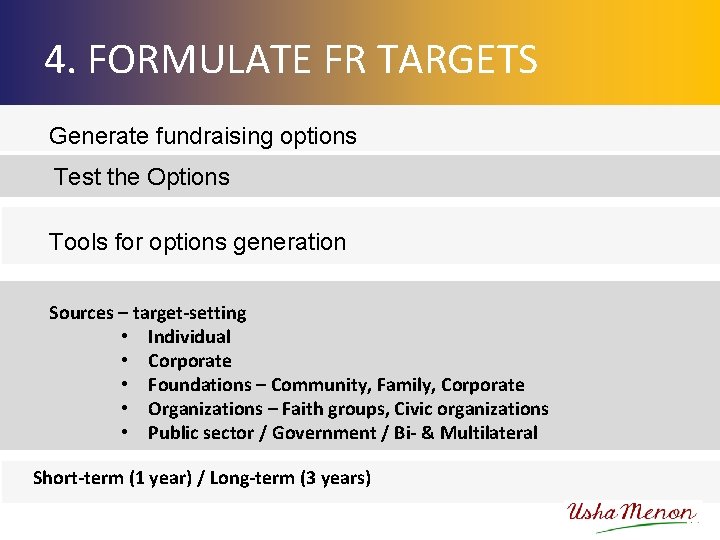
4. FORMULATE FR TARGETS Generate fundraising options Test the Options Tools for options generation Sources – target-setting • Individual • Corporate • Foundations – Community, Family, Corporate • Organizations – Faith groups, Civic organizations • Public sector / Government / Bi- & Multilateral Short-term (1 year) / Long-term (3 years)
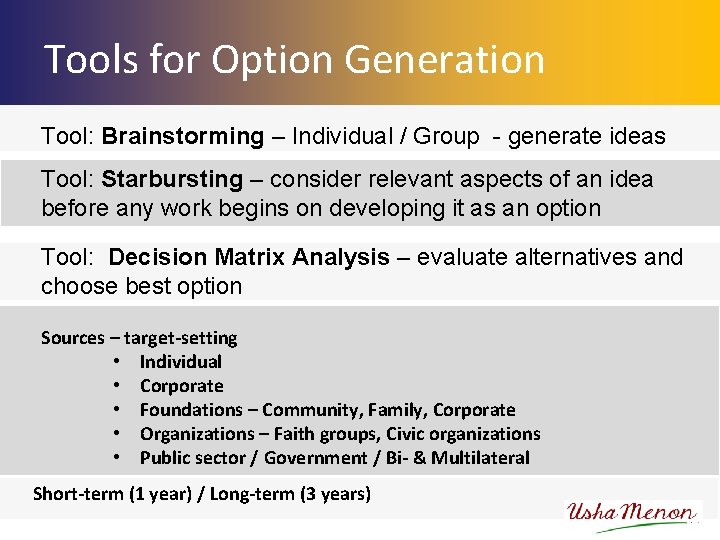
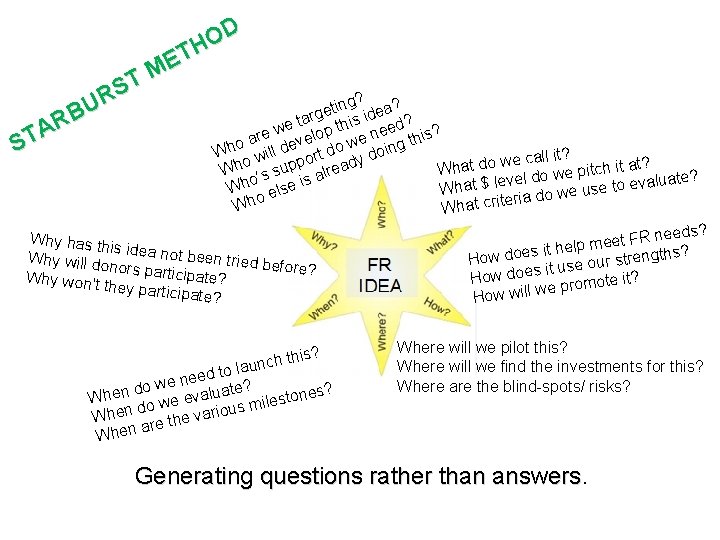
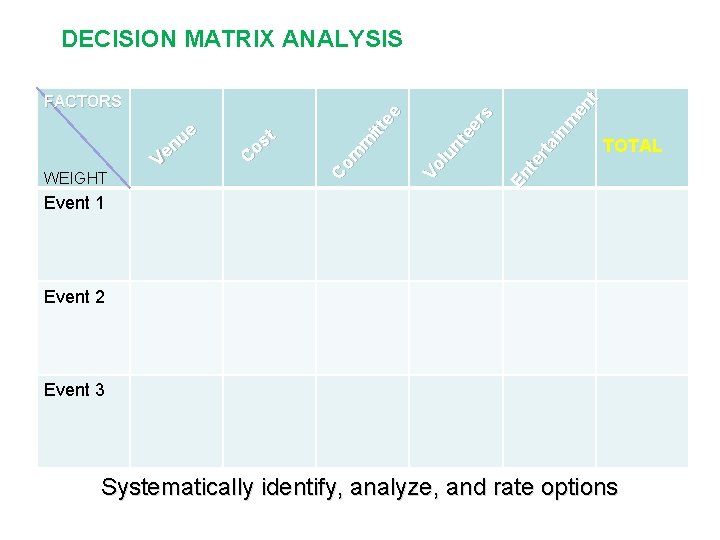
Tools for Option Generation Tool: Brainstorming – Individual / Group - generate ideas Tool: Starbursting – consider relevant aspects of an idea before any work begins on developing it as an option Tool: Decision Matrix Analysis – evaluate alternatives and choose best option Sources – target-setting • Individual • Corporate • Foundations – Community, Family, Corporate • Organizations – Faith groups, Civic organizations • Public sector / Government / Bi- & Multilateral Short-term (1 year) / Long-term (3 years)
D O H T E M T S R ng? ea? i U t e B targ this id ed? R e w A re elop we ne g this? a T v o e S Wh will d ort do y doin o p Wh ’s sup alread o s Wh else i o Wh Why has th is idea not been tried Why will do before? nors partic ipate? Why won’t they partic ipate? this? h c n u la eed to n e w do te? ? When o we evalua milestones d us When re the vario a When call it? e w ? o d t Wha pitch it at e w o d l ve valuate? e o t e What $ le s u ria do we e it r c t a h W needs? R F t e e s it help m trengths? e o d w o H use our s it s e o d How ote it? m o r p e w How will Where will we pilot this? Where will we find the investments for this? Where are the blind-spots/ risks? Generating questions rather than answers
st o C Vo lu nt ee rs WEIGHT e u n Ve Co m m itt ee FACTORS En te rta in m en t DECISION MATRIX ANALYSIS TOTAL Event 1 Event 2 Event 3 Systematically identify, analyze, and rate options
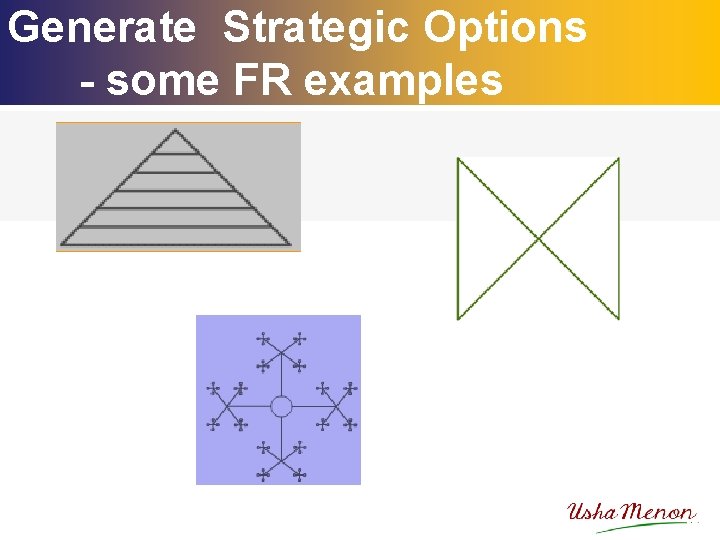
Generate Strategic Options - some FR examples
Goals Help the organisation measure its success in serving its mission and thereby achieving its vision. Concrete steps to take towards meeting the mission.
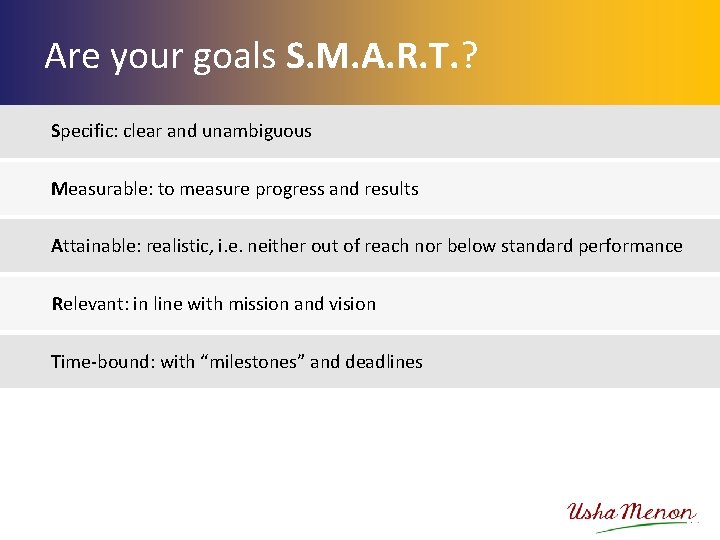
Are your goals S. M. A. R. T. ? Specific: clear and unambiguous Measurable: to measure progress and results Attainable: realistic, i. e. neither out of reach nor below standard performance Relevant: in line with mission and vision Time-bound: with “milestones” and deadlines
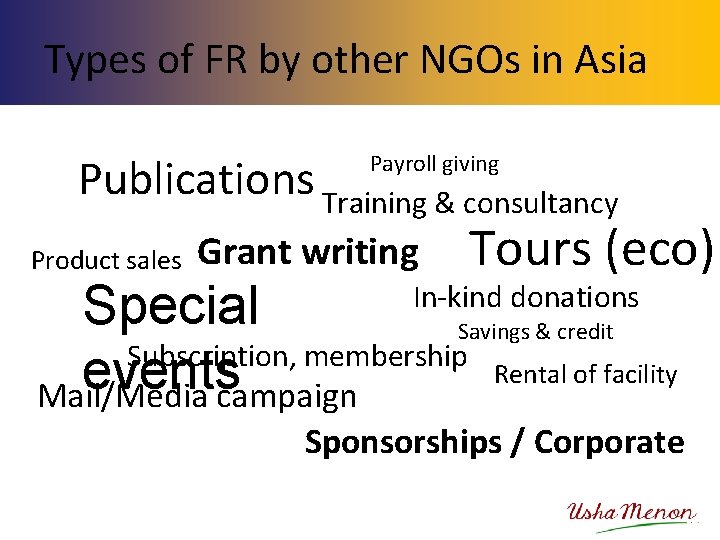
Types of FR by other NGOs in Asia Publications Training & consultancy Payroll giving Product sales Grant writing Tours (eco) Special Savings & credit Subscription, membership Rental of facility events Mail/Media campaign In-kind donations Sponsorships / Corporate
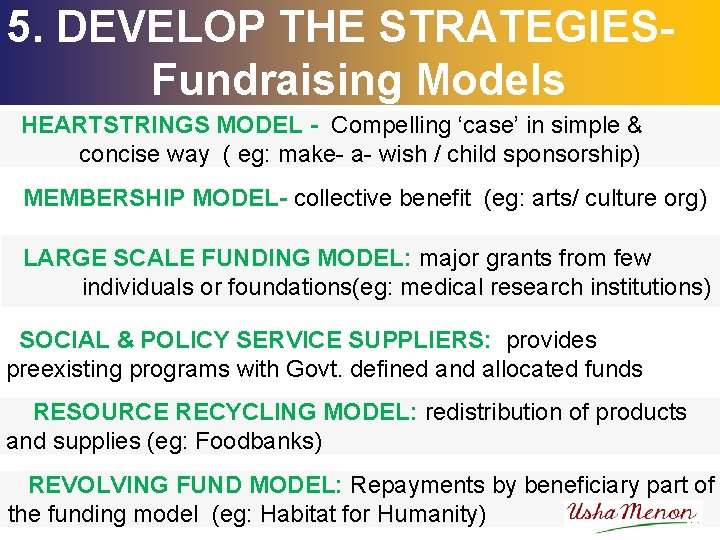
5. DEVELOP THE STRATEGIESFundraising Models HEARTSTRINGS MODEL - Compelling ‘case’ in simple & concise way ( eg: make- a- wish / child sponsorship) MEMBERSHIP MODEL- collective benefit (eg: arts/ culture org) LARGE SCALE FUNDING MODEL: major grants from few individuals or foundations(eg: medical research institutions) SOCIAL & POLICY SERVICE SUPPLIERS: provides preexisting programs with Govt. defined and allocated funds RESOURCE RECYCLING MODEL: redistribution of products and supplies (eg: Foodbanks) REVOLVING FUND MODEL: Repayments by beneficiary part of the funding model (eg: Habitat for Humanity)
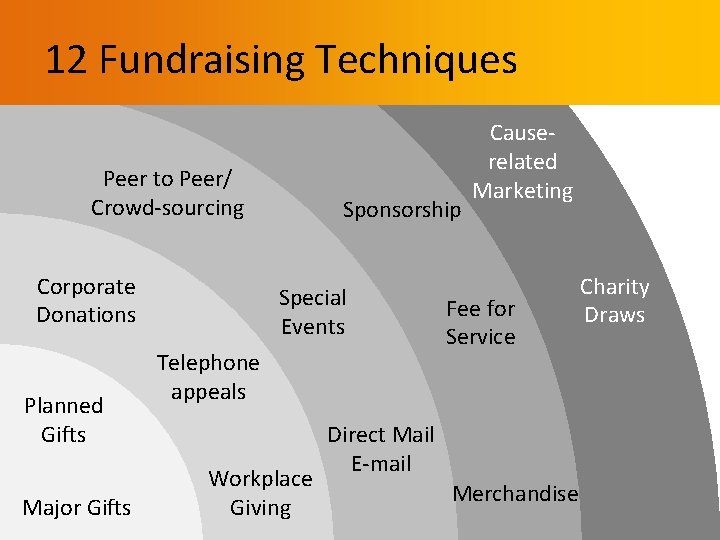
12 Fundraising Techniques Peer to Peer/ Crowd-sourcing Corporate Donations Planned Gifts Major Gifts Sponsorship Special Events Telephone appeals Workplace Giving Causerelated Marketing Fee for Service Direct Mail E-mail Merchandise Charity Draws
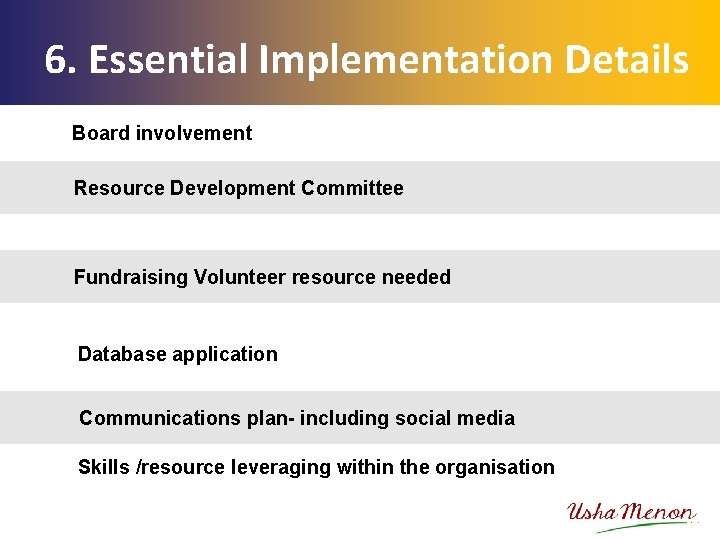
6. Essential Implementation Details Board involvement Resource Development Committee Fundraising Volunteer resource needed Database application Communications plan- including social media Skills /resource leveraging within the organisation
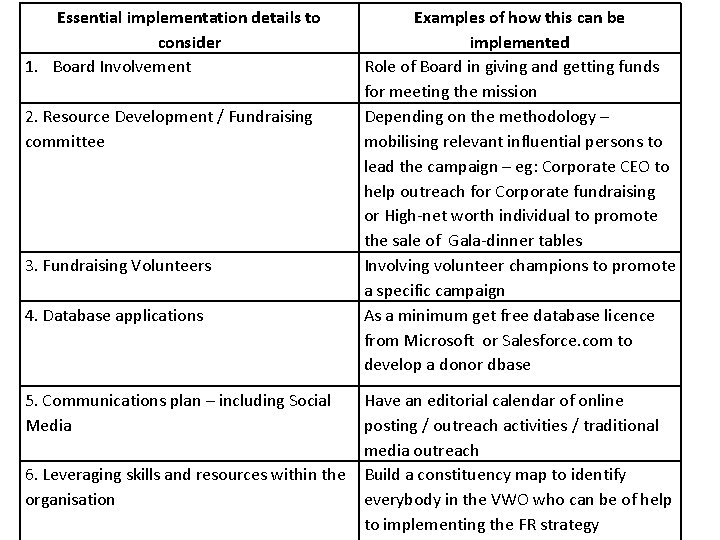
Essential implementation details to consider 1. Board Involvement 2. Resource Development / Fundraising committee 3. Fundraising Volunteers 4. Database applications 5. Communications plan – including Social Media Examples of how this can be implemented Role of Board in giving and getting funds for meeting the mission Depending on the methodology – mobilising relevant influential persons to lead the campaign – eg: Corporate CEO to help outreach for Corporate fundraising or High-net worth individual to promote the sale of Gala-dinner tables Involving volunteer champions to promote a specific campaign As a minimum get free database licence from Microsoft or Salesforce. com to develop a donor dbase Have an editorial calendar of online posting / outreach activities / traditional media outreach 6. Leveraging skills and resources within the Build a constituency map to identify organisation everybody in the VWO who can be of help to implementing the FR strategy
POLICIES
Prepare a check-list of FR related policies
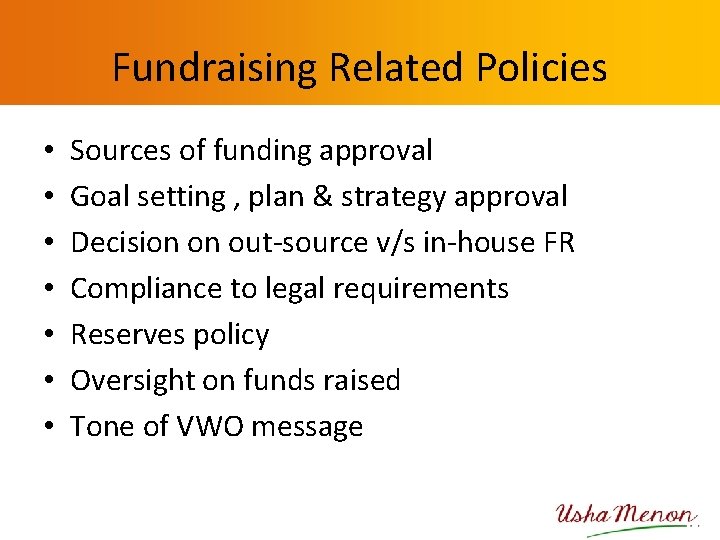
Fundraising Related Policies • • Sources of funding approval Goal setting , plan & strategy approval Decision on out-source v/s in-house FR Compliance to legal requirements Reserves policy Oversight on funds raised Tone of VWO message
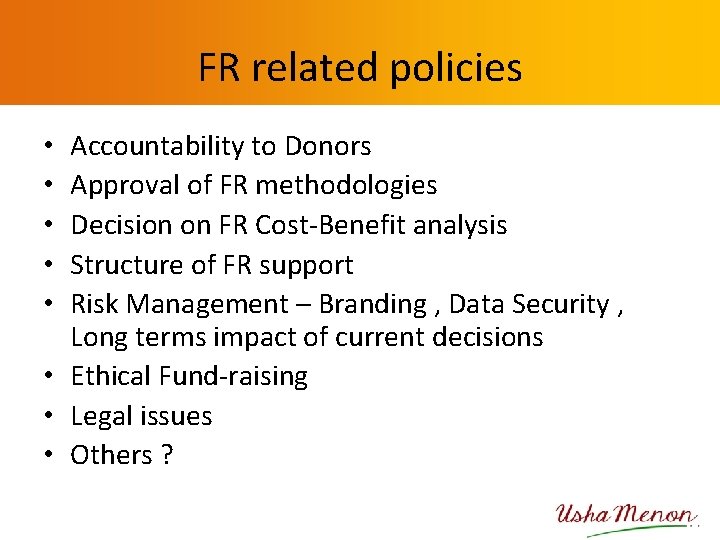
FR related policies Accountability to Donors Approval of FR methodologies Decision on FR Cost-Benefit analysis Structure of FR support Risk Management – Branding , Data Security , Long terms impact of current decisions • Ethical Fund-raising • Legal issues • Others ? • • •
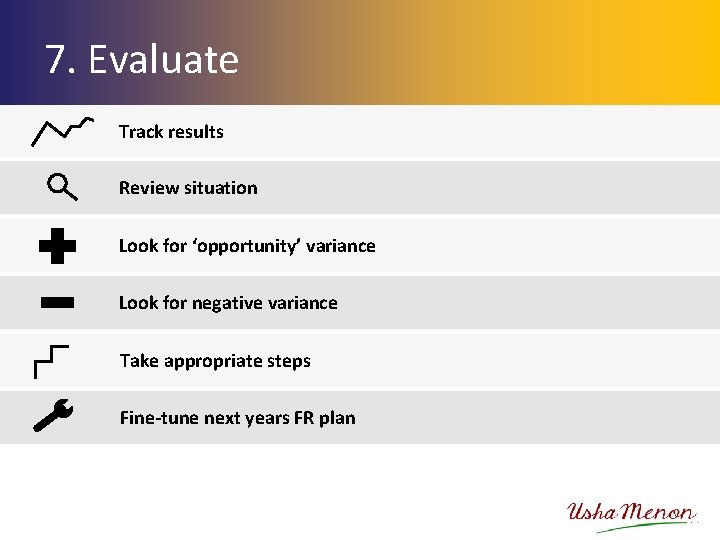
7. Evaluate Track results Review situation Look for ‘opportunity’ variance Look for negative variance Take appropriate steps Fine-tune next years FR plan
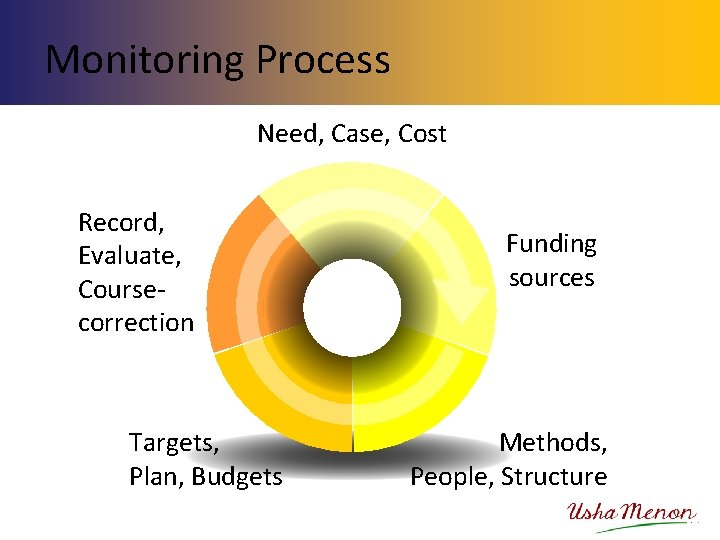
Monitoring Process Need, Case, Cost Record, Evaluate, Coursecorrection Targets, Plan, Budgets Funding sources Methods, People, Structure
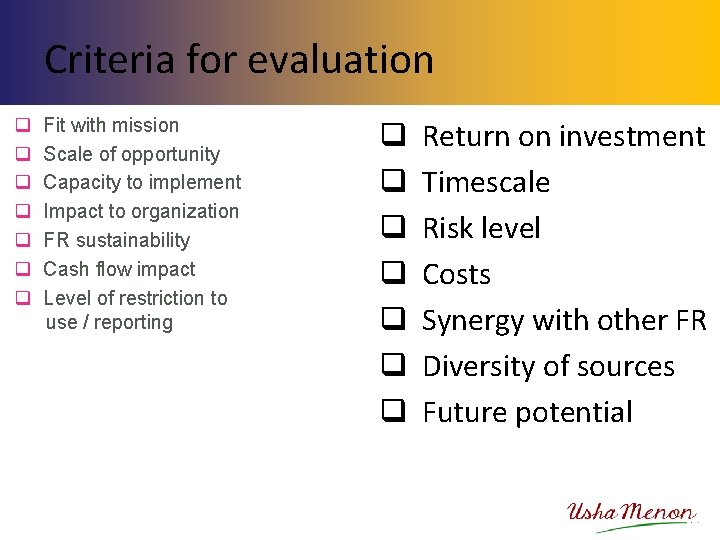
Criteria for evaluation q q q q Fit with mission Scale of opportunity Capacity to implement Impact to organization FR sustainability Cash flow impact Level of restriction to use / reporting q Return on investment q Timescale q Risk level q Costs q Synergy with other FR q Diversity of sources q Future potential
Do not mistake activity for achievement ! ~ American basketball coach John Wooden
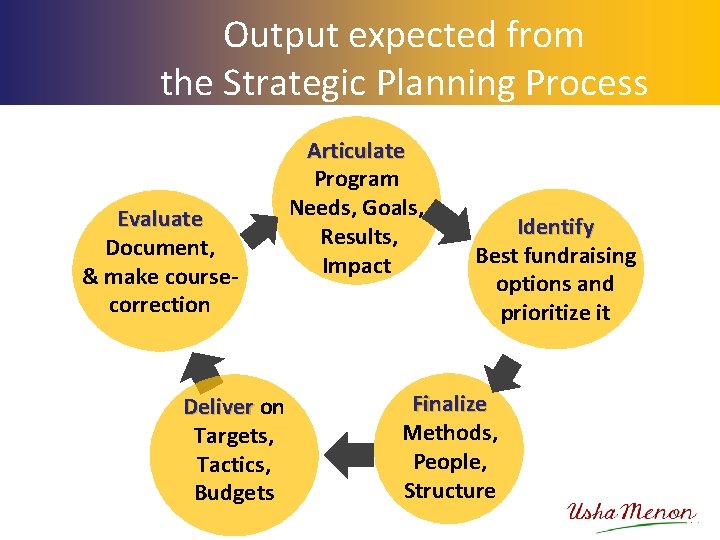
Output expected from the Strategic Planning Process Evaluate Document, & make coursecorrection Deliver on Targets, Tactics, Budgets Articulate Program Needs, Goals, Results, Impact Identify Best fundraising options and prioritize it Finalize Methods, People, Structure
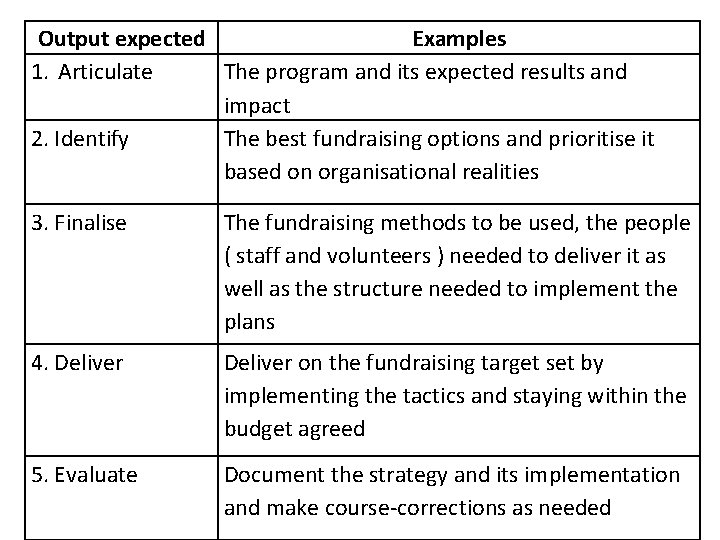
Output expected Examples 1. Articulate The program and its expected results and impact 2. Identify The best fundraising options and prioritise it based on organisational realities 3. Finalise The fundraising methods to be used, the people ( staff and volunteers ) needed to deliver it as well as the structure needed to implement the plans 4. Deliver on the fundraising target set by implementing the tactics and staying within the budget agreed 5. Evaluate Document the strategy and its implementation and make course-corrections as needed
Group Activity Develop a fundraising strategy • Refer to The Beautiful Foundation (Korea) scenario
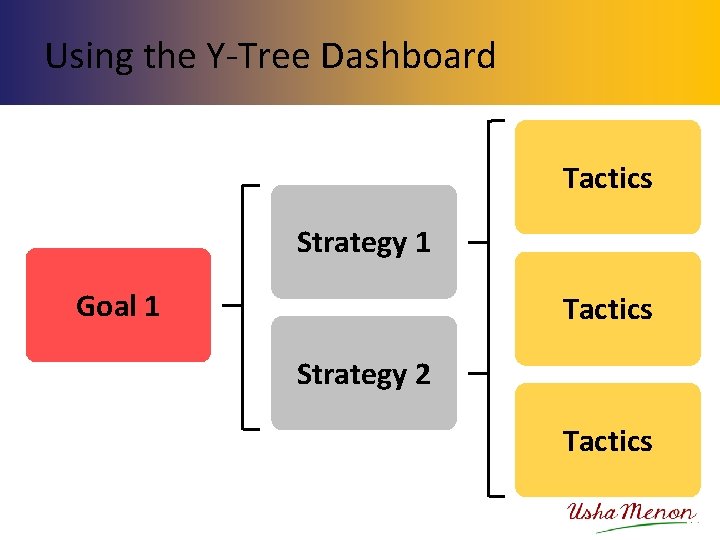
Using the Y-Tree Dashboard Tactics Strategy 1 Goal 1 Tactics Strategy 2 Tactics
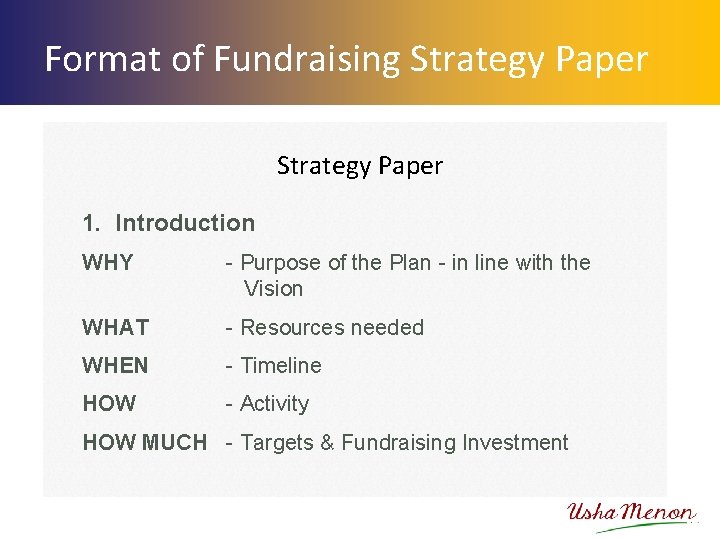
Format of Fundraising Strategy Paper 1. Introduction WHY - Purpose of the Plan - in line with the Vision WHAT - Resources needed WHEN - Timeline HOW - Activity HOW MUCH - Targets & Fundraising Investment
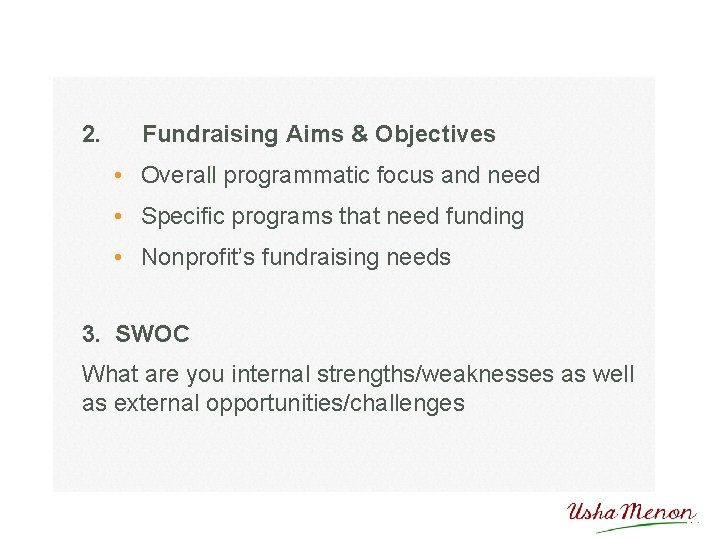
2. Fundraising Aims & Objectives • Overall programmatic focus and need • Specific programs that need funding • Nonprofit’s fundraising needs 3. SWOC What are you internal strengths/weaknesses as well as external opportunities/challenges
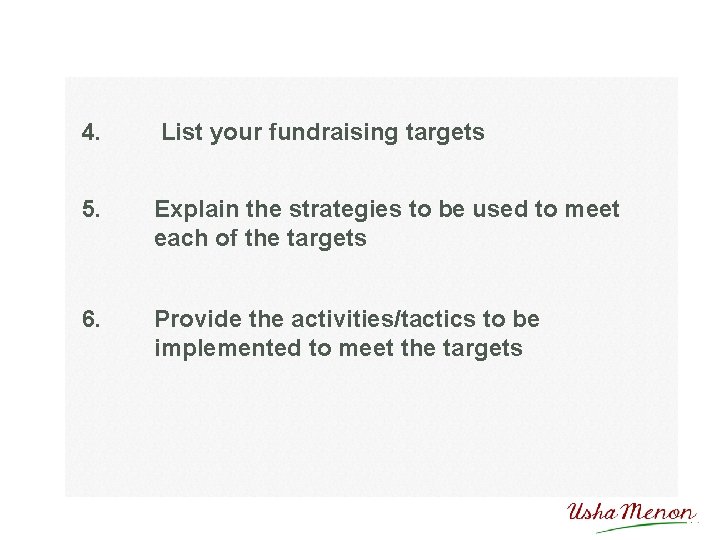
4. List your fundraising targets 5. Explain the strategies to be used to meet each of the targets 6. Provide the activities/tactics to be implemented to meet the targets
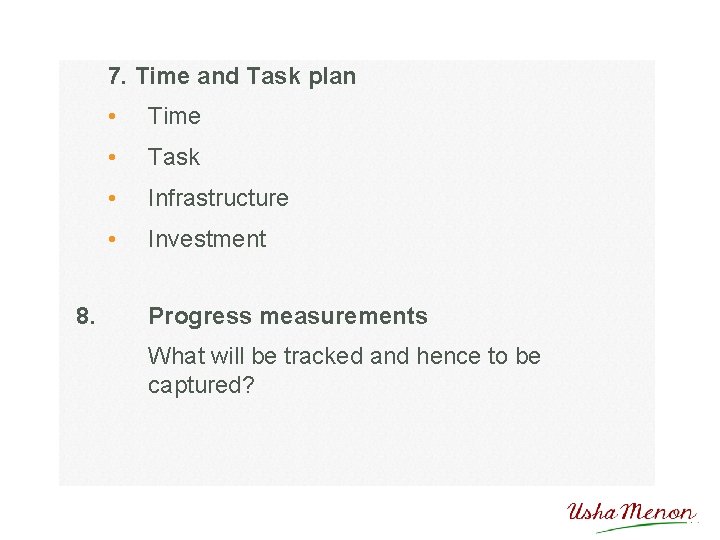
7. Time and Task plan 8. • Time • Task • Infrastructure • Investment Progress measurements What will be tracked and hence to be captured?
9. Reporting format/timings 10. Contingencies What is Plan B?
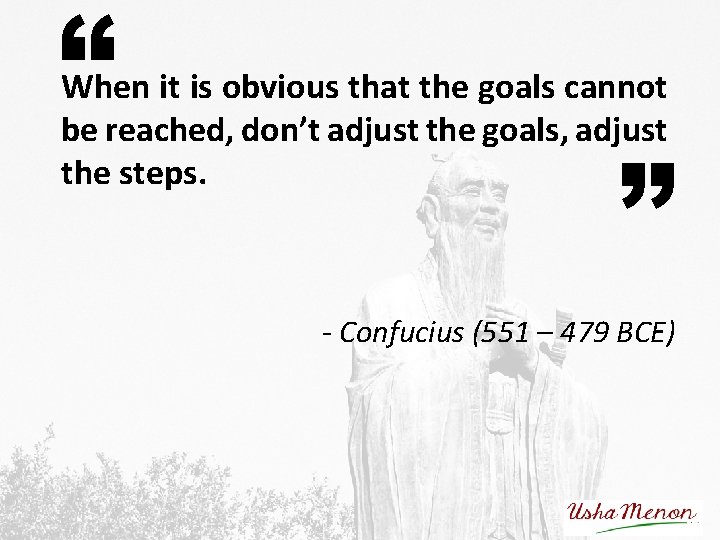
“ When it is obvious that the goals cannot be reached, don’t adjust the goals, adjust the steps. ” - Confucius (551 – 479 BCE)
REVIEW THE SESSION Questions ?
Thank YOU! USHA MENON umenon@ushamenonasia. com @Usha. Menon_Asia www. ushamenonasia. com