
Developing a framework for organisational social work leadership

- Slides: 10
Developing a framework for organisational social work leadership in Aotearoa New Zealand Doctoral and Postgraduate Symposium Saturday 20 th July 2013 Michael Webster School of Counselling, Human Services and Social Work Supervisor: Assoc Prof Christa Fouché Co-supervisor: Dr Carole Adamson
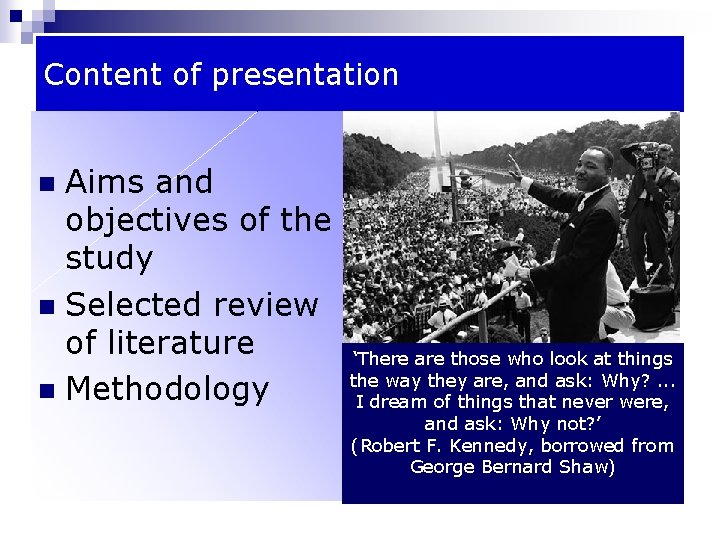
Content of presentation Aims and objectives of the study n Selected review of literature n Methodology n ‘There are those who look at things the way they are, and ask: Why? . . . I dream of things that never were, and ask: Why not? ’ (Robert F. Kennedy, borrowed from George Bernard Shaw)
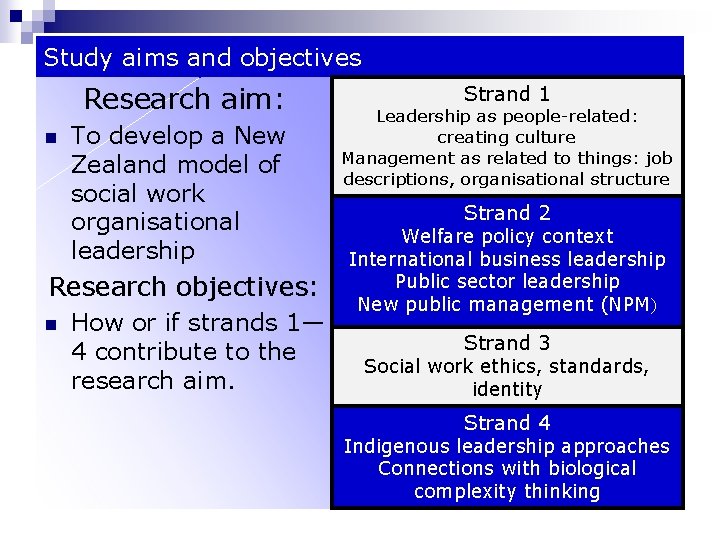
Study aims and objectives Research aim: n To develop a New Zealand model of social work organisational leadership Research objectives: n How or if strands 1— 4 contribute to the research aim. Strand 1 Leadership as people-related: creating culture Management as related to things: job descriptions, organisational structure Strand 2 Welfare policy context International business leadership Public sector leadership New public management (NPM) Strand 3 Social work ethics, standards, identity Strand 4 Indigenous leadership approaches Connections with biological complexity thinking
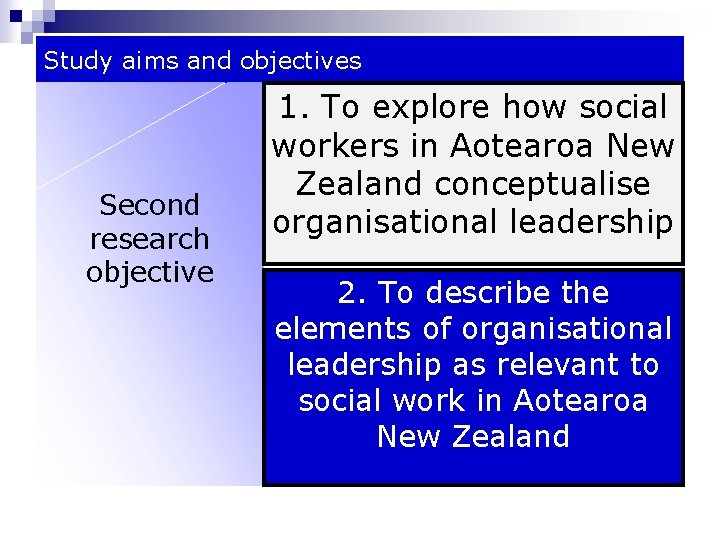
Study aims and objectives Second research objective 1. To explore how social workers in Aotearoa New Zealand conceptualise organisational leadership 2. To describe the elements of organisational leadership as relevant to social work in Aotearoa New Zealand
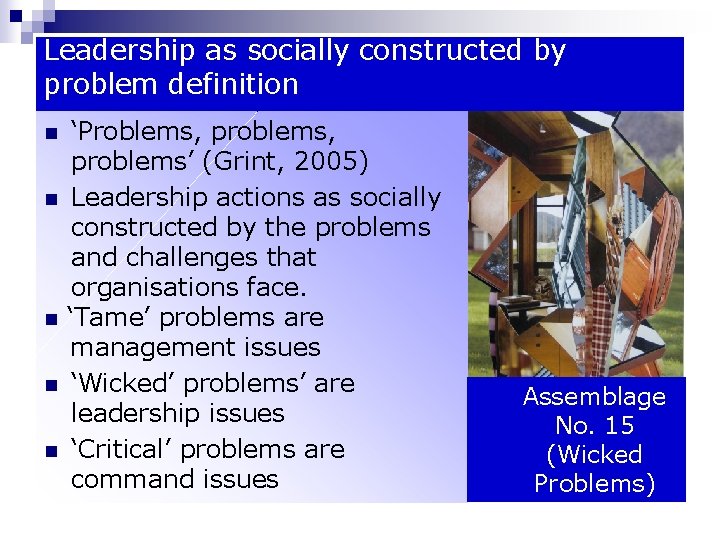
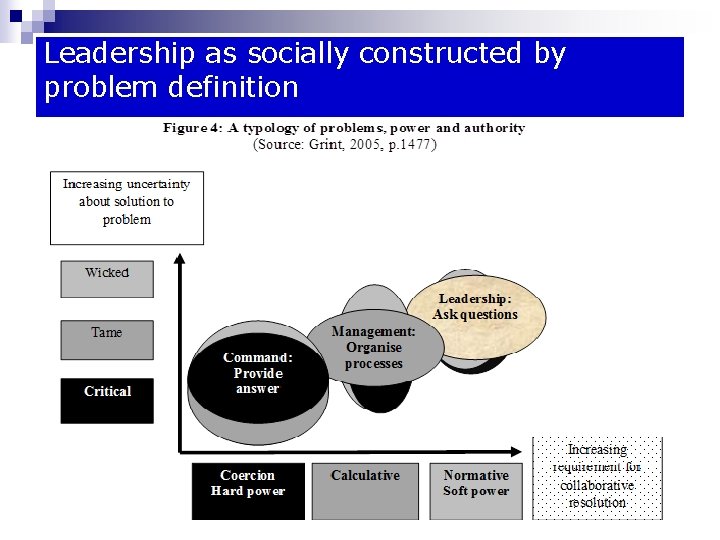
Leadership as socially constructed by problem definition n n ‘Problems, problems’ (Grint, 2005) Leadership actions as socially constructed by the problems and challenges that organisations face. ‘Tame’ problems are management issues ‘Wicked’ problems’ are leadership issues ‘Critical’ problems are command issues Assemblage No. 15 (Wicked Problems)
Leadership as socially constructed by problem definition
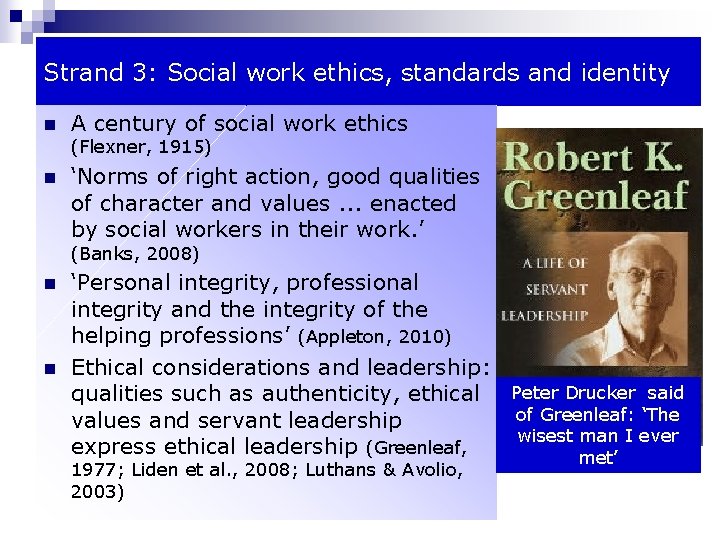
Strand 3: Social work ethics, standards and identity n A century of social work ethics (Flexner, 1915) n ‘Norms of right action, good qualities of character and values. . . enacted by social workers in their work. ’ (Banks, 2008) n n ‘Personal integrity, professional integrity and the integrity of the helping professions’ (Appleton, 2010) Ethical considerations and leadership: qualities such as authenticity, ethical Peter Drucker said of Greenleaf: ‘The values and servant leadership wisest man I ever express ethical leadership (Greenleaf, met’ 1977; Liden et al. , 2008; Luthans & Avolio, 2003)
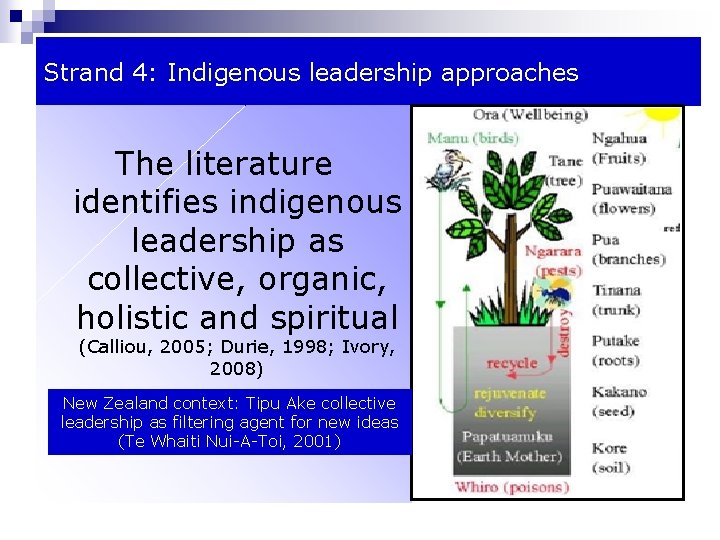
Strand 4: Indigenous leadership approaches The literature identifies indigenous leadership as collective, organic, holistic and spiritual (Calliou, 2005; Durie, 1998; Ivory, 2008) New Zealand context: Tipu Ake collective leadership as filtering agent for new ideas (Te Whaiti Nui-A-Toi, 2001)
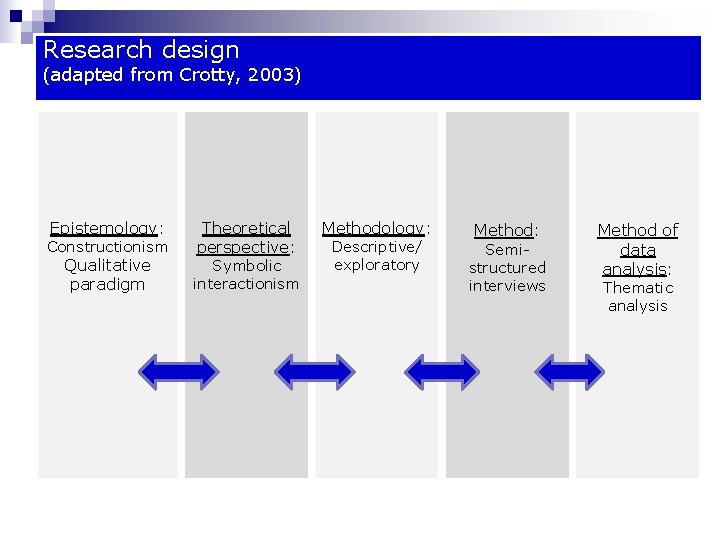
Research design (adapted from Crotty, 2003) Epistemology: Constructionism Qualitative paradigm Theoretical perspective: Symbolic interactionism Methodology: Descriptive/ exploratory Method: Semistructured interviews Method of data analysis: Thematic analysis
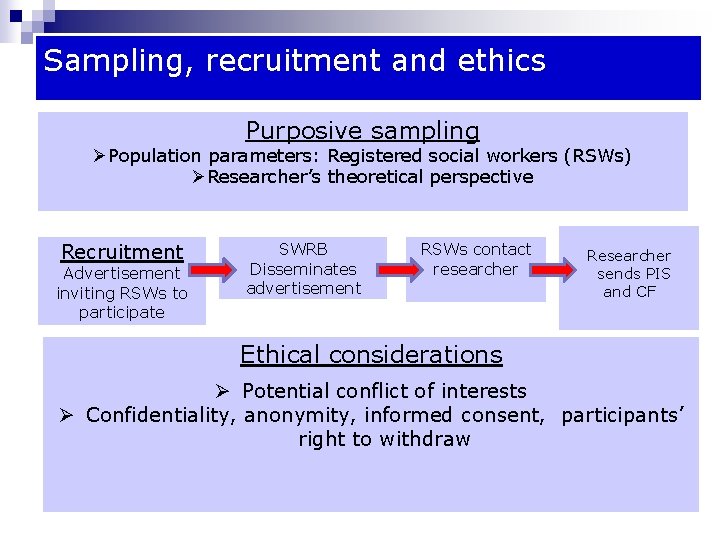
Sampling, recruitment and ethics Purposive sampling ØPopulation parameters: Registered social workers (RSWs) ØResearcher’s theoretical perspective Recruitment Advertisement inviting RSWs to participate SWRB Disseminates advertisement RSWs contact researcher Researcher sends PIS and CF Ethical considerations Ø Potential conflict of interests Ø Confidentiality, anonymity, informed consent, participants’ right to withdraw