
Developing a Framework for Earth Science Literacy II
- Slides: 20
Developing a Framework for Earth Science Literacy II: Big Ideas and Supporting Concepts Michael Wysession - Washington University David Budd - University of Colorado Karen Campbell - National Center for Earth-surface Dynamics Martha Conklin - University of California, Merced Nicole La. Due, Jill Karsten, Lina Patino - NSF Gary Lewis - GSA Robert Raynolds - Denver Museum of Science and Nature Robert W. Ridky - USGS Robert Ross - PRI John Taber - IRIS Barbara Tewksbury - Hamilton College Peter Tuddenham, Tina Bishop, William Bragg - College of Exploration
Process Two-week asynchronous online workshop May 11 -23, 2008 ~150 invited scientist participants ~200 scientist and educator observers Writing Workshop July 21 -23, 2008 Washington University, St. Louis MO 35 scientists and educators from academia, K-12, agencies August / September – Committee/July participants comment on draft document October - December – Community comment on draft document
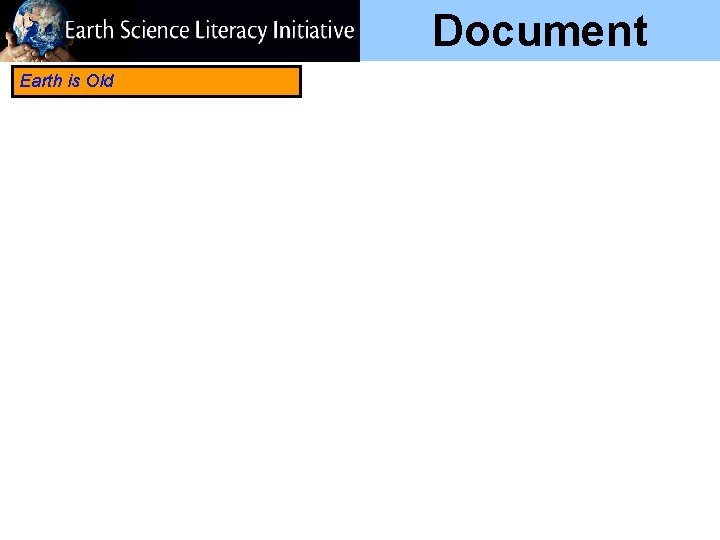
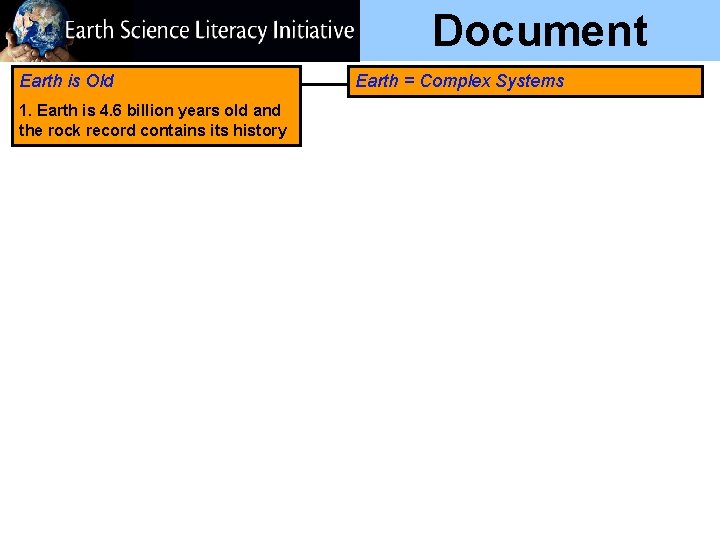
Document Overview Earth is Old
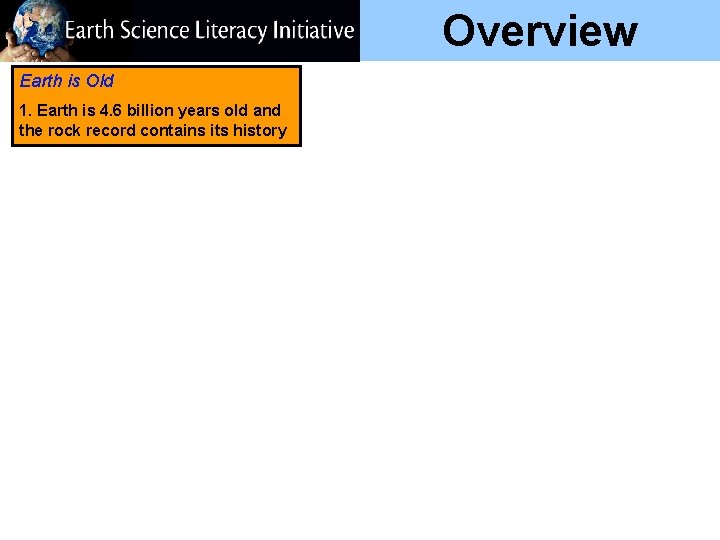
Overview Earth is Old 1. Earth is 4. 6 billion years old and the rock record contains its history
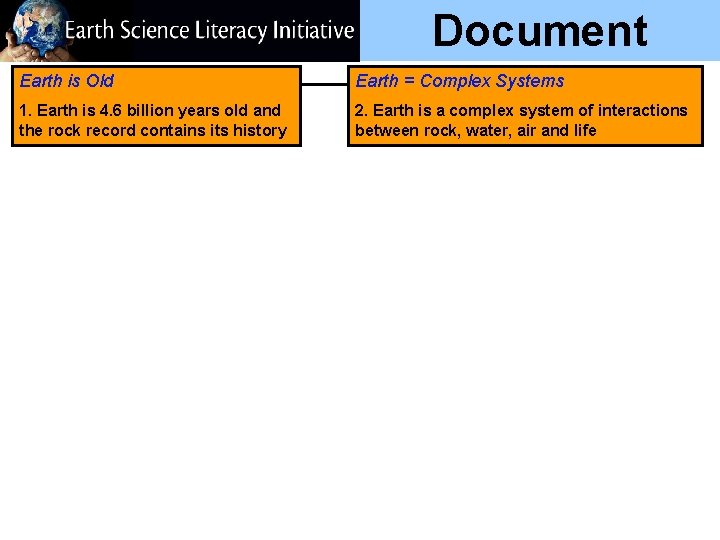
Document Overview Earth is Old 1. Earth is 4. 6 billion years old and the rock record contains its history Earth = Complex Systems
Document Overview Earth is Old Earth = Complex Systems 1. Earth is 4. 6 billion years old and the rock record contains its history 2. Earth is a complex system of interactions between rock, water, air and life
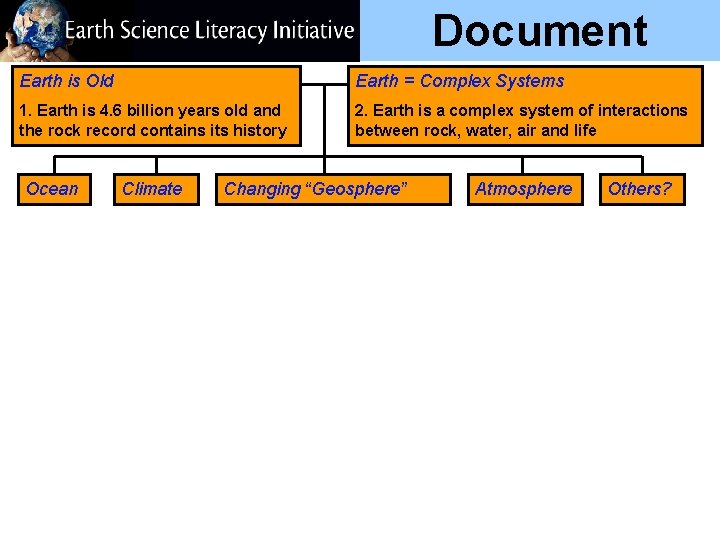
Document Overview Earth is Old Earth = Complex Systems 1. Earth is 4. 6 billion years old and the rock record contains its history 2. Earth is a complex system of interactions between rock, water, air and life Ocean Climate Changing “Geosphere” Atmosphere Others?
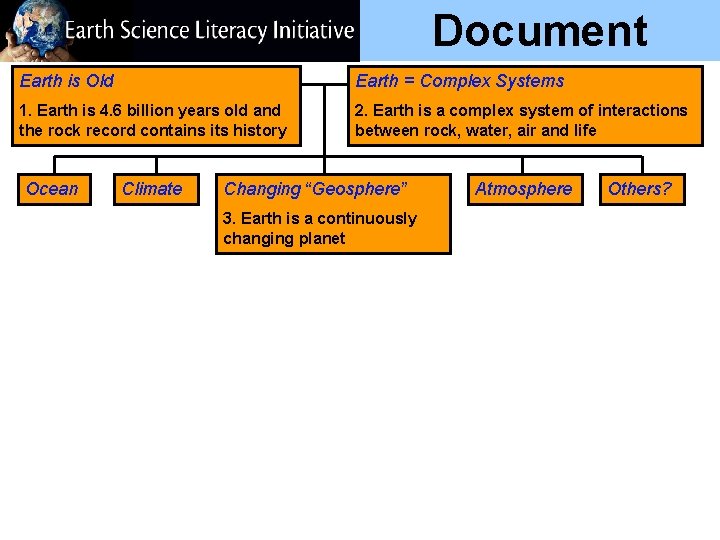
Document Overview Earth is Old Earth = Complex Systems 1. Earth is 4. 6 billion years old and the rock record contains its history 2. Earth is a complex system of interactions between rock, water, air and life Ocean Climate Changing “Geosphere” 3. Earth is a continuously changing planet Atmosphere Others?
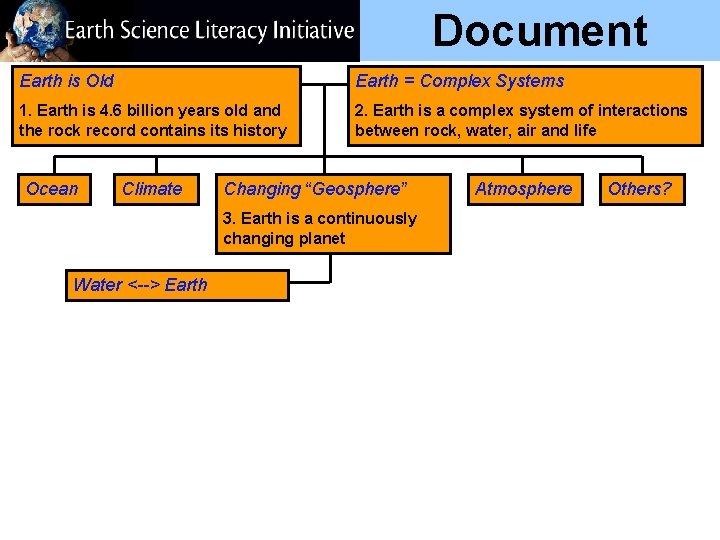
Document Overview Earth is Old Earth = Complex Systems 1. Earth is 4. 6 billion years old and the rock record contains its history 2. Earth is a complex system of interactions between rock, water, air and life Ocean Climate Changing “Geosphere” 3. Earth is a continuously changing planet Water <--> Earth Atmosphere Others?
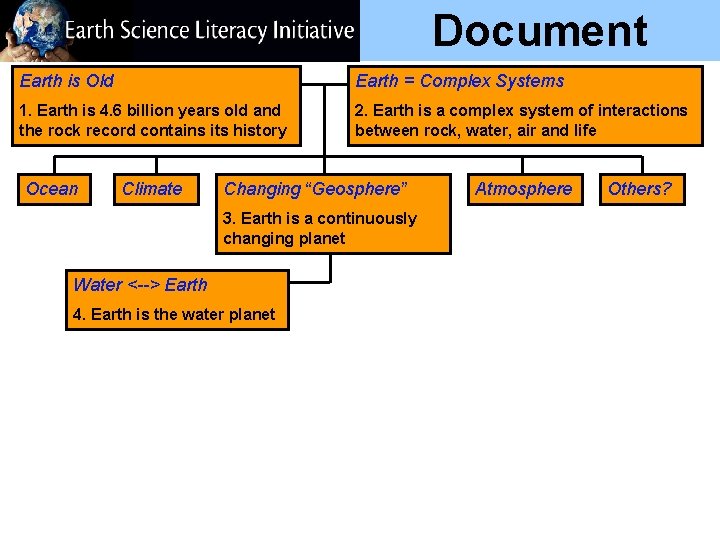
Document Overview Earth is Old Earth = Complex Systems 1. Earth is 4. 6 billion years old and the rock record contains its history 2. Earth is a complex system of interactions between rock, water, air and life Ocean Climate Changing “Geosphere” 3. Earth is a continuously changing planet Water <--> Earth 4. Earth is the water planet Atmosphere Others?
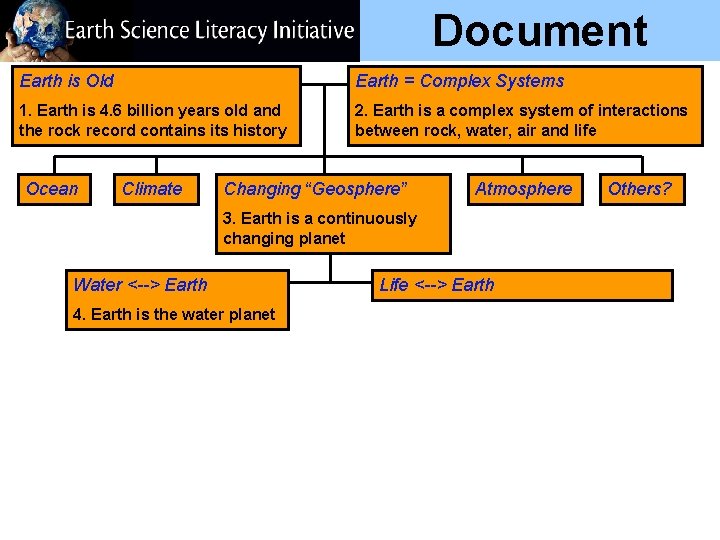
Document Overview Earth is Old Earth = Complex Systems 1. Earth is 4. 6 billion years old and the rock record contains its history 2. Earth is a complex system of interactions between rock, water, air and life Ocean Climate Changing “Geosphere” Atmosphere 3. Earth is a continuously changing planet Water <--> Earth 4. Earth is the water planet Life <--> Earth Others?
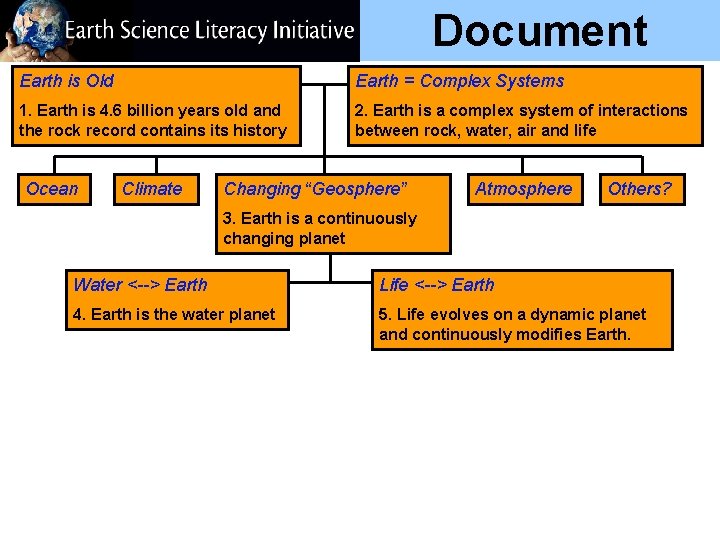
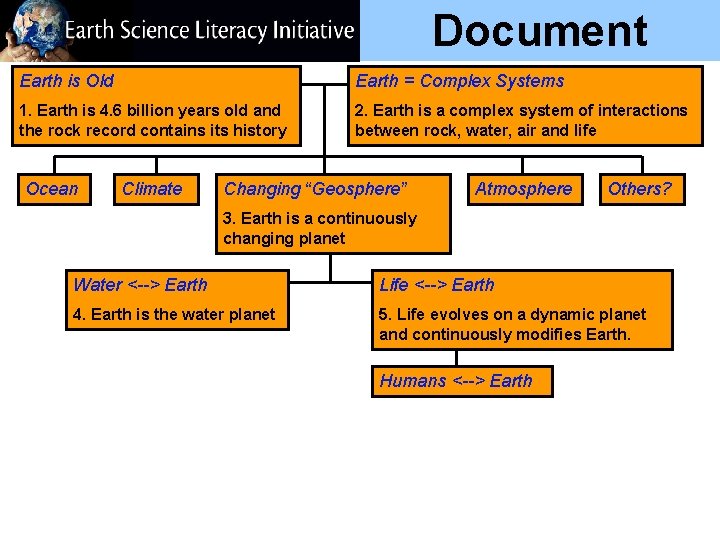
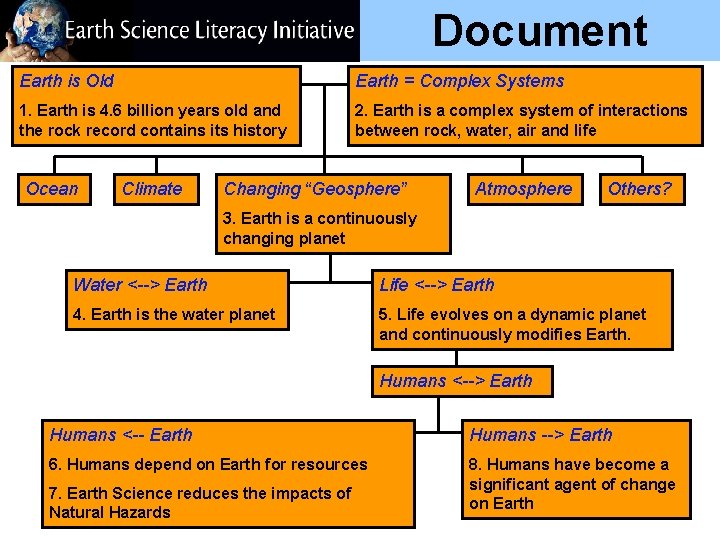
Document Overview Earth is Old Earth = Complex Systems 1. Earth is 4. 6 billion years old and the rock record contains its history 2. Earth is a complex system of interactions between rock, water, air and life Ocean Climate Changing “Geosphere” Atmosphere Others? 3. Earth is a continuously changing planet Water <--> Earth Life <--> Earth 4. Earth is the water planet 5. Life evolves on a dynamic planet and continuously modifies Earth.
Document Overview Earth is Old Earth = Complex Systems 1. Earth is 4. 6 billion years old and the rock record contains its history 2. Earth is a complex system of interactions between rock, water, air and life Ocean Climate Changing “Geosphere” Atmosphere Others? 3. Earth is a continuously changing planet Water <--> Earth Life <--> Earth 4. Earth is the water planet 5. Life evolves on a dynamic planet and continuously modifies Earth. Humans <--> Earth
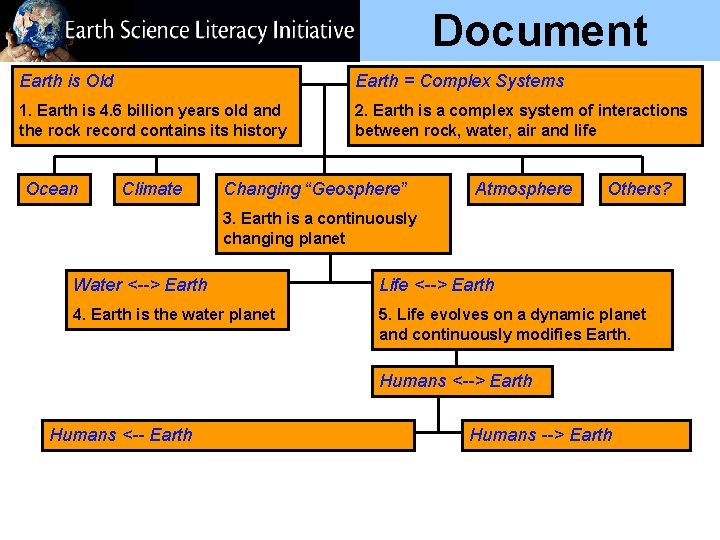
Document Overview Earth is Old Earth = Complex Systems 1. Earth is 4. 6 billion years old and the rock record contains its history 2. Earth is a complex system of interactions between rock, water, air and life Ocean Climate Changing “Geosphere” Atmosphere Others? 3. Earth is a continuously changing planet Water <--> Earth Life <--> Earth 4. Earth is the water planet 5. Life evolves on a dynamic planet and continuously modifies Earth. Humans <--> Earth Humans <-- Earth Humans --> Earth
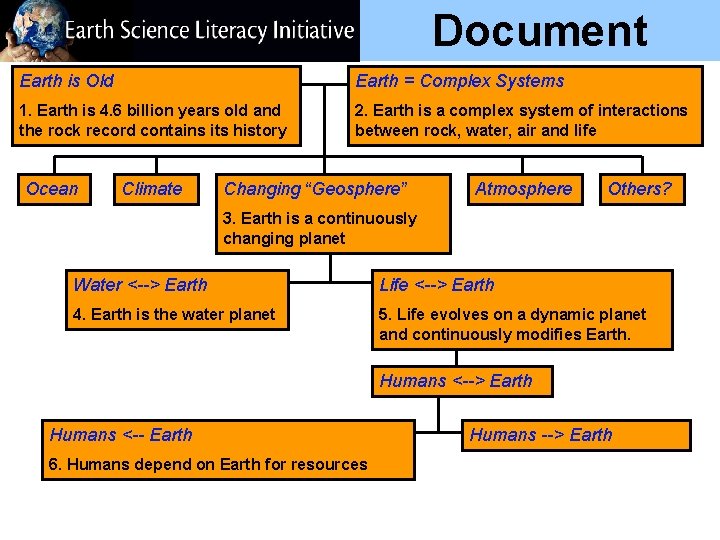
Document Overview Earth is Old Earth = Complex Systems 1. Earth is 4. 6 billion years old and the rock record contains its history 2. Earth is a complex system of interactions between rock, water, air and life Ocean Climate Changing “Geosphere” Atmosphere Others? 3. Earth is a continuously changing planet Water <--> Earth Life <--> Earth 4. Earth is the water planet 5. Life evolves on a dynamic planet and continuously modifies Earth. Humans <--> Earth Humans <-- Earth 6. Humans depend on Earth for resources Humans --> Earth
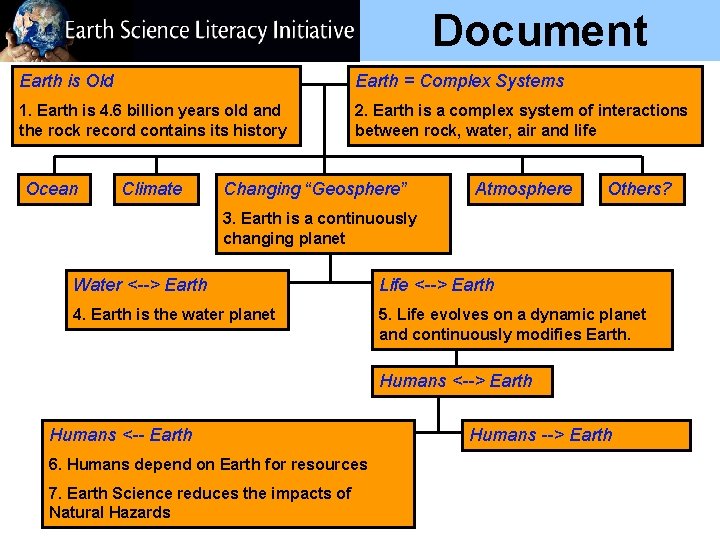
Document Overview Earth is Old Earth = Complex Systems 1. Earth is 4. 6 billion years old and the rock record contains its history 2. Earth is a complex system of interactions between rock, water, air and life Ocean Climate Changing “Geosphere” Atmosphere Others? 3. Earth is a continuously changing planet Water <--> Earth Life <--> Earth 4. Earth is the water planet 5. Life evolves on a dynamic planet and continuously modifies Earth. Humans <--> Earth Humans <-- Earth 6. Humans depend on Earth for resources 7. Earth Science reduces the impacts of Natural Hazards Humans --> Earth
Document Overview Earth is Old Earth = Complex Systems 1. Earth is 4. 6 billion years old and the rock record contains its history 2. Earth is a complex system of interactions between rock, water, air and life Ocean Climate Changing “Geosphere” Atmosphere Others? 3. Earth is a continuously changing planet Water <--> Earth Life <--> Earth 4. Earth is the water planet 5. Life evolves on a dynamic planet and continuously modifies Earth. Humans <--> Earth Humans <-- Earth Humans --> Earth 6. Humans depend on Earth for resources 8. Humans have become a significant agent of change on Earth 7. Earth Science reduces the impacts of Natural Hazards
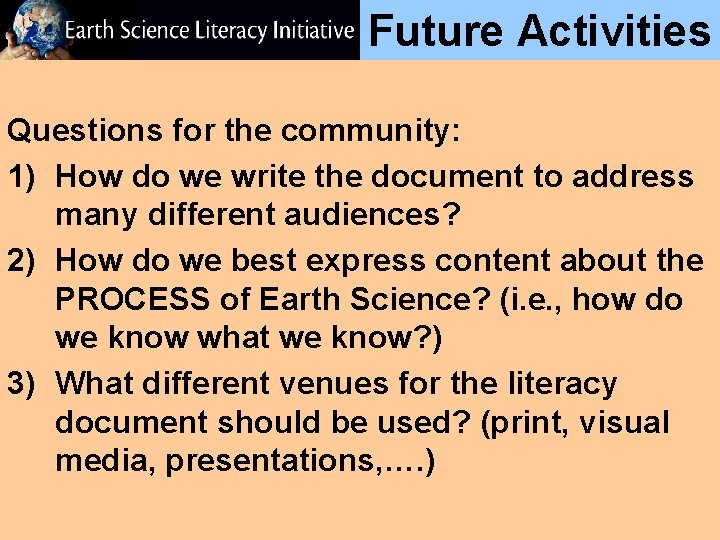
Future Activities Questions for the community: 1) How do we write the document to address many different audiences? 2) How do we best express content about the PROCESS of Earth Science? (i. e. , how do we know what we know? ) 3) What different venues for the literacy document should be used? (print, visual media, presentations, …. )
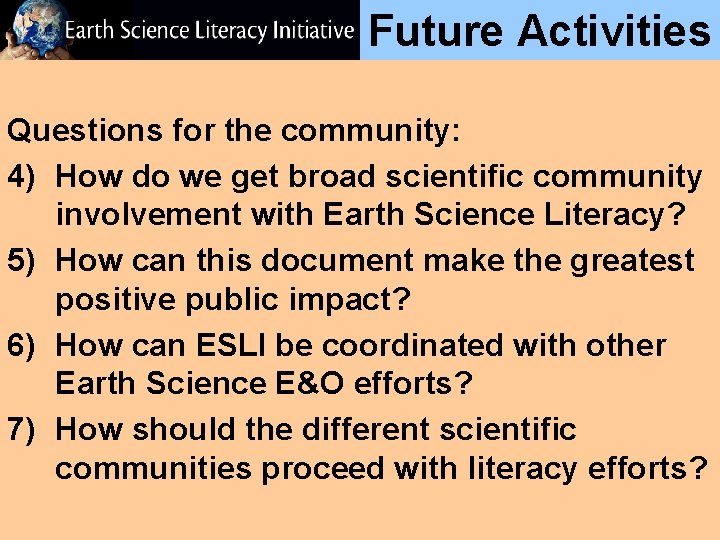
Future Activities Questions for the community: 4) How do we get broad scientific community involvement with Earth Science Literacy? 5) How can this document make the greatest positive public impact? 6) How can ESLI be coordinated with other Earth Science E&O efforts? 7) How should the different scientific communities proceed with literacy efforts?
Next Steps Website open for public comment at www. earthscienceliteracy. org For More Information, Contact: Michael Wysession Washington University, St. Louis, MO michael@seismo. wustl. edu Nicole La. Due Geoscience Education and Diversity Programs, National Science Foundation nladue@nsf. gov