
Developing a Fisheries plan 4 Decide on management

- Slides: 16
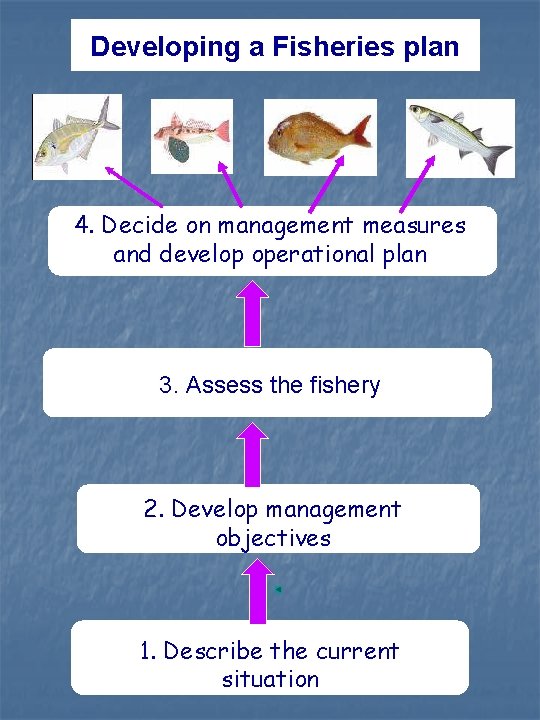
Developing a Fisheries plan 4. Decide on management measures and develop operational plan 3. Assess the fishery 2. Develop management objectives 1. Describe the current situation
West Coast Fisheries Plan Current Situation Ø Ø Ø Health of the aquatic environment is protected; People realise best value from sustainable and efficient use of resources; Credible management fisheries
Health of the aquatic environment is protected Ø Ø North West Coast Marine Environment Managing for Maximum Sustainable Yields Ø Biodiversity Ø Benthic impacts Ø Spirits Bay Sponges Ø Habitats of Particular Significance to Fisheries Management Ø Associated or Dependent Species Ø Protected Species Ø Bycatch Species Ø Other Resource Users
NW Coast Marine Environment Ø Exposed sandy beaches; ØRocky bluffs and outcrops; ØOffshore gravels and iron sands; ØSeveral harbours; Ø Areas of special interest – Sugar Loaf and Gannet islands, Cape Reinga sponges
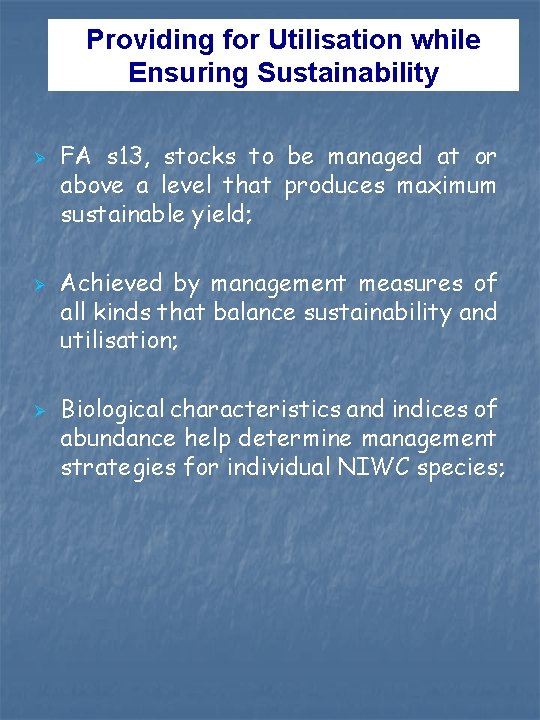
Providing for Utilisation while Ensuring Sustainability Ø Ø Ø FA s 13, stocks to be managed at or above a level that produces maximum sustainable yield; Achieved by management measures of all kinds that balance sustainability and utilisation; Biological characteristics and indices of abundance help determine management strategies for individual NIWC species;
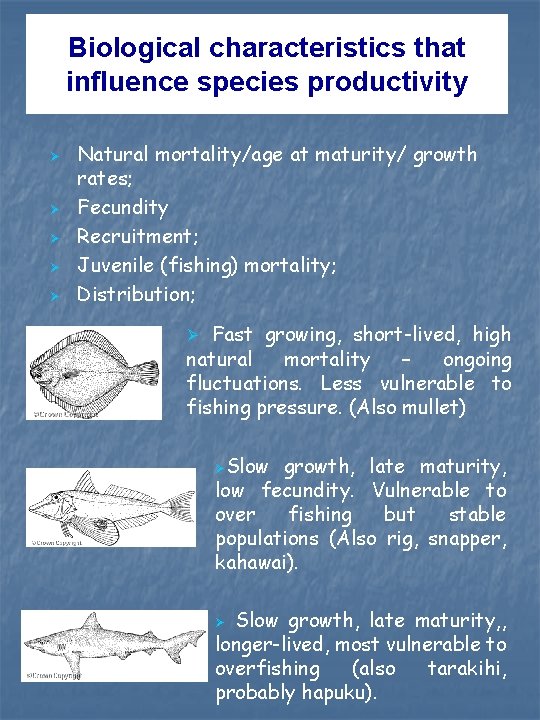
Biological characteristics that influence species productivity Ø Ø Ø Natural mortality/age at maturity/ growth rates; Fecundity Recruitment; Juvenile (fishing) mortality; Distribution; Fast growing, short-lived, high natural mortality – ongoing fluctuations. Less vulnerable to fishing pressure. (Also mullet) Ø ØSlow growth, late maturity, low fecundity. Vulnerable to over fishing but stable populations (Also rig, snapper, kahawai). Slow growth, late maturity, , longer-lived, most vulnerable to overfishing (also tarakihi, probably hapuku). Ø
Biodiversity Ø FA 1996 – biological diversity of aquatic environment should be maintained
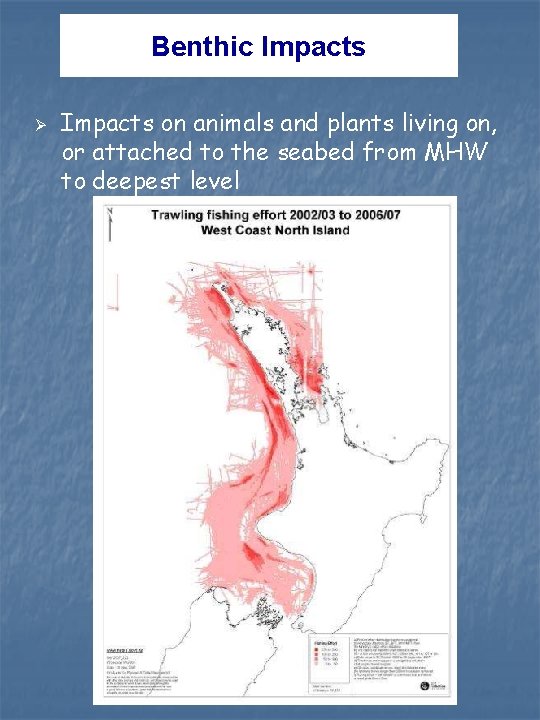
Benthic Impacts Ø Impacts on animals and plants living on, or attached to the seabed from MHW to deepest level
Spirits Bay Sponges Ø Ø Diverse sponge and byrozoan communities, corals, probably black corals, wide variety of invertebrates with sub-tropical affinity; Possible impacts of trawling, scallop dredging on benthic environment
Significant habitats for fisheries management Ø Ø FA 96 requires protection of areas important in parts of lifecycles of some fish species, and of habitat of rare species and those vulnerable to some fishing methods; Important west coast habitats: - Spawning and recruitment areas, - estuaries, - migratory routes, - areas with high biodiversity
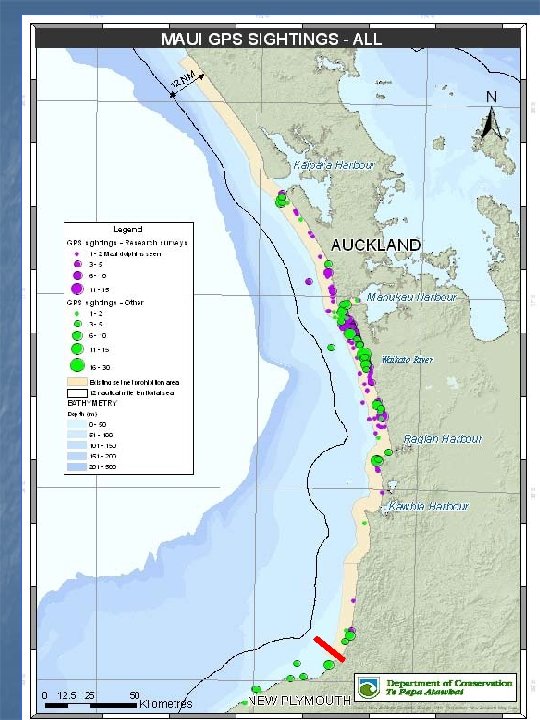
Maui’s dolphin Ø Ø Advice being prepared for Minister on Treat management Plan issues and related submissions from stakeholders; Main issues: - does dolphin range extend to harbours? - are trawlers operating in the region where there are dolphins a threat? - is set and drift netting at Port Waikato a threat?
Associated or dependent species Ø Ø FA 96 requires that associated or dependent species are maintained above a level that ensures their longterm viability; Defined as any species not intended to be caught that are taken or affected in some way by catching of target species West coast protected species: - dolphins, - seabirds, - turtles, - black coral, - spotted groper - white pointer Fishing activities must be done in ways that as far as possible avoid catching or harming these species
Bycatch Ø Ø All target WCNI fisheries take high proportion of bycatch By catch species include: barracouta, kahawai, school shark, rig jack mackerel; Target grey mullet, flatfish, rig and school shark set net fisheries take 100 – 150 bycatch species; Snapper, trevally red gurnard mixed fishery;
Other resource uses Ø Marine farming – Kaipara Harbour oyster farms Ø Sand oil extraction; Ø Trans Tasman cable; Ø Sedimentation due to land use