
Developing a community participation strategy NOM PPT 5
- Slides: 12
Developing a community participation strategy NOM PPT 5. 12 UNESCO Intangible Cultural Heritage Section
In this presentation. . . • Why community participation • Defining communities, groups, individuals • Roles of stakeholders • Examples • Mechanisms
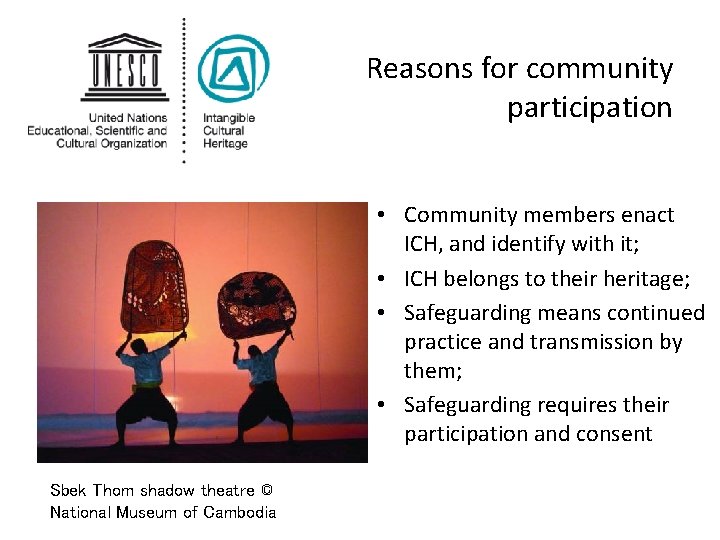
Reasons for community participation • Community members enact ICH, and identify with it; • ICH belongs to their heritage; • Safeguarding means continued practice and transmission by them; • Safeguarding requires their participation and consent Sbek Thom shadow theatre © National Museum of Cambodia
The nomination file requires proof of: • Community participation in: - identification of their ICH - preparation of safeguarding plan • Community consent for submission of nomination • Community commitment to safeguard the element
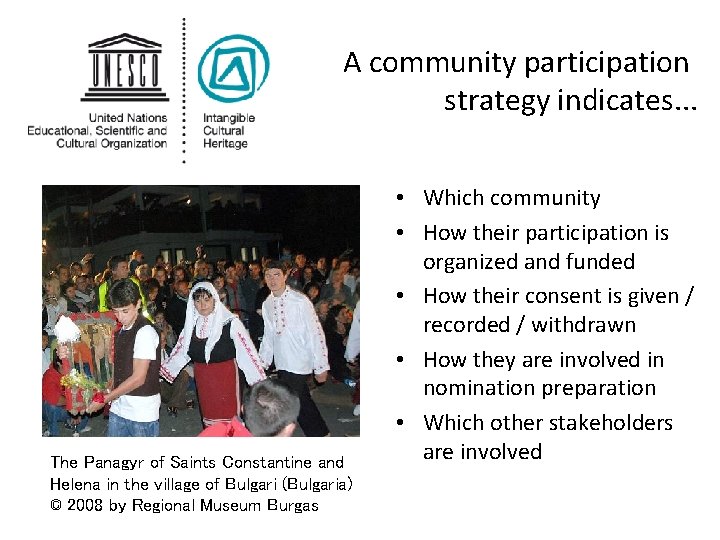
A community participation strategy indicates. . . The Panagyr of Saints Constantine and Helena in the village of Bulgari (Bulgaria) © 2008 by Regional Museum Burgas • Which community • How their participation is organized and funded • How their consent is given / recorded / withdrawn • How they are involved in nomination preparation • Which other stakeholders are involved
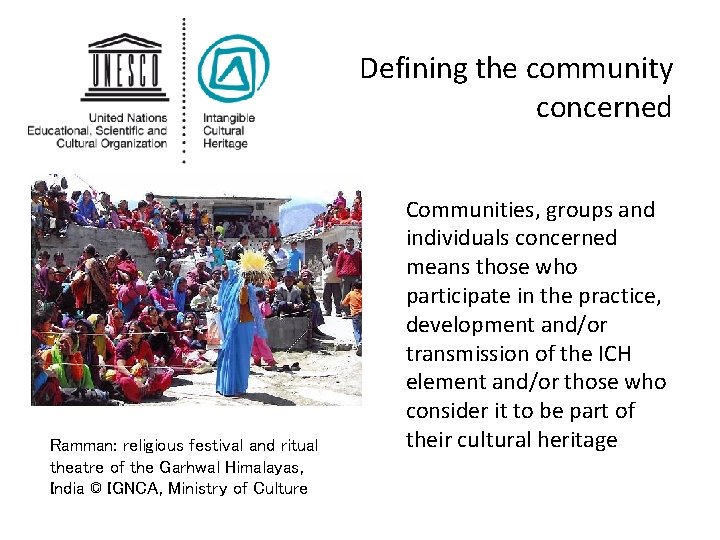
Defining the community concerned Ramman: religious festival and ritual theatre of the Garhwal Himalayas, India © IGNCA, Ministry of Culture Communities, groups and individuals concerned means those who participate in the practice, development and/or transmission of the ICH element and/or those who consider it to be part of their cultural heritage
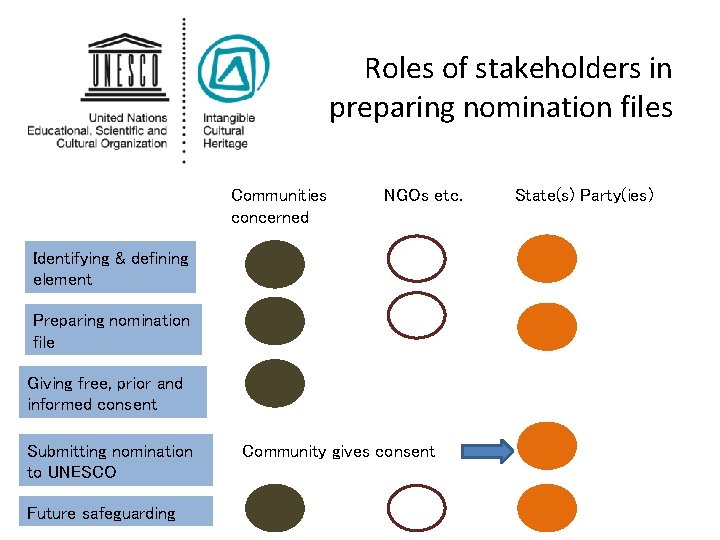
Roles of stakeholders in preparing nomination files Communities concerned NGOs etc. Identifying & defining element Preparing nomination file Giving free, prior and informed consent Submitting nomination to UNESCO Future safeguarding Community gives consent State(s) Party(ies)
Dr Londres Fonseca (IPHAN - Brazil) “. . . what is really needed is for the community to participate in the process [of inventorying]. . . If the inscription takes place without dialogue with the community. . . I wonder whethere will actually be any involvement in safeguarding. . . ”
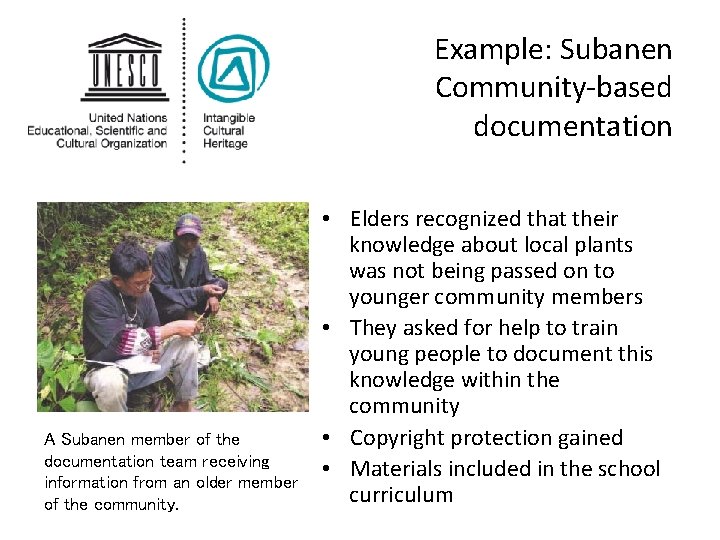
Example: Subanen Community-based documentation A Subanen member of the documentation team receiving information from an older member of the community. • Elders recognized that their knowledge about local plants was not being passed on to younger community members • They asked for help to train young people to document this knowledge within the community • Copyright protection gained • Materials included in the school curriculum
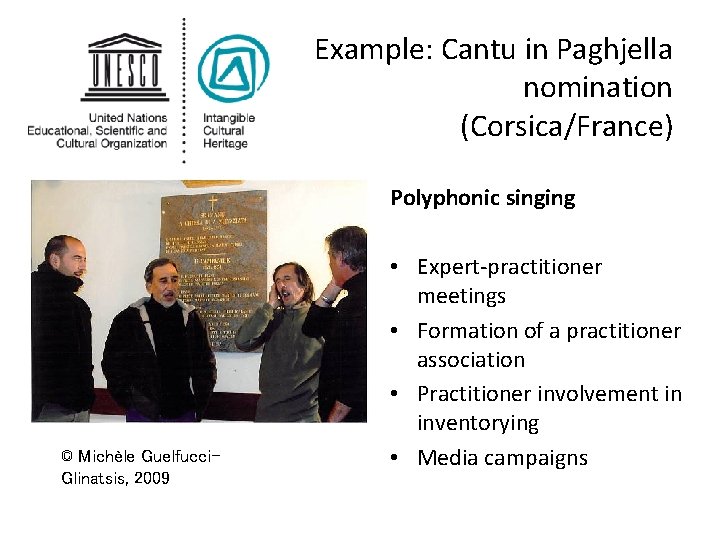
Example: Cantu in Paghjella nomination (Corsica/France) Polyphonic singing © Michèle Guelfucci. Glinatsis, 2009 • Expert-practitioner meetings • Formation of a practitioner association • Practitioner involvement in inventorying • Media campaigns
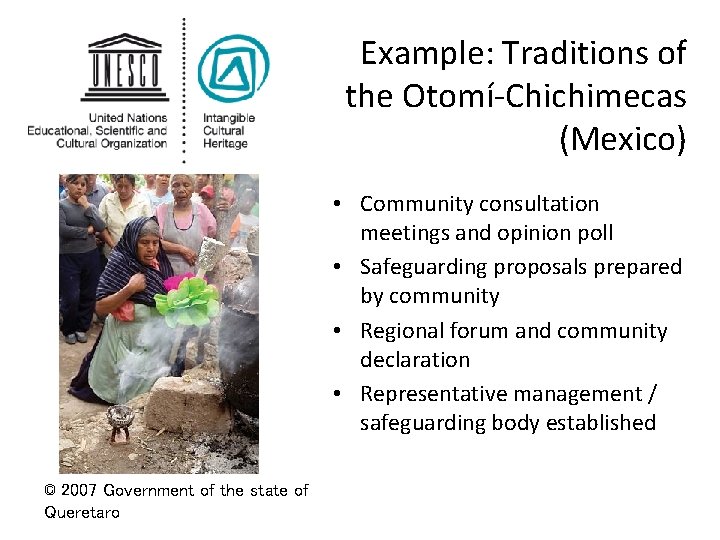
Example: Traditions of the Otomí-Chichimecas (Mexico) • Community consultation meetings and opinion poll • Safeguarding proposals prepared by community • Regional forum and community declaration • Representative management / safeguarding body established © 2007 Government of the state of Queretaro
Aims of community participation • Inform and consult • Improve communication • Determine consent / not • Determine commitments • Identify ICH value, viability, threats • Prepare and implement nominations and safeguarding plans