
Developing a Community Broadband Roadmap Part 1 Intro
Developing a Community Broadband Roadmap

Part 1: Intro to Roadmap Development
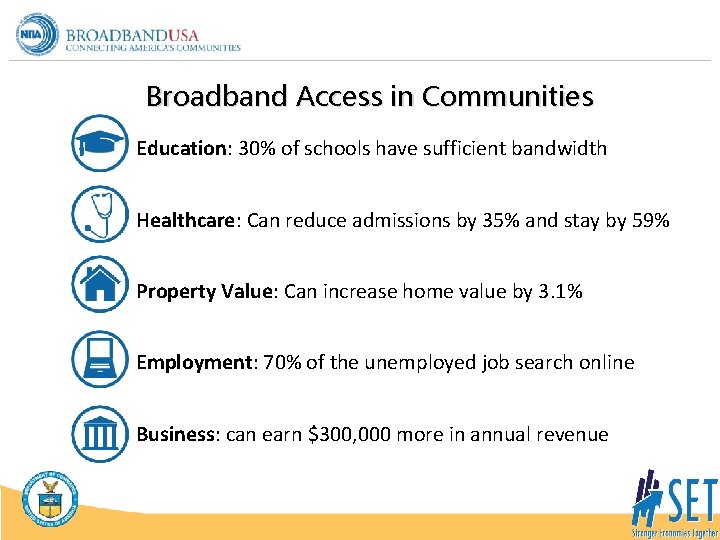
Broadband Access in Communities Education: 30% of schools have sufficient bandwidth Healthcare: Can reduce admissions by 35% and stay by 59% Property Value: Can increase home value by 3. 1% Employment: 70% of the unemployed job search online Business: can earn $300, 000 more in annual revenue
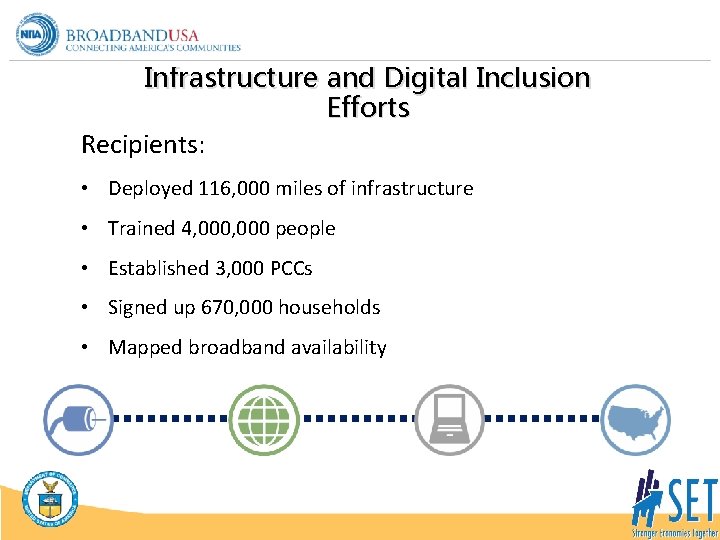
Infrastructure and Digital Inclusion Efforts Recipients: • Deployed 116, 000 miles of infrastructure • Trained 4, 000 people • Established 3, 000 PCCs • Signed up 670, 000 households • Mapped broadband availability
Planning and Executing Broadband Initiatives Advising –for community infrastructure and digital inclusion efforts Partnering – leverage experience to support communities seeking partnerships Training – provide training to organizations
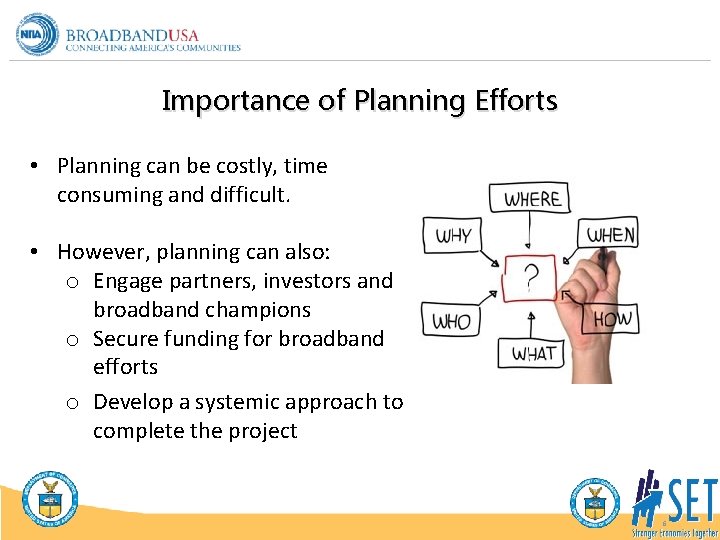
Importance of Planning Efforts • Planning can be costly, time consuming and difficult. • However, planning can also: o Engage partners, investors and broadband champions o Secure funding for broadband efforts o Develop a systemic approach to complete the project 6
Consider Overall Goals • How do broadband initiatives support the community, institutions and businesses? • How do infrastructure plans benefit other economic development activities? • What mix of initiatives is best? • Which initiatives and benefits can be achieved in the short term vs. long term?
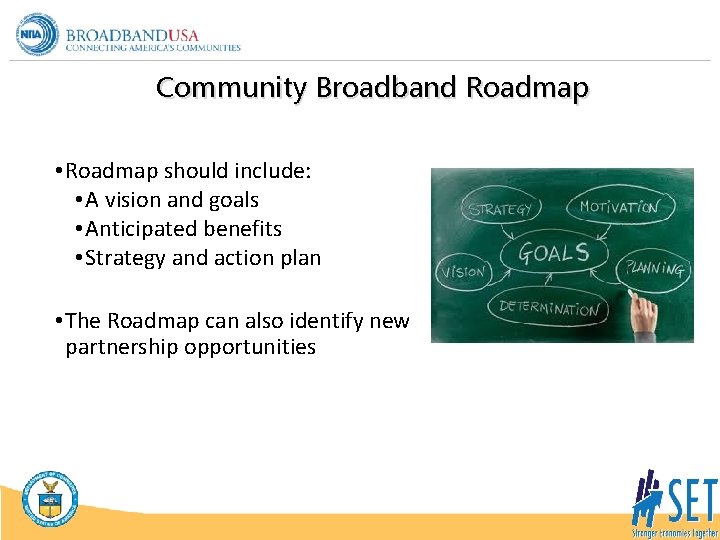
Community Broadband Roadmap • Roadmap should include: • A vision and goals • Anticipated benefits • Strategy and action plan • The Roadmap can also identify new partnership opportunities
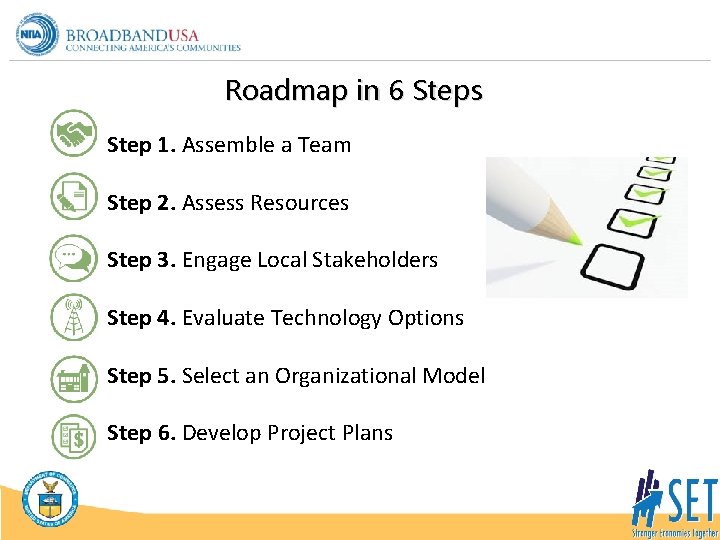
Roadmap in 6 Steps Step 1. Assemble a Team Step 2. Assess Resources Step 3. Engage Local Stakeholders Step 4. Evaluate Technology Options Step 5. Select an Organizational Model Step 6. Develop Project Plans
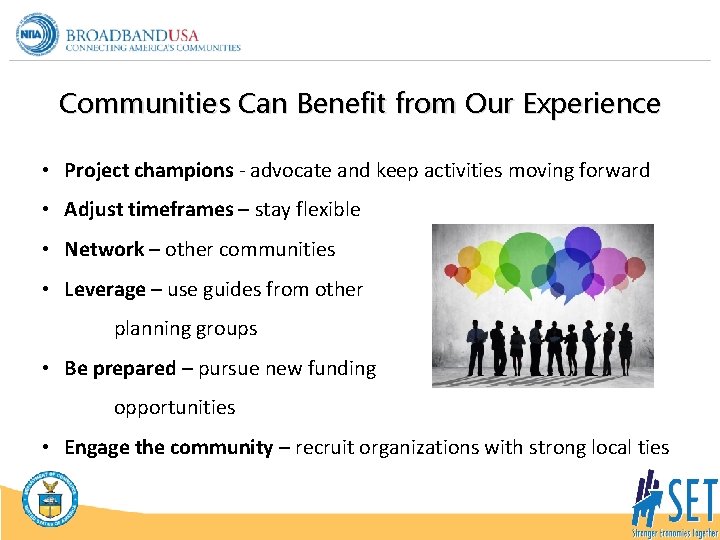
Communities Can Benefit from Our Experience • Project champions - advocate and keep activities moving forward • Adjust timeframes – stay flexible • Network – other communities • Leverage – use guides from other planning groups • Be prepared – pursue new funding opportunities • Engage the community – recruit organizations with strong local ties
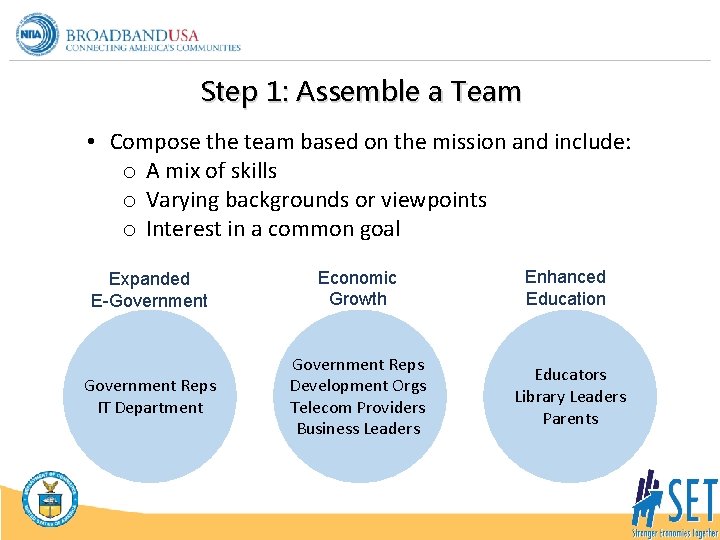
Step 1: Assemble a Team • Compose the team based on the mission and include: o A mix of skills o Varying backgrounds or viewpoints o Interest in a common goal Expanded E-Government Economic Growth Enhanced Education Government Reps IT Department Government Reps Development Orgs Telecom Providers Business Leaders Educators Library Leaders Parents
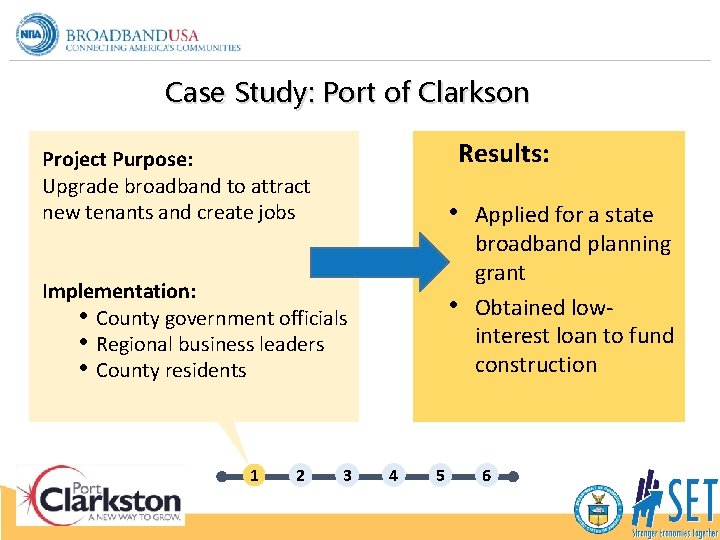
Case Study: Port of Clarkson Results: Project Purpose: Upgrade broadband to attract new tenants and create jobs • Applied for a state Implementation: • County government officials • Regional business leaders • County residents 1 2 3 • 4 5 broadband planning grant Obtained lowinterest loan to fund construction 6
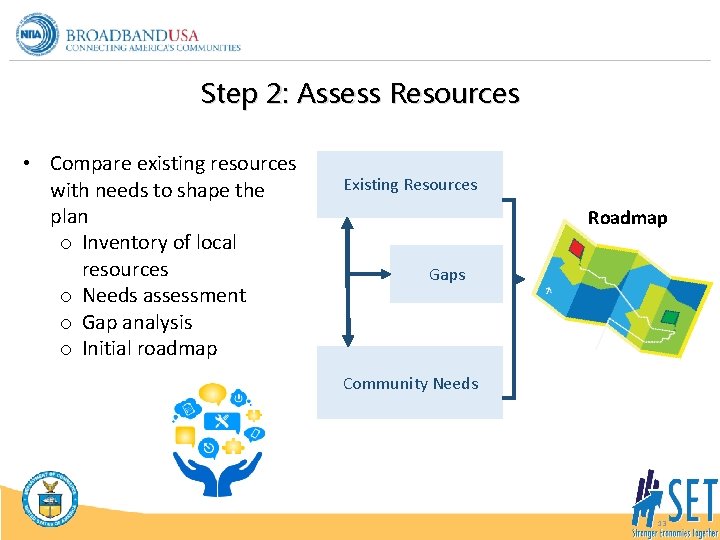
Step 2: Assess Resources • Compare existing resources with needs to shape the plan o Inventory of local resources o Needs assessment o Gap analysis o Initial roadmap Existing Resources Roadmap Gaps Community Needs 13
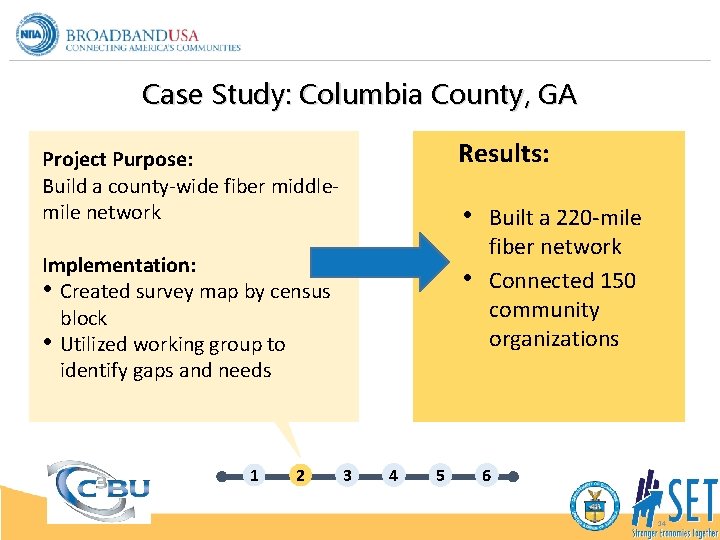
Case Study: Columbia County, GA Results: Project Purpose: Build a county-wide fiber middlemile network • Built a 220 -mile Implementation: • Created survey map by census block • Utilized working group to identify gaps and needs 1 2 • 3 4 5 fiber network Connected 150 community organizations 6 14
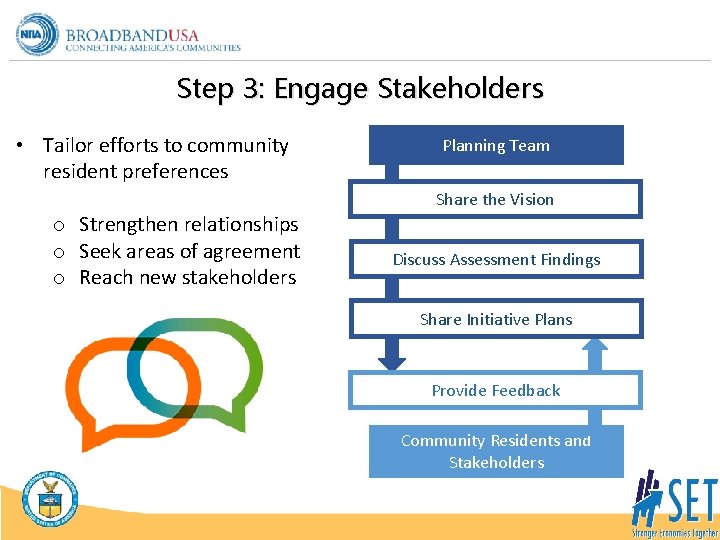
Step 3: Engage Stakeholders • Tailor efforts to community resident preferences Planning Team Share the Vision o Strengthen relationships o Seek areas of agreement o Reach new stakeholders Discuss Assessment Findings Share Initiative Plans Provide Feedback Community Residents and Stakeholders
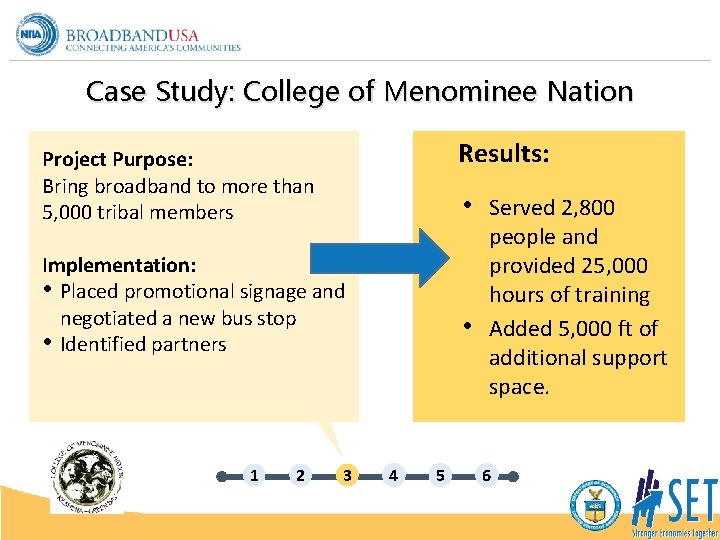
Case Study: College of Menominee Nation Results: Project Purpose: Bring broadband to more than 5, 000 tribal members • Served 2, 800 Implementation: • Placed promotional signage and negotiated a new bus stop • Identified partners 1 2 3 • 4 5 people and provided 25, 000 hours of training Added 5, 000 ft of additional support space. 6
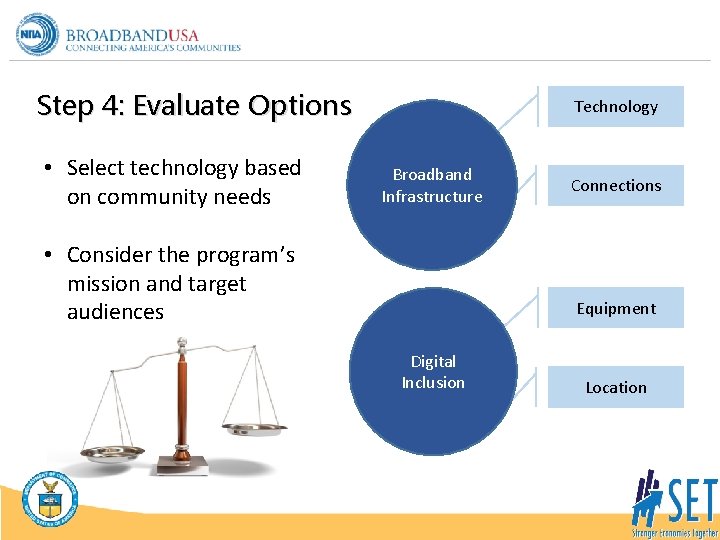
Step 4: Evaluate Options • Select technology based on community needs Technology Broadband Infrastructure • Consider the program’s mission and target audiences Connections Equipment Digital Inclusion Location
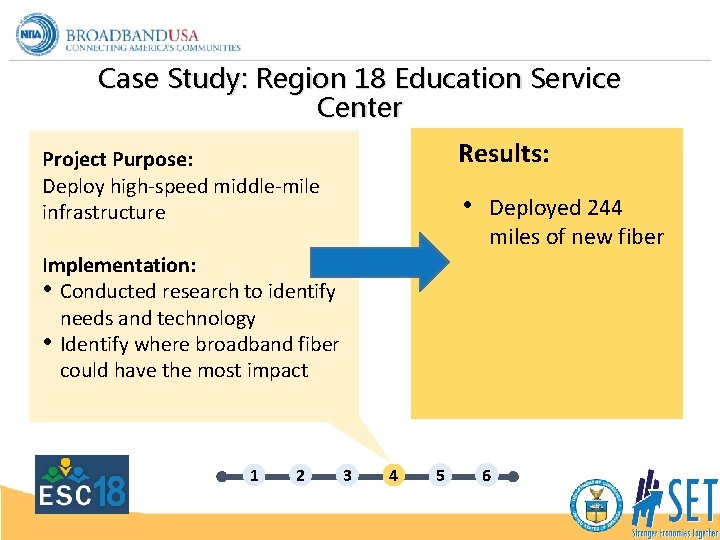
Case Study: Region 18 Education Service Center Results: Project Purpose: Deploy high-speed middle-mile infrastructure • Deployed 244 miles of new fiber Implementation: • Conducted research to identify needs and technology • Identify where broadband fiber could have the most impact 1 2 3 4 5 6
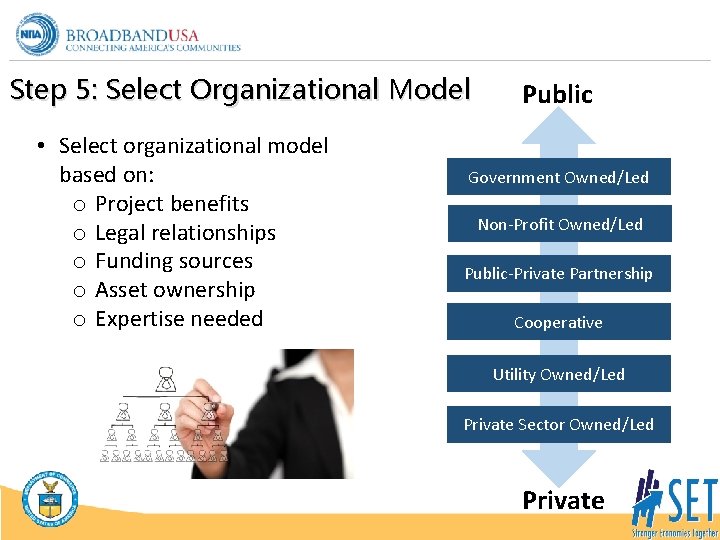
Step 5: Select Organizational Model • Select organizational model based on: o Project benefits o Legal relationships o Funding sources o Asset ownership o Expertise needed Public Government Owned/Led Non-Profit Owned/Led Public-Private Partnership Cooperative Utility Owned/Led Private Sector Owned/Led Private
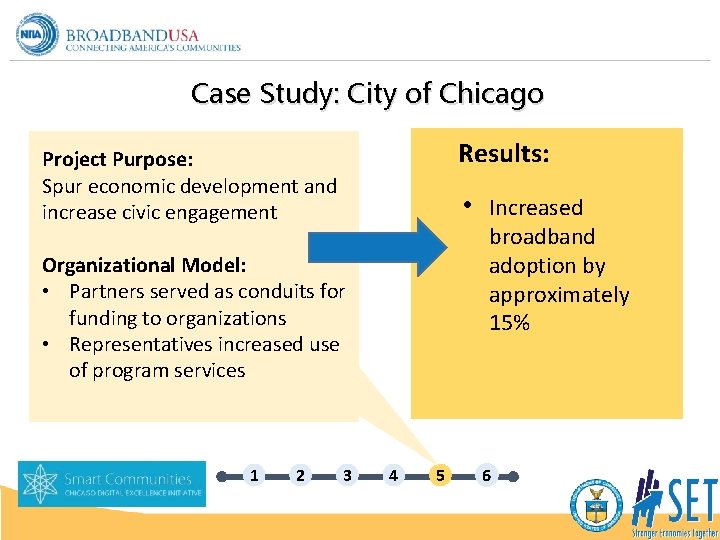
Case Study: City of Chicago Results: Project Purpose: Spur economic development and increase civic engagement • Increased broadband adoption by approximately 15% Organizational Model: • Partners served as conduits for funding to organizations • Representatives increased use of program services 1 2 3 4 5 6
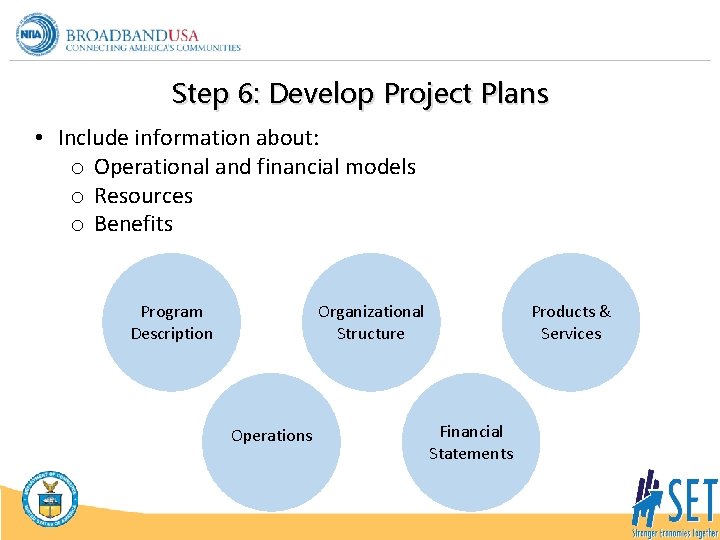
Step 6: Develop Project Plans • Include information about: o Operational and financial models o Resources o Benefits Program Description Organizational Structure Operations Products & Services Financial Statements
Key Plan Elements • Executive Summary • Marketing and Sales • Program/Project Description • Income Statement • Organizational Structure • Statement of Cash Flows • Market Analysis • Balance Sheet • Products and Services
Case Study: North Georgia Network Project Purpose: Spur economic development in North Georgia Results: Implementation: • Received planning grant to carry out a study • Developed project plan • 1 2 • Completed 260 - 3 4 5 mile fiber ring Created a cooperative service provider 6
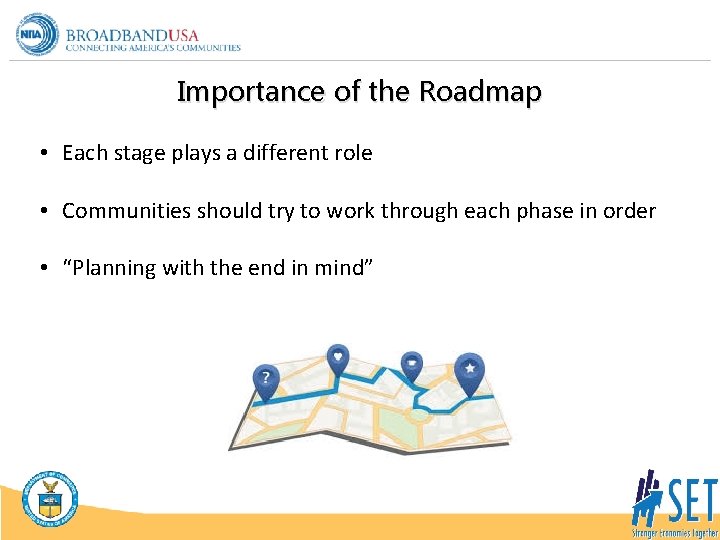
Importance of the Roadmap • Each stage plays a different role • Communities should try to work through each phase in order • “Planning with the end in mind”
Questions?
Resources • Federal Funding Guide • Public-Private Partnerships Guide • Community Broadband Roadmap Toolkit • Introduction to Stakeholder Outreach For General Information: 202 -482 -2048 broadbandusa@ntia. doc. gov http: //www. ntia. doc. gov/broadbandusa To Request Technical Assistance: Submit Intake Form
- Slides: 26