
Dev Ops and Private Cloud Automation 23 April
- Slides: 20
Dev. Ops and Private Cloud Automation 23 April 2015 Hal Clark
CONFLICT OF IT OPERATIONS OBJECTIVES
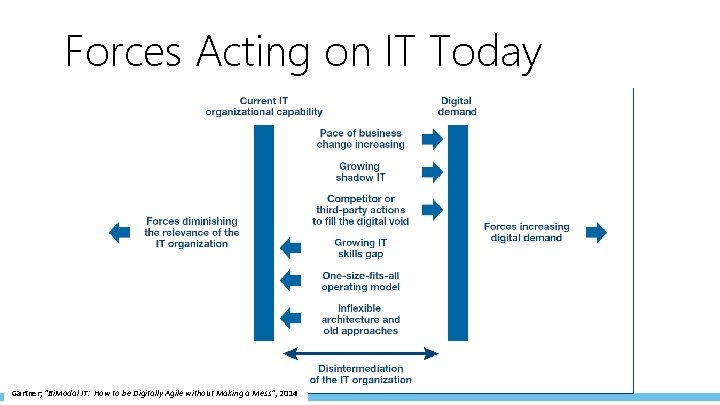
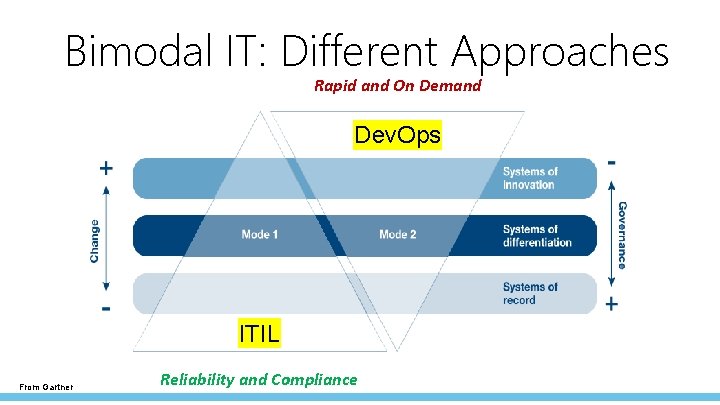
Forces Acting on IT Today Gartner; “Bi. Modal IT: How to be Digitally Agile without Making a Mess”, 2014
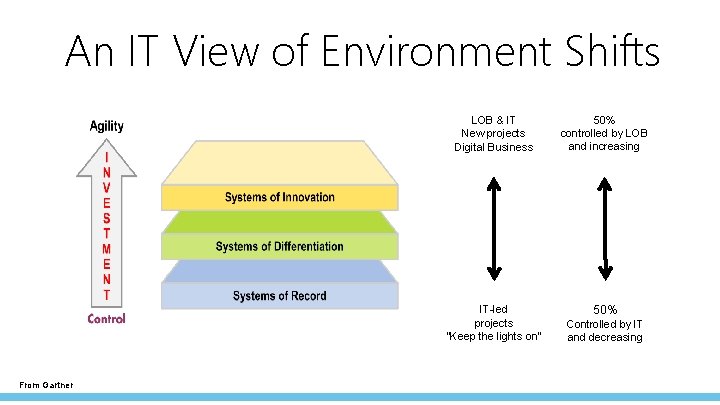
An IT View of Environment Shifts LOB & IT New projects Digital Business 50% controlled by LOB and increasing IT-led projects “Keep the lights on” Controlled by IT and decreasing System of innovation System of differentiation System of record From Gartner 50%
Bimodal IT: Different Approaches Rapid and On Demand Dev. Ops ITIL From Gartner Reliability and Compliance
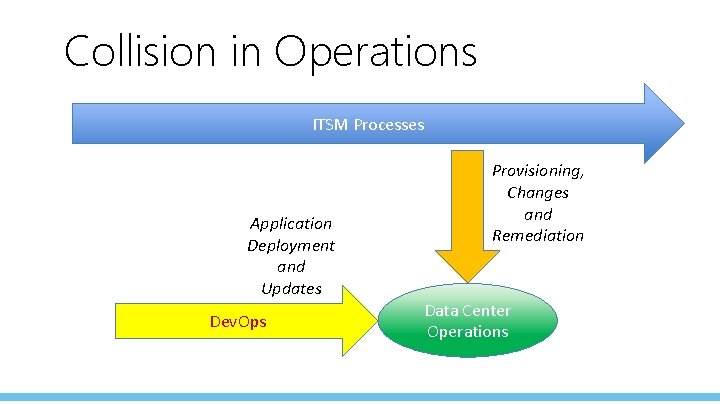
Collision in Operations ITSM Processes Application Deployment and Updates Dev. Ops Provisioning, Changes and Remediation Data Center Operations
ORCHESTRATING ISLANDS OF AUTOMATION
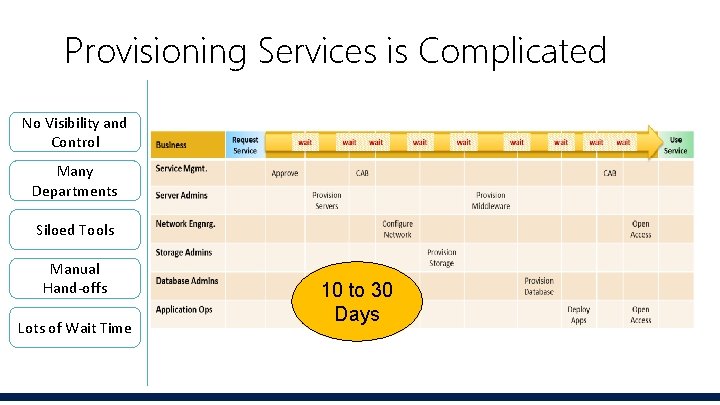
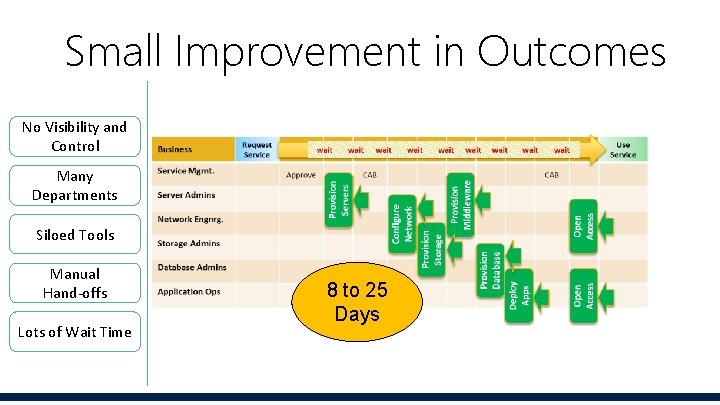
Provisioning Services is Complicated No Visibility and Control Many Departments Siloed Tools Manual Hand-offs Lots of Wait Time 10 to 30 Days
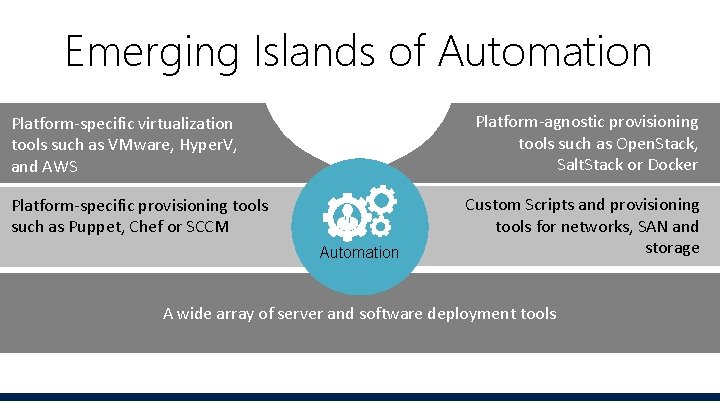
Emerging Islands of Automation Platform-agnostic provisioning tools such as Open. Stack, Salt. Stack or Docker Platform-specific virtualization tools such as VMware, Hyper. V, and AWS Platform-specific provisioning tools such as Puppet, Chef or SCCM Automation Custom Scripts and provisioning tools for networks, SAN and storage A wide array of server and software deployment tools
Small Improvement in Outcomes No Visibility and Control Many Departments Siloed Tools Manual Hand-offs Lots of Wait Time 8 to 25 Days
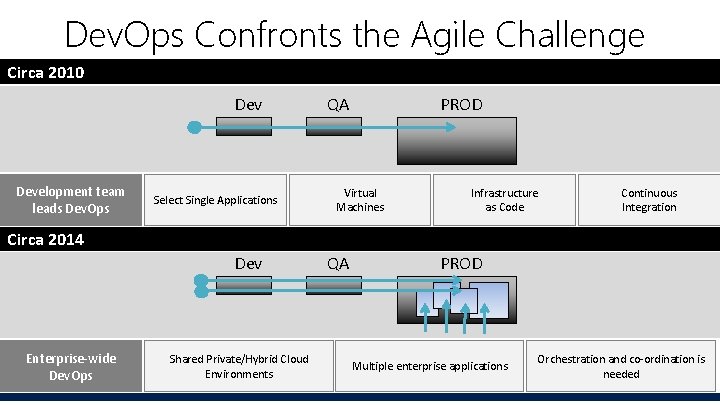
Dev. Ops Confronts the Agile Challenge Circa 2010 Development team leads Dev. Ops Select Single Applications QA PROD Virtual Machines Infrastructure as Code Continuous Integration Circa 2014 Dev Enterprise-wide Dev. Ops Shared Private/Hybrid Cloud Environments QA PROD Multiple enterprise applications Orchestration and co-ordination is needed
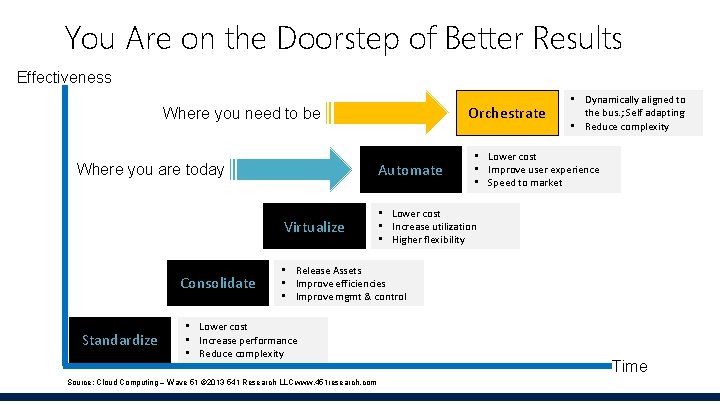
You Are on the Doorstep of Better Results Effectiveness Orchestrate Where you need to be Automate Where you are today Virtualize Consolidate Standardize • Dynamically aligned to the bus. ; Self adapting • Reduce complexity • Lower cost • Improve user experience • Speed to market • Lower cost • Increase utilization • Higher flexibility • Release Assets • Improve efficiencies • Improve mgmt & control • Lower cost • Increase performance • Reduce complexity Source: Cloud Computing – Wave 51 © 2013 541 Research LLC www. 451 research. com Time
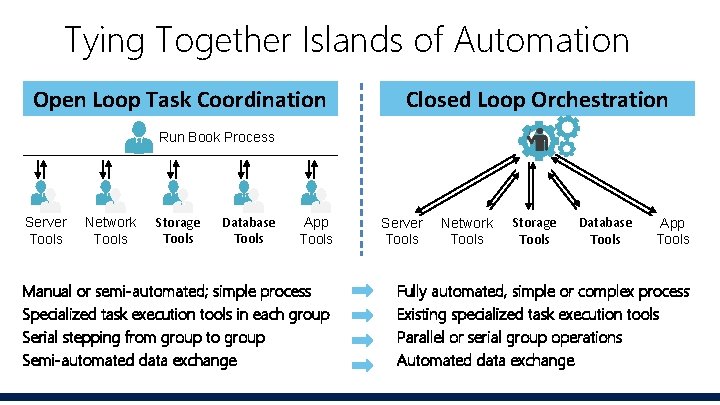
Tying Together Islands of Automation Open Loop Task Coordination Closed Loop Orchestration Run Book Process Server Tools Network Tools Storage Tools Database Tools App Tools Manual or semi-automated; simple process Specialized task execution tools in each group Serial stepping from group to group Semi-automated data exchange Server Tools Network Tools Storage Tools Database Tools App Tools Fully automated, simple or complex process Existing specialized task execution tools Parallel or serial group operations Automated data exchange
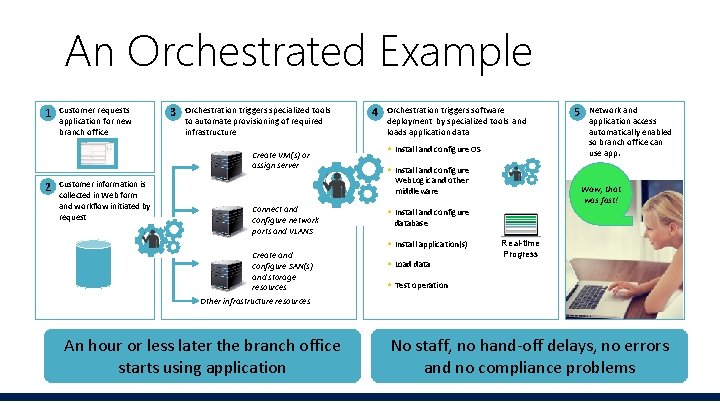
An Orchestrated Example 1 Customer requests application for new branch office 3 Orchestration triggers specialized tools to automate provisioning of required infrastructure Create VM(s) or assign server 2 Customer information is collected in Web form and workflow initiated by request 4 Orchestration triggers software deployment by specialized tools and loads application data • Install and configure OS An hour or less later the branch office starts using application Wow, that was fast! • Install and configure database • Install application(s) Create and configure SAN(s) and storage resources Other infrastructure resources Network and application access automatically enabled so branch office can use app. • Install and configure Web. Logic and other middleware Connect and configure network ports and VLANS 5 • Load data Real-time Progress • Test operation No staff, no hand-off delays, no errors and no compliance problems
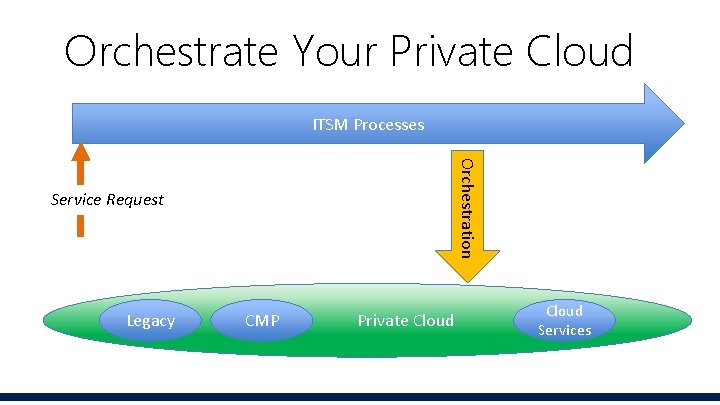
Orchestrate Your Private Cloud ITSM Processes Orchestration Service Request Legacy CMP Private Cloud Services
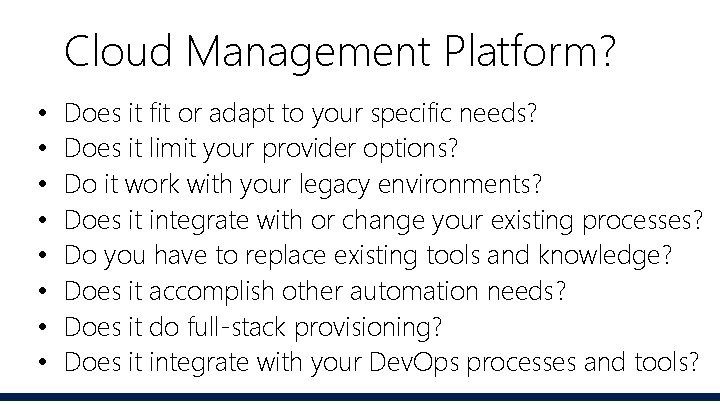
Cloud Management Platform? • • Does it fit or adapt to your specific needs? Does it limit your provider options? Do it work with your legacy environments? Does it integrate with or change your existing processes? Do you have to replace existing tools and knowledge? Does it accomplish other automation needs? Does it do full-stack provisioning? Does it integrate with your Dev. Ops processes and tools?
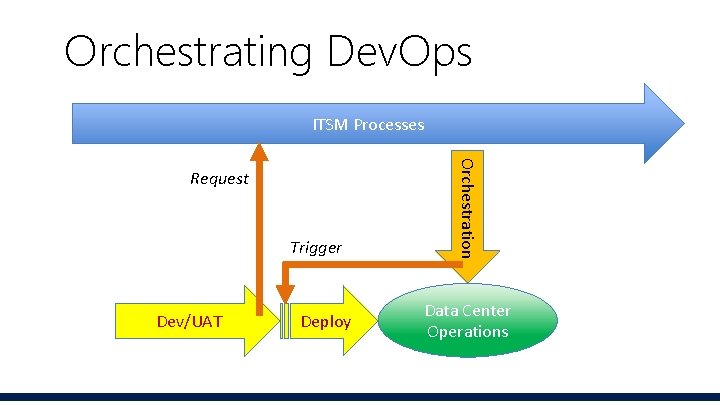
Orchestrating Dev. Ops ITSM Processes Trigger Dev/UAT Deploy Orchestration Request Data Center Operations
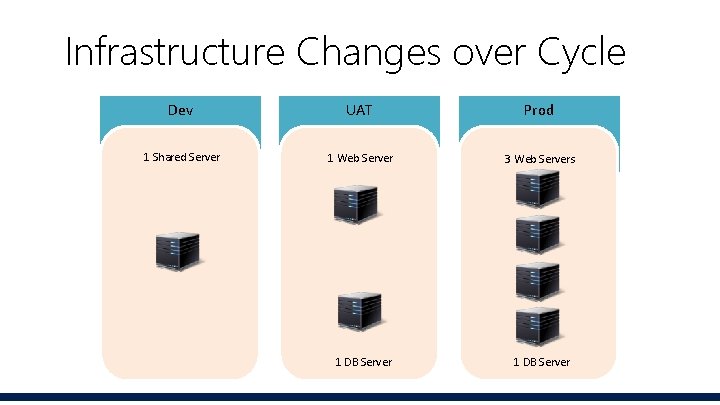
Infrastructure Changes over Cycle Dev UAT Prod 1 Shared Server 1 Web Server 3 Web Servers 1 DB Server
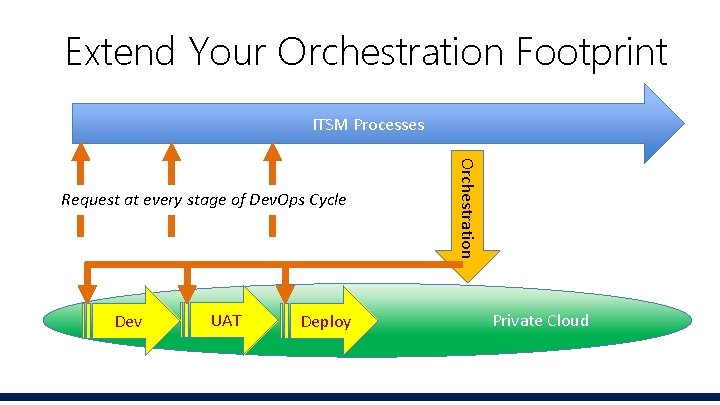
Extend Your Orchestration Footprint ITSM Processes Dev UAT Deploy Orchestration Request at every stage of Dev. Ops Cycle Private Cloud
Go the Next Level Up the Automation Ladder