
Determining the Arbiter for Dynamic Task Allocation in
Determining the Arbiter for Dynamic Task Allocation in Adaptive Automation Systems Gabriella M. Hancock, Ph. D. Assistant Professor Director, Stress & Technology Applied Research (STAR) Laboratory California State University, Long Beach
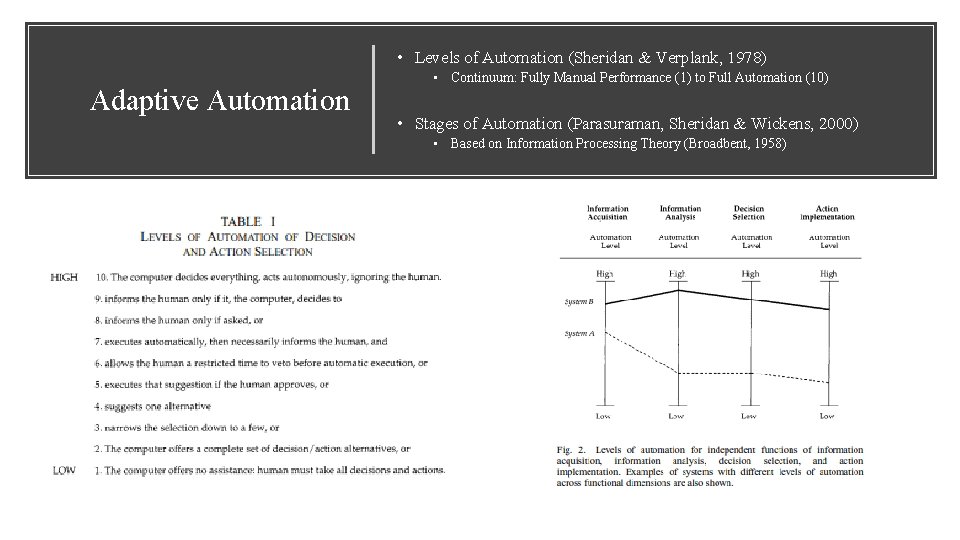
• Levels of Automation (Sheridan & Verplank, 1978) Adaptive Automation • Continuum: Fully Manual Performance (1) to Full Automation (10) • Stages of Automation (Parasuraman, Sheridan & Wickens, 2000) • Based on Information Processing Theory (Broadbent, 1958)
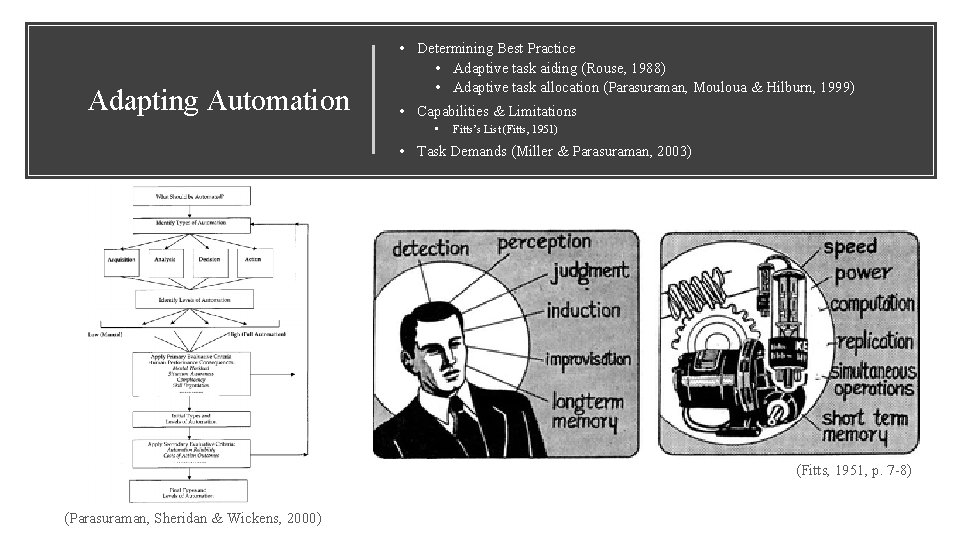
Adapting Automation • Determining Best Practice • Adaptive task aiding (Rouse, 1988) • Adaptive task allocation (Parasuraman, Mouloua & Hilburn, 1999) • Capabilities & Limitations • Fitts’s List (Fitts, 1951) • Task Demands (Miller & Parasuraman, 2003) (Fitts, 1951, p. 7 -8)) (Parasuraman, Sheridan & Wickens, 2000))
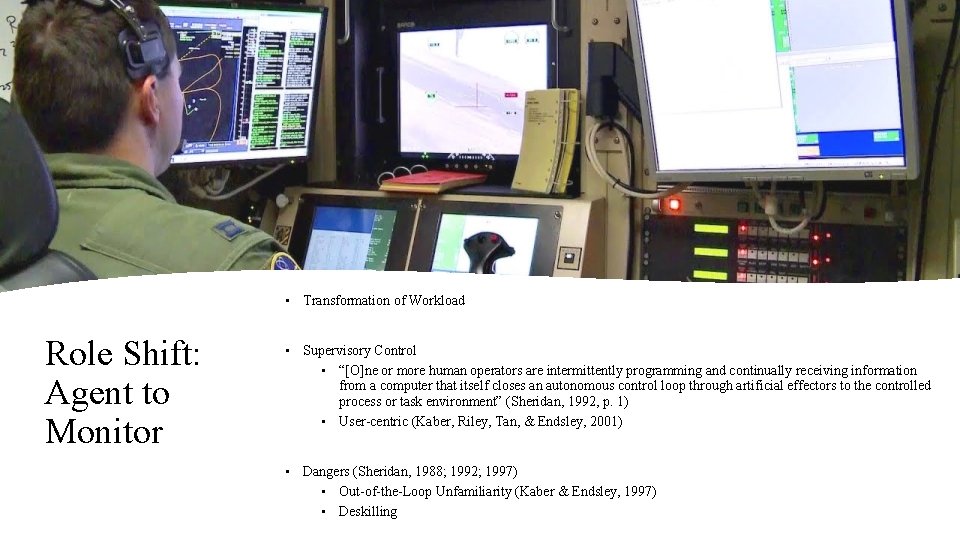
• Transformation of Workload Role Shift: Agent to Monitor • Supervisory Control • “[O]ne or more human operators are intermittently programming and continually receiving information from a computer that itself closes an autonomous control loop through artificial effectors to the controlled process or task environment” (Sheridan, 1992, p. 1) • User-centric (Kaber, Riley, Tan, & Endsley, 2001) • Dangers (Sheridan, 1988; 1992; 1997) • Out-of-the-Loop Unfamiliarity (Kaber & Endsley, 1997) • Deskilling
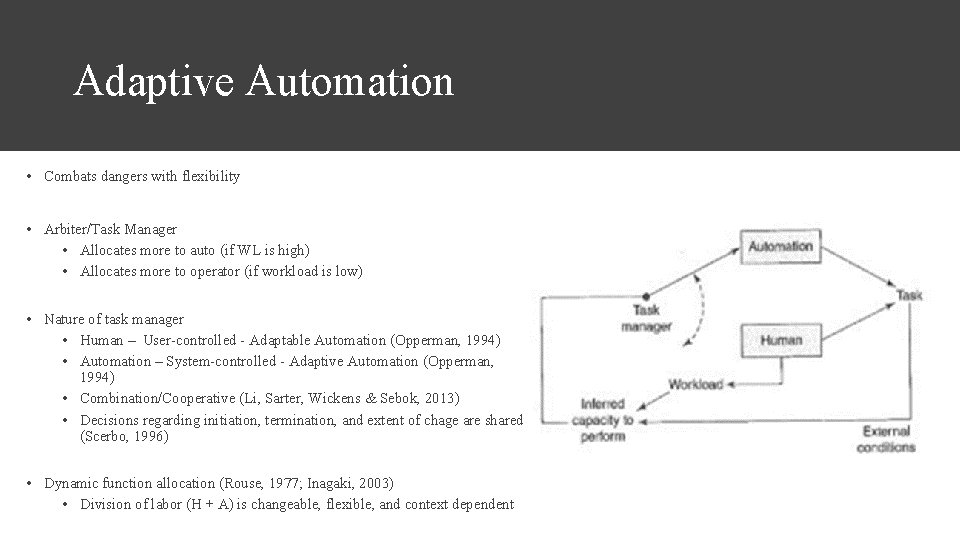
Adaptive Automation • Combats dangers with flexibility • Arbiter/Task Manager • Allocates more to auto (if WL is high) • Allocates more to operator (if workload is low) • Nature of task manager • Human – User-controlled - Adaptable Automation (Opperman, 1994) • Automation – System-controlled - Adaptive Automation (Opperman, 1994) • Combination/Cooperative (Li, Sarter, Wickens & Sebok, 2013) • Decisions regarding initiation, termination, and extent of chage are shared (Scerbo, 1996) • Dynamic function allocation (Rouse, 1977; Inagaki, 2003) • Division of labor (H + A) is changeable, flexible, and context dependent

Dynamic Task Allocation • Reallocation of responsibilities based on • Tasks (or sub-tasks) to be automated (Bindewald et al. , 2014) • Inference sources • Timeline of change initiation/completion • Both operator + automated system should have awareness of each other’s current • Capabilities • Performance • State • Methods of determining when changes in levels are necessary • Assessment of environment • Continuous assessment of performance • Continuous assessment of WL (Sheridan, 2011, p. 665))
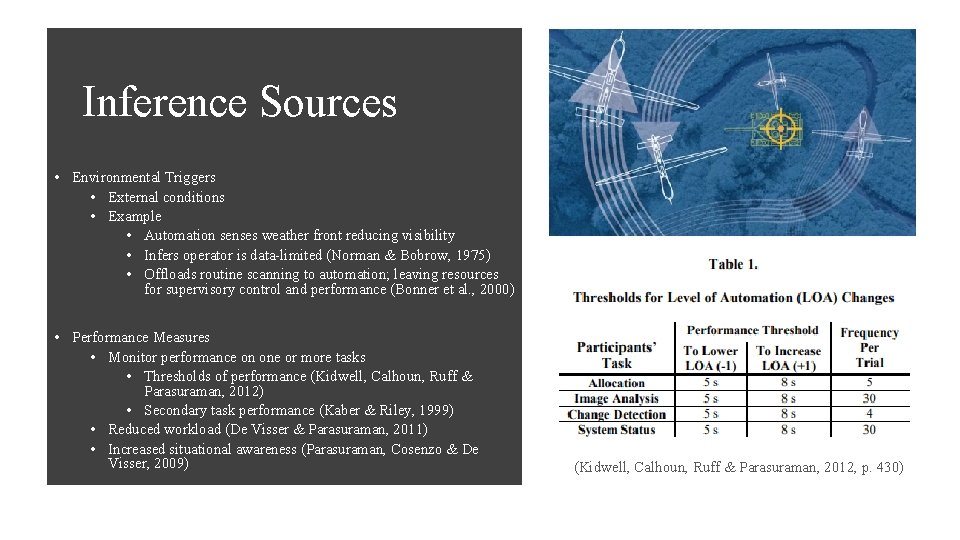
Inference Sources • Environmental Triggers • External conditions • Example • Automation senses weather front reducing visibility • Infers operator is data-limited (Norman & Bobrow, 1975) • Offloads routine scanning to automation; leaving resources for supervisory control and performance (Bonner et al. , 2000) • Performance Measures • Monitor performance on one or more tasks • Thresholds of performance (Kidwell, Calhoun, Ruff & Parasuraman, 2012) • Secondary task performance (Kaber & Riley, 1999) • Reduced workload (De Visser & Parasuraman, 2011) • Increased situational awareness (Parasuraman, Cosenzo & De Visser, 2009) (Kidwell, Calhoun, Ruff & Parasuraman, 2012, p. 430))
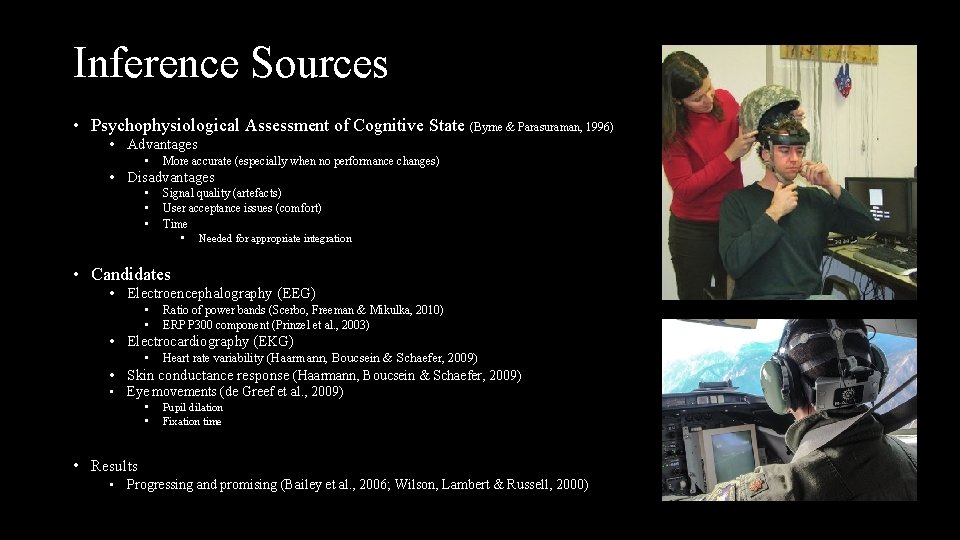
Inference Sources • Psychophysiological Assessment of Cognitive State (Byrne & Parasuraman, 1996) • Advantages • More accurate (especially when no performance changes) • Disadvantages • • • Signal quality (artefacts) User acceptance issues (comfort) Time • Needed for appropriate integration • Candidates • Electroencephalography (EEG) • • Ratio of power bands (Scerbo, Freeman & Mikulka, 2010) ERP P 300 component (Prinzel et al. , 2003) • Electrocardiography (EKG) • Heart rate variability (Haarmann, Boucsein & Schaefer, 2009) • Skin conductance response (Haarmann, Boucsein & Schaefer, 2009) • Eye movements (de Greef et al. , 2009) • • Pupil dilation Fixation time • Results • Progressing and promising (Bailey et al. , 2006; Wilson, Lambert & Russell, 2000)
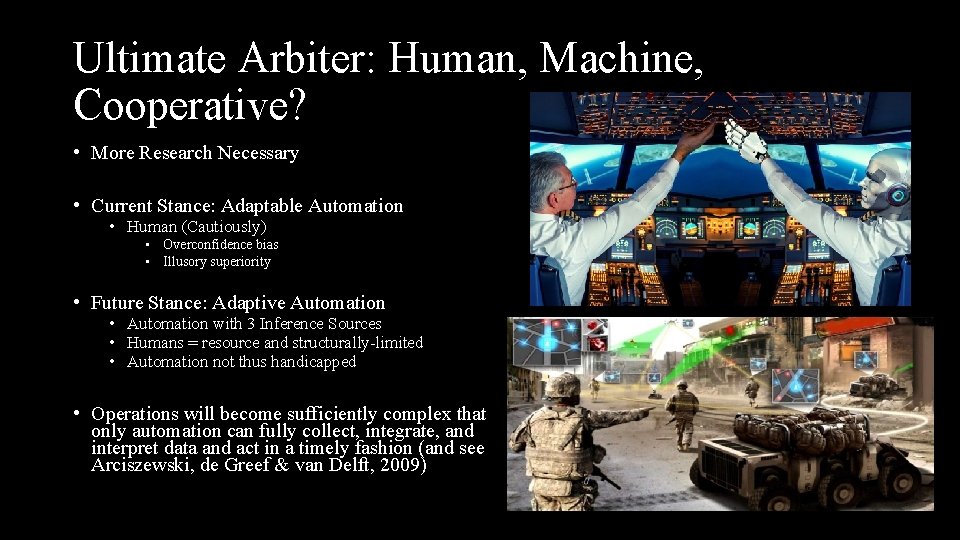
Ultimate Arbiter: Human, Machine, Cooperative? • More Research Necessary • Current Stance: Adaptable Automation • Human (Cautiously) • Overconfidence bias • Illusory superiority • Future Stance: Adaptive Automation • Automation with 3 Inference Sources • Humans = resource and structurally-limited • Automation not thus handicapped • Operations will become sufficiently complex that only automation can fully collect, integrate, and interpret data and act in a timely fashion (and see Arciszewski, de Greef & van Delft, 2009)

Thank You & Questions GABRIELLA HANCOCK, Ph. D. Assistant Professor Psychology Department California State University Long Beach e: Gabriella. Hancock@csulb. edu p: (562) 985 - 4856
References • Arciszewski, H. F. , De Greef, T. E. , & Van Delft, J. H. (2009). Adaptive automation in a naval combat management system. IEEE Transactions on Systems, Man, and Cybernetics-Part A: Systems and Humans, 39(6), 1188 -1199. • Bailey, N. R. , Scerbo, M. W. , Freeman, F. G. , Mikulka, P. J. , & Scott, L. A. (2006). Comparison of a brain-based adaptive system and a manual adaptable system for invoking automation. Human Factors, 48(4), 693 -709. • Bindewald, J. M. , Miller, M. E. , & Peterson, G. L. (2014). A function-to-task process model for adaptive automation system design. International Journal of Human-Computer Studies, 72(12), 822 -834. • Bonner, M. , Taylor, R. , Fletcher, K. , & Miller, C. (2000, October). Adaptive automation and decision aiding in the military fast jet domain. In Proceedings of the conference on Human Performance, Situation Awareness and Automation: User centered design for the new Millennium (pp. 154 -159). • Broadbent, D. E. (1958). Perception and communication. London, UK: Pergamon. • Byrne, E. A. , & Parasuraman, R. (1996). Psychophysiology and adaptive automation. Biological Psychology, 42(3), 249 -268. • de Greef, T. , Lafeber, H. , van Oostendorp, H. , & Lindenberg, J. (2009, July). Eye movement as indicators of mental workload to trigger adaptive automation. In International Conference on Foundations of Augmented Cognition (pp. 219 -228). Springer, Berlin, Heidelberg. • De Visser, E. , & Parasuraman, R. (2011). Adaptive aiding in human-robot teaming: Effects of imperfect automation on performance, trust, and workload. Journal of Cognitive Engineering and Decision Making, 5(2), 209 -231. • Fitts, P. M. (1951). Human engineering for an effective air-navigation and traffic-control system. National Research Council, Washington, DC. • Haarmann, A. , Boucsein, W. , & Schaefer, F. (2009). Combining electrodermal responses and cardiovascular measures for probing adaptive automation during simulated flight. Applied Ergonomics, 40(6), 1026 -1040. • Inagaki, T. (2003). Adaptive automation: Sharing and trading of control. Handbook of cognitive task design, 8, 147 -169.
References • Kaber, D. B. , & Endsley, M. R. (1997, October). The combined effect of level of automation and adaptive automation on human performance with complex, dynamic control systems. In Proceedings of the Human Factors and Ergonomics Society Annual Meeting (Vol. 41, No. 1, pp. 205 -209). Sage CA: Los Angeles, CA: SAGE Publications. • Kaber, D. B. , & Riley, J. M. (1999). Adaptive automation of a dynamic control task based on secondary task workload measurement. International Journal of Cognitive Ergonomics, 3(3), 169 -187. • Kaber, D. B. , Riley, J. M. , Tan, K-W. , & Endsley, M. R. (2001). On the design of adaptive automation for complex systems. International Journal of Cognitive Ergonomics, 5(1), 37 -57. • Kidwell, B. , Calhoun, G. L. , Ruff, H. A. , & Parasuraman, R. (2012, September). Adaptable and adaptive automation for supervisory control of multiple autonomous vehicles. In Proceedings of the human factors and Ergonomics society annual meeting (Vol. 56, No. 1, pp. 428 -432). Sage CA: Los Angeles, CA: SAGE Publications. • Li, H. , Sarter, N. , Wickens, C. , & Sebok, A. (2013, September). Supporting Human-Automation Collaboration Through Dynamic Function Allocation: The Case of Space Teleoperation. In Proceedings of the Human Factors and Ergonomics Society Annual Meeting (Vol. 57, No. 1, pp. 359 -363). Sage CA: Los Angeles, CA: SAGE Publications. • Miller, C. A. , & Parasuraman, R. (2003, October). Beyond levels of automation: An architecture for more flexible human-automation collaboration. In Proceedings of the Human Factors and Ergonomics Society Annual Meeting (Vol. 47, No. 1, pp. 182 -186). Sage CA: Los Angeles, CA: SAGE Publications. • Norman, D. A. , & Bobrow, D. G. (1975). On data-limited and resource-limited processes. Cognitive Psychology, 7(1), 44 -64. • Opperman, R. (1994). Adaptive user support. Hillsdale, NJ: Erlbaum. • Parasuraman, R. , Cosenzo, K. A. , & De Visser, E. (2009). Adaptive automation for human supervision of multiple uninhabited vehicles: Effects on change detection, situation awareness, and mental workload. Military Psychology, 21, 270 -297. • Parasuraman, R. , Mouloua, M. , & Hilburn, B. (1999). Adaptive aiding and adaptive task allocation enhance human-machine interaction. In M. W. Scerbo & M. Mouloua (Eds. ), Automation technology and human performance: Current research and trends (pp. 119– 123). Mahwah, NJ: Erlbaum.
References • Parasuraman, R. , Sheridan, T. B. , & Wickens, C. D. (2000). A model for types and levels of human interaction with automation. IEEE Transactions on systems, man, and cybernetics-Part A: Systems and Humans, 30(3), 286 -297. • Prinzel, L. J. III, Freeman, F. G. , Scerbo, M. W. , Mikulka, P. J. , & Pope, A. T. (2003). Effects of a psychophysiological system for adaptive automation on performance, workload, and the event-related potential P 300 component. Human Factors, 45(4), 601 -613. • Rouse, W. B. (1977). Human-computer interaction in multitask situations. IEEE Transactions on Systems, Man, and Cybernetics, 7(5), 384 -392. • Rouse, W. B. (1988). Adaptive aiding for human/computer control. Human Factors, 30(4), 431 -443. • Scerbo, M. W. , (1996). Theoretical perspectives on adaptive automation. In R. Parasuraman & M. Mouloua (Eds. ), Automation and human performance: Theory and applications (pp. 37 -63). Hillsdale, NJ: Erlbaum. • Scerbo, M. W. , Freeman, F. G. , & Mikulka, P. J. (2010). A brain-based system for adaptive automation. Theoretical Issues in Ergonomics Science, 4, 200 -219. • Sheridan, T. B. (1988). Task allocation and supervisory control. In Handbook of human-computer interaction (pp. 159 -173). North. Holland. • Sheridan, T. B. (1992). Telerobotics, automation, and human supervisory control. MIT press. • Sheridan, T. B. (1997). Task analysis, task allocation and supervisory control. In Handbook of human-computer interaction (pp. 87105). North-Holland. • Sheridan, T. B. (2011). Adaptive automation, level of automation, allocation authority, supervisory control, and adaptive control: Distinctions and modes of adaptation. IEEE Transactions on Systems, Man, and Cybernetics-Part A: Systems and Humans, 41(4), 662 -667. • Sheridan, T. B. &Verplank, W. L. (1978). Human and computer control of undersea teleoperators. MIT Man-Machine Systems Laboratory, Cambridge, MA. Technical Report. • Wilson, G. F. , Lambert, J. D. , & Russell, C. A. (2000, July). Performance enhancement with real-time physiologically controlled adaptive aiding. In Proceedings of the human factors and ergonomics society annual meeting (Vol. 44, No. 13, pp. 61 -64). Sage CA: Los Angeles, CA: SAGE Publications.
- Slides: 13