
Determining capacity and identifying capacitybuilding needs The CBIT
Determining capacity and identifying capacity-building needs The CBIT self-assessment tool Ana C. Henriques Cardoso UNEP DTU Partnership 8 th Annual Partnership Retreat 2019 of the Partnership on Transparency in the Paris Agreement
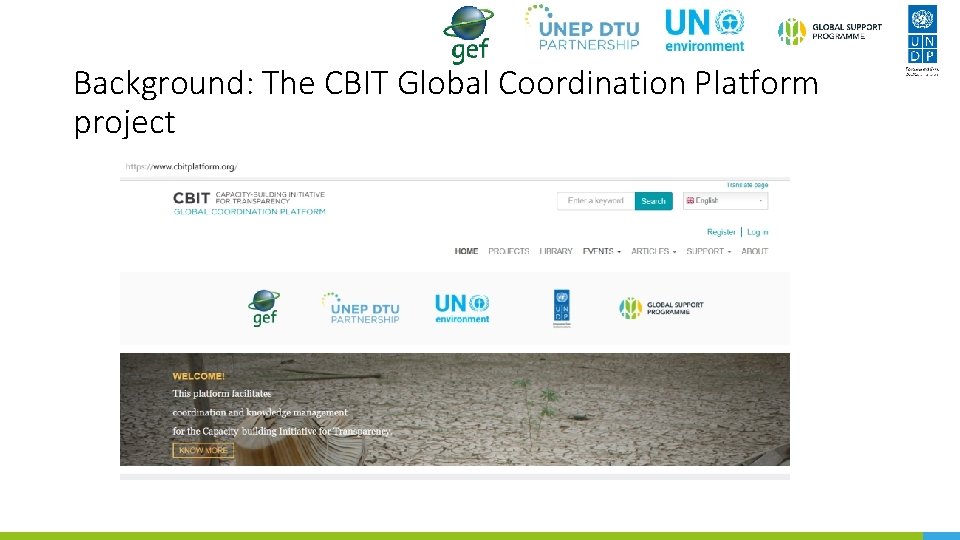
Background: The CBIT Global Coordination Platform project
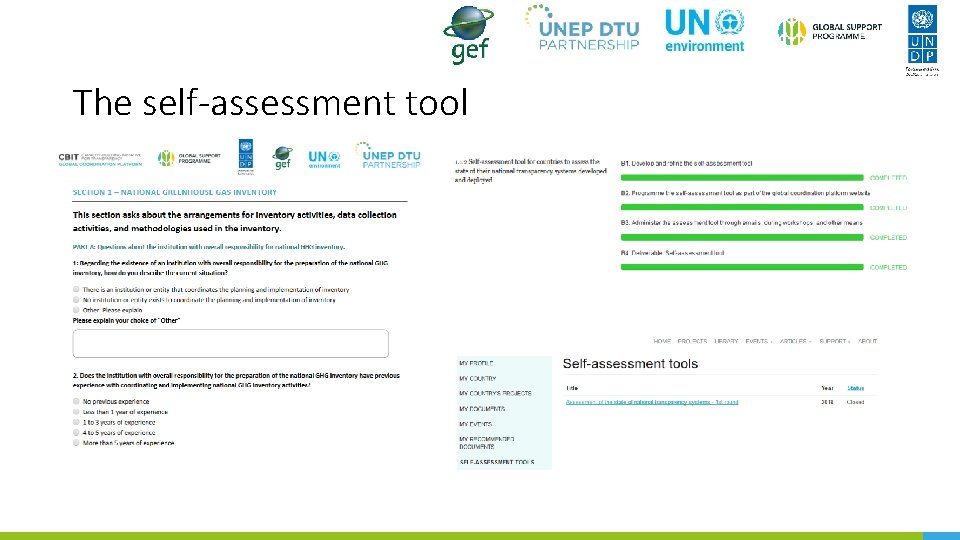
The self-assessment tool

The challenge of capacity assessments • Multiple levels of capacity: individual, organizational, systemic (what) • Different development organizations, different methodologies to assess capacity and to approach capacity development (who and how) • Multiple capacity assessments done for multiple purposes (why) • Difficult to compare the multiple assessments (who, what, how, when, why)
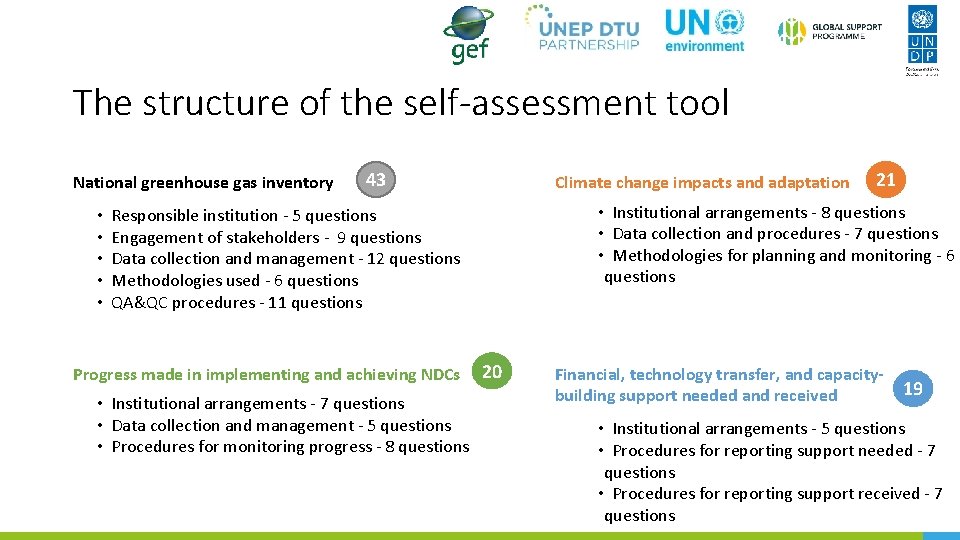
The structure of the self-assessment tool National greenhouse gas inventory • • • 43 Climate change impacts and adaptation • Institutional arrangements - 8 questions • Data collection and procedures - 7 questions • Methodologies for planning and monitoring - 6 questions Responsible institution - 5 questions Engagement of stakeholders - 9 questions Data collection and management - 12 questions Methodologies used - 6 questions QA&QC procedures - 11 questions Progress made in implementing and achieving NDCs • Institutional arrangements - 7 questions • Data collection and management - 5 questions • Procedures for monitoring progress - 8 questions 21 20 Financial, technology transfer, and capacitybuilding support needed and received 19 • Institutional arrangements - 5 questions • Procedures for reporting support needed - 7 questions • Procedures for reporting support received - 7 questions
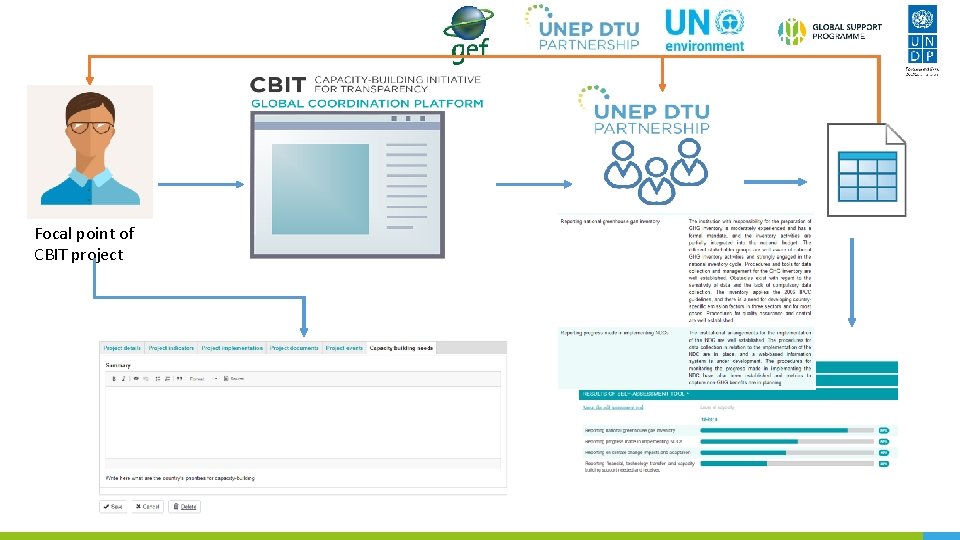
Focal point of CBIT project
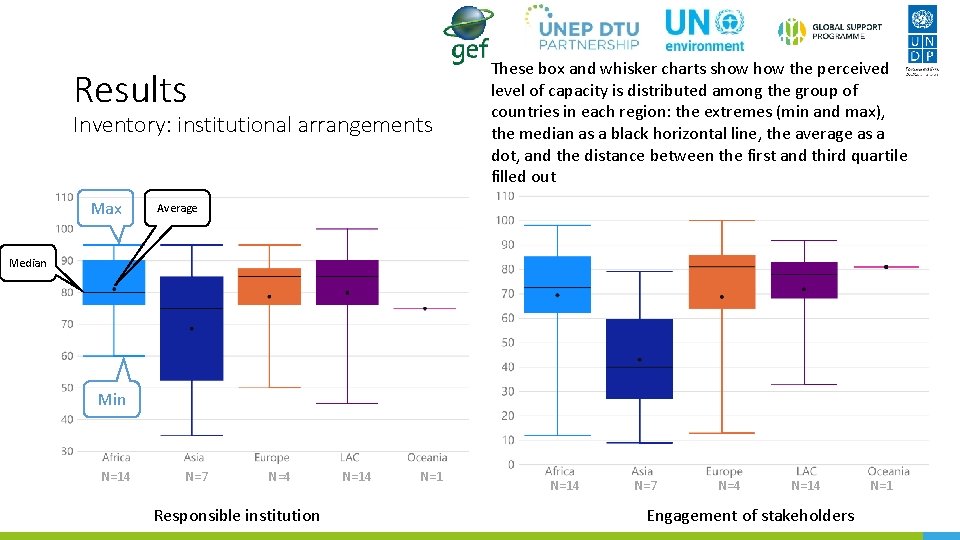
Results Inventory: institutional arrangements Max These box and whisker charts show the perceived level of capacity is distributed among the group of countries in each region: the extremes (min and max), the median as a black horizontal line, the average as a dot, and the distance between the first and third quartile filled out Average Median Min N=14 N=7 N=4 Responsible institution N=14 N=7 N=4 N=14 Engagement of stakeholders N=1
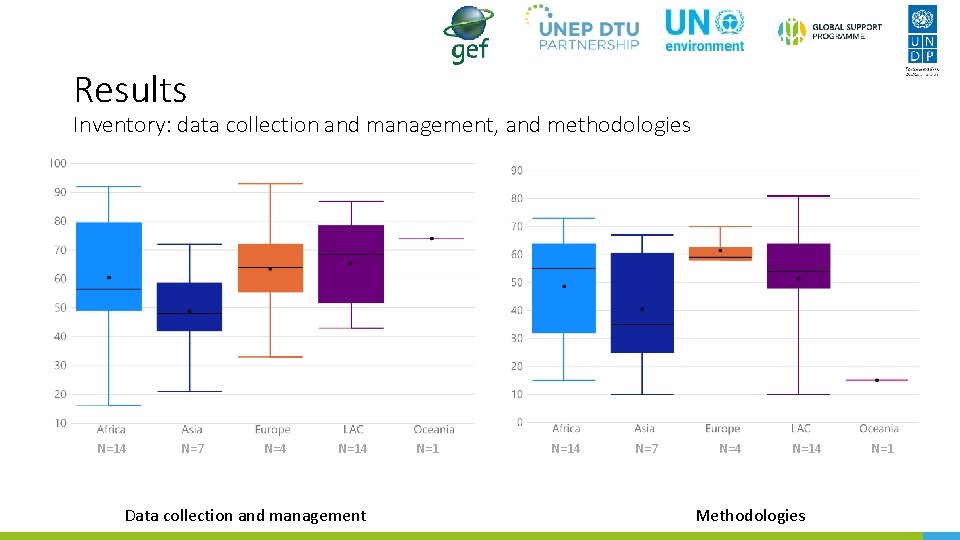
Results Inventory: data collection and management, and methodologies N=14 N=7 N=4 N=14 Data collection and management N=14 N=7 N=4 N=14 Methodologies N=1
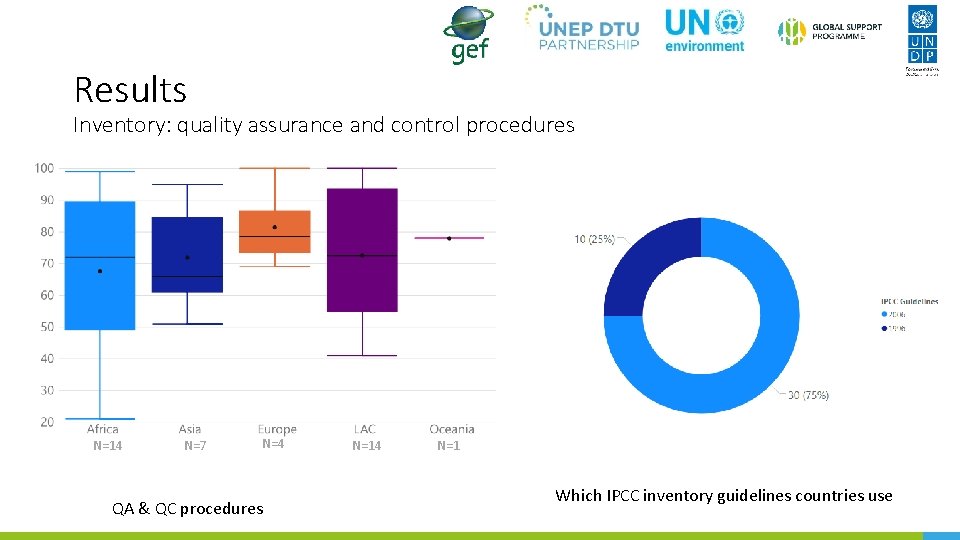
Results Inventory: quality assurance and control procedures N=14 N=7 N=4 QA & QC procedures N=14 N=1 Which IPCC inventory guidelines countries use
Key findings: GHG inventory • Still work to do on institutional arrangements, with CBIT countries from Asia with more variability in terms of capacity for working institutional arrangements • Gaps on capacity for data collection and management in all regions, and especially in CBIT countries from Asia. More variability in Africa and LAC • On methodologies, there's large variability in capacity across CBIT countries in Africa and Asia. Much less in CBIT countries from Europe • For QA&QC, larger variability in capacity in Africa and LAC • For all areas, there are countries with high capacity
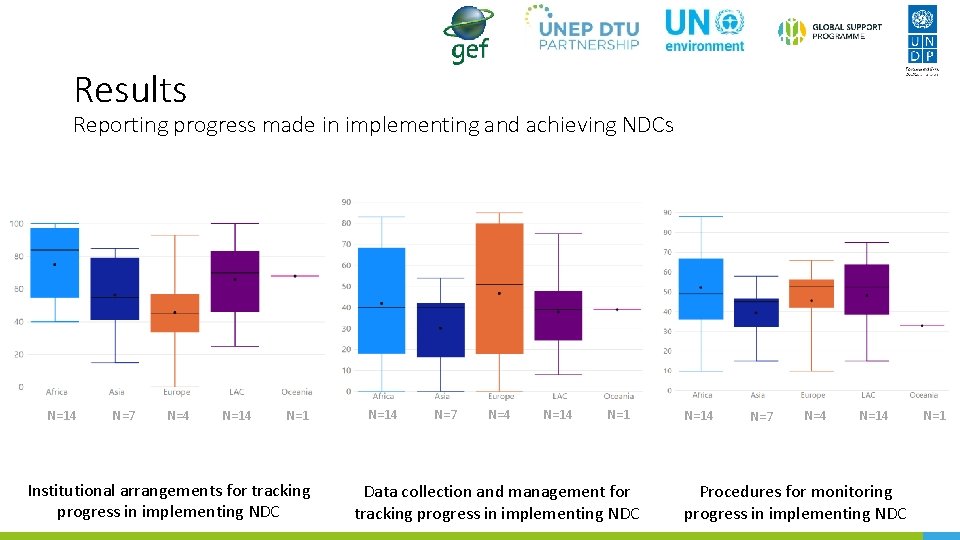
Results Reporting progress made in implementing and achieving NDCs N=14 N=7 N=4 N=1 Institutional arrangements for tracking progress in implementing NDC N=14 N=7 N=4 N=1 Data collection and management for tracking progress in implementing NDC N=14 N=7 N=4 N=14 Procedures for monitoring progress in implementing NDC N=1
Key findings: reporting NDC implementation • In all regions, there is capacity to be built on institutional arrangements, though less in African countries • High variability on capacity for data collection and management - especially in Africa and Europe • Less variability on capacity related to procedures for monitoring, but significant work to be done there
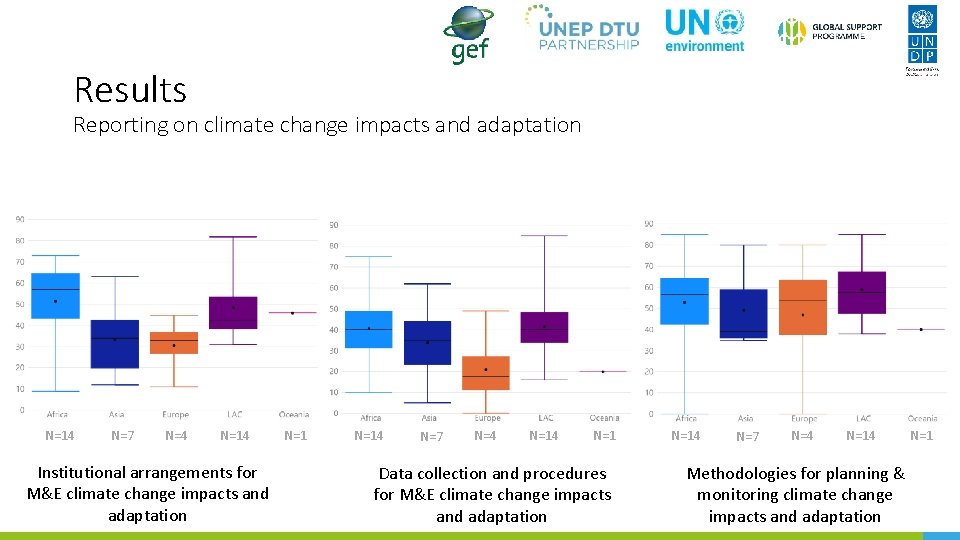
Results Reporting on climate change impacts and adaptation N=14 N=7 N=4 N=14 Institutional arrangements for M&E climate change impacts and adaptation N=14 N=7 N=4 N=1 Data collection and procedures for M&E climate change impacts and adaptation N=14 N=7 N=4 N=14 Methodologies for planning & monitoring climate change impacts and adaptation N=1
Key findings: climate change impacts & adaptation • In general lower capacity in all regions • Significant need for capacity building on institutional arrangements and on data collection and procedures for CBIT countries in Asia and Europe • There are capacity gaps also in terms of methodologies for planning and monitoring adaptation actions, but here the countries are more similar across regions
Results Reporting on financial, tech transfer, and CB support needed and received N=14 N=7 N=4 N=14 Institutional arrangements for monitoring & reporting support needed and received N=14 N=7 N=4 N=14 Procedures - support needed N=14 N=7 N=4 N=14 Procedures - support received N=1
Key findings: reporting support needed & received • Progress to be done on institutional arrangements, higher variability in LAC region • Significant capacity gaps at the procedural level, which is quite low in all regions • Also high variability in terms of capacity for reporting support needed and received, especially in Africa and also a bit in LAC region and in Europe (for support received)
Future work • Revision of the tool, to integrate feedback from countries and MPGs • Clarity for users on what constitutes capacity for climate transparency • Possibility to mark answers to sections of the tool as unchanged
- Slides: 17