
Determine protein structure from amino acid sequence Ray
- Slides: 8
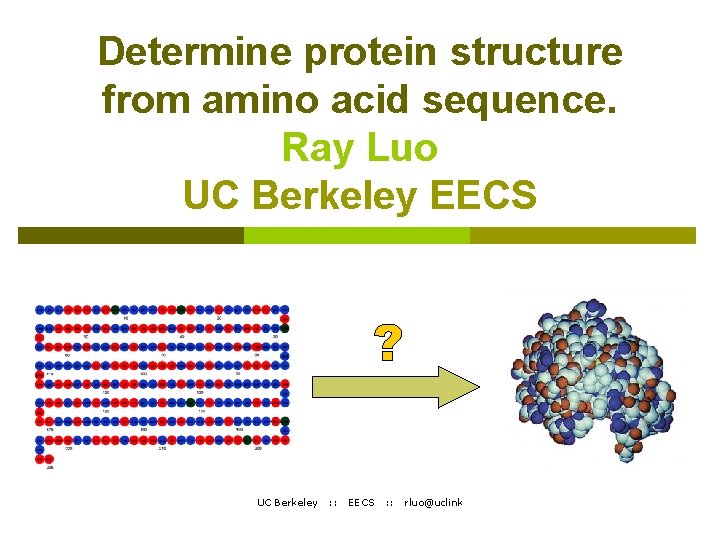
Determine protein structure from amino acid sequence. Ray Luo UC Berkeley EECS UC Berkeley : : EECS : : rluo@uclink
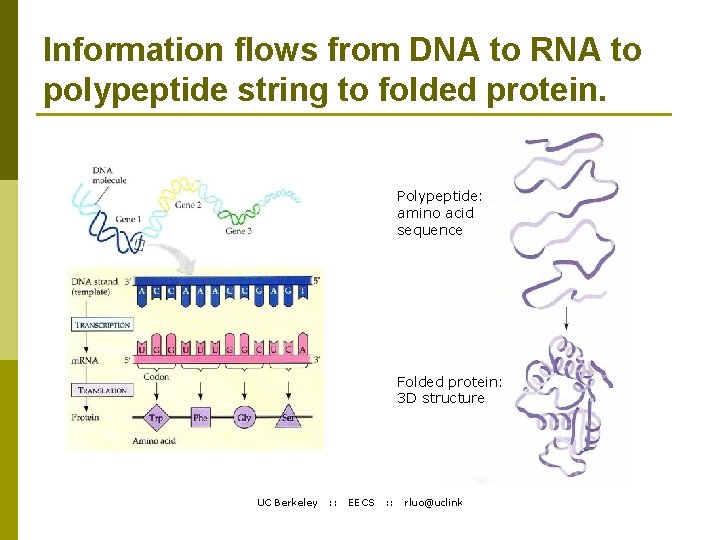
Information flows from DNA to RNA to polypeptide string to folded protein. Polypeptide: amino acid sequence Folded protein: 3 D structure UC Berkeley : : EECS : : rluo@uclink
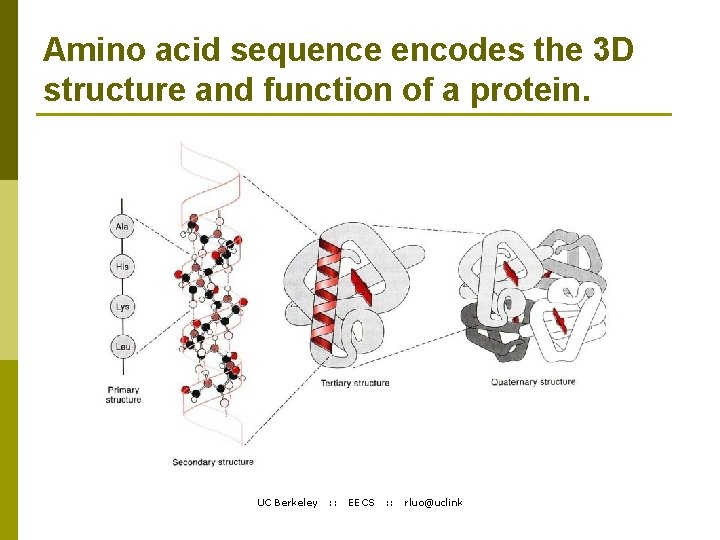
Amino acid sequence encodes the 3 D structure and function of a protein. UC Berkeley : : EECS : : rluo@uclink
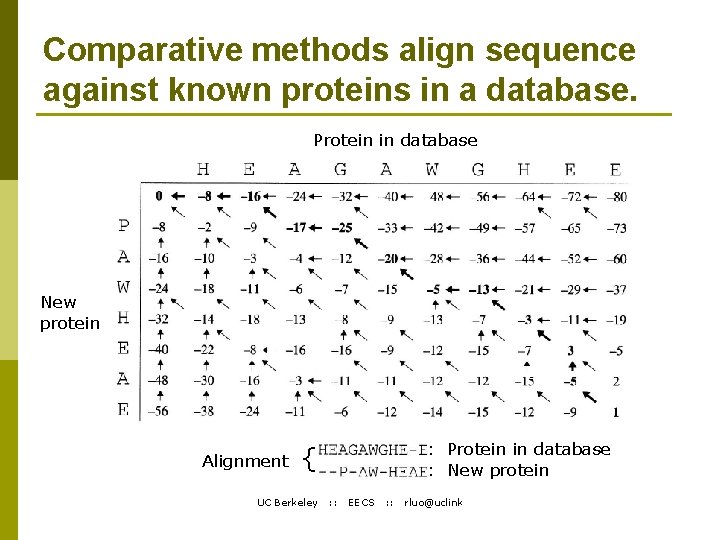
Comparative methods align sequence against known proteins in a database. Protein in database New protein Alignment : Protein in database : New protein { UC Berkeley : : EECS : : rluo@uclink
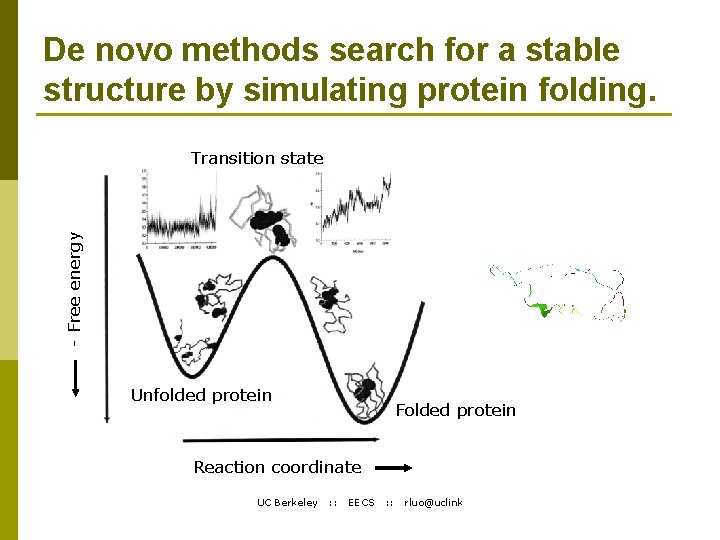
De novo methods search for a stable structure by simulating protein folding. - Free energy Transition state Unfolded protein Folded protein Reaction coordinate UC Berkeley : : EECS : : rluo@uclink
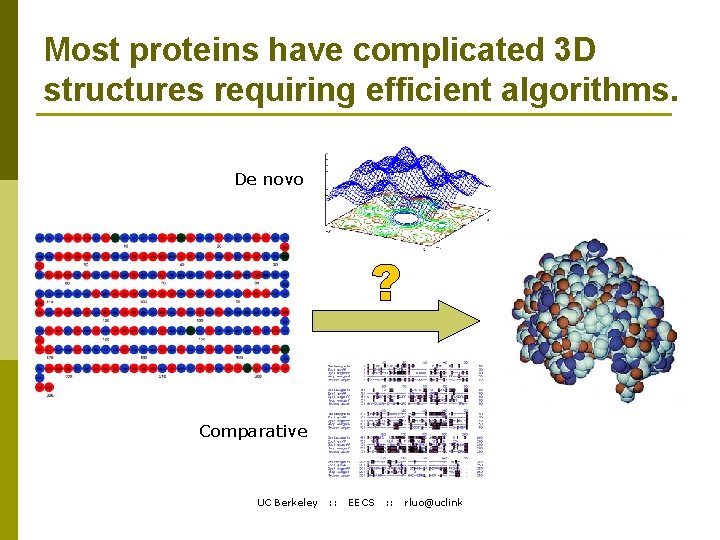
Most proteins have complicated 3 D structures requiring efficient algorithms. De novo Comparative UC Berkeley : : EECS : : rluo@uclink
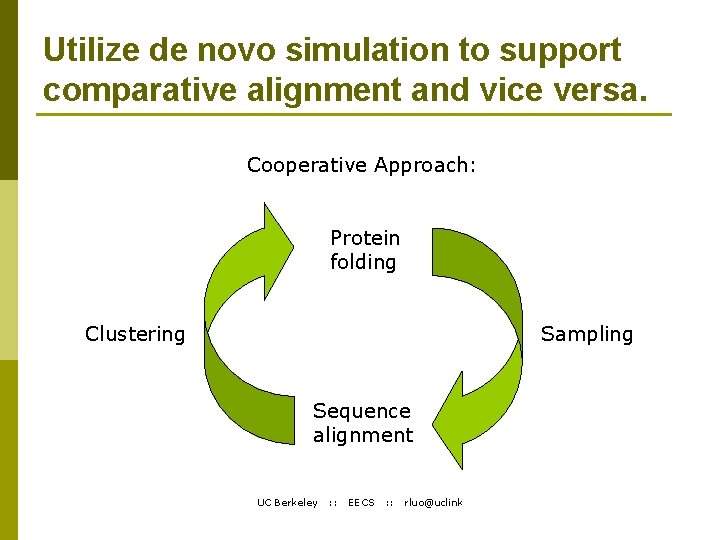
Utilize de novo simulation to support comparative alignment and vice versa. Cooperative Approach: Protein folding Clustering Sampling Sequence alignment UC Berkeley : : EECS : : rluo@uclink
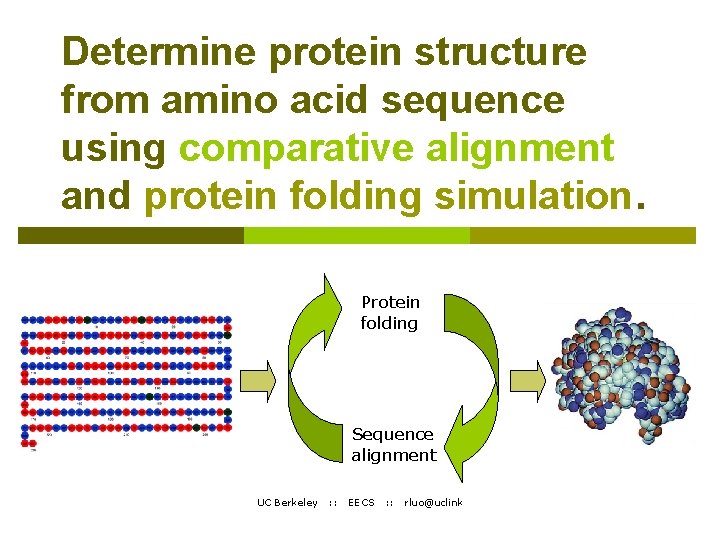
Determine protein structure from amino acid sequence using comparative alignment and protein folding simulation. Protein folding Sequence alignment UC Berkeley : : EECS : : rluo@uclink