
Determinants of Material Weaknesses in Internal Control over
- Slides: 17
Determinants of Material Weaknesses in Internal Control over Compliance in Accordance with OMB Circular A-133 for U. S. Counties Julie C. Hyde, Ph. D. , CPA
Overview • • • Research Question Motivation Literature Review Hypotheses Sample and Empirical Results Conclusions
Research Question • What entity characteristics are associated with the reporting of a material weakness in internal control over compliance for federal grants?
Motivation • Interest to county administrators, grantor agencies, and auditors • Increased understanding of internal controls for federal grants • Addition to material weakness literature (Boyle et al. 2004; Ge and Mc. Vay 2005; Klamm and Wilson 2009)
Prior Research • Companies with MW are small, complex, and financially weak. – Doyle et al. (2007); Ashbaugh-Skaife et al. (2007); Ge and Mc. Vay (2005)
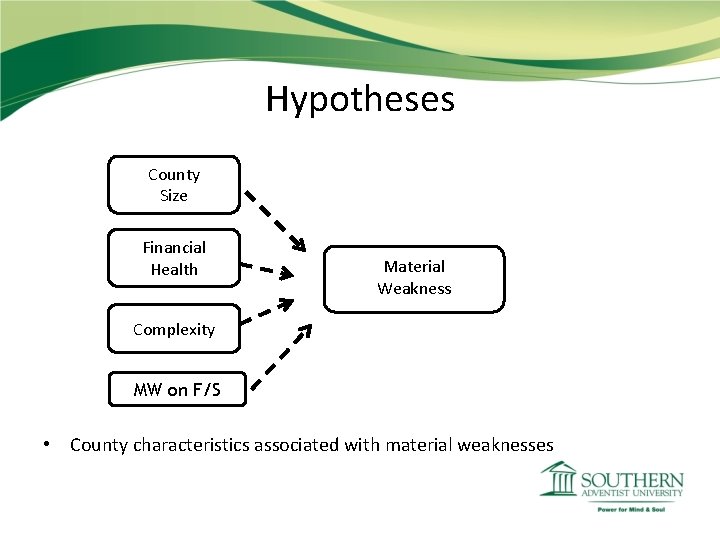
Hypotheses County Size Financial Health Material Weakness Complexity MW on F/S • County characteristics associated with material weaknesses
Sample Selection • Federal Audit Clearinghouse – 159 counties with material weaknesses in internal control over compliance in 2007 – Matched control group (159) – Hand collection of county financial reports
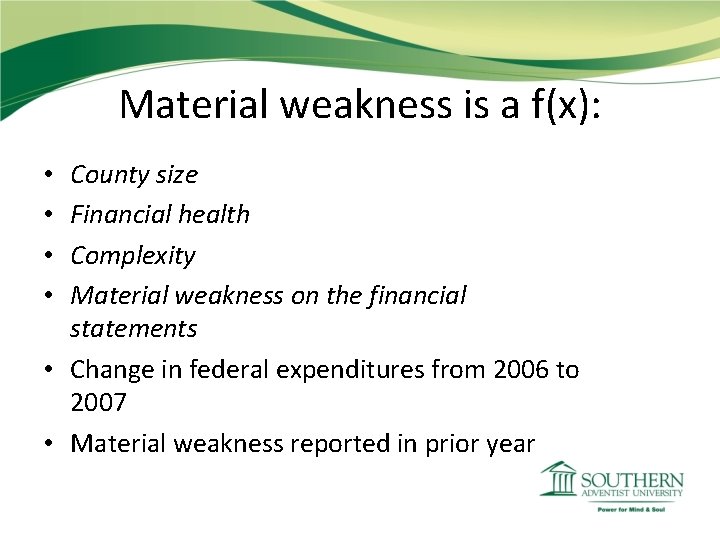
Material weakness is a f(x): County size Financial health Complexity Material weakness on the financial statements • Change in federal expenditures from 2006 to 2007 • Material weakness reported in prior year • •
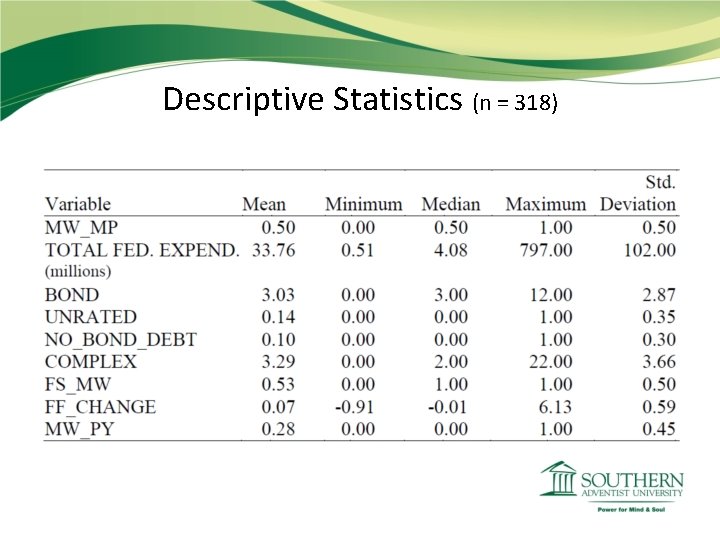
Descriptive Statistics (n = 318)
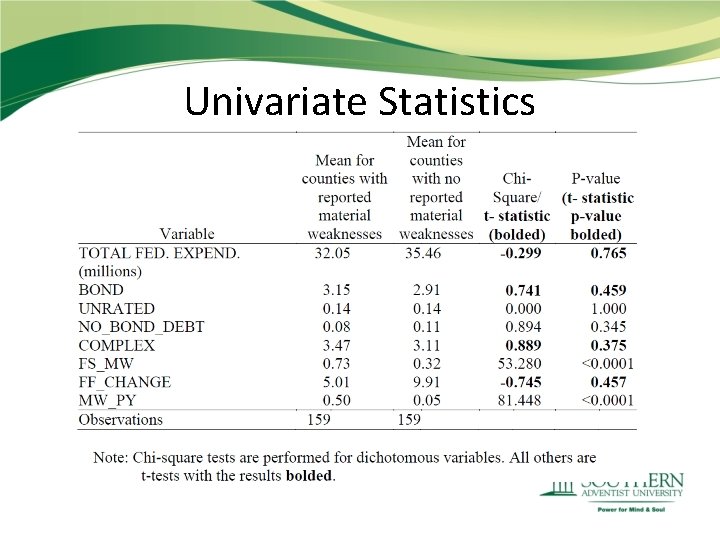
Univariate Statistics
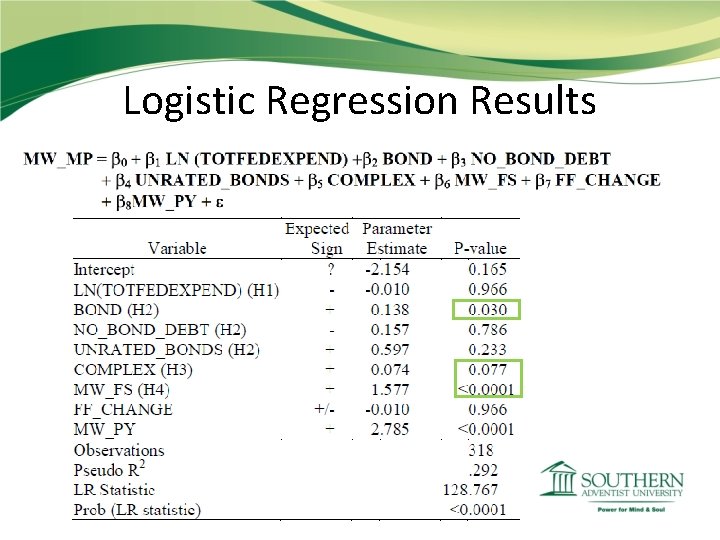
Logistic Regression Results
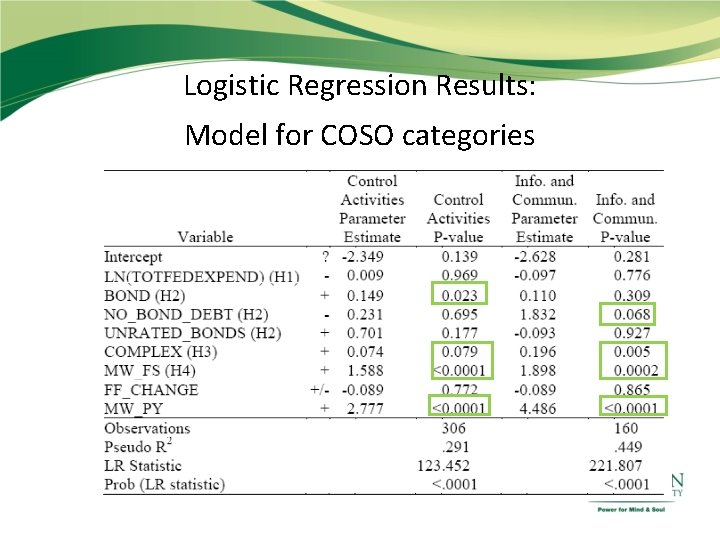
Logistic Regression Results: Model for COSO categories
Conclusions • Like SEC companies, counties with complex operations and poor financial health are more likely to report material weaknesses (Doyle et al. 2007; Ge and Mc. Vay 2005; Bryan and Lilien 2005). • Relation between material weaknesses on both internal controls over financial statements and over compliance for federal grants • Unlike SEC companies, no relation between size and material weaknesses could result because grants are administered by departments, not the entity-wide control system.
Implications • From a single audit perspective, size does not present additional risks for MWs. • Grantor agencies could evaluate financially weak and complex counties as having increased likelihood of MWs in awarding grants or determining monitoring activities. • Auditors may adjust risk assessments using the results of this study.
Limitations • Generalizability of results • Time frame • Instances where material weaknesses in internal controls over compliance were present but were unreported
Future Research • Include entity types such as municipalities, school districts, universities, and nonprofit organizations • Longer time frame • Determinants of material weaknesses over financial reporting
Questions and Comments